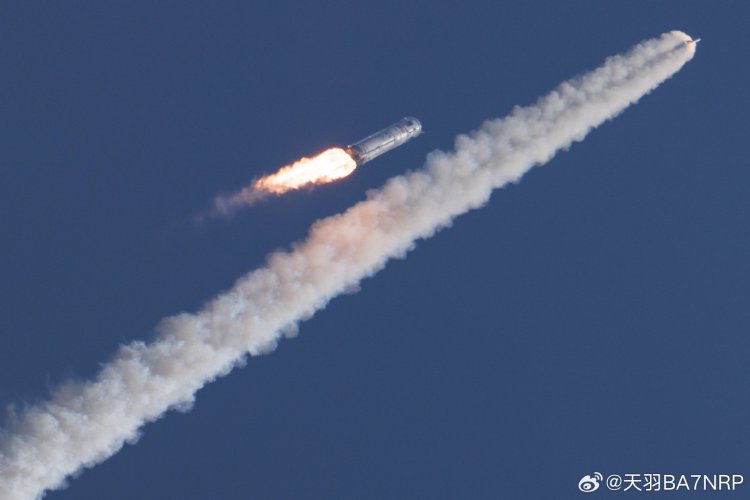
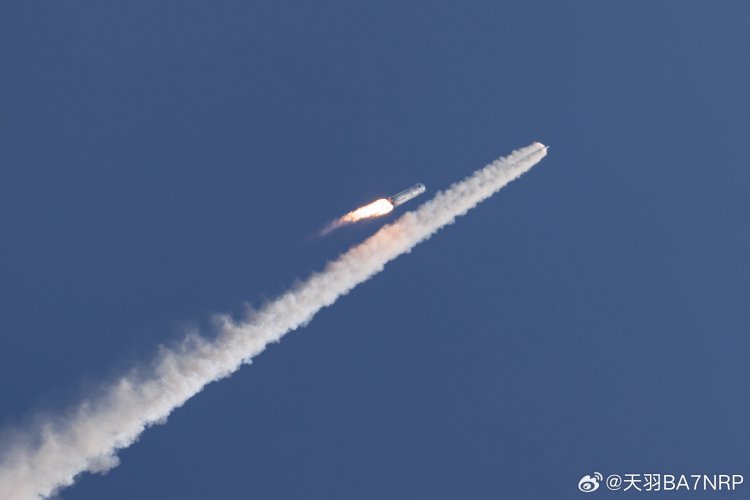
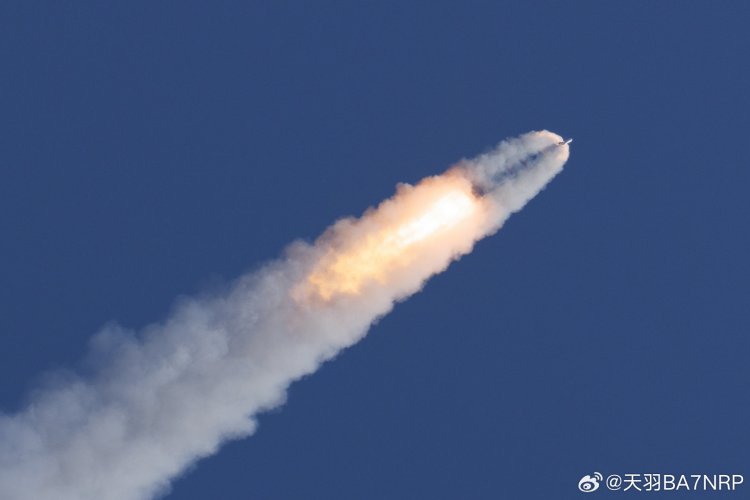
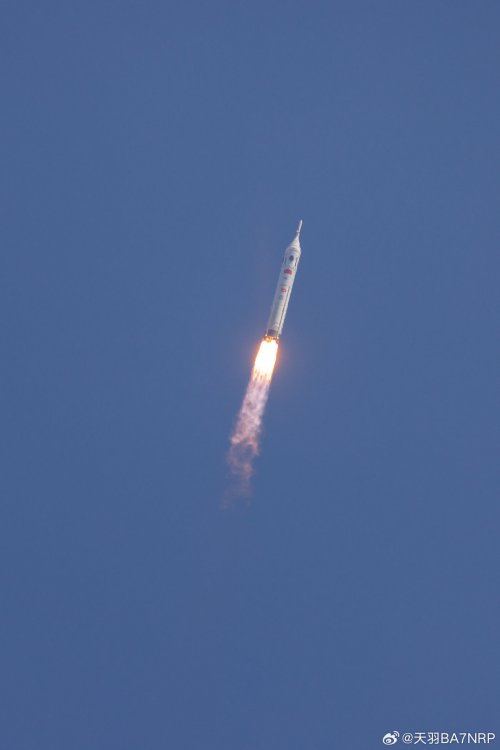
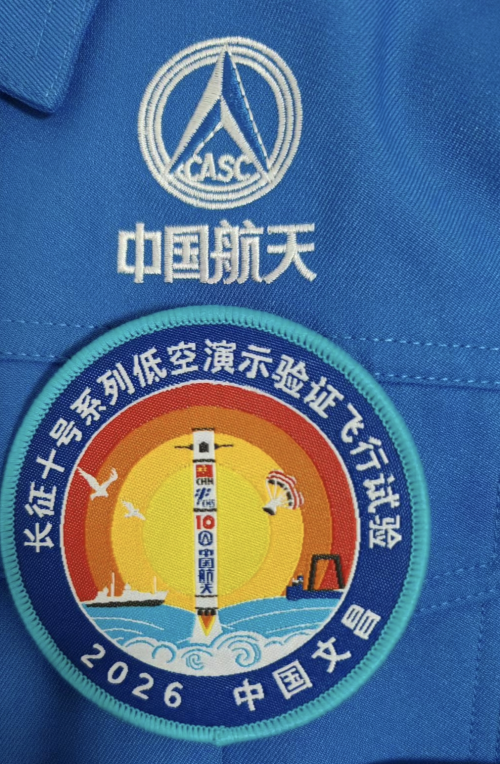
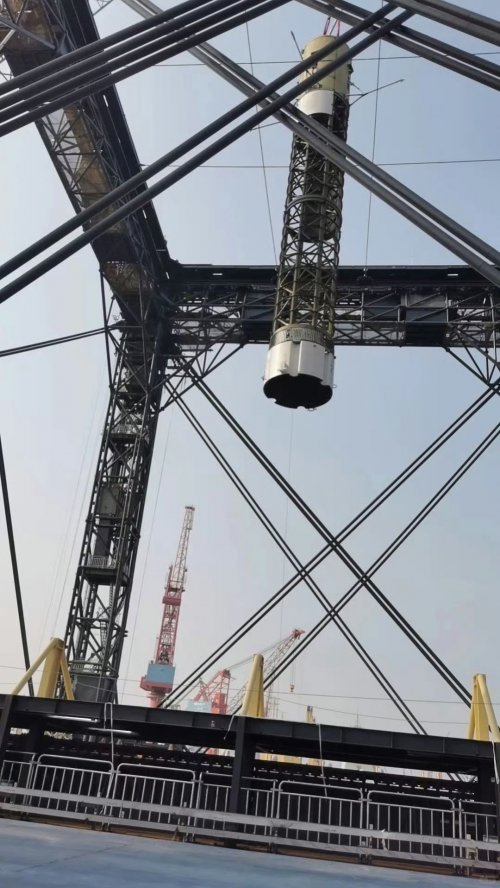
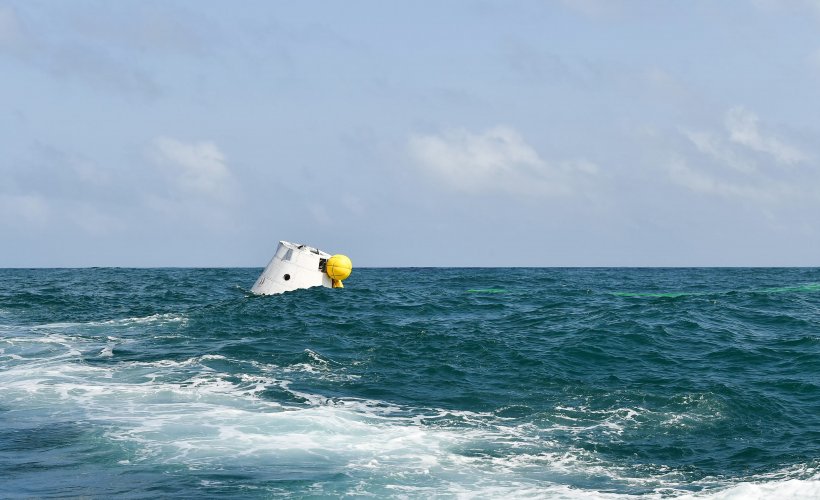
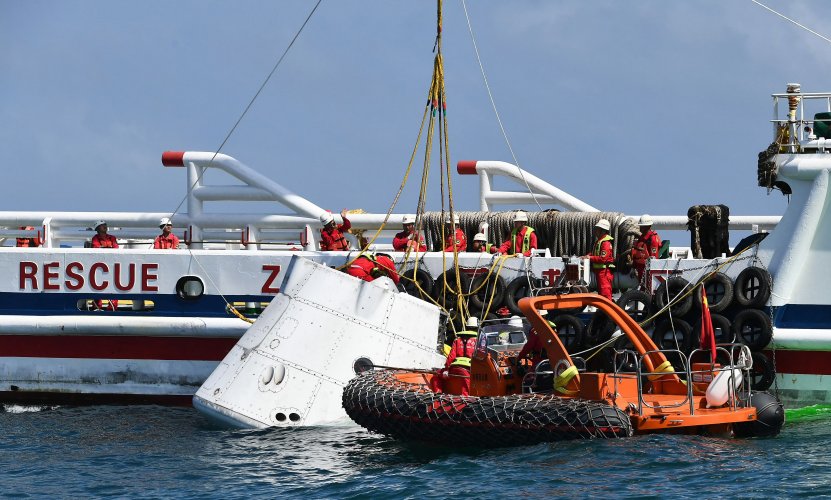
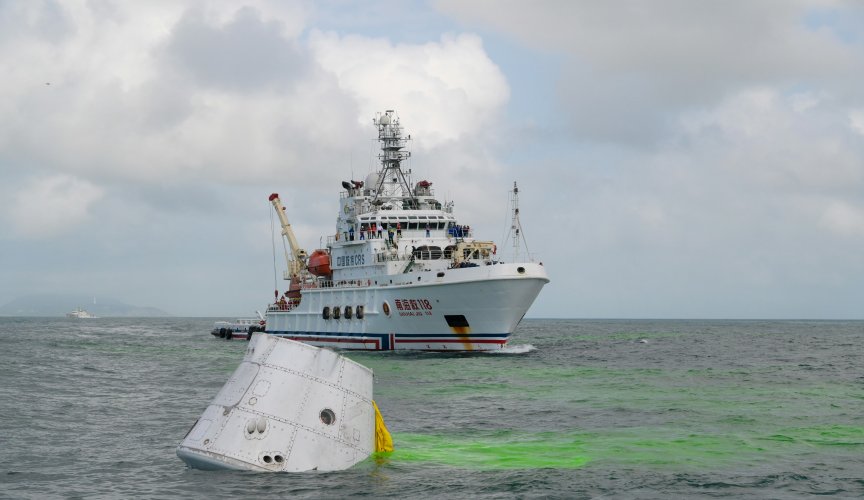
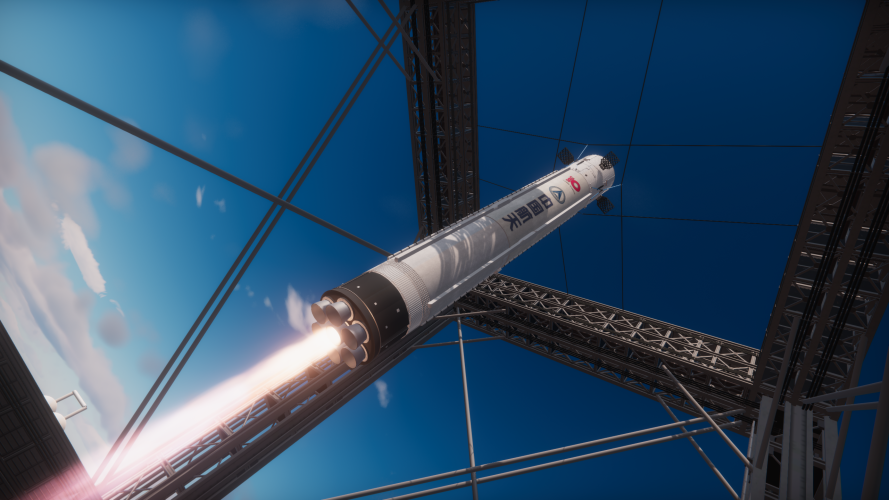
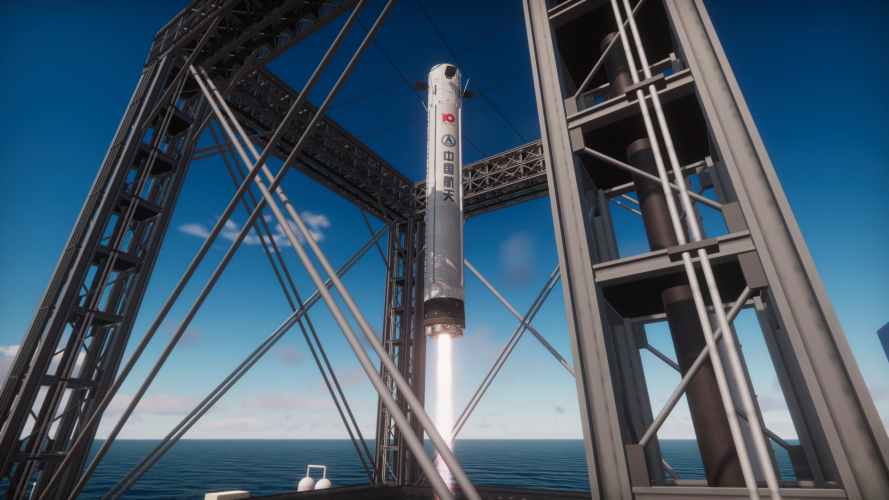
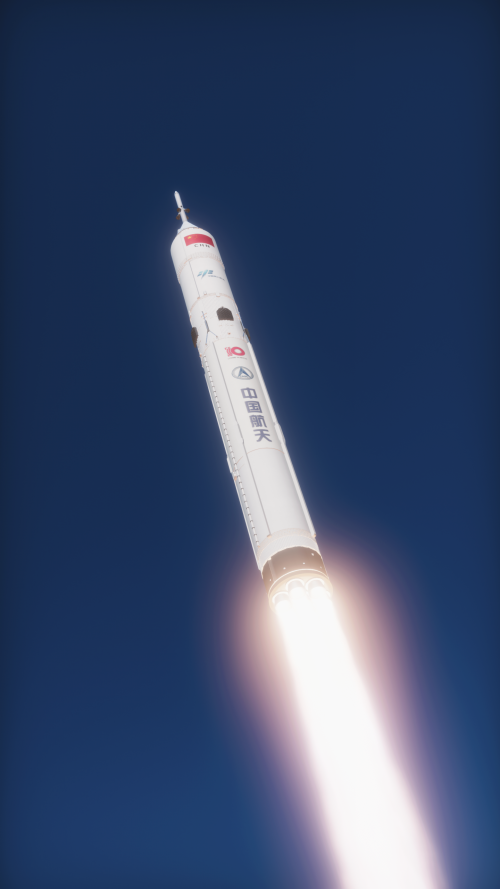
At 11:00 AM on February 11th, at the beginning of midday, under the clear, bright sunlight, the low-altitude demonstration and verification of the Long March 10 carrier rocket system and the maximum dynamic pressure escape flight test of the Mengzhou manned spacecraft system were successfully completed. This marks a crucial step forward in my country's manned lunar exploration program and the development of reusable rockets. China's dream of a manned lunar landing is taking increasingly solid steps towards the celestial galaxy under this clear sky.
The Sixth Academy of China Aerospace Science and Technology Corporation provided the first-stage reusable engine and the return capsule propulsion system for this test, and successfully completed the fuel loading and support work for the rocket body, contributing to my country's first successful vertical takeoff and landing recovery mission.
This test mission was not only a research and development flight test for the Long March 10 series manned carrier rocket, but also the debut of the 130-ton-class liquid oxygen-kerosene staged combustion cycle engine. This engine became my country's first rocket engine to complete the full mission profile and successfully achieve vertical landing and recovery. The Sixth Academy, with its robust power, is providing a solid foundation and steady escort for China's manned lunar landing journey.
Delivering a Solid "Answer Sheet" in an "Open-Air Examination"
To ensure a perfect engine flight, every step must be flawless.
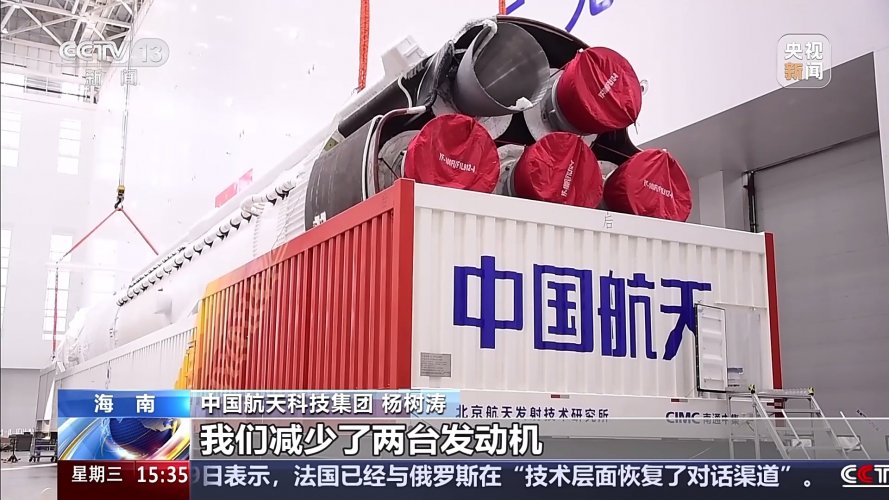
The rocket used in this test mission employed a single-stage core stage configuration. Five 130-ton-class liquid oxygen-kerosene staged combustion cycle reusable engines from the Sixth Academy had already successfully completed two tethered ignition tests, demonstrating excellent performance and stability. This was their third use, successfully completing the entire ascent phase before undergoing a second vacuum ignition and a second high dynamic pressure ignition. Through a wide range of thrust variations, all aspects of the mission profile were successfully completed, ensuring a precise, stable, and controlled splashdown of the rocket in the designated sea area. This marks a crucial leap for the first stage of the Long March 10 series carrier rocket, transitioning from "static ignition" to "reusable recovery."
[Image caption: At the outset of the development of the 130-ton-class reusable liquid oxygen-kerosene staged combustion cycle engine, the team completed the entire process from design to demonstration and verification in just one year. On November 26, 2022, the engine successfully completed its first two-stage ignition test.] In the short span of three years that followed, this engine completed hundreds of ignitions and tens of thousands of seconds of testing, achieving the integration of generalization, integration, and digital intelligence technologies for this series of engines. With its short development cycle, IPT collaborative design, and the application of 3D printing technology, the Sixth Academy has continuously pioneered new fields in liquid propulsion with its performance-leading "national heavyweights."
As the main propulsion system for my country's reusable launch vehicles, the 130-ton-class reusable engine features high comprehensive performance, strong expandability, and high reliability. The Sixth Academy's research and development team overcame several core key technologies, including multiple ignitions, wide-range inlet pressure start-up, and large-range thrust variation; they also broke through difficulties such as rapid and simple maintenance and condition inspection and evaluation. Through in-depth analysis of mechanisms, continuous structural optimization, and thorough experimental verification, they comprehensively strengthened the management of the engine's weak points, significantly improving the engine's inherent reliability.
On August 15, 2025, the Long March 10 rocket team completed its first tethered ignition test at the Wenchang Space Launch Site in Hainan. The Long March 10 series tethered ignition test was the largest full-system test in my country in terms of thrust, reaching nearly 1,000 tons. Facing multiple challenges including a "new rocket, new team, new environment, and new mode," the research and development team successfully reduced the engine's after-processing cycle by 50% while ensuring safe operation. This is of great significance for the application of reusable liquid oxygen-kerosene engines in my country.
During the tethered ignition test, the research and development team encountered multiple challenges. Besides the high temperature and humidity and torrential rain during the typhoon season in Wenchang, Hainan, team members also had to overcome unfavorable factors such as the simple after-processing platform and the limited operating space after entering the cabin. Faced with these adverse conditions, the research and development team formulated detailed work plans and emergency plans, and accelerated the after-processing work through scientific scheduling, ultimately allowing the engine to deliver a solid "answer" in the "open-air test." To ensure the engine's perfect flight, every step must be flawless.
In addition, the test team overcame the influence of the field environment, completed the field handling of the product after tethered ignition, identified risks for this test, and worked closely with the overall team to complete on-site operations such as nozzle protection and heat insulation coating.
Previously, the Sixth Academy also undertook and successfully completed the first, second, and third stage propulsion system tests of the Long March 10 series rockets, as well as the propulsion system and liquid oxygen/liquid nitrogen refueling system support for the tethered ignition test, providing crucial support for the reliable launch of the rockets.
Building a "Lifeline" for Astronauts with "Perfectionism"
At noon in February, in Wenchang, Hainan, the sunlight suddenly became intense. The sticky heat, carrying the salty smell of the sea breeze, offered no relief from the heat. This was Zhao Pengcheng, a post-00s engineer from the Sixth Academy's test team, spending his 79th day in Wenchang.
Images show Zhao Pengcheng and his teammates meticulously reviewed and repeatedly verified every step of the pre-launch process, from assembly and product confirmation to data interpretation and report writing. They precisely analyzed the product status against flight requirements and optimized the launch site testing procedures, all in pursuit of a "perfect process and a satisfactory result."
Images show that although the delivered product had already passed rigorous testing and the development team was confident in the system's performance, at the launch site, no deviation was overlooked. These young aerospace professionals deeply understood the meaning of "striving for excellence."
Since entering the launch site in November 2025, the test team has successfully completed electrical performance testing, integrated testing, propellant loading, and gas cylinder filling of the propulsion subsystem. They have also continuously monitored and ensured propellant concentration after loading.
Images show that the Mengzhou spacecraft, my country's newly developed next-generation reusable manned spacecraft, successfully completed its first critical test—the maximum dynamic pressure escape flight test—during this test.
Images show that the Mengzhou spacecraft's return capsule propulsion system also successfully completed its first major test. Unlike the Shenzhou spacecraft's escape and rescue mode, the Mengzhou spacecraft's escape function is handled entirely by the spacecraft system, which is fully responsible for both escape and rescue missions. During the test, the Mengzhou spacecraft's return capsule propulsion subsystem functioned normally, successfully completing the attitude control mission. The success of this test verified the reliability of the 400N engine's room-temperature start-up under emergency escape conditions and the rationality of the propulsion system's in-flight purging procedure during recovery, fully demonstrating the reliability of the Mengzhou spacecraft's escape system and adding another layer of protection for astronauts' lives.
Furthermore, the Sixth Academy provided HAN-based green single-component propellant for the Mengzhou manned spacecraft's return capsule attitude control propulsion system. This attitude control propulsion system, currently the most powerful HAN-based propulsion system in international engineering applications, boasts internationally leading technology. The test team also undertook the construction and commissioning of the gas supply system in the technical area and provided pre-launch testing facilities for products such as the escape tower.
A Battle of ±1℃: Ensuring Reliable Fuel for the Rocket
Besides the propulsion system products, the Sixth Academy also undertook the design, installation, and commissioning of the kerosene storage area refueling system for this mission, providing self-developed coal-based aerospace kerosene and completing refueling support work, ensuring reliable fuel for the rocket.
The real test arrived on the eve of the mission. On the afternoon of February 10th, kerosene temperature adjustment was initiated. Everyone carried a heavy responsibility. Team members worked through the night, their eyes glued to the monitoring screens, intently watching every fluctuating parameter, adjusting the heat flow of kerosene and liquid nitrogen, precisely controlling the temperature until the early morning of the 11th, when the refueling was successfully completed. However, the mission was not over. Without a moment's rest, everyone quickly switched gears, transforming into a rescue team, continuing to stand guard at their posts, ensuring the rocket's safe flight throughout.
Image
▲ On November 26, 2022, the first 130-ton reusable liquid oxygen/kerosene staged combustion cycle engine successfully completed two start-up tests.
"The on-site conditions for this mission placed extremely stringent requirements on the kerosene temperature, needing to be controlled with an accuracy of ±1℃," said Li Luhao, a member of the test team, with a firm tone. "We must ensure the mission's absolute success." Achieving precise temperature control in a temporary storage area composed of multiple tank trucks was a significant technical challenge.
Image
The test team innovatively proposed a "non-pressurized tank nitrogen priming structure" scheme. Through repeated simulations and experiments, they overcame key technologies such as kerosene temperature stratification control and pump cavitation prevention, ultimately achieving precise control of kerosene temperature rise under tropical climate conditions. This coal-based aerospace kerosene has undergone multiple flight tests with my country's new generation of high-thrust liquid oxygen/kerosene engines, and its mature reliability instilled "steady" confidence in this launch mission.
From the official launch of the manned lunar exploration program in 2023, to the full-scale entry of the Mengzhou spacecraft into the prototype development stage in 2024, to the completion of the comprehensive verification test of the lunar lander's landing and takeoff in 2025, and now to this breakthrough test, each success and achievement represents a solid and steady technological breakthrough and record-breaking achievement. These successes have also collectively built confidence and strength to achieve the goal of the manned lunar landing mission on schedule.
The Sixth Academy will adhere to the development philosophy of "user first, power first," and implement the research and development policy of "exploring the limits of technology, rapid iteration of R&D, and ultimate product improvement." It will accelerate the development of two major series of reusable engines: liquid oxygen/kerosene and liquid oxygen/methane. This will strongly support the development of reusable space launch vehicles in my country, comprehensively enhance my country's large-scale, low-cost space access capabilities, and propel China's aerospace industry to take solid steps into deep space.



 ️️
️️