- Joined
- 28 January 2008
- Messages
- 1,646
- Reaction score
- 4,213
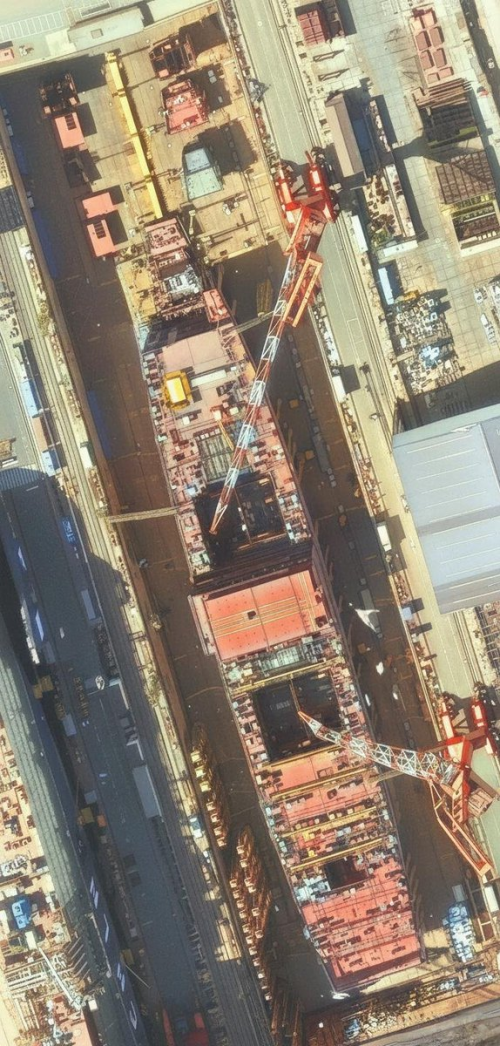
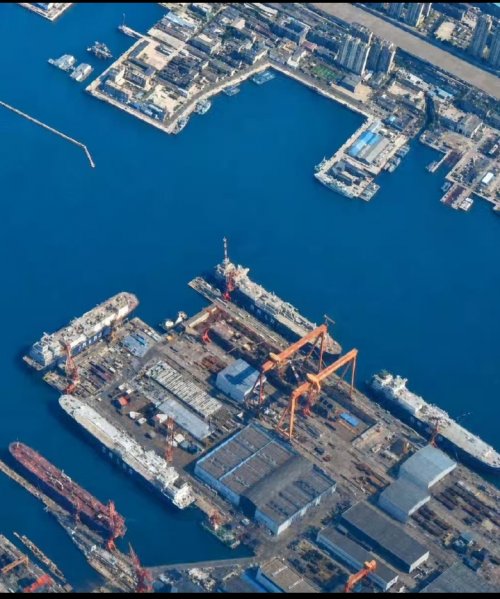
Looks like a nuke.Latest sat image of 004.
View attachment 800937

Looks like a nuke.Latest sat image of 004.
View attachment 800937

That has been clear for a couple months nowLooks like a nuke.
Looks like a nuke.

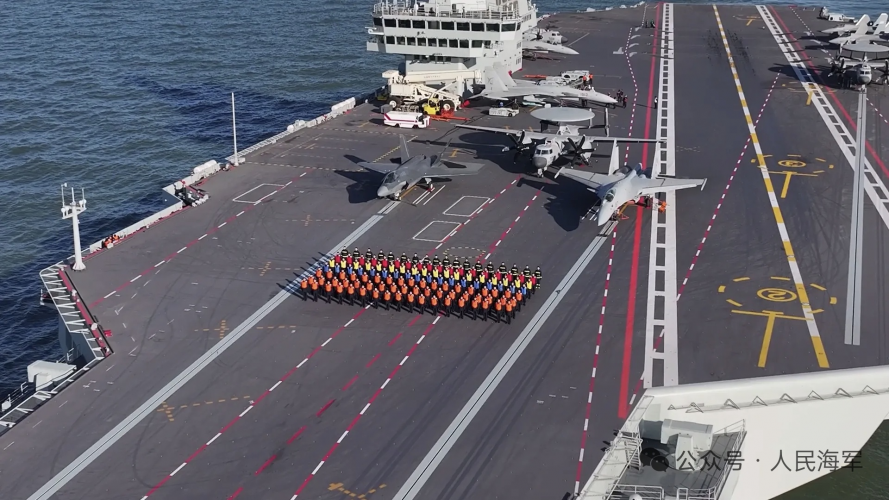
In the fall of 2025, China commissioned its first indigenously-designed and built aircraft carrier, Fujian, named after a Chinese province. The commissioning ceremony was photographed from overhead by Western commercial reconnaissance satellites, but of course China proudly released their own photographs of the ceremony. The conventionally powered aircraft carrier is large and impressive. Although not quite as big as the US Navy’s Nimitz-class or Ford-class carriers, Fujian sports modern equipment, such as electromagnetic catapults and arresting gear.
But even as Fujian was formally entering service after an extended period of sea trials, another large carrier was taking shape in China. It too has been photographed by commercial reconnaissance satellites, and Western amateur analysts have been keeping tabs on the progress, trying to assess its size and capabilities. They soon saw indications that this ship, unlike its predecessors, will be nuclear-powered. Satellites are a primary source of information on China’s latest naval developments.
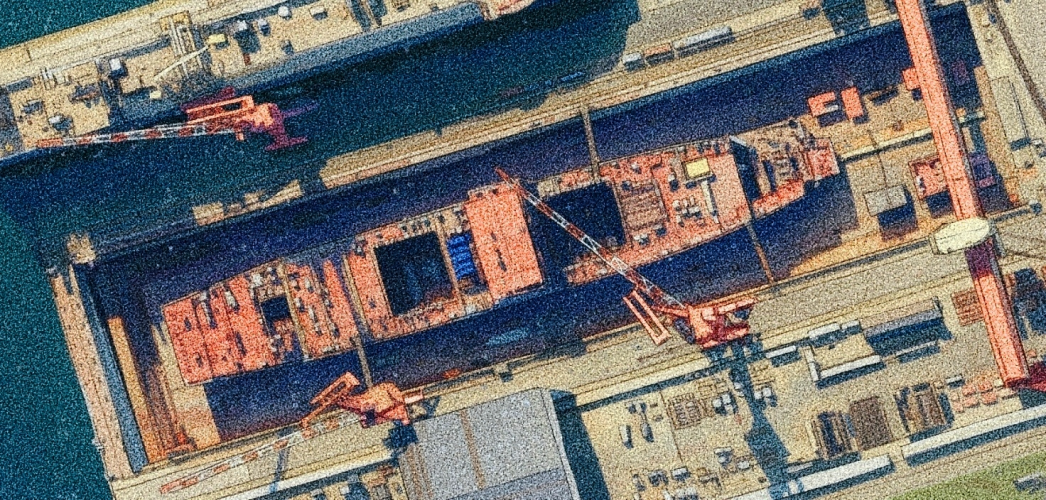
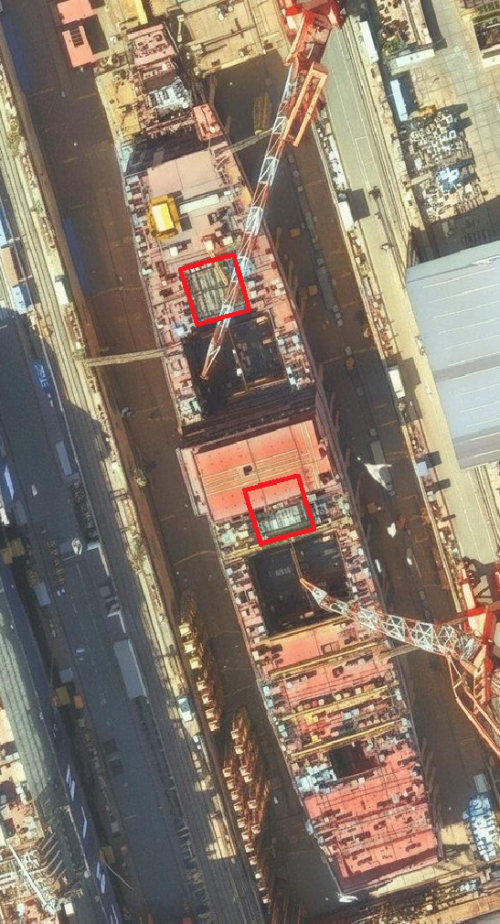
Where in that photograph would the ship's two nuclear-reactors be located?Latest sat image of 004.
View attachment 801378
Page 24 of this thread touched on this with comparison photos from US carriers. If I understood correctly the reactors and associated equipment will be placed in the two rectangular sections.Where in that photograph would the ship's two nuclear-reactors be located?
If I understood correctly the reactors and associated equipment will be placed in the two rectangular sections.
If it's anything like the Ford-Class, then yes:Rectangular sections as in those big rectangular holes in the above photograph?
The actual reactor vessel containment boxes should be in the positions highlighted in red, the 2nd reactor is already partially covered by the hangar section.If it's anything like the Ford-Class, then yes:
Thanks for clarifyingThe actual reactor vessel containment boxes should be in the positions highlighted in red, the 2nd reactor is already partially covered by the hangar section.

Things are coming along rather fast for 004 Deino.

It's not, 004 is the odd one out. It uses straight wall and a similar hullform as US carriers unlike 003 which still had a hull based on the original Kuznetsov. So it's actually the first completely cleansheet Chinese carrier.Well, it is a modified 003 design.
It's not, 004 is the odd one out. It uses straight wall and a similar hullform as US carriers unlike 003 which still had a hull based on the original Kuznetsov. So it's actually the first completely cleansheet Chinese carrier.
It's not fully, hull is still influenced by Kuznetsov with similar but upgraded propulsion arrangement as 002.I was under the impression that 003 was the first clean-sheet design.
Surprised at that Tomboy, the Type 003 still being influenced by the Kuznetsov.
Most likely Type 004So when will we start to see an all Chinese carrier that is one without being influenced by the Russians?

Except you need 400hz AC for the radars.【实现弹弹弹自由!福建舰“一马当先”的底气何在?】 https://www.bilibili.com/video/BV1T...eb&vd_source=2425f76ab11741b8a952b432ea15d3ce
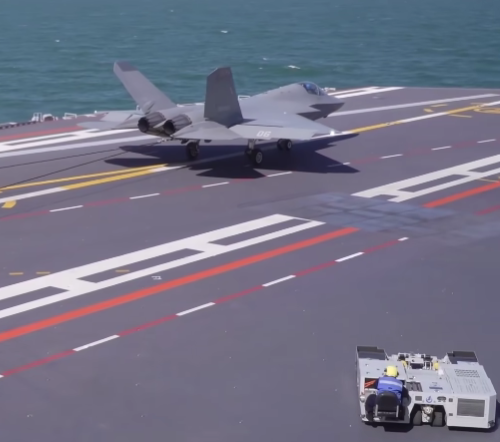
The Fujian ship uses a medium-voltage DC integrated power system and energy storage technology, which is really efficient at converting energy. This system can directly power the electromagnetic catapult, making the structure simpler and less prone to errors. On top of that, using supercapacitors solves the challenge of pulsed power supply. The supercapacitor energy storage tech on the Fujian ship charges faster and can handle pulses on its own, so it doesn’t put a strain on the main engines.
That’s why the Fujian ship can go with an electromagnetic catapult.
It is possible to deliver medium-voltage DC power to the electrical ports and then convert it into the required AC power using power semiconductors for inversion—this is not a problem. Overall, thanks to an integrated power system, Chinese warships do not face the same power generation issues as U.S. Navy ships.Except you need 400hz AC for the radars.
I admit I'm more used to motor-generator sets than solid state inverters, but those would probably work just as well.It is possible to deliver medium-voltage DC power to the electrical ports and then convert it into the required AC power using power semiconductors for inversion—this is not a problem. Overall, thanks to an integrated power system, Chinese warships do not face the same power generation issues as U.S. Navy ships.
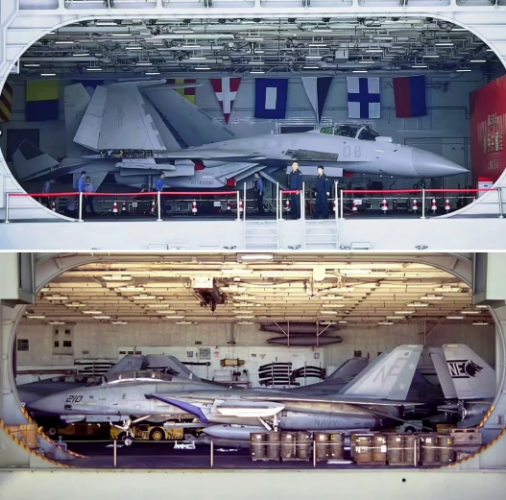
The J-15 is over 10 feet longer than the Tomcat.Is a Flanker really that much bigger than a Tomcat, or is the Kuznetzov/Type 003 hangar a good bit shorter than a Nimitz-class?

【与人民海军一起,向大洋!一定要去看彩蛋!-哔哩哔哩】 https://b23.tv/Shtqs3u
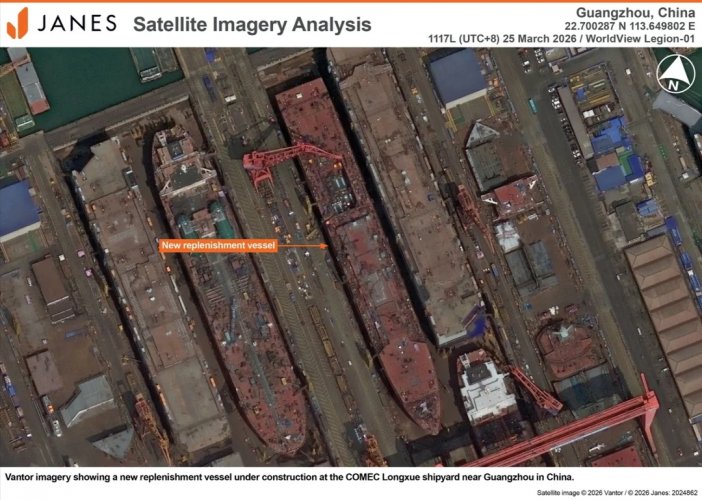
It can be said that this is the official and implicit announcement that aircraft Carrier No. 19 is a nuclear-powered one. It is also said that a larger supply ship is under construction.
I doubt it, the initial criticality and crew certification will likely take extra time.Recent pictures of CVN-19; if things move quickly enough, it might be launched by the end of next year? To be honest, I haven’t heard of any follow-up construction plans for the Type 003 recently.
In 13 years?I think it would be a good goal for China to maintain 12-15 aircraft carriers by 2049. As for whether all of them will be nuclear-powered, that depends on whether more Type 003 carriers are built in the future.
Indeed, given that this is China's first CVN, I don't want anything to go wrong with it, but commissioning it around 2030 would be a good timing.I doubt it, the initial criticality and crew certification will likely take extra time.
There are 23 years, which is plenty of time, and judging from the annual increase in military spending, it is quite reasonable. Also, I don't think China will build too many aircraft carriers in the short term; they will probably gradually and steadily increase to around 13 carriers over these 23 years.In 13 years?
No, I think that they'll slow down a little, to try to get more experienced crew rotated off their existing carriers to give a nice competent cadre of senior enlisted and officers.