Those programs may or may not have a relationship to Phantom Works and NGAD. KC46 is completely unrelated. Neither of those programs speak directly to the work boeing has 'demonstrated' on the actual NGAD and related programs for the DOD (AF and Navy). Speaking specifically to the program and everything that fed into it. Those are far more likely to have had an influence on the decision than programs listed above.
We're talking about two different things. I'm not concerned at all that Boeing managed to one-up NG and LM (everybody was surprised when they were the winners of ATF too). My concern is production. I have little faith in Boeing's ability to deliver, and all those programs demonstrate that that's where they struggle. (Well, one of the areas.)
 
shifting the responsibility of drilling holes and interfaces from the guys on the floor to the supplier
....

- FSDA improves assembly touch labor hours by at least 60-80%.
- Hole size/location has 98-99% first time quality.
So the alternatives are either:
Supplier places part in mounting/jig, robot drills holes according to Catia.
Or:
Supplier sends part to Boeing, Boeing puts part in mounting/jig, robot drills holds according to Catia.

I'm really not seeing how the supplier doing it gives greater accuracy than Boeing can manage for the same process. OTOH it does increase Boeing's Revenue Per Employee by shifting employee numbers over to the supply chain, and if your management bonus is dependent on improving RPE ....
 
I'll point out that Boeing Military (old McD) has proven to be more reliable than Boeing Commercial (new McD). F-15 and F/A-18 have been fairly successful and relatively problem free. Id put Boeing Military above LM right now but still below NG.
 
So the alternatives are either:
Supplier places part in mounting/jig, robot drills holes according to Catia.
Or:
Supplier sends part to Boeing, Boeing puts part in mounting/jig, robot drills holds according to Catia.

I'm really not seeing how the supplier doing it gives greater accuracy than Boeing can manage for the same process. OTOH it does increase Boeing's Revenue Per Employee by shifting employee numbers over to the supply chain, and if your management bonus is dependent on improving RPE ....
Hand drilling vs. CNC milling is how it’s so much more accurate.

It puts more on the supplier, but it’s done in the same setup as when it’s being CNC’d, so it’s not an extravagant amount of extra work from a machining perspective.

Regardless of the nuances, NG (and likely LM) now are using this method on newer projects, so it clearly bring a lot of benefits. Boeing has just been doing it for longer and therefore has a better understanding of its benefits.
 
Is this a black program? I was not aware GE or Pratt has been working on derivatives of the F110 or F100.
Trimble confirmed the derivative. Odd. You would think there would be info regarding testing. Trimble reiterated a GE interim engine for the F-47. Leaning toward BAE EW and RTX radar because that what Boeing does with their fighters.
 
We're talking about two different things. I'm not concerned at all that Boeing managed to one-up NG and LM (everybody was surprised when they were the winners of ATF too). My concern is production. I have little faith in Boeing's ability to deliver, and all those programs demonstrate that that's where they struggle. (Well, one of the areas.)
Not necessarily. KC46 is not a Phantom Works program. It is not a purely Boeing defense play either with heavy Boeing commercial involvement obviously. MQ-25 and T-7 challenges have been related to requirements and design and development. Neither program had challenges in rate production. On T-7 it was related to discoveries in design that required fix which was implemented. It was also pioneering digital design tools and other things for Boeing like FSDA. Same for certain aspects of the F-15EX production cut. MQ-25 is only now entering production phase. Boeing has laid a case for the 'producibility' argument by investing upfront to the tune of multiple billions (ahead of an actual contract) to demonstate to the DOD that it can produce and scale.
 
Not necessarily. KC46 is not a Phantom Works program. It is not a purely Boeing defense play either with heavy Boeing commercial involvement obviously. MQ-25 and T-7 challenges have been related to requirements and design and development. Neither program had challenges in rate production. On T-7 it was related to discoveries in design that required fix which was implemented. It was also pioneering digital design tools and other things for Boeing like FSDA. Same for certain aspects of the F-15EX production cut. MQ-25 is only now entering production phase. Boeing has laid a case for the 'producibility' argument by investing upfront to the tune of multiple billions (ahead of an actual contract) to demonstate to the DOD that it can produce and scale.
Does Phantom Works even build production aircraft? Skunk Works helped design the YF-22/X-35 (or did it all) but they don't run the production line, supply lines, etc. Is it different with Boeing/Phantom Works?
 
Does Phantom Works even build production aircraft? Skunk Works helped design the YF-22/X-35 (or did it all) but they don't run the production line, supply lines, etc. Is it different with Boeing/Phantom Works?

My main point was regarding ex MD / St Louis operations. But yes, some of these facilities being put together are Boeing PW IIRC.
 

Attachments

  • 1790811103969.png
    1790811103969.png
    1 MB · Views: 11
So the first flight of the F-47 is 2028 as I understand so will the F/AXX be mid 2030s ?.
 
What is meant by variable cycle technology in this context, if you have any details? I would not think that is a thing you could go halfway on.
Somewhere I've seen a 10 yr old ppt slide by GE showing F110 growth paths, on this site or on the internet. My info is limited but is from someone involved.
 
Someone in this thread stated explicitly that ACE was off the table and that price was not the primary factor. They could not elaborate. I do not know that to be true but I personally found them credible, and I personally wonder if an adaptive engine would have issues with carrier landings that require immediate full power after touchdown. High bypass -> low bypass may introduce a hesitation between moderate and full power.

I wrote my post with that post (and others) very much center of mind. My language carefully specifies initial versions for F-47 and -XX and what I have been lead to believe and wrote in my post isn’t necessarily out of band with what what you’re referencing (as well as the public quote from a NAVAIR officer), if you believe those datapoints were in reference to initial F/A-XXs then and presumably current proposed configuration.

I mean, to be idiotically simple; in ten years, today’s unique advantages of ACEs will be proliferated table stakes for high end fighters in the pacific, so I will simply assume F/A-XX provides the design and space to enable the option of housing three stream engines in the future. But that’s just my totally speculative opinion.
 
I don’t think it’s surprising Boeing won. It might’ve been a case, at least somewhat, of who can get this out the door quickest. Even if the F-47 and F-A/XX are different airframes, there would at least be some commonality in terms of engineering, subsystems and manufacturing, leading to efficiency gains in both time and cost by going with Boeing.
 
NGAP has been described as a family of technologies with component tech that can be readily ported to legacy / existing engines. It likely wont be the whole deal though.

The new engine technologies are broad and many of them can be adapted to existing engines. A number of them are software - like n the 90s when people put custom chips in their car’s engine controller for increased performance.

It’s also important to remember that the Boeing AII-X demonstrator validated supercruise and long range with an existing or derivative (not adaptive cycle) engine.

The Navy has a strong preference for engines it already uses , for logistical and other reasons.
 
It was a 50% call, that's not exactly proof of anything. Even an idiot can be right sometimes.

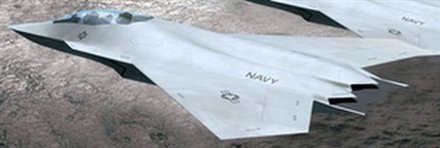
IIRC the “thesis” there was that F/A-XX was a navalized NGAD or vice versa. This isn’t correct. They are not variants of one design but share a common design language, exactly what you would expect if they were both designed by the same company.

It will be interesting to see if NG protests the award. It would not surprise me if the recent requirements changes favored one company’s design.
 
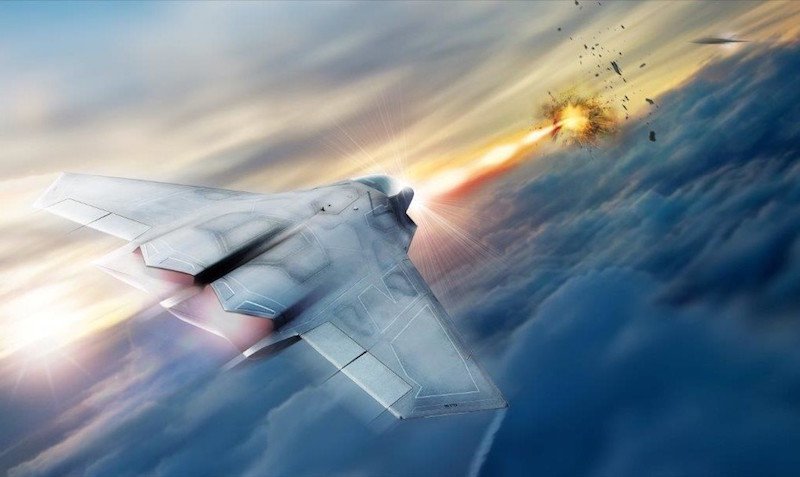
Boeing from 2015:


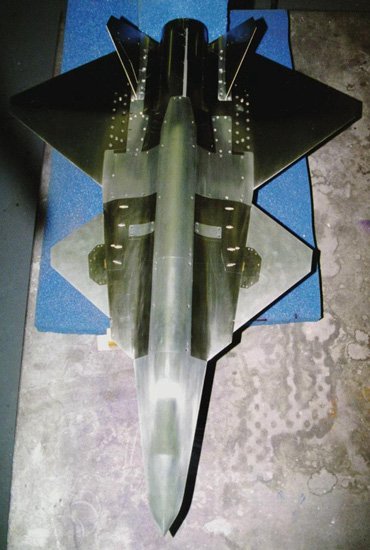
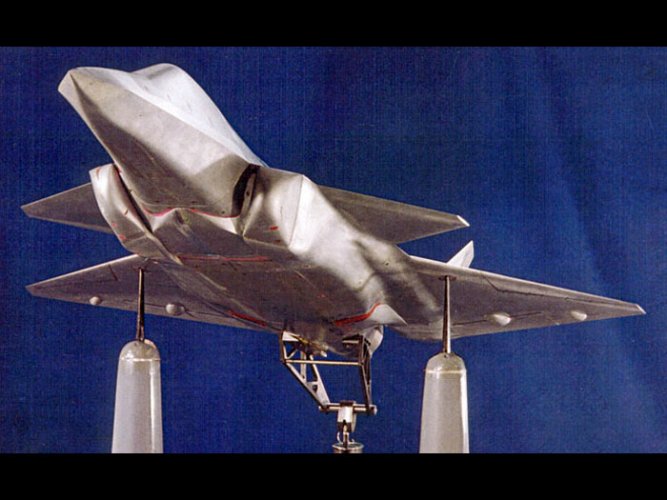
McD from 2002 (JSF obviously)
 

Attachments

  • Boeing_6thgen-concept_May2009b.jpg
    Boeing_6thgen-concept_May2009b.jpg
    14.3 KB · Views: 0
  • 188181_1.jpg
    188181_1.jpg
    68.2 KB · Views: 0
  • MDA_JSF_TOP.jpg
    MDA_JSF_TOP.jpg
    81.9 KB · Views: 0
  • LYLsEcI.jpg
    LYLsEcI.jpg
    76.4 KB · Views: 0
  • y6TG7sU.jpg
    y6TG7sU.jpg
    71.5 KB · Views: 0
I don’t think it’s surprising Boeing won. It might’ve been a case, at least somewhat, of who can get this out the door quickest. Even if the F-47 and F-A/XX are different airframes, there would at least be some commonality in terms of engineering, subsystems and manufacturing, leading to efficiency gains in both time and cost by going with Boeing.

Having the F-18 production wrap up probably frees a lot of resources as well. But at least for the USAF, several posters who tend to be in the know like Quellish indicated the USAF was impressed with the design. While I think these are two different airframes with two different roles, there probably is a lot of common technology and general layout. Production capacity was stated to be a concern for awardFA-XX, though I am not quite sure I believe that excuse.
 
IIRC the “thesis” there was that F/A-XX was a navalized NGAD or vice versa. This isn’t correct. They are not variants of one design but share a common design language, exactly what you would expect if they were both designed by the same company.

It will be interesting to see if NG protests the award. It would not surprise me if the recent requirements changes favored one company’s design.
I doubt NG will protest and if they don't, they have B-21 which is moving along quite well and I assume they have other classified aircraft platforms in development and probably in classified flight testing (same as LM ADP). With Boeing now having F-47 and F/A-XX locked in along with all of there other programs, they are now tapped out, its now NG Advanced Programs and LM ADP time for other needs; Advanced Recon (LM ADP) and Advanced Strike (NG). I may be wrong but in a classified sense, I don't think Advanced Theater Strike is dead as an example, just waiting in the wings as a classified effort.
 

Similar threads

Back
Top Bottom