From old site on Net,
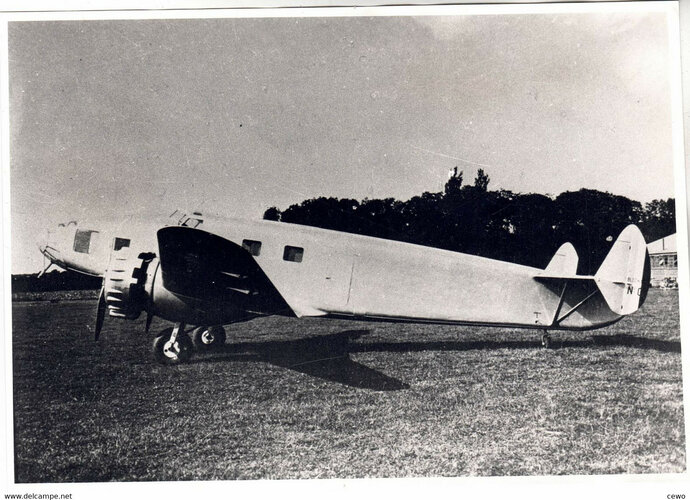
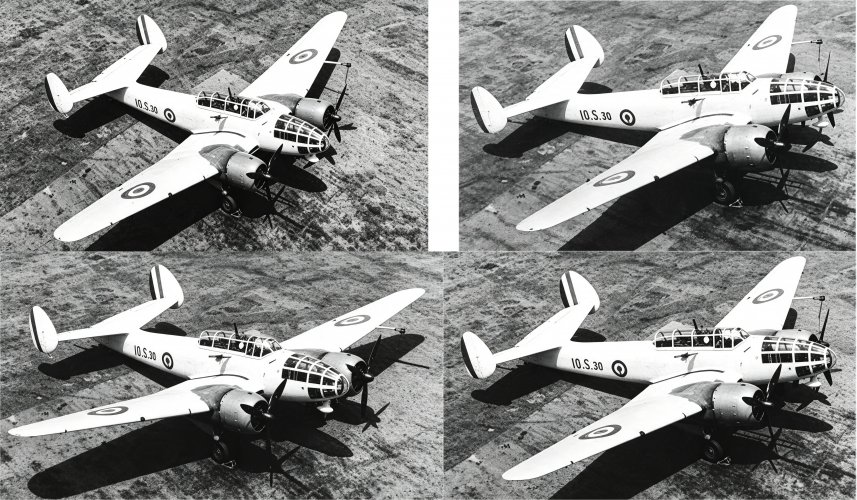
The second project was the MB-135B4 , an aircraft similar in design to the MB-134, but powered by four lower-power Gnôme-Rhône 14M-6/M-7 engines. The M-6 engines were clockwise and mounted on the left wing, while the M-7 engines were counterclockwise and placed on the right wing – this design eliminated the influence of propeller torque. The MB-135 was a cantilever, low-wing monoplane, with an all-metal structure covered with duralumin sheet metal. The twin vertical stabilizers were positioned so that most of their surface area was beneath the horizontal stabilizer. This provided a large, clear field of fire for the upper gunner, who was to operate a single 20 mm cannon in a retractable, rotating gun turret on the fuselage's dorsal surface. This turret was planned for the production version of the bomber, and the prototype was not yet equipped with it.
Construction of the first MB-135-01 prototype (MB-135B4 No. 01) began at the Bloch factory in Courbevoie. At the end of 1938, the aircraft's individual components were transported to the SNCASO factory in Villacoublay, where final assembly took place. On January 12, 1939, SNCASO's chief test pilot, René Le Bail, and co-pilot Jean Lapeyre, flew prototype No. 01. Subsequent flight tests revealed the need for several minor changes to the aircraft's design, particularly in the tail and aileron areas. The aircraft was otherwise highly successful, boasting high performance and good flight characteristics. Prototype refinement took several months in the spring of 1939, and during the summer, the MB-135B4 awaited the Air Force's decision on whether to begin series production.
Unfortunately, World War II broke out on September 1, 1939, with France and England formally joining two days later. Meanwhile, the French aviation industry—disorganized by the nationalization of 1936-37 and grappling with numerous problems—was already struggling to keep up with the growing demand for air force aircraft. Many parts and components for newly built aircraft were in short supply, while the aircraft flying at the front were mostly obsolete. Therefore, the Air Ministry decided to limit the number of types produced and not introduce new aircraft—even highly successful ones—into series production, as the increased demand for modern engines and other equipment could not be met. Consequently, only a single MB-135 remained in production.