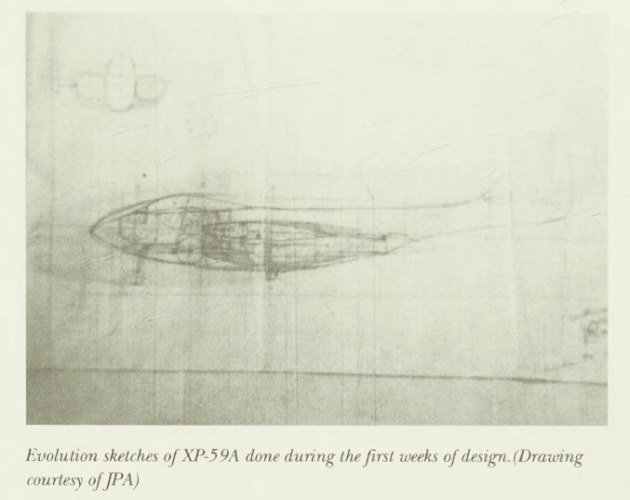
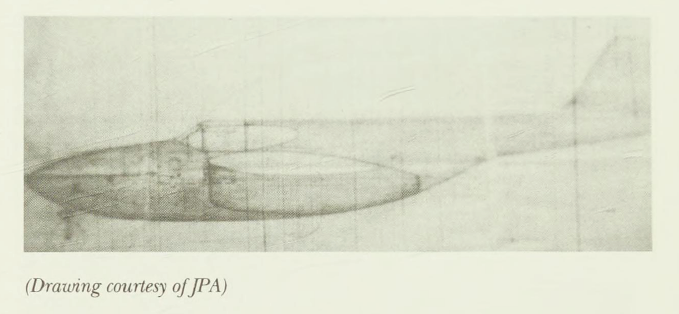
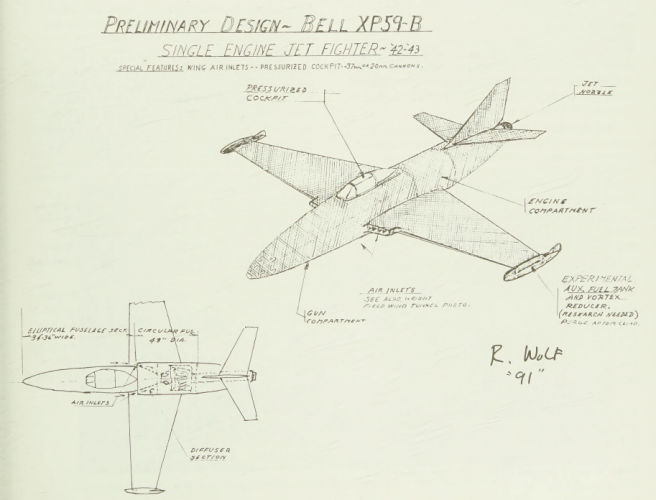
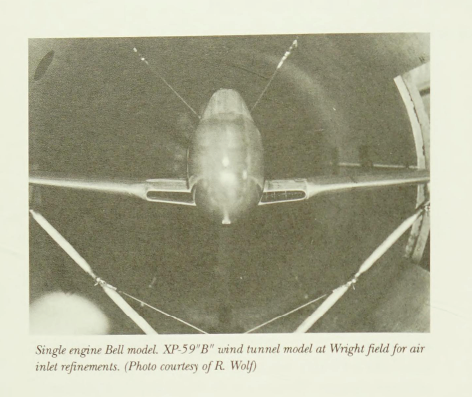
Bell « Airacomet » early concepts and planned variants

Lockon

ACCESS: Confidential
Joined
22 December 2007
Messages
52
Reaction score
8
I have been reading that the US put a prop on the P-59 when they where moving it around during the day so that anyone would think that it was a new prop plane being tested and not a jet.

Ok I need to know about this prop that was on the P-59, was it just a tmiber cut out or was it off some other aircraft like a P-51 etc.

Does anyone have any info,pics or drawings on the prop/P-59 or where I might find this info.

Lockon.
 
It was basically just a cheap cardboard cut-out that would be put on the plane when it was being towed. Up close it probably wouldn't fool anybody, but then again probably only "authorized personnel" were allowed to get up-close.

Of course, I like their solution as to how to disguise this thing when it was up in the air - rather than cover up the fact that it was a jet, they had the pilots wear gorilla suits so that every time someone saw this thing up in the air, they thought they were going crazy and the base shrink would convince them that this plane didn't exist :)
 
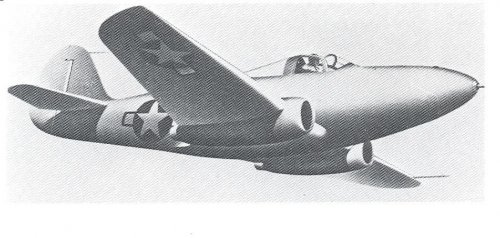
one low quality pic of P 59 with prop is here:

http://www.airbornegrafix.com/HistoricAircraft/EarlyJets/P59XP83.htm

other is here (but back - view :-[ )

http://tanks45.tripod.com/Jets45/Histories/Bell-P-59/XP-59.htm
 
Thanks so far for the links and info.

Just call me Ray are you for real about the gorlla suits? ::)

Thanks AF for the links, I hope someone will be able to post some close up pics of the prop! I what to build a P-59 like this now it looks cool.

Keep the pics coming people.

Lockon
 
Other find - :) http://www.air-and-space.com/Bell%20P-59%20Airacomet.htm
 
Lockon said:
Just call me Ray are you for real about the gorlla suits? ::)

Yup!

More info can be found here, along with info about the propeller you're looking for:

http://www.aviation-history.com/bell/xp59.html

Apparently it was just a wooden cut-out.
 
AFAIK there was an entire episode on the P-59 on discovery channel (wings probably) ... whole videos with the propeller ... the ruse was much talked about on the show....
 
Hi all I have read that there are some good pictures of the timber prop in this book! does anyone have it to see if this is right?.

Lockon.
 

Attachments

  • P-59 Airacomet.jpg
    P-59 Airacomet.jpg
    8.2 KB · Views: 563
Hi,

I sent something like this before;
http://www.secretprojects.co.uk/forum/index.php/topic,4319.0/highlight,p-59.html
 
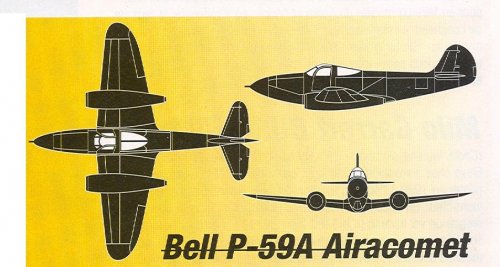
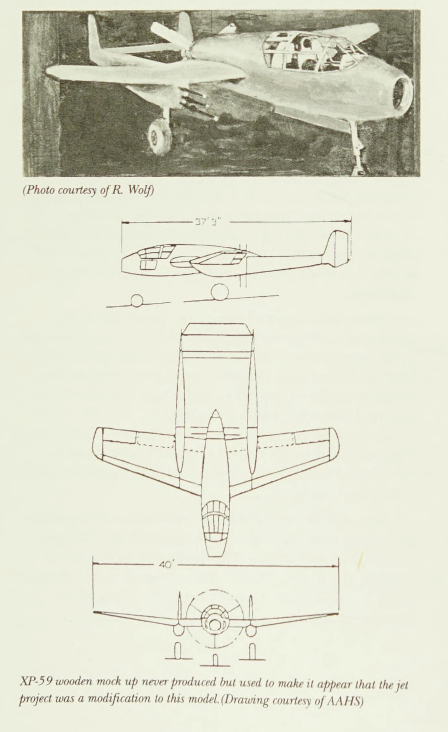
In Pelletier's Bell Aircraft Since 1935 the original XP-59 was piston engine. The designation was reused for the jet engine version XP-59A.

Would this be the 1st configuration of the XP-59A?
 
No, the piston-engine XP-59 was a whole different aircraft. The designation was reused to conceal the existence of a jet project.

Here is what the original XP-59 (or Model 20) was supposed to look like...
 

Attachments

  • xp-59.jpg
    xp-59.jpg
    34.3 KB · Views: 407
Some additional info from
-"Air International/March 1980
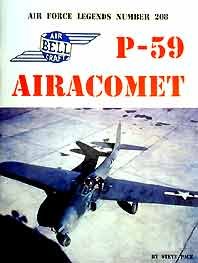
-"Air Force Legends" Number 208 by Steve Pace
 

Attachments

  • Escanear0002.jpg
    Escanear0002.jpg
    206.6 KB · Views: 359
  • Escanear0003.jpg
    Escanear0003.jpg
    84.1 KB · Views: 376
  • Escanear0001.jpg
    Escanear0001.jpg
    61.8 KB · Views: 396
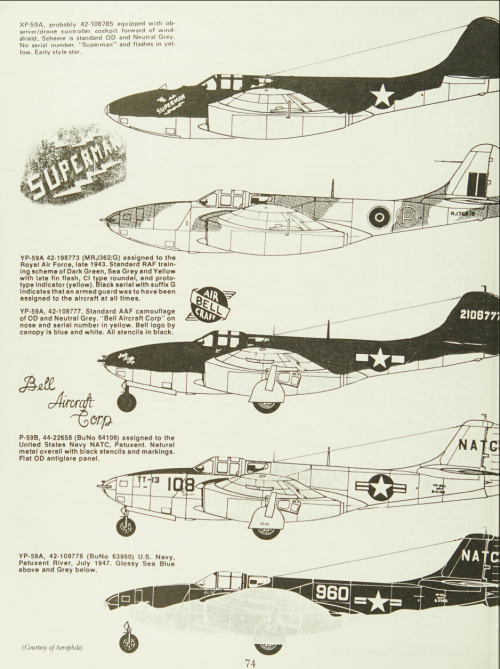
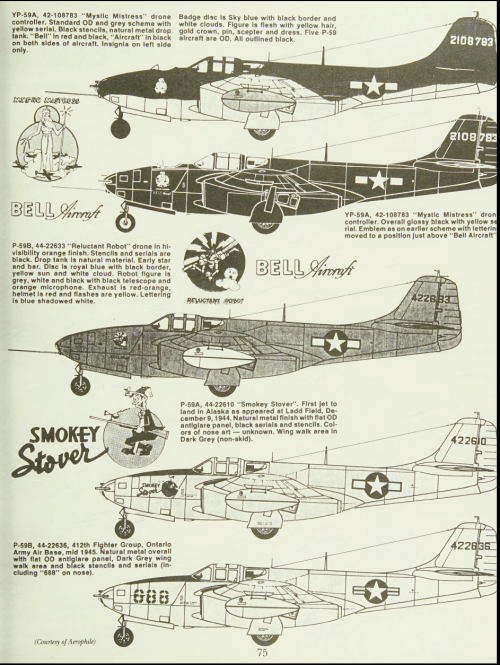
From, The American Fighter The Definitive Guide to American Fighter Aircraft from 1917 to the Present.
 

Attachments

  • 1.png
    1.png
    472.1 KB · Views: 269
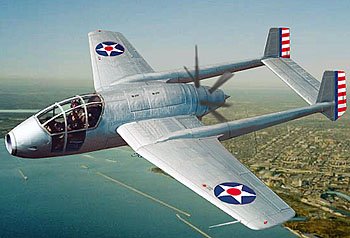
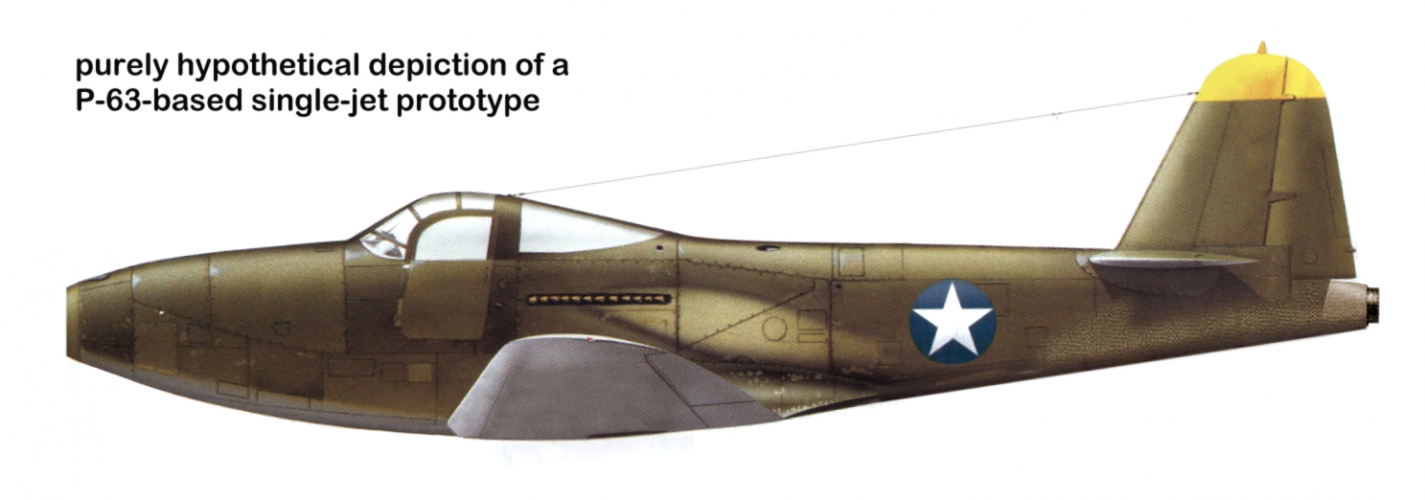
"On one occasion, I was admitted to a locked room where I saw a wooden mockup of a single-engine jet which looked remarkably like a P-63 (the engine-in-the-middle concept died hard at Bell). I do not know whether this was an in-house competition design which lost to the XP-83 or still another follow-on in a competition which lost to the P-80. It never got past the wood mockup stage."

From "Recollections of a Bell Engineer" by Harry F Kinsey in AAHS Journal Winter 1991
 
Purely hypothetical, of course

The fuselage would have to be widened around the cockpit to accommodate the bi-furcated inlet. The P-63 cockpit was built with a very narrow cross section to minimize drag in the original design (which is why the aircraft was designed as a mid-engine aircraft to minimize frontal drag and increase the aircraft's speed). Due to the removal of the door the window frame would also likely be different, possibly similar to a P-51 teardrop canopy (i.e. the mockup had a stated look similar to the P-63. The jet that supposedly preceded the P-59, which had a sliding frame canopy, had a different silhouette, so given the era it was designed the teardrop canopy could have been an option.). This is a great start to a very interesting hypothetical concept. The only suggestions I would make would be to widen the forebody and inlet, remove the Allison V-1710 engine exhaust, and make a more P-51 or P-47 canopy. All in all a great job!
 
Hi,

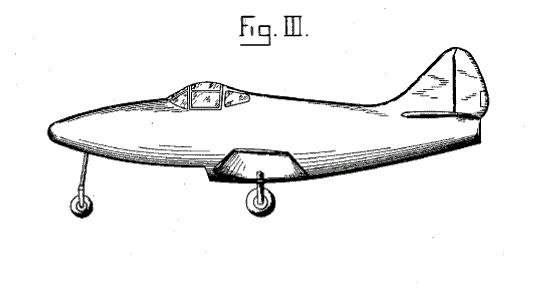
I think this Bell aircraft patent related to XP-59 ?.
 

Attachments

  • 20.jpg
    20.jpg
    14.4 KB · Views: 100
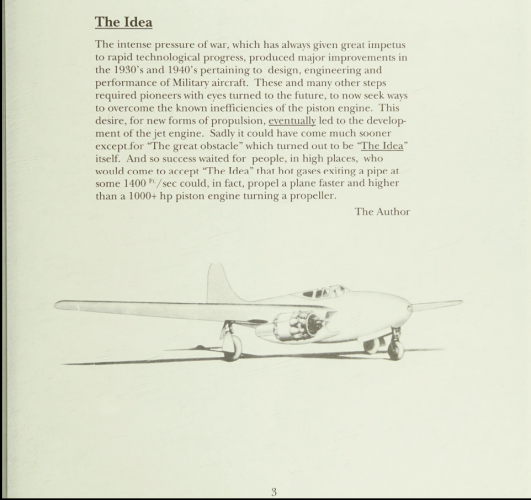
From this book.
 

Attachments

  • 1.png
    1.png
    306.7 KB · Views: 70
  • 2.png
    2.png
    1,002.1 KB · Views: 71
  • 3.png
    3.png
    323.1 KB · Views: 69
  • 4.png
    4.png
    188.4 KB · Views: 82
  • 5.png
    5.png
    452.8 KB · Views: 81
  • 6.png
    6.png
    265.2 KB · Views: 86
  • 7.png
    7.png
    1.3 MB · Views: 72
  • 8.png
    8.png
    1.7 MB · Views: 79
  • 9.png
    9.png
    468.9 KB · Views: 95
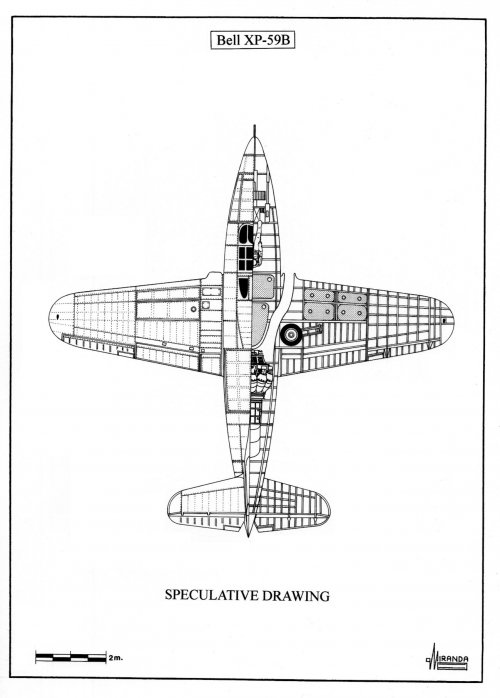
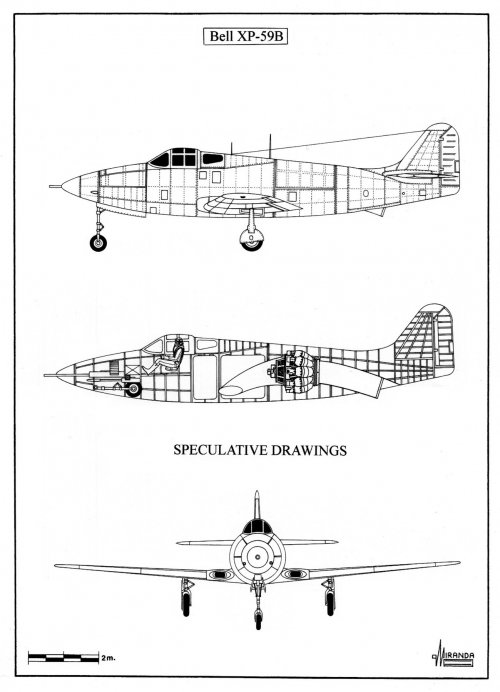
Yet another example of a late war american design with a straight leading edge and moderate taper ratio.
 
Bell XP-59B

​

On August 27, 1939, the German jet prototype Heinkel He 178 V-1 was flown, powered

by one Heinkel-Hirth HeS 3B centrifugal flow turbojet, with 500 kgf static thrust and 3.9 feet of diameter.

Late in 1939, the Heinkel team in Rostock was working on the development of the

HeS 8 centrifugal turbojet, which was expected to be used to propel the He 280 fighters.

With a planned thrust of 700 kgf and a diameter 20 per cent shorter than the HeS 3, the

new turbojet required a great research effort and an extensive test program. Numerous

technical problems had to be solved before starting its large-scale production and the

HeS 8 suffered numerous delays. By March 1941, it only produced 500 kgf static thrust,

550 kgf by early 1942, and 600 kgf in early 1943.

The root cause was the reduction of the diameter, recommended by the aerodynamicists

to minimize the drag produced by the engine nacelles when installed under the wings of the He 280. Trials experience revealed that the most effective way to increase thrust in these turbojets was to also increase their diameter, to improve the performance of the centrifugal compressor.

The British jet prototype Gloster E.28/39 (W4041/G) made its first flight on May 15,

1941, powered by one Power Jets W1 centrifugal flow turbojet, with 390 kgf static

thrust and 3.5 feet in diameter. In March 1942, the Power Jets W1A produced 525 kgf.

In early 1943, the Power Jets W2/500 produced 734 kgf and 770 kgf in August.

By mid-1943 it became clear that the future Bell P-59A fighter would not be able to compete in dogfight and speed with the piston fighters of the time, let alone the new Luftwaffe’s jet and rocket fighters.

In June 1943, the British turbojet de Havilland Halford H.1, with 4.2 feet in diameter, produced 1,225 kgf static thrust. With this power, it was possible to build a single-engined jet fighter, with the centrifugal turbojet installed inside the fuselage.

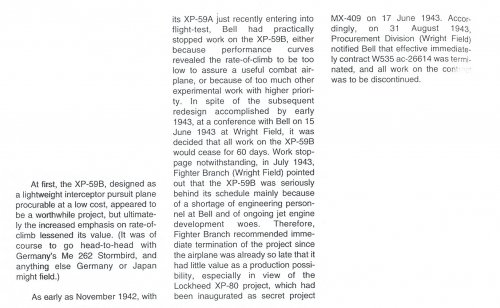
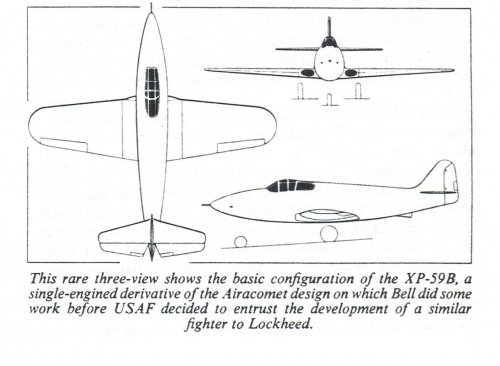
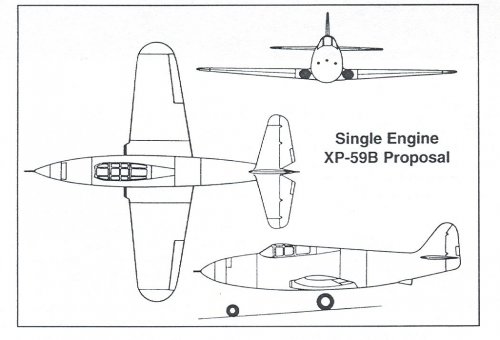
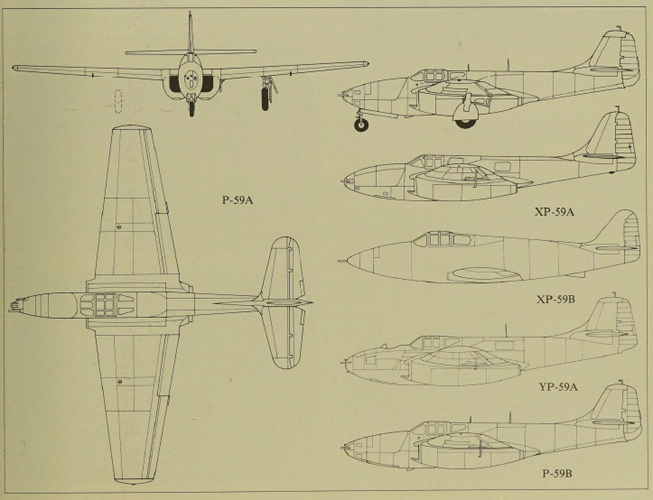
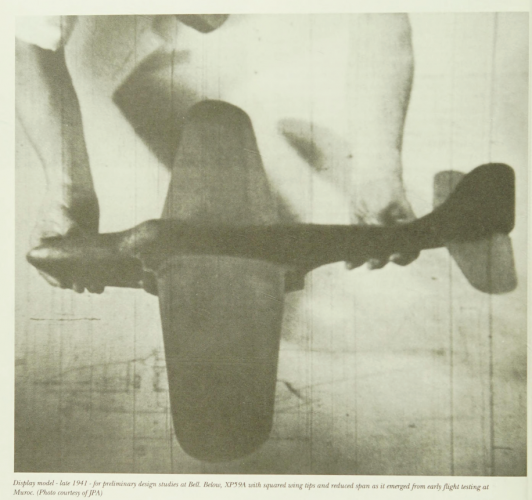
Bell's design team proposed the XP-59B, a single-engined derivative of the YP-59A with the wingspan reduced to 65 percent and the tail surfaces reduced to 93 percent.

The proposed armament for the new light fighter was one nose mounted 37-mm M4 cannon and two 0.5-in machine guns, but the USAAF decided to entrust its development to Lockheed.

 

Attachments

  • Picture2.jpg
    Picture2.jpg
    253.7 KB · Views: 46
  • Picture1.jpg
    Picture1.jpg
    249.7 KB · Views: 47
Back
Top Bottom