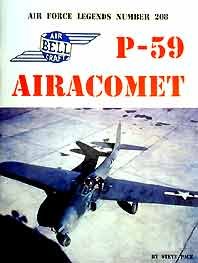
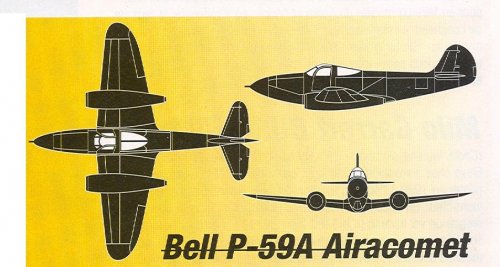
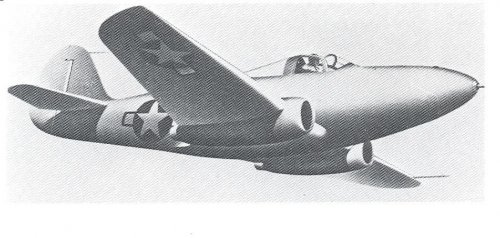
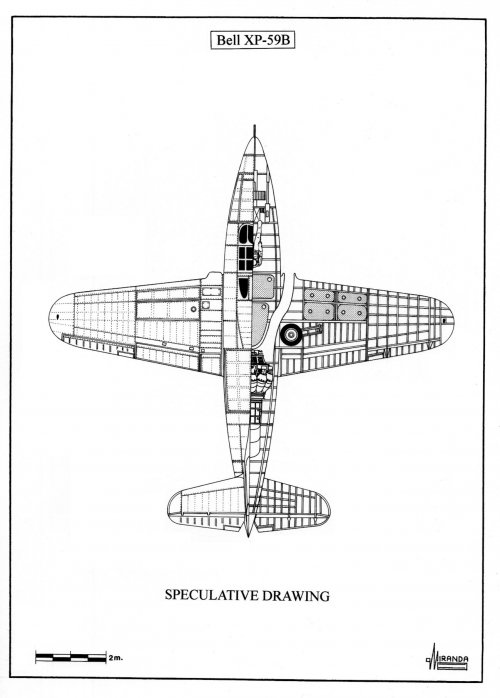
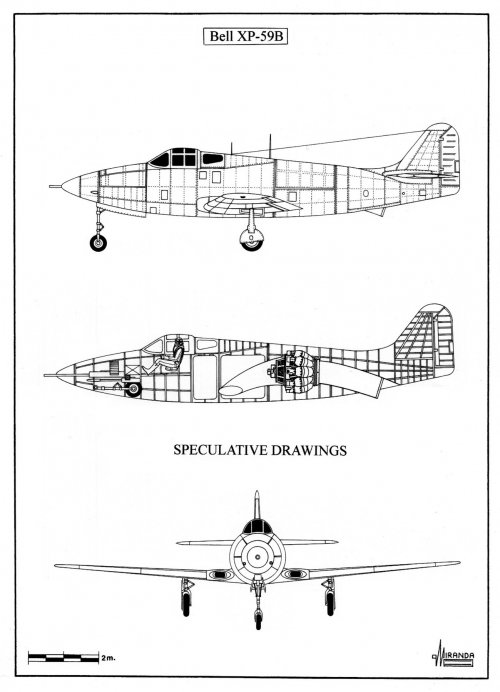
Bell XP-59B
On August 27, 1939, the German jet prototype Heinkel He 178 V-1 was flown, powered
by one Heinkel-Hirth HeS 3B centrifugal flow turbojet, with 500 kgf static thrust and 3.9 feet of diameter.
Late in 1939, the Heinkel team in Rostock was working on the development of the
HeS 8 centrifugal turbojet, which was expected to be used to propel the He 280 fighters.
With a planned thrust of 700 kgf and a diameter 20 per cent shorter than the HeS 3, the
new turbojet required a great research effort and an extensive test program. Numerous
technical problems had to be solved before starting its large-scale production and the
HeS 8 suffered numerous delays. By March 1941, it only produced 500 kgf static thrust,
550 kgf by early 1942, and 600 kgf in early 1943.
The root cause was the reduction of the diameter, recommended by the aerodynamicists
to minimize the drag produced by the engine nacelles when installed under the wings of the He 280. Trials experience revealed that the most effective way to increase thrust in these turbojets was to also increase their diameter, to improve the performance of the centrifugal compressor.
The British jet prototype Gloster E.28/39 (W4041/G) made its first flight on May 15,
1941, powered by one Power Jets W1 centrifugal flow turbojet, with 390 kgf static
thrust and 3.5 feet in diameter. In March 1942, the Power Jets W1A produced 525 kgf.
In early 1943, the Power Jets W2/500 produced 734 kgf and 770 kgf in August.
By mid-1943 it became clear that the future Bell P-59A fighter would not be able to compete in dogfight and speed with the piston fighters of the time, let alone the new
Luftwaffe’s jet and rocket fighters.
In June 1943, the British turbojet de Havilland
Halford H.1, with 4.2 feet in diameter, produced 1,225 kgf static thrust. With this power, it was possible to build a single-engined jet fighter, with the centrifugal turbojet installed inside the fuselage.
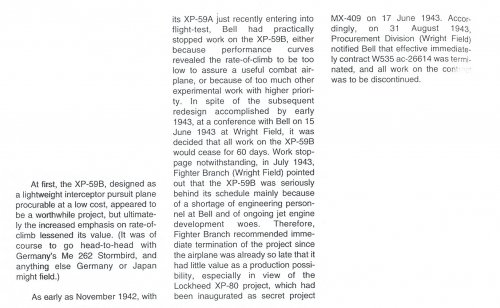
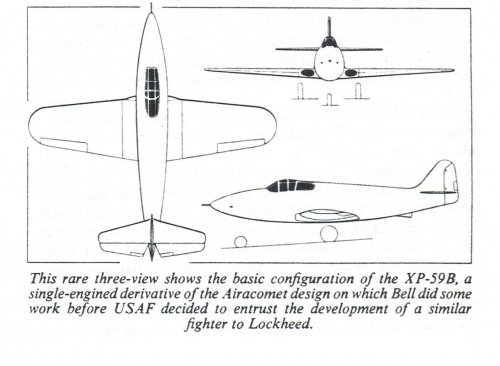
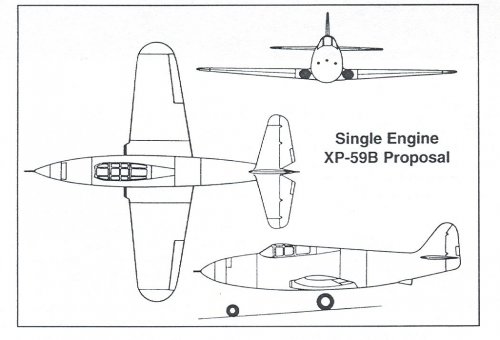
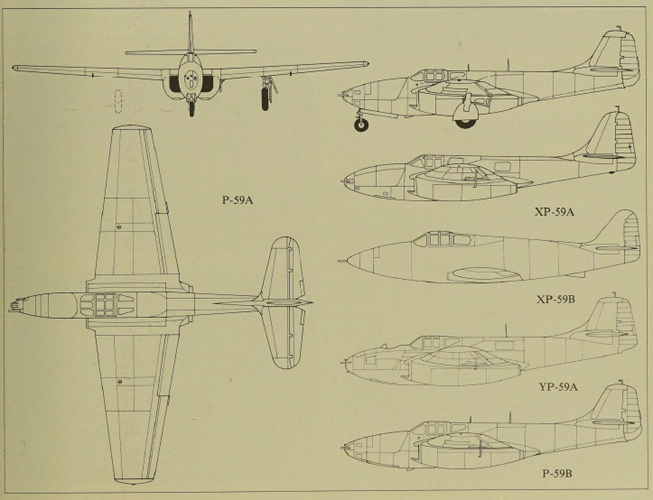
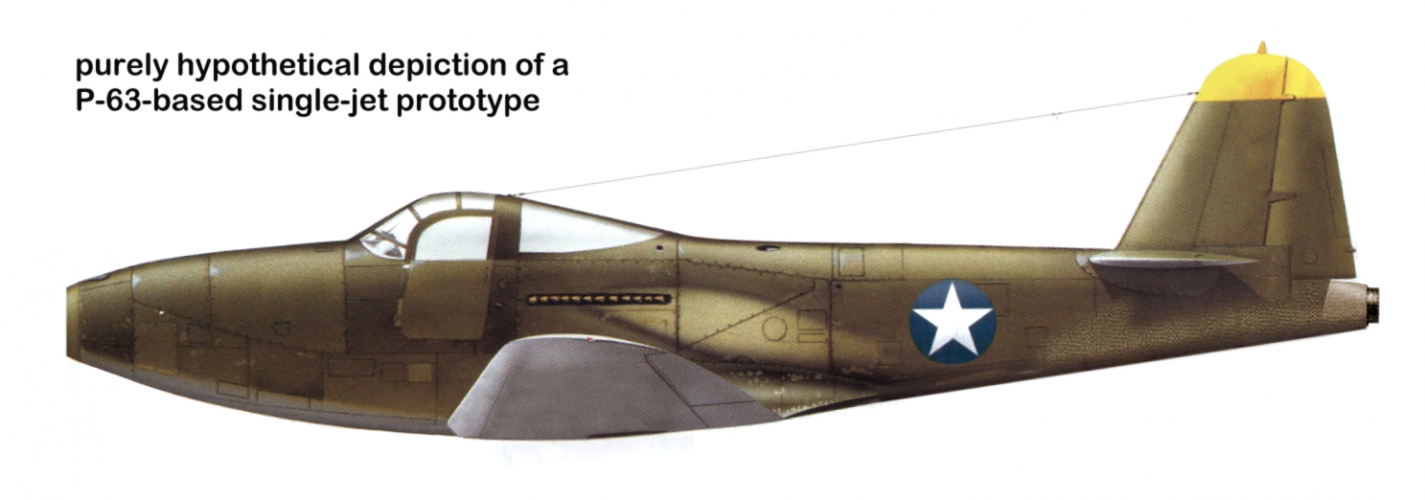
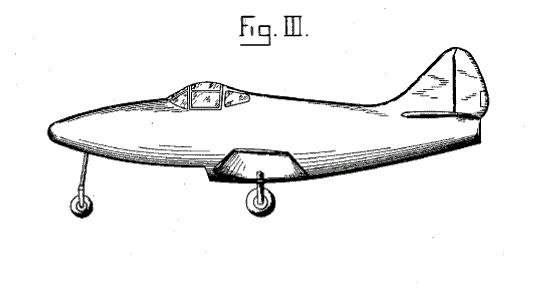
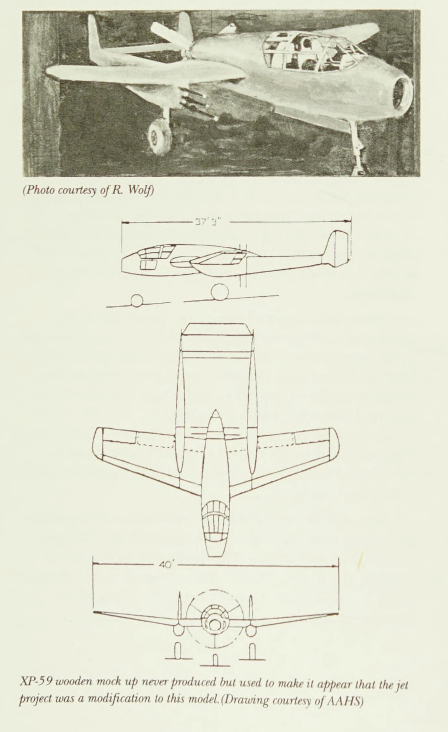
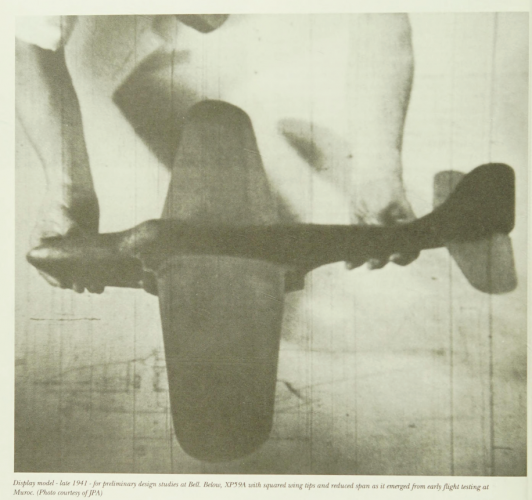
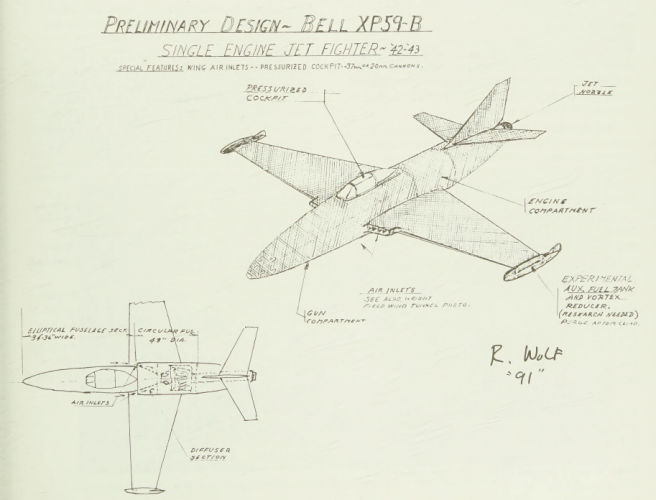
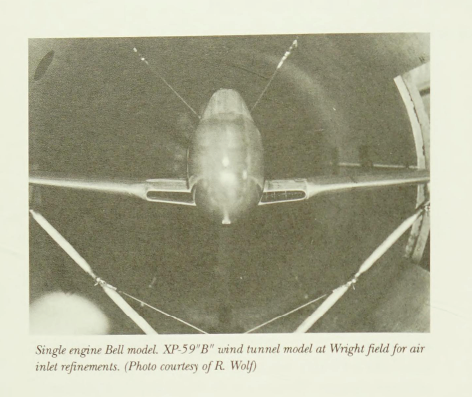
Bell's design team proposed the XP-59B, a single-engined derivative of the YP-59A with the wingspan reduced to 65 percent and the tail surfaces reduced to 93 percent.
The proposed armament for the new light fighter was one nose mounted 37-mm M4 cannon and two 0.5-in machine guns, but the USAAF decided to entrust its development to Lockheed.