Astronomy and Planetary Science Thread

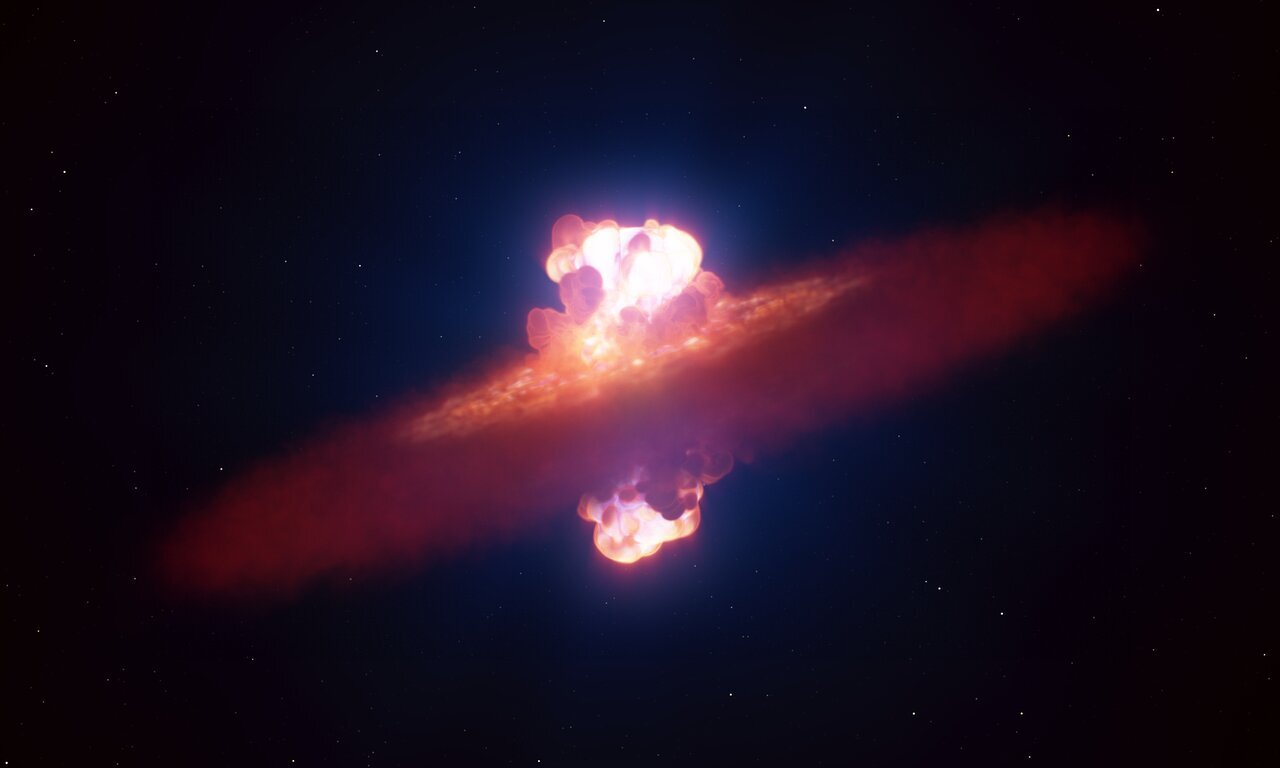
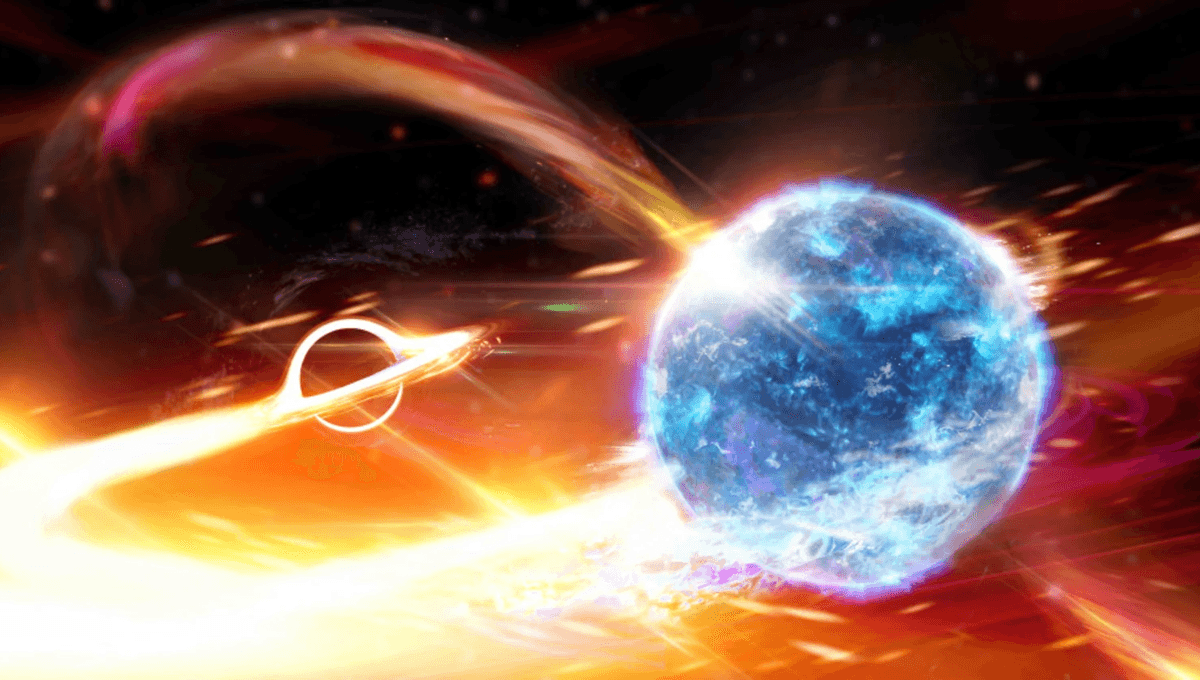
Runaway black hole mergers may have built supermassive black holes

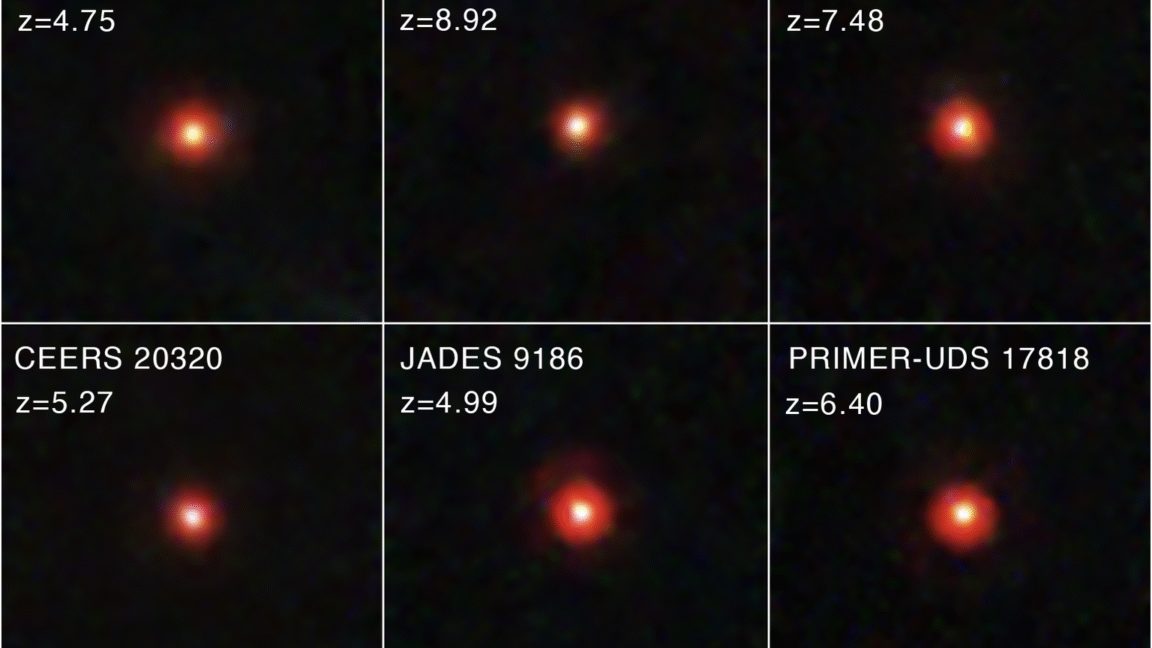
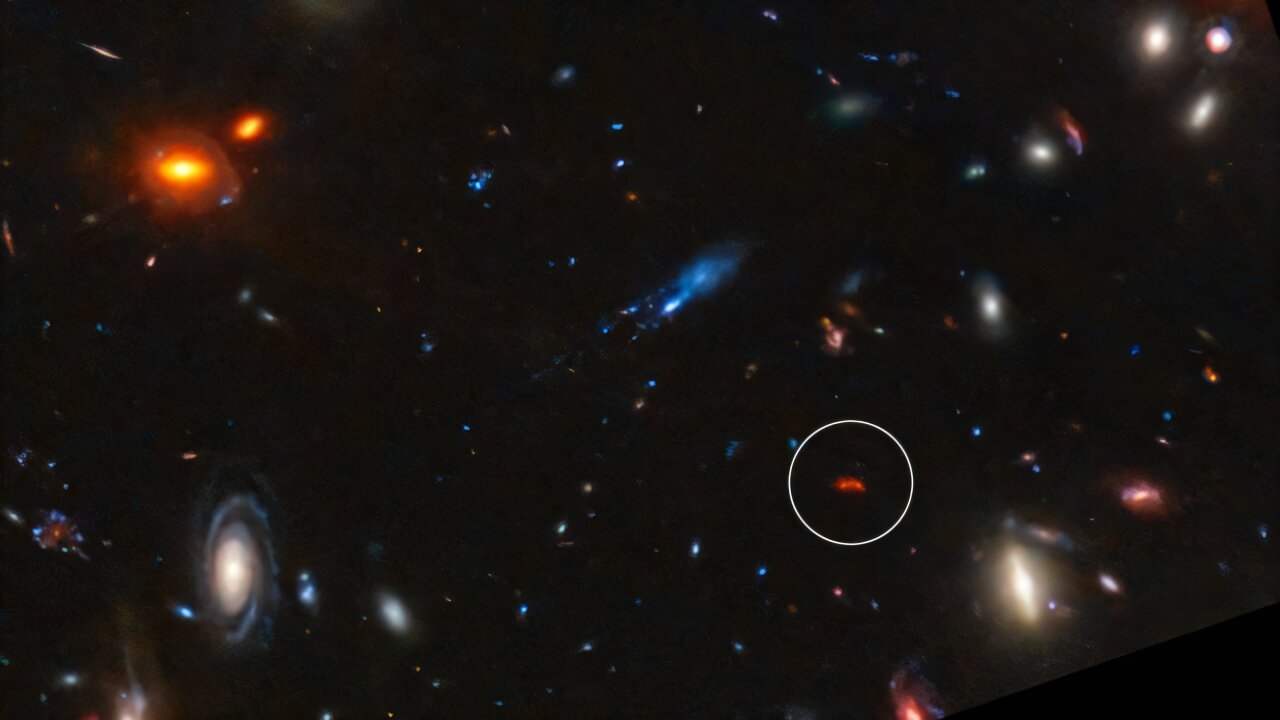
A new simulation could help solve one of astronomy’s longstanding mysteries—how supermassive black holes formed so rapidly—along with a new one: What are the James Webb Space Telescope’s (JWST) “little red dots?”


Related paper:

 
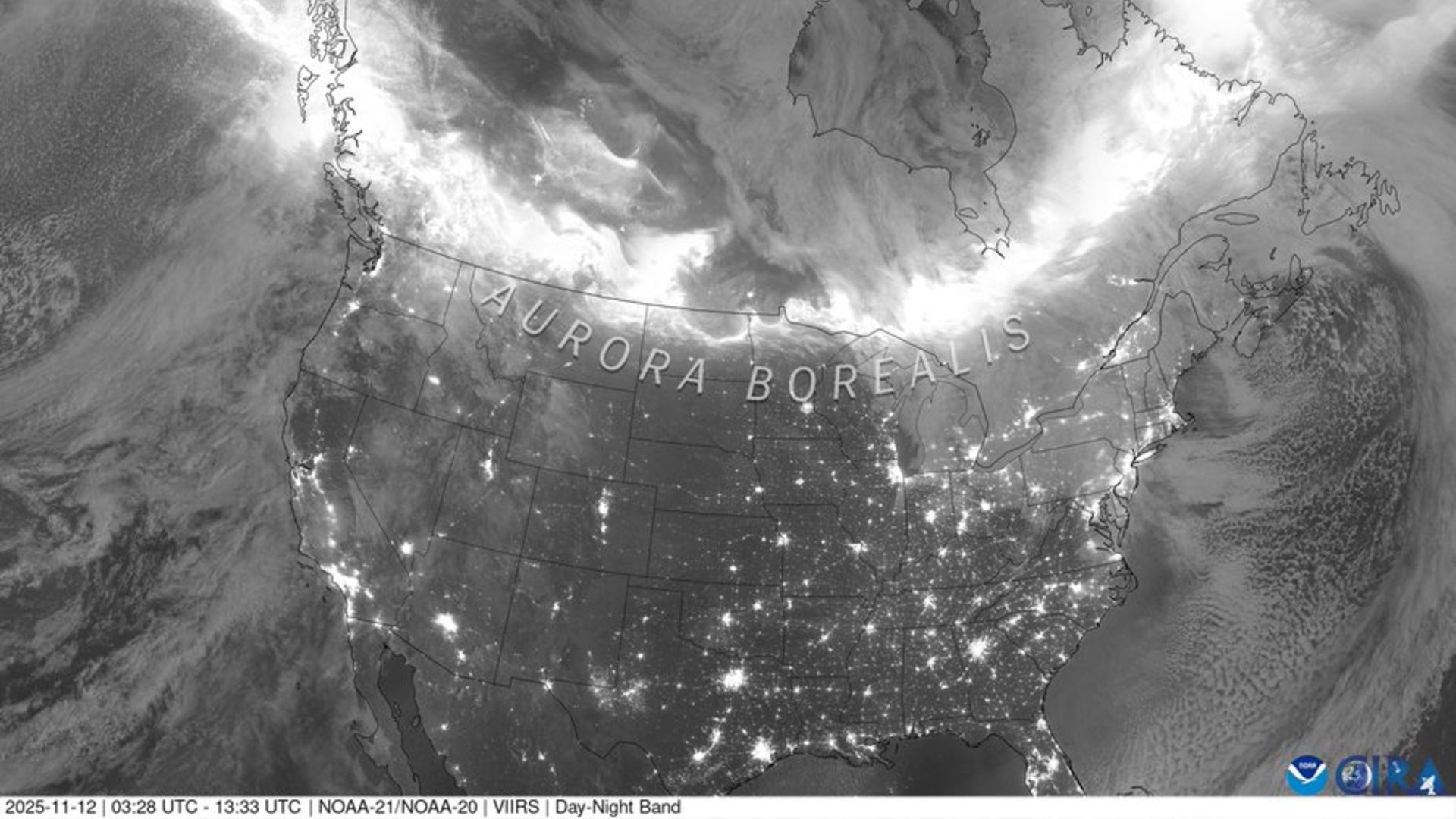
Northern Lights set to dazzle UK this week due to possible 'severe' geomagnetic storm


View: https://twitter.com/NWSSWPC/status/1988196905369972795


X5.1 flare (R3-Strong) from Region 4274

Region 4274 produced an X5.1 flare at 11/1004 UTC. Likely the strongest flare of the cycle. More information will follow in subsequent posts.

Space: Sun unleashes strongest solar flare of 2025, sparking radio blackouts across Africa and Europe [Nov 11]

The eruption peaked at 5 a.m. EST (1000 GMT) from sunspot AR4274, which has been bursting with activity in recent days. The blast triggered strong (R3-level) radio blackouts across Africa and Europe, disrupting high-frequency radio communications on the sunlit side of Earth.

View: https://twitter.com/JAtanackov/status/1988197482195808389
 
Astronomers have found a cosmic ocean of water around a distant quasar:


Astronomers have discovered the largest and most distant water reservoir ever detected — surrounding a supermassive black hole in quasar APM 08279+5255, 12 billion light-years away. This ancient water cloud could fill 140 trillion Earth-sized oceans, proving that water and complex molecules existed when the universe was still young.​
Chapters:
00:00 Introduction
00:50 DISCOVERY
03:01 SCIENTIFIC IMPORTANCE & THEORIES
05:30 IMPLICATIONS & WHAT’S NEXThttps://www.youtube.com/watch?v=xRfQr5l5J94&t=495s
08:15 Outro
08:38 Enjoy
 
First confirmed sighting of explosive burst on nearby star [Nov 12]

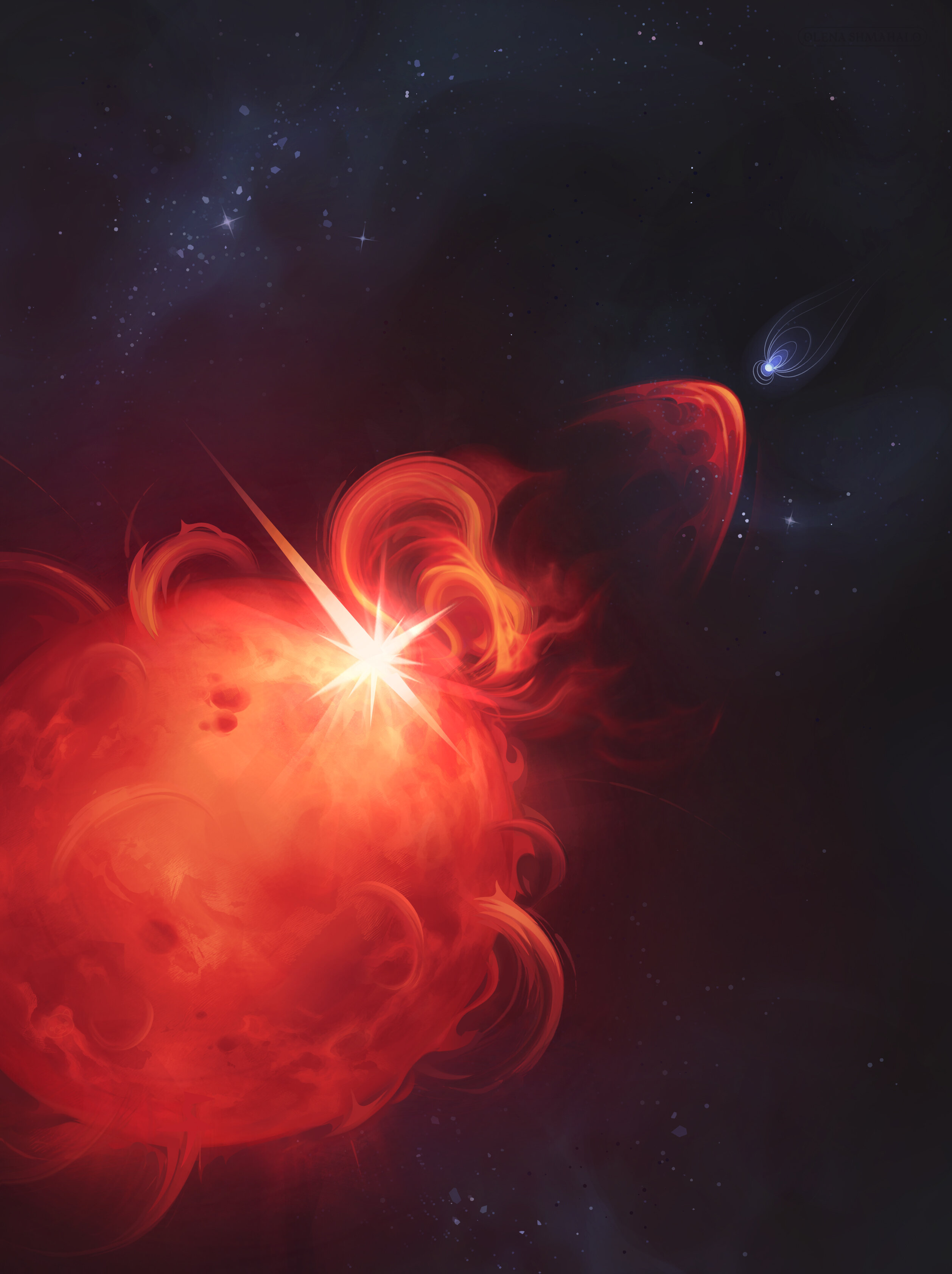
Astronomers using the European Space Agency’s XMM-Newton space observatory and the LOFAR telescope have definitively spotted an explosive burst of material thrown out into space by another star – a burst powerful enough to strip away the atmosphere of any unlucky planet in its path.

The burst was a coronal mass ejection (CME), eruptions we often see coming from the Sun. During a CME, massive amounts of material are flung out from our star, flooding the surrounding space. These dramatic expulsions shape and drive space weather, such as the dazzling auroras we see on Earth, and can chip away at the atmospheres of any nearby planets.

But while CMEs are commonplace at the Sun, we hadn’t convincingly spotted one on another star – until now.

“Astronomers have wanted to spot a CME on another star for decades,” says Joe Callingham of the Netherlands Institute for Radio Astronomy (ASTRON), author of the new research published in Nature. “Previous findings have inferred that they exist, or hinted at their presence, but haven’t actually confirmed that material has definitively escaped out into space. We’ve now managed to do this for the first time.”

As a CME travels through the layers of a star out into interplanetary space, it produces a shock wave and associated burst of radio waves (a type of light). This short, intense radio signal was picked up by Joe and colleagues and found to come from a star lying around 130 light-years away.

“This kind of radio signal just wouldn’t exist unless material had completely left the star’s bubble of powerful magnetism,” adds Joe. “In other words: it’s caused by a CME.”

A danger to any planets
The matter-flinging star is a red dwarf – a type of star far fainter, cooler, and smaller than the Sun. It is nothing like our own star: it has roughly half the mass, it rotates 20 times faster, and has a magnetic field 300 times more powerful. Most of the planets known to exist in the Milky Way orbit this kind of star.

The radio signal was spotted using the Low Frequency Array (LOFAR) radio telescope thanks to new data processing methods developed by co-authors Cyril Tasse and Philippe Zarka at the Observatoire de Paris-PSL. The team then used ESA’s XMM-Newton to determine the star’s temperature, rotation, and brightness in X-ray light. This was essential to interpret the radio signal and figure out what was actually going on.

“We needed the sensitivity and frequency of LOFAR to detect the radio waves,” says co-author David Konijn, a PhD student working with Joe at ASTRON. “And without XMM-Newton, we wouldn’t have been able to determine the CME’s motion or put it in a solar context, both crucial for proving what we’d found. Neither telescope alone would have been enough – we needed both.”

The researchers determined the CME to be moving at a super-fast 2400 km per second, a speed only seen in 1 of every 2000 CMEs taking place on the Sun. The ejection was both fast and dense enough to completely strip away the atmospheres of any planets closely orbiting the star.

 
The shape of supernova

The stuff of stars...leaking

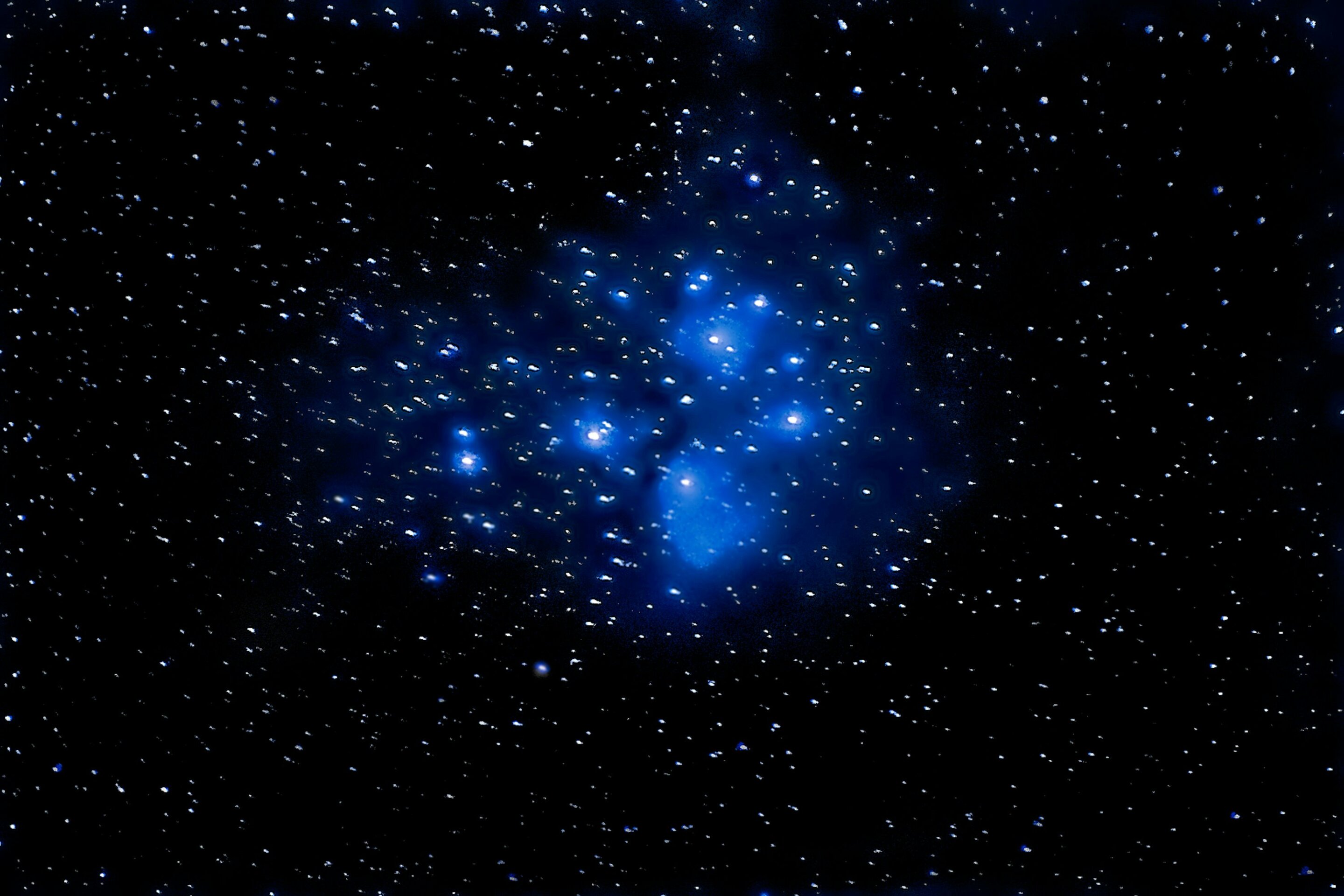
Sisters

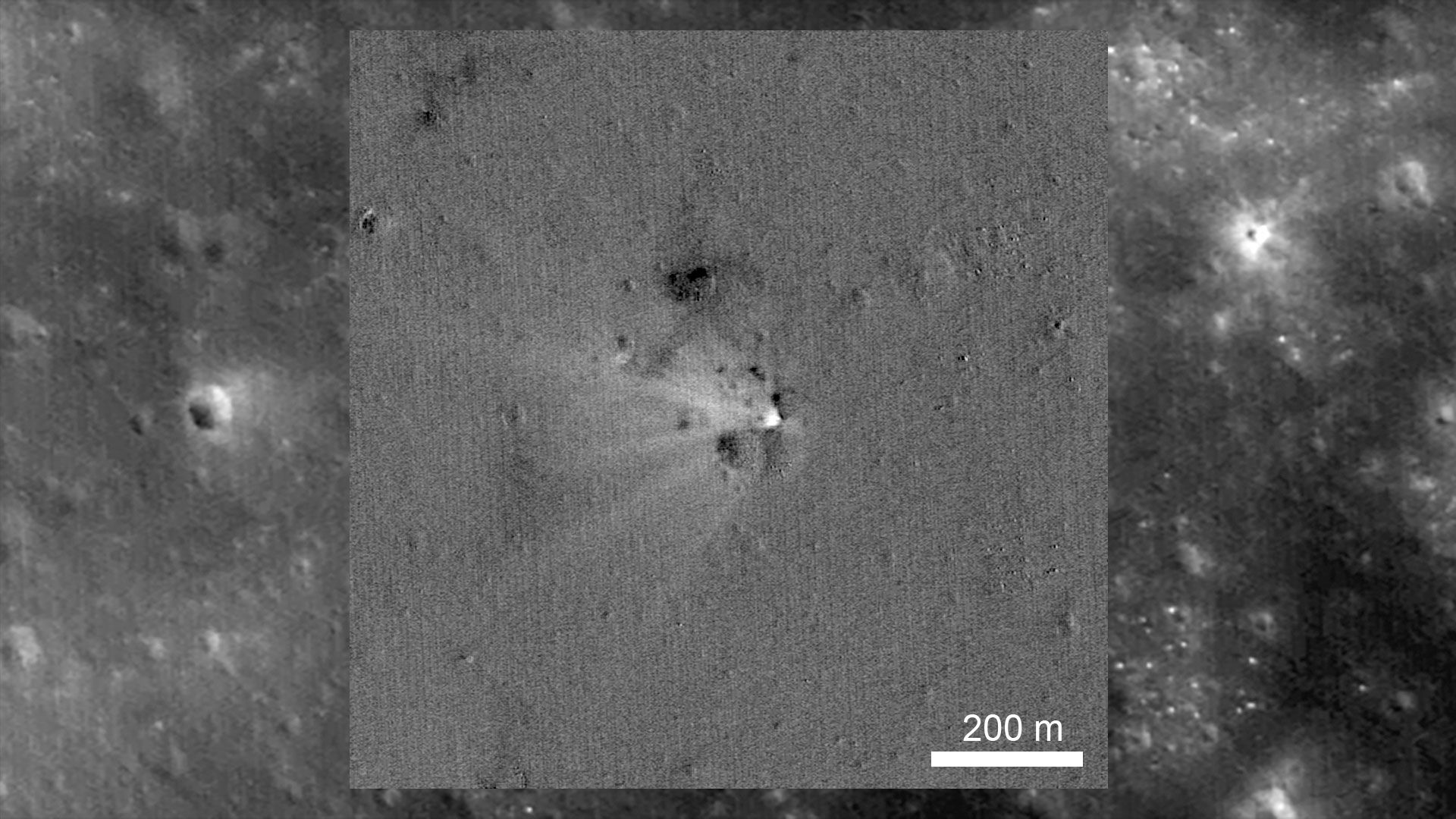
Crater
 
Last edited:
The Solar System has a strange new comet, from Anton Petrov:


0:00 Strangest comet in the solar system - Chiron
0:55 What is Chiron though? Centaurs in a nutshell
4:15 Recent observations and discoveries
5:45 Strange molecules and weird cometary tail
7:00 Incredible rings around it
8:05 The ring is growing in real time!
9:40 What's happening here though?
11:30 Conclusions and what this means
 
The 2060 Chiron wiki

--has it that Chiron will eventually become a short-period comet a million years from now---coincidentally about when Gliese 710 passes...
 
I stumbled across three year old Anton Petrov video concerning the fine-structure constant:


Anton Petrov has just uploaded a video concerning new possible evidence of Population III stars:


0:00 Population III stars - first starts in the universe
2:30 LAP1-B Galaxy evidence
4:20 Predictions about what they should be
5:00 What this galaxy is and what was found
8:25 Surprise from the James Webb
9:10 Why is this galaxy so strange?
11:02 Exactly as predicted?
12:00 What this means and why this is important
13:30 Conclusions
 
Astronomers discover a superheated star factory in the early universe

Astronomers have uncovered a previously unknown, extreme kind of star factory by taking the temperature of a distant galaxy using the ALMA telescope. The galaxy is glowing intensely in superheated cosmic dust while forming stars 180 times faster than our own Milky Way. The discovery indicates how galaxies could have grown quickly when the universe was very young, solving a long-standing puzzle for astronomers.


Related paper:

 
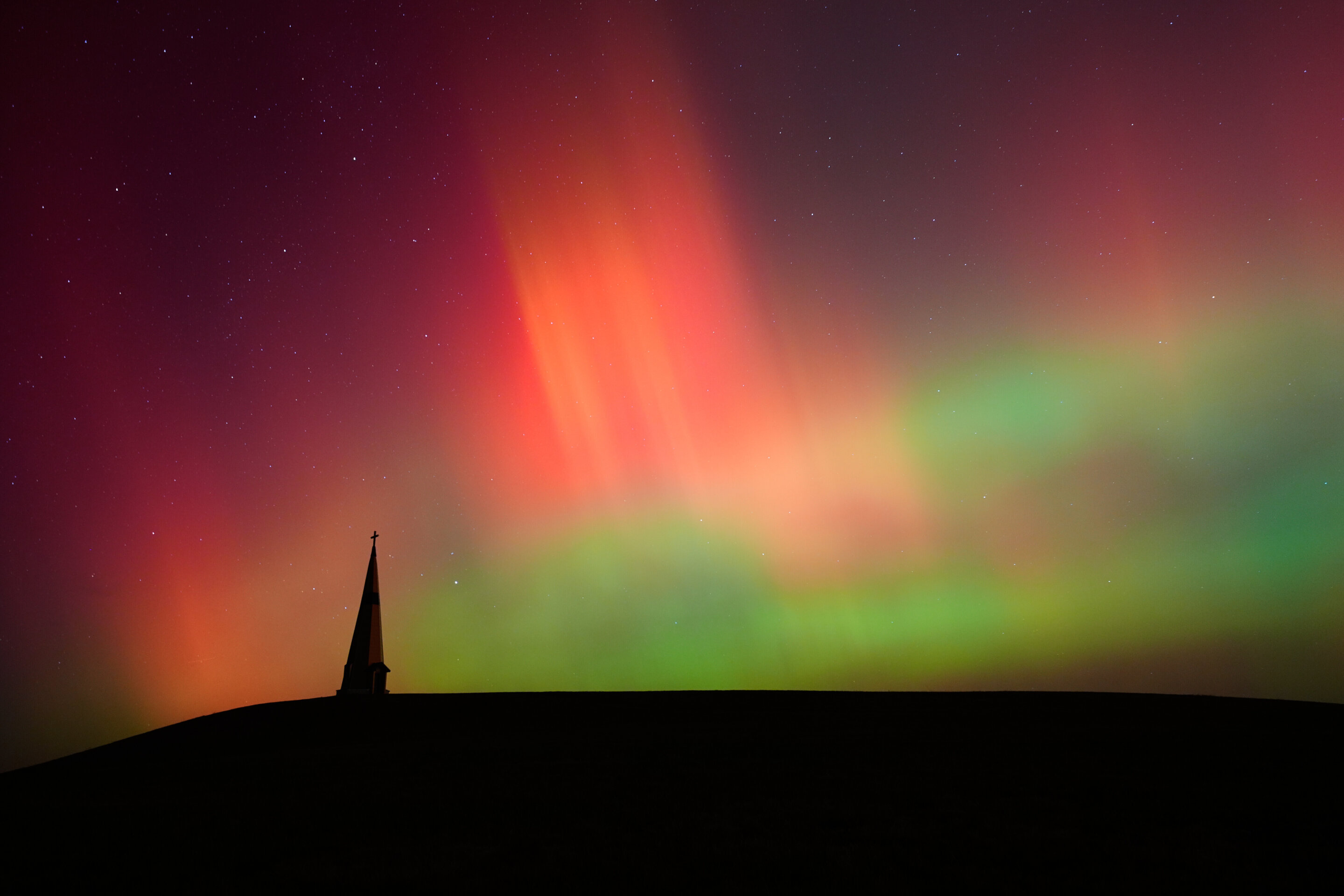
Recent Aurora

Life

Collapse
 
Last edited:
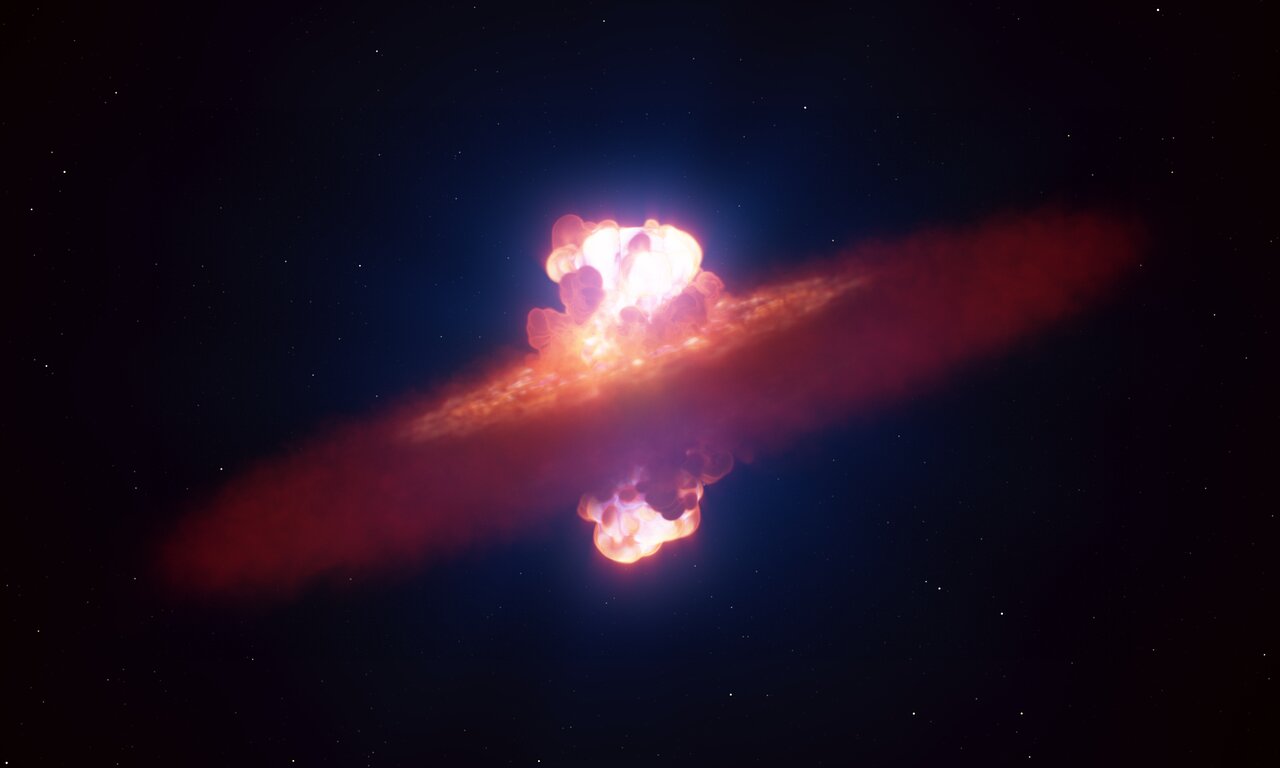
ESO has put out a short video concerning the true shape of a supernova explosion:


Astronomers have observed a supernova just a day after it was first detected. In the early stages of the blast, the explosion has not yet interacted with the material around the star, retaining its true shape. This initial shape has now been revealed for the first time. This video summarises the discovery.
 
Perfect spheres are rare.

Looks like the Star Wars Special Edition got it right

The Praxis Ring


They knew about lobes before last year

Speaking of supernovae--I never bought into the whole standard candle nonsense:

If lowly humans can design nukes at many different yields---don't think for a moment stars couldn't do it too...just by accident.
Something is only a standard candle if a person makes it with precision to start with. Trying to kludge starbursts into measuring sticks was always going to be sloppy.

Charming
 
Last edited:
 
Interesting Flyaway, so no more myths about alien technology then it is just another interstellar comet. I would like to see another interstellar comet come through our Solar System but at a much closer trajectory so that we can get a proper look at it.
 
Imagine something twice as big as Hale-Bopp half as close as Hyakutake---that might be something we could see if Chiron goes walkabout and breaks up.


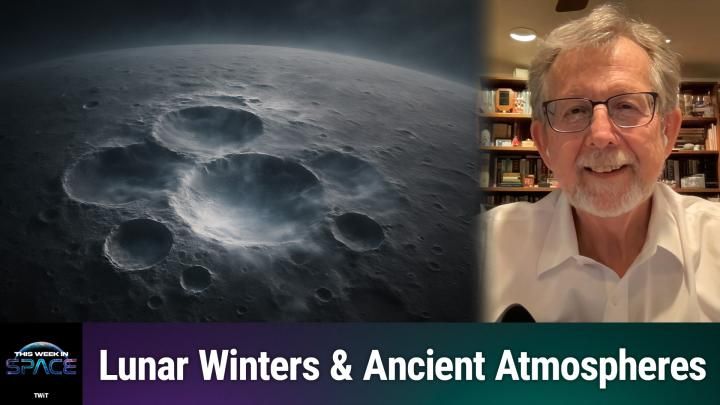
Moon matters
 
Last edited:
From GEO GIRL:


Helpful past videos I reference information from in this video:
Europa videos:
Life on Europa? The Conditions That Make Europa Potentially Habitable- • Life on Europa? What Conditions Make Europ... https://www.youtube.com/watch?v=_X87YpLN5qM
Is Europa Geologically Active? - • Is Europa Geologically Active?- Europa's S...
https://www.youtube.com/watch?v=7UI4LKOuAOU
What is Europa's interior (core, mantle, & crust) made of? - • Europa's Core, Mantle, & Water Shell- What... https://www.youtube.com/watch?v=dJ-biPZG8Jw
What is Europa's ocean made of? - • What is Europa's Ocean Made of & How Do We... https://www.youtube.com/watch?v=qiVKMWdKmfY
Interview with a Europa Clipper Mission Scientist about Europa's Geology and what Europa Clipper plans to investigate when it reaches Europa! - • Europa Geology & What it Means for Life on... https://www.youtube.com/watch?v=cFDADvxjGpo
Io videos (Io is a moon of Jupiter- the most volcanically active body in our solar system that provides more context around mountains & volcanoes on other worlds):
Plate Tectonics videos (that give context around Earth being the only planet known to have active plate tectonics):
When did plate tectonics begin on Earth (recent research updates)- • When Did Plate Tectonics Begin on Earth? (... https://www.youtube.com/watch?v=81KDvZ3B_ts
Earth didn't always have plate tectonics (initial interview video discussing potential early Earth tectonic regimes)- • Not ALL Tectonics is ‘Plate’ Tectonics (w/... https://www.youtube.com/watch?v=v57XTNLoWKw
Chapters:
0:00 Mountains in our Solar System
0:29 Largest Mountains on Earth
0:49 Tallest Mountain in Solar System?
1:42 Even MORE Impressive Tallest Mountain!
2:19 Longest Mountains in Solar System?
3:18 Largest Mountains on Venus
3:52 Longest Canyon in Solar System?
4:28 Cryovolcanic Domes on Icy Moons!
5:00 Why Study Extraterrestrial Mountains?
 
PBS Space Time has a video out concerning the graviton:


Physics is this close to understanding the entire universe. And what lives in this gap? Many physicists think it’s the elusive graviton—the quantum particle of gravity—whose discovery will finally allow us to stitch together our two great theories of nature into a single master theory. But what is the graviton, and does it even exist?​
 
PBS Space Time has a video out concerning the graviton:

Albert Einstein belief that gravitation is created by mass curving the Space-Time continuum.
Burkhard Heim went step further believing that gravity is part of quantum mechanic as geometric form.

both theory don't need a graviton particle
 
Candidate Gravitational Wave Detection Hints At First-Of-Its-Kind Incredibly Small Object

Enter gravitational wave candidate S251112cm. The detectors can use the signal to estimate the mass of the whole system after a collision. The estimated mass for S251112cm is smaller than the Sun, suggesting that, if the signal is real, we are looking at a truly incredible pair of objects. One possibility is that the objects in question are neutron stars with a particular traumatic start in life, which leads to a much smaller mass than usual.


“This is the prospect of a primordial black hole. These are black holes formed much earlier in the universe. Basically, you get density fluctuations in the early universe. If those get dense enough, they will collapse down and they can collapse down directly to be a black hole,” Dr Berry told IFLScience. “These primordial black holes have long been theorized in various cosmological models, but we don't know if they exist.”


How confident are scientists with these results? They are not popping champagne just yet, but they are not discounting it. The false alarm rate is measured in fake events per year, and while binary black holes are now so clear to spot that there’s a false alarm every tens of thousands of years (or much longer in some cases), this event has a false alarm rate of 1 in 6.2 years. So, an excitable skepticism is necessary.

 
New EHT Images Reveal Unexpected Polarization Flips at M87*

The Event Horizon Telescope (EHT) collaboration has unveiled new, detailed images of the supermassive black hole at the center of the galaxy M87- known as M87*- revealing a dynamic environment with changing polarization patterns near the black hole. Additionally, the scientists found the first signatures of the extended jet emission near the jet base, which connects to the ring around M87*, in EHT data. These new observations, published today Astronomy & Astrophysics, are providing new insight into how matter and energy behave in the extreme environments surrounding black holes.

 
Unique shape of star’s explosion revealed just a day after detection

Swift observations with the European Southern Observatory’s Very Large Telescope (ESO’s VLT) have revealed the explosive death of a star just as the blast was breaking through the star’s surface. For the first time, astronomers unveiled the shape of the explosion at its earliest, fleeting stage. This brief initial phase wouldn’t have been observable a day later and helps address a whole set of questions about how massive stars go supernova.

 
View: https://twitter.com/NASA/status/1990531515281764734


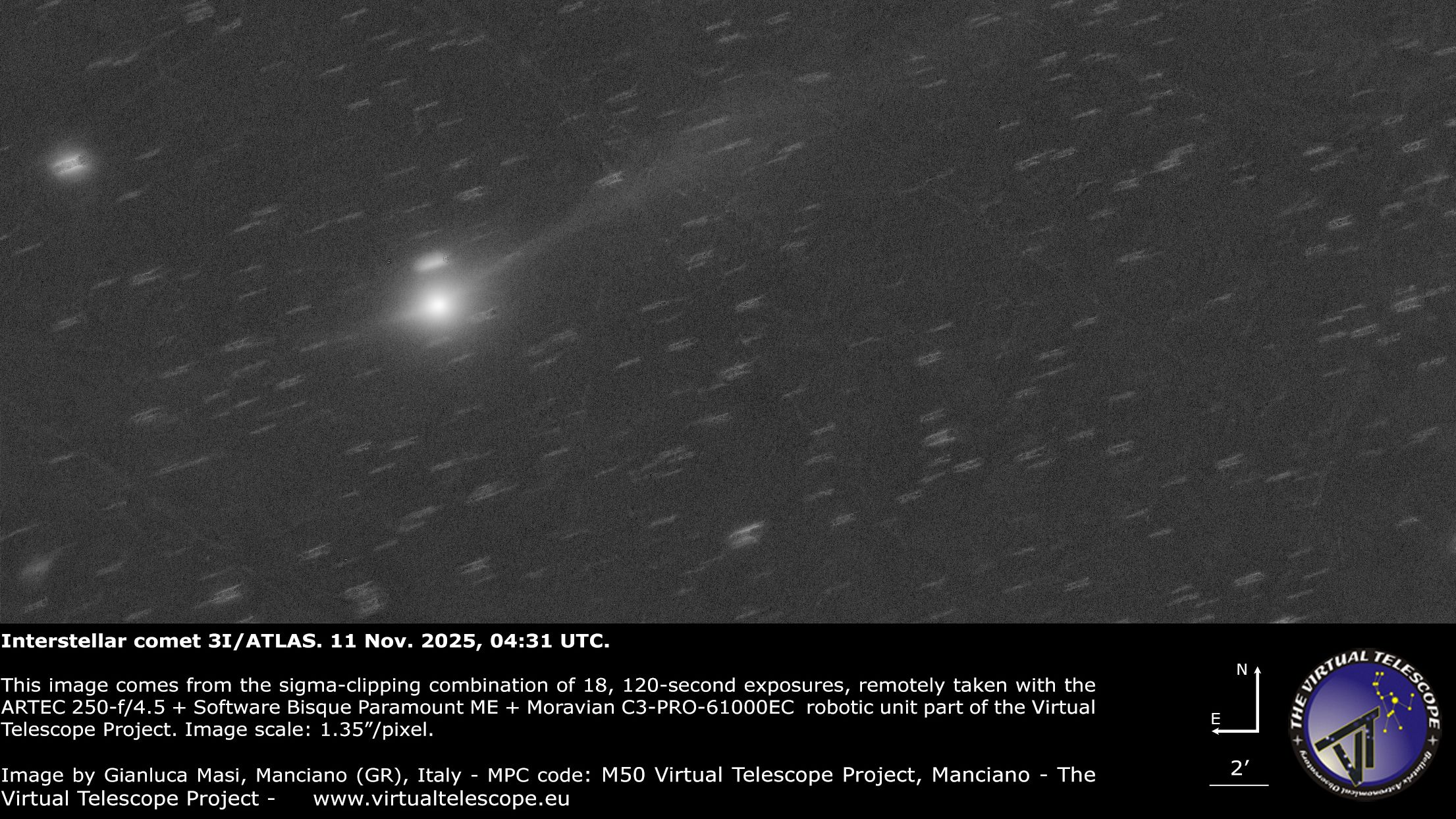
NASA to Share Comet 3I/ATLAS Images From Spacecraft, Telescopes [Nov 17]

NASA will host a live event at 3 p.m. EST, Wednesday, Nov. 19, to share imagery of the interstellar comet 3I/ATLAS collected by a number of the agency’s missions. The event will take place at NASA’s Goddard Space Flight Center in Greenbelt, Maryland.

Comet 3I/ATLAS, discovered by the NASA-funded ATLAS (Asteroid Terrestrial-impact Last Alert System) observatory on July 1, is only the third object ever identified as entering our solar system from elsewhere in the galaxy. While it poses no threat to Earth and will get no closer than 170 million miles to Earth, the comet flew within 19 million miles of Mars in early October.

The event will air on NASA+, the NASA app, the agency’s website and YouTube channel, and Amazon Prime.

Briefing participants include:
• NASA Associate Administrator Amit Kshatriya
• Nicky Fox, associate administrator, Science Mission Directorate
• Shawn Domagal-Goldman, acting director, Astrophysics Division
• Tom Statler, lead scientist for solar system small bodies

View: https://www.youtube.com/watch?v=A55SUq2eDXg
 
The furnace cosmic
When astronomers analyze their light, they see unexpected ratios of heavy elements that can't be easily explained by the two processes. The anomalies point to a third way: the "intermediate" i-process.

Mathis Wiedeking, an experimental physicist at the Department of Energy's Lawrence Berkeley National Laboratory (Berkeley Lab), gathers data on nuclear reactions that can improve models of how the elements form. He's also the lead author of a new Nature Reviews Physics article on the current state of i-process research, where experiments, theory, and astrophysical observations converge.

In this Q&A, he shares how the i-process fits into the bigger picture of element formation, what it takes to study it, and why it matters—both for understanding the cosmos and advancing technologies here on Earth.


What a tiny black hole could do to you
In his article, Scherrer examined the minimum size of a primordial black hole needed to cause significant injury to a person. Knowing this information can then help determine the properties of this type of dark matter, such as its mass.
 
Last edited:
in 2011 got three astronomer the Nobel price for there discovery that Univers expand every faster

Now there theory got serious dent by JWST, what finds no evidence of tension in Hubble Constant.
could be the three made measuring error ?


in 2011 got three astronomer the Nobel price for there discovery that Univers expand every faster

Now there theory got serious dent by JWST, what finds no evidence of tension in Hubble Constant.
could be the three made measuring error ?


The classical Greeks knew exactly what the gods ate, the Byzantine theologians knew how many angels could sit on the tip of a sewing needle, the medieval bishops knew the exact date and time of the creation of the world, the scientists of the Club of Rome knew that oil would run out in 20 years and that overpopulation would create famines. Cosmologists know that the universe is expanding and they calculate its speed... Does anyone really think that they can talk about the universe like this, if they don't even know what dark matter is?

They are in the Middle Ages on the promontory of Sagres with an astrolabe, trying to calculate the real extent of the ocean when they do not even know the existence of the Pacific or Antarctica. They came to America believing it was Japan.:)
 
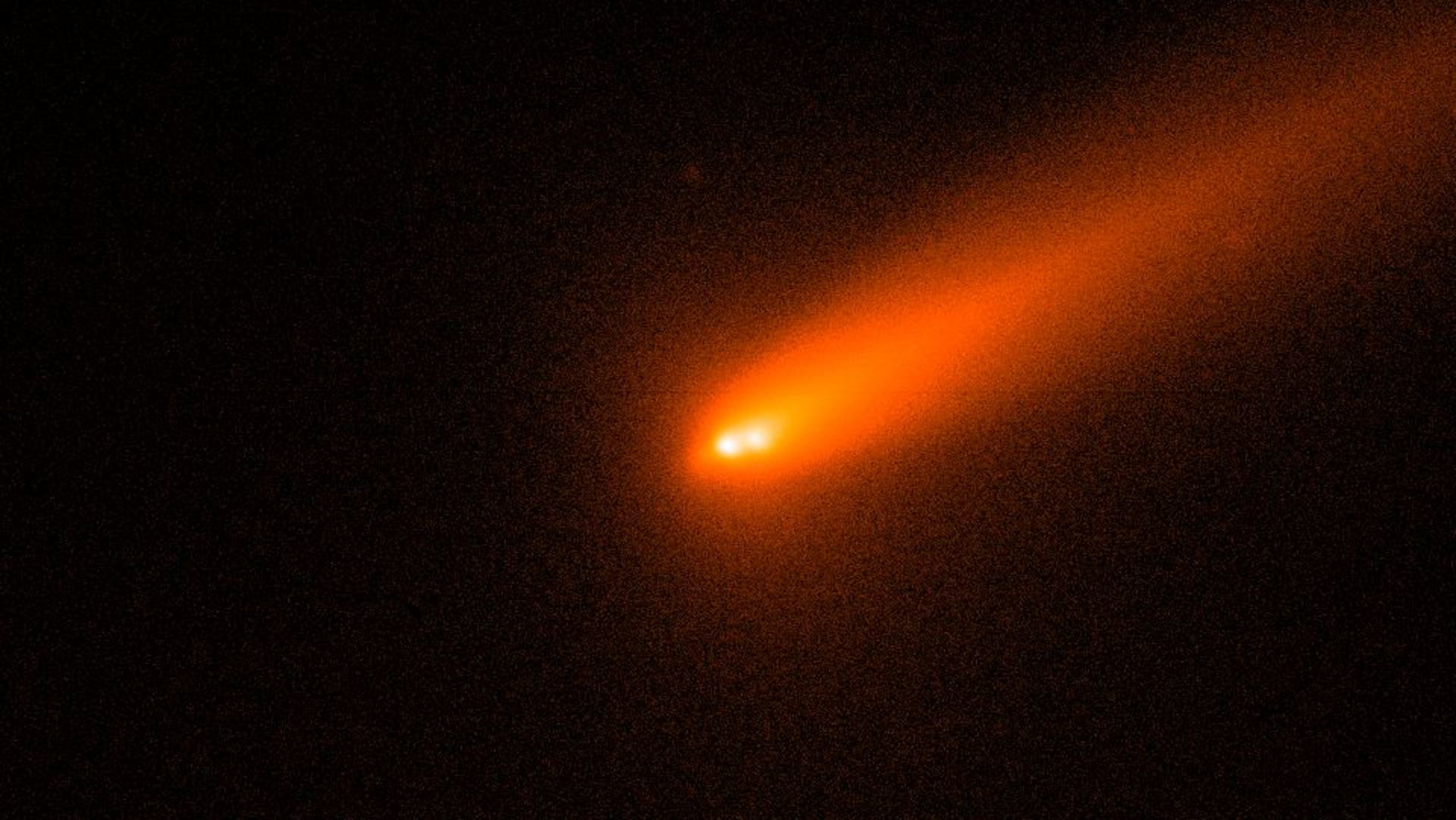
3I/ATLAS is an interstellar comet - NASA says 'all evidence points to it'

View: https://www.youtube.com/watch?v=kV-GoyoDaGU


Nov 19, 2025
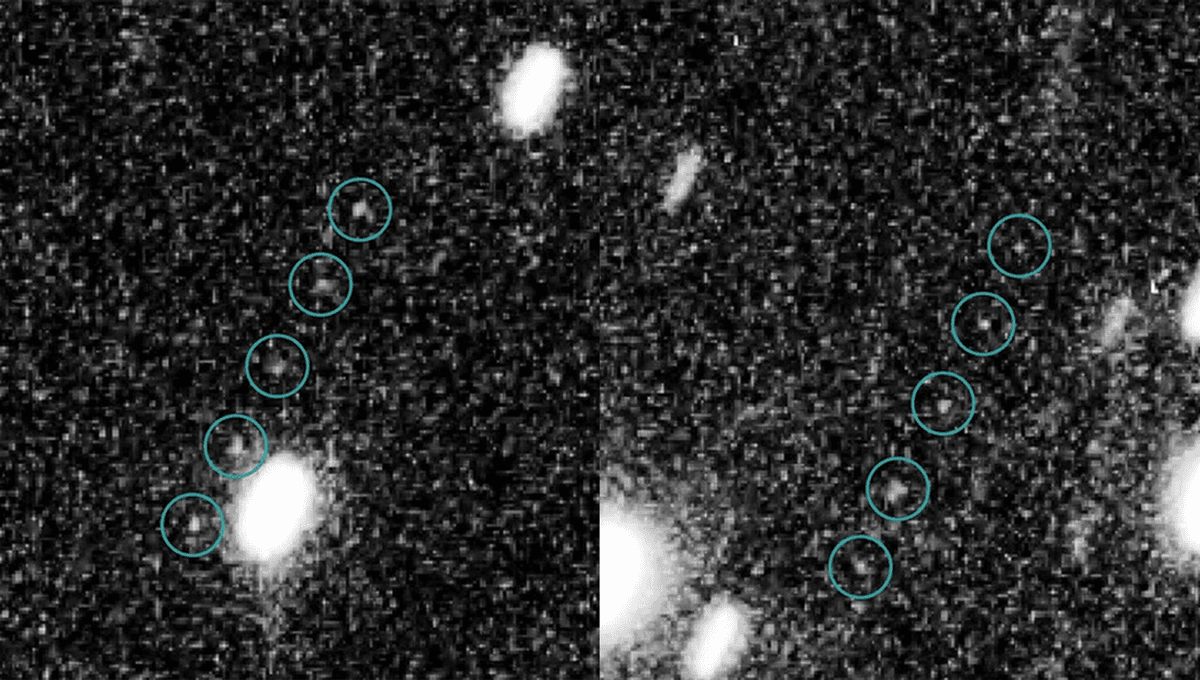
NASA associate administrator Amit Kshatriya and associate administrator of NASA Science Dr. Nicky Fox explain that "all evidence points" that is an interstellar comet and reveal a new image from the Mars Reconnaissance Orbiter (MRO).

Credit: NASA
 
View: https://twitter.com/NASASolarSystem/status/1991217781942153435


View Interstellar Comet 3I/ATLAS Through NASA’s Multiple Lenses [Nov 19]

Observations from Mars
The closest imagery of the comet was taken by NASA’s spacecraft at Mars. Earlier this fall, 3I/ATLAS passed by Mars from a distance of 19 million miles, where it was observed by three NASA spacecraft. The Mars Reconnaissance Orbiter (MRO) captured one of the closest images of the comet, while the MAVEN (Mars Atmosphere and Volatile EvolutioN) orbiter obtained ultraviolet images that will help scientists understand the comet’s make-up. Meanwhile, the Perseverance rover grabbed a faint glimpse from the surface of Mars.

Sun watchers’ view
Some of NASA’s heliophysics missions have the unique ability to observe areas of the sky near the Sun, which allowed them to track comet 3I/ATLAS as it passed behind our Sun as seen from Earth, making observations with ground-based telescopes impossible. NASA’s STEREO (Solar Terrestrial Relations Observatory) captured images from Sept. 11 to Oct. 2, and the ESA (European Space Agency) and NASA mission SOHO (Solar and Heliospheric Observatory) observed the comet from Oct. 15 to 26. Images from NASA’s PUNCH (Polarimeter to Unify the Corona and Heliosphere) mission, which launched earlier this year, reveal the comet’s tail during observations from Sept. 20 to Oct. 3.

Despite previously observing and discovering thousands of comets, this is the first time NASA’s heliophysics missions have purposefully observed an object originating in another solar system.

Asteroid explorers
NASA’s Psyche and Lucy spacecraft, currently on their respective outbound journeys to study various asteroid targets throughout the solar system, were able to observe 3I/ATLAS en route. On Sept. 8 and 9, Psyche acquired four observations of the comet over eight hours from a distance of 33 million miles. These images will help scientists refine the comet’s trajectory. On Sept. 16, Lucy took a series of images from 240 million miles away. Stacking these images together provides detail on the comet’s coma and tail.

The NASA-funded ATLAS (Asteroid Terrestrial-impact Last Alert System) telescope in Chile discovered 3I/ATLAS on July 1. Later that month it was viewed by NASA’s Hubble Space Telescope. In August, both NASA’s James Webb Telescope and SPHEREx (Spectro-Photometer for the History of the Universe, Epoch of Reionization and Ices Explorer) captured imagery.

Comet 3I/ATLAS will fly closest to Earth about Friday, Dec. 19, at 170 million miles, which is almost twice the distance between the Earth and Sun. NASA spacecraft will continue to observe the comet as it makes its journey through the solar system, passing the orbit of Jupiter in spring 2026.
 
An Oort cloud comet has different speed than interstellar comets Justo Miranda, take Hale-Bopp for instance it was an example of a Oort cloud comet it will return in about 4000 years whereas 3i/ATLAS will never return due to its high speed and current trajectory.
 
A "Very Old, Undisturbed Structure" May Have Been Discovered Beyond The Orbit Of Neptune, 43 AU From The Sun

A team looking at the dynamics of objects in the Kuiper belt, the ring-shaped region of icy bodies well beyond the orbit of Neptune, believe they have found evidence for a "very old, undisturbed structure" in our Solar System.


Related paper:

 
How can scientists tell the difference between an Oort comet and an interstellar comet? Different speed?

Objects from interstellar space have a significantly higher velocity than objects originating from the Oort Cloud or especially the Kuiper belt.
 
A sparkling ‘Diamond Ring’ in space: Astronomers in Cologne unravel the mystery of a cosmic ring

An international team led by researchers from the University of Cologne has solved the mystery of an extraordinary phenomenon known as the ‘Diamond Ring’ in the star-forming region Cygnus X, a huge, ring-shaped structure made of gas and dust that resembles a glowing diamond ring. In similar structures, the formations are not flat but spherical in shape. How this special shape came about was previously unknown. The results have been published under the title ‘The Diamond Ring in Cygnus X: an advanced stage of an expanding bubble of ionized carbon’ in the journal Astronomy & Astrophysics.


Related paper:


Similar threads

Back
Top Bottom