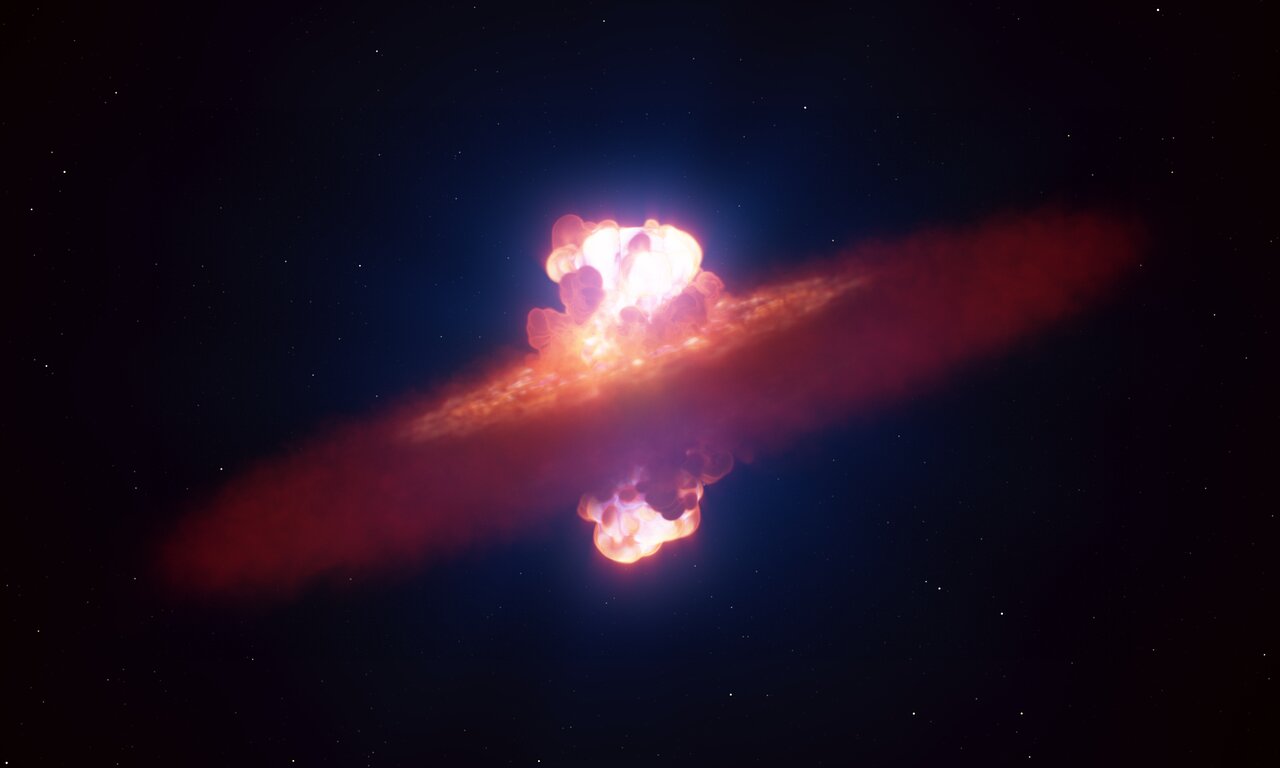
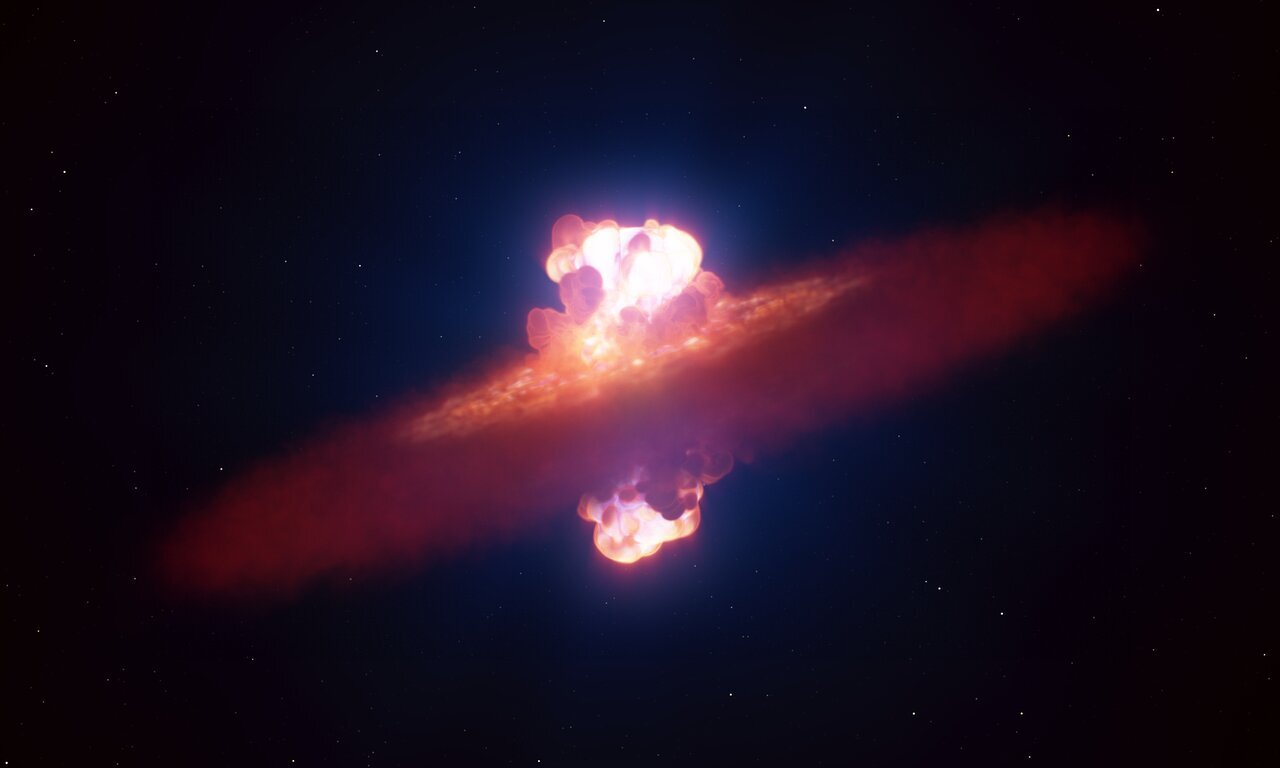
Astronomers using the European Space Agency’s XMM-Newton space observatory and the LOFAR telescope have definitively spotted an explosive burst of material thrown out into space by another star – a burst powerful enough to strip away the atmosphere of any unlucky planet in its path.
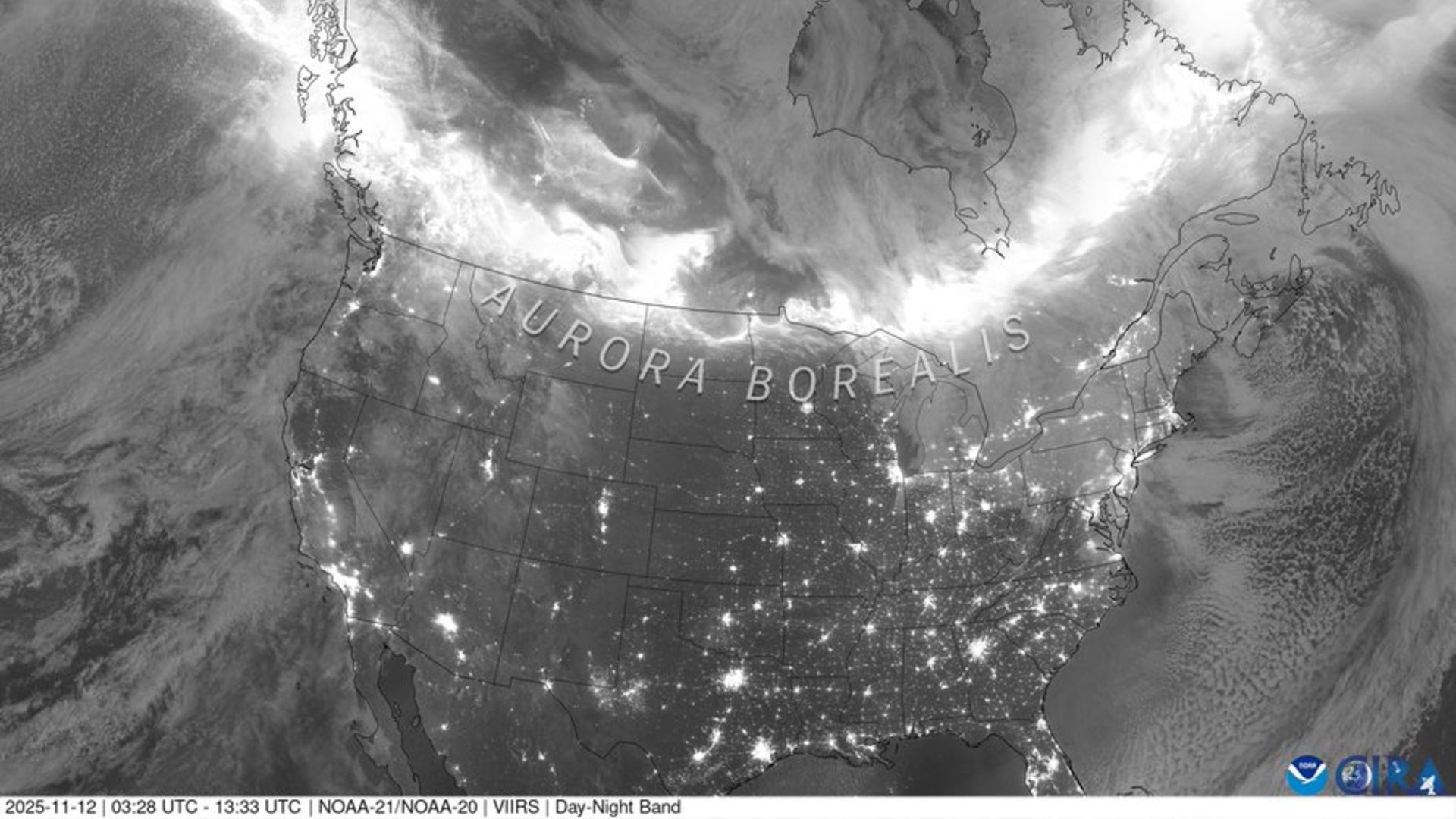
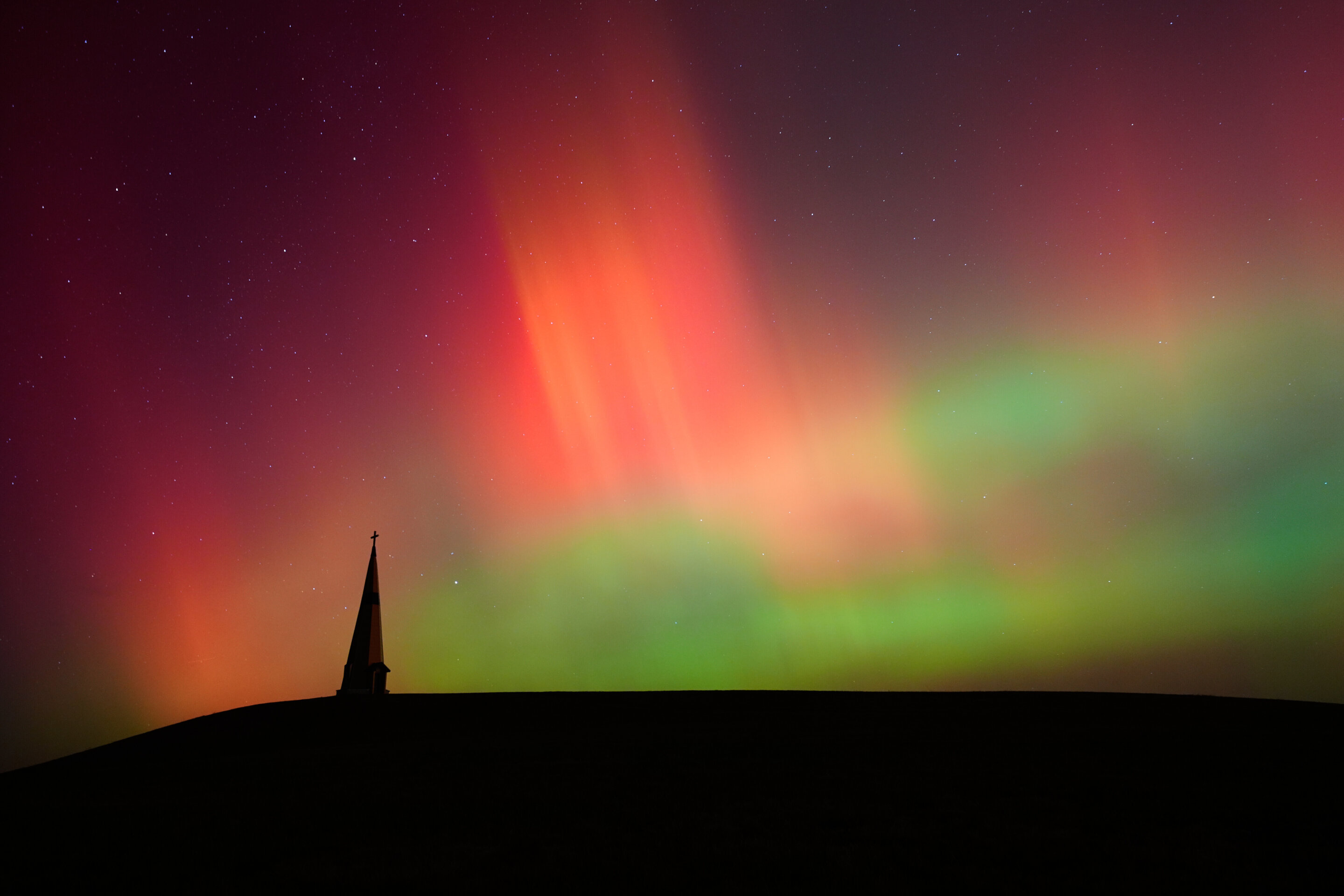
The burst was a coronal mass ejection (CME), eruptions we often see coming from the Sun. During a CME, massive amounts of material are flung out from our star, flooding the surrounding space. These dramatic expulsions shape and drive space weather, such as the dazzling auroras we see on Earth, and can chip away at the atmospheres of any nearby planets.
But while CMEs are commonplace at the Sun, we hadn’t convincingly spotted one on another star – until now.
“Astronomers have wanted to spot a CME on another star for decades,” says Joe Callingham of the Netherlands Institute for Radio Astronomy (ASTRON), author of the new research published in Nature. “Previous findings have inferred that they exist, or hinted at their presence, but haven’t actually confirmed that material has definitively escaped out into space. We’ve now managed to do this for the first time.”
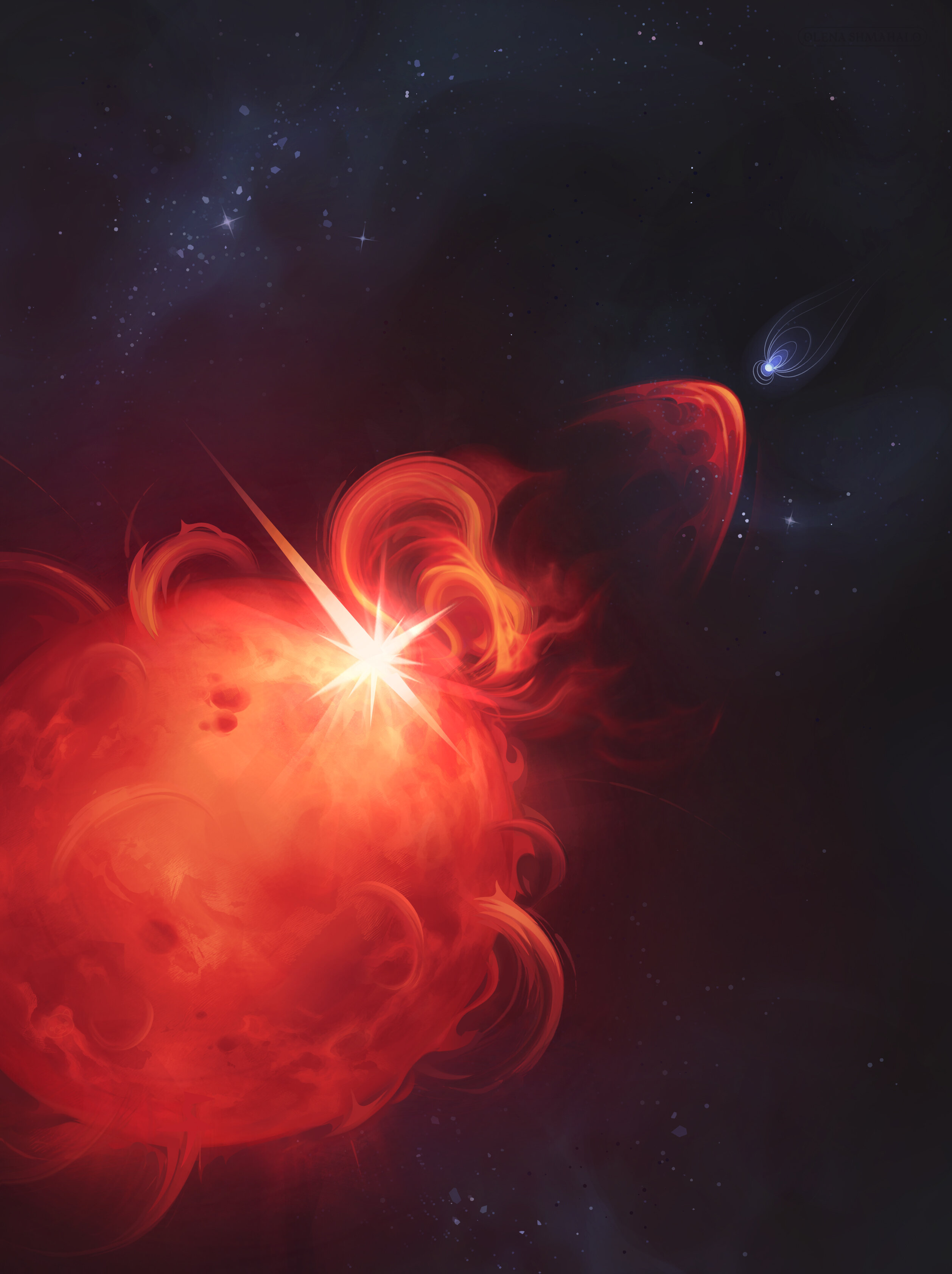
As a CME travels through the layers of a star out into interplanetary space, it produces a shock wave and associated burst of radio waves (a type of light). This short, intense radio signal was picked up by Joe and colleagues and found to come from a star lying around 130 light-years away.
“This kind of radio signal just wouldn’t exist unless material had completely left the star’s bubble of powerful magnetism,” adds Joe. “In other words: it’s caused by a CME.”
A danger to any planets
The matter-flinging star is a red dwarf – a type of star far fainter, cooler, and smaller than the Sun. It is nothing like our own star: it has roughly half the mass, it rotates 20 times faster, and has a magnetic field 300 times more powerful. Most of the planets known to exist in the Milky Way orbit this kind of star.
The radio signal was spotted using the Low Frequency Array (LOFAR) radio telescope thanks to new data processing methods developed by co-authors Cyril Tasse and Philippe Zarka at the Observatoire de Paris-PSL. The team then used ESA’s XMM-Newton to determine the star’s temperature, rotation, and brightness in X-ray light. This was essential to interpret the radio signal and figure out what was actually going on.
“We needed the sensitivity and frequency of LOFAR to detect the radio waves,” says co-author David Konijn, a PhD student working with Joe at ASTRON. “And without XMM-Newton, we wouldn’t have been able to determine the CME’s motion or put it in a solar context, both crucial for proving what we’d found. Neither telescope alone would have been enough – we needed both.”
The researchers determined the CME to be moving at a super-fast 2400 km per second, a speed only seen in 1 of every 2000 CMEs taking place on the Sun. The ejection was both fast and dense enough to completely strip away the atmospheres of any planets closely orbiting the star.






 • Previously Unknown Type of Water Ice Solid...