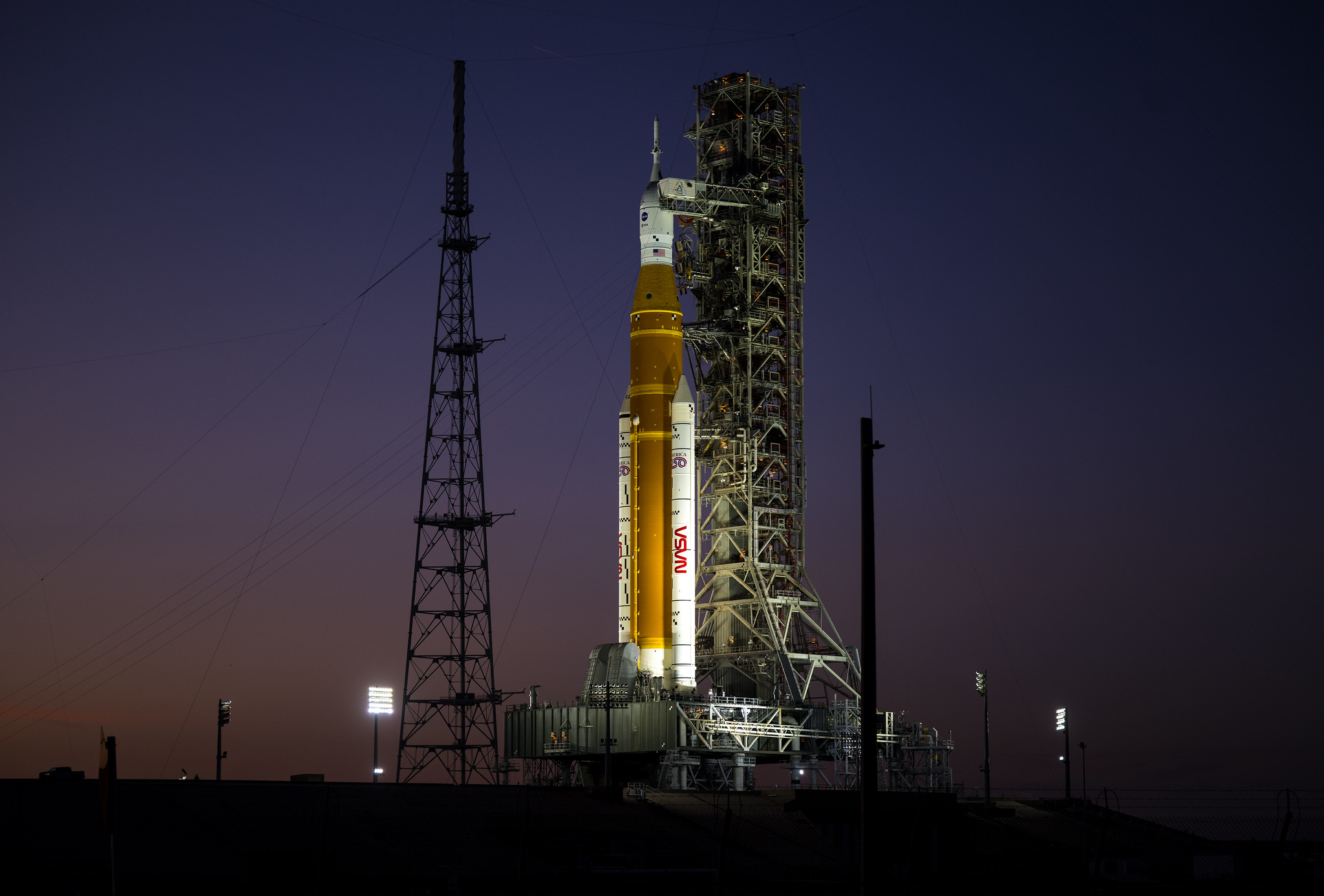
I just stumbled across this hilarious YouTube short video about the SLS rocket:

They were going to interview Starship, but it freaked out and went all to pieces.

All Elon's horses and all of Trump's men couldn't put it back together again.

On hydrogen storage
https://phys.org/news/2026-02-cryogenic-cooling-material-solely-abundant.html
In collaboration with the National Institute of Technology (KOSEN), Oshima College, the National Institute for Materials Science (NIMS) succeeded in developing a new regenerator material composed solely of abundant elements, such as copper, iron, and aluminum, that can achieve cryogenic temperatures (approx. 4K = −269°C or below) without using any rare-earth metals or liquid helium.
A.I.'s take

SLS

Zubrin's take (interview)

At least Orion has a toilet, where Starliner is a toilet.
 
Last edited:
Randians in their hate-government zeal--have been under ming support for space.

Those Randroid idiots and the poisonous political philosophy they follow needs to be permanently discredited, I really, REALLY don't understand such a warped worldview.
 
Last edited:
There are very few actual Randians, publiusr simply terms anyone who disagrees with SLS spending and NASA’s permanent supremacy a Randian or libertarian. He’s called me that more than once even when I argue for more NASA funding, spent on useful R&D. Who knew wanting NASA to have a bigger budget than it does now spent on research makes one a Randian? The term is effectively meaningless.

Plus, establishment types who promote uncritically everything NASA does have undermined public support for decades by accepting absurd costs, no public access to go to space, and continually focusing on programs that appeal to enthusiasts and to no one else. Artemis would be well served if such people had no influence in how it’s run, because they’ll ensure decades more of little real, sustained public support.
 
Ryan Caton
@dpoddolphinpro
·
4h
.
@NASA
has provided an update on the progress towards the next Artemis II Wet Dress Rehearsal:

Repairs
- Two seals have been replaced where the high hydrogen gas concentrations were
- Reconnecting interfaces expected by Monday 9th
- Testing will happen at Stennis to "evaluate additional dynamics of the plates"
- "Engineers are reviewing options to test the repair work prior to the next wet dress rehearsal to ensure the seals are performing as expected."

Changes for next WDR
- Orion hatch will be closed prior to next WDR.
- Closeout Crew NOT going to pad.
- CAA not retracted during terminal count.
- 30 mins extra time added to the planned hold before fuelling, and the planned hold after fuelling, allowing more troubleshooting time.

These changes are interesting, considering the Orion closeout operations caused a significant amount of the delays & difficulties on the first wet dress.

NSF - NASASpaceflight.com
@NASASpaceflight
Artemis II: Preliminary information points to a second WDR (Wet Dress Rehearsal) target of next Friday.

Interestingly, there's talk of a NET launch date of March 3 (not previously in the windows), which could result in a daylight launch T-0.

All subject to change of course, and hydrogen behaving.

View: https://twitter.com/dpoddolphinpro/status/2020675578257428543

NASA Updated on work performed on Artemis II H2 leak

NASA Conducts Repairs, Analysis Ahead of Next Artemis II Fueling Test
 
Last edited:
Philip Sloss has a new video concerning the fix for the LH2 and other Artemis II updates:


The repeat of hydrogen leaks on the second consecutive SLS vehicle during the Wet Dress Rehearsal (WDR) forced NASA to delay Artemis II to March, and they are a reminder of big issues for both SLS and Artemis. In this video I'll go through what happened on Groundhog Day and outline what Exploration Ground Systems will be doing to reset SLS and Orion for March, beginning with another WDR.​
Over three years after pretty much the same problem delayed Artemis I in 2022, another hydrogen leak (Groundhog Day-style) raises lots of questions with little in the way of explanation. It's another reminder of the expensively tepid commitment from the U.S. government to SLS, which will always keep the door open to its replacement. And that always-available opportunity is another reminder that the better-funded replacements aren't close to being ready today...and how secret they are about how they're doing.​
Imagery is courtesy of NASA, except where noted.
Links to social media posts:
https://x.com/blueorigin/status/20183...https://www.youtube.com/redirect?ev...igin/status/2018333372473364779&v=0ext8I_sBL0
https://x.com/astro_reid/status/20183...https://www.youtube.com/redirect?ev...reid/status/2018373290255892694&v=0ext8I_sBL0

https://www.youtube.com/redirect?ev...://buymeacoffee.com/philipsloss&v=0ext8I_sBL0
00:00 Intro
02:48 A recap of the Wet Dress Rehearsal events at the beginning of the week
09:41 The location of the hydrogen leak: the Core Stage LH2 tail service mast umbilical plate cavity
16:03 What's next: another WDR and resetting clocks for March with the contingency pad access platforms
20:02 They've done this quick-disconnect servicing of the tail service mast umbilical plates before
21:33 How high a priority is a permanent fix for this hydrogen leak?
24:10 SLS has its issues, but those aren't delaying an SLS replacement: those delays are secret
27:06 Other news and notes
29:54 Thanks for watching!
 
I would volunteer to ride in Orion right this minute.

Just remember...the HLS products many claim to be a fraction of the cost of Arty are the same fraction of being ready. You don't get what you don't pay for.
 
Last edited:
Looks like the leak has been sorted by the looks of things which is good news, roll on March and launch day.
You were saying…

SpaceX launches space station crew on 8-month mission

While Crew 12 made final preparations to fly, engineers ran another test at nearby pad 39B Thursday to check the effectiveness of new seals in an umbilical connecting fuel lines to the SLS moon rocket. The seals are intended to prevent the sort of hydrogen leakage seen during a “wet-dress rehearsal” countdown Feb. 2.

NASA did not publicize the test, but the agency said later it did not go as planned because of what sources described as a frozen filter in ground equipment.

The trouble will have to be addressed before engineers can attempt a re-test of the new seals, followed by another full-up dress rehearsal fueling test to clear the way for launch as early as March 3.
 
"By God Thiokol, when do you want me to launch, in April ?"
Such inspired words...
 

NASA continues SLS hydrogen leak tests​

WASHINGTON — A NASA test to confirm repairs to seals in the Space Launch System’s liquid hydrogen fueling system was only partially successful because of problems with ground equipment.
 
Philip Sloss has uploaded a new report including details on the LH2 leaks and Moon landing schedules:


Imagery is courtesy of NASA, except where noted.
Links to social media posts referenced in the video:
https://x.com/NASASpaceflight/status/...https://www.youtube.com/redirect?ev...ight/status/2019805496836767830&v=czQZHGnqqaA
https://x.com/NASASpaceflight/status/...https://www.youtube.com/redirect?ev...ight/status/2021976435636728190&v=czQZHGnqqaA
https://x.com/davill/status/202239411...https://www.youtube.com/redirect?ev...vill/status/2022394114063675419&v=czQZHGnqqaA

Links to stories referenced:
https://spacenews.com/spacex-executiv...https://www.youtube.com/redirect?ev...ve-confirms-interest-in-an-ipo/&v=czQZHGnqqaA
https://www.wsj.com/science/space-ast...https://www.youtube.com/redirect?ev...plans-to-focus-on-moon-66d5c542&v=czQZHGnqqaA
https://payloadspace.com/spacex-delay...https://www.youtube.com/redirect?ev...ars-plans-in-favor-of-the-moon/&v=czQZHGnqqaA
https://www.china-in-space.com/p/chin...https://www.youtube.com/redirect?ev...-successfully-conducts-mengzhou&v=czQZHGnqqaA
https://www.china-in-space.com/p/meng...https://www.youtube.com/redirect?ev...1-pakistani-visitor-to-tiangong&v=czQZHGnqqaA
https://arstechnica.com/space/2026/02...https://www.youtube.com/redirect?ev...because-he-has-a-new-moon-plan/&v=czQZHGnqqaA

00:00 Intro
02:03 Artemis II Watch
11:01 NASA's different responses to the same March 3rd launch opportunity question
14:15 Artemis III Watch
16:50 China performs a second launch abort test of their lunar crew transport spacecraft
19:29 Con-ops for possible Blue Moon Artemis III lunar lander alternative
25:57 Other news and notes, starting with Gateway PPE pics
27:04 NASA Stennis continues activation of systems for the EUS Green Run
29:58 Thanks for watching!
 

NASA continues SLS hydrogen leak tests​

NASA continues SLS hydrogen leak tests​

Yes, NASA, by all means, please continue testing for (and promptly remediating) any and all leaks on any and all for your flight hardware...
 
As aerospace engineer, I am actually holding out hope that they do it BECAUSE IT IS THE RIGHT AND PROPER ENGINEERING THING TO DO!!!!!
Yes. Do it because it’s right, not because someone else is judging you. Only doing something well because other eyes are on you is a negative judgment on your character.
 
NSF - NASASpaceflight.com
@NASASpaceflight
·
53m
Artemis II: Potential WDR 2 (Wet Dress Rehearsal) for SLS on Thursday, we understand. Will be pending NASA approval to proceed, etc. Official status will come from NASA or
@NASAAdmin
.

Teams would need to enter Call To Stations ops on Tuesday if Thursday is indeed an option.

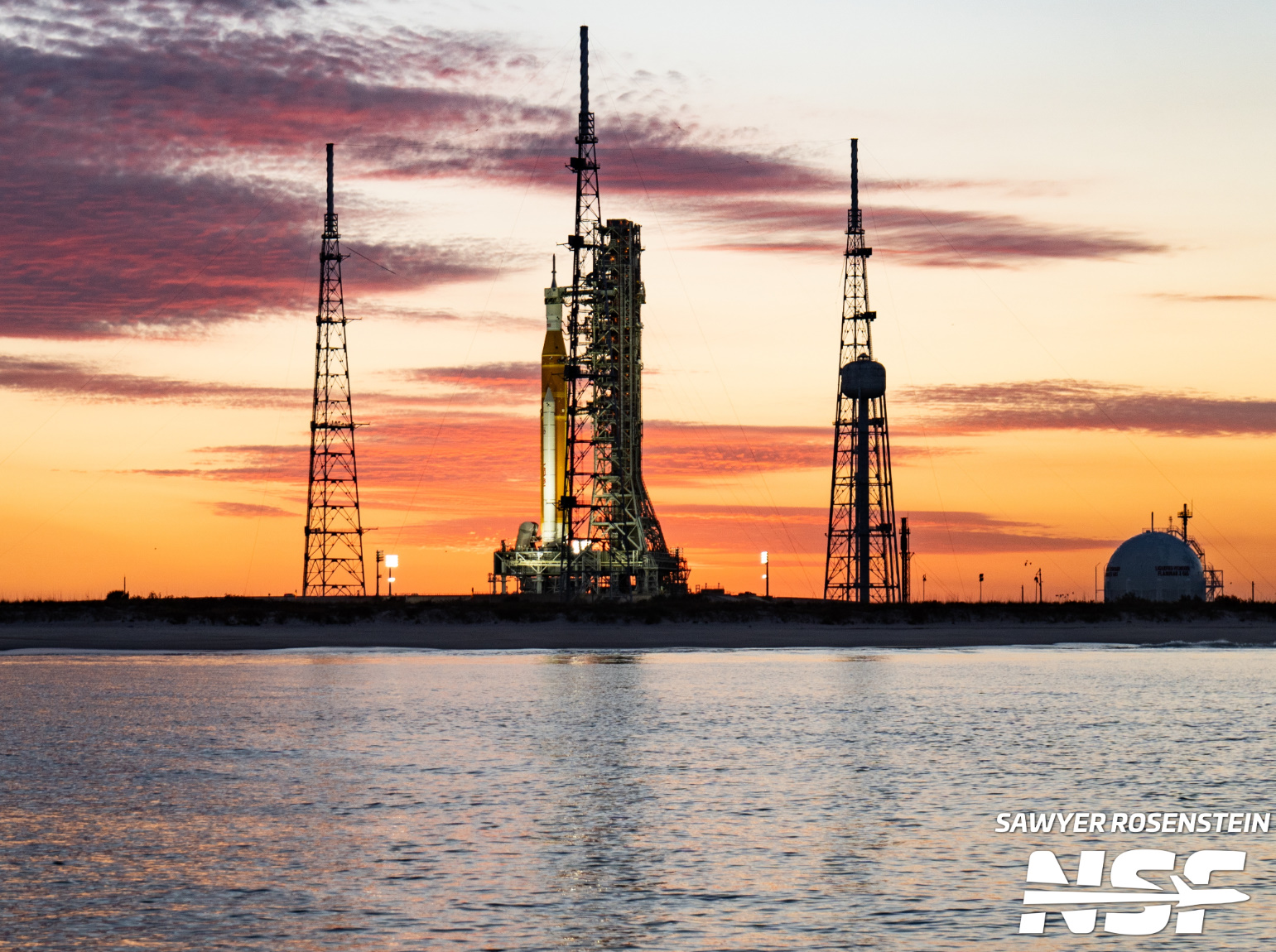
Sawyer Rosentien (@thenasaman) photo:

View: https://twitter.com/NASASpaceflight/status/2023465143514869949
 
Richard P. Gallagher
@rpg571
·
1h
The Hydrogen Leak Puzzle: Why SLS's Keeps Springing Leaks—and NASA's Plan to Seal It

As NASA's Artemis II rocket—the first crewed lunar voyage since Apollo—looms at Launch Complex 39B, the persistent challenge of liquid hydrogen (LH2) leaks has once again delayed progress, sharpening focus on a March launch target. During the February 2-3, 2026, wet dress rehearsal (WDR), teams loaded the SLS core stage with hundreds of thousands of gallons of super-cold propellants, but a stubborn LH2 leak at the tail service mast umbilical (TSMU) forced pauses, seal "warming" tricks, and an abort at T-5:15 when pressures spiked. A quick "confidence test" on February 12 showed "materially lower leak rates" after swapping seals, though a ground filter snag slowed things down (NASA, Feb. 13, 2026 update). It's a replay of Artemis I woes, but with astronauts on the line, engineers are drilling deeper into the why—and how to fix it for good.

Why Hydrogen Plays Hard to Seal: The Tiny Molecule That Won't Stay Put

LH2 is a rocket fuel superstar—light, energetic, and perfect for the RS-25 engines' punch. But at -423°F (-253°C), it's a cryogenic nightmare. "Hydrogen molecules are the smallest and lightest in the Universe, with the ability to find their way through the tiniest of breaches," Eric Berger wrote in Ars Technica. "Because of this, NASA engineers accept that a small amount of hydrogen will escape seals in the fueling line" (Ars Technica, Feb. 3, 2026).

Unlike chunky kerosene, H2 sneaks through gaps like smoke under a door. The cold shrinks metals and seals unevenly, and even a hairline crack lets it ooze. "This one caught us off guard," said John Honeycutt, chair of the Artemis II Mission Management Team. "We either had some sort of misalignment or some sort of deformation or debris on the seal" (Feb. 3, 2026 briefing). It's echoed Shuttle days—leaks that grounded fleets—and hit Artemis I hard, delaying it months.

Breaking It Down: The TSMU Plumbing and Seal Setup, As Pipefitters Might Explain It

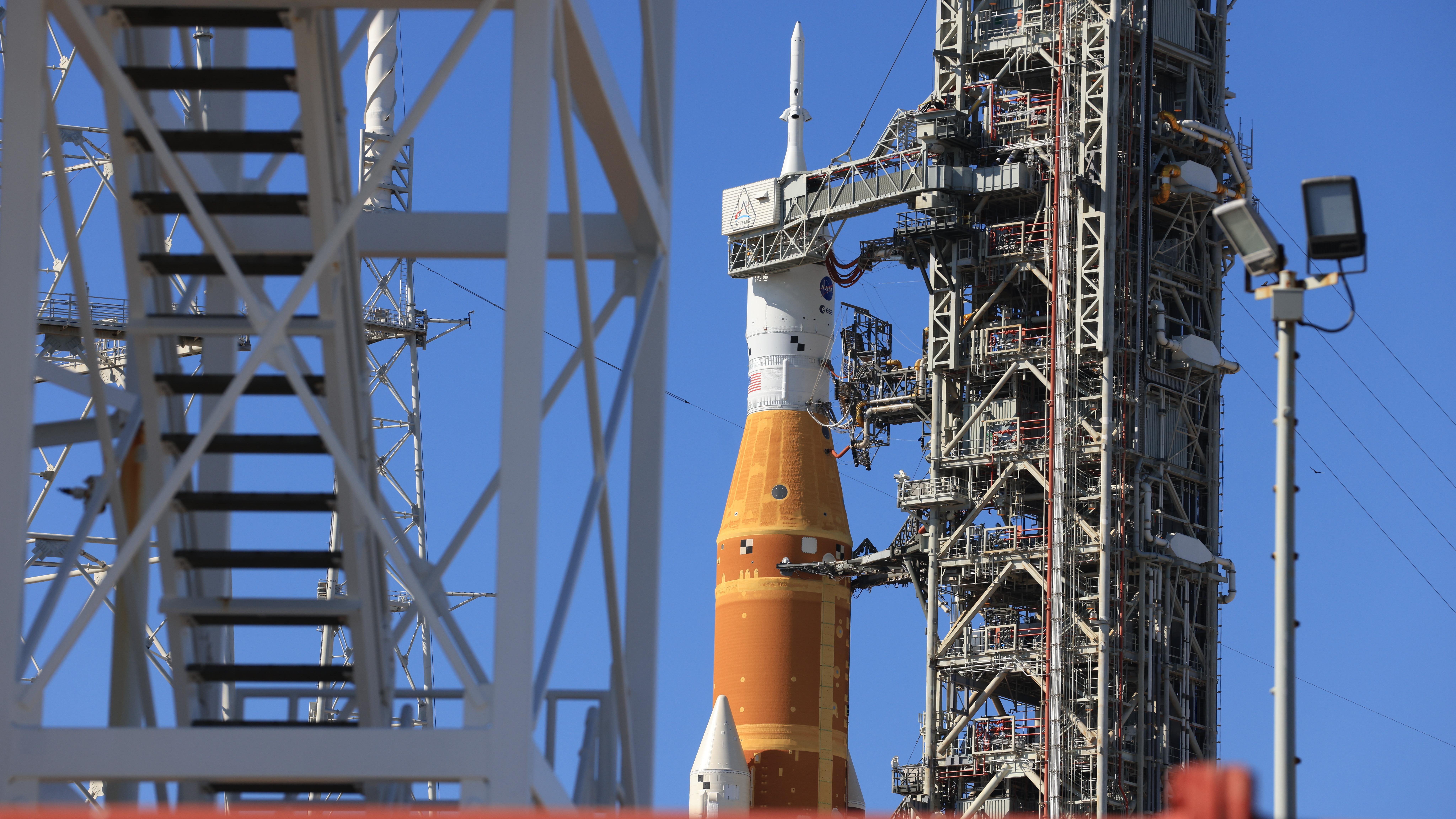
The TSMU is the critical “handshake” point between the ground and the rocket—two tall masts on the mobile launcher delivering propellants to the core stage's engine section. As a pipefitter on the pad might explain it, you've got these big 8-inch and 4-inch stainless steel lines, vacuum-jacketed lines, like super insulated Yeti straws, to keep the fuel cold, running up from ground tanks. They connect via flanges—heavy aluminum or titanium plates, one on the rocket (flight side), one on the launcher (ground side)—bolted tight but built to snap apart clean at liftoff.

Inside, quick disconnects (QDs) act like smart valves: poppet-style, spring-loaded plugs that open for fueling, then slam shut and retract. The seals are the real workhorses—dual-redundant Teflon (PTFE) O-rings, kind of like the rubber washer in your garden hose, in grooves around the pipe ends. "Not your standard rubber—PTFE stays squishy even at cryo temps, unlike metal that turns brittle," NASA notes. "Pressure from the fuel 'energizes' them, pushing the ring hard against the mating face for a tight squeeze" (NASA technical overview, 2017, updated in briefings).

Think of it as a face seal on a flanged pipe joint: the O-ring sits in a rectangular gland, the cut groove, and as LH2 flows, its pressure (hundreds of psi) forces the soft PTFE to conform, filling micro-gaps. "It's pressure-assisted, so the harder the push, the better the seal—until the cold warps things" (Spaceflight Now, Feb. 12, 2026).

But here's where it bites: thermal contraction. "Steel shrinks one way, aluminum another, PTFE a third—everything's fighting at -423°F," Honeycutt explained. "Add vibration from the 4-mile rollout, a speck of debris, or a fast-fill surge, and poof—tiny leak path" (Feb. 3 briefing). During the WDR, leaks hit 12-14% H2 concentration in the TSMU cavity, spiking to abort levels when the core stage pressurized at T-5:15. "As we began that pressurization, we did see that the leak within the cavity came up pretty quick," said Charlie Blackwell-Thompson, Artemis launch director (Feb. 3 briefing).

The Mechanics of Seal Failure

The seal degradation unfolds progressively during the fueling sequence:

Slow Fill Phase: The initial gentle flow allows the seals to cool and seat adequately, resulting in only minor leaks within operational limits.

Fast Fill Phase: Increased pressure and flow rates induce thermal shock, leading to uneven cooling and slight separation of the flange plates (Ars Technica, Feb. 3, 2026).

Pressurization Phase: During terminal countdown, core stage tank pressurization generates a pressure spike, causing hydrogen concentrations in the TSMU cavity to rise rapidly, exceeding the purge system's capacity to contain it (Blackwell-Thompson, Feb. 3 briefing).

Leak Path Formation: Hydrogen permeates even microscopic gaps (as small as 0.001 inches). Potential contributors include assembly debris or misalignment of the guide pins (collets). "We really need to get into the plate and take a look," said Honeycutt (Feb. 3 briefing).

The issue isn't with the rocket—it's TSMU's ground hardware, upgraded from Space Shuttle days but still not keeping up with SLS's higher flow rate.

The Tolerance for Leaks: Why Zero Isn't Even Possible—and How the System Manages It

Zero leak? Not realistically possible with hydrogen. "Some hydrogen will always leak due to the nature of the molecule," as http://nasaspaceflight.com put it, based on Artemis I data (Feb. 2, 2026). H2's atomic size and cryo behavior mean even "perfect" seals have micro-paths—engineers design around a baseline seepage.

The system allows it by design: The TSMU cavity is continuously purged with helium or nitrogen to dilute and vent any H2 gas, keeping concentrations safe. NASA monitors via sensors; the old Shuttle limit was a conservative 4% H2, but tests showed the flammability threshold here is closer to 16%. So for Artemis II, they raised the allowable to 16%—"an appropriate leak limit for LH2 in that cavity," per Honeycutt (Feb. 3 briefing). "At 16 percent, you could not [ignite it]," he added, based on ignition tests (Ars Technica, Feb. 16, 2026).

During WDR, spikes to 12-14% were managed until the final pressurization push. The purge and sensors act like a safety net—if it hits the limit, the Ground Launch Sequencer aborts automatically. This tolerance is why leaks don't doom the mission outright; it's baked into cryo ops, from Shuttle to SLS.

NASA's Fix-It Plan: Swap, Test, and Redesign for the Long Haul

No VAB rollback this time—fixes happen on-pad. Post-WDR, techs detached the plates, yanked two PTFE seals around the LH2 lines, and inspected. "Technicians have replaced two seals in an area where operators saw higher than allowable hydrogen gas concentrations," NASA reported (Feb. 8, 2026). The February 12 test? "We observed materially lower leak rates," though a GSE filter clogged flow (NASA, Feb. 13).

Short-Term:

Lab-test the old seals at Stennis for clues (deformation? FOD?).

Swap the filter, purge lines.

Second WDR soon: "Modified sequence" focused on TSMU, gentler fills to let seals "warm and reseat" (Spaceflight Now, Feb. 12).

Longer-Term for Artemis III+:

"Cryoproofing": Full cold tests pre-pad.

Tweak interfaces: Better collets, torque specs, redundant sensors. "New ground systems have new interfaces like the quick disconnects," NASA said, noting Shuttle lessons (Aerospace America, Feb. 2026).

"They've made progress in changing out a few seals, and they're doing some testing on those seals," added Steve Stich, overseeing SLS elements (Feb. press conference).

Persistence Pays Off

This isn't defeat—it's the rocket "talking to us," as Honeycutt put it. With data piling up, NASA eyes March, honing the system for crewed flights. For the TSMU, fixing the leaks could be what transforms, stuck on the pad forever into launching from the pad and going to the Moon.


View: https://twitter.com/rpg571/status/2023459060788375692
 
Philip Sloss has just uploaded an update concerning Artemis II's latest WDR:


NASA released a blog update this holiday afternoon, clarifying multiple questions from the last couple of weeks. In this video, I ran through the updates about the upcoming second Wet Dress Rehearsal, other launch preparation work, and how that impacts possible lunar opportunities early next month.
Imagery is courtesy of NASA, except for the thumbnail here, which was taken by me.

Edit: I just noticed I'd accidentally posted the wrong video, error corrected.
 
Last edited:
"This isn't defeat....this is the rocket talking to us."

That is the quote to take away from this...TSMU work-arounds something Stoke could have an interest in.

Just remember--the folks straining at gnats about this or that being hardware poor didn't even want the hardware to exist...you know, the ones who hope you don't remember things like this:

To leak, a craft has to exist first :)
 
"This isn't defeat....this is the rocket talking to us."

Strong copium there. It wasn't even the 'rocket', it was a seal on the umbilical. The same seals that delayed Artemis I for months.

What engineering have they done to address it since then? None. Swap the seals and try again, that's the 'solution' when your launch cadence is only once every three years and there are no penalties for further delay.
 
Ryan Caton
@dpoddolphinpro
·
Interesting note that @NASA has changed its mind about sending the Closeout Crew to LC-39B during Wet Dress Rehearsal #2: "a team of personnel will go to the launch pad to practice Orion closeout operations, including closing the spacecraft’s hatches."

Alongside the troublesome hydrogen TSMU, the closeout crew faced a number of difficulties & delays during WDR #1 - hopefully their learnings will make this process easier this time around.

View: https://twitter.com/dpoddolphinpro/status/2023497609940287630
 
Last edited:
The trailer is already released on BBC Sounds, and as it’s going to BBC World Service you’ll be able to hear it outside the UK.

Space podcast returns with special season, 13 Minutes Presents: Artemis II

Hosted by Dame Dr Maggie Aderin-Pocock, Tim Peake and Kristin Fisher, the new season will see daily episodes follow NASA’s mission to send humans further into space than ever before


As NASA prepares to launch its historic Artemis II mission, the BBC is going to be following it every day in a special new season of 13 Minutes, the BBC World Service’s space podcast.

The new season, 13 Minutes Presents: Artemis II, will see daily episodes follow NASA’s mission to send humans further into space than ever before – with the Artemis II mission potentially beating the distance record set by the troubled Apollo 13 mission around the far side of the Moon.

Every mission needs a great crew, and this season will be hosted by space scientist and 13 Minutes presenter, Dame Dr Maggie Aderin-Pocock; British astronaut, Tim Peake; and US space journalist Kristin Fisher, whose parents were Space Shuttle astronauts.

The BBC News Science Editor, Rebecca Morelle, and Science Correspondent, Pallab Ghosh, will be contributing to the podcast too.

NASA’s Artemis II mission is aiming to be the first since 1972 to send humans around the Moon. More than 53 years ago, Apollo 17 was the last crewed spacecraft to land on the Moon. Artemis II won’t be doing that but will be travelling to, and looping around the Moon, in preparation for the plan for a Moon landing in 2027 with Artemis III.

If all goes as planned, four astronauts – Reid Wiseman, Victor Glover, Christina Koch and Jeremy Hansen – will soon lift off to be the first to travel beyond the Moon in more than half a century. They will demonstrate the manoeuvrability of the Orion spacecraft in Earth orbit before making a slingshot round the far side of the Moon – travelling further from Earth than anyone ever has – and then using the Moon’s gravity to send them back home.

The whole journey is expected to last 10 days with the next potential launch window in early March 2026. 13 Minutes Presents: Artemis II is scheduled to release its first episode around two days before launch.

Episodes of 13 Minutes Presents: Artemis II will be released daily.

It will also be broadcast on the BBC World Service during the Outside Source radio programme every weekday at 5.30pm GMT, and at the weekend during The Newsroom programme, Saturday at 6.30pm and Sunday at 7.30pm GMT.

In keeping with previous seasons of the BBC’s podcast about epic space stories, 13 Minutes Presents: Artemis II will be all about telling the story of the mission but, in this case, it will be as it develops in real time.

Dame Dr Maggie Aderin-Pocock, podcast co-host, said: “The Artemis II mission is a defining moment in space exploration, and 13 Minutes Presents: Artemis II is about bringing people with us on that journey. To be able to tell that story as it unfolds, in real time, is incredibly exciting. I’m thrilled to be co-presenting this special season of 13 Minutes alongside Tim and Kristin.”

Tim Peake, podcast co-host, said: “Having lived and worked in space, I know just how extraordinary these missions are, not only for the astronauts, but for everyone on the ground who makes them possible. Artemis II marks the first time in over fifty years that humans will travel around the Moon, and through this podcast we’ll be discussing the risks, the rewards and the remarkable teamwork behind the mission as it happens.”

Kristin Fisher, podcast co-host, said: “I grew up surrounded by astronauts and spaceflight, but Artemis II marks a bold leap into a new era of exploration. With 13 Minutes Presents: Artemis II, we’re telling the deeply human story behind the mission: the anticipation, the risk, and the awe of watching people journey farther from Earth than any humans have in more than half a century.”

All seasons of 13 Minutes have been made by the BBC’s Audio Science team, and they are currently working on a further two seasons, to follow Artemis II.

Jon Manel, Commissioning Editor, BBC World Service, said:

“13 Minutes is all about epic space stories, so it’s a no brainer that it has to tell the story of the Artemis II mission. As with its previous seasons about historic missions, it will be carefully explaining the ‘hows, whys and whats’ but with Artemis II, it will be as the story unfolds in real time. The BBC’s space podcast is once again in great hands, this time with the expertise of Dame Dr Maggie, Tim and Kristin, combined with that of the BBC News science team.”

13 Minutes Presents: Artemis II will be available on BBC Sounds and wherever you get your BBC podcasts every day for 14 days, starting two days before the launch of Artemis II. For international audiences, it will also be available to listen to on bbc.com.

It will be broadcast on the BBC World Service during the Outside Source radio programme every weekday at 5.30pm GMT, and at the weekend during The Newsroom programme, Saturday at 6.30pm and Sunday at 7.30pm GMT.

Tim Peake and Dame Dr Maggie Aderin Pocock will also appear in Artemis: Horizon Special for BBC Two and iPlayer. Filmed over three years with unparalleled access inside NASA, the documentary follows the Artemis II crew.

 
Fully fueled:

On the WDR
https://phys.org/news/2026-02-nasa-rocket-fueling-artemis-astronauts.htmlJust two months into the job, Isaacman already is promising to redesign the fuel connections between the rocket and pad before the next Artemis III launch.

March 6 perhaps.

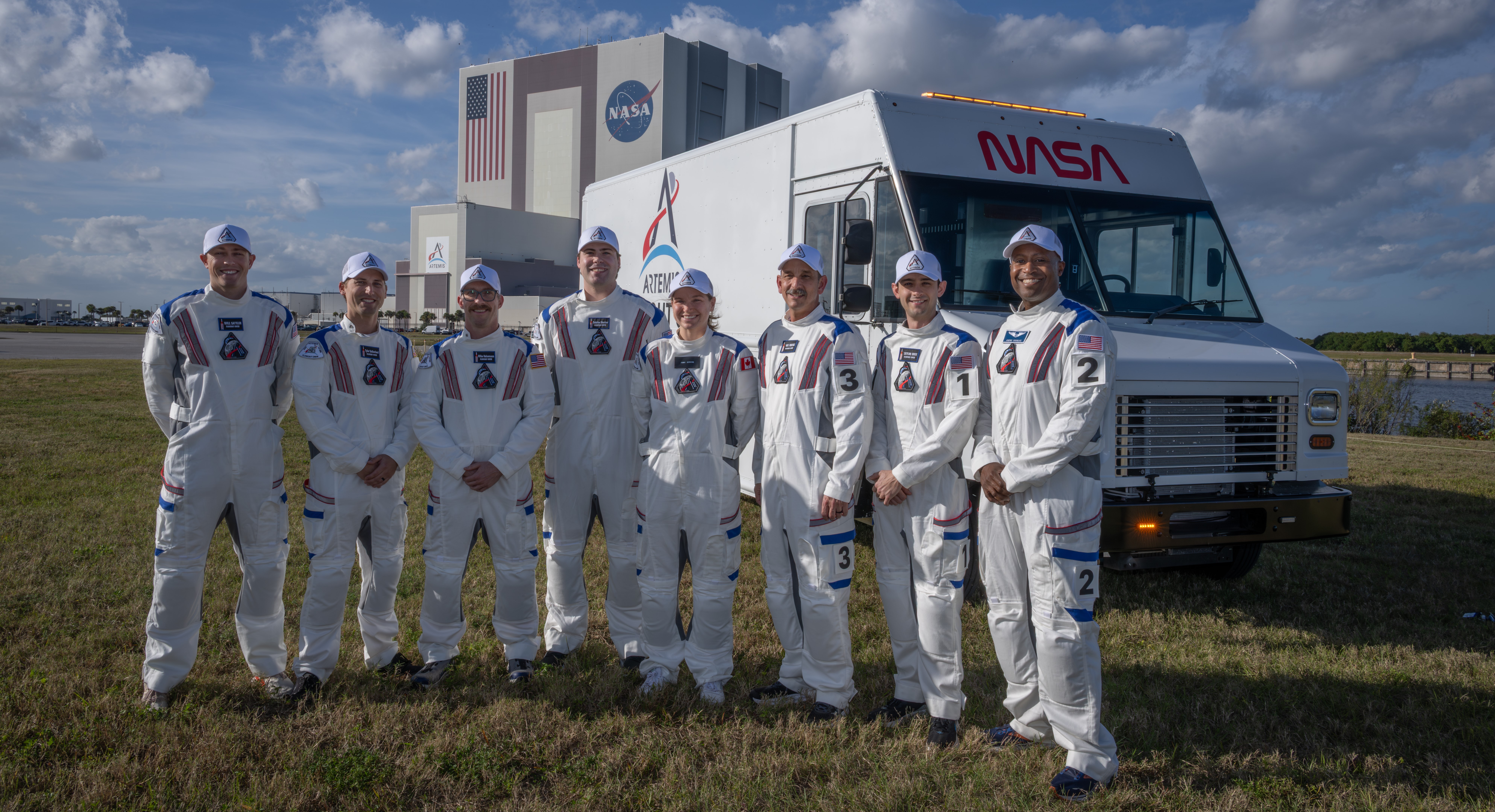
The close-out crew

Coverage

Artemis III assembly

Arty III service module unloaded:

Hardware poor my foot.
 
Last edited:
NASA:

10:18 p.m.

The Artemis II wet dress rehearsal ended today at 10:16 p.m., concluding as planned at T-29 seconds in the countdown.

NASA will hold a media briefing about the test Friday, Feb. 19 at 11 a.m., which will stream on the agency’s website. A 24/7 live stream of the rocket at the pad remains online.

Blog Post: https://www.nasa.gov/blogs/missions...ii-launch-pad-ops-after-successful-fuel-test/

View: https://twitter.com/NASA/status/2024701930501558759
 

Similar threads

Back
Top Bottom