pathology_doc
ACCESS: Top Secret
- Joined
- 6 June 2008
- Messages
- 1,895
- Reaction score
- 2,116
Designed, yes. Shoved into a different airplane? Hmm...This is all taken into account when a radar is being designed.

Designed, yes. Shoved into a different airplane? Hmm...This is all taken into account when a radar is being designed.
Even that simple radar will take a lot of electrical power. My thought was literally stripping the radar out of a Crusader.This would overcomplicate things a lot. Just use a simple radar, AN/VPS-2 style (the ranging-only radar on Vulcan gun), slaved to the optical sight. It would solve the main problem of early Chaparral models - inability to engage targets head-on. Any kind of search/track capability could be added on later models.
Shoved into a different airplane? Hmm...
No, it's really not. Packaging, weight&balance, running the wiring, electrical power...That should be a relatively trivial issue.
No, it's really not. Packaging, weight&balance, running the wiring, electrical power...

Well, they have such radar even on VADS - merely for ranging.Even that simple radar will take a lot of electrical power. My thought was literally stripping the radar out of a Crusader.
AIM-9C didn't have tuneable filters like what Hughes was working on.
Speaking of, I wonder if there are any AIM-9C seekers left to make another batch of AGM-122 Sidearms? Or were they all used up in the 1990s?AIM-9C wouldn't replace an AIM-4 based SARH option. AIM-9C didn't have tuneable filters like what Hughes was working on. That is probably why it was effective as a cheap anti-radiation missile, because it literally was kept too simple.
As far as I know they were all used up (There were only IIRC 885 AIM-9C GCUs left for conversion), there should've been new build AGM-122B Sidearms to replace the AGM-122As but it would appear shortsighted bean-counters nixed that (Fucktards).Speaking of, I wonder if there are any AIM-9C seekers left to make another batch of AGM-122 Sidearms? Or were they all used up in the 1990s?
[expletives deleted]As far as I know they were all used up (There were only IIRC 885 AIM-9C GCUs left for conversion),
Yes, there should have.there should've been new build AGM-122B Sidearms to replace the AGM-122As but it would appear shortsighted bean-counters nixed that (Fucktards).
Creating an AIM-9C seeker again might make sense as a Zuni wing attachment, like the original idea for modular APKWS only upscaled.
Seems like you could more easily rebuild older light SAMs like Roland into a modern equivalent.
There's no reason why someone at the DoD couldn't get Raytheon to dust of the plans to build AGM-122Bs.
Isn't RIM-116 RAM basically SIDEARM (vs. anti-ship missiles) with added IR?
So if it's based on the AIM-9 airframe and it homes in on enemy radars, what's the difference between that and SIDEARM?an added RF-seeker for midcourse guidance (It locks onto and homes in on an AShM's terminal active-radar seeker).
So if it's based on the AIM-9 airframe and it homes in on enemy radars, what's the difference between that and SIDEARM?
All I'm trying to say is that you don't have to wave a magic wand to reopen the AIM-9C line; you already have the basis of what you need in production.
Older Sidewinders from AIM-9C era uses technology that is obsolete and labor intensive.
The way they curved the circuit board was ingenius at the time but the technology has evolved.
Sure, but how long is it going to take to develop that seeker?The main problem I see with using a modified RIM-116 is the presence of the IR terminal seeker, it takes up space that could otherwise be used for a proper broadband PRH seeker like the one from AGM-122A.
About 50 years ago my shop teacher had a Sidewinder logic circuit board and a circular wire-like subframe it mounted inside. Each part was very delicate until secured in the frame. It took about 20 minutes to attach all the pieces, that is if you remembered what went where. It wasn't like it came with a manual. The circuit board was like a coiled up foil, not a flat PCB. Mounting angles in relationship to the subframe was very tight to keep it compact. He didn't have the outer body but did have a gimbal like piece that he said the sensor ultimately mounted upon and two motors attached. He also had a part of the fin section with a small magneto looking generator built in. Pretty cool stuff. He said he worked at a company making car parts then transferred to another division making those parts. He also called them blem parts that were rejected for flaws and could never function in a completed missile. He also stated he knew what was wrong with them but could never tell anyone because its a secret. Our dumb shop teacher wasn't dumb at all. Eye opening class that day.Can you elaborate preferably with technical details, please.

That seems to be a bit of a mischaracterization. Considering the live fire test results of the AIM-47/ASG-18 from a YF-12A, I'd say Hughes knocked it out of the park with that one. Problem is the USAF didn't buy the aircraft it was meant for. (Either the XF-108 or F-12B.) They kept noodling though, and by the time the F-111B came on the scene it had evolved into the AWG-9/AIM-54.AIM-54 (with AWG-9) is Hughes finally getting it right, something like 20 years after it first started working on AAMs, although -47 might have been just as good if any of its platforms had actually been adopted.
My sentence that you quoted ended with: "...although -47 might have been just as good if any of its platforms had actually been adopted", so I did actually address that.That seems to be a bit of a mischaracterization. Considering the live fire test results of the AIM-47/ASG-18 from a YF-12A, I'd say Hughes knocked it out of the park with that one. Problem is the USAF didn't buy the aircraft it was meant for. (Either the XF-108 or F-12B.) They kept noodling though, and by the time the F-111B came on the scene it had evolved into the AWG-9/AIM-54.

He said he worked at a company making car parts then transferred to another division making those parts.
Whoops. That's what I get for multitasking.My sentence that you quoted ended with: "...although -47 might have been just as good if any of its platforms had actually been adopted", so I did actually address that.
I would blame the lack of coffee, but ultimately we are all human.Whoops. That's what I get for multitasking.

Lack of coffee is always an acceptable eexcuse. Especially when I can't make my coffee, because i haven't had my coffee...I would blame the lack of coffee, but ultimately we are all human.
You know they make timed coffee makers, even fancy ones with grinders and bean storage built in, so that you can prep your coffee while you have coffee and it will turn on to make the coffee before you have had your coffee, right?Especially when I can't make my coffee, because i haven't had my coffee...
I still have to put cream and sugar in, and some mornings, that's a struggleYou know they make timed coffee makers, even fancy ones with grinders and bean storage built in, so that you can prep your coffee while you have coffee and it will turn on to make the coffee before you have had your coffee, right?
oof...I still have to put cream and sugar in, and some mornings, that's a struggle
Inescapable death spiral. RIP you.Lack of coffee is always an acceptable excuse. Especially when I can't make my coffee, because i haven't had my coffee...
Thanks for the data!Hello, I'm the guy who dug up the photos.
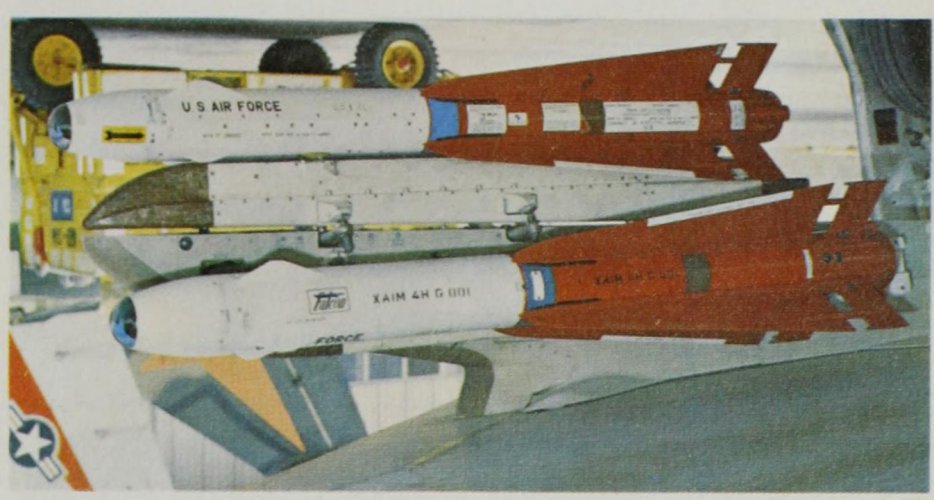
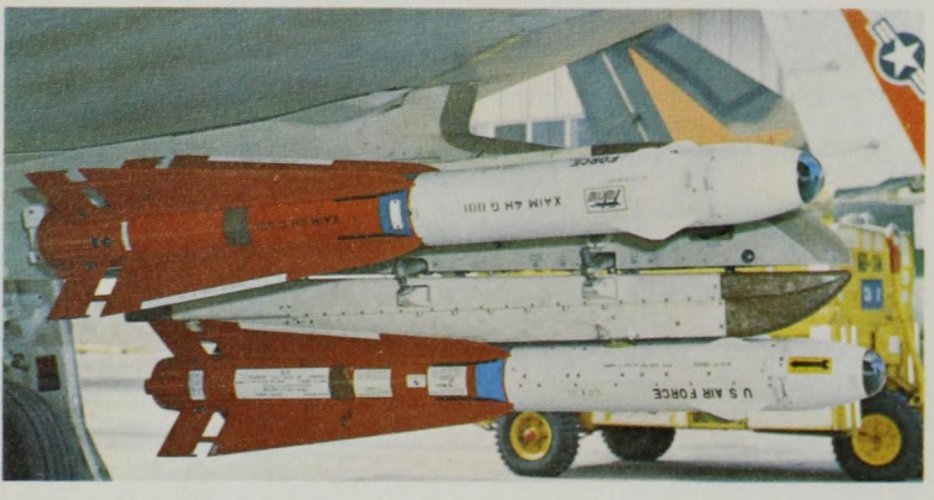
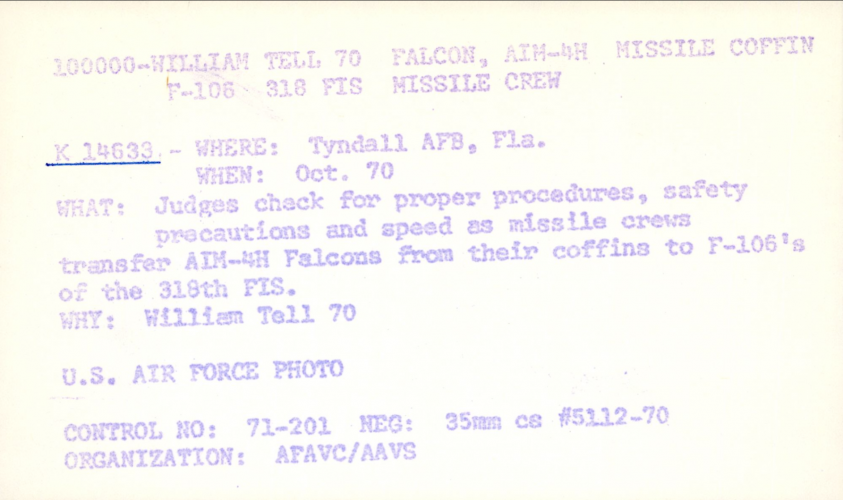
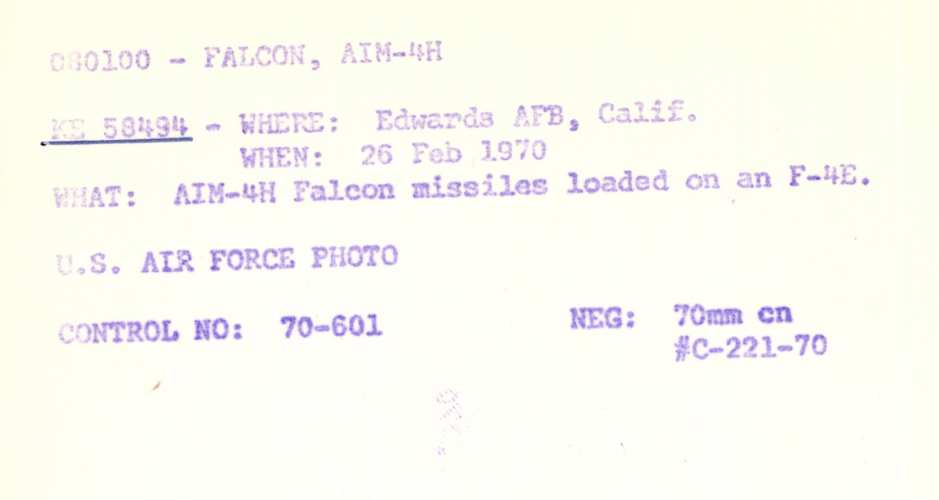
The XAIM-4H had it entered service would have basically been an All-Aspect AIM-9J with IRCCM. The guys at Hughes had ripped out all the electronics and the warhead for solid state electronics, a larger/enhanced warhead (the source doesn't really say whether it was larger or just A better warhead or maybe both), the laser proximity fuse was placed in the space between the rocket nozzle and the fins(you can see them on the one on the top rail in the photo), and Gate width IRCCM (so basically some guy just had the seeker head of the XAIM-4H and took it apart to find a quad segment in there).