Alternate Post War Royal Navy Carrier Rebuilds

Caryina2642

ACCESS: Top Secret
Joined
17 September 2022
Messages
582
Reaction score
311
So i watched Dr Alex Clarke video on the implacable class where he states that they would have been a much better option to rebuild than HMS Victorious. If i remember correctly he stated that Victorious was meant proof of concept before rebuilding the other war time carriers, of course we know what happend with the Victorious Rebuild. So what if instead of Victorious getting rebuilt either Implacable or Indefatigable are rebuild as a proof of concept?
  1. Would this be cheaper and take less time then the Victorious rebuild? If So would the 2nd Implacable also get rebuild along with HMS Eagle?
  2. If all 3 get rebuilt, plus with Ark Royal, what would the RN do with Hermes? Would they keep her as the 5th Carrier when one of the big 4 are in Refit? Or would Hermes get sold once completed to say Australia?
  3. Obviously Eagle and Ark Royal can get Phantomised, but would the Implacables be able to be Phantomoised or are they still too small?
  4. What would happen to Centaur? Converted to a Commando Carrier or Sold on?
  5. Finnally how would this effect the Royal Navy going Forward
 
Victorious' rebuild didn't need to take so long, if only they'd replaced the boilers when the ship was stripped down. In that case she'd likely be completed to an interim standard like Ark Royal and Melbourne, with short steam catapults and a slightly angled deck.

One of the 4 shaft carriers would be inherently better candidates for the sort of hull lengthening etc that Victorious got. If it was the second conversion it would get a full spec rebuild, BS5 catapults and big deck angle.

Wasn't one of the 4 shaft carrier's hull warped from kamikaze hits?
 
The earliest plans were to modernise all 6 wartime armoured carriers starting with the 3 Illustrious class as the largest single group. But:-

Illustrious was in use as the RN trials and training carrier and couldn't be spared.
Formidable in 1949 was found to be in too poor a condition to modernise.
So Victorious became the first to undergo modernisation.

The next group in the plan were the two Implacables. But it needs to be kept in mind that these ships were completely different to Victorious. Most notably a 4 shaft machinery layout that occupied more space in a lower hull that was only about 20ft longer on the waterline. Also they had that extra half hangar that sat a deck lower in the ship than the single Illustrious hangar, and which couldn't be extended forward because it ran into the upper elements of the machinery compartments and those hangar decks were only 14ft clear under the beams. So an entirely new modernisation scheme was required.

According to Friedman Implacable's machinery occupied 40% of her underwater hull volume compared to 30% for Victorious, so less hull volume for all the other stuff to be fitted.

The new hangar deck in Implacable was to be the existing upper hangar and would result in the flight deck having to be raised by 9ft, increasing the displacement and requiring a larger bulging of the hull (15ft) to maintain stability. But that would then limit the number of dry docks in Britain able to accommodate her to just one at Devonport and the floating dry dock at Portsmouth.

The minimum modifications required (higher hangar, new gallery deck to increase accommodation, new flight deck, steam cats, larger lifts, increasing aviation fuel storage, new electronics etc) were also the most expensive and would take the longest time. And even at the end of it she would still lack effective underwater protection due to her machinery subdivision which had longitudinal bulkheads and were therefore vulnerable in the case of assymetric flooding (remember this ship was built to pre-WW2 design practices that WW2 experience had seen changed).

All sorts of changes to the full modernisation plan were considered to both cut cost and shorten the length of time required for modernisation but all met the same problem - a much less effective ship.

Design work continued until at least Feb 1952 and in June the Admiralty decided, on the basis of the experience to date with Victorious, as well as the expected available dockyard resources, to scrap all future modernisation of these ships.

So to answer your first question, conversion of an Implacable would have taken longer and cost more than Victorious as originally planned.
 
The hull of Victorious was NOT lengthened. It's length between the perpendiculars (bp) after modernisation remained exactly the same as when she was completed in 1941 at 673ft.

What did happen was that her bow was reshaped and the flight deck aft given an overhanging extension so that her overall length (oa) increased from 740ft to 778ft.

The unsupported allegation of a warped hull has been made against Formidable.

Implacable suffered no damage while in the Pacific in 1945, only entering combat in June. Indefatigable was the first RN carrier to be hit by a kamikaze on 1st April 1945 but was operational again in a few hours.
 
Last edited:
The way I see it: the six Illustrious were a "rebuilt death trap", for a number of reasons.
-Unlike the Centaurs they were considered heavy carriers, with a number of advantages (faster with more power)
-the six of them however were more like three different classes - but not 2-2-2 : rather 3-1-2
(Indomitable being an "orphan" in the middle of them all !)
-the key difference among the six was the armored hangar, of different heights
-that key difference made each rebuilt different from the other five
-it was almost impossible to apply a "common rebuilt standard" to the six (think of the Essex SCB-125 "package")
-it was almost impossible to bring the six to a "common post rebuilt standard" (SCB-125 again)
-to make matters worse, some in the class took massive WWII damage: Stuka bombs vs Kamikazes

After typing this I wonder. Could we imagine a SCB-125 like rebuilt "standard" that could be applied to make the six similar enough at the end of the process ? How hard would it be to turn the five others to the Victorious level ?
 
After typing this I wonder. Could we imagine a SCB-125 like rebuilt "standard" that could be applied to make the six similar enough at the end of the process ? How hard would it be to turn the five others to the Victorious level ?

Ultimately that was what the Admiralty were trying to do.

But what do you mean by "Victorious level"? As originally envisaged in 1949/50? As finally completed in 1958? Or somewhere in between?Because there were a large number of changes made to Victorious along the way that were not originally envisaged. She was taken in hand for reconstruction in Oct 1950. The problem of the boilers always gets brought up but there were others. For example

Flight deck arrangements - originally to be a straight deck. The angled deck concept wasn't proposed until 7 Aug 1951. It was 1953 before this was being turned into operational hardware on RN cariers. USS Antietam was only fitted with a prototype deck Sept-Dec 1952.
Jet Blast Deflectors - required to operate the more powerful jets safely that it was envisaged that she would operate on completion. Aircraft like the Scimitar & Sea Vixen. The JBDs had to be designed for fitment to Victorious. Earlier carriers operating jets had managed to do without.
Steam catapults - development had started shortly after WW2 and it was proposed that Vic should get them. But trials hardware didn't appear until 1949 on Perseus and it was 1954 before the first (British built) steam cats went into SCB-27C conversions of USS Hancock & Ticonderoga. So until it was proved her design had to remain flexible.
Mirror landing aid - conceived in late 1951 and initial trials in 1952 on Illustrious. Albion was the first to receive it on completion in May 1953 followed by the USS Benningto in Oct.

Comprehensive Display System and associated Type 984 radar - As originally designed the modernisation of both Victorious & Implacable was to include the Type 982/983 radars with a manual aircraft direction system. Type 984/CDS had a long gestation period. It was 1956 before the first full trials version began to work ashore. Victorious became the first ship so fitted. Fitting this equipment was seen as essential in view of ever greater approach speeds of an airborne attacker and therefore the reduced warning times. It was atate of the art for its time and reportedly superior to USN systems. Delayed availibility of this set was cited as something else that would have pushed back the modernisation of Implacable (at one point it was hoped to put two Type 984 radars aboard a morernised Implacable.

Ability to handle guided weapons - initially Firestreak and then Redtop. IIRC this was a very late addition in the modernisation process that required space to be found for workshops for the sophisticated electronics. as well as space for all the technicians needed to maintain it.

So by the time the whole modernisation project was canned in mid-1952, the need for most of these changes was already on the horizon. Each placed its own demands on the modernisation process and affected the time and cost of incorporating them. As the Admiralty found, cutting elements, whether from the above or some of the other physical attributes of the ship, from the plans produced a sub-standard carrier.

Remember Essex class modernisation started in the late 1940s with completion of CV-34 Oriskany:-

SCB-27 - 1 ship (Oriskany) then given SCB-125A Sept 1957 to May 1959
SCB-27A - 8 ships Feb 1949 to Sept 1953. 7 then given SCB-125 March 1955 to Aug 1956
SCB-27C - 3 ships Dec 1951 - Sept 1954. 3 then given SCB-125 Aug 1955 to May 1957
SCB-27C / 125 - 3 ships Oct 1952 to Sept 1955

In addition Antietam received an angled deck but nothing else.

And that programme still left 8 unmodernised Essex
 
But what do you mean by "Victorious level"?
The final shape, as it was retired in 1968 after that fire. But, as you wisely note, that shape wasn't fixed from the beginning - not at all. Which makes the whole rebuilt program of the six, even more a bleak nightmare.

Where the Essex more homogenous between them and easier to upgrades in blocks ? the successive SCB upgrades never seems to have run into Victorious rebuilt horror stories.

Was it the lack of hangar / armored deck intricated relationship ? Seems to have been a colossal PITA. Harmonizing the hangar height and dimensions across the six ran straight into the armored deck - so the ships had to be razed to a certain level, then rebuilt around a specific hangar shape and size... hopefully common to the six at the end of all these rebuilds !
And of course during the ship lives naval aviation went from F4F Wildcat to... F-4 Phantom, no less.
 
If all 3 get rebuilt, plus with Ark Royal, what would the RN do with Hermes? Would they keep her as the 5th Carrier when one of the big 4 are in Refit? Or would Hermes get sold once completed to say Australia?
I think Hermes gets cancelled on the ways and dismantled. Her redesign was conducted from 1951 to 1954, and given the RN's chronic lack of design resources and of course dockyard space it's likely she would have to be cancelled to free up resources for the rebuilds.
 
Was it the lack of hangar / armored deck intricated relationship ? Seems to have been a colossal PITA. Harmonizing the hangar height and dimensions across the six ran straight into the armored deck - so the ships had to be razed to a certain level, then rebuilt around a specific hangar shape and size... hopefully common to the six at the end of all these rebuilds !
And of course during the ship lives naval aviation went from F4F Wildcat to... F-4 Phantom, no less.

The fundamental problem with the Iliustrious / Implacable modernisation was getting additional hangar height, but that is an issue with its origins in the 1930s if not the 1920s.

The USN had been building its carriers since the Yorktown class with a clear hangar height under the beams of roughly 17ft 6in (the Yorktowns were 17ft 3in, Wasp 17ft 2in), a height it then standardised on until the USS United States design of 1949 when they went higher. Forrestal was 25ft.

In the RN hangar heights settled at 16ft (Furious as reconstructed was 15ft). That included Hermes, C & G, Ark Royal and the Illustrious class. But to get extra aircraft capacity into an Illustrious treaty limited tonnage & hull, sacrifices were made in redesigning Indomitable and in the Implacables. So hangar height dropped to 14ft (upper hangar only in Indomitable) out of necessity.

Not a problem if you are designing your own aircraft. But once WW2 came along the FAA was becoming reliant of US aircraft and recognised its carriers had to match the hangar height of US ships. So the switch was made in the Colossus and Audacious classes in the 1942 Programme to 17ft 6in.

The effect can be seen with the Vought F4U Corsair. RN aircraft had 4in cut from each wingtip to that they could be stowed in the hangars of of the three Illustrious class, something that wasn't recognised until about autumn 1943. Indomitable got F6F Hellcats instead. Lack of the latter being available through Lend Lease meant the Implacables got Seafires with a folded height of 13ft 6in.

In designing the reconstruction of the armoured carriers, the Admiralty recognised that in a future war they might again be dependent on a supply of naval aircraft from the USA so better make the reconstructions compatible. So whatever happens that extra hangar height has to be bought somehow.

Then there was the problem of crew accomodation. Like many pre-war and wartime designs the carriers were seriously overcrowded by the end of WW2. More accomodation was to be met by incorporating an extra gallery deck under the flight deck. More depth from keel to flight deck required!

So Victorious was reduced to the level of the hangar deck floor (level with the quarterdeck). Immediately below that level amidships were machinery compartments with the cross ship funnel uptakes, so it couldn't go any lower. It was also so low as to make a side lift impossible. So overall her hull depth increased by a few feet from keel to flight deck (not sure exactly how much as the figures I have don't make sense on a quick read)

Trouble is that when you look at an Implacable (or Indomitable) you can't go down to the floor of the lower hangar as it is a deck lower than in Victorious and was only half length because it ran into machinery compartments at its forward end. So the description of the proposed modernisation of Implacable was to start at the floor of the upper hangar (but that is still about one deck higher than in Victorious. The hangar deck was roughly the equivalent of two normal decks.) With that slightly greater hull depth it was hoped that they might have enough freeboard to fit a side lift.

The original design of the two classes is so far apart that you were never going to get a homogeneous group of 6 ships.

But even the Essex class were not a homogeneous group when you delve into their design layout. Wartime experience meant differences between early & later ships. The one that has caught my eye in the past is the provision for aviation fuel stowage, comparing plans of Lexington CV-16 ordered in Sept 1940 with Shangri-La CV-38 ordered in Aug 1942. In later ships (probably those ordered in 1942 & 1943 but maybe retrospectively applied to vessels still in build depending on stage of construction) the forward avgas tank was moved aft to a point where the hull was beamier, with an extra layer of protection between them and the ship's outer hull. The tanks themselves were changed to a saddle design for greater protection but at a cost of about 10% of their capacity. This all came from lessons learned in the loss of Lexington CV-2 and Wasp CV-7 in 1942. How that was then changed again in the SCB-27A/C conversions I've never delved into.

 
Ultimately they were a sunk cost and rebuild was a waste of resources. But the theory it would be cheaper and faster for The Year of Maximum Danger (1957) led them down the rabbit hole.
 
Ultimately they were a sunk cost and rebuild was a waste of resources. But the theory it would be cheaper and faster for The Year of Maximum Danger (1957) led them down the rabbit hole.

Therein lies one of the problems, the 3 defence policy/strategies that occurred during the lives of ships started during WW2: Year of maximum danger, massive retaliation/limited wars and flexible response. The likes of the Eagle and Ark Royal saw service across all three.
 
The Centaurs were "fresher" (post WWII build and designs, no damage) but considered light carriers like the Colossus/ Majestics - when the six where seen as "heavies". To their credit the six were faster, larger with more power. Albeit Hermes ended not much less capable than Victorious - the irony.
Sometimes I wonder, starting from 1945 - which fleet was the best bargain ? (besides two or three Audacious as the most capable decks)
-four Centaurs ?
or
-six Illustrious ?
They should have considered the "carrier rebuild problem" from that angle. After all, they ended with Victorious and Hermes, one per class fully rebuild.
Say what you want about the Centaurs, they were "freshers" and true twins, not half-half-sisters like the 3-1-2 Illustrious.
 
Apart from the ludicrous Victorious double strip-down rebuild the RN may be considered to have done OK in the 50s when it comes to carriers. It wasn't a good time to be locking in long-term decisions with the extremely rapid pace of change for both aircraft and carrier technology as has been said. Any firm decisions in 1951 will be well and truly surpassed by the time the work is done in 1955 or so.

Probably the best course of action is to 'wing it' through the early-mid 50s and then build a '1952'/CVA01 hybrid carrier designed from about 1957 onwards with all the latest carrier technology and with the likes of the Buccaneer and Mach 2 fighters firmly in mind. Additionally designate the Eagle and Ark as the most important carriers, so they get the most attention for upgrades etc.
 
so if rebuilding implacables will be to difficult, would it be better to give eagle and Ark Royal the full rebuild then? Then also build the 1952 type Carrier design to replace the other war time carriers?
 
The Victorious rebuild, at an actual cost of £19m, cost effectively produced an excellent ship. She was regarded as superior to the rebuilt Eagle in terms of steam conditions and electrical fit and superior to the similar cost Hermes in all but electrical fit. For the real cost of the Victorious refit, see this link.

For details, or at least a summary of what actually survives, of the machinations on the the Implacable refit, see this link.

I no longer believe the Implacable and Indefatigable reconstructions were really cancelled because of challenges with their design or experience with Victorious. For context, the Victorious, Implacable and Indefatigable reconstructions were part of a programme approved by the Admiralty in 1949 that was intended to give a frontline fleet in 1957 consisting of:

Eagle
Ark Royal
Victorious (reconstructed)
Implacable (reconstructed)
Indefatigable (reconstructed)
Centaur
Bulwark
Albion
Hermes

Victorious was to complete, or at least leave her dry-dock, in 1953 when the Implacable and Indefatigable reconstructions would begin. In 1951, the Board approved a programme that added a new construction fleet carrier to lay down in 1956 and complete in 1960. However, when the the original programme went to the Cabinet Defence Committee in 1950 they only approved Victorious and decreed that subsequent reconstructions would have to be approved by the Committee prior to proceeding. This was the trigger for the 1952 Board meeting, the associated memo laid out a costed programme to undertake the Implacable and Indefatigable reconstructions and stated that the board had to approve it prior to it moving to the Chiefs of Staff Committee and then the Cabinet Defence Committee. There was no way those two committees were going to approve the programme. Outside the Navy the push was for cost savings, reductions in steel consumption and a notable hostility to strike carriers. Cancelling the Implacable and Indefatigable project removed the legal requirement to seek approval through those forums, there is a note in the 1952 Carrier Cover stating that 1SL had spoken to the PM about building a new carrier, the 1952 carrier doesn't appear in the surviving records of either Chiefs of Staff Committee or Cabinet Defence Committee - 1SL had done a bureaucratic end run on a hostile approvals chain.

The 1951 programme that contained the new build carrier was never approved beyond the board and was never funded but that ship was the origin of the 1952 carrier. One of my first clues that the published history might be misleading was the amount of work done prior to the notorious Board meeting, including a sketch for a 240,000 SHP steam plant. The 1952 carrier was cancelled in mid 1953, after having already been deferred, meaning that the only ships in the programme that would complete anytime soon were those already under re/construction. Therefore, having been kept very tight, the scope for the Victorious project was opened up and she received all the new toys in what was really a big bang change rather than a process of continuous scope creep as some have suggested.
 
Last edited:
Korea.
Cascades of money start and at Ceasefire stop.

Politically and strategically, those run through panic, and fear this was the opening move before the USSR itself.
Later assessment must be more realistic as it was China to the rescue.
 
@JFC Fuller do you know what the force number plans were, and when they changed? IIUC post 57 DWP the RN was to have 4 fleet carriers and 2 Commando carriers and prior to the 57 DWP the RN was to have 6 fleet carriers. However when was 6 decided on and what was it before that, and so on back to when long range planning restarted in 1948/49?
 
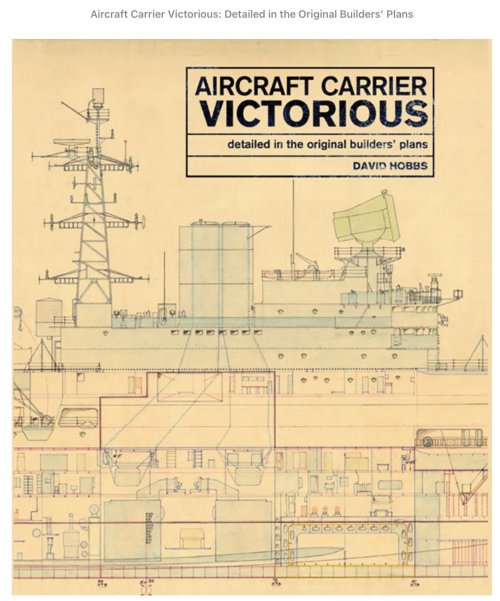
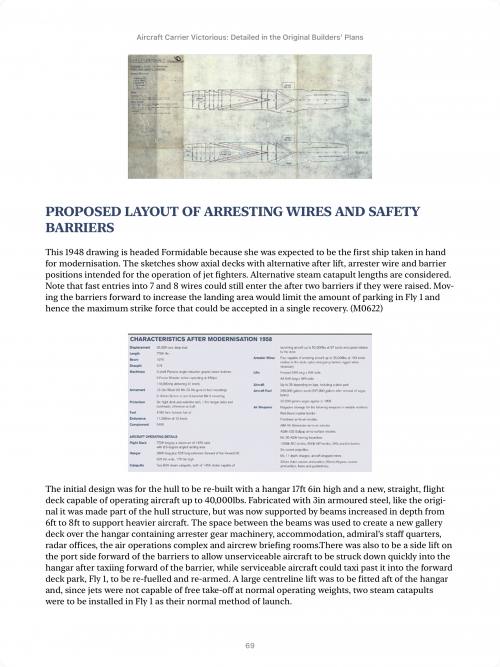
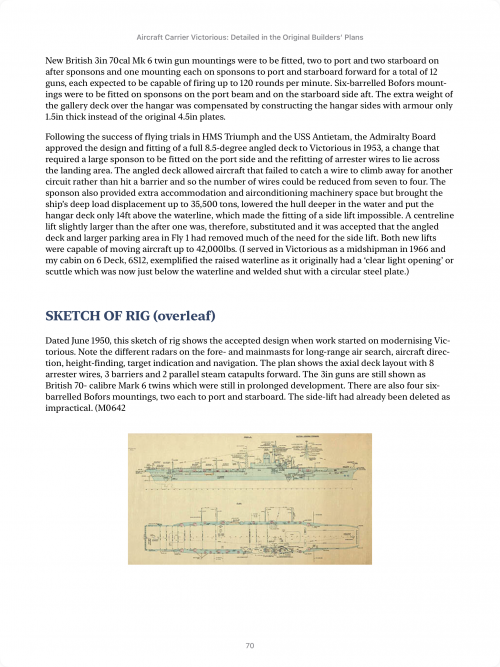
These Screen Grabs from from David Hobb’s book may help in illustrating some of the issues with the modernisation of Victorious. The earlier ‘straight forward’ modernisation and the subsequent ‘tweaking’ as new technologies came through the system. Also, bearing in mind, the fact that the hoped for new build ‘Fleet’ Carrier was still-born meant that what had started as a relatively easy ‘update’ then became a chance/opportunity to put as much of the new kit into the then seemingly only available option….
 

Attachments

  • IMG_0398.jpeg
    IMG_0398.jpeg
    360.5 KB · Views: 33
  • IMG_0393.png
    IMG_0393.png
    1.3 MB · Views: 37
  • IMG_0394.png
    IMG_0394.png
    969.3 KB · Views: 38
Does the 1950 assumption that Victorious would be the first of several rebuilds, completions and new builds explain the decision not to re-boiler her? The original rebuild would have given her a 10 year service life, 1954 to 1964.

Once it became clear that no more rebuilds and new builds would be forthcoming re-boilering became a requirement much like the steam cats, angled deck etc etc, to get 15+ years out of the rebuild?
 
I wonder if HMS Indomitable could have been reconstructed to a standard identical with that of HMS Victorious. As far as I know, her hull was identical with HMS Victorious (as built) up to her lower hangar deck and she (and Victorious) was very slightly longer at the waterline than HMS Illustrious and HMS Formidable. In any case she would have been razed down to her lower hangar deck in a full reconstruction. Unfortunately, as far as I know, a full reconstruction was never even contemplated for her, as she was intended to serve as a training carrier after a relatively minor modernisation refit.

I also wonder if the former lower hangar would have been converted to accomodation spaces in a notional reconstruction of HMS Indefatigable and HMS Implacable. This, along with an enlarged island, might have provided enough extra space for crew and equipment as to avoid the need for a gallery deck. Along with the already higher hangar floor (former upper hangar floor), there might just be enough clearance for a deck-edge lift (with preferably the rear lift moved to port). Preferably the reconstructed Implacables would get the same excellent 48-channel CDS, Type 984 3D radar and AC electric system as Victorious, a full angled deck, a 154' BS-5 at port bow and a 199' BS-5A at the angled deck. The higher flight deck, angled deck and enlarged island would have required considerable extra bulging, but the more powerful four-shaft, eight-boiler machinery should habe ensured that a sufficiently high speed (over 30 kts) be maintained. If they were to be reboilered, they should have been able to keep a better speed than the Audacious-class ships while using their catapults (eight modern high-pressure boilers might even have provided more steam than the turbines would have been able to effectively utilise).
 
There are a number of misconceptions about Indomitable because of early descriptions of how she was modified.

Firstly, both length between the perpendiculars and at the waterline were the same as the Illustrious class - 693ft & 710ft respectively. As completed she was 14ft longer overall but that happened above the waterline.

Secondly, Friedman notes that compared to an Illustrious class, Indomitable was unaltered from keel to upper deck. The upper deck was situated one deck lower than the hangar deck of an Illustrious class. It was the upper deck on which Indomitable's lower hangar was constructed, just as it was in the Implacables.

So, just like the Implacables the lower hangar ran into machinery compartments at the forward end meaning it could only be half length. Internally her layout must have changed considerably above that, compared to an Illustrious, as the upper hangar was 40ft shorter (416ft v 456ft in Illustrious and the upper hangar of the Implacables). That was achieved by moving the forward lift aft by 16ft and the aft lift forward by 24ft and, by implication the location of the gun mounts etc.

So razing her hull to the level of the lower hangar deck floor would have been impossible, just as it would have been in the Implacables.

While the lower hangar deck space in the Implacables would have undoubtedly been repurposed, the Admiralty were still seeking that gallery deck in between the hangar beams for them. Whether it would have been needed in an Indomitable conversion is unknown because, as you note, her modernisation as to be limited. With her Illustrious class machinery layout (3 engine & boiler rooms abreast) there would have been a greater available hull volume below the waterline as I noted in an earlier post. Her hull was also a few feet deeper, keel to flight deck, than an Implacable, in part because of having a 16ft, rather than 14ft, lower hangar. So to add a new taller hangar as carried out in Victorious and proposed for Implacable would have greater stability issues.
 
All this just proves the case for the Medium Fleet Carrier.

The only problem is this idea didn't surface in time to be achieved and if JFC Fuller is right....couldn't pass the politics of committee authorisation.
That likely ties into decisions on Strike and the FAW platform, with the results from angled deck trials.
Things get settled by '55, which is too late. When arguably this ought to be settled in 1948.

If we want more Victorious modernised carriers, we would need more Illustrious class carriers instead of the evolved developments.
 
I have wondered if a more austere modernisation could have been possible for the Implacables?

Angled deck, steam catapults, updated arrester gear, new radars, improved accommodation. Lower hangar converted to other purposes; upper hangar remains 14' and appropriate aircraft embarked.

Gannet fits, as does FJ2/3/4 Fury, and Grumman Tiger. I imagine an evolved Sea Hunter, radar nose and guided missiles.

The aim is to get them back into service as soon as possible and serve to the late 60s, maybe the early 70s, but not longer than that.
 
Apart from the ludicrous Victorious double strip-down rebuild the RN may be considered to have done OK in the 50s when it comes to carriers. It wasn't a good time to be locking in long-term decisions with the extremely rapid pace of change for both aircraft and carrier technology as has been said. Any firm decisions in 1951 will be well and truly surpassed by the time the work is done in 1955 or so.

Probably the best course of action is to 'wing it' through the early-mid 50s and then build a '1952'/CVA01 hybrid carrier designed from about 1957 onwards with all the latest carrier technology and with the likes of the Buccaneer and Mach 2 fighters firmly in mind. Additionally designate the Eagle and Ark as the most important carriers, so they get the most attention for upgrades etc.
Yeah, I too have come to the conclusion that the best opertunity the RN might have had to build new carriers was around 1950's, stating the case that their existing carriers were war torn and obsolete in terms of lessons learnt from the war and the advent of jet aircraft, angled flight deck, steam catapult, etc. Use the USN as an example of new build programs. The Admiralty, promotes the selling of existing carriers off to allied/friendly navy's, with the funds generated from such sales going towards the building of say four modern carriers.........
I also think it would be prudent for the RN/British government to seriously look at joint development of carrier-based aircraft with the USN, rather than trying to build a handful of aircraft for its own ORBAT. In such a scenario, the RN might be able to put more influence into new/modern carrier-based aircraft designs which could operate effectively from these new designed and built carriers, as well as the modernised Essex-class carriers of the USN....

Who knows, such a new designed and built carrier might attract orders from Australia, Canada, Netherlands.....If not purchased new built, they'd sure be enticing as second hand in the 1970's to replace their respective Majestic-class'.

Just a thought....

Regards
Pioneer
 
Last edited:
Yeah, I too have come to the conclusion that the best opertunity the RN might have had to build new carriers was around 1950's, stating the case that their existing carriers were war torn and obsolete in terms of lessons learnt from the war and the advent of jet aircraft, angled flight deck, steam catapult, etc. Use the USN as an example of new build programs. The Admiralty, promotes the selling of existing carriers off to allied/friendly navy's, with the funds generated from such sales going towards the building of say four modern carriers.........
I also think it would be prudent for the RN/British government to seriously look at joint development of carrier-based aircraft with the USN, rather than trying to build a handful of aircraft for its own ORBAT. In such a scenario, the RN might be able to put more influence into new/modern carrier-based aircraft designs which could operate effectively from these new designed and built carriers, as well as the modernised Essex-class carriers of the USN....

Who knows, such a new designed and built carrier might attract orders from Australia, Canada, Netherlands.....If not purchased new built, they'd sure be enticing as second hand in the 1970's to replace their respective Majestic-class'.

Just a thought....

Regards
Pioneer
The Commonwealth as a whole would have benefited from this. Sell the 1943 Light Fleets to the Commonwealth, maybe transfer Implacable and Indomitable to the RAN as proposed, complete Ark and Eagle close to their original design, now major upgrade and build new ships.

Albion, Bulwark, Centaur, Eagle and Ark all operated jets in the 50s and did (or could) have continued to with interim angled decks etc. into the 60s. Skip completing Hermes and build new ships, transferring the others to other navies as the new ships arrive.

Perfect is the mortal enemy of perfectly good enough.
 
I also think it would be prudent for the RN/British government to seriously look at joint development of carrier-based aircraft with the USN, rather than trying to build a handful of aircraft for its own ORBAT. In such a scenario, the RN might be able to put more influence into new/modern carrier-based aircraft designs which could operate effectively from these new designed and built carriers, as well as the modernised Essex-class carriers of the USN....
This is where things could have gotten interesting.
Considering the origins of the F4 as a twin Sapphire with modular front ends for Attack, Reconaisense, Interceptor and Fighter All Weather. There was scope for a variant with more folding wing for example or UK engines and even shoe-horning in UK avionics (AI.18 or AI.23) with UK weapons. Had the FAA got on at the start....

Equally, the FAA might have thrown it's lot on the F8U-III and swung a two aircraft outcome (F4 and F8U-III) as the international partner.

Potential win-win as I'm sure the USN would appreciate either more wing fold or the two fighter option.

But...........the 50's isn't quite the love-fest of Anglo-American relations.
 
Yeah, I too have come to the conclusion that the best opertunity the RN might have had to build new carriers was around 1950's,
We can refine that to from 1947-1948. A decision to scrap or sell or donate extent Fleet CVs and recapitalise on new build. Arguably some 3 Medium Fleet Carriers to follow on from Audacious completion/modernisation.
Laying down by 1950 first of class, long gestation due to revised for angled deck and second incorporating full designed in Angled Flightdeck laid down '53. With third in '55.
Assuming first IOC by '58-59 there's no gap worse than Victorious's modernisation.
Second and third arrive early 60's and shift to scrap Ark Royal can be taken in '63. CVA-01 becomes follow-on effort for Eagle replacement, still cancels in '66.
 
I have wondered if a more austere modernisation could have been possible for the Implacables?

Angled deck, steam catapults, updated arrester gear, new radars, improved accommodation. Lower hangar converted to other purposes; upper hangar remains 14' and appropriate aircraft embarked.

Gannet fits,
Gannet AS.1/4 fits - just - at 13ft 9in. BUT if you need to spread the wings for any reason to carry out maintenance they don't. So anything involving that has to be carried out on flight deck.

Then what happens when the Gannet is replaced in the ASW role in the late 1950s. Both Whirlwind and Wessex helicopters were over 15ft in height.

as does FJ2/3/4 Fury, and Grumman Tiger.

All US types. Don't see Britain buying from the US unless war breaks out. It means spending dollars. Doesn't do much either for the British aircraft industry.

The 14ft Implacable hangar wasn't even tall enough for the folded Sea Fury (15ft 10.5in) let alone Sea Hawk (16ft +) or Scimitar (17ft 4in).

Post her return from the Pacific in 1946, Implacable operated Seafire III/XVII, Firefly, Barracuda, Firebrand and Sea Hornet. She operated Sea Furies for just 10 days (807 squadron in May 1948) when they were the only squadron on board, so, if they managed to get them down the forward lift there would have been no problem accommodating them spread in the hangar.
I imagine an evolved Sea Hunter, radar nose and guided missiles.

The aim is to get them back into service as soon as possible and serve to the late 60s, maybe the early 70s, but not longer than that.
Hunter was already 13ft 2in in height. I think much will depend on how far out from the undercarriage the wing fold is made. But what is this supposed to replace given that Sea Vixen & Scimitar had long development histories dating back to early post war i.e. a point where the RN had already committed to a 17ft 6in hangar height (1942 to match US ships). Given small production runs can the RN afford the cost of developing and procuring a third aircraft of that generation?

Finally you have forgotten the AEW platforms. Skyraider at 15ft 8in (maybe slightly more) and Gannet AEW.3 at 16ft 10in.

In any modernisation of these ships, even if they are only going to survive until the early 1970s, the one thing that really must happen is that the hangar height MUST be increased from 14 / 16ft to at least 17ft 6in. Otherwise aircraftcdesign and the numbers that can be carried become ever more restrictive.
 
All this just proves the case for the Medium Fleet Carrier.

The only problem is this idea didn't surface in time to be achieved and if JFC Fuller is right....couldn't pass the politics of committee authorisation.
That likely ties into decisions on Strike and the FAW platform, with the results from angled deck trials.
Things get settled by '55, which is too late. When arguably this ought to be settled in 1948.

If we want more Victorious modernised carriers, we would need more Illustrious class carriers instead of the evolved developments.

We can refine that to from 1947-1948. A decision to scrap or sell or donate extent Fleet CVs and recapitalise on new build. Arguably some 3 Medium Fleet Carriers to follow on from Audacious completion/modernisation.
Laying down by 1950 first of class, long gestation due to revised for angled deck and second incorporating full designed in Angled Flightdeck laid down '53. With third in '55.
Assuming first IOC by '58-59 there's no gap worse than Victorious's modernisation.
Second and third arrive early 60's and shift to scrap Ark Royal can be taken in '63. CVA-01 becomes follow-on effort for Eagle replacement, still cancels in '66.
The problem is that this is financially dead on arrival. The entire reason they were rebuilding the WW2 carriers was that there wasn't expected to be the money for new carriers until 1954, and given the reality of the cancellation of the Maltas, the original Eagle, and the last four Centaurs they weren't wrong about that. With this in mind, more likely it would have to be on timing similar to the 1952 Fleet Carrier, which has the problem of the RN already committed to rebuilding Victorious.

This on top of all the issues JFC outlined.
 
The problem is that this is financially dead on arrival. The entire reason they were rebuilding the WW2 carriers was that there wasn't expected to be the money for new carriers until 1954, and given the reality of the cancellation of the Maltas, the original Eagle, and the last four Centaurs they weren't wrong about that. With this in mind, more likely it would have to be on timing similar to the 1952 Fleet Carrier, which has the problem of the RN already committed to rebuilding Victorious.

This on top of all the issues JFC outlined.
Ok so let me put the scenario a little differently. Say Victorious got sunk in action during the war. What does the RN do? The two options I can see is either modernize one of the 5 remaining armored carriers instead or complete Hermes early alongside the other three Centaur class carriers and on the same standard. Which then creates a gap in the order of battle come 1959 but that's a different question. Which of the two is it?
 
Ok so let me put the scenario a little differently. Say Victorious got sunk in action during the war. What does the RN do? The two options I can see is either modernize one of the 5 remaining armored carriers instead or complete Hermes early alongside the other three Centaur class carriers and on the same standard. Which then creates a gap in the order of battle come 1959 but that's a different question. Which of the two is it?
Most likely it's Hermes. The survey that found Formidable to be in such terrible condition was only conducted after design work for the Illustrious rebuild was well underway. As such, I expect it would be decided it's too late to pivot to, say, Indomitable, and Hermes makes more sense as an interim ship while design work is started early for the Implacables.
 
If we want more Victorious modernised carriers, we would need more Illustrious class carriers instead of the evolved developments.
This is where things could get interesting. But answering the question it brings up, is likely to require a battle-by-battle analysis of the carriers to assess if the differences between possible Illustrious airwings and OTL.
The question is does the outcome differ significantly enough....
 
This is where things could get interesting. But answering the question it brings up, is likely to require a battle-by-battle analysis of the carriers to assess if the differences between possible Illustrious airwings and OTL.
The question is does the outcome differ significantly enough....
Probably not. Implacable and Indefatigable arrived too late - by the time they commissioned the Allies had firm superiority at sea. As for Indomitable, in practice she generally didn't carry more aircraft than the Illustrious-class. I'm given to understand the lower hangar was usually given over to accommodation or workshops.
 
Probably not. Implacable and Indefatigable arrived too late - by the time they commissioned the Allies had firm superiority at sea. As for Indomitable, in practice she generally didn't carry more aircraft than the Illustrious-class. I'm given to understand the lower hangar was usually given over to accommodation or workshops.
That's my suspicion. That changing the design achieved far less than the longer term consequences of doing so.
Had they just continued building Illustrious class, the modernisation to Victorious standard would be affordable and pass through committees.
 
Most likely it's Hermes. The survey that found Formidable to be in such terrible condition was only conducted after design work for the Illustrious rebuild was well underway. As such, I expect it would be decided it's too late to pivot to, say, Indomitable, and Hermes makes more sense as an interim ship while design work is started early for the Implacables.
The next logical question is if Hermes comes in 1953-54 at similar cost to her sisters what is getting built in 1954-59? Yeah in theory you saved up about 39 million pounds but this doesn't mean they necessarily remain on budget.
 
Probably not. Implacable and Indefatigable arrived too late - by the time they commissioned the Allies had firm superiority at sea. As for Indomitable, in practice she generally didn't carry more aircraft than the Illustrious-class. I'm given to understand the lower hangar was usually given over to accommodation or workshops.
As far as Indomitable is concerned, until 1944/45 she was generally carrying MORE aircraft than an Illustrious. For example40 (at the start of the operations):-

April 1942 in the IO - 45 v Formidable with 33.
Aug 1942 Operation Pedestal - 51 v Victorious with 40
July 1943 Operation Husky - 55 v Formidable 45.

Come July 1944 when Indomitable returned to the IO she faced two problems:-

1. There was a shortage of Hellcats for FAA use at this time. The decision by the USN in late 1943 to increase the numbers of replacement air groups and aircraft reserves in the Pacific meant fewer were supplied to Britain. So while 8 Corsair squadrons were formed between June and Dec 1943, only 4 squadrons received Hellcats, two of which were intended for Indomitable.

So while squadrons began with 10 aircraft, Corsair squadrons were increased to 14 and then 18 during 1944 by breaking up some of the squadrons. While there were enough Hellcats to increase squadron strength to 14 there were never enough until mid-1945 to bring them up to the level of the Corsair squadrons even when one squadron was disbanded in May 1945.

Plans to give her a Firefly squadron were cancelled.

While she was at Sydney refitting June-Aug 1945 the squadrons were being increased in size to 18. So had Operation Olympic gone ahead it is likely her air group would have been larger than off the Sakishima Gunto.

2. Due to her radar fit (She had a US SM-1 fighter direction radar, the only wartime British carrier to have it) she was selected as the flagship of ACS 1. That meant her crew numbers were even greater than those on the other carriers, so part of the lower hangar was temporarily repurposed for additional accommodation.

The lower hangar in the Indomitable (and Implacables) was accessed only by the after lift. So using the lower hangar for more extensive maintenance jobs made sense as it limited the number of aircraft movements between the flight deck and hangar spaces.
 
Gannet AS.1/4 fits - just - at 13ft 9in. BUT if you need to spread the wings for any reason to carry out maintenance they don't. So anything involving that has to be carried out on flight deck.

Then what happens when the Gannet is replaced in the ASW role in the late 1950s. Both Whirlwind and Wessex helicopters were over 15ft in height.


All US types. Don't see Britain buying from the US unless war breaks out. It means spending dollars. Doesn't do much either for the British aircraft industry.

The 14ft Implacable hangar wasn't even tall enough for the folded Sea Fury (15ft 10.5in) let alone Sea Hawk (16ft +) or Scimitar (17ft 4in).

Post her return from the Pacific in 1946, Implacable operated Seafire III/XVII, Firefly, Barracuda, Firebrand and Sea Hornet. She operated Sea Furies for just 10 days (807 squadron in May 1948) when they were the only squadron on board, so, if they managed to get them down the forward lift there would have been no problem accommodating them spread in the hangar.


Hunter was already 13ft 2in in height. I think much will depend on how far out from the undercarriage the wing fold is made. But what is this supposed to replace given that Sea Vixen & Scimitar had long development histories dating back to early post war i.e. a point where the RN had already committed to a 17ft 6in hangar height (1942 to match US ships). Given small production runs can the RN afford the cost of developing and procuring a third aircraft of that generation?

Finally you have forgotten the AEW platforms. Skyraider at 15ft 8in (maybe slightly more) and Gannet AEW.3 at 16ft 10in.

In any modernisation of these ships, even if they are only going to survive until the early 1970s, the one thing that really must happen is that the hangar height MUST be increased from 14 / 16ft to at least 17ft 6in. Otherwise aircraftcdesign and the numbers that can be carried become ever more restrictive.
I recall a photo of a folded Sea Hornet in the hangar of one of the Implacables, it showed the hangar deckhead, or more to the point, the space between the girders. I wish I could find it, as I think it showed the height between the girders was a couple of feet higher. This doesn't help striking down and moving aircraft beyond the 14' height folded, but there was space to unfold aircraft for maintenance in the hangar.

Another thought, the aft section of the upper hangar could have been dropped a couple of feet using the upper part of the lower hangar. Two different deck heights are far from ideal, but it would solve the problem. Smaller aircraft are stowed forward, larger aft. Maybe a scissor lift or ramp between the two.
 
Last edited:
The next logical question is if Hermes comes in 1953-54 at similar cost to her sisters what is getting built in 1954-59? Yeah in theory you saved up about 39 million pounds but this doesn't mean they necessarily remain on budget.
TBH I suspect Implacable and Indefatigable get the green light for modernization and it would take to at least 1957. And then the Sandys review in 1957 hits and the Royal Navy has four fleet carriers already: Eagle, Ark, Implacable, and Indefatigable.

What they do with an extra, unmodernized Centaur is an interesting question I don't have an answer to.
 
TBH I suspect Implacable and Indefatigable get the green light for modernization and it would take to at least 1957. And then the Sandys review in 1957 hits and the Royal Navy has four fleet carriers already: Eagle, Ark, Implacable, and Indefatigable.

What they do with an extra, unmodernized Centaur is an interesting question I don't have an answer to.
I would say they would either convert it to a commando carrier or try to sell it another nation like Australia or India. How many Commando Carriers does the RN need?
Also if you upgraded the Implacables will be able to operate F4s?
 
Back
Top Bottom