Okay, so counter value use only. What I meant was the RV a sphere/cylinder/flare (Like the Polaris A3's Mk-2 RV) or sphere/cone type RV (Like the Mk-4/5 RVs)?
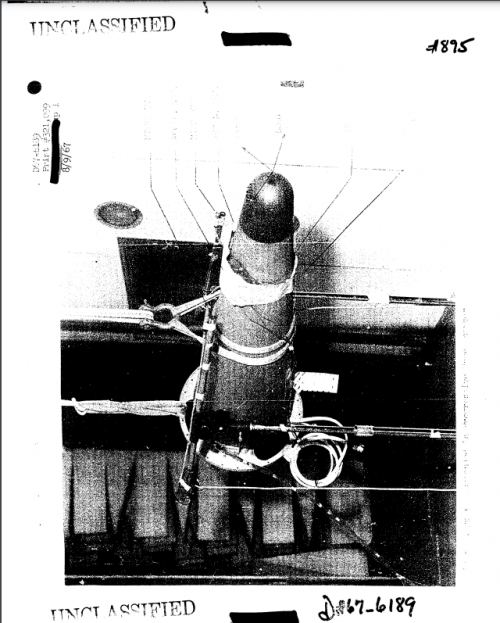
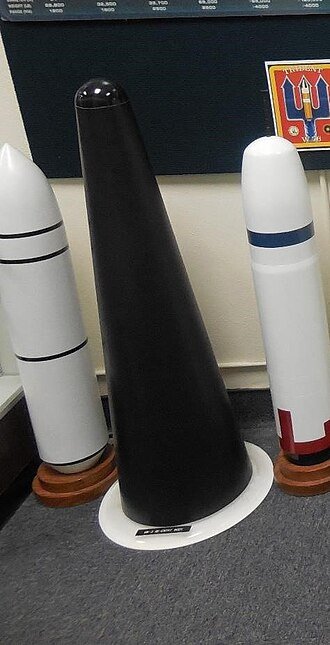
Here are some photos of the Mk3 RB. The first two are museum exhibits, and therefore may have some differences vs production aeroshells. The last is from a declassified report, and should be more representative of a production aeroshell.

The design is somewhat similar to the Mk4 in terms of external appearance, but scaled down, and with a blunter nosetip.
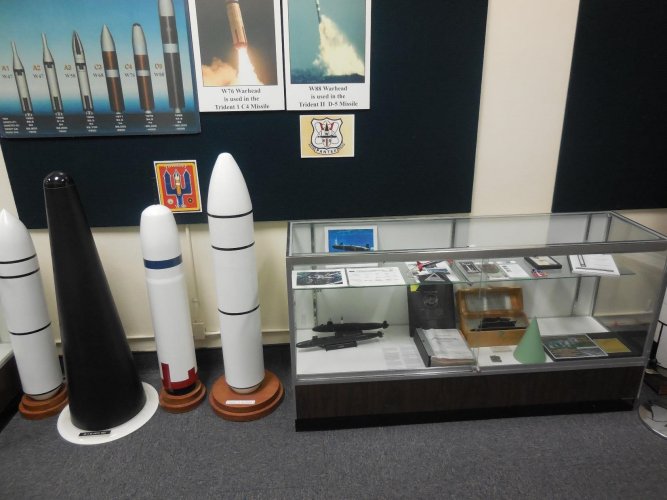
US_missile_and_rocket_hallway_(navy) W68 Mk3.jpg

330px-W68_Mk3_reentry_body.jpg

20220330031832 Mk3 W68 RB photo (pdf in gdrive).png

Originally, the Mk3 was planned to be much closer to the Mk4 or Mk12 in terms of nosetip design and (in particular) aeroshell beta. This seems to have fallen apart during the later phases of development, although technically speaking, the beta of the final Mk3 design has never been directly disclosed. I suspect it is probably slightly lower than the Mk4, which has a beta of 1800.

For more detailed information on the clusterfuck around the Mk3/W68 and how LLNL blew their shot at the Mk4/W76 contract, Tracing the Origins of the W76 is an excellent (if fairly lengthy and heavily overly redacted) read.

It's worth reading no matter if you're interested in the Mk3/W68, Mk4/W76, or just in general nuclear weapon developments, as there is a ton of unique information in there. For example, there are fascinating tidbits about the development process of the W78 scattered throughout there, as well as some interesting hints about the origins of B77/B83 programs. It also touches on many other systems from similar eras ranging from the W68 through the B83.

There is discussion about the alternate versions of MM III, C3, and C4 payloads, discussion about the many transient design variants of the C3/C4 and how they evolved into the final version, discussion about the ULMS (aka the earliest concept of what eventually became the Trident/Ohio class submarine and Trident I/II missiles), discussions about abandoned designs, discussions about designs that were repeatedly dropped, picked back up, dropped again, then finally merged into final programs, and so much more.

It is pretty painful to see how much of the document was redacted, but don't skip over the redacted sections entirely, as if you do, you'll miss the scattered blocks of unredacted text interspaced between long chunks of redacted pages, many of which contain fascinatingly useful and interesting tidbits.

And of course, it is basically the definitional source on the origins of the W76. It doesn't cover the W68 in as much detail as I'd like, but it mentions enough to explain many of that design's weaknesses and some of the lore of its origins, even if the whole W68 yield clusterfuck is almost completely redacted in this particular document (some limited mention of it is alluded to in some of the surviving unredacted text, but most discussions of it are not covered in here – it's unclear if this is because it was viewed as out of scope, or if it was originally covered but then had almost all mentions of the issue completely excised by the (clearly at least somewhat over-zealous) censor that handled the redactions for declassifying this document).

The programs which evolved into the Mk4/W78 include the: Mk18, advanced ballistic concept (ABC), EXPO warhead, ULMS warhead, and Mk400. You can see that the SPO originally (as per tradition) advocated for reuse of the Mk3/W68 to some extent in the missile that eventually became the C4, but as usual (again per tradition) this quickly fell apart and a whole new warhead and aeroshell design was ultimately used for the C4. Admittedly there was some initial consideration of using a heavily modified variant of the Mk3/W68 at one point to economize on costs, but this also fell apart quickly enough, in no small part due to LLNL's foolish arrogance.

You can read this report on Wikimedia commons via this link: https://upload.wikimedia.org/wikipe...rkins_2003_Tracing_the_Origins_of_the_W76.pdf
 
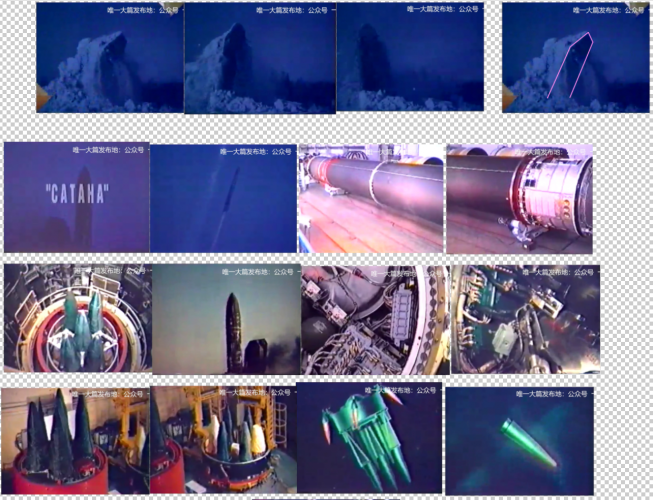
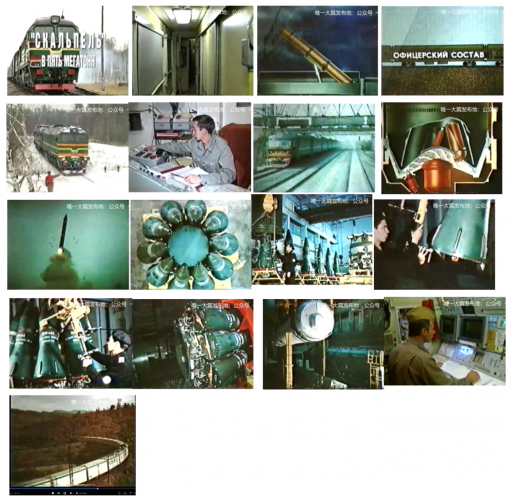
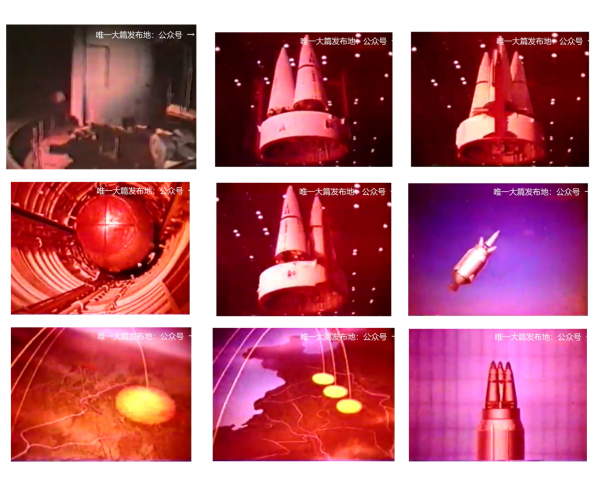
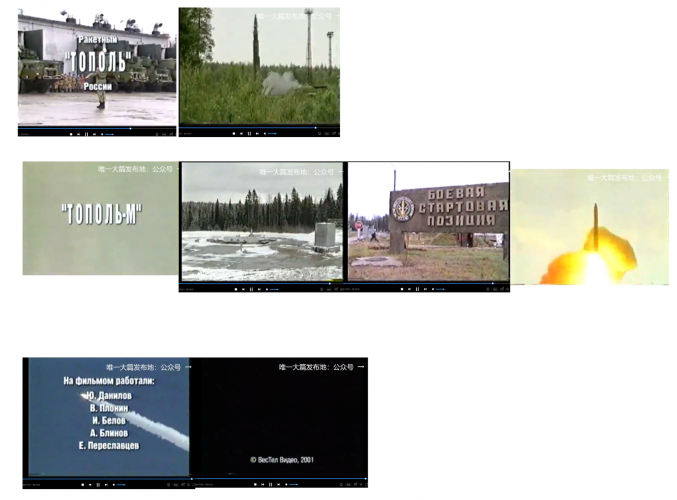
I discovered these video still montages on a Russian military forum (https://glav.su/forum/5/2015/threads?page=251), but in spite of many searches, I have been unable to find the videos from which they were taken. Can anyone find them? I am particularly interested in the videos of the SS-11 Mod 3 (UR-100K) and SS-24 (RT-23), which have some really interesting views of their MRV/MIRV warheads. Thanks for your help!
 

Attachments

  • Nukes_R-36M2_glav.su1.png
    Nukes_R-36M2_glav.su1.png
    1.3 MB · Views: 67
  • Nukes_RT-23_glav.su1.png
    Nukes_RT-23_glav.su1.png
    2 MB · Views: 62
  • Nukes_UR-100K_glav.su1.png
    Nukes_UR-100K_glav.su1.png
    1.7 MB · Views: 56
  • Topol-M_glav.su1.png
    Topol-M_glav.su1.png
    1.1 MB · Views: 64
I discovered these video still montages on a Russian military forum (https://glav.su/forum/5/2015/threads?page=251), but in spite of many searches, I have been unable to find the videos from which they were taken. Can anyone find them? I am particularly interested in the videos of the SS-11 Mod 3 (UR-100K) and SS-24 (RT-23), which have some really interesting views of their MRV/MIRV warheads. Thanks for your help!
The UR-100K only appears to have 3 warheads. What was the yield of each?

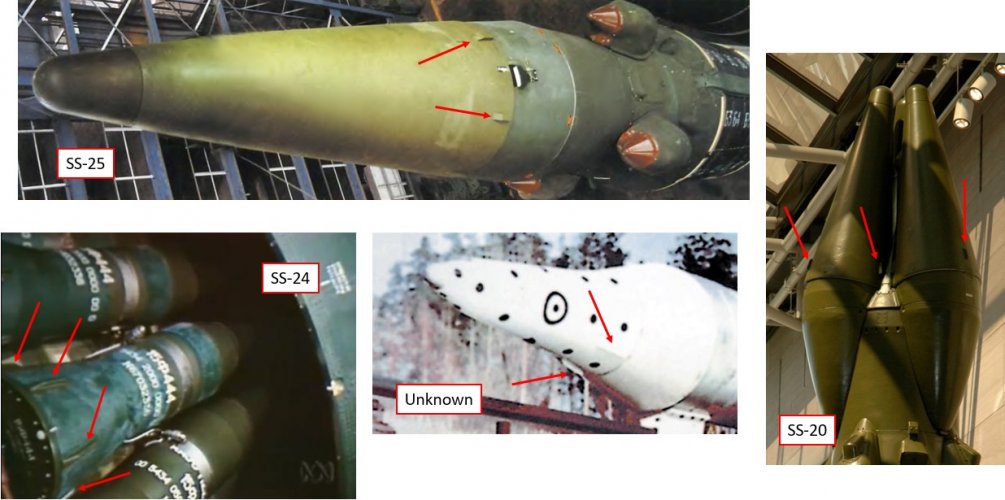
Do the RT-23 warheads appear to have small fins at the bottom, or just me?
 
I discovered these video still montages on a Russian military forum (https://glav.su/forum/5/2015/threads?page=251), but in spite of many searches, I have been unable to find the videos from which they were taken. Can anyone find them? I am particularly interested in the videos of the SS-11 Mod 3 (UR-100K) and SS-24 (RT-23), which have some really interesting views of their MRV/MIRV warheads. Thanks for your help!
This is an off topic question.

What will be the head on RCS of the RV of SS-24? From the pics, I can see that the RV is as tall as a human being.

Will it's RCS be less than 0.1 sqm. I am talking from BMD point of view.
 
What a criminally stupid project. Particularly the nukes only lasting a year in orbit and thus they should have been recovered... dumb, dumb, dumb.
No, FOBS is launch into orbit but have the RVs drop before finishing one orbit. Leaving the nukes up there kinda violates the name of Fractional-Orbit Bombardment System.
 
No, FOBS is launch into orbit but have the RVs drop before finishing one orbit. Leaving the nukes up there kinda violates the name of Fractional-Orbit Bombardment System.
To be honest, I picked this thread because "nukes in space" (=/= orbit, admittedly) but there might be a better one... somewhere.
 
The UR-100K only appears to have 3 warheads. What was the yield of each?

Do the RT-23 warheads appear to have small fins at the bottom, or just me?
Most sources state the yield as 350 kt, but Vitaly Kataev, a high-level official from the Yuzhnoye Design Bureau, gave a yield of only 220 kt. As for the small fins at the bottom of the RT-23 warheads, they were likely designed to help control the roll of spin-stabilized RVs during reentry. Some (not all) of Russia's more modern RVs had them; see the attached montage for examples. This was to prevent roll resonances (or even causing the RV's spin to reverse), which could cause instability resulting in a large accuracy loss or even catastrophic failure.
 

Attachments

  • RV roll tabs_Russia.jpg
    RV roll tabs_Russia.jpg
    148.8 KB · Views: 31
What a criminally stupid project. Particularly the nukes only lasting a year in orbit and thus they should have been recovered... dumb, dumb, dumb.

Okay, I already responded to the first part of your post (i.e. not FOBS), but let me respond to this one.

This was a study. It was not a development project. Now I happen to run studies involving groups of very smart people for my day job. Our studies serve a certain type of purpose. But there are other purposes for studies. One purpose of studies is to demonstrate that some ideas are bad ones. A related purpose is to indicate if there are any major pitfalls to an idea or ideas.

We don't know the details of why this study happened. I've looked at this subject of basing nukes in space off and on for a very long time, but never tried to dig deeply into it. However, it seems that there was a fair amount of discussion in the late 1950s of putting nuclear weapons in space. At that time, spaceflight was really unknown and mysterious. It may have seemed to some people in charge that putting nuclear weapons in orbit might have some value. Maybe they would be too high and too fast to shoot down, and therefore less vulnerable than bombers and maybe less expensive than missiles in silos. Maybe. Who knows?

So you ask a contractor to do a study, and then they come back some time later and they say "Here's what we discovered... and oh, yeah, there are some big problems..."

Electronics lifetime was a big problem back then. Unless an electronic system was relatively simple, like a radio, it required a lot of maintenance. There were certainly efforts to make electronics last longer and they were ultimately successful. But the Douglas engineers in 1961 did their analysis and determined that the mean lifetime of this kind of satellite in orbit was one year. And that would require replacing each satellite after a year, but also require bringing the expired satellite down after a year. Doing the study gave them some firmer data and then they could go and tell the generals and the undersecretaries and the secretaries that maybe orbiting bombs was a bad idea.

So that's why they did this study.

Hans and I will have more about this stuff in the future. It took some odd turns.
 
However, it seems that there was a fair amount of discussion in the late 1950s of putting nuclear weapons in space. At that time, spaceflight was really unknown and mysterious. It may have seemed to some people in charge that putting nuclear weapons in orbit might have some value. Maybe they would be too high and too fast to shoot down, and therefore less vulnerable than bombers and maybe less expensive than missiles in silos. Maybe. Who knows?

So you ask a contractor to do a study, and then they come back some time later and they say "Here's what we discovered... and oh, yeah, there are some big problems..."

Electronics lifetime was a big problem back then. Unless an electronic system was relatively simple, like a radio, it required a lot of maintenance.
A lot of 1940s/50s scifi involves nukes in space, mostly hanging in manned space stations (for the maintenance crew to replace the vacuum tubes in the electronics). And the Main Characters are stuck dealing with the politics of this setup.

Wish I would remember the name of the story of a kid who became a space cadet and on a leave back on earth is getting nagged by his parents about how he no longer stands up straight but always in a hunch, ready to reach out and grab something. This setup ring a bell for anyone?
 
Wish I would remember the name of the story of a kid who became a space cadet and on a leave back on earth is getting nagged by his parents about how he no longer stands up straight but always in a hunch, ready to reach out and grab something. This setup ring a bell for anyone?

That sounds like something from one of Robert Heinlein's 1950s SF novels.
 
A lot of 1940s/50s scifi involves nukes in space, mostly hanging in manned space stations (for the maintenance crew to replace the vacuum tubes in the electronics). And the Main Characters are stuck dealing with the politics of this setup.

Wish I would remember the name of the story of a kid who became a space cadet and on a leave back on earth is getting nagged by his parents about how he no longer stands up straight but always in a hunch, ready to reach out and grab something. This setup ring a bell for anyone?

I am guessing you did not read the article, which starts:

https://www.thespacereview.com/article/5325/1

"In Robert Heinlein’s 1948 novel Space Cadet, the protagonist is tasked with the mission of maintaining a constellation of “rocket bombs” in orbit around the Earth, capable of being called down on a city at a moment’s notice and destroying it."
 

Similar threads

Back
Top Bottom