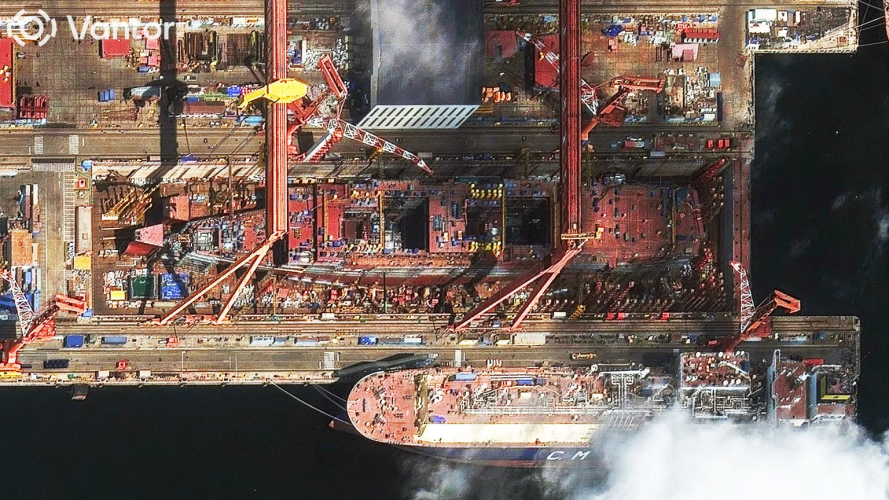
A lot of it comes down to dutiful preparations, a sufficiently skilled and experienced workforce and possible carry over design elements from previous carriers like Fujian. The latter can't be confirmed or denied 100%, might as well be entirely different
I mean, even the US recycled a lot of design elements from earlier carriers.
 
There will probably be very little difference between the Type 004 and the Fujian carriers.
 
Totally agree SUPER=BUG, to think that the 004 is going to be 100,000 tonne displacement is just crazy. That will probably happen on the Type 005 whenever that comes out.
 
Totally agree SUPER=BUG, to think that the 004 is going to be 100,000 tonne displacement is just crazy. That will probably happen on the Type 005 whenever that comes out.
My lower bound displacement estimate:
315m x 42.8m x 12m x 0.63 x 1.025
= 104,500 T

Upper bound displacement estimate:
321m x 43.5m x 13m x 0.63 x 1.025
= 117,200 T

So I would estimate somewhere between 105-110k. Based off current satellite image measurements.
 
Well if it does prove to be over 100,000 tonnes that will make it heavier than the US Ford class carriers.
 
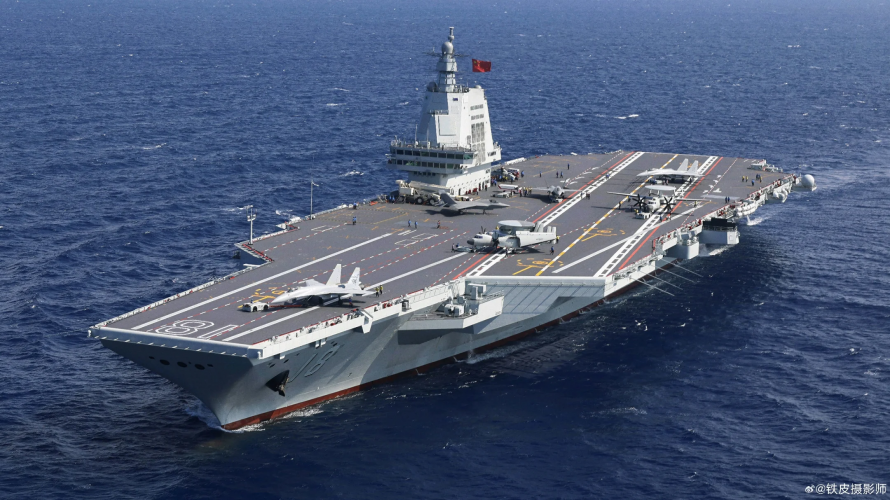
Satellite imagery cannot be entirely accurate, but based on it, 004 seems to be at least 1-2m wider at the waterline than both Nimitz and ford. With the waterline length estimated to be between 315-320m, roughly equivalent to the ford and Nimitz. It's almost assuredly to be larger in displacement than both ford and Nimitz.
 
Satellite imagery cannot be entirely accurate, but based on it, 004 seems to be at least 1-2m wider at the waterline than both Nimitz and ford. With the waterline length estimated to be between 315-320m, roughly equivalent to the ford and Nimitz. It's almost assuredly to be larger in displacement than both ford and Nimitz.
Time will tell.
 
I would think, and i would hope, that PLAN just couldn't resist the temptation to make 004 couple meters wider and a few meters longer just to rightfully claim theirs is the biggest. At any rate, PLAN is building a CVN in the same class as Ford, the largest and most advanced carrier and warship ever built. And this from a Navy that not even two decades ago didn't even have an operational carrier. That is beyond impressive (though this is usual for China nowadays).
 
It only seems obvious that Chinese carriers would be larger than American ones no? It's not just a 'dick measuring contest.'

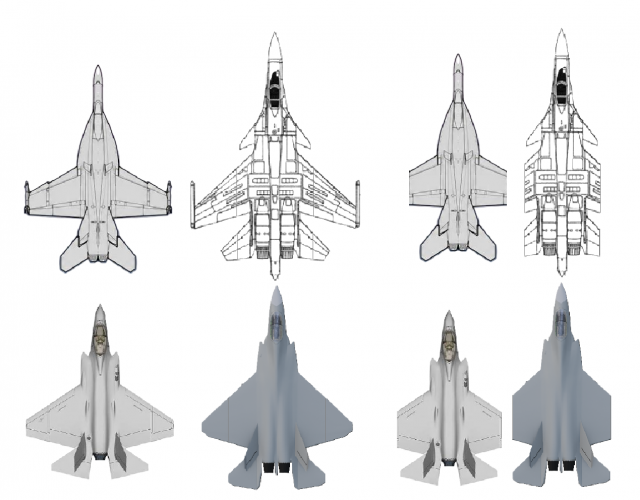
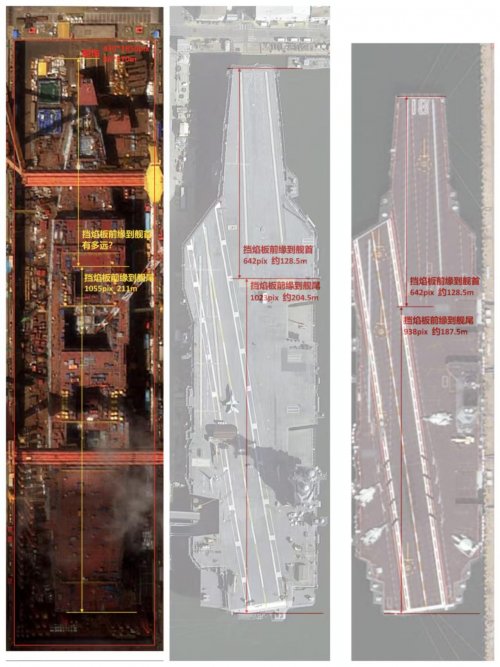
Flankers are massive aircraft, far larger than the hornet. While J-35 in footprint is closer to F-22, than F-35. Chinese aircraft are larger on average, and need more space for storage and maneuvering on deck. Ford's EMALS are also what around 5-10m shorter than EMCAT's found on the Fujian. So a longer carrier would need to compensate for a similar clearance on the deck, as for a wider hangar.

I tried to make it accurate to scale. J-15/Su-33 does have the F/A-18E/F beat in the folded dimension, but is far longer. Image of Fujian is shown for how longer emcats, on a shorter deck leads to sub-optimal forward elevator placement.
 

Attachments

  • 1787459712545.png
    1787459712545.png
    438.1 KB · Views: 111
  • 1787459986063.png
    1787459986063.png
    668.8 KB · Views: 77
Last edited:
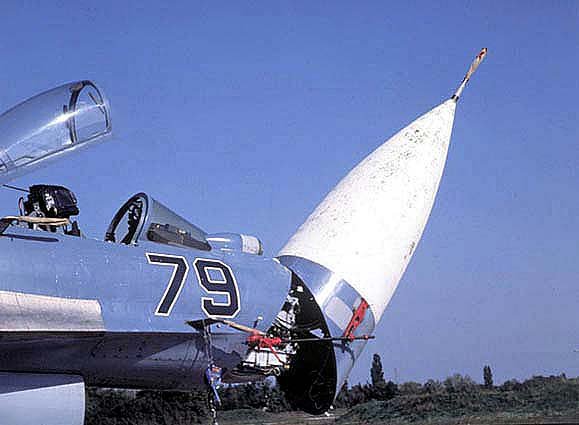
The Su-33 has a radar cone that folds back, and its tail is shorter than that of the Su-30.
The area of the Su-33 ready for flight is 111 m2, and when folded, it is 82 m2
The area of the F/A-18E/F ready for flight is 80 m2, and when folded, it is 73 m2.
F‑35C — 82 m² / 74 m²
 

Attachments

  • SCR0020.jpg
    SCR0020.jpg
    35.4 KB · Views: 84
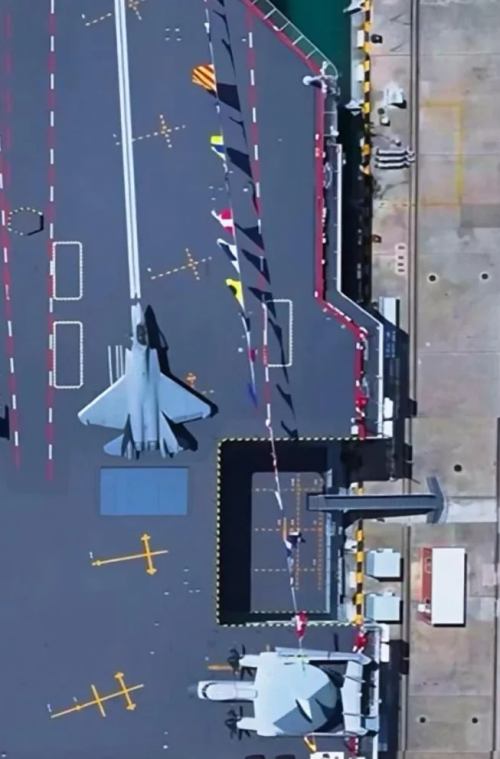
Anyway, the bigger the aircraft carrier, the bigger the deck, the more it benefits planes like the J15T. I don’t know why, but when I look at this picture, the carrier always ends up looking too small and the fighter jet too big.

;P
 

Attachments

  • 1000023714.png
    1000023714.png
    3.8 MB · Views: 106
It should be a bit of both. Compared to a fighter jet, the ship does look smaller, and on the other hand, it's also due to the shooting angle.
 
It only seems obvious that Chinese carriers would be larger than American ones no? It's not just a 'dick measuring contest.'

Flankers are massive aircraft, far larger than the hornet. While J-35 in footprint is closer to F-22, than F-35. Chinese aircraft are larger on average, and need more space for storage and maneuvering on deck. Ford's EMALS are also what around 5-10m shorter than EMCAT's found on the Fujian. So a longer carrier would need to compensate for a similar clearance on the deck, as for a wider hangar.

I tried to make it accurate to scale. J-15/Su-33 does have the F/A-18E/F beat in the folded dimension, but is far longer. Image of Fujian is shown for how longer emcats, on a shorter deck leads to sub-optimal forward elevator placement.

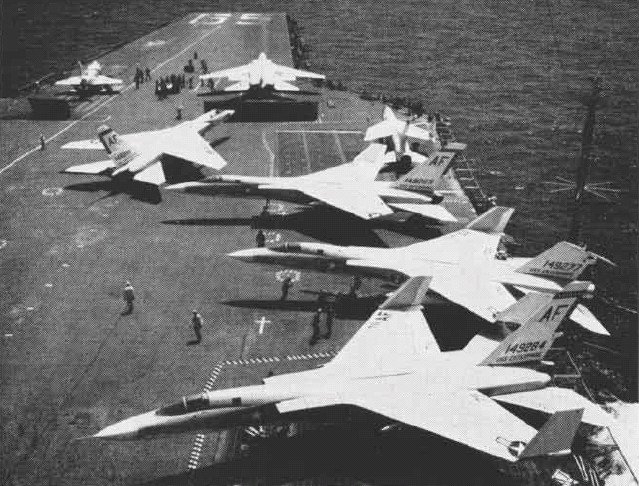
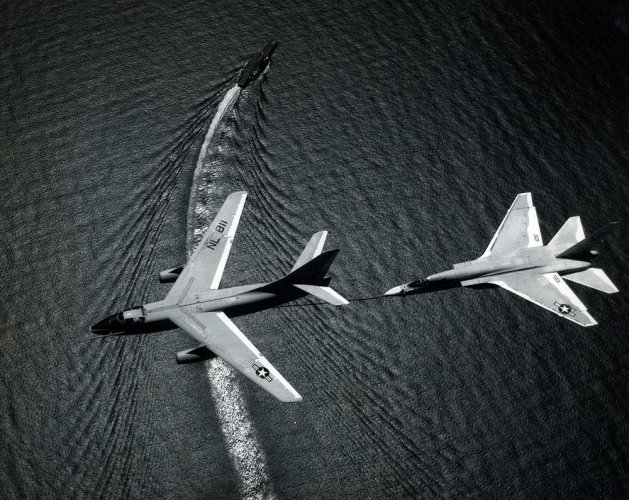
In the second picture both the Vigilante and A3D are from Ranger. Both types were heavier and had a bigger footprint than the Flanker.
 

Attachments

  • A3J-1s_VAH-7_CVAN-65_NAN11-62.jpg
    A3J-1s_VAH-7_CVAN-65_NAN11-62.jpg
    111 KB · Views: 64
  • umnyfra2a8o51.jpg
    umnyfra2a8o51.jpg
    191.7 KB · Views: 61
Last edited:
In the second picture both the Vigilante and A3D are from Ranger. Both types were heavier and had a bigger footprint than the Flanker.
Except they weren't only operating Vigilante and A3D's on the Ranger were they? These were at most a couple per carrier, while the main fighter fleet consisted of much smaller aircraft, so I don't see your point.

I'd imagine if the USN had to exclusive operate A3D sized aircraft from their carriers, they would opt to build one with a larger deck as well.
 
Except they weren't only operating Vigilante and A3D's on the Ranger were they? These were at most a couple per carrier, while the main fighter fleet consisted of much smaller aircraft, so I don't see your point.
A carrier air wing in the early 1960s had either a Heavy Attack Squadron of A-3s or of A-5s, followed by a short period where the EA3s, RA3s, and EKA3s operated in nearly squadron strength between the three with a full squadron of A-5s.

This then went to a full squadron of 10-12x EKA-3s and a detatchment of ~3-6x RA-5Cs, with one squadron of A-6s, one squadron of A-1s, and one squadron of A-7s. Plus two squadrons of F-4s or F-8s.


I'd imagine if the USN had to exclusive operate A3D sized aircraft from their carriers, they would opt to build one with a larger deck as well.
We did enlarge the flight decks from Forrestal to Enterprise to Nimitz, and IIRC again to Ford.
 
Except they weren't only operating Vigilante and A3D's on the Ranger were they? These were at most a couple per carrier, while the main fighter fleet consisted of much smaller aircraft, so I don't see your point.

I'd imagine if the USN had to exclusive operate A3D sized aircraft from their carriers, they would opt to build one with a larger deck as well.
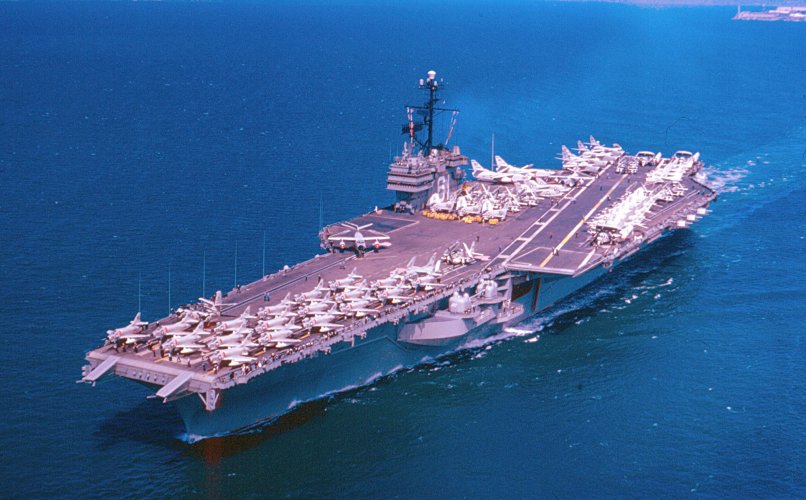
A "couple"? There are seven, that we can see, on Ranger here. But yeah, it wasn't like there were decks of A3Ds and Vigilantes. Still, carriers in the 80s/90s regularly deployed with 24 Tomcats in addition to squadrons of Hornets/Corsair IIs and Intruders along with tankers, Prowlers, Hawkeyes, Vikings, helicopters, etc. It was normal for them to head out with 80+ aircraft of multiple types. The whole, "we need bigger carriers because Flankers" is weak sauce.
 

Attachments

  • USS_RANGER_august_1961_(6051633307).jpg
    USS_RANGER_august_1961_(6051633307).jpg
    517.9 KB · Views: 68
A "couple"? There are seven, that we can see, on Ranger here. But yeah, it wasn't like there were decks of A3Ds and Vigilantes. Still, carriers in the 80s/90s regularly deployed with 24 Tomcats in addition to squadrons of Hornets/Corsair IIs and Intruders along with tankers, Prowlers, Hawkeyes, Vikings, helicopters, etc. It was normal for them to head out with 80+ aircraft of multiple types. The whole, "we need bigger carriers because Flankers" is weak sauce.
China would never park it's aircraft on the deck like that. Unlike US carriers with no fixed parking spots, parking locations are all painted on the deck of Chinese carriers, meaning it's quite easy to tell that 001 and 002 will never carry more than 24 fixed wing aircraft on the deck, and Fujian will not carry more than 30-32. With the size of 004, I wouldn't expect more than 40-42 on the deck at once.

And also, Chinese Emcat track length is still 10m longer than that of Ford's, so I'd still expect the 004 to be longer than Ford, even if as you say, the flankers size is irrelevant to deck size.

My question is, why did the US navy continue to increase the size of it's carriers all the way to the arbitrary size limit of 100k tons? Why would it be surprising for China to construct a carrier larger than that? Especially considering the ship building prowess of China.
 
My question is, why did the US navy continue to increase the size of it's carriers all the way to the arbitrary size limit of 100k tons? Why would it be surprising for China to construct a carrier larger than that? Especially considering the ship building prowess of China.
Suezmax?
 
The whole, "we need bigger carriers because Flankers" is weak sauce.

The aircraft carried by an aircraft carrier and their operations make certainly a stronger case for size and space requirements than the assumption of "my carrier needs to be bigger than other carriers". One could say that's the weakest of sauces that people default to when they don't grasp how hardware development works which is dictated by a framework of hard specifications that have to be met.
 
The aircraft carried by an aircraft carrier and their operations make certainly a stronger case for size and space requirements than the assumption of "my carrier needs to be bigger than other carriers". One could say that's the weakest of sauces that people default to when they don't grasp how hardware development works which is dictated by a framework of hard specifications that have to be met.
You forget that us men are involved in these decisions. And if there's an opportunity to make it bigger than the enemy's then it will be taken. I give you the Tsar Bomba as a prime example. Everyone involved knew its size was just a political statement. As long as men are men and fueled by testosterone it will be thus. If all these decision makers were fueled by reason and logic we wouldn't be building 100k tonne weaponry in the first place because we'd be talking through our differences.
 
For an aircraft carrier, the larger the "aircraft," the larger the "carrier." The size of carrier-based aircraft is getting larger, right? So wouldn't it make sense to build carriers bigger, to reserve space for future aircraft, as well as radar, cooling, and power systems?

Thinking that comes from below the belly button isn't worth much.
 
For an aircraft carrier, the larger the "aircraft," the larger the "carrier." The size of carrier-based aircraft is getting larger, right? So wouldn't it make sense to build carriers bigger, to reserve space for future aircraft, as well as radar, cooling, and power systems?

Thinking that comes from below the belly button isn't worth much.
You'd think so, but then I see carriers like the Vikrant, where it has tiny elevators designed for MiG-29Ks with folded wings and Tejas, and nothing larger.. and wonder.. why didn't they consider future growth? especially in a clean sheet design.
 
You'd think so, but then I see carriers like the Vikrant, where it has tiny elevators designed for MiG-29Ks with folded wings and Tejas, and nothing larger.. and wonder.. why didn't they consider future growth? especially in a clean sheet design.
Would be interesting to know how they arrived at the size for Ford.
 

Similar threads

Back
Top Bottom