I mean, yes but then you gotta circle the globe in the Southern Ocean to get from the Pacific to the Indian Ocean. There's no good way to avoid the Strait of Malacca!

Which means you're limited to a 333m long ship in practice, and like the edit you missed (you posted while I was editing) I think the Nimitz/Ford size carrier is in the sweet spot for maximum flight deck size versus power needed.
Well, if it gives you a decisive advantage, why not Chinamax?
Yes, Malacca is desirable for Indian Ocean. It isn't exactly unavoidable, as Brits found out in 1942.
But for Pacific, it's a broadly irrelevant limitation.
 
I forgot a point. The various straits and canals have size limits.

NeoPanamax limits:​
1200ft/366m long​
168ft/51.25m abeam​
50ft/15.2m draft​
Suezmax limits:​
1300ft/400m long​
254ft/77m max, 164ft/50m at max draft​
66ft/20.1m draft​
223ft/68m height​
Malaccamax limits:​
1093ft/333m long​
197ft/60m abeam​
67ft/20.5m draft​

So those make the real physical size limits on your ships.

Combined maxes:​
1093ft/333m long​
164ft/50m beam​
50ft/15.2m draft​
223ft/68m height above waterline​

So you can't get longer than a Ford, but you could get wider and deeper if you needed to. The Ford's flight deck is roughly twice the beam, so assuming that holds true as a general design thing you could make a flight deck 20m wider than the Fords, and draw another 3m deeper. In addition, the top of the mast could be 25ft/8m higher for a longer radar horizon.
Ford class displaces 100k at full load, the box of LxBxD is 164k m3 for a fineness ratio of .61
Max box size is 253k m3 times fineness of .61 makes the "globalmax carrier" have a displacement of around 155k tons.

So there you go. ~155k tons with a flight deck 20m wider than a Ford-class is the absolute biggest you can get. Flight deck area of ~26,000m3, which is ~25% more flight deck than a Ford.

Thing is, a carrier like that has a L:B ratio of 6.66. That's relatively short and fat. The "beamy" Burke-class has a L:B of 7.65, and the stubby South Dakota class battleships had a L:B of 6.1. That means needing more horsepower for the same speed. Lots more power, actually, the Ford-class has a L:B of 8.15 and has ~260k horsepower for 30+ knots. The SoDaks had 11,000 more horsepower than the North Carolinas (same displacement, better L:B ratio) and made less speed. Your globalmax carrier is going to need at least 450k horsepower, better install the equivalent of 4x A1B reactors!

Edit: I think the Nimitz/Ford size carrier is the sweet spot for "largest flight deck versus horsepower needed", but I haven't sat down and ground the numbers.

At that point it would be a barge rather than a carrier.
 
I mean, yes but then you gotta circle the globe in the Southern Ocean to get from the Pacific to the Indian Ocean. There's no good way to avoid the Strait of Malacca!

Which means you're limited to a 333m long ship in practice, and like the edit you missed (you posted while I was editing) I think the Nimitz/Ford size carrier is in the sweet spot for maximum flight deck size versus power needed.
It's not like the USN never studied the problem. :D
 
Thing is, a carrier like that has a L:B ratio of 6.66. That's relatively short and fat. The "beamy" Burke-class has a L:B of 7.65, and the stubby South Dakota class battleships had a L:B of 6.1. That means needing more horsepower for the same speed. Lots more power, actually, the Ford-class has a L:B of 8.15 and has ~260k horsepower for 30+ knots. The SoDaks had 11,000 more horsepower than the North Carolinas (same displacement, better L:B ratio) and made less speed. Your globalmax carrier is going to need at least 450k horsepower, better install the equivalent of 4x A1B reactors!
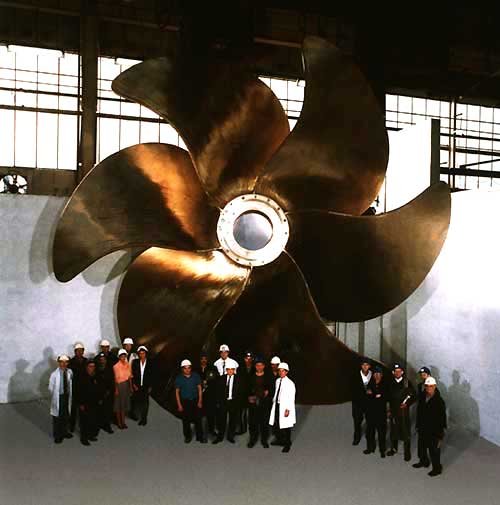
And at 450,000 horsepower the reactors are the least of your problems, this runs into shaft load limitations like a brick wall. Even on six shafts you'd probably need completely new-design propellers that can absorb that much power and there's still no word that that's even possible aside from very old rumors on the Fords.
 
And at 450,000 horsepower the reactors are the least of your problems, this runs into shaft load limitations like a brick wall. Even on six shafts you'd probably need completely new-design propellers that can absorb that much power and there's still no word that that's even possible aside from very old rumors on the Fords.
If you look up, "world's largest piston engine" it's over 100,000shp driving a single screw.

https://en.wikipedia.org/wiki/Wärtsilä-Sulzer_RTA96-C

https://en.wikipedia.org/wiki/Emma_Mærsk
 

Attachments

  • hquuimxi3hd21.jpg
    hquuimxi3hd21.jpg
    25.6 KB · Views: 105
I forgot a point. The various straits and canals have size limits.

NeoPanamax limits:​
1200ft/366m long​
168ft/51.25m abeam​
50ft/15.2m draft​
Suezmax limits:​
1300ft/400m long​
254ft/77m max, 164ft/50m at max draft​
66ft/20.1m draft​
223ft/68m height​
Malaccamax limits:​
1093ft/333m long​
197ft/60m abeam​
67ft/20.5m draft​
Malacca isn't a canal, it's a wide open strait between the Indian Ocean and the Pacific. Only limiting dimension is depth, unless you think the 65 kilometre minimum width of the strait is actually limiting. The only functional limiting factor for a Chinese CV is the size of Chinese naval harbours. If they want to assert their power further afield, then Suez rears its head, and you get the 254ft/77m size for the flight deck.
The only carriers going through the Panama locks are going to be amphib ships.
 
I forgot a point. The various straits and canals have size limits.

NeoPanamax limits:​
1200ft/366m long​
168ft/51.25m abeam​
50ft/15.2m draft​
Suezmax limits:​
1300ft/400m long​
254ft/77m max, 164ft/50m at max draft​
66ft/20.1m draft​
223ft/68m height​
Malaccamax limits:​
1093ft/333m long​
197ft/60m abeam​
67ft/20.5m draft​

So those make the real physical size limits on your ships.

Combined maxes:​
1093ft/333m long​
164ft/50m beam​
50ft/15.2m draft​
223ft/68m height above waterline​

So you can't get longer than a Ford, but you could get wider and deeper if you needed to. The Ford's flight deck is roughly twice the beam, so assuming that holds true as a general design thing you could make a flight deck 20m wider than the Fords, and draw another 3m deeper. In addition, the top of the mast could be 25ft/8m higher for a longer radar horizon.
Ford class displaces 100k at full load, the box of LxBxD is 164k m3 for a fineness ratio of .61
Max box size is 253k m3 times fineness of .61 makes the "globalmax carrier" have a displacement of around 155k tons.

So there you go. ~155k tons with a flight deck 20m wider than a Ford-class is the absolute biggest you can get. Flight deck area of ~26,000m3, which is ~25% more flight deck than a Ford.

Thing is, a carrier like that has a L:B ratio of 6.66. That's relatively short and fat. The "beamy" Burke-class has a L:B of 7.65, and the stubby South Dakota class battleships had a L:B of 6.1. That means needing more horsepower for the same speed. Lots more power, actually, the Ford-class has a L:B of 8.15 and has ~260k horsepower for 30+ knots. The SoDaks had 11,000 more horsepower than the North Carolinas (same displacement, better L:B ratio) and made less speed. Your globalmax carrier is going to need at least 450k horsepower, better install the equivalent of 4x A1B reactors!

Edit: I think the Nimitz/Ford size carrier is the sweet spot for "largest flight deck versus horsepower needed", but I haven't sat down and ground the numbers.
18000TEU Malaccamax limits:370m long*59m beam*25m draft
 
It actually comes from a mix of WW2 and size of aircraft. Essex-class carriers could handle about one hundred aircraft while the Midways could physically handle over one hundred thirty


But the command and control side could not handle more than one hundred airframes

Modern carriers have decided to aim for an operating wing of about seventy because that"s easier to handle on the flight deck than the ninety to one hundred that could physically fit on the carrier
What the US learned was there was a physical limit to the number of planes a carrier could operate. Too many and you have planes sitting unused much of the time. Too few and you can't cycle strikes efficiently.

With the Midways, the number of planes was, in 1944 - 45 too many. They couldn't cycle strikes and use all the planes available. But it was accepted as the Navy saw that it was highly likely that near future planes would be larger meaning fewer in number and the problem would resolve itself. There was room for growth.

Today, that's why US carriers hover around 75 to 80 aircraft. That number allows for a certain percentage down for maintenance and those that are operational can be cycled efficiently. Thus, you launch a strike of say, 12 to 20 aircraft over about 30 minutes. You then have a lull where you respot for the next strike and for the inbound last strike. The last strike lands and is parked over about 30 minutes. You then launch a new strike from the spotted aircraft for it. Reset for another cycle where the last strike that just landed gets maintenance, refueled, and rearmed.
 
Malacca isn't a canal, it's a wide open strait between the Indian Ocean and the Pacific. Only limiting dimension is depth, unless you think the 65 kilometre minimum width of the strait is actually limiting. The only functional limiting factor for a Chinese CV is the size of Chinese naval harbours. If they want to assert their power further afield, then Suez rears its head, and you get the 254ft/77m size for the flight deck.
The only carriers going through the Panama locks are going to be amphib ships.
The straits of Malacca have maximum allowed dimensions, which includes length.

https://en.wikipedia.org/wiki/Malaccamax

The mix between all 3 (Panamax, Suezmax, and Malaccamax) gives you the overall limits globally. And if you're trying to drive through someplace during peacetime, you might want to be within the stated limits. If you're not, the nation owning that water can tell you F OFF AND GO AROUND. Enforced by their national military, and likely every other nation playing by the rules.


What the US learned was there was a physical limit to the number of planes a carrier could operate. Too many and you have planes sitting unused much of the time. Too few and you can't cycle strikes efficiently.

With the Midways, the number of planes was, in 1944 - 45 too many. They couldn't cycle strikes and use all the planes available. But it was accepted as the Navy saw that it was highly likely that near future planes would be larger meaning fewer in number and the problem would resolve itself. There was room for growth.

Today, that's why US carriers hover around 75 to 80 aircraft. That number allows for a certain percentage down for maintenance and those that are operational can be cycled efficiently. Thus, you launch a strike of say, 12 to 20 aircraft over about 30 minutes. You then have a lull where you respot for the next strike and for the inbound last strike. The last strike lands and is parked over about 30 minutes. You then launch a new strike from the spotted aircraft for it. Reset for another cycle where the last strike that just landed gets maintenance, refueled, and rearmed.
Exactly. But even with vastly more efficient flight deck layouts, that number of maximum operational aircraft is still about 100. Even during the most-packed-decks era of the 1980s and early 1990s, the Nimitz class went with ~90 aircraft.
 
At the moment, not all aircraft carriers like to run around the world. If a few are permanently stationed on this side of the Pacific, there's really no need to worry about these restrictions.
 
With the Midways, the number of planes was, in 1944 - 45 too many. They couldn't cycle strikes and use all the planes available.

I was under the impression those extra aircraft were attrition replacements for aircraft either damaged beyond repair or damaged to the point they weren't considered worth the effort to fix and pushed over the side after being stripped of salvageable equipment.
 
I was under the impression those extra aircraft were attrition replacements for aircraft either damaged beyond repair or damaged to the point they weren't considered worth the effort to fix and pushed over the side after being stripped of salvageable equipment.
Nope. By 1944, the US had sufficient replacement planes and pilots to simply send more out to replace losses. Even as early as Midway this was occurring. The Saratoga was overloaded with planes including ones to replace losses--in part--of the carriers in that battle. Carrier battles were found to be intermittent where you had a few days of battle, then a period of as much as weeks until the next battle.

Today, losses are very low, so all the planes are considered operational ones. The ones in the hanger are usually there for longer term maintenance because they have some issue that can't be resolved quickly.

What was found important was to be able to launch a strike, then re-spot the planes on deck, land a strike, re-spot for a launch, and keep that cycle up. In battle, this kept pressure on the enemy by never letting up on the air strikes. They came relentlessly with only short or no intervals between them.
 
Nope. By 1944, the US had sufficient replacement planes and pilots to simply send more out to replace losses. Even as early as Midway this was occurring. The Saratoga was overloaded with planes including ones to replace losses--in part--of the carriers in that battle. Carrier battles were found to be intermittent where you had a few days of battle, then a period of as much as weeks until the next battle.

Today, losses are very low, so all the planes are considered operational ones. The ones in the hanger are usually there for longer term maintenance because they have some issue that can't be resolved quickly.

What was found important was to be able to launch a strike, then re-spot the planes on deck, land a strike, re-spot for a launch, and keep that cycle up. In battle, this kept pressure on the enemy by never letting up on the air strikes. They came relentlessly with only short or no intervals between them.
The difference between theory and experience.
 
At the moment, not all aircraft carriers like to run around the world. If a few are permanently stationed on this side of the Pacific, there's really no need to worry about these restrictions.

That seems very short sighted for ships that last half a century, at least in US usage.
 
Last edited:
Early war aircraft carriers carried disassembled replacement aircraft equal to about 1/3 of their compliment as operational attrition replacements. That is, the business of landing and taking off at sea also created regular attrition, and spares were needed and hung from the hangar ceiling as separate fuselage and wing sections. Obviously that is not done with modern aircraft. We may however see that model adopted again for CCAs, though storage might be moved to the station ship. Most CCA designs I believe can be crated in a 40’ TEU.
 
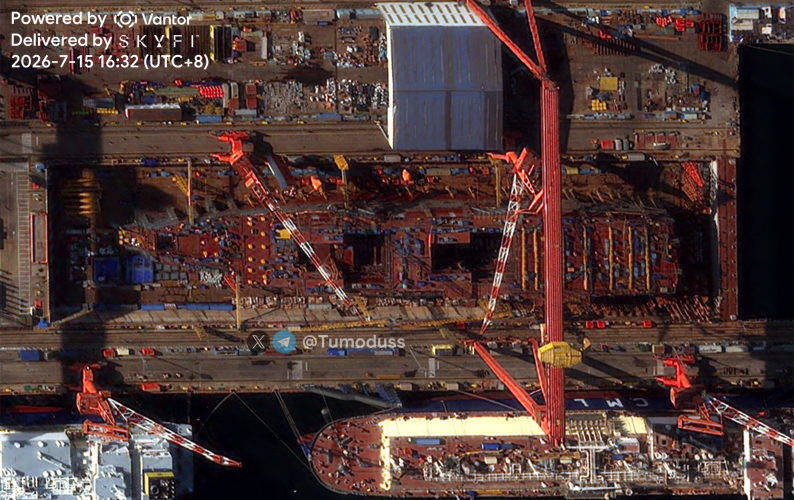
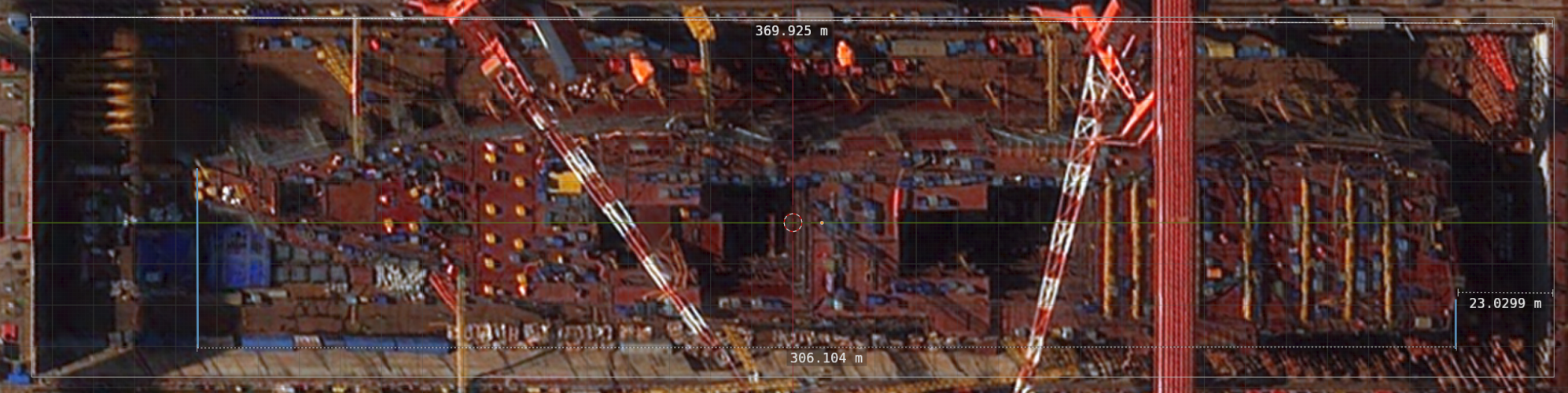
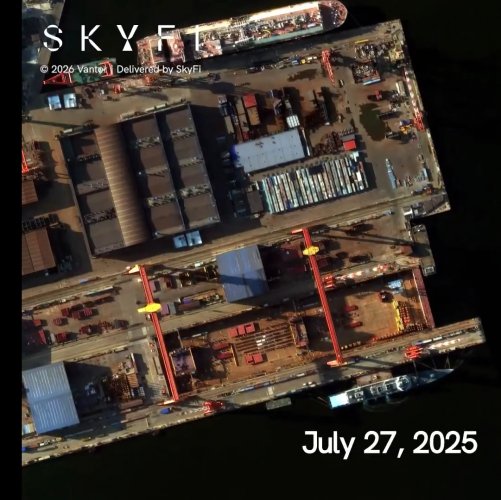
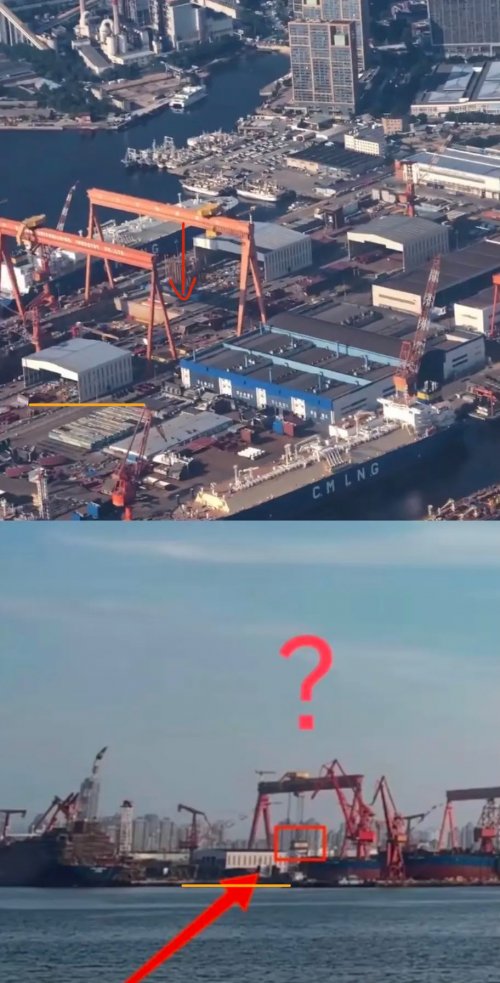
The Aft seems to have reached flight deck level, pretty much means the aft is 23m from the end of the drydock. Meaning the carrier can be no greater than 347m long. Of course the bow is still not finished but it's seem obvious that the 004 will be roughly as long as ford. Current build length is 307m (my measurement is slightly off). Based off the random clutter on the ground at the fore end of the drydock, around 29m of length. The 004 should be around 336m long? Give or take a meter or two for sponsons and other extrusions.
 

Attachments

  • 1784212771536.png
    1784212771536.png
    2.5 MB · Views: 61
Early war aircraft carriers carried disassembled replacement aircraft equal to about 1/3 of their compliment as operational attrition replacements. That is, the business of landing and taking off at sea also created regular attrition, and spares were needed and hung from the hangar ceiling as separate fuselage and wing sections. Obviously that is not done with modern aircraft. We may however see that model adopted again for CCAs, though storage might be moved to the station ship. Most CCA designs I believe can be crated in a 40’ TEU.
When I was on the Enterprise (dating myself some here) we were returning from the IO and the Midway was going to the IO. In the Philippines our two A-7 squadrons swapped aircraft with the Midway because our squadrons had more operational planes than theirs. That way Midway had the operational planes they needed and their broken ones went back to the states for major overhaul.
 
When I was on the Enterprise (dating myself some here) we were returning from the IO and the Midway was going to the IO. In the Philippines our two A-7 squadrons swapped aircraft with the Midway because our squadrons had more operational planes than theirs. That way Midway had the operational planes they needed and their broken ones went back to the states for major overhaul.
How did you get the broken planes from Midway to Enterprise? :confused:
 
How did you get the broken planes from Midway to Enterprise? :confused:
We were in port and they were off loaded to the pier then on loaded to the other carrier. Those that could fly simply changed carriers (some were broken but flyable. That is, they could fly but were not operational for combat missions).

I can say that our pilots weren't happy as it deeply impacted their flying hours.
 
1000009969.jpg

It looks like the construction is going really fast, so there's a good chance it will be launched next year. Compared to this, the construction of the previous 003 was much slower.
 
We were in port and they were off loaded to the pier then on loaded to the other carrier. Those that could fly simply changed carriers (some were broken but flyable. That is, they could fly but were not operational for combat missions).

I can say that our pilots weren't happy as it deeply impacted their flying hours.
I had visions of trying to move them from one ship to another while at sea. :oops:
 
The straits of Malacca have maximum allowed dimensions, which includes length.

https://en.wikipedia.org/wiki/Malaccamax

The mix between all 3 (Panamax, Suezmax, and Malaccamax) gives you the overall limits globally. And if you're trying to drive through someplace during peacetime, you might want to be within the stated limits. If you're not, the nation owning that water can tell you F OFF AND GO AROUND. Enforced by their national military, and likely every other nation playing by the rules.
From your linked wiki page: "Malaccamax is a naval architecture term for the largest tonnage of ship capable of fitting through the 25-metre-deep (82 ft) Strait of Malacca" Followed by: "A typical Malaccamax tanker can have a maximum length of 333 m (1,093 ft), beam of 60 m (197 ft), draught of 20.5 m (67.3 ft)"
If you read closely, it says TYPICAL. The only limiting dimension is depth, which makes sense, as it's a large, if busy shipping passage. Suez, Panama, etc, are all man-made.

The real limiting size is the harbours they will use. Such as the QE's, height limited by the Forth bridges, width by entrance to Portsmouth and Devonport, For the Chinese, given they have massive ships coming and going, the only limitations are going to be the dry docks and how effective a really large ship actually will be
 
Via: HailingTX20 /SDF:

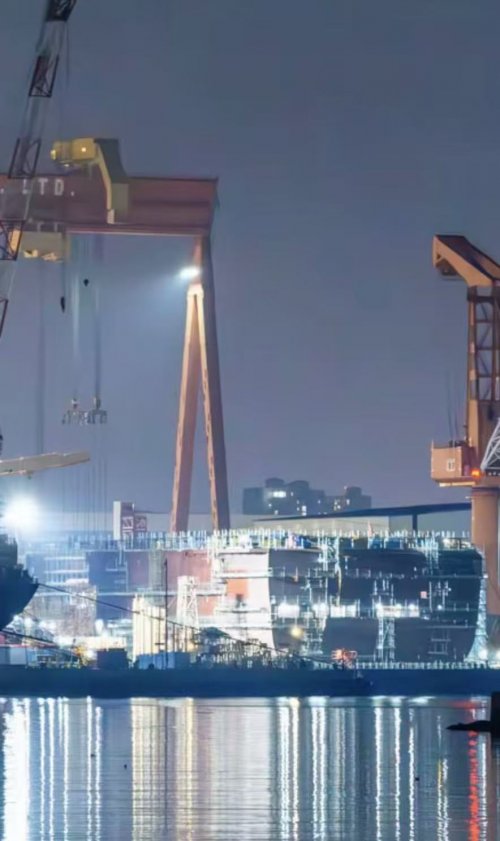
Installation of the bulbous bow's initial sections may have begun
 

Attachments

  • f9c118ddfbe9670ca69d537c874b5e50386474550.jpg
    f9c118ddfbe9670ca69d537c874b5e50386474550.jpg
    715.7 KB · Views: 63
While Malacca Strait is the shortest route from the Indian Ocean through the Outer Indonesian Island barrier, there are others.

Sunda Strait between Sumatra & Java (navigation can be tricky, but probably no worse than Malacca Strait)
https://content.ballastmarkets.com/chokepoints/sunda-strait/

Lombok Strait between Bali & Lombok Islands (less in the way of size restrictions)
https://content.ballastmarkets.com/chokepoints/lombok-strait/

Which is best all depends on what you want to do before and after passing through the Outer island barrier.
 
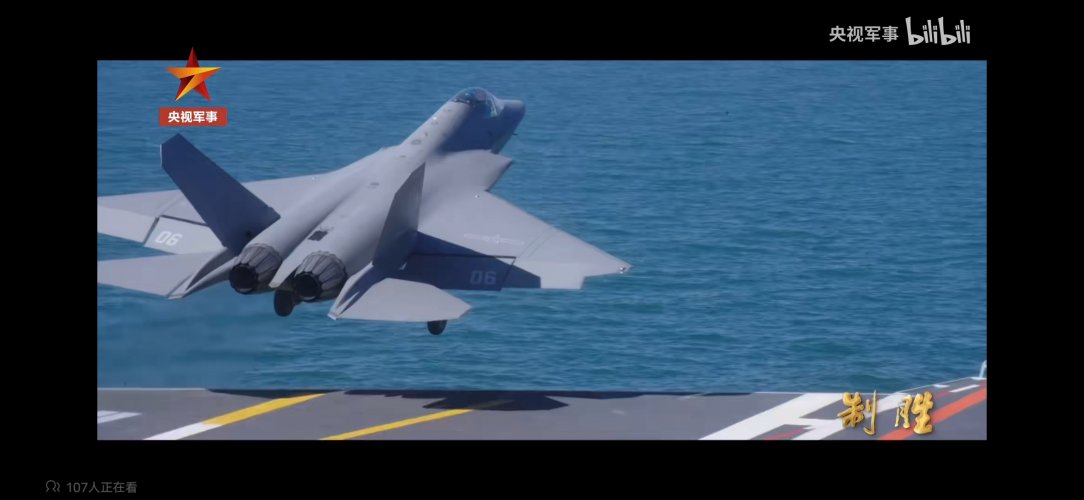
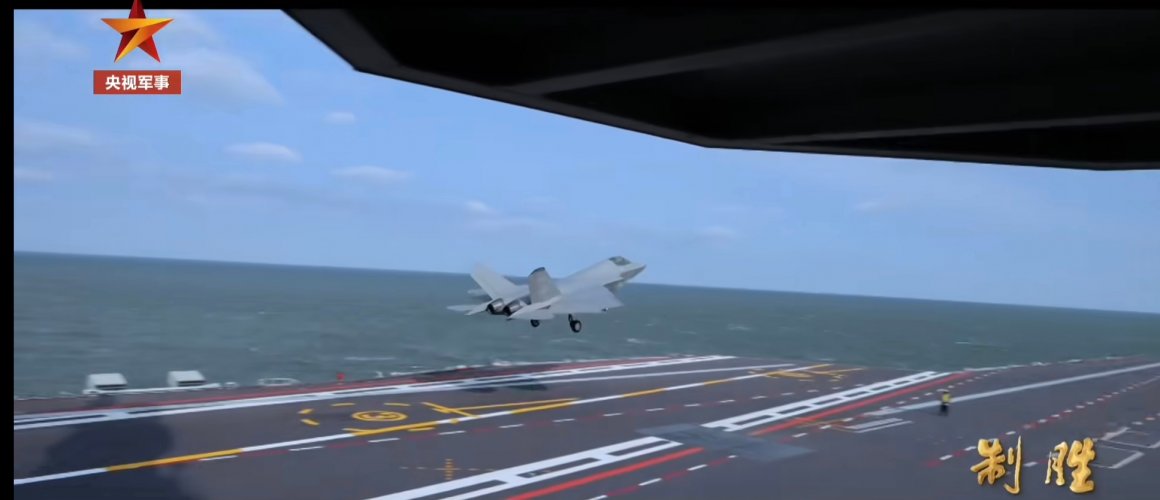
This is probably the third catapult launch clip, and unfortunately, the original video still doesn’t show it completely. In comparison, the J35's touch-and-go takeoff looks like this
 

Attachments

  • 1000013029.jpg
    1000013029.jpg
    606.2 KB · Views: 48
  • 1000012928.jpg
    1000012928.jpg
    444.5 KB · Views: 51
This is probably the third catapult launch clip, and unfortunately, the original video still doesn’t show it completely. In comparison, the J35's touch-and-go takeoff looks like this
Glad to see they're doing that successfully. Carrier aviation is dangerous, and relatively small carriers are more dangerous than the big ones.
 
It's said that the new aircraft carrier has a waterline length of about 320 meters and a high waterline. Maybe they'll start laying the deck in a while.
 
Although the deck hasn't been laid yet, I think this ship might be a bit bigger than the Type 003 Fujian. Let's wait a bit longer; it should be launched around this time next year.
 
Launched this time next year SUPER=BUG? Things are certainly moving fast in the PLAN.
 
I did not think that things were that far advanced in terms of building the Type 004 lancer21?
 
I did not think that things were that far advanced in terms of building the Type 004 lancer21?
A lot of it comes down to dutiful preparations, a sufficiently skilled and experienced workforce and possible carry over design elements from previous carriers like Fujian. The latter can't be confirmed or denied 100%, might as well be entirely different
 

Similar threads

Back
Top Bottom