I think it would be a good goal for China to maintain 12-15 aircraft carriers by 2049. As for whether all of them will be nuclear-powered, that depends on whether more Type 003 carriers are built in the future.
For what would they need 12-15 CV/CVNs?

If we're talking about Fujian sized ships and above that seems a bit much for a country with the foreign policy of China. If you're including vessels like Sichuan and successor designs focused on amphibious operations and/or the deployment of unmanned fixed wing aircraft and rotorcraft, then that number becomes more logical.

The 10-11 CVNs of the USN are a direct result of how they conduct their foreign policy and global power projection, especially in Western Asia, Europe and Eastern Asia. China for that matter has a different approach to such things and certainly little desire to power project and get involved in foreign (mis)adventures as their transpacific neighbors. To control the western Pacific, Indian Ocean and secure vital global shipping routes you don't need over a dozen supercarriers. Furthermore the US has so many carriers because they're also for the most part deployed overseas. China has a very slim selection of overseas bases and even if they'd have a base in...let's say Severodvinsk, Bandar Abbas, Gwadar and Rio de Janeiro, you'd have one large flat top per base. So that would be 4 carriers overseas and possibly 3-4 based in China itself. That's assuming a more aggressive foreign policy and deepened defense ties, basically a mirror to the US for the sake of this argument. Even then you'd have significantly less carriers than the 12-15 CV/CVNs you proposed. And that's despite this being based on China hypothetically behaving contrary to how they behaved for over half a century.
 
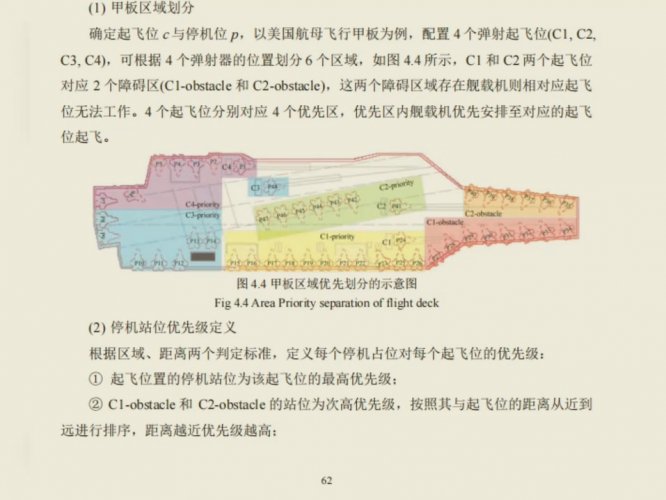
The question is very simple, because these aircraft carriers only seem numerous. If China has 15 CVNs, then one-third could be under maintenance in shipyards, one-third in training, and one-third ready for combat. From this perspective, China would only have 5 aircraft carriers available for immediate deployment, and inevitably, two of them would patrol near China's coastal waters, while the remaining three would handle China's overseas interests. If the operation is performing well, perhaps that many aren't necessary, but ultimately, owning 15 CVNs and being able to operate 15 carriers simultaneously are not the same concept. As for the military budget, frankly, with China's current annual growth in defense spending, 23 years from now would not be a problem. Moreover, China's and the U.S.'s systems are not the same; in some aspects, the cost of operating 15 carriers in China may not be equivalent to the cost in the U.S. This is not to imitate the U.S. Navy or for so-called prestige, but rather a fairly scientific and effective figure derived from observing the issues within the U.S. Navy. Twenty-three years is a long time; China's overseas interests cannot remain frozen in 2026. If, by 2049, China's overseas interests truly span the globe, China would need at least three CVNs to travel worldwide to protect China and its trade routes from third-party interference. From this perspective, 15 carriers are not many. However, on the positive side, perhaps 23 years from now we won't even need these assets…
 
Their number of required carriers is based upon their regional or global expansion plans and goals, do they want to be a blue water Navy like the US and have similar influences?
 
China is a global trade partner, highly dependent on shipping goods across oceans.

The Chinese merchant fleet is ~2,200 ships so in the event of a war with them (For example trying to invade Taiwan) they'd be highly vulnerable to privateers.

do they want to be a blue water Navy like the US and have similar influences?
Belt and Road program suggests they do.

In addition to their "Belt and Road" programme aka debt-trap diplomacy the PRC wants to control the western Pacific Ocean, you need a blue-water navy with CVBGs to control it.

Edit: The PRC has clear ambitions to replace the USA as the sole remaining superpower but that will not happen due to its' intractable (And rapidly worsening) demographic and economic issues.
 
Last edited:
Nobody says that China doesn't need carriers or a blue water Navy, two things they already have and had for a while now. The point was that questionably liberal estimates were shared with regards to future fleet size of their carriers. A fleet size which would exceed that of the height of the cold war during peace time, commanded by a far more passive power than the US.

If a country were to close down a certain waterway, China can effectively cut them off from global trade. And not in the lip-service kind of way in which western "sanctions" work, but as the world economy and especially industry relies on Chinese products and materials, being sanctioned by China would hit harder than any carrier battle group. That one or even two carriers are completely impotent in such a scenario has just been proven this year. So why spend several hundred millions for a fleet size that does not serve the actual existing needs.

@SUPER=BUG I find your 5/5/5 suggestion quite odd, why would you want to have a third of your multibillion dollar fleet serve as training vessels? When 1-2 ships can already fulfill that role in regional waters and then get rotated with other units. You don't have to have 5 ships conduct training simultanously really. Furthermore to control the Indopacific you'd have to match or marginally exceed the American presence, that is like 3 carriers of which usually only 2 are deployed. This obviously leaves aside the actually far more relevant and impactful assets, like large destroyers and frigates, of which the PLAN naturally has a decisively larger fleet, in the region even more so. Submarines , maritime patrol, early warning, ELINT, SIGINT etc. all assets that are equally if not more relevant than carriers, especially for the security of global shipping. And as China most likely won't have Operation Baja Storm on the menu anytime soon or several conflicts in the middle east, an overly large fleet of carriers would be a waste of money, personelle and yards that could be used for more vital needs.
 
Last edited:
If you build fourteen aircraft carriers within thirty years, that means in the next thirty years not far away, you will also have to build another fourteen carriers to replace them.

We must consider the present: if the United States acts aggressively, then we may need to build fourteen aircraft carriers within thirty years. Just as the United States built twelve carriers between 1950 and 1980.

We must also consider the present: thirty years from now, will we still face the same threat? Will we still have the same construction capacity? This is also the dilemma facing the U.S. Navy. In the next thirty years, nine Nimitz-class carriers (including CVN-68) will be retired. Given the current pace of construction, at most only seven Ford-class carriers will be built to replace them.

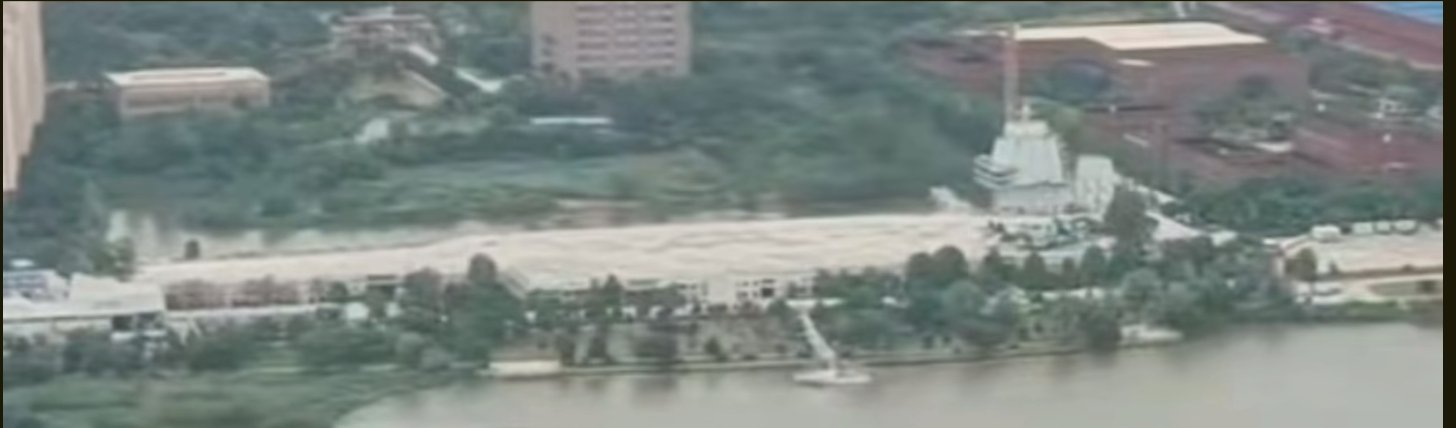
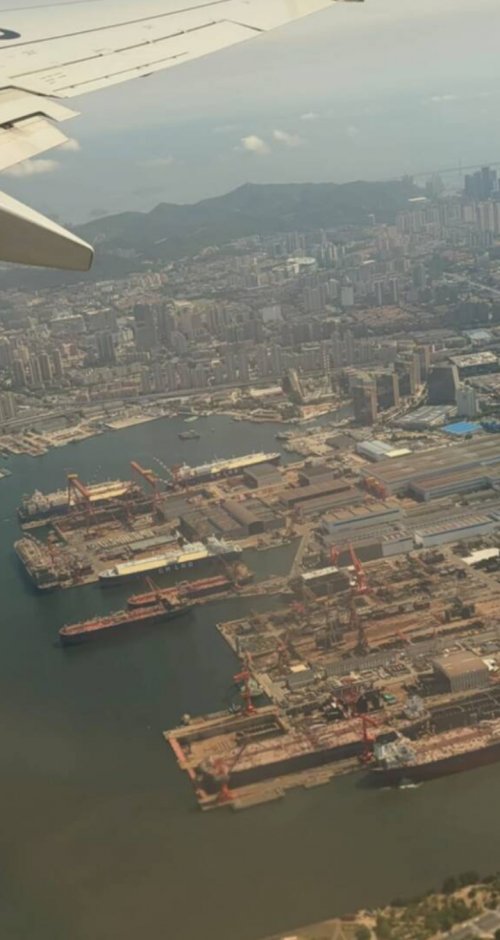
Looking at the current situation, the Chinese Navy is not going to adopt a pace of building more than ten aircraft carriers over thirty years. There have been rumors that China will start building two carriers at the same time — one conventional in Shanghai and one nuclea in Dalian — but we have not seen that happen (as of now). With the delayed retirement of the USS Nimitz and the delayed commissioning of the USS Kennedy, the number of carriers in the U.S. Navy could very well fall below ten in the near future. China's military spending also remains very restrained.

Of course, we cannot rule out the possibility that in the next ten years, this industrial and military behemoth will begin to roar. But that depends on the threats it faces.
 
We must also consider the present: thirty years from now, will we still face the same threat? Will we still have the same construction capacity? This is also the dilemma facing the U.S. Navy. In the next thirty years, nine Nimitz-class carriers (including CVN-68) will be retired. Given the current pace of construction, at most only seven Ford-class carriers will be built to replace them.
Even with stretching the Nimitz-class a couple years each and speeding up the Fords by a couple years each, the US is going to be stuck at 10-11 carriers for the next 40 years.
 
Even with stretching the Nimitz-class a couple years each and speeding up the Fords by a couple years each, the US is going to be stuck at 10-11 carriers for the next 40 years.
Based on the commissioned rhythm of the last three ships of the Nimitz class — one ship every five years — only 6 to 7 Ford-class ships will enter U.S. Navy service in the next thirty years. Including the USS Ford, that would make 7 to 8 Ford-class ships in the U.S. Navy.

By this time, in 2056, among all Nimitz-class carriers, based on a fifty-year service life, the USS George H.W. Bush will not have completed fifty years of service, the USS Reagan will have already been in service for three years beyond its intended lifespan, and the USS Truman will have been in service for eight years beyond its intended lifespan (which is basically impossible).

Therefore, in 2056, there will be only 1 to 2 Nimitz-class carriers in active service. In the most ideal scenario — 2 + 8 = 10; in the least ideal scenario — 1 + 7 = 8.

Over the next forty years, with one ship commissioned every five years, 8 to 9 Ford-class ships will enter service with the U.S. Navy. Including the USS Gerald R. Ford, that would make 9 to 10 aircraft carrier in the U.S. Navy. All Nimitz-class carriers will have been retired. In the most ideal scenario — 10; in the least ideal scenario — 9.
 
Last edited:
The big question, what is and are China's intentions in regards to global show of power which will drive the number of carriers they build and their fleet size. You want to match the US, you need are large fleet, plain and simple. If the Type 004 is going to be a nuke along with all of the other ship types they are developing, China seems to be sending a clear message.
 
Just for the sake of protecting shipping lanes and key straits, this reason alone is enough. China's trade spreads across the globe, and from a security perspective, building a blue-water navy capable of safeguarding related interests worldwide is essential. China cannot rely on other countries for the security of its overseas interests; after all, Chinese overseas embassies have been bombed.

Returning to the aircraft carriers themselves, I believe both the Type 003 and the future Type 004 have the potential to be produced in multiple units: one as a conventional power template and the other as a nuclear-powered version. But according to recent news, some personnel from southern shipyards have been assigned to the north to assist with the construction of the Type 004, and due to changes in the catapult system, the Type 003 is reportedly undergoing some modifications. It is possible that we will not see further construction plans for the Type 003 carriers until the Type 004 is completed.
 
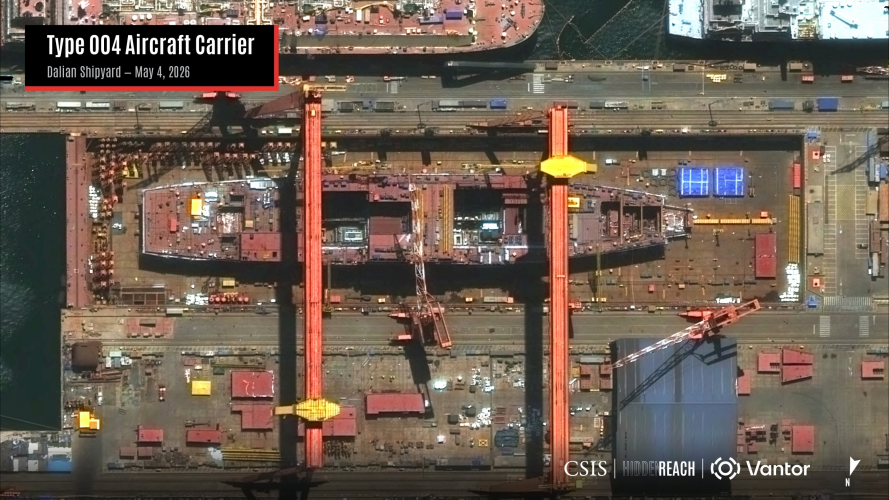
CSIS May 4th top down view.
1779517851406.png

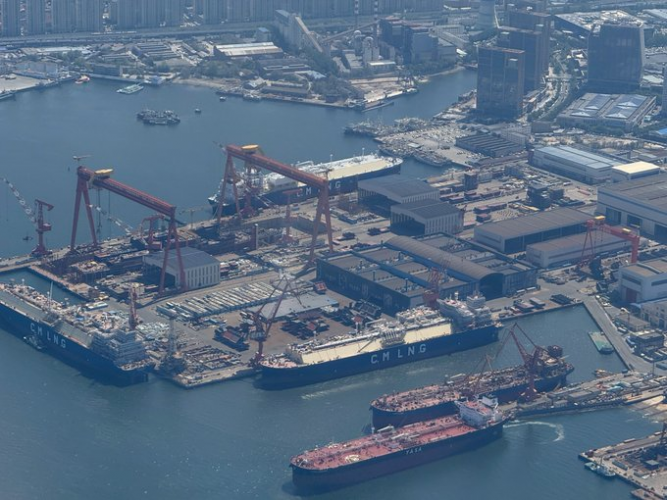
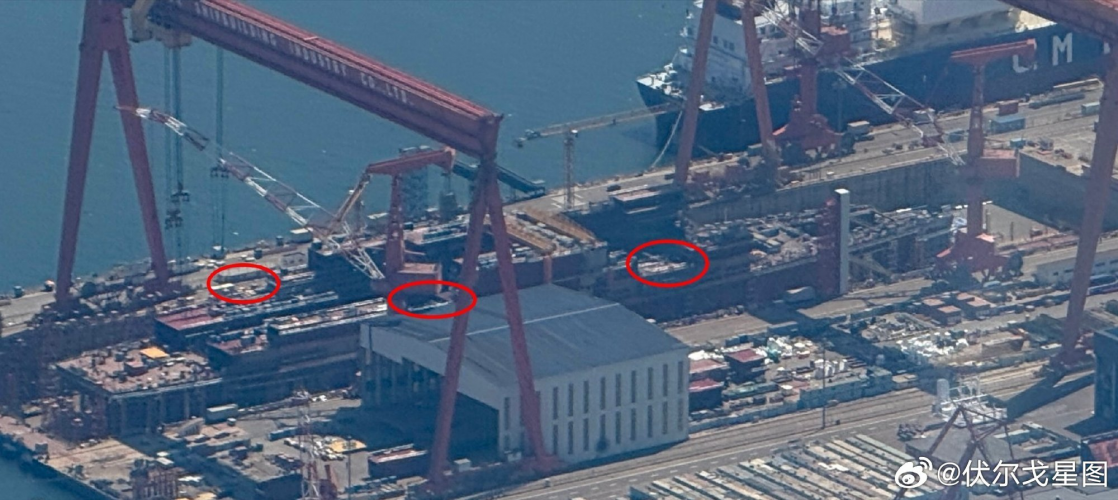
More recent side view-ish. shows 3 elevator positions.
1779517888109.png
1779517920003.png

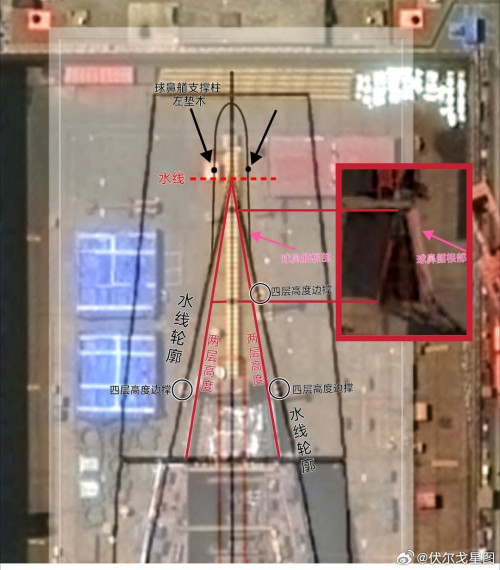
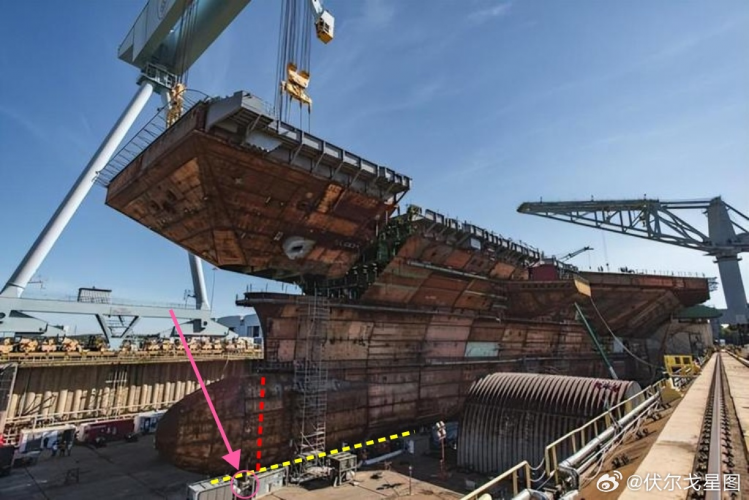
Some guy estimated waterline length to be 315m.
"The hull section behind the bulbous bow has support columns going directly down to the dock floor.

For the heaviest part of the bulbous bow, the main load-bearing columns on the left and right sides are placed on higher blocks to reduce pressure damage to the dock floor. The forward cutoff point of the waterline is located behind the blocks."

1779517959916.png
1779517970678.png
 
The big question, what is and are China's intentions in regards to global show of power which will drive the number of carriers they build and their fleet size. You want to match the US, you need are large fleet, plain and simple. If the Type 004 is going to be a nuke along with all of the other ship types they are developing, China seems to be sending a clear message.
China relies on imports for over 85% of its oil, over 40% of its natural gas, and 90% of its rubber. Virtually all of its nuclear fuel, as well as 1 billion tons of iron ore every year, are also dependent on imports.
 
In a way unfortunately, China is smart, they observe and analyze what other countries do especially the US then they replicate (and steal, all other countries including the US do the same) and/or utilize what makes sense. They refurbished their first carrier which was Russian, kept I expect the good aspects but fixed the bad. Now up to Type 004, probably will be a smaller CVN-78. Kind of like when Bruce Lee developed Jeet Kune Do, incorporate what works from other fighting styles this way you are unpredictable and effective. I still do believe based upon Chinese culture and cultural discipline and as compared to the US, China's armed forces will not be able to think for themselves right down to the lower enlisted levels, their leadership will not grant that kind of freedom, got to follow the strict hierarchy, which could be bad for them in a conflict.

As an example, I work with Japanese aerospace counterparts, things do not happen quickly in a Japanese system as compared to the US, cultural red tape. The Japanese have excellent quality and precision but it can come at a cost in time of conflict when you need to move and act quickly. Some may agree and disagree regarding my comments, but that's OK.
 
This is a pretty interesting way of putting it, it seems like in your eyes East Asian cultures all look the same. But unfortunately, China is not Japan. And I'm also sure that you don't actually know much about Chinese culture either, but that's no big deal. It's just that driven by this kind of thinking, you might find that the future development of the PLA will differ a bit from what you expect.
 
things do not happen quickly in a Japanese system as compared to the US
Because Japan is incredibly bureaucratic, especially when it comes to all things military. China? Far less so, alone because the majority of the largest defense contractors are state owned entities and thus usually operate on explicit intent to deliver certain capabilities or technologies in a given timeframe. As a consequence China, with all their STEM graduates, encourages a high level of academic freedom and autonomy. The pencil pushers might get bogged down by bureaucracy, but not the engineers (which are honestly in many ways far more flexible and less often victims of corporate interference than their western counterparts). As for the military, that is heavily branch dependent, the PLA ground forces for example are the least called upon and I think I echo many PLA watchers and enthusiasts when I say that the PLAGF is also the least developed. The PLARF, PLAAF and PLAN operate completely different though and are trusted with far more complex and important aspects of national security, thus greater individual autonomy is desired and encouraged, especially in the air and at sea. Which is certainly similar to how it is in the west as well.

Comparing Japan to China is not going anywhere either, because Japan is the most bureaucratic country in East Asia. Not to mention that there are fundamental social, ethnic, linguistic, cultural and historical differences. It's like comparing Germany to the United States.
 
Sigh, maybe it's better to talk less about social or cultural comparisons—they tend to go off-topic too easily.

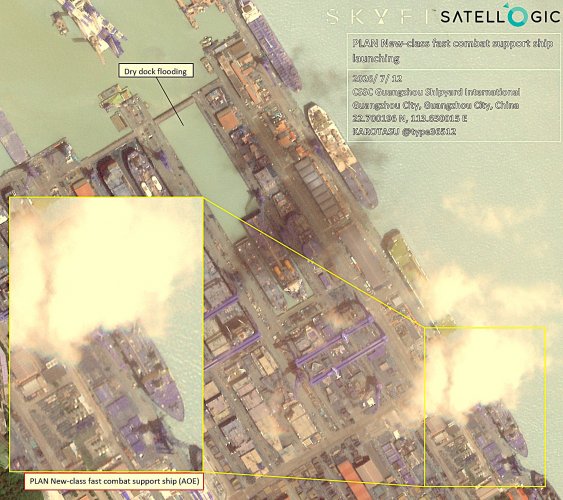
Back to the main point, regarding the future development of Chinese aircraft carriers, I think we can also keep an eye on the development of China's supply ships. Today I came across a very interesting viewpoint: the Type 901 fast combat support ship is actually more suited for carriers like the Shandong and Liaoning. Its supply capability is relatively strained for a carrier like the Fujian, not to mention the future Type 004 carrier. So, the PLA will likely want to use a brand-new supply ship to address this issue.
 
In terms of the PLA:N's existing carrier force and experience I'd say that they're where the RN and the USN carrier forces were in the 1920s.
Interesting, how long did it take the UK/USA to achieve what could be considered effective, mature operational procedures and cadence? Because to me that would be a good comparative timeframe for the PLAN to achieve similar effectiveness.
 
Sigh, maybe it's better to talk less about social or cultural comparisons—they tend to go off-topic too easily.

Back to the main point, regarding the future development of Chinese aircraft carriers, I think we can also keep an eye on the development of China's supply ships. Today I came across a very interesting viewpoint: the Type 901 fast combat support ship is actually more suited for carriers like the Shandong and Liaoning. Its supply capability is relatively strained for a carrier like the Fujian, not to mention the future Type 004 carrier. So, the PLA will likely want to use a brand-new supply ship to address this issue.

Type 901 is large for an UNREP ship. The only thing modestly larger is the supply class. Though AFAIK only the two exist, so presumably with theee carriers in operation and two more building, we should see more 901s or a follow on design. I do not keep up on ship building so maybe this has already bee observed.
 
Hazarding a guess for the RN by the late 1930s and the USN during late WWII.
The USN had extensively tested doctrine pre war. Obviously some of those ideas needed adjustments, particularly almost every pre war concept of what adequate air defense was, but late war doctrine was hardly unrecognizable. Perhaps the single biggest shift was concentrating carriers in TFs to maximize AD and coordination. Pre war their far fewer carriers than late war and dispersal was seen as the best defense against opposing strikes. That was still largely the case for the first half of the war until construction and technology altered the situation.

A great read on the pre war and early war doctrine, tactics, and actions is The First Team, if you can find a copy.
 
Type 901 is large for an UNREP ship. The only thing modestly larger is the supply class. Though AFAIK only the two exist, so presumably with theee carriers in operation and two more building, we should see more 901s or a follow on design. I do not keep up on ship building so maybe this has already bee observed.
Remember that even when the USN had 15 carriers, they only operated 4 of the big Sacramento-class AOEs.

AOEs just don't need as long a refit period after a deployment (fewer systems to repair), and because they have fewer systems they need less prep time to be ready to deploy again.
 
I remember the official goal is that the crew of the Fujian ship will transition from basically forming combat capability to fully forming combat capability within 2026. It's expected that in the second half of the year, there might be footage released of the Fujian ship's night training and full-deck attack exercises. Actual combat deployment is planned for 2027.
 
The 10-11 CVNs of the USN are a direct result of how they conduct their foreign policy and global power projection, especially in Western Asia, Europe and Eastern Asia.
That's a projection of a long unique era, when US naval dominance wasn't challenged to such a degree than navy big decks have to justify their existence.

Carriers bring aviation to sea, aviation is the main means to wrest naval dominance.
Whoever has more, better carriers, brings in more planes.
Simple, straightforward.
 
I think it’s worth pointing out that whatever you think of a PLAN-PLARF-USN conflict in the western pacific, no one is going to question what happens to a PLAN CV any where else in the world. USN CSGs have value outside direct competition with China in their back yard. Chinese carrier groups have similar, if lesser, value.
 
Nobody says that China doesn't need carriers or a blue water Navy, two things they already have and had for a while now. The point was that questionably liberal estimates were shared with regards to future fleet size of their carriers. A fleet size which would exceed that of the height of the cold war during peace time, commanded by a far more passive power than the US.
I think I'm expecting China to build 6-9 nuclear carriers relatively quickly, then slow down for however many more carriers they want to build in total. Assuming that they don't get into a shooting war, I think I am expecting ~15 CVNs with full escort groups in about 30 years.
But just having 6-9 carriers in total would allow China to equal the US in the Pacific in the event of shenanigans.

Why? China's economy will catch up to the size of the US within about 15 years. They will be able to afford 12 carriers by then. And their economy will continue to grow a bit faster than the US economy has been growing, so they'll hit about double the size of the US economy in about 25-35 years after they catch up. All that takes is an economy growing ~2.5% more than the US economy is.
 
Are there any reviews/articles/papers on where/what the bottleneck for carrier size is?
It actually comes from a mix of WW2 and size of aircraft. Essex-class carriers could handle about one hundred aircraft while the Midways could physically handle over one hundred thirty


But the command and control side could not handle more than one hundred airframes

Modern carriers have decided to aim for an operating wing of about seventy because that"s easier to handle on the flight deck than the ninety to one hundred that could physically fit on the carrier
 
Fourth, To be honest, I originally thought it would be more noticeable in the dry dock, but now it... looks ordinary.

There's a pretty interesting saying that switching from steam catapults to electromagnetic catapults affected China's aircraft carrier construction plans. Originally, they were going to build two carriers with steam catapults, but then the plan changed. In the initial plan, there wasn't the current Type 002 carrier, which is the sister ship of the Liaoning, the Shandong.
 

Attachments

  • 1000017514.jpg
    1000017514.jpg
    374.8 KB · Views: 67
Last edited:
Looks like the next-generation replenishment ship has been launched.

With a displacement of over 60,000 tons, it will be an important support for China's aircraft carrier fleet as it heads into the deep sea in the future.
 

Attachments

  • 1000005295.jpg
    1000005295.jpg
    686.2 KB · Views: 39
Are there any reviews/articles/papers on where/what the bottleneck for carrier size is?
I forgot a point. The various straits and canals have size limits.

NeoPanamax limits:​
1200ft/366m long​
168ft/51.25m abeam​
50ft/15.2m draft​
Suezmax limits:​
1300ft/400m long​
254ft/77m max, 164ft/50m at max draft​
66ft/20.1m draft​
223ft/68m height​
Malaccamax limits:​
1093ft/333m long​
197ft/60m abeam​
67ft/20.5m draft​

So those make the real physical size limits on your ships.

Combined maxes:​
1093ft/333m long​
164ft/50m beam​
50ft/15.2m draft​
223ft/68m height above waterline​

So you can't get longer than a Ford, but you could get wider and deeper if you needed to. The Ford's flight deck is roughly twice the beam, so assuming that holds true as a general design thing you could make a flight deck 20m wider than the Fords, and draw another 3m deeper. In addition, the top of the mast could be 25ft/8m higher for a longer radar horizon.
Ford class displaces 100k at full load, the box of LxBxD is 164k m3 for a fineness ratio of .61
Max box size is 253k m3 times fineness of .61 makes the "globalmax carrier" have a displacement of around 155k tons.

So there you go. ~155k tons with a flight deck 20m wider than a Ford-class is the absolute biggest you can get. Flight deck area of ~26,000m3, which is ~25% more flight deck than a Ford.

Thing is, a carrier like that has a L:B ratio of 6.66. That's relatively short and fat. The "beamy" Burke-class has a L:B of 7.65, and the stubby South Dakota class battleships had a L:B of 6.1. That means needing more horsepower for the same speed. Lots more power, actually, the Ford-class has a L:B of 8.15 and has ~260k horsepower for 30+ knots. The SoDaks had 11,000 more horsepower than the North Carolinas (same displacement, better L:B ratio) and made less speed. Your globalmax carrier is going to need at least 450k horsepower, better install the equivalent of 4x A1B reactors!

Edit: I think the Nimitz/Ford size carrier is the sweet spot for "largest flight deck versus horsepower needed", but I haven't sat down and ground the numbers.
 
Last edited:
So if we don't have to deal with those straits, it could be built a bit bigger . :p
 
So if we don't have to deal with those straits, it could be built a bit bigger . :p
I mean, yes but then you gotta circle the globe in the Southern Ocean to get from the Pacific to the Indian Ocean. There's no good way to avoid the Strait of Malacca!

Which means you're limited to a 333m long ship in practice, and like the edit you missed (you posted while I was editing) I think the Nimitz/Ford size carrier is in the sweet spot for maximum flight deck size versus power needed.
 

Similar threads

Back
Top Bottom