I don't think the PSCs and Project 22220s are actually all that comparable aside from both being able to break ice. The Arktikas have greater displacement, generate more power and their endurance is virtually unlimited if it wasn't for crew supplies. Also far more relevant to this discussion, the 22220s are genuine civilian vessels, they have no dual use whatsoever. They are true civilian ships with nuclear propulsion. The Polar Security Cutters on the other hand have less displacement, less endurance and they are armed paramilitary vessels. They are more so comparable to the Project 23550 icebreaking patrol ships, just much larger (although more lightly armed than the likes of Ivan Papanin).

The biggest difference is obviously that the PSCs are being constructed by people who have not constructed an icebreaker in their lifetime, and is thus heavily delayed as a consequence. The Russians are constructing nuclear icebreakers since Lenin, and doing so continously ever since.

Which is why I said that if any such undertaking would have ever taken shape, the vessels would have been from Russia's Baltic Shipyards. But in the same breath I also noted that this sort of what-if is so far away from possibility, that it's barely worth discussing.

The only credible rumors of a nuclear powered civilian ship outside of Russia comes from China who is said to be developing a large nuclear icebreaker as well.
 
Only if they use turbo-electric drive.
I think all Russian nuclear icebreakers used turbo-electric drives, IIRC even Lenin did back when it was active. The possibility to act as a power source is very much a feature of these ships, especially when in Port.
 
@World B4 the issue is that nuclear power requires specialized equipment, infrastructure, resources and personelle that in most countries are heavily limited and mostly reserved for military use. As such nuclear cargo or tanker ships have to overcome these hurdles on top of cost. Now, nuclear propulsion is being iterated upon and becoming cheaper and more compact, while fossil fuels are ultimately finite and their price is highly affected by geopolitical stability.

This is the state on the side of shipping that's meant to haul goods, the less than ideal use case for nuclear propulsion.

Where nuclear propulsion is excelling is with icebreakers, because the advantages of consistently high power output, autonomy and endurance, which are inherent advantages of nuclear propulsion, are highly relevant to that particular type of ship.

Other use cases would be extremely large off-shore research facilities, we're talking borderline floating towns here. Or to venture a bit into military operations again, C² ships like Ural or Blue Ridge.

Ultimately it is just unfortunate for proponents of nuclear propulsion that the most in demand type of large vessels are the types of ships that leverage the advantages of nuclear propulsion the least. At least right now and for the near future.
 
Yet when the US was designing the America-class, they did the math and came to the conclusion that oil would need to be at or above $140/barrel for the life of the hulls for Navy Nuclear to make sense.

And that is with a very large crew of reactor techs. If you can design a low-manning reactor system, something that doesn't need a dozen personnel per watch, the break-even cost goes down.

I wouldn't want civilian container or tanker ships with nuke power unless they also carried insurance for the potential cost of cleanup and loss of economic activity if they caused a disaster at a major port. I don't know what that number is, but if I had to guess I would say it has 11 or 12 zeros on it.
 
I wouldn't want civilian container or tanker ships with nuke power unless they also carried insurance for the potential cost of cleanup and loss of economic activity if they caused a disaster at a major port. I don't know what that number is, but if I had to guess I would say it has 11 or 12 zeros on it.
The number of USN nuclear accidents is zero.
 
The number of USN nuclear accidents is zero.

If you build and man civilian nuclear ships to USN standards, the cost to operate them would be an order of magnitude higher than diesel ships.

I'm ok with nuclear on navy ships because the potential cost of an accident is underwritten by the nation. A shipping line can not do so itself, so it would need to be underwritten by an organization that has the means to pay for potential damages, and the potential damages are so astronomically high that insurance would end up costing more than fuel on a diesel ship. Even if the assessed risk of an accident is near zero, just having the funds available to pay for it would be extremely expensive.

A viable alternative might be something like a nuclear tug that stays out of shallow water, but it would still need to come in for maintenance periodically. Maybe it could shut the reactor down for a few days before coming in though.
 
Last edited:
If you build and man civilian nuclear ships to USN standards, the cost to operate them would be an order of magnitude higher than diesel ships.

I'm ok with nuclear on navy ships because the potential cost of an accident is underwritten by the nation. A shipping line can not do so itself, so it would need to be underwritten by an organization that has the means to pay for potential damages, and the potential damages are so astronomically high that insurance would end up costing more than fuel on a diesel ship. Even if the assessed risk of an accident is near zero, just having the funds available to pay for it would be extremely expensive.

A viable alternative might be something like a nuclear tug that stays out of shallow water, but it would still need to come in for maintenance periodically. Maybe it could shut the reactor down for a few days before coming in though.
No, the damages are NOT that high.

Unless you count those caused by outright fear-mongering [expletives deleted].

Reactors go into instant shutdown when startled. Then you just have residual heat in the mass of metal and coolant that can shove you around.

How much radioactivity has gone into the environment out of a USN ship? Hint: it's a number virtually identical to zero. Risk to the surroundings is zero outside the wrecks.

You're presuming an "accident" so violent that it breaches the reactor vessel. And that would not be an accident but a deliberate attack, unless you know a way for the ground to breach some 12" of steel.
 
No, the damages are NOT that high.

Unless you count those caused by outright fear-mongering [expletives deleted].

Reactors go into instant shutdown when startled. Then you just have residual heat in the mass of metal and coolant that can shove you around.

How much radioactivity has gone into the environment out of a USN ship? Hint: it's a number virtually identical to zero. Risk to the surroundings is zero outside the wrecks.

You're presuming an "accident" so violent that it breaches the reactor vessel. And that would not be an accident but a deliberate attack, unless you know a way for the ground to breach some 12" of steel.

Estimated cost of Fukushima is $200-500B. Any civil nuclear operation should have insurance to cover that IMO.
 
No, the damages are NOT that high.

Unless you count those caused by outright fear-mongering [expletives deleted].
Those 'fear-mongerers' are the ones who get to decide if a nuclear-powered ship enters their port. If they want you to show underwriting for tens or hundreds of billions of dollars, you either pony up or don't go to that port.

If the risk is really that low, then the insurance premiums won't be too bad - at least not in principle. The problem is that no insurance firm has pockets that deep, which means in turn that only states can feasibly underwrite nuclear ships.

Commercially owned civil nuclear powerplants are only feasible because the state regulators grant them a limit of liability in the case of an accident, which is contingent on them maintaining the specified standards of training, maintenance and so forth. That's an enforcable standard because you can't pick up a nuclear power plant and move it.

If (say) a Taiwanese-owned, Liberian-registered, and Philippine-crewed ship shows up off Long Beach or Mumbai, the port authority is understandably going to have its doubts.
You're presuming an "accident" so violent that it breaches the reactor vessel. And that would not be an accident but a deliberate attack, unless you know a way for the ground to breach some 12" of steel.
Look at the variety of stupid things that happen to commercial ships on an almost daily basis. Remember that they're run not by naval officers, but by the kind of people who - if given half a chance - will save money by not maintaining the lifesaving appliances. There are many examples of this happening.
 
No nuclear powered ship has the capacity to become the next Fukushima unless you'd blow it up and get a large cloud of radioactive material propagating from a breached reactor.

There has been only one minor radiation incident in the last couple decades which was Taymyr leaking coolant which led to a minor spike in radiation. The icebreaker went into port, repairs were made and the ship returned to operational status. Mind you that's a comparatively dated ship, jointly build with Finland (whereas all other nuclear icebreakers were purely designed and constructed within Russia and the USSR) from the 1980s that went through the dissolution of the USSR. No modern nuclear powered vessel experienced similar issues and the Project 10520, Project 10521 and Project 22220 fleets never experienced any radiation incidents throughout their service history.

The challenges with nuclear freighters and tankers are nonetheless far greater, simply as they'd operate in high traffic areas. But the reactor itself is not a source of imminent danger. And so far reactors have proven rather safe, because there are several layers of safety and precautions surrounding them and their operation. One may also argue that the terribly oil leaks from ships like the Sanchi tanker collision are far more harmful to the environment than a minor radiation leak could ever be (simply because of how water interacts with radiation compared to oil, diesel and gasoline).
 
No nuclear powered ship has the capacity to become the next Fukushima unless you'd blow it up and get a large cloud of radioactive material propagating from a breached reactor.

Even without any cleanup of surrounding environment, the cost just to dismantle Fukushima and store the spicy stuff is ~$100B, and it didn't take an explosion to breach the reactor vessel, just loss of power and coolant.

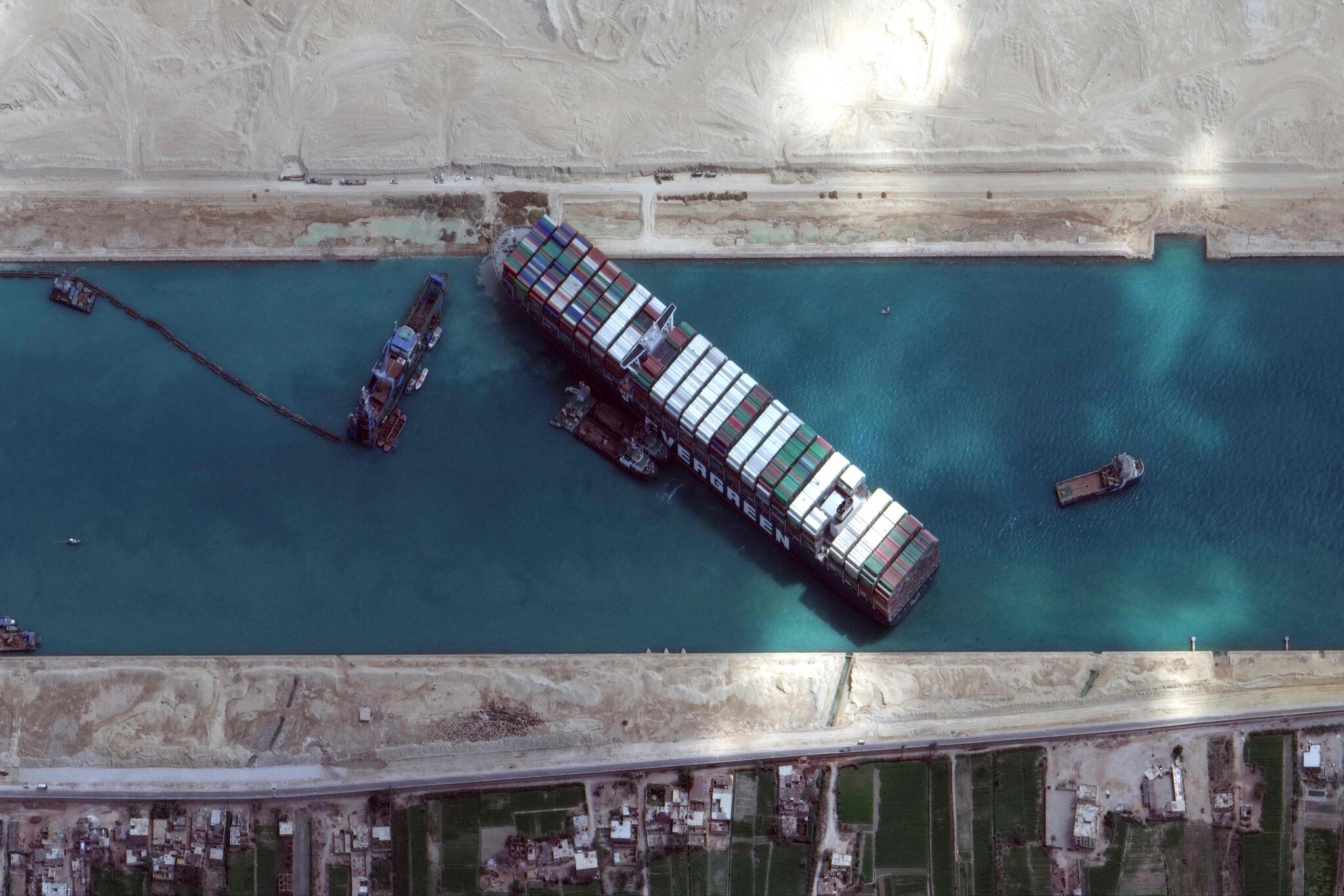
Now imagine the Ever Given, but with a failed nuke plant. The ~$100B ~20 year salvage operation would be a rounding error compared to the loss of the Suez Canal for that period of time.

Another concern is security. Are you going to put heavily armed protection forces on every merchant ship just like nuclear warships and ice breakers? What is that going to cost?

00suez-01-superJumbo.jpg
 
Last edited:
Even without any cleanup of surrounding environment, the cost just to dismantle Fukushima and store the spicy stuff is ~$100B, and it didn't take an explosion to breach the reactor vessel, just loss of power and coolant.
You're forgetting the Tsunami that destroyed parts of the buildings, plus hydrogen-gas and/or steam explosions big enough to knock water vapor out of the air. Call those a minimum of half a ton of TNT in kaboom, and likely closer to kilotons in yield. Multiple explosions.


Now imagine the Ever Given, but with a failed nuke plant. The ~$100B ~20 year salvage operation would be a rounding error compared to the loss of the Suez Canal for that period of time.
The most likely long-term failure in the Suez would be a steam line rupture, causing loss of propulsion. And while it'd kill everyone in the engineroom at the time, once you vented the engineroom to atmosphere and let things cool a bit you could send a welder in to patch the steam lines that popped.

No release of radiation to the environment from that event.

You're worried about an even that breaches the reactor vessel itself. Let's assume that the reactor primary is operating on 600psi steam. Or would be if you allowed boiling in the primary. How much steel thickness do you need for holding 600psi at or above 600degF for decades?


Another concern is security. Are you going to put heavily armed protection forces on every merchant ship just like nuclear warships and ice breakers? What is that going to cost?
We do that all the time on ships traveling through high-piracy-risk areas. Probably half the USMC signed on with PMCs providing that service.
 
You're forgetting the Tsunami that destroyed parts of the buildings, plus hydrogen-gas and/or steam explosions big enough to knock water vapor out of the air. Call those a minimum of half a ton of TNT in kaboom, and likely closer to kilotons in yield. Multiple explosions.

Those explosions were a direct consequence of the loss of coolant, so a similar loss of power in a ship could result in a similar explosion, only now it isn't a massive reinforced concrete containment structure, it is a ship that will be ripped apart. And the ~$100B decommissioning project would still be there without the explosions contaminating the surrounding area.

I do like the idea of having nuclear ships that stay in deep water though. If not a nuclear tug, then maybe something like a big floating dry dock that can carry container barges that will be towed in and out of ports and choke points by diesel tugs. Or something like an underway refueling oiler that connects to the container ship with high voltage cables to power an electric motor on the shaft. No one cares if it blows up and sinks in 5000ft of water.
 
Last edited:
Those explosions were a direct consequence of the loss of coolant, so a similar loss of power in a ship could result in a similar explosion, only now it isn't a massive reinforced concrete containment structure, it is a ship that will be ripped apart. And the ~$100B decommissioning project would still be there without the explosions contaminating the surrounding area.
Reactors are designed around preventing the Loss of Coolant Accident, with naval reactors even having a way to flood the reactor with saltwater to maintain cooling to get rid of residual heat (wrecking the core if not the whole reactor vessel in the process). Hell of a lot of themal mass involved, so the reactor stays warm for a long time.
 
If they have a secondary wall and ample amount of fresh water tanks. The inner section culd be flooded with fresh water while the outer layer with sea water. This would limit the damage the problem is this also requires heatsink like radiator structures or pipes to get thermal transport going. Otherwise there won't be natural flow and he staleness & insulation will still cause a meltdown.
 
If they have a secondary wall and ample amount of fresh water tanks. The inner section culd be flooded with fresh water while the outer layer with sea water. This would limit the damage the problem is this also requires heatsink like radiator structures or pipes to get thermal transport going. Otherwise there won't be natural flow and he staleness & insulation will still cause a meltdown.
Having the Reactor Compartment flooded full of water clear to the hull would allow for heat to slowly transfer out of the primary loop.
 
It's hard to say. Besides purely technical issues, there are many strange legal problems that need to be resolved. Internationally, new standards are also needed; otherwise, no insurance company would guarantee you. Without insurance coverage, other countries might not even allow your ship to dock, let alone the fact that a ship's lifespan is roughly 20 years, and nuclear reactors would bring all sorts of unexpected difficulties during dismantling. All I can say is that the idea is beautiful, but reality is harsh. As it stands, nuclear-powered cargo ships still have a long way to go.
 
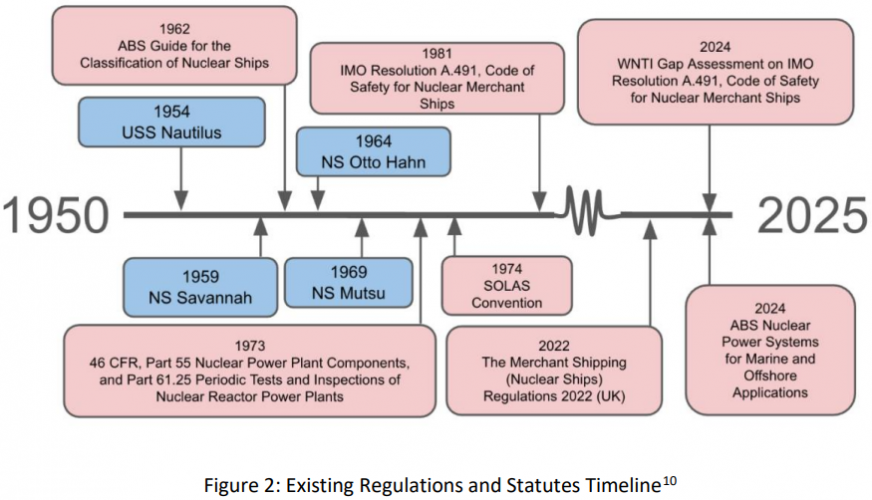
It's all under Safety of Life at Sea (SOLAS) chapter 8. I do have a hard copy but it's half a world apart from where I'm now so will have to rely on the web:
Nuclear ships
In principle, yes.

In practice, SOLAS says very little beyond 'the nuclear plant must be designed to be used on a ship and be approved by the flag state'. Oh, and in the event of a nuclear accident you have to inform the country whose waters you're in. So that's good at least. The IMO Code of Safety for Nuclear Merchant Ships is rather more thorough.

Actual implementation depends on the flag state. As in many other matters, one would expect some states to be more thorough than others. The impact of US requirements for double hulled tankers might be an interesting parallel here.
 
In principle, yes.

In practice, SOLAS says very little beyond 'the nuclear plant must be designed to be used on a ship and be approved by the flag state'. Oh, and in the event of a nuclear accident you have to inform the country whose waters you're in. So that's good at least. The IMO Code of Safety for Nuclear Merchant Ships is rather more thorough.

Actual implementation depends on the flag state. As in many other matters, one would expect some states to be more thorough than others. The impact of US requirements for double hulled tankers might be an interesting parallel here.
I suspect that the insurers would demand US level training and design.

Which means that flagging a nuclear cargo ship out of the Free State of Jefferson isn't going to help you if your insurers still demand US compliance.
 
Lloyd's is basically the only one with various national branches. But like most commercial regulations blood has to be paid first before new safety rules are commissioned and even with them beng observed tragidy could happend because off them. Like the lifeboat regulation after Titanic being the cause of ship sinking because they were applied to ships that got bad balance. Things are somewhat better today.
That said have you ever actually looked at international radiation regulations? The US, Canada, Japan are more or less the same for both the nuclear and space industry. ESA follows the same but for some reason the Germans have tougher thresholds.
I wouldn't expect any to be as safe as should or could be.

The impact of US requirements for double hulled tankers might be an interesting parallel here.
Double hull isn't truely working for grounding cases:
web.archive.org/web/20081004135857/https://www.c4tx.org/ctx/pub/tromedy2.pdf
and it would be worse with heavy reactors as they are located where it usually hits:
dspace.mit.edu/bitstream/handle/1721.1/163117/25_Nuclear ship safety handbook.pdf

I would like someting similar to LNG ships with their separate tank.
Also today we got to worry about drone attaks, too.
 

Attachments

  • Nuclear ship safety regs timeline.png
    Nuclear ship safety regs timeline.png
    220.4 KB · Views: 5
Lloyd's is basically the only one with various national branches. But like most commercial regulations blood has to be paid first before new safety rules are commissioned and even with them beng observed tragidy could happend because off them. Like the lifeboat regulation after Titanic being the cause of ship sinking because they were applied to ships that got bad balance. Things are somewhat better today.
That said have you ever actually looked at international radiation regulations? The US, Canada, Japan are more or less the same for both the nuclear and space industry. ESA follows the same but for some reason the Germans have tougher thresholds.
I wouldn't expect any to be as safe as should or could be.
I would expect the nuclear ship insurance to be broadly the same across any nation with the technical capability to make them.

Because you can't build the reactor without permission from Department of Energy or national equivalent.


Also today we got to worry about drone attaks, too.
As if a drone attack will have enough boom to punch through hull and breach the primary.
 
As if a drone attack will have enough boom to punch through hull and breach the primary.
It doesn't have to be destructive. It could just be getting rid of the crew and nap the whole thing for its contents.
 
I think it's fair to say that any nuclear reactor is at risk in wartime without diplomatic protection
 
I think it's fair to say that any nuclear reactor is at risk in wartime without diplomatic protection
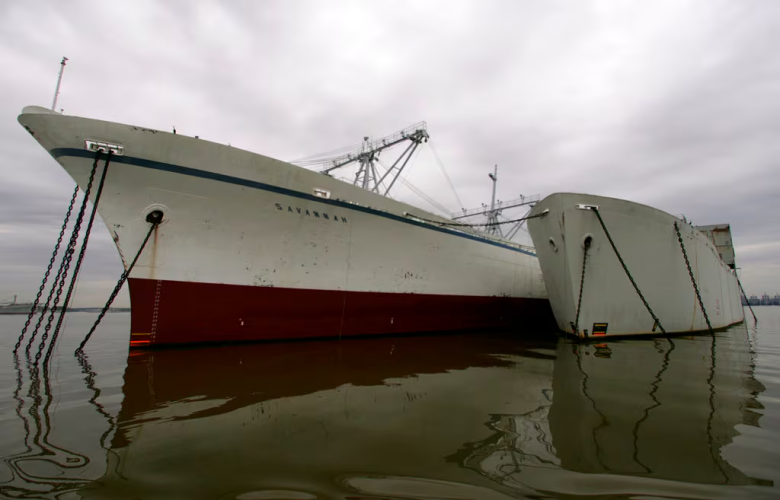
During wartime every ship is at risk. Just that attacking a nuclear powered vessel flagged or belonging to a nuclear power will see you at the receiving end of at least a tactical nuclear warhead. You'd think the reaction to trying to blow up a Nimitz Class CVN would be much different than if you had attempted to blow up Savannah or any NPP on land?
 
During wartime every ship is at risk. Just that attacking a nuclear powered vessel flagged or belonging to a nuclear power will see you at the receiving end of at least a tactical nuclear warhead. You'd think the reaction to trying to blow up a Nimitz Class CVN would be much different than if you had attempted to blow up Savannah or any NPP on land?
Totally disagree, no country is going to nuke someone for destroying a warship, even a nuclear one. It's an incredible escalation to the point of diplomatic suicide, and defeats the point of conventional warfare.
 
Lloyd's is basically the only one with various national branches.
Not at all the case - Bureau Veritas and DNV GL have substantial worldwise presence as well, and one of them (I want to say DNV GL) has published draft Rules for nuclear ships. I believe ABS is quite well represented in the Americas, but I'm less sure on that.

In this context, though, it's registration, not classification, that matters, because that's performed by states which have (in theory!) state powers to enforce regulations. The worst thing a classification society can do is refuse to issue paperwork.
Double hull isn't truely working for grounding cases:
Yep, there are plenty of reasons why double hull isn't a full solution. But the US mandated it after EXXON VALDEZ, so it became the default, which is what I was getting at.

You've linked Jack Devanney's 'Tankship Tromedy' paper. He argues quite convincingly that under the current structure of the maritime industry, only the port state has the power and the incentive to impose meaningful regulations. I think that will absolutely prove to be be the case for nuclear shipping.

The example has been used of USN nuclear standards. I can definitely see the US demanding that any civil nuclear ships meet those standards in order to use its ports. I suspect that they would prove so onerous that it's not economic to do so.
 
The example has been used of USN nuclear standards. I can definitely see the US demanding that any civil nuclear ships meet those standards in order to use its ports. I suspect that they would prove so onerous that it's not economic to do so.
The challenge would be failure modes training.

Basic operations is easy enough.

But what the US civil nuclear industry greatly values Navy training for is failure modes and practice. Civilian nuclear plants basically don't get a chance to do SCRAMs and recoveries, while the USN does them at least weekly if not 4x a week.
 
The example has been used of USN nuclear standards. I can definitely see the US demanding that any civil nuclear ships meet those standards in order to use its ports.
Yes, this will definitely for all developed countries. We see that with airliners and ships alike.
I suspect that they would prove so onerous that it's not economic to do so.
Agree, if we want torough safety it won't be economic. That's why I see the return of sails being the most promising if speed isn't an issue. Otherwise it's probably some hydrogen electric-hybrids.
 
Yes, this will definitely for all developed countries. We see that with airliners and ships alike.
At least on the airliner side of things, FAA and Euro standards are close enough that you can often get away with using the same set of tests for a lot of both of them.

I've been outside the loop for nuclear regulatory stuff for so long that I don't have a clue civilian-side.


Agree, if we want torough safety it won't be economic. That's why I see the return of sails being the most promising if speed isn't an issue. Otherwise it's probably some hydrogen electric-hybrids.
Disagree.

It will not be cheap, "Safe, cheap, fast; pick 2" also applies somewhat. The real question comes from when the various powers that be really crack down on Bunker C combustion emissions, raising the costs of diesel ships burning that sludge.
 
Agree, if we want torough safety it won't be economic. That's why I see the return of sails being the most promising if speed isn't an issue. Otherwise it's probably some hydrogen electric-hybrids.
Direct hydrogen use aboard ship is a bit of a pain and seems unlikely to be a solution for deep sea shipping. It's looking likely that methanol and ammonia are the preferred solutions for hydrogen storage, but not clear whether one will win out or if there'll be coexistence of both.
 
Direct hydrogen use aboard ship is a bit of a pain and seems unlikely to be a solution for deep sea shipping. It's looking likely that methanol and ammonia are the preferred solutions for hydrogen storage, but not clear whether one will win out or if there'll be coexistence of both.
May depend on what kind of cargo the ship is designed around.

A ship designed to haul refrigerated goods, for example, would likely prefer to run on ammonia (since the refrigeration plant likely runs on anhydrous ammonia anyways).

There's also the argument that a lot of idiot sailors would try to drink the methanol "because it's alcohol", so that's a distinct negative. Not to mention that methanol burns with an invisible flame. If the sun is up, you can't see the fire!
 

Similar threads

Back
Top Bottom