SUPER=BUG
ACCESS: Top Secret
- Joined
- 25 September 2024
- Messages
- 884
- Reaction score
- 2,426
To be honest, the article in the link below reads like a bunch of nonsense.

To be honest, the article in the link below reads like a bunch of nonsense.

Yep you are right, I'm going to nuke it and search for better source.
This is what the draft (the final version is expected to have only minor variations) of the 5 year plans guidelines say:In fact, there is a catalog of the 15th Five-Year Plan collected by the Chinese authorities here, which contains a total of 109 major engineering projects.
https://www.workercn.cn/upload/resources/file/2026/03/07/2739066.pdf
https://www.news.cn/politics/20260305/d8dc531b0f3c480fa72f20f825d9d8b6/c.html
But unfortunately, there is no English version here.
These are likely respectively:Column 8: Cutting-Edge Scientific and Technological Breakthroughs
08 Deep Space Exploration
Demonstrate the implementation of
-the second phase of the planetary exploration project
-the near-Earth asteroid defense project
-the solar system boundary exploration project.
-Develop reusable heavy-lift launch vehicles.
-Demonstrate the construction of an international lunar research station and implement the lunar exploration project.

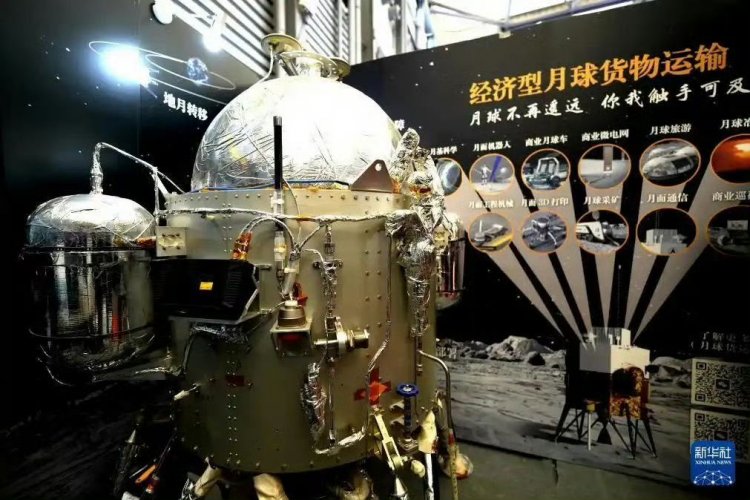
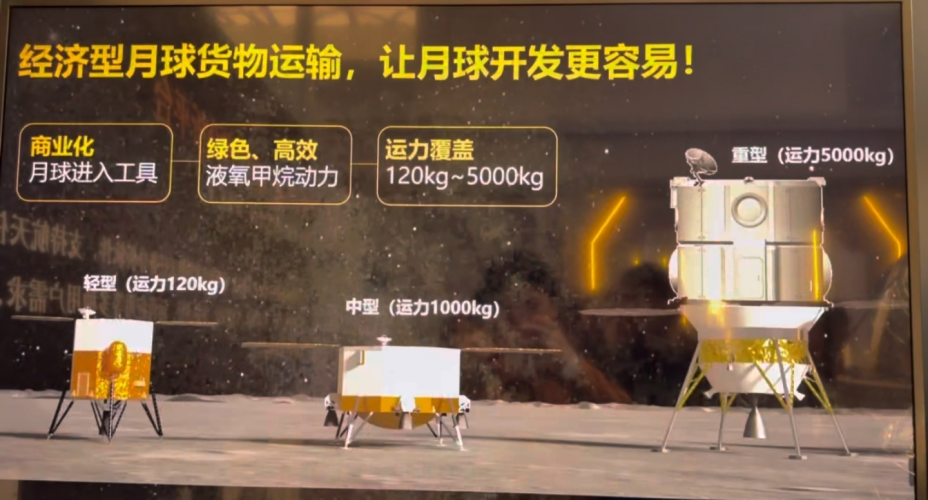
Chinese Dalek? They really copy *everything*...View attachment 805213View attachment 805214Methane Lunar Cargo Lander
SAST is displaying an economical lunar cargo transportation spacecraft at a conference in Shanghai. A demo version has already completed liftoff, hovering and landing tests. Image via xinhua.
https://satobs.org/seesat/Mar-2026/0021.htmlImage of the chinese space plane (PRC TEST SPACECRAFT 4) from yesterday.
https://app.astrobin.com/i/1cd7co
animation:
https://app.astrobin.com/i/1cd7co?r=B
wide field video:
https://app.astrobin.com/i/1cd7co?r=C
The main difference to the last flight seems to be that only a single solar
panel is deployed from the cargo bay, similar to the X-37B.
During the last flight, two solar panels were mounted on a support
module at the rear of the craft.
I believe that the bright extension is the solar panel, due to it only
becoming visible at phase angles smaller than 90°.
animation showing the "appearance" of the panel at PA<90°:
https://app.astrobin.com/i/1cd7co?r=D
The panel also seems to have been the source of the bright flare shortly
after the peak of the pass.
Additionally the panel seems to be smaller than on the previous flight.
The total length of the craft is around 8.5m, similar to the X-37B, and
also to my observations of the previous flight.
It also seems to have aligned its longitudinal axis along its flight path.


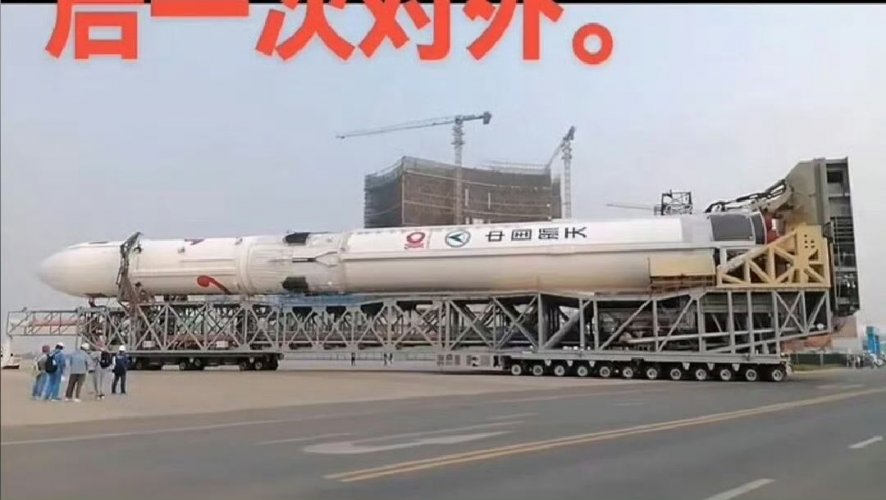
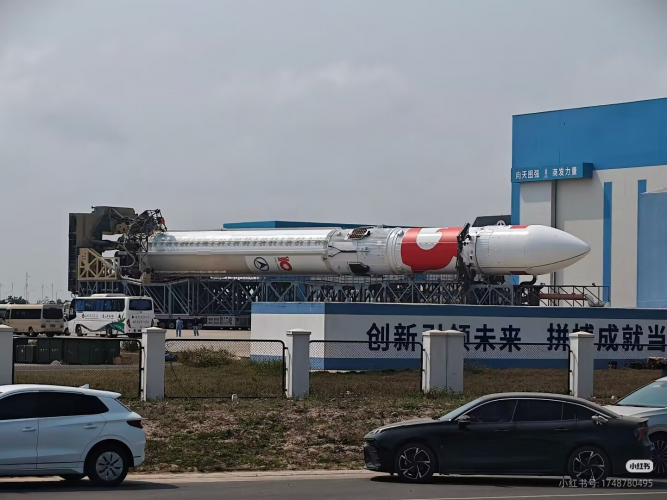
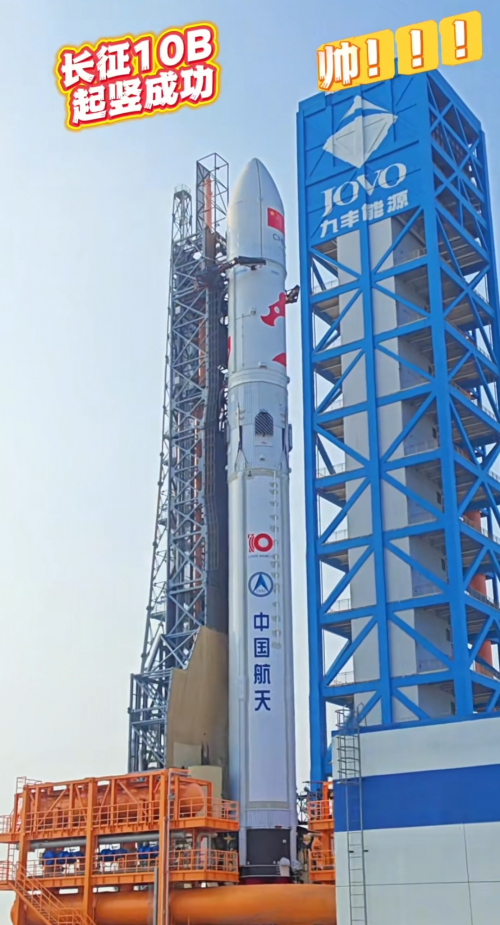
CZ-10B's TE was moving back to the AB after the rehearsal. Hopefully next time when it moves out, we could see the actual 10B on the TE. via Douyin/Jerry
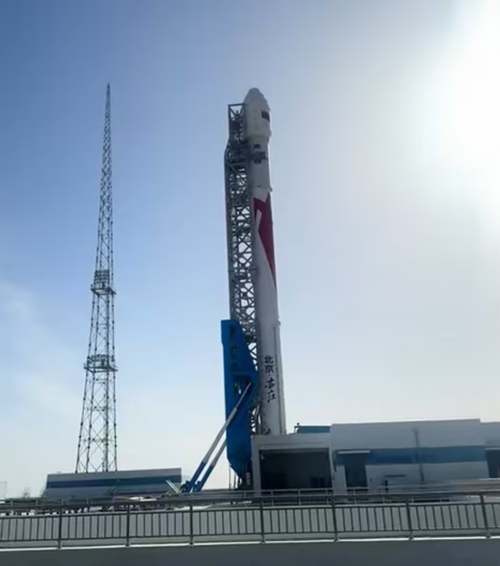
An insider revealed that the Long March 12B, which had been delayed, is about to make its maiden flight.
The CACL team has already set up shop in Gansu (no pictures, but the proof is there).
On March 16, it was learned from the State Administration for Market Regulation that the Administration recently officially approved the establishment of the National Satellite Internet System and Service Standardization Technical Committee.
In recent years, with the accelerated construction of low-Earth orbit satellite constellations, the application of satellite internet in areas such as direct mobile phone connections, emergency communications, marine fisheries, transportation and logistics, and communication support in remote areas has been continuously expanding. my country's satellite internet industry ecosystem is becoming increasingly active, and its industrial capabilities are constantly strengthening.
It is understood that the newly established National Satellite Internet System and Service Standardization Technical Committee will address the current characteristics of rapid technological development and the influx of diverse commercial entities. It will broadly gather the strength of all parties, promote resource sharing within the industry, accelerate the development of urgently needed standards such as satellite internet terminology, constellation on-orbit operation assessment, and key system products, continuously improve the satellite internet standard system, actively participate in international standard setting, and promote the rapid, standardized, and healthy development of the satellite internet industry.
Some features for the mission:
- total mass < 3.1t (or < 2.1t as per one slide below, could be a typo?), 270kg of scientific payload (including 150kg atmospheric entry probe)
- two 300W RTG for power supply, 380W at mission end
- 3.75m HGA and X/Ka band downlink, data rate ≥ 32kbps
- launched directly into Earth-Neptune transfer orbit, with departure C3 ≥ 158 km^2/s^2 and 15 years of transfer
- annual launch window, primary in 2033
- Triton gravity assist to reduce capture ΔV, finally enter Triton 2:1 resonant orbit
The slide about the transfer trajectory shows a propulsion stage of nearly 50,000kg. This suggests that the launch vehicle is CZ-9, which has the exact TLI capability.
Source to the attached pics
https://weibo.com/5658451754/PkxvGhugu

Isn't this a Japanese project?
It certainly is.Isn't this a Japanese project?
It certainly is.
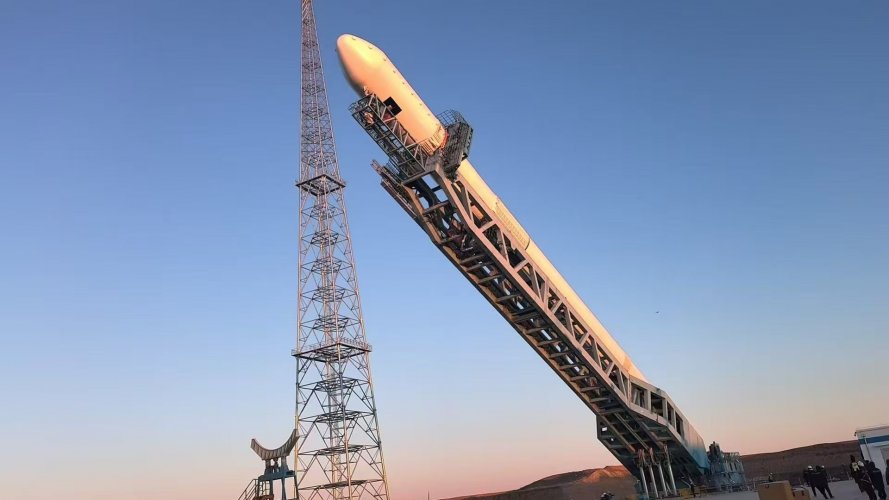
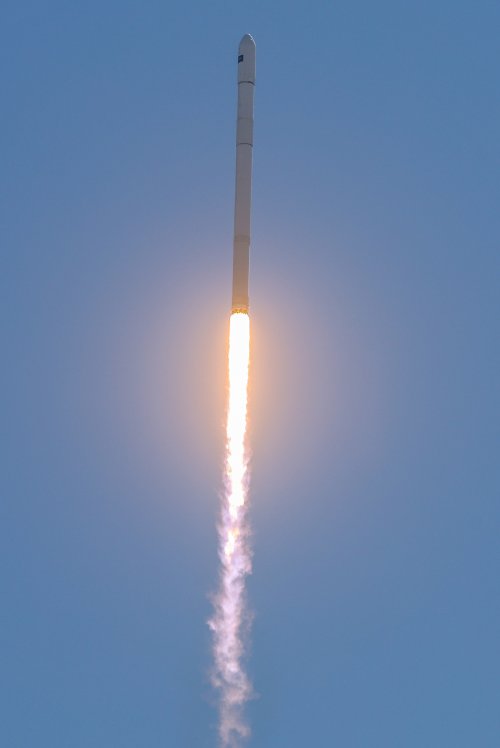
At 12:17 PM on April 3, 2026, our company's "TW-4·Xiyou" satellite, launched aboard the Tianlong-3 (Y1) carrier rocket from the Dongfeng Commercial Aerospace Innovation Test Zone, experienced an anomaly during flight, resulting in a launch failure and the satellite failing to reach its intended orbit.
We deeply regret this launch failure. This satellite is an important scientific research satellite jointly developed by our company and Xi'an University of Posts and Telecommunications, embodying the long-term R&D efforts and technological investment of both teams. It carries the mission and expectation of promoting the intelligent and precise development of remote sensing technology through university-enterprise cooperation. While the launch failure is heartbreaking, space exploration is inherently full of risks and challenges, and every attempt is a step towards technological accumulation and growth.
Setbacks are the crucible for progress. Tianwei Technology will always maintain a deep respect for the aerospace industry, adhere to its original aspirations, summarize experiences, and forge ahead. We will continue to cultivate the fields of satellite development and aerospace information applications, advancing subsequent satellite development and launch missions with a more rigorous attitude and more solid technology, living up to the trust and expectations of all sectors.
The three experimental satellites of the Earth-Moon distant retrograde orbit (DRO) pilot exploration mission independently deployed by the Chinese Academy of Sciences have been conducting experiments in orbit for two years, accomplishing the world's first low-energy DRO insertion, and verifying the new principles of spacecraft stable residence in DRO, low-energy maneuver transfers, and space-based measurement, orbit determination, and navigation.
In addition to occupying the 'feng shui treasure land,' these three satellites also completed a crucial task at the 'spaceport'—building an 'internal communication network.' They successfully established a K-band inter-satellite link spanning up to 1.17 million kilometers, a distance more than three times that from the Earth to the Moon. With this link, the three satellites can 'chat' directly with each other and measure each other's positions, without having to relay signals back through the ground. It's as if, in the vastness of space, they have formed their own exclusive 'group chat,' achieving efficient communication.
The establishment of this 'group chat' also carries a more symbolic significance: by measuring each other and sharing data among the satellites, they have truly learned to 'find their own way.' This means that future deep-space spacecraft could potentially achieve 'autonomous navigation,' no longer entirely reliant on ground commands—an aspect particularly crucial in regions where ground signals cannot reach, such as the far side of the Moon or Mars. It can be said that these three satellites are gradually building a solid prototype of the future 'interstellar navigation port.'
https://saemiller.com/qian-xuesen-hsue-shen-tsien/I am very happy to see Qian Xuesen's vision become a reality.

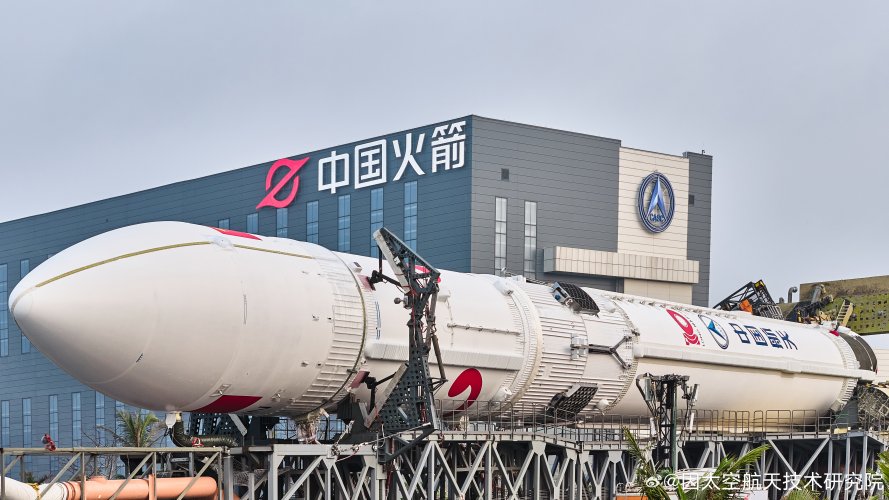
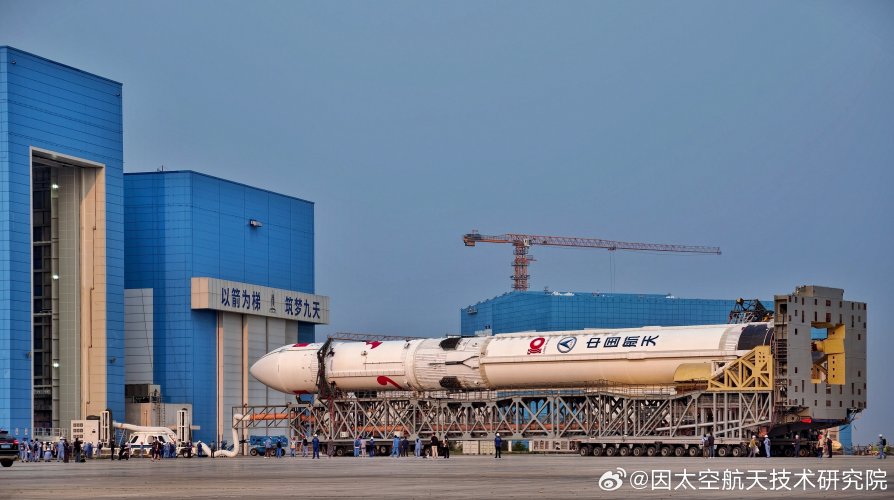
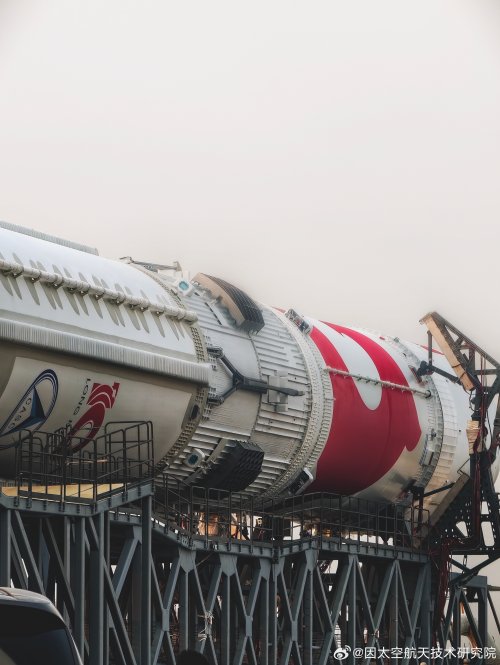
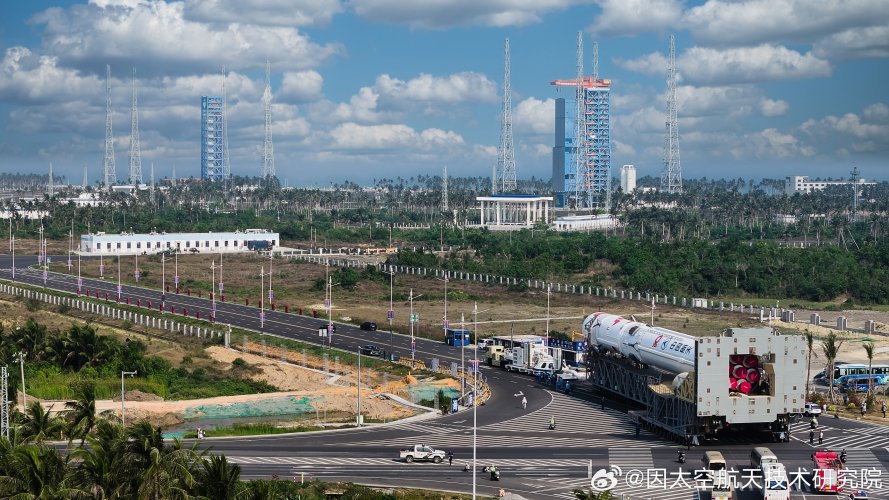
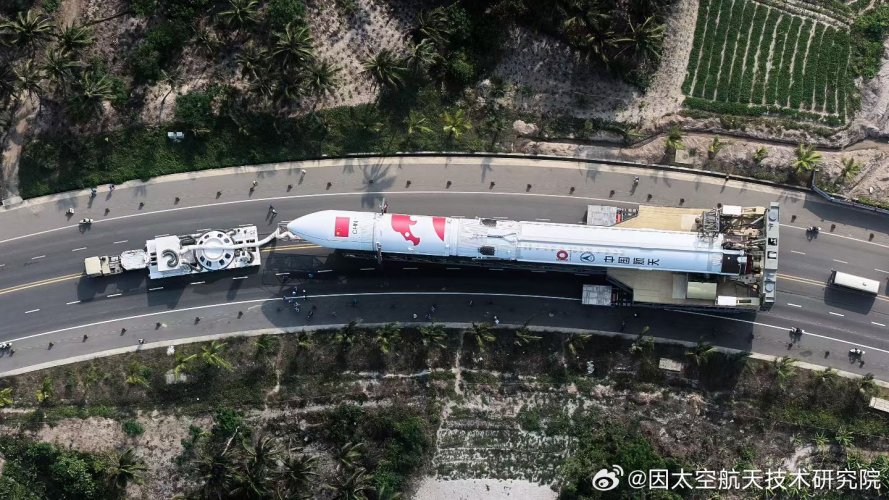
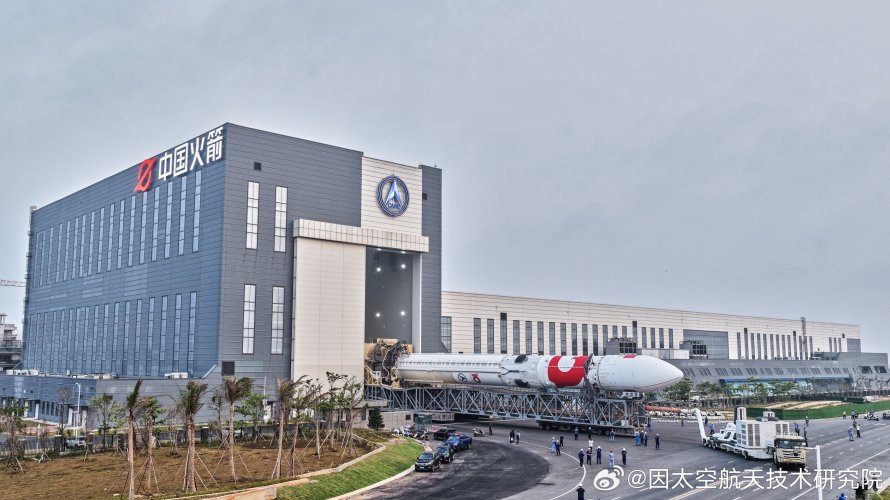
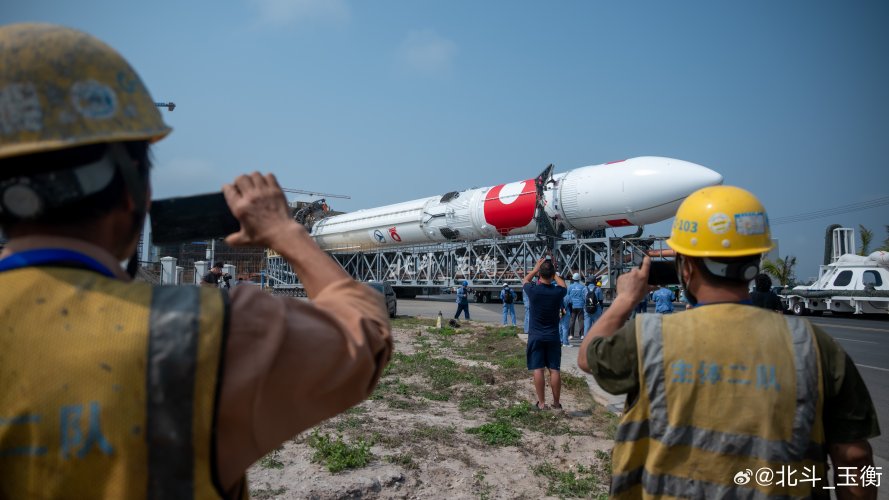
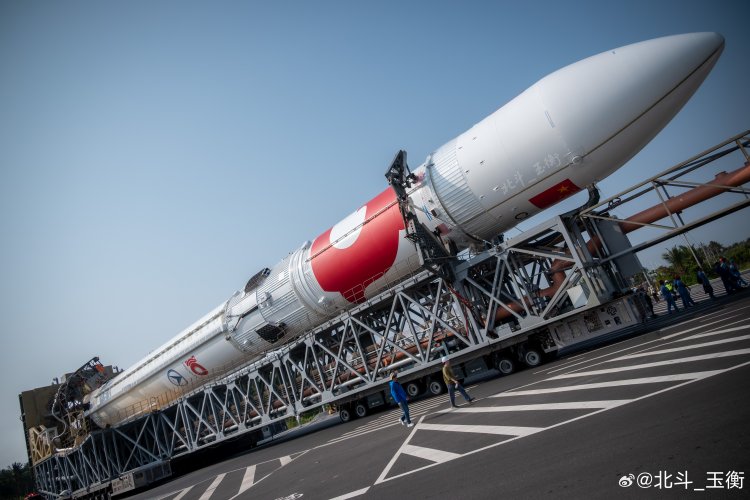
10B,not12BCZ-12B. If all goes well, it will launch by the end of this month.
From Weibo 因太空航天技术研究院 & 北斗_玉衡

Why 10B, 12A, and 12B?10B,not12B
?They belong to different developersWhy 10B, 12A, and 12B?
10B - China Academy of Launch Vehicle Technology?They belong to different developers
If you're a latecomer developing a single-core, VTVL, first-stage reusable rocket, you'll more or less repeat what American developers have done. The Chinese do it, the Russians do it, and so do the Europeans.Is it racist to say that all those rockets either look like one another or like SpaceX clones? If so, please, mods swoop in for old man cleanup...
Why? Rocket Lab's Neutron is different. Stoke Space's Nova is different. Blue Origin is different. Sure, Relativity Space's is pretty close but it's also, probably, going to be far more capable than Falcon 9. (Assuming they can finagle logistics and support as well as SpaceX.)If you're a latecomer developing a single-core, VTVL, first-stage reusable rocket, you'll more or less repeat what American developers have done. The Chinese do it, the Russians do it, and so do the Europeans.