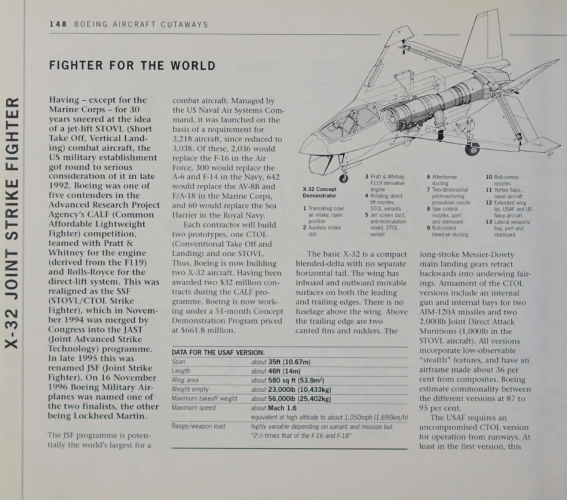
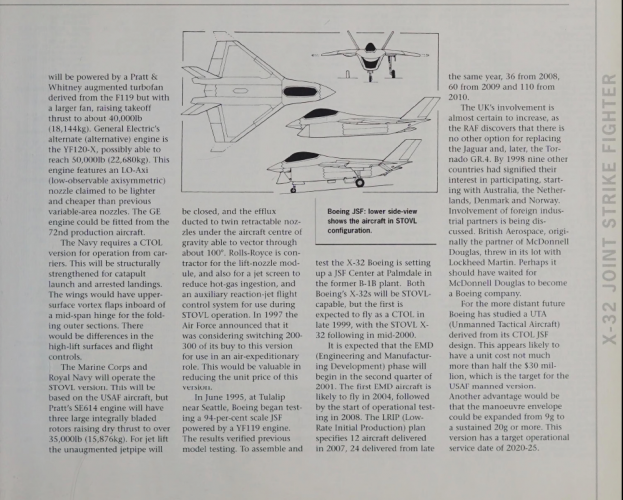
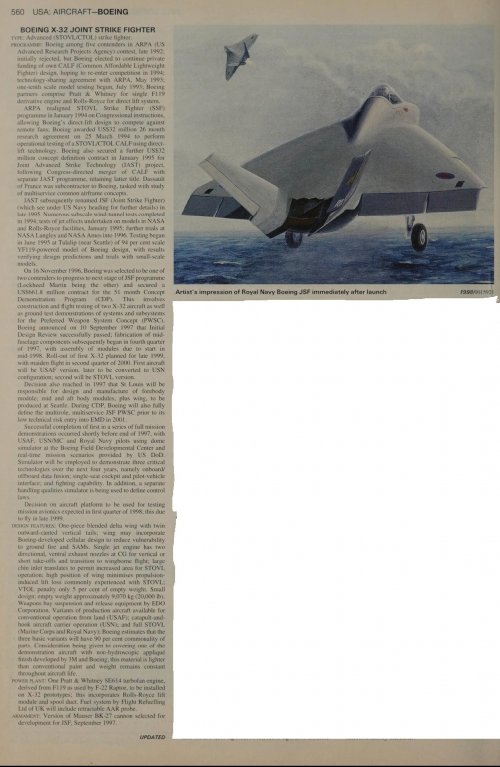
I found the patent that Aerojet Rocketdyne filed on them for our proposal aircraft
Patents often show general configurations which aren't representative of the exact way a manufacturer will implement it, if at all. I was wondering how representative the patent was.

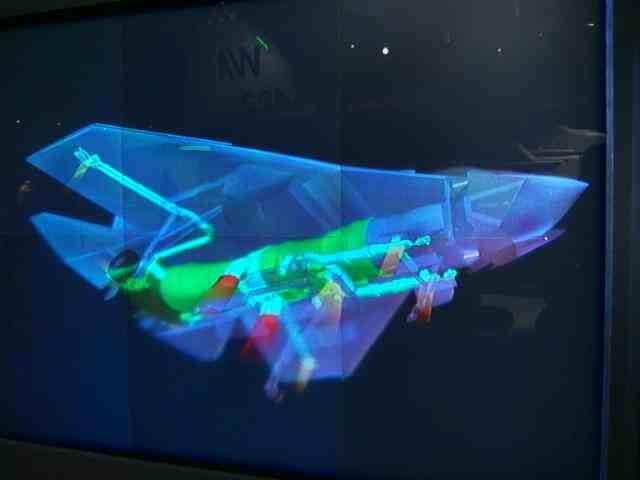
The LTAs appear to be in the same location as the patent, as seen in the attached image.

Note: the jet screen is forward of the LTAs.


they were just ramjets
They appear closer to RALS because they were supplied with compressed air from the fan, not ram air. Maybe PALS (proximal instead of remote)?
 

Attachments

  • JSF_B_10.jpg
    JSF_B_10.jpg
    10.2 KB · Views: 49
Patents often show general configurations which aren't representative of the exact way a manufacturer will implement it, if at all. I was wondering how representative the patent was.

The LTAs appear to be in the same location as the patent, as seen in the attached image.

Note: the jet screen is forward of the LTAs.


They appear closer to RALS because they were supplied with compressed air from the fan, not ram air. Maybe PALS (proximal instead of remote)?
I haven't heard "RALS" for a long long time - I'm having a fit of nostalgia right now. :) And I thought for just a moment that the picture was one of our vulnerability illustrations, from when we were using something called SAVE (no, not THAT "SAVE"!) - Spatial Access Vulnerability Evaluator. It used the production part drawings as the "geometric target model" instead of using those drawings to generate a separate GTM (as had always been done for running FASTGEN/COVART tools) which let us run shotlines directly through the parts themselves rather than the GTM. It saved months of time and produced output graphics that looked a lot like that image. More importantly, it let the vulnerability analyses keep pace with the evolution of the configuration so that our results were always representative of what the airplane was at every moment in time. And I appear to be getting deeper and deeper into technical details of no importance to anyone but a few specialists... :)
 
I haven't heard "RALS" for a long long time - I'm having a fit of nostalgia right now. :) And I thought for just a moment that the picture was one of our vulnerability illustrations, from when we were using something called SAVE (no, not THAT "SAVE"!) - Spatial Access Vulnerability Evaluator. It used the production part drawings as the "geometric target model" instead of using those drawings to generate a separate GTM (as had always been done for running FASTGEN/COVART tools) which let us run shotlines directly through the parts themselves rather than the GTM. It saved months of time and produced output graphics that looked a lot like that image. More importantly, it let the vulnerability analyses keep pace with the evolution of the configuration so that our results were always representative of what the airplane was at every moment in time. And I appear to be getting deeper and deeper into technical details of no importance to anyone but a few specialists... :)
Must admit, that sounds like a useful development to keep the vulnerability analyses updating every time someone made a change like that.
 
Must admit, that sounds like a useful development to keep the vulnerability analyses updating every time someone made a change like that.
At one point the FASTGEN/COVART model managers were interested in SAVE for the next major step in the evolution of the vulnerability analysis toolset. Generating the geometric target model was always the weak link in that whole process, taking anywhere from months to a year or more using the techniques and computer capabilities then available. As a result, all the airframers were developing their own GTM "autotranslators" and it seemed like some standardization would help everybody. But SAVE couldn't even find much traction within Boeing itself. It was something that my Operations Analysis group had developed, and we weren't a "program" as such, we were a core skills group whose members were hired out to the various programs as needed. Sometimes we were the only people on the program doing the Vulnerability work, sometimes we were just supplementary support when an existing team had its own experts and just needed more bodies to help out. There was a large program (one of the very few left at that time) that fit the latter category, having its own Vulnerability team but needing more analysts to make it through a high-volume work period. It was a make-or-break situation for SAVE, and unfortunately the Vulnerability team leader was enamored of someone else's autotranslator, even though SAVE was considerably faster and had proven that fact on another small proposal program. There being no other large programs on the horizon, the leader's preferred autotranslator became the de facto "official" one and SAVE was forgotten within the Company and thus not pushed for the Government's next standard analytical toolset. I retired not long after that. I honestly have no idea what's being used these days but I left behind one SAVE enthusiast on that other small program, so who knows? Maybe it survives as a niche player. It's just highly frustrating to see a better tool being pushed aside by an inferior one. So glad to be out of that whole environment! As a matter of fact, I'm sitting here typing this wearing a t-shirt that says "RETIRED ENGINEER - just like a regular engineer only way happier." :)
 

Similar threads

Back
Top Bottom