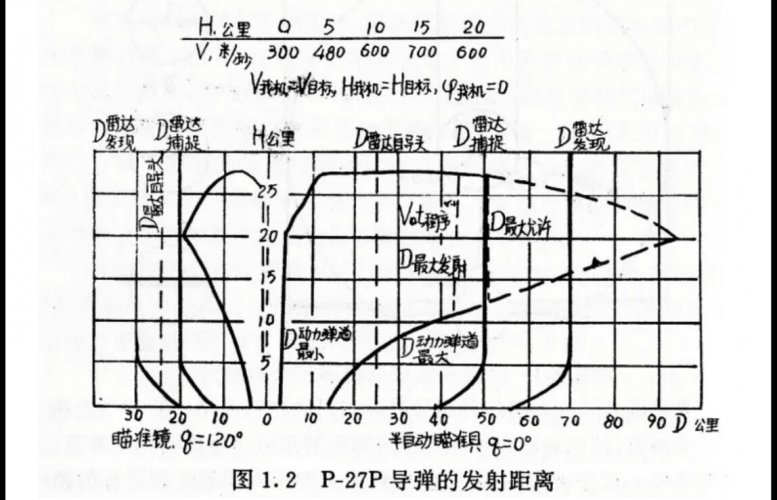
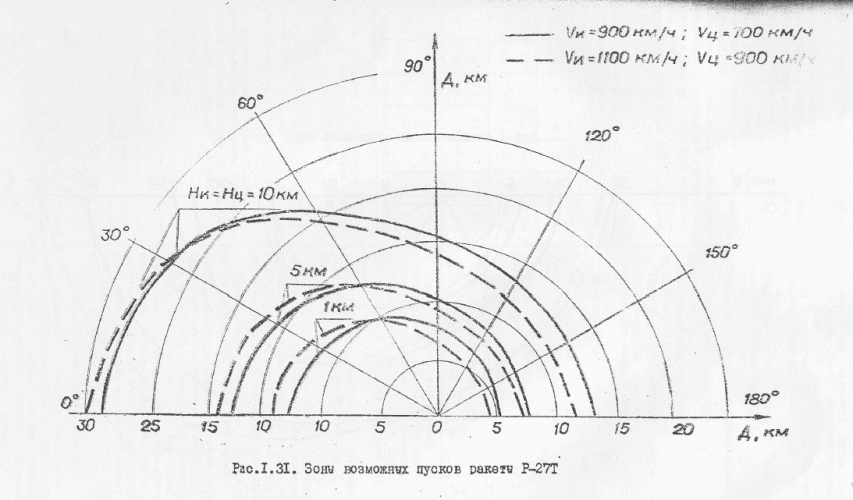
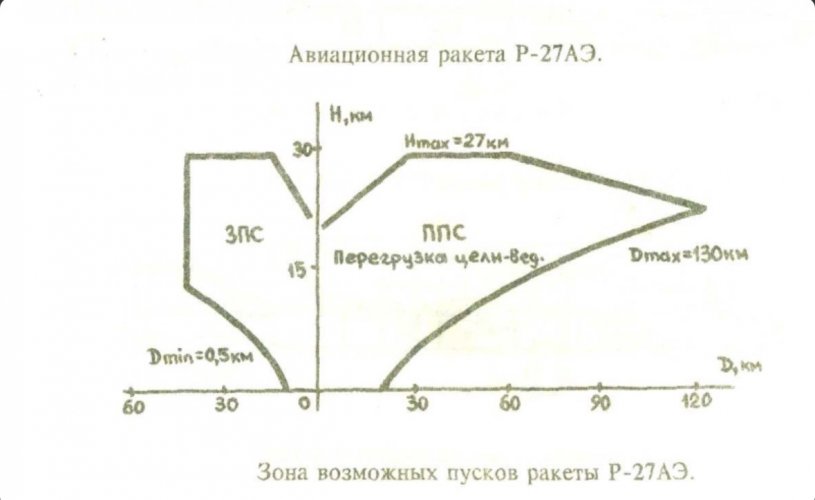
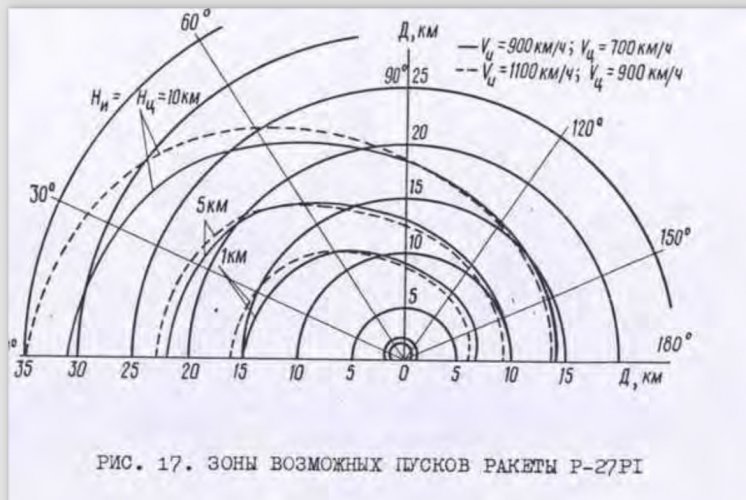
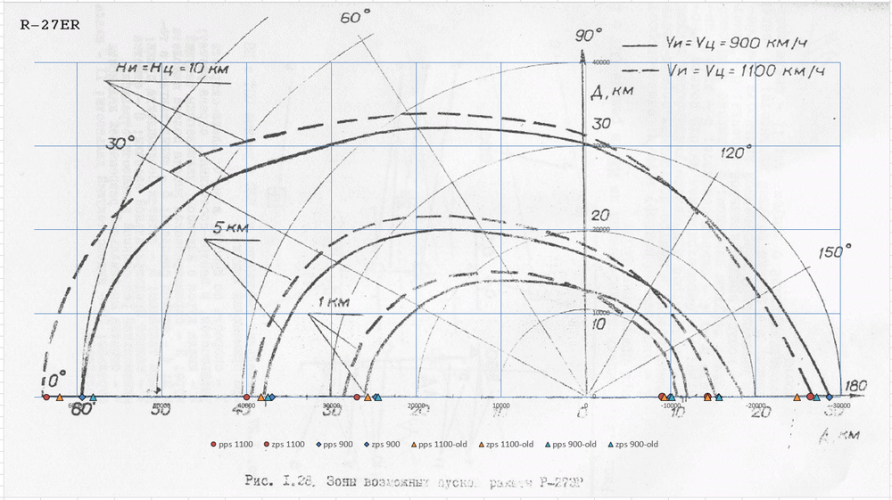
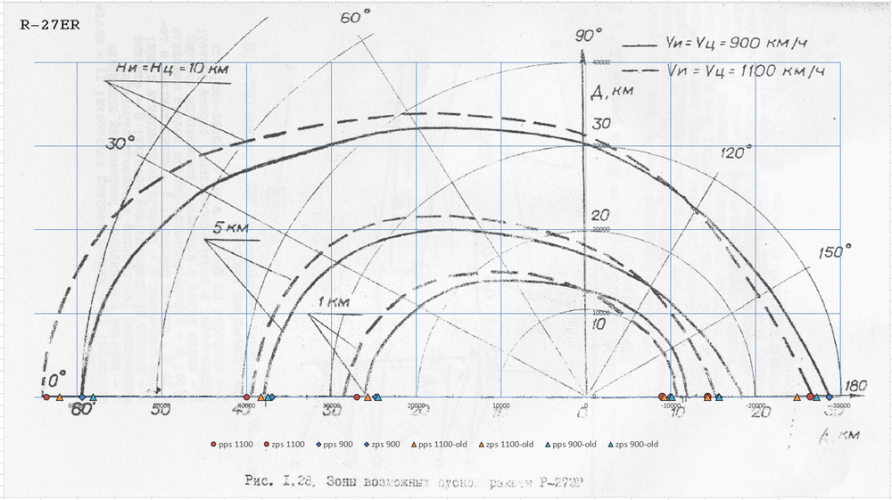
It matches most graphs in front aspect, but much lower in rear aspect. I believe this is becuase most graphs are for subsonic speeds, and this one it higher, though still subsonic at the lowest altitude oddly.
Either way, while it’s odd to under do the rear aspect it is inline with a R-77 graph that has no speeds listed.
What’s also interesting is it shows approx MiG-29 radar detection and lock range overlaid.
It matches most graphs in front aspect, but much lower in rear aspect. I believe this is becuase most graphs are for subsonic speeds, and this one it higher, though still subsonic at the lowest altitude oddly.
Either way, while it’s odd to under do the rear aspect it is inline with a R-77 graph that has no speeds listed.
What’s also interesting is it shows approx MiG-29 radar detection and lock range overlaid.
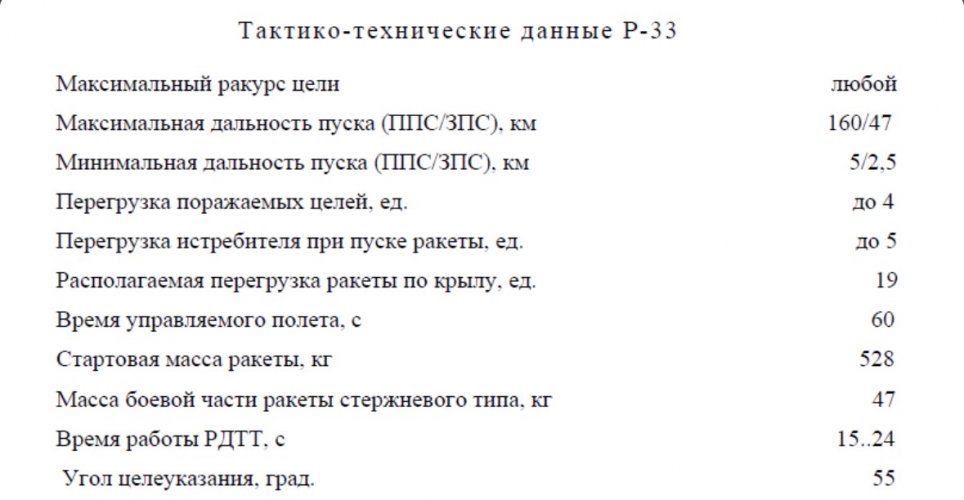
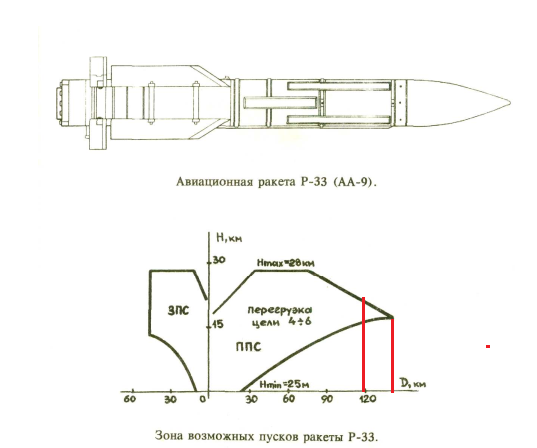
Btw, I have a question, do earlier you said the chart of R-33 was against Mach 2 target, but I can’t find it in the table, can you let me know where the data from?
Btw, I have a question, do earlier you said the chart of R-33 was against Mach 2 target, but I can’t find it in the table, can you let me know where the data from? View attachment 803194
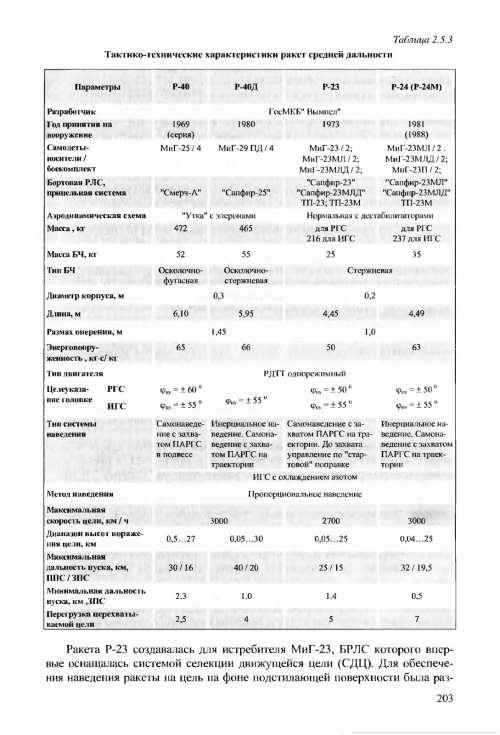
It is more assumption based on how every single Soviet chart of this form is like. They are always for 380 m/s at ground level, 480 m/s at 5 km, 500 m/s at 10 km, 700 m/s for 15 km, 600 m/s at 20 km. We see this explicitly Mentioned in Soviet charts for R-23, R-24, AIM-7F/M, AIM-120A, and now R-27R.
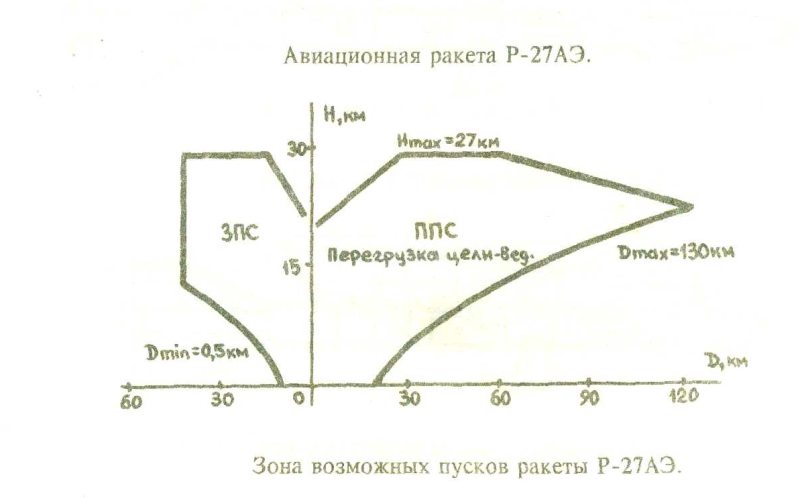
Only under these conditions is it possible to reach 90 km with R-27R, and only under these conditions is it possible to reach 130 km for R-27ER, 27AE, and 120 km for R-27ET/EP. Since R-33 max range is quoted at 120 km, we can assume it for the R-33 120 km chart as well.
Per SD-10/PL-12 designer, the R-77 chart is for a Mach 1.5 speed vs Mach 1.5 at 15 km, but I wonder if he’s rounding down a bit here.
It is more assumption based on how every single Soviet chart of this form is like. They are always for 380 m/s at ground level, 480 m/s at 5 km, 500 m/s at 10 km, 700 m/s for 15 km, 820 m/s at 20 km. We see this explicitly Mentioned in Soviet charts for R-23, R-24, AIM-7F/M, AIM-120A, R-27R and we can imply it for an R-77 chart of similar type.
Only under these conditions is it possible to reach 90 km with R-27R, and only under these conditions is it possible to reach 130 km for R-27ER, 27AE, and 120 km for R-27ET/EP. Since R-33 max range is quoted at 120 km, we can assume it for the R-33 120 km chart as well.
I see. Damm, R-33S seem crazy fast.
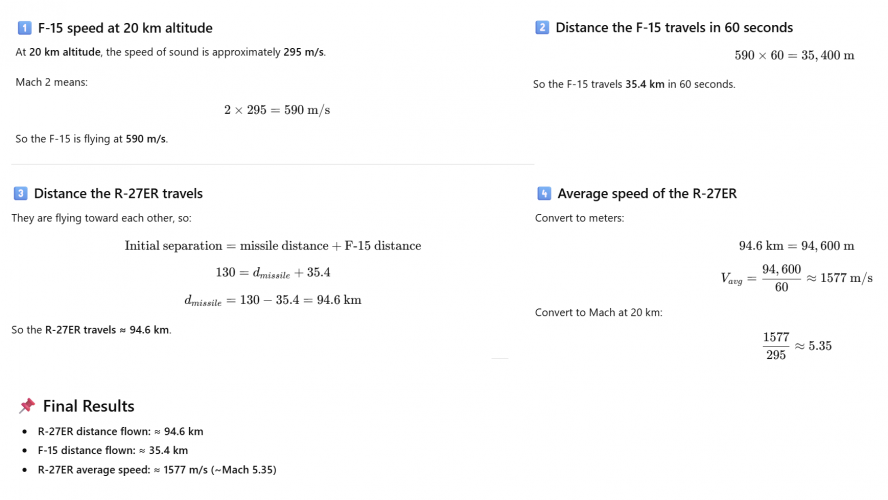
A Mach 2 aircraft could fly 35.4 km in 60 seconds, that mean R-33S fly 124.6 km in 60 seconds. That average speed of Mach 7
I see. Damm, R-33S seem crazy fast.
A Mach 2 aircraft could fly 35.4 km in 60 seconds, that mean R-33S fly 124.6 km in 60 seconds. That average speed of Mach 7
Yeah, I wouldn’t be surprised if it has a small battery lifetime boost over the original model. But the book just has the info of the original model for battery life. You could use a longer or more powerful sustainer motor, lifetime, but hard to imagine much of an increase in peak speed. The motor is of nearly identical power to AIM-54 engine.
Only under these conditions is it possible to reach 90 km with R-27R, and only under these conditions is it possible to reach 130 km for R-27ER, 27AE, and 120 km for R-27ET/EP
Max height of the MiG-29 (A/B) with R-27R/R1 is 16km ,with supersonic speed ,launch distance can be max 90km against big incoming air target flying at higher alt ( 'Gorka' or pop-up maneuver).
From:
Бортовой комплекс самолетовождения, прицеливания и управления вооружением самолета МИГ-29Б (СУВ-29Э и сопрягаемые системы).
Su-27S/SK can reach 18km with R-27ER/ER1 and with supersonic launch speed ,130km launch range can be achieved. ET/ET1 can not achieve 120km launch range because max detection range of the OLS-27 is 100 km ( for the incoming fighter flying on AB mode and in the 1/4 angle aspect).
ET/ET1 can not achieve 120km launch range because max detection range of the OLS-27 is 100 km ( for the incoming fighter flying on AB mode and in the 1/4 angle aspect).
Max launch range of 27T/ET has no relation to OLS range. 36T seeker needs lock before launch, all IRST does is tell it where to point same as radar (which launches T/ET fine) or helmet (which can aim them more off boresight then R-73).
Range of the seeker is given as 16-18 km front aspect and 70 km in rear aspect, but I wouldn’t be surprised if max ballistic range in rear aspect taking into account needed fuze closure is closer to 30 km.
Max launch range of 27T/ET has no relation to OLS range.36T seeker needs lock before launch, all IRST does is tell it where to point same as radar (which launches T/ET fine) or helmet (which can aim them more off boresight then R-73)
Everything is related with the radar (gives those ranges during KVO mode if it is trailing channel of FCS) and IRST of course.T/ET are only 'independent' in the 'φ0 mode'. Btw, ranges of the IRST/OLS-27 can only be measured by the radar ( during WVR with LR of course).
Still max range would not equal OLS range. It can be aimed by radar. It can be aimed by lining up with datalink and going to Fi0. It can be aimed any of these ways.
Also, range to target can also be measured by datalink during jamming or estimated by KMOD
There's a 'K-25' as a soviet 'sparrow' competing with R-23/24. R-40 has it's seeker named as 'RGS-25', weird right? 'RGS-25' is not for K-25, but for K-40...
R-33 only reaches 120 km. It could be not far from the truth that R-27ER was in some ways a superior missile if launched at equal altitudes and velocities, which is of course where R-33 gets its advantage ( the launch vehicle and twice the motor operating time). Like R-27ER R-33 does not loft. I’m not sure how a larger missle has to have a longer range Many such examples of large missiles that do not go far. The calibre of R-33/AIM-54 is also not good for drag compared to slimmer missiles Like R-27. Look it up and you will see that in service original R-33 is only ever quoted with 120 km max range. Compare it to the 27AE chart posted above
Based on your chart, it look like R-33 range is at least 150 km? that give average speed of Mach 6.47 ?
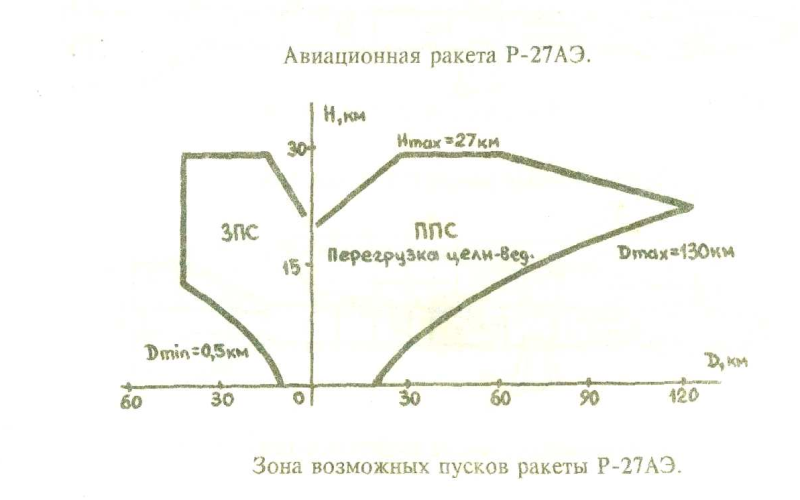
For R-27AE, if the flight time is 60 seconds and target speed is Mach 2, the average speed is Mach 5.35?. Seem insanely fast still. I have seen several simulation of AMRAAM, even top speed doesn't reach that value
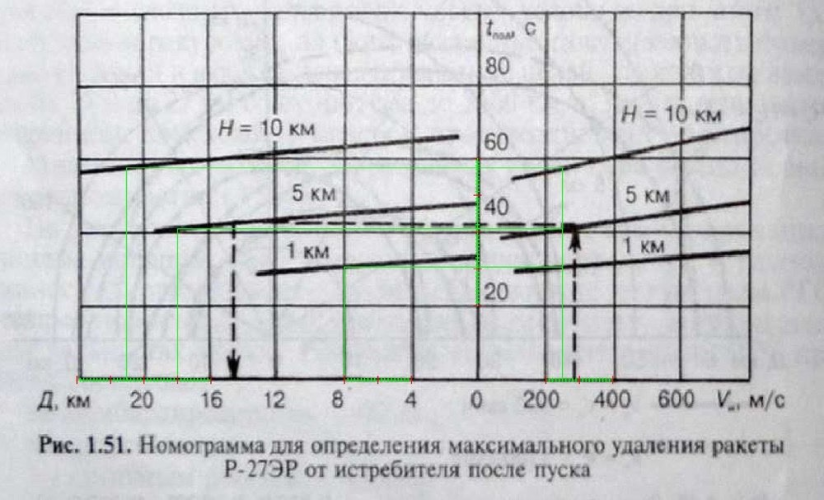
also correct me if I'm wrong but this chart show operating time of 69-70 second for R-27ER ?, I'm not quite sure how it supposed to be interpreted
For R-27AE, if the flight time is 60 seconds and target speed is Mach 2, the average speed is Mach 5.35?. Seem insanely fast still. I have seen several simulation of AMRAAM, even top speed doesn't reach that value View attachment 803326
also correct me if I'm wrong but this chart show operating time of 69-70 second for R-27ER ?, I'm not quite sure how it supposed to be interpreted View attachment 803327
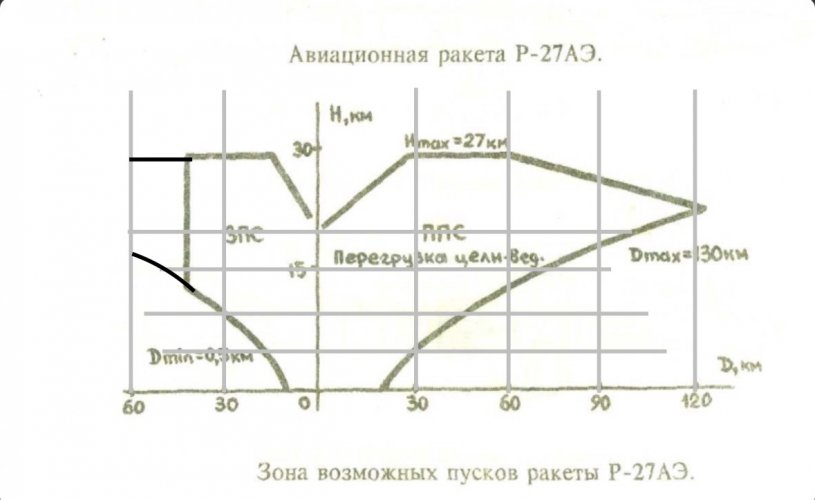
That graph for the R-27E (EA) has some ''issues'' .
Su-27S/SK e.g. can launch R-27ER/ER1 ( max four from stations No 1,2 9 and 10 ) at 18 km of height with max speed Mach 2.35 . When engaged with ER/ER1 target can be 12km above or below the Su-27S/SK. So target can fly even at 30km and can be engaged with ER/ER1 from Su-27S/SK flying at 18km, 30km not 27km as max.
So, that 130km of max launch distance by the so called ''Drmax 1'' launch parameter ( against big incoming non-maneuverable air target ) , can be achieved with 2.35M or less and 18km .
Will repeat from previously mentioned thread. K-27E launched from 18km height during real flight tests w/o guidance unit, achieved about 100km of straight flight trajectory with aerodynamic stability and controllability.
From 14 min Vladimir Bogatsky ( GosMKB Vimpel ), explained why R-27ER has 130km of max launch distance.
For R-27AE, if the flight time is 60 seconds and target speed is Mach 2, the average speed is Mach 5.35?. Seem insanely fast still. I have seen several simulation of AMRAAM, even top speed doesn't reach that value
Just becuase Su-27 has deltaH up to +10 and 18 km ceiling does not mean that every missile it carries is rated for 30 km altitude. R-27E is rated by manufacturer as maximum altitude it is designed for so this is what the chart is using. It is not an “issue.”
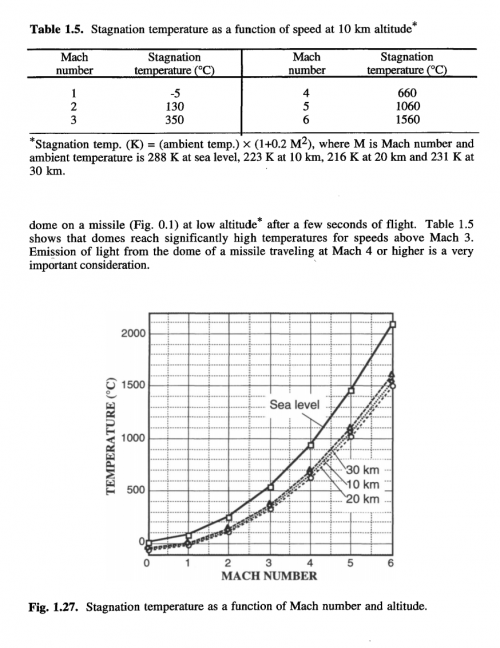
Mach 6 average is crazy fast I think, on the level of hypersonic missile basically, the temperature of the missile will reach 1500 degrees Celsius, can the radome sustain the structure strength at that temperature?
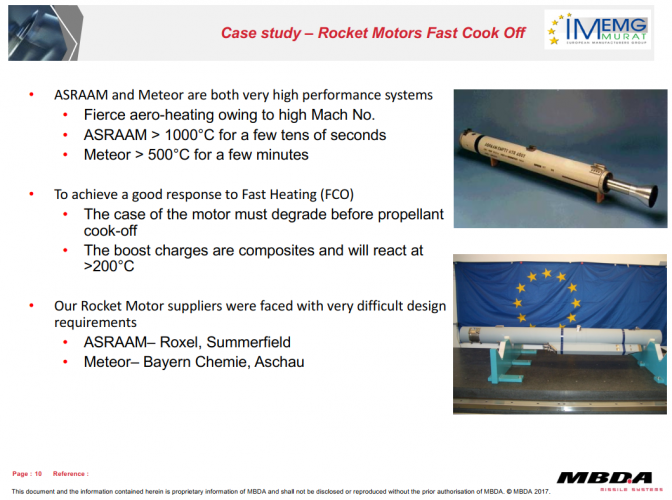
for comparison, Meteor supposed to sustain around 500 degrees Celsius for a few minutes which equal to max average speed of around 3.5-3.7 Mach
Mach 6 average is crazy fast I think, on the level of hypersonic missile basically, the temperature of the missile will reach 1500 degrees Celsius, can the radome sustain the structure strength at that temperature?
If you're talking about a missile radome for such high-speed AAMs their radomes were initially made from thing likes carbon-carbon or later fused-silica IIRC.
Still max range would not equal OLS range. It can be aimed by radar. It can be aimed by lining up with datalink and going to Fi0. It can be aimed any of these ways.
Also, range to target can also be measured by datalink during jamming or estimated by KMOD
We discussed that before and concluded that launch ranges of T/ET depend on the IR seeker capabilities. Yes, from OLS radar,KMOD etc .There is so many sources of targeting data thanks to the sensor fusion and data link capabilities . Mode φ0 is used when radar and OLS can not work in fact.
Just becuase Su-27 has deltaH up to +10 and 18 km ceiling does not mean that every missile it carries is rated for 30 k
altitude. R-27E is rated by manufacturer as maximum altitude it is designed for so this is what the chart is using. It is not an “issue.”
Also we discussed that before about DeltaH as +/-10 km max .So, as we suppose launch height 18 km as max than target can be engaged at 28km ,not 27 km as we can see on the chart. But there is that moment from the manufacturer where we can see that with R-27E is possible to engage target which fly +/-12km.
This is from the R-33,R-37.... thread .
''As is true for R-27 main body and wing surfaces. Only engine body is steel.''
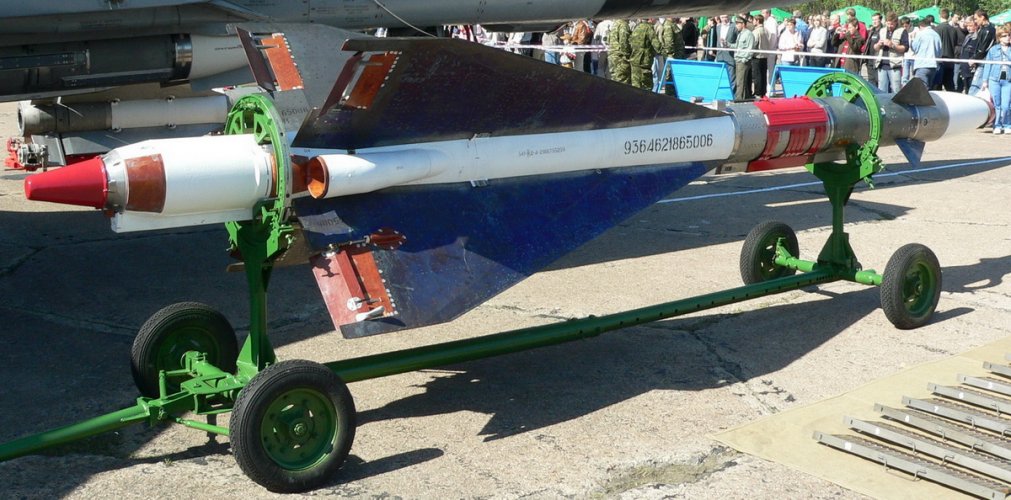
I forgot to mention that wings and stabilizers of the R-27/E are really made from Titanium Alloy( very importnat detail when we talk about max speed of that AAM ) but body from radome section to the high- temp. ceramic nozzle of that AAM is made from the Steel Alloy.
Now regarding the max possible M-number of the R-27ER ....
About max possible speed during and after acceleration phase ( active phase of flight path). Again for us known citation :
'За время работы двигатель при пуске ракеты обеспечивает приращение скорости ракеты к скорости полета истребителя для Р-27ЭР (ЭП) до 800—1000 м/с и для Р-27ЭТ до 700—1100 м/с.''
''During operation of the engine while missile launch ,provides an increase in the missile speed to the fighter's flight speed for the R-27ER (EP) up to 800-1000 m/s and for the R-27ET up to 700-1100 m/s.''
So hypothetical case will be, one Su-27S/SK launches one or more R-27ER at 18km with max possible speed 2.35M ,that increase will be 3600km/h or about 3.4 M at 18km ? 2.35M +3.4M at 18000m ( assuming only straight flight path of course) ???
Can be doesn’t have to be. For example, Fi0 is the only mode in which R-27P/EP is instructed be launched in as it could accidentally see host radar (IRST would still use radar range finding after 8 seconds of no laser range in MiG-29 and there is no case that IRST works without radar ranging/lock in Su-27 unless turned off manually)
Becuase it’s the max height for that missile per manufacturer. Being able to Hit a target 12 km above you doesn’t mean it can do this at all altitudes. If you do a zoom climb to 20 km, 27 km would still be max rated altitude. The R-27 autopilot has 4 range bands for different altitudes, its autopilot is not tuned for altitudes higher then 27 km.
What source says this? You? All sources I have say “rocket design is titanium alloy with the engine body being steel.” This is direct quote, engine body not ‘rocket.’ Also, the missile skin is lined with insulation under it according to the polish docs I attached and Markovsky.
This adds up to over Mach 5.7 . Also, I highly doubt this figure is with a max speed and altitude in mind but an “average”, and I highly suggest a typo as there is NO WAY R-27ET is reaching a higher speed then 27ER. Perhaps they were switched. In such a case that we assume it is a typo and real speed is 1100 m/s, we get Mach 6.1.
36T seeker housing is much more draggy then R/ER radome. It wouldn’t be the first typo in that manual where it says 36T cools its photodetector to practically below absolute zero which is impossible and makes no sense for InSb detector. That manual has good info but I’m not the only one to find occasional “mistakes” in it. It does not take genius to understand why R-27ER should be faster than ET and not the other way around.
Just look at chart for T vs R here
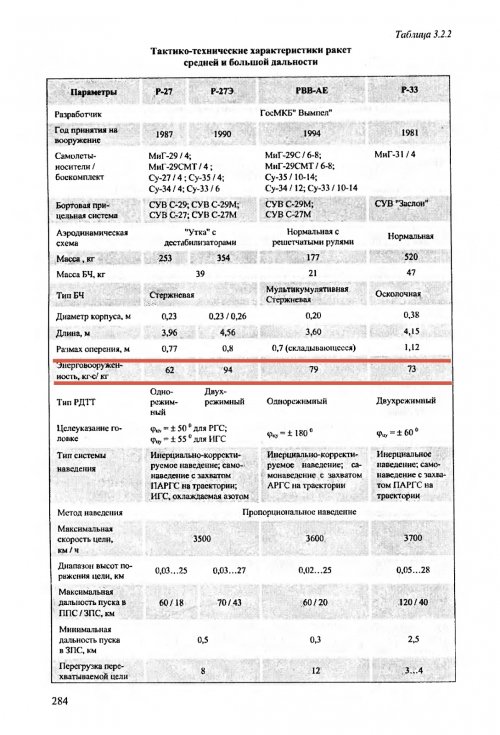
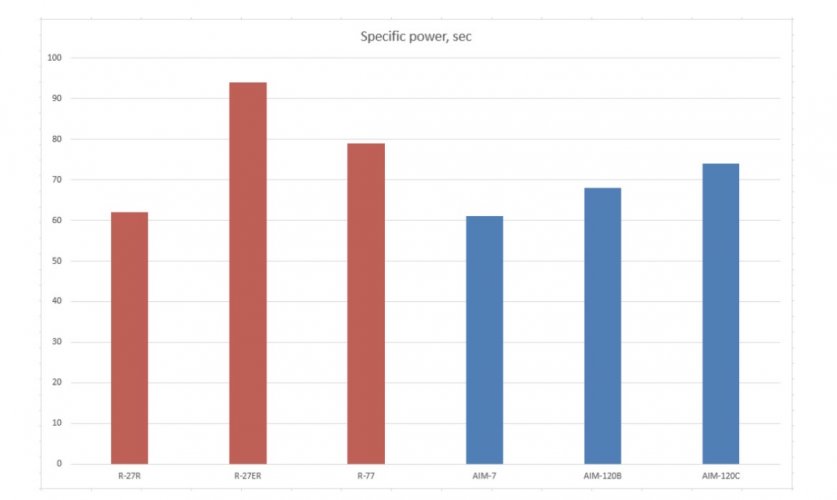
If we add deltav to velocity, which is also exactly 1177 m/s (so close to 1100 m/s figure given for R/27ET probably mistakenly) we get about just above Mach 6.3. So yes, It’s atleast Mach 5.7 with Mach 6+ more likely. Atmosphere will also reduce deltav acceleration most at low altitude, and much less at 15-18 km. CFDs show almost negligible difference at high altitude. This is also one reason manually lofting it in the simulator game DCS works because gravity ( or for that matter air density at 15-18 km) has such a small effect on the burnout speed of a missile with a thrust to weight ratio of 94:1, R-33 thrust to weight ratio is 73:1. Here also R-27R and R-77.
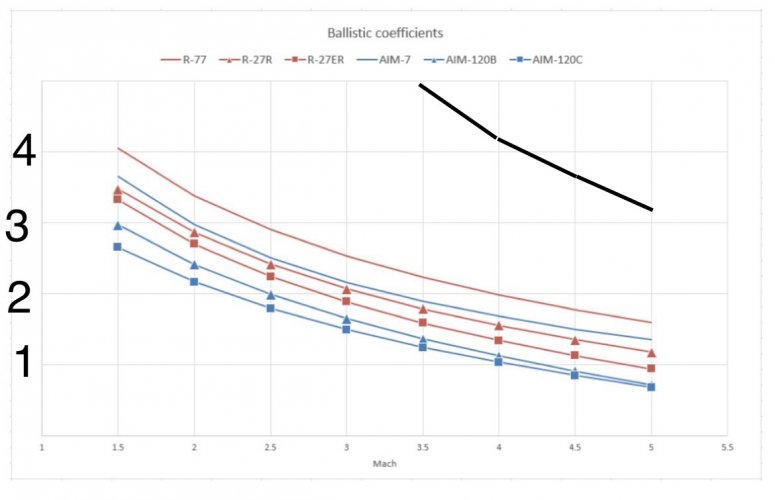
Here is a chart of CFD of multiple missiles. This graph is showing the approximate deceleration speed of each missile after motor burnout.
You will notice that 27ER slows down even slower then 27R becuase of its greater inertia.
R-33/AIM-54 on the other hand, I have added as a black line, and it cannot cover the whole chart as its drag is atleast 4x that of AMRAAM. The lower a line is on the chart the slower it decelerates (the better it preserves it energy). I even underestimated its drag slightly for you.
To be precise it is measuring ballistic coefficient, which measures the amount of drag something produces vs its inertia to calculate this speed of deceleration.
Even if altitude changes, the rough relationship of R-33/AIM-54 having 4x the frontal surface area or more will mean that this relationship/ratio of ballistic coefficient between these missiles will be the same or very similar at all altitudes.
Aerodynamics is no joke. Weight and size is not everything or missile aerodynamics innovation would stop with R-8 Anab or R-40.
Here are more thrust to weight ratios (specific power) to compare
This adds up to over Mach 5.7 . Also, I highly doubt this figure is with a max speed and altitude in mind but an “average”, and I highly suggest a typo as there is NO WAY R-27ET is reaching a higher speed then 27ER. Perhaps they were switched. In such a case that we assume it is a typo and real speed is 1100 m/s, we get Mach 6.1.
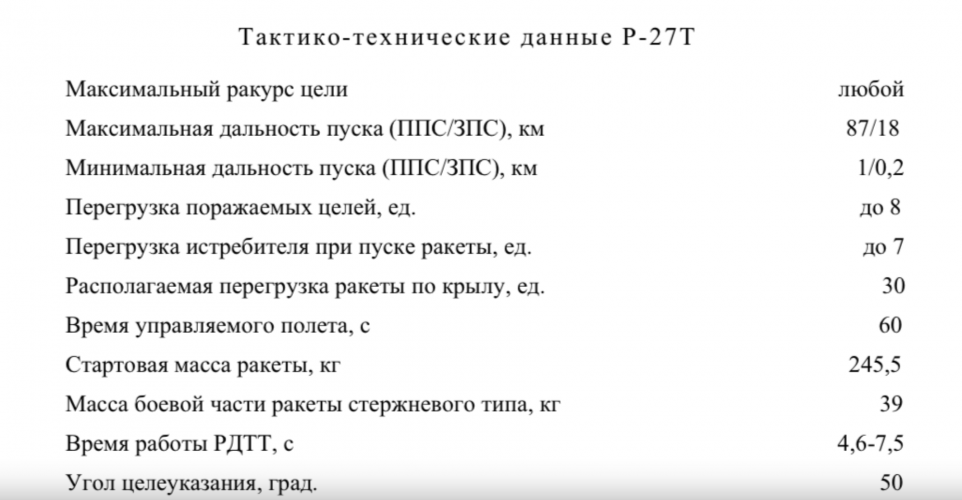
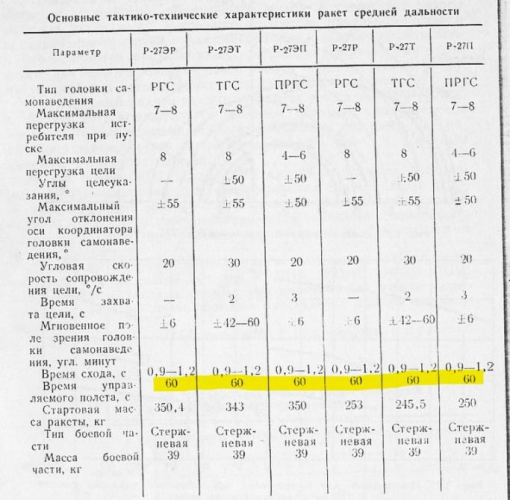
Hmm I just realize something, it seem like there is a contradiction between the two graphs that we are using If we use this graphs below for R-27AE with the table that give controllable flight time for R-27T, and we make the assumption that the controllable time (battery time) of R-27T is the same as R-27AE and equal to 60 seconds.
That mean at altitude of 20 km, R-27AE can fly 130 km in 60 seconds, that equal to average speed of Mach 5.35 or 1578 m/s
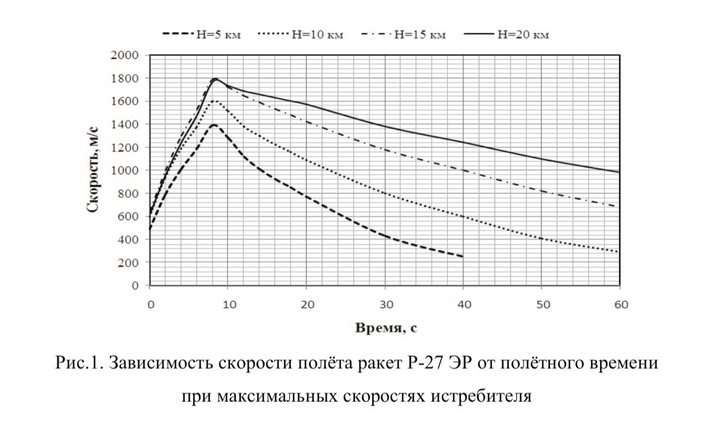
However, if we used this CFD graph below
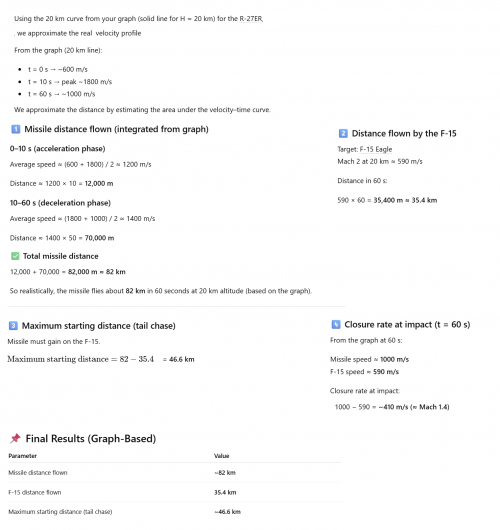
I uploaded the image to several AI like Grok, Gemini, and ChatGPT. Based on the chart, their calculations estimate the average speed at 20 km altitude over 60 seconds to be approximately 1,325 m/s (around Mach 4.5) and max distance travel to be 79.5 km rather than 130 km.
But that not the only inconsistency
If the we look at the R-27AE chart again
The rear aspect shot distance is around 45 km
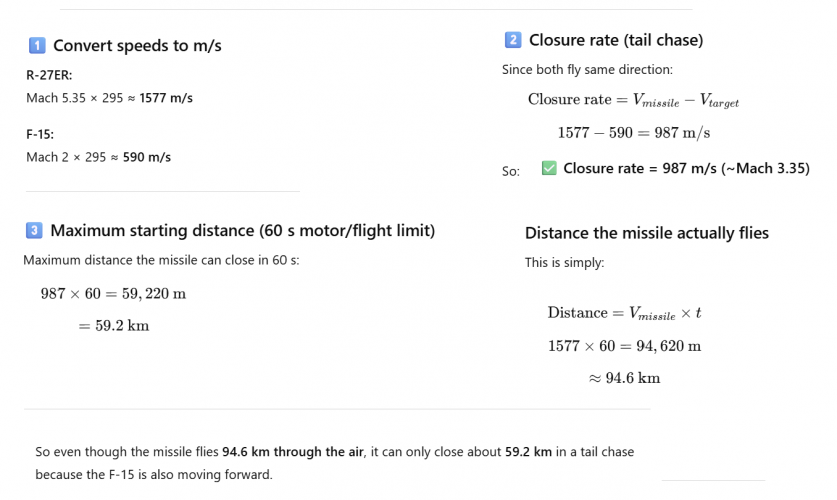
But if we put R-27AE average speed as calculated to be Mach 5.35 (1578 m/s), then the maximum distance that it can chase a Mach 2 target before run out of 60 second battery time is 59.3 km. Whereas, if we put R-27AE average speed to be the same as the CFD graph which is Mach 4.5 (1,325 m/s) then the maximum distance it can chase the target is 44 km (which is actually a lot closer to what represented on the chart)
Based on data above, I think either: Option 1: R-27ER and R-27ET not only have bigger rocket motor, they also have much longer battery time compared to R-27R and R-27T? Option 2: R-27T have shorter battery time compared to R-27R because it need cooling for its IR seeker? Option 3: 130 km is the maximum kinematic range and missile can't be controlled by the terminal phase????? (unlikely) Option 4: controllable flight time only mean the maximum time it can control surface continuously and if it have to move less, it can operate for longer period?? (very unlikely since AAM use thermal battery)
They do not. Missiles is modular for a reason. Only rocket and programming are different. And T/ET/P/EP not having radio correction antenna and different seeker.
The inconsistency of speed is likely a combination of the CFD under estimating and the Soviet chart being “the best possible conditions you could ever have,” along with you perhaps misunderstanding that rear aspect range is flight distance - target flight distance, and the proximity fuse limitation.
Understand that max rear aspect range is limited by the 150 m/s closure needed for the proximity fuse to operate. There is no such restriction in front hemisphere.
I think you also misunderstand another thing about rear aspect, it is not “the range the missile can fly within its flight time” but the range in the chart is the range between the Carrier and Target at moment of launch. This distance is much smaller in rear aspect then distance the rocket flies, and distance at launch much higher then rocket flies in front aspect.
If it was “range the missile flies” front and rear aspect would show much numbers no more then the 80 km you got.
So if 80 km is max flight distance, and a Mach 2 plane flies 34.5 km in 60s, that means the range at moment of launch in rear aspect can be no more then…. 45.6 km. The exact figure on the chart basically.
Option 5: Rear aspect range is not missile flight distance but flight distance - target flight distance while front aspect is missile flight distance + target flight distance.
A side aspect shot would equal flight distance. In addition to the proximity fuse closure limitation being only a rear aspect issue.
R-27T/ET seeker cooling is done by nitrogen. It’s not like a peltier cooler in R-60M or KOLS that uses electricity. So it wouldn’t impact any power requirement nor could it use the generated gas in the turbo power plant. R-73 is same way. Both use cross type seekers also. You know how these seekers discriminate flares?
They likely rotate at thousands of rpm (KOLS seeker nutates at 10k rpm), and using their 4 elements are thus able to map the area viewed and hotspots within. It then figures out which hotspots are falling at the rate of gravity and discards them. It also discriminates by last known target location and by sudden changes in amplitude.
I did accounted for target speed as well, I was not very clear about that in my previous comment, so sorry about that
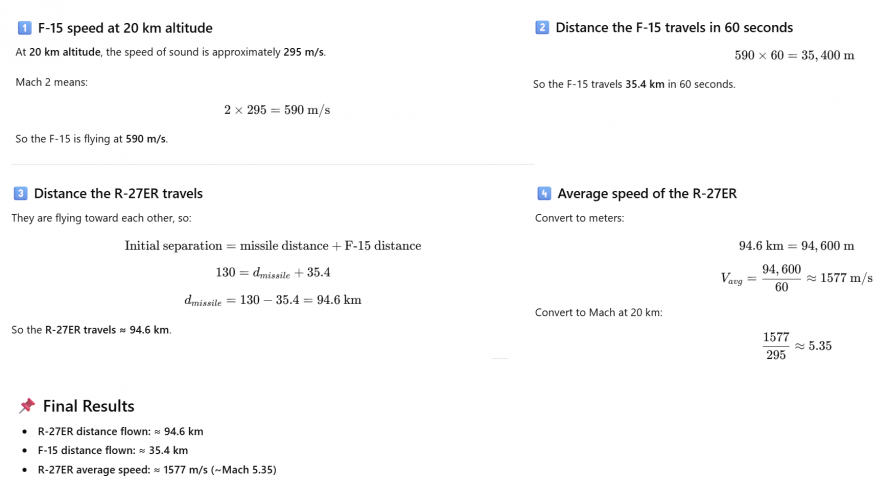
R-27ER travel 94.6 km in 60 seconds so average speed of Mach 5.35 (1577 m/s)
The Soviets max range they got in testing was 98 km.
In real war, such perfect conditions would likely never happen and 100 km is the much more realistic figure.
I don't know lot of detail about Soviet missile but maybe this case is similar to the different between R-33S and original R-33? they upgraded not only the rocket motor but also the battery, so maybe in case of R-27R and R-27ER they also improve the battery?
Understand that max rear aspect range is limited by the 150 m/s closure needed for the proximity fuse to operate. There is no such restriction in front hemisphere.
closure rate is not an issue, even at 60 seconds point, the missile still moving at 1000 m/s while the Mach 2 aircraft only move at around 600 m/s. That about 400 m/s of closure rate, should be more than enough
I think you also misunderstand another thing about rear aspect, it is not “the range the missile can fly within its flight time” but the range in the chart is the range between the Carrier and Target at moment of launch. This distance is much smaller in rear aspect then distance the rocket flies, and distance at launch much higher then rocket flies in front aspect.
No no, I know that part, the distance missile fly is actually much higher. The starting distance is still around 59 km if missile average speed is Mach 5.35 though
While I love his CFDs, I do not know his qualifications, so it’s possible it might be slightly under estimated as well.
The inconsistency of speed is likely a combination of the CFD under estimating and the Soviet chart being “the best possible conditions you could ever have,”
I don't know his qualification either, but I have to be honest, after input his chart into Chatgpt, his result matched very very closely with the tail chase scenario in Soviet chart. It just the head on scenario where we have issue
He sent me these
In just part of launching envelope, guidance time which is limited to 60 seconds (active time of gas-generator, not battery) is factor for creating boundaries of envelope.
I don't know lot of detail about Soviet missile but maybe this case is similar to the different between R-33S and original R-33? they upgraded not only the rocket motor but also the battery, so maybe in case of R-27R and R-27ER they also improve the battery?
closure rate is not an issue, even at 60 seconds point, the missile still moving at 1000 m/s while the Mach 2 aircraft only move at around 600 m/s. That about 400 m/s of closure rate, should be more than enough
The impact for 130 km is usually measured closer to 54-58 seconds then 60. So it is slightly faster in front aspect then the graph.
Do you not think it is possible the graph is overestimated slightly? It cannot be exact. CFD goes for accuracy of about 2-3% at best, and at worst can be anywhere higher.
There are also provisions in the computer for max speed of the R-27ER at impact. I think the CFD is simply over estimating here.
As for flight time, all that was meant is the gas generator is not a battery. Controlled flight time is 60 seconds in all cases unless pre empted by impact. Only difference with guidance is that missile has 0.5s time from launch until control begins.
What source says this? You? All sources I have say “rocket design is titanium alloy with the engine body being steel.” This is direct quote, engine body not ‘rocket.’ Also, the missile skin is lined with insulation under it according to the polish docs I attached and Markovsky.
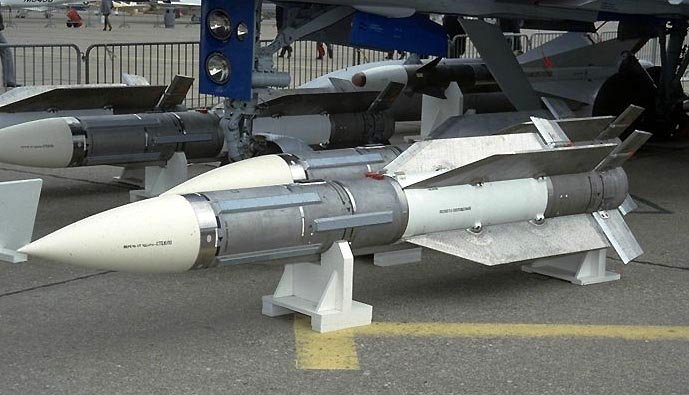
What can we see on them? First ,we can see white painted areas and than those grey painted structural parts of the AAMs. White painted parts are usually made from the high-temp Steel Alloys, some high-temp composite materials (for radomes e.g. ).Parts made from the Titanium Alloys are usually not painted.They can be only greyish or greyish with some bluish color as result of the special galvanization process. Example for that are the wings and stabilizers of the R-40 or wings of the new R-37M. Another example: skin part of the horizontal stabilizers of the Su-35S.
For painting of the skin section made from Ti Alloys, it is needed special painting process with high temp adhesion paint. Example : engine nacelles of the Su-fighters are made from the high temp Ti -Alloys and they are not painted at all except in the case of Su-57 ,of course to be more stealthier.
One of the examples is the ASM/ARM Kh-31A/P ( AD/PD) where we can clearly see what is made from Ti ( front section ) and what is made from Steel Alloys ( rear section).
On the pics on this site we can see that some parts of the R-40TD ( front section behind the radome) are made from both Steel and Ti Alloys, also we can see that wings are painted in white.
https://en.missilery.info/missile/r40
Yes, there are cases where we can see even R-33 painted in white ,front section with or w/o warhead section being painted in white.
Did you not notice that 94.6 km +35.4 km is 130 km? Why do you think it needs more than 60 seconds? If you give it more battery, you increase both rear and front aspect range.
Yes I notice 94.6 km +35.4 km is 130 km, and that is exactly my point.
If we assume an R-27ER launched from an altitude of 20 km in a head on engagement at a distance of 130 km against a target approaching at Mach 2, the missile would intercept in approximately 60 seconds. That implies an average speed of about Mach 5.35 over the engagement.
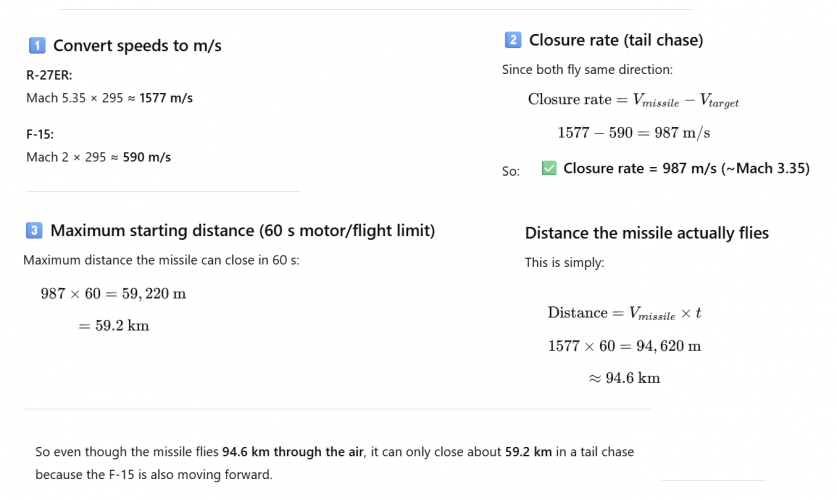
If the above is correct, under tail aspect conditions against the same Mach 2 target, the maximum possible launch distance would be 59.2 km.
The reason is simple: in both scenarios, the R-27ER travels the same total distance of 94.6 km. The difference in maximum launch range is entirely due to the relative motion of the target closing speed in the head-on case versus reduced closure in the tail chase.
But as we saw the range of head on aspect and the tail on aspect on the graph doesn't follow that logic.
I think it is plausible that either
Option 1: R-27ER have longer battery time and it just not disclosed so we don't know
Option 2: actually both R-27ER and R-33 charts are wrong in the head on aspect. Also in that aspect, were these charts from some flight manual?
The impact for 130 km is usually measured closer to 54-58 seconds then 60. So it is slightly faster in front aspect then the graph.
Do you not think it is possible the graph is overestimated slightly? It cannot be exact. CFD goes for accuracy of about 2-3% at best, and at worst can be anywhere higher.
here are also provisions in the computer for max speed of the R-27ER at impact. I think the CFD is simply over estimating here.
If time to impact in head on is 54 seconds then the average speed of R-27ER would be Mach 6.16 which should lead to an even bigger rear aspect shot. If there is no inaccuracy in operation time then maybe the range graph are wrong?
And your R-33 and R-40 also have large painted white likely steel engine bodies. Even if true It doesn’t prove anything except these missiles are made to fly on MiG-25/MiG-31 which experiences much more aerodynamic heating then MiG-29/Su-27, wether the top is connected to pylon close to the body or not I already informed you the body of the rocket does have thermal insulation padding.
Titanium does not make a missile faster. All the stuff we’ve talked about shows this Mach 5.7-6.1 top speed.
What can we say about its speed? Its motor lasts twice the time of R-27ER. We know they have similar max range. If R-33 isn’t in burnout for an extra 10 seconds, that means it likely has a lower max speed then R-27ER and a similar average speed in this shot scenario. Obviously different at low altitude where long burning motor helps more.
The difference is it needs to maintain that speed after being under a MiG-31 traveling possibly Mach 2.3-2.8 for undetermined amount of time and have its structure last for the built lifetime of the missile.
The battery life is 60 seconds for all variants. Again, why do you need more? It achieves the max front aspect and rear aspect shot just fine in 60 seconds.
If the above is correct, under tail aspect conditions against the same Mach 2 target, the maximum possible launch distance would be 59.2 km.
The reason is simple: in both scenarios, the R-27ER travels the same total distance of 94.6 km
You are again neglecting that launch distance for rear aspect isn’t the travel range of the missile but the distance between the two aircraft at launch. A plane 40 km away will travel an extra 34.5 km by the time R-27 gets there. 74.5 km. R-27 travels 75 km but launch range was 40 km. Make sense?
These DLZs are also made not just with fuze condition but also that the missile needs to be able to hit a target that maneuvers at 3-5 G in terminal.
Option 3: Range on chart is between planes at moment of launch. Fast plane fly far in 60 seconds. 40 km launch range missile travels almost 75 km.
time to impact in head on is 54 seconds then the average speed of R-27ER would be Mach 6.16 which should lead to an even bigger rear aspect shot. If there is no inaccuracy in operation time then maybe the range graph are wrong?
The battery life is 60 seconds for all variants. Again, why do you need more? It achieves the max front aspect and rear aspect shot just fine in 60 seconds.
I think you misunderstand my point, it is not that I think R-27ER need more battery time. It just that the R-27EA chart is very inconsistent in head on and tail chase range to the point that one value must be wrong for the math to be correct. If you think the battery time is correct, then the range value (130 km) is wrong. That is my point.
Option 1: R-27EA battery time is not the same as R-27T
Option 2: range graph is wrong, R-27EA can’t reach 130 km in 60 seconds.
Option 3: range graph represent kinematic distance rather than distance where the missile is controllable
You are again neglecting that launch distance for rear aspect isn’t the travel range of the missile but the distance between the two aircraft at launch. A plane 40 km away will travel an extra 34.5 km by the time R-27 gets there. 74.5 km. R-27 travels 75 km but launch range was 40 km. Make sense? Option 3: Range on chart is between planes at moment of launch. Fast plane fly far in 60 seconds. 40 km launch range missile travels almost 75 km.
I said 54-58 seconds as a general time for all variants. In this shot case yes most simulations put it at impacting around 57-59 seconds
No I did not neglecting that, please re-read my post carefully. What you just said is literally what I shown in the calculation.
Let me walk you through it again: For the head on case:
1- distance missile travel: 94.6 km
2- distance the enemy aircraft travel in the opposite direction: 35.4 km
3- distance between the two aircraft when missile is launched: 130 km
For the tail chase scenario:
1- disrance missile travel: 94.6 km
2- distance the enemy aircraft travel in the same direction as the missile: 35.4 km
3- distance between the two aircraft when missile is launched: 59.2 km
And this is why the graph make no sense,
If the head on range is 130 km then tail chase range should be 59 km rather than about 45 km as shown on the graph. And yes this 59 km is the starting distance at launch and NOT the travel distance of the missile.
If that is the case then it should have the same impact on both head on and rear aspect shot.
But then it would open another source of problem, we are not talking about mid altitude here, we are talking about missile shot against co altitude target at altitude of 20 km, at such altitude, even 2G turn is very hard to make, let alone 3-5G, so I have a hard time believe these two chart include that. It likely against non maneuvering target
Option 1: R-27EA battery time is not the same as R-27T
Option 2: range graph is wrong, R-27EA can’t reach 130 km in 60 seconds.
Option 3: range graph represent kinematic distance rather than distance where the missile is controllable
It has been long theorized that R-27EA has more flight time. But it sort of falls apart when you realize R-27R/ER quotes exact same ranges.
Also let me tell you, it wouldn’t be the first Russian chart to have errors. Most of these charts are hand drawn and mistakes do occur such as lines not being a perfect circle or ellipse. Also the fact there are almost no numbering or lines tells me this chart is meant as an estimate.
Also, notice how the range ends at just over 120 km when it says “130 km.” This clearly more “hand drawn with errors” then perfected.
it is mentioned in a few places such as MiG-29B manual that the DLZ is taking to account a reserve of 3-4 G. MiG-25 can do 3-4 G briefly at such altitudes. As I said, it is most likely not the exact same conditions from sea level to 20 km
R-27ER is quoted at max 43 km rear aspect range.
Front aspect range in this case should be 70 km farther then rear aspect range. 43 + 70 =113 km. It’s not perfect.
. The manual Chart is only for transonic launch at most and shows 26-27 km max range in rear aspect for Mach 1 target.
Here compare the results from these two white graphs for 27R and ER with this double graph that is suss as hell
Only the R-27R graph here have I seen people comment as having “seemingly no errors.”
Also, let’s consider this, You are not going Mach 2 at sea level, or Mach 1.5 for that matter. So there is some variation in speed. Speed likely increases from Mach 1 to 2 as altitude increases.
Transonic Chart shows 25-27 km in front aspect at sea level, and 11-12 km for rear aspect at sea level. At 5 km it gives 38 km PPS and 15-18 km at ZPS. Notice that this matches the R-27AE chart very well. However the AE chart is under doing PPS range at 10 km and at 10 km and ZPS it is basically slightly exceeding the transonic ER chart. It is simply hand drawn with those errors compounding and hard limit in place for some reason.
However, you see the page of two charts that’s weird? It’s front aspect ranges that don’t align with the single white chart (which has been debated as badly drawn), well, they match better with the R-27AE chart front aspect at 10-15 km altitude if we consider its lower velocity will naturally give less PPS range.
Also, notice the rear aspect hits a “barrier” where the line becomes vertical. If you followed the lines like for PPS, you would have much greater range where they meet at a point, yes perhaps 55 km ZPS.
Most Soviet charts of this type are for these max speeds
0.5 km: 380 m/s
5 km: 480 m/s
10 km: 600 m/s
15 km: 700 m/s
20 km: 620-870 m/s
25 km: 910 m/s
For 15 km that is 42 km in 60s. 20 km it’s basically 35-52 km. 54 km distance flown by target for 25 km altitude 910 m/s. This would be much closer to matching AE chart even if we consider no closure/speed limit.
Let’s say it does use these speeds of 380-870 m/s, it is primarily about the increasing speed causing the closure limit to be triggered around 43 km, see my Drmax1 and Drmax2/NEZ calc below
Here I extended ZPS lines to meet, it is nearly 60 km at 20 km as you predicted. however I bet that speed is meant to go from 600 at 10 km alt to 700 at 15 km alt and up to 870 m/s at 20 km. I bet it’s the speeds I mentioned causing closure limit hit.
For a 10 km shot, the CFD shows end speed of just 300 m/s! This is basically the altitude where air cannot slow the missile down fast enough to make it reach minimum speed before 60 seconds.
After much reading I found formulas for max range and Drmax2 (NEZ)
Drmax1: (Target to missile closure speed m/s x missile flight time) +/- missile flight distance depending on aspect.
The coordinates are Cartesian so when you compute rear aspect range/Drmax2 you will get negative numbers. It is just like we discussed that max range is target travel distance + missile travel distance in front aspect and missile flight distance - target flight distance.
Drmax2/NEZ instead being Drmax1 - missile flight distance. 10 km rear aspect range being -10 km NEZ for 20 km missile flight distance (Cartesian coordinate things behind the reference center coordinate are negative).
130 km shot at 15-20 km 600 m/s target being - 94 km and thus 36 km Drmax2/NEZ. With rear aspect range at 55 km which as you noted is high, but if we include the new velocities I gave this changes to around the chart value for rear aspect (. I think the chart overdoes the upwards curve of the bottom line of PPS/front aspect).
Rear aspect 10 km shot parameters at 600 m/s is, If we consider average missile velocity to be 950 m/s at 10 km (per charts), only 21 km and 90 km in front aspect.
However we must keep in mind closure limit at altitudes below 15 km for 600 m/s speed.
At 15 km this increases to 55 seconds of flight time before closure limit is hit on rear aspect 600 m/s target, which is 50 km almost. Less if velocity is really 700 m/s at 15 km alt giving 44 km range ( extremely close). At 20 km if velocity is as much as 870 m/s as we see on a few Soviet charts of exact same type and era we get 41 km max ballistic rear aspect range and basically hits closure limit at same exact time.
So if you take the velocities I mentioned, which we see in R-23, R-24, Soviet AIM-7 and AIM-120 and R-77 charts, I think you will find the 43 km max ZPS range actually very close with the 150 m/s closure allowance in mind.
Remember that at low altitudes, flight time is usually closer to 35-36s max. 44-45s at 5 km. 55-60s only 10 km and up.
And your R-33 and R-40 also have large painted white likely steel engine bodies. Even if true It doesn’t prove anything except these missiles are made to fly on MiG-25/MiG-31 which experiences much more aerodynamic heating then MiG-29/Su-27, wether the top is connected to pylon close to the body or not I already informed you the body of the rocket does have thermal insulation padding.
Titanium does not make a missile faster. All the stuff we’ve talked about shows this Mach 5.7-6.1 top speed.
Exactly but in the case of the R-27/E, it seems that only stabilizers and wings are made from Ti- Alloys as mentioned before.
Now about those max authorised launch ranges ...
''При атаке цели в режиме ППО на шкале дальности вместе с индексом (стрелкой) текущей дальности индицируются:
индекс максимальной разрешённой дальности пуска, который считается алгоритмически для заведомо неманеврирущей цели (ДРмакс1);
индекс максимальной разрешённой дальности пуска для заведомо маневрирующей цели (ДРмакс2);
индекс минимальной разрешённой дальности пуска (ДРмин).''
During the attack on a target in the complete instrumentation procuring, the range scale displays, along with the current range index (arrow):
−the maximum permitted launch range index, which is calculated algorithmically for a known non-maneuvering target (DRmax1);
−the maximum permitted launch range index for a known maneuvering target (DRmax2);
−the minimum permitted launch range index (DRmin).
Now about that ''60sec'' in the DNP mode
''При пуске ракет с РГС в режиме НПО РЛПК переходит в режим ДНП на 60 сек, в течение которых необходимо продолжать отслеживать цель, если цель не будет поражена раньше.''
''When launching radar guided missile with a radar in the incomplete instrumentation procuring mode, radar switches to the DNP mode for 60 seconds, during which it is necessary to continue tracking the target, unless the target is hit earlier.''
So what we have here ?
ППО полное приборное обеспечение or complete instrumentation
НПО неполное приборное обеспечение or incomplete instrumentation
What about DNP mode in the case of complete instrumentation ? There is so many factors,parameters,values etc and we must count on all of them in the same time.
One more thing :
Max( possible) authorised/permitted launch ranges calculated by the FCS :
for R-27R : 30km against small target,70km against medium target,90km against big target
for R-27ER:50km against small target,90km against medium target, 130km against big target.
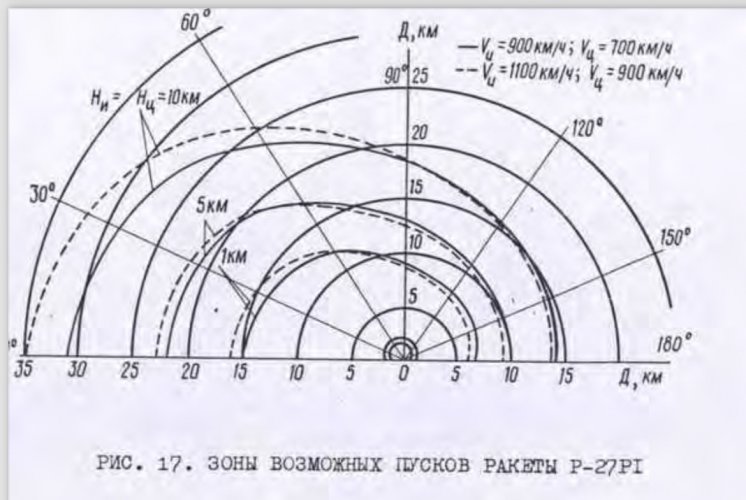
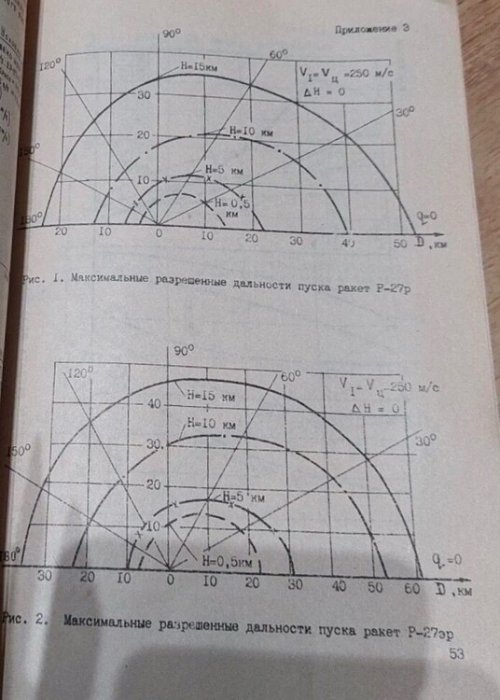
I input the circular graph of R-27ER and R-27R into chatgpt, indeed they are fairly accurate in term of head on vs rear aspect shot (i mean range in the same graph doesn't seem to have much inconsistency)
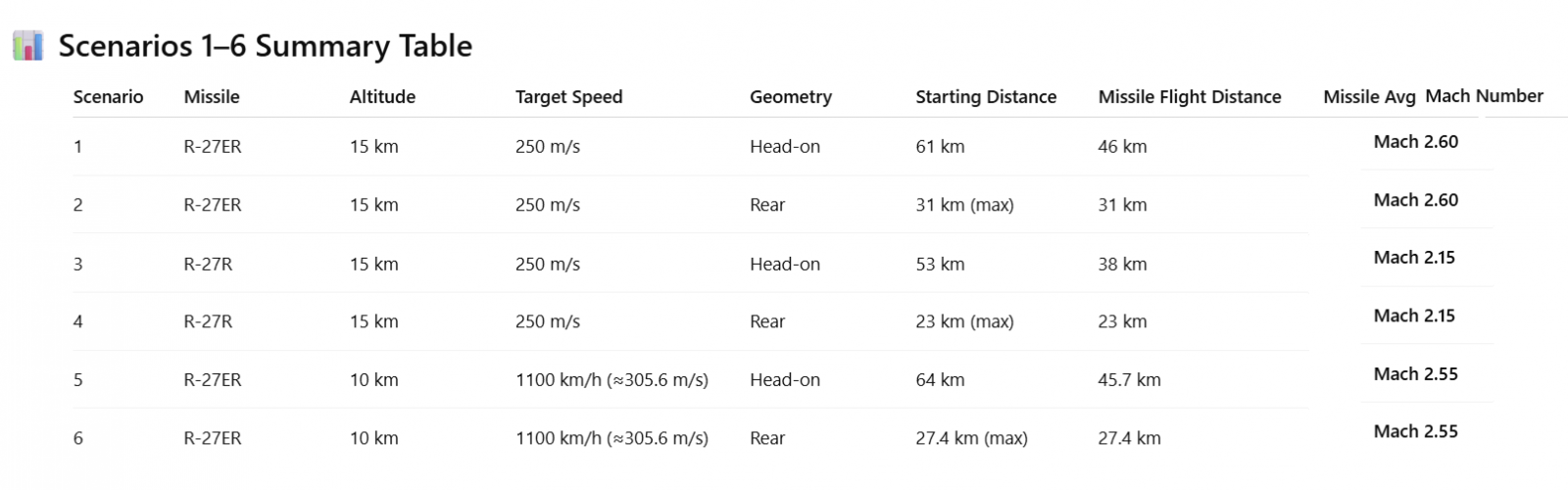
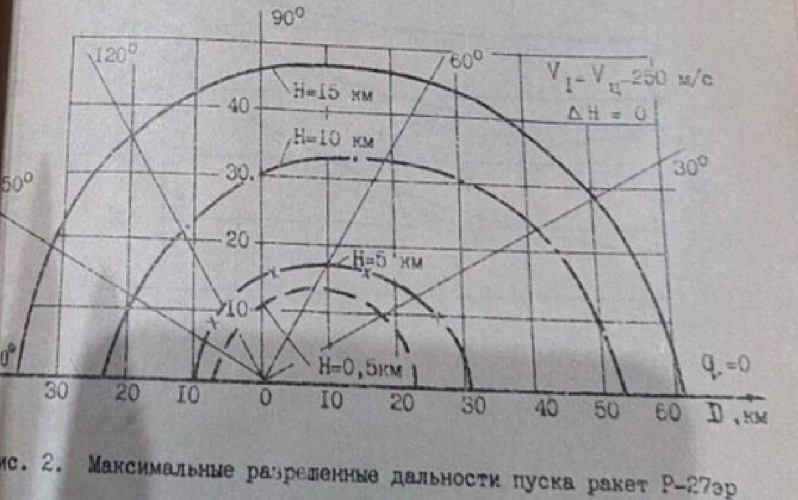
The only thing that is slightly strange for me is that R-27ER launched from height of 10 km in 1 graph is roughly as fast as the one launched from 15 km height in another graph
Like why does R-27ER range at height of 10 km is not the same between these two graph below?
250 m/s is 900 km/h
once graph say R-27ER can reach 60 km, the other say it can only reach 53 km?. I assume the first one is from Mig-29 manual and the second graph from Su-27 manual?
Most Soviet charts of this type are for these max speeds
0.5 km: 380 m/s
5 km: 480 m/s
10 km: 600 m/s
15 km: 700 m/s
20 km: 620-870 m/s
25 km: 910 m/s
For 15 km that is 42 km in 60s. 20 km it’s basically 35-52 km. 54 km distance flown by target for 25 km altitude 910 m/s. This would be much closer to matching AE chart even if we consider no closure/speed limit.
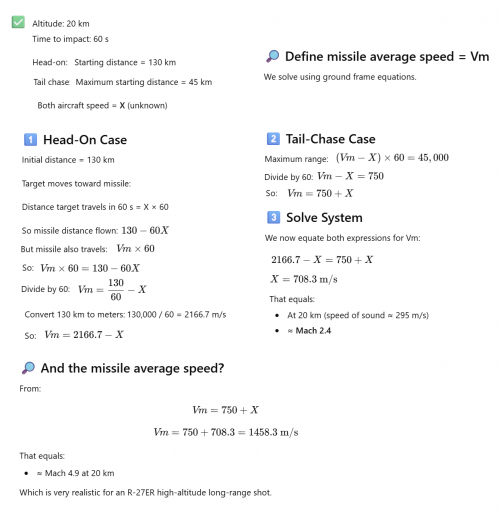
So if target speed is Mach 2.4 instead of Mach then the head on and rear aspect range make sense.
R-27ER average speed at altitude of 20 km changed to Mach 4.9 instead of Mach 5.35, still very high but seem more reasonable
This site uses cookies to help personalise content, tailor your experience and to keep you logged in if you register.
By continuing to use this site, you are consenting to our use of cookies.