Dassault statement :
(Saint-Cloud, le 17 novembre 2025) – Dassault Aviation remercie les autorités ukrainiennes et françaises pour l’accord d'intention d’acquérir l’avion de combat Rafale, qu’elles viennent de signer, et pour la confiance qu’elles placent dans les capacités opérationnelles de cet appareil.

(Saint-Cloud, 17 November 2025) – Dassault Aviation thanks the Ukrainian and French authorities for the letter of intent to acquire the Rafale combat aircraft, which they have just signed, and for the confidence they are placing in the operational capabilities of this aircraft.
 
Now, if they specify that this particular order will be fully upgradeable to the F5 standard, it suggests to me that older rafales might, in fact, not be fully upgradeable to F5.

It’s possible that some F5 elements will be integrated into a 2008-2012 F3R airframe for example, but probably not the full upgrade.
That means that F4 already have all the wires (or a max of) for F5 std. Mainly fiber optic ones.
It wasn't the case, or at least at another level, of older model.

Sorry no source except some forumers exchanges in other forums.
 
The thread was cleaned up, the title changed a bit, please adhere to it !
Infringements will result in reply bans immediately.

Those discussion that had to be deleted here are absolutely ok ... on reddit, X, wherever, but, please, not here !
 
Update on Rafale deliveries in 2025, based on aircraft spotted at Dassault Merignac... looks like the goal of 25 deliveries could be exceeded, with 28 new Rafales spotted so far this year.

  • France (12 or 13): C165-C171 and B369-B373 have flown this year. A 13th Rafale should fly soon apparently (C172)
  • Egypt (12): EM10-EM15 and DM17-DM22 have flown
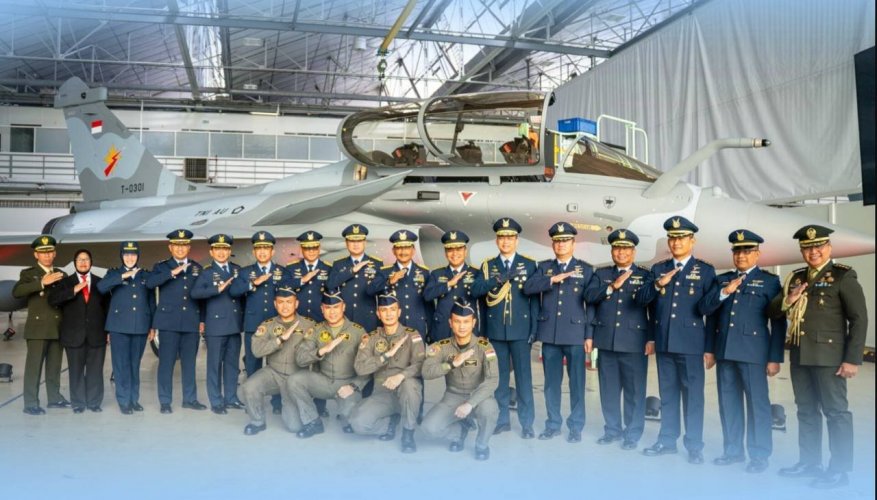
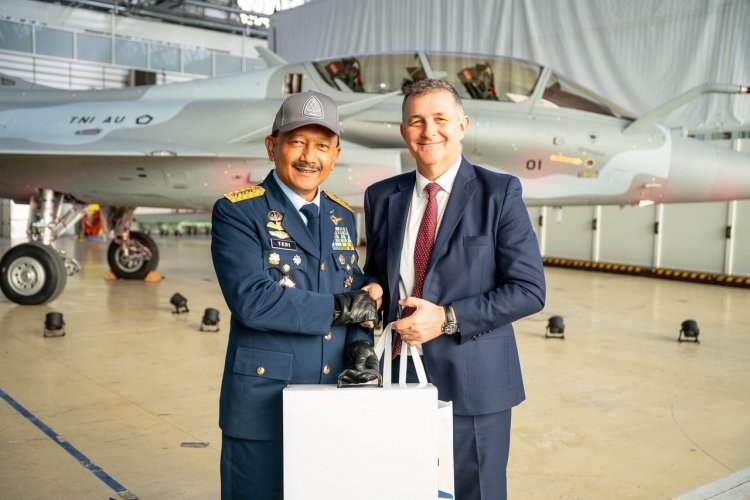
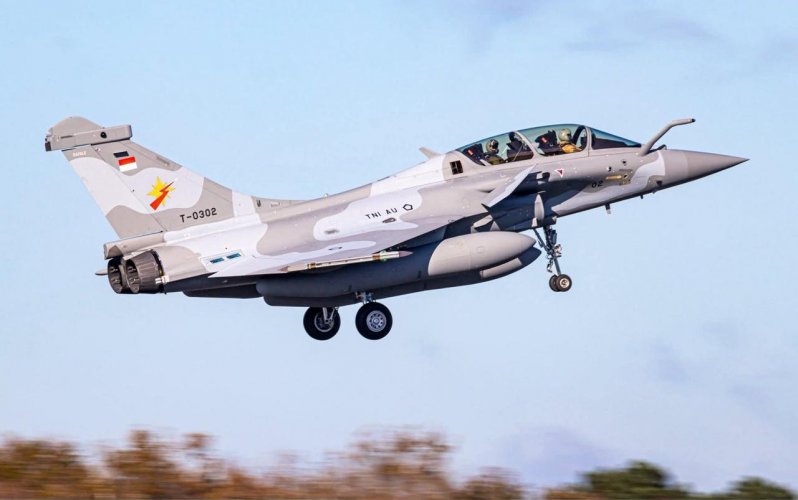
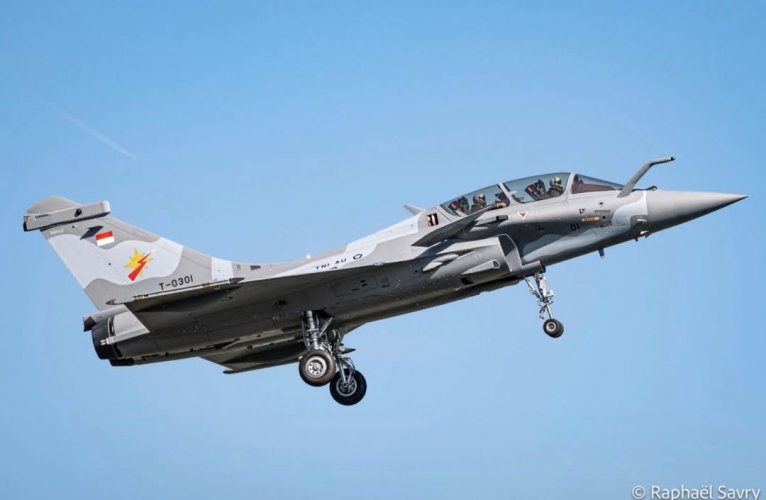
  • Indonesia (3): The first 2 aircraft have flown (T-0301 and T-0302), T-0303 spotted doing taxi tests so should fly very shortly
  • UAE (1): The 1st UAE Rafale (DU-1101) has flown
 
Last edited:

Adjacent to the new Leap engine MRO facility, Safran has built a 5,000-m2 MRO facility dedicated to the M88 engine that powers the Dassault Rafale combat aircraft. It is the first Safran military engine maintenance site to be built outside France. It will provide MRO services for more than 600 engine modules a year and will employ up to 150 people at full capacity.

Prioritizing engines on aircraft operated by the Indian Air Force, it will also perform MRO for other M88 export customers. India is a long-standing customer for Safran’s military engines. The country recently ordered 26 Rafale M naval variants and already operates 36 Rafale and 47 Mirage 2000 fighters.

To build a sustained talent pipeline,
Safran will also establish an on-site training academy capable of preparing over 100 technicians and engineers every year, strengthening domestic expertise and raising the technical benchmark for engine maintenance in Hyderabad and the surrounding region.
 
Greek parliament approves budget to keep availabity at around 90%
Rafale: Extension of fighter jet support contract approved by Parliament

The purpose of maintaining the extremely high availability level of the Rafale aircraft, also for the next four years, is served, according to the Deputy Minister of National Defence, Ath. Davakis, by the bill entitled “Approval of the draft Amendment Contract to Contract 014Γ/20 for the extension of the follow-on support of the ‘RAFALE’ fighter aircraft,” which was voted today by the plenary session of Parliament.

[...]
“One question arises: Do we want high availability levels at around 90 %, as stated by both the Chief of the Hellenic National Defence General Staff and the Chief of the Air Force, or not? I am sorry to say it, but on this question, the entire opposition — with some bright exceptions among certain opposition parties — says no,” he added.
Hope availability rates is technical enough.
 
The DGA is currently testing the new technologies that will equip the 9 ton thrust M88 T-Rex planned for the F5 standard

Apparently up to 2100K TET


EDIT
According to the DGA’s LinkedIn post, the 2100 K target actually applies to the Next Generation Fighter Engine planned for the NGF fighter ... not to the M88 T-Rex for the Rafale F5
That makes more sense, since jumping from the current M88’s 1850 K to 2100 K would have been a very large leap.


The Rafale’s M88 engine with new technologies

+ more thrust
+ longer service life
– lower fuel consumption

The DGA is conducting a series of tests on the M88 engine aimed at pushing new propulsion-enhancing technologies to their limits.

Called M88, presented at the International Paris Air Show, it is intended to equip the Rafale F5, notably with:
improved thrust: from 7.5 to 9 tonnes
improved flight endurance

To achieve this, the DGA entrusted the manufacturer Safran with the development of technological “building blocks” incorporating the latest generations of ceramic materials and superalloys that will allow the engine to deliver its full power.

These new technologies are tested and analysed at the DGA’s expertise and testing centers: DGA Propulsion Testing (DGAEP) for engine tests and DGA Aerospace Technologies (DGATA) for material analysis.

Here, the DGA recreates on the ground the atmospheric conditions of the altitudes and environments in which the M88 equipped with the latest technological bricks will operate.

In the same day, and in the same location, it is tested as if operating in the Sahara and then in the North Pole.

It is thus pushed to the maximum of its capabilities in complete safety.

The components and materials used are then analysed at DGATA.

All of this work, ongoing and future, will ultimately make it possible to field an engine capable of operating at 2100 K, a key requirement for the next-generation turbofan engine.
 
Last edited:
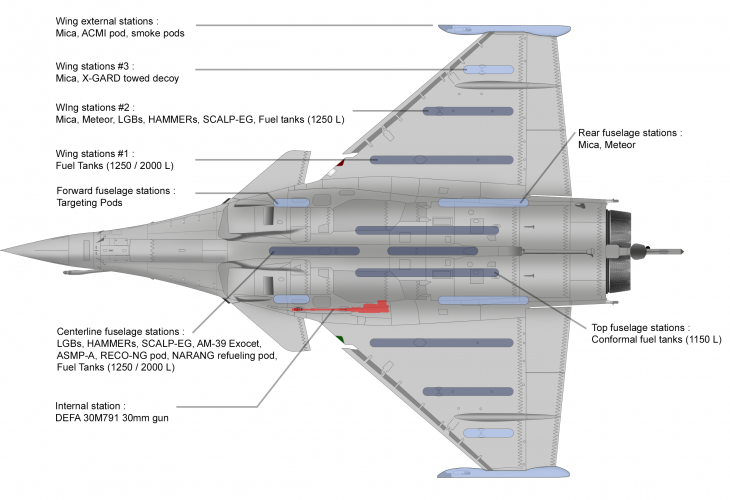
Dated but should give an indication (note that triple ejector are seldom used due to weapon launch clearance) and external underwing hardpoints are opened only on F4+ and beyond and left cheek hardpoint is not activated yet:

emports.jpg


Last edited:
Been meaning to ask

What is it about the Rafale F1/Mirage 2000-5f mission computer architecture that prevents air to ground? Is it solely processing power?
 
They both have A2G capabilities, although on the Rafale F1, they were not fully integrated before the Afghan war.
The M2K-D and N are the dedicated A2G variants with robust TFR and INS. M2K-5 didn't have SAR/TFR on the French models (but export).
 
They both have A2G capabilities, although on the Rafale F1, they were not fully integrated before the Afghan war.
The M2K-D and N are the dedicated A2G variants with robust TFR and INS. M2K-5 didn't have SAR/TFR on the French models (but export).

Rafale F1 had no AG capabilities and never got them either. The aircraft were upgraded to F3 standard that entailed AG capabilities.

@F-2
It's more about operational requirements and needs.
 
Beginning in March 2007, French Rafale fighters operated from the French Navy aircraft carrier Charles de Gaulle’ and from the Dushanbe airbase in Tadzhikistan, in support of NATO operations in Afghanistan. The operation necessitated some ad-hoc adaptations of the air-defense fighters, preparing them for the ground support role. To meet this requirement, Dassault Aviation integrated two versions of 500 lbs (250kg class) guided weapons – the GBU-12 and GBU-22 laser guided bombs. The flight envelope expansion including fifteen firing trials were conducted in less than three months, clearing the aircraft for precision strike role in early March 2007. Each aircraft was cleared to carry a total of six GBU-12 or GBU-22 bombs. By the end of March 2007, a total force of 15 aircraft were deployed to the theatre, comprising of nine F1 Rafale air-defense fighters, flying combat air patrols in support of the Charles de Gaulle’s carrier air group while the modified Navy Rafales were committed to precision strike, ground support role.

Read also here, a report from Le Figaro, in French, that specify the F2 (AdlA) and, implicitly the 3x F1 (Navy) similarly hastily modified for A2G missions. You can see here that the F3 appeared the next year, in 2008.

I am pretty sure that you will get there even quicker reading some old Air Fan magazines with better information on overall.
 
Last edited:

Read also here, a report from Le Figaro, in French, that specify the F2 (AdlA) and, implicitly the 3x F1 (Navy) similarly hastily modified for A2G missions. You can see here that the F3 appeared the next year, in 2008.

I am pretty sure that you will get there even quicker reading some old Air Fan magazines with better information on overall.

The article doesn't mention Rafale F1 at all, it was just talking about three aircraft on the CdG and these were F2 standard aircraft. The modifications being talked about was the F2+ standard with GBU-12/22 Paveway II/III and Scarabee datalink plus terminal on the Rafale B. F1s remained AA capable only prior their direct upgrade to the F3 standard. Three F1 were modified onboard CdG in 2002 to use the buddy-buddy pod, but that's it.
 
Update on Rafale deliveries in 2025, based on aircraft spotted at Dassault Merignac... looks like the goal of 25 deliveries could be exceeded, with 28 new Rafales spotted so far this year.

  • France (12 or 13): C165-C171 and B369-B373 have flown this year. A 13th Rafale should fly soon apparently (C172)
  • Egypt (12): EM10-EM15 and DM17-DM22 have flown
  • Indonesia (3): The first 2 aircraft have flown (T-0301 and T-0302), T-0303 spotted doing taxi tests so should fly very shortly
  • UAE (1): The 1st UAE Rafale (DU-1101) has flown

2 more Rafales spotted at Merignac, making it 30 new Rafales this year!

C172 (13th French aircraft this year and last French air force delivery of Tranche 4, making it 115 Rafales in air force service)

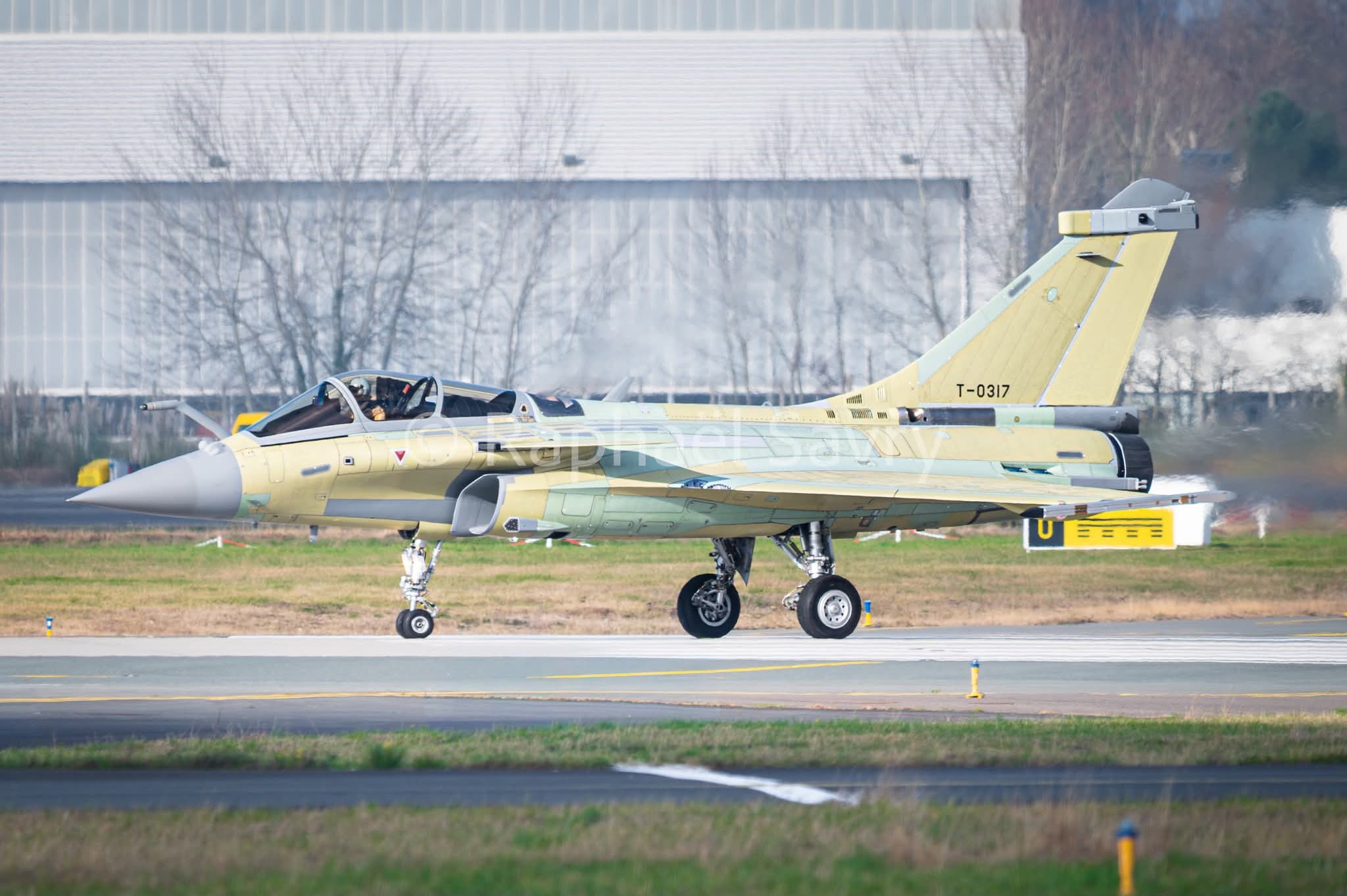
T-0317 - 4th Indonesian aircraft and first single-seater.
c6722e92-92f5-494d-9624-f0c056fd8bde.jpg
 
jumping from the current M88’s 1850 K to 2100 K would have been a very large leap.
1850°K was the inlet temperature of M88 since mid 90's at least.
Since, a lot of R&D efforts program were made... with consumption reduction and increased life.
I would not be surprised that the actual M88 are running with higher than 1850°K temperature.
 
Been meaning to ask

What is it about the Rafale F1/Mirage 2000-5f mission computer architecture that prevents air to ground? Is it solely processing power?
Rafale F1 was only made to give french navy a first air to air superiority fighter so as to ease the end of the crusaders. It was never inducted in french air force (jumped directly to F2).
Mirage 2000-5F was from the beginning a air to air only fighter, using 2nd hand french air force frames, to ease the export of this new variant. French air force already had the Mirage 2000D (and Nk2) variant for air to ground.
So in the 2 cases the weapon system was air to air oriented.
 
No one ever seemed to claim Meteor wasn’t delivered integrated before this conflict. We have IISS sales data and pictures of Indian Rafales flying with Meteor in France. It just seems to me the claim they didn’t have Meteor was narrative control.
The point of me sharing this was that, although everyone knew India had received Meteors, after the shootdown the Indians changed the narrative to "oh but they only had MICAs", as if that somehow preserved their "superiority"(?).

It now looks like we have evidence pointing to the opposite, disproving that Jai Hind propaganda. Meteors did factor into the conflict; the problem was that the Indians just didn’t expect the Pakistanis to sling PL-15Es from 160 km away.
 
Last edited:

Read also here, a report from Le Figaro, in French, that specify the F2 (AdlA) and, implicitly the 3x F1 (Navy) similarly hastily modified for A2G missions. You can see here that the F3 appeared the next year, in 2008.

I am pretty sure that you will get there even quicker reading some old Air Fan magazines with better information on overall.
If I remember well some F1 were able to carry guided bombs, but without laser pod abroad, and without the proper weapon system software. They were just bombs trucks. The targets were then designed by Super Etendards laser pods.
 
If I remember well some F1 were able to carry guided bombs, but without laser pod abroad, and without the proper weapon system software. They were just bombs trucks. The targets were then designed by Super Etendards laser pods.

Sorry to say so, but you don't remember well. The Rafales employed in Afghanistan in early 2007 were all F2+, that update was developed i.a.w. an urgent operational requirement inthe second half of 2006 and comprised integration of the 500lb GBU-12 and GBU-22, but without self-designation capability that came with the F3.1 standard, which included Damocles integration.
 
26 Rafale (15 Export, 11 France) were delivered, for a forecast of 25,
against 21 Rafale (14 France, 7 Export) delivered in 2024.

26 Rafale Export were ordered
against 30 Rafale Export in 2024.

As of December 31, 2025, the order book includes 220 Rafale (175 Export, 45 France)
against 220 Rafale (164 Export, 56 France) in December 31, 2024,
 
On 8 January 2026, three Dassault Rafale Bs for the Tentara Nasional Indonesia - Angkatan Udara (TNI-AU, Indonesian Air Force) took off from Bordeaux heading for Istres. Their delivery flight is expected to commence soon and the planning is that they will arrive in Indonesia on or around 22 January 2026.


View: https://x.com/Defence_IDA/status/2009581279021527196?s=20
 
Some news about F5 standard.


Rafale: the winning strategy of step-by-step evolution

...
From F1 to F4: Two Decades of Continuous Integration
The Rafale F1, delivered to the French Navy in 2004, was initially only capable of air-to-air combat.
The F2 (2006) paved the way for air-to-ground operations.
The F3 (2008) enabled multiple missions to be completed on a single flight. The F3-R (2018) integrated an AESA radar, the Meteor missile, a TALIOS pod, and an enhanced SPECTRA system.
The F4 standard is being introduced in three phases. The F4.1, qualified in 2023, brings a Scorpion helmet-mounted display, a 1,000 kg AASM bomb, and improvements to the RBE2 radar, OSF, and SPECTRA systems. The F4.2, currently in the experimental phase, enhances connectivity with SATCOM, Link 16 Block 2, the TRAGEDAC system, CAPOEIRA, and the CONTACT software-defined radio. It also adds predictive maintenance capabilities. The F4.3, scheduled for 2026, will integrate the MICA NG missile, a digitized version of the SPECTRA and an enhanced TALIOS pod.

F5: The Next Step
The F5, slated for 2030, aims for a new level of capability. Its objective: to enable the Rafale to operate in contested environments, including nuclear missions. The centerpiece is the RBE2 XG radar. Based on gallium nitride (GaN), it promises a 50 to 70% greater range, improved resistance to jamming, and enhanced electronic warfare capabilities.
The M88 T-REX engine, developed by Safran, will offer 20% more thrust while remaining compatible with current modules. Range will be increased thanks to conformal fuel tanks (CFTs) integrated into the fuselage, without impacting hardpoints.
The F5 also ushers in a new era in weaponry. It will be able to carry the ASN4G hypersonic missile, successor to the ASMP-A, designed to penetrate advanced defenses at Mach 6 or even faster. The Smart Cruiser, a tactical swarm-deployment missile, will restore SEAD/DEAD capability. Up to 18 can be carried by aircraft using multiple launchers. The RJ10 missile, planned for 2035, will complete the arsenal with a supersonic anti-radar capability.

The Rafale F5 will no longer fly alone. It will be accompanied by a stealth combat drone, derived from the nEUROn demonstrator. Controlled from the cockpit, it will detect, strike, or jam targets. Similar in size to the Mirage 2000, with an M88 engine and an internal payload: the human-machine partnership is entering its most challenging phase. The first flight is targeted before 2033.
...
 

Dassault Aviation invests in Harmattan AI at €1.4 billion value​

The partnership will help Harmattan develop embedded artificial intelligence for Dassault Aviation’s future air combat systems, such as the future F5 standard of the Rafale, in particular for control of unmanned aerial systems, the companies said in a joint statement on Monday.
Dassault is working on an air-combat drone that will serve as an unmanned wingman for the future F5 standard Rafale, and the partnership with Harmattan will support development of embedded AI for both aircraft, the companies said. The partnership fits in an “overarching strategy” to integrate sovereign AI into Dassault Aviation’s combat systems, according to the statement.
 
Some news about F5 standard.


Rafale: the winning strategy of step-by-step evolution
...
From F1 to F4: Two Decades of Continuous Integration
The Rafale F1, delivered to the French Navy in 2004, was initially only capable of air-to-air combat.
The F2 (2006) paved the way for air-to-ground operations.
The F3 (2008) enabled multiple missions to be completed on a single flight. The F3-R (2018) integrated an AESA radar, the Meteor missile, a TALIOS pod, and an enhanced SPECTRA system.
The F4 standard is being introduced in three phases. The F4.1, qualified in 2023, brings a Scorpion helmet-mounted display, a 1,000 kg AASM bomb, and improvements to the RBE2 radar, OSF, and SPECTRA systems. The F4.2, currently in the experimental phase, enhances connectivity with SATCOM, Link 16 Block 2, the TRAGEDAC system, CAPOEIRA, and the CONTACT software-defined radio. It also adds predictive maintenance capabilities. The F4.3, scheduled for 2026, will integrate the MICA NG missile, a digitized version of the SPECTRA and an enhanced TALIOS pod.

F5: The Next Step
The F5, slated for 2030, aims for a new level of capability. Its objective: to enable the Rafale to operate in contested environments, including nuclear missions. The centerpiece is the RBE2 XG radar. Based on gallium nitride (GaN), it promises a 50 to 70% greater range, improved resistance to jamming, and enhanced electronic warfare capabilities.
The M88 T-REX engine, developed by Safran, will offer 20% more thrust while remaining compatible with current modules. Range will be increased thanks to conformal fuel tanks (CFTs) integrated into the fuselage, without impacting hardpoints.
The F5 also ushers in a new era in weaponry. It will be able to carry the ASN4G hypersonic missile, successor to the ASMP-A, designed to penetrate advanced defenses at Mach 6 or even faster. The Smart Cruiser, a tactical swarm-deployment missile, will restore SEAD/DEAD capability. Up to 18 can be carried by aircraft using multiple launchers. The RJ10 missile, planned for 2035, will complete the arsenal with a supersonic anti-radar capability.

The Rafale F5 will no longer fly alone. It will be accompanied by a stealth combat drone, derived from the nEUROn demonstrator. Controlled from the cockpit, it will detect, strike, or jam targets. Similar in size to the Mirage 2000, with an M88 engine and an internal payload: the human-machine partnership is entering its most challenging phase. The first flight is targeted before 2033.
...


TRAGEDAC = R&D effort for passive detection via aircraft networking and triangulation.
CAPOEIRA = Not the first time I read that, but I don't remember what it is for.
MELBA was a R&D effort for AESA wide band.
DRAAMA and CARAA were for advanced modes for AESA radar.
DARTAGNAN, REMORA, THEO and TURENNES 1 & 2 were for engine improvements (temperature, shapes, controls...)
DEDIRA was for stealth increase.
GANIMEDE for GaN modules industrialization.
INCAS for spectra improvements including GaN and LEA active decoys
MASTRID for next gen laser pod

some are ended, some maybe not. And some new are on the way.
 
Last edited:
CAPOEIRA = managing Future datalink format compatibility

CAPOEIRA [pour connectivité améliorée pour les évolutions du Rafale]
*****////********

CAPOEIRA [for improved connectivity for Rafale upgrades]


Similar threads

Back
Top Bottom