Perhaps the Swedes are a little more attached to the CAMM than I'd guessed previously. It really only helps the British effort in that respect. I guess there's also the plus of being able to share an ammunition stockpile with their neighbour.

Does it at all benefit the UK to allow France to create a competitive system? Any clear new export opportunities?
 
Perhaps the Swedes are a little more attached to the CAMM than I'd guessed previously. It really only helps the British effort in that respect. I guess there's also the plus of being able to share an ammunition stockpile with their neighbour.

Does it at all benefit the UK to allow France to create a competitive system? Any clear new export opportunities?
If it's cheaper than ExLS we could use it on T26 and T31 for extra packing density, but at that point MBDA should just bash some heads together internally and develop their own close-fitting VLS for CAMM, -ER and possibly also -MR.
 
Perhaps the Swedes are a little more attached to the CAMM than I'd guessed previously. It really only helps the British effort in that respect. I guess there's also the plus of being able to share an ammunition stockpile with their neighbour.

Does it at all benefit the UK to allow France to create a competitive system? Any clear new export opportunities?

CAMM was the only realistic option that could go on the Visby Class in a reasonable timeline without a shedload of risk.

I can't see any advantage for the UK allowing Naval Group to get more missiles onboard FDI....its a competitor for a number of competitions at present.
 
f it's cheaper than ExLS we could use it on T26 and T31 for extra packing density, but at that point MBDA should just bash some heads together internally and develop their own close-fitting VLS for CAMM, -ER and possibly also -MR.

To be honest I've been surprised that MBDA didn't develop their own, or just purchase Standalone ExLS IP from LM (it went 15 years without a customer so a deal could have been done).

As for MR that might require hot launch, we just don't know at present.
 
To be honest I've been surprised that MBDA didn't develop their own, or just purchase Standalone ExLS IP from LM (it went 15 years without a customer so a deal could have been done).

As for MR that might require hot launch, we just don't know at present.
To be used by the UK or Poland it will need cold launch, our vehicles just can't handle exhausts. I suspect MBDA have been waiting for BAE to spend money on their behalf, though had they developed a UK multirole VLS like the K-VLS family in time for T45 then we would be laughing at the moment. Could still do it for T83, never know.
I like the idea of buying ExLS, it's hardly done much good for LM now has it? Putting it in MBDA's hands would allow much more coherent sales strategy.
 
Let's be clear, the tighter you pack missiles together, the greater the risks.
Risks of attacking forces disabling the lot with a single successful strike.
Risks of a missile fire consuming them all and destroying the ship.
 
Let's be clear, the tighter you pack missiles together, the greater the risks.
Risks of attacking forces disabling the lot with a single successful strike.
Risks of a missile fire consuming them all and destroying the ship.

Conversely, though, the tighter you pack them, the less area of the ship is susceptible to hits damaging the missiles (assuming a random distribution of impacts). The optimal solution is probably a small number of relatively dense launchers.
 
Conversely, though, the tighter you pack them, the less area of the ship is susceptible to hits damaging the missiles (assuming a random distribution of impacts). The optimal solution is probably a small number of relatively dense launchers.
There's also more to a weapons system than just the launchers. If the system has some other key point (say a fire control computer) then it actually makes sense to concentrate all the key elements in one place. Badly conceived dispersal can actually increase vulnerability if you increase the number of places that are critical vulnerabilities.
 
To be used by the UK or Poland it will need cold launch, our vehicles just can't handle exhausts.

CAMM-MR is specifically for use from Mk.41 in a twin pack. We don't know all the details of the missile, canister or launch (whether its hot or cold launch, but it appears to be larger than previously noted UK Soft Vertical Launch method limits). But the fact that Mk.41 is to be used (in all the CGI seen to date) indicates that at the very least hot launch is a serious possibility. It could also mean that it is too large for the existing CAMM installations either by length or weight limits.

Personally, I hope its cold launch as it makes launch from iLauncher possible, perhaps the Soft Vertical Launch limits have been increased.
 
The 275mm launch countainer for CAMM and CAMM-ER is made by MBDA or by LM specifically for ExLS ?
 
CAMM-MR is specifically for use from Mk.41 in a twin pack. We don't know all the details of the missile, canister or launch (whether its hot or cold launch, but it appears to be larger than previously noted UK Soft Vertical Launch method limits). But the fact that Mk.41 is to be used (in all the CGI seen to date) indicates that at the very least hot launch is a serious possibility. It could also mean that it is too large for the existing CAMM installations either by length or weight limits.
CAMM-MR is always shown in the Mk41 because both Polish Navy and RN will use Mk41 to launch it. As for the dimensions and compatibility, it should be possible to integrate it with the iLauncher, as it's also meant to be used by Polish GBAD as the main MRAD/LRAD interceptor. And since M903 integration is unlikely, the iLauncher would be the only other option.
 
Let's be clear, the tighter you pack missiles together, the greater the risks.
Risks of attacking forces disabling the lot with a single successful strike.
Risks of a missile fire consuming them all and destroying the ship.
I mean, it's not like CAMMs are super protected in the mushroom farm modules, so packing them tighter would not make much of a difference either.
The 275mm launch countainer for CAMM and CAMM-ER is made by MBDA or by LM specifically for ExLS ?
By MBDA, it's universal for the ground and sea launch, CAMMs come sealed in that container from the factory.
This is interesting....apparently France's Naval Group is developing, or at least exploring (its not entirely clear) a rival to Standalone ExLS for the French FDI bid for Sweden's Lulea Class....specifically to avoid the use of the US made ExLS but still to fire CAMM which Sweden has adopted for the Visby Class.
The article mentioned in that Twitter thread talks about CAMM-ER, which makes more sense as the ER is too long to be launched out of the ExLS, I wonder why it's meant to be just 24 missiles per launcher, that's less than the Mk41 module (32) and 3 ExLS modules (36) that take up about as much space as a single Mk41. And almost half of what you could theoretically pack into a space occupied by a single Sylver module, which if I calculated correctly is about 42-48 missiles accounting for all the supports needed to hold the launch containers in place.
 
By MBDA, it's universal for the ground and sea launch, CAMMs come sealed in that container from the factory.
the only difference between a CAMM and a CAMM-ER container being it's length ?
So a CAMM-ER launcher should theoretically be CAMM ready

The article mentioned in that Twitter thread talks about CAMM-ER, which makes more sense as the ER is too long to be launched out of the ExLS, I wonder why it's meant to be just 24 missiles per launcher, that's less than the Mk41 module (32) and 3 ExLS modules (36) that take up about as much space as a single Mk41. And almost half of what you could theoretically pack into a space occupied by a single Sylver module, which if I calculated correctly is about 42-48 missiles accounting for all the supports needed to hold the launch containers in place.
According to you, a 3 Cell ExLS module is as long as a Sylver launcher and half it's width (sylver is 260cmx230cm)
I don't think this info is available anywhere, though since the Standalone ExLS is essentially an extra short 3 cell Mk41 module without the exhaust management system, the "horizontal" dimenstions are probably around 2.6 by 1.25-1.3 meters (more less what you get by multiplying Mk41's length by 3/4 and width by 1/2). As for depth, from my post above you can see that the CAMM launch canister is above as high as the Standalone ExLS itself, so I'd say the depth is not more than 3.5 meters (CAMM is 3.2 meters long, so its launch canister should be 3.4 as that's the difference between the length of the CAMM-ER and its launch canister, both of which are known).
The naval group SL launcher has the same footprint as a Sylver
2x 3 cell ExLS modules = Naval Group LC = 24 CAMM/CAMM-ER missiles
 
the only difference between a CAMM and a CAMM-ER container being it's length ?
So a CAMM-ER launcher should theoretically be CAMM ready
Yes, the CAMM-ER is about a meter longer and so is its launch container. Both missiles' containers have the same "horizontal" dimensions - 275 × 275 mm. So any CAMM-ER launcher should indeed be able to launch CAMMs.
According to you, a 3 Cell ExLS module is as long as a Sylver launcher and half it's width (sylver is 260cmx230cm)
That's what I thought back then, but I remember reading somewhere that it's 2,7 × 0,9 meters, so quite a bit smaller. It's still not the most space efficient way to pack cold launch missiles though, as the space between cells is essentially wasted there, which is why I said 42-48 missiles is possible.
 
but at that point MBDA should just bash some heads together internally and develop their own close-fitting VLS for CAMM, -ER and possibly also -MR.

Agreed.

They have...
  1. Exceptionally well thought out and adaptable system in iLauncher, its hard to think of any serious improvement they could make to it (apart from an anti-drone RWS on it, but then everything needs that)
  2. Soft Vertical Launch which is a huge advantage for integration anywhere, and not using prized hot launch cells, particularly strike length.
  3. Sensor and CMS agnostic integration, that is clearly believed in and trusted by everyone who has purchased it
  4. Hot production line with significant ongoing orders for years to come
  5. Small form factor and high performance compared to other missiles, both in the missile and launching solution.

What they and the UK are missing is:
  1. A more adaptable and dense UK sovereign maritime installation for soft launch than GWS.35, thats not US controlled ExLS (there should be zero interest in it being a Mk.41 or Sylver insert)
  2. A UK sovereign VLS in general (if the Koreans and Japanese see the need so should we...). Type 83 and Sylver/Aster's future in UK service is a very useful negotiating tool around UK access and production to both though...but i doubt Italy and France would play ball...
  3. Smaller land launch options...the recent Asraam based Raven derivatives shown at DSEi show some hope...
  4. A product range of missiles available that increases in number far more rapidly than at present. I've said it before but a cheap CAMM-SR, a boosted Meteor based CAMM-LR (just using the name/concept), Land Precision Strike (in both original CAMM/Brimstone mash-up form factor and elongated Spear variant) would be a compelling sales prospect, and really wouldn't cost the earth). Any BMD missile would likely need to be a joint programme though (like Aquila).
  5. Add in cheaper land attack options with greater range alongside, possibly Brakestop candidates...
Its already a fantastic eco-system...but with a small amount of effort could be so much more...
 
Last edited:
Exceptionally well thought out and adaptable system in iLauncher, its hard to think of any serious improvement they could make to it (apart from an anti-drone RWS on it, but then everything needs that)
Capacity - one serious improvement that the iLauncher would benefit from is increasing the amount of missiles from 8 to 12. The original FLAADS(L) launcher had 12 missiles, so making a 12 missile rack for the iLauncher should be possible, especially looking at how much space there is between the missiles now.
 
The 275mm launch countainer for CAMM and CAMM-ER is made by MBDA or by LM specifically for ExLS ?

It is the standard CAMM transport and launch canister. Remember with CAMM the transport canister is the VL. You could prop it up with some scaffold or wood, plug it in and it would launch the missile....the canister contains the captured cold launch piston. Its a sealed round.

CAMM-ER has never been seen in ExLS though...the standard ExLS module would need to be lengthened. That would be incredibly easy....just some more sheet steel, but would then require some stops that could hold a shorter CAMM canister in place if built for the longer CAMM-ER to enable compatibility with both.

CAMM-MR is always shown in the Mk41 because both Polish Navy and RN will use Mk41 to launch it. As for the dimensions and compatibility, it should be possible to integrate it with the iLauncher, as it's also meant to be used by Polish GBAD as the main MRAD/LRAD interceptor. And since M903 integration is unlikely, the iLauncher would be the only other option.

It's just CGI at present. And we don't know if the UK will buy it. We also don't know from what it will be launched from. If its Hot Launch it might not be launched from iLauncher. Or if it was it might require an iLauncher that was dedicated to the MR variant only as the efflux from the rocket would damage the canisters and, particularly, the end caps of any other CAMM rounds mounted onboard.

I mean, it's not like CAMMs are super protected in the mushroom farm modules, so packing them tighter would not make much of a difference either.
One of the RN's reasons for GWS.35 is apparently due to protection. granted doesn't have an armoured lid but is apparently better protected below decks.

The article mentioned in that Twitter thread talks about CAMM-ER, which makes more sense as the ER is too long to be launched out of the ExLS,
The article is very confused. It talks initially about CAMM. Then goes on to mention CAMM-ER in relation to ExLS (which CAMM-ER does not fit inside). The infographic attached mentions CAMM-ER based on Naval Groups proposed launcher.

But...FDI's weakness is not just in number of missiles, its close in defence (apart from the Greek navy variant with 21 x RAM launcher). CAMM-ER doesn't help for close in defence, and would sit alongside Aster 15 in terms of range. Sweden already uses CAMM and CAMM totally closes FDI's gap for close in protection.

To be honest if approval was given by the UK the sensible move would be a mixed load of CAMM and CAMM-ER, get rid of Aster 15 and use the Sylver cells exclusively for Aster 30 (like the RN is doing with Type 45). That would maximise close in protection, medium range and long range engagements.

the only difference between a CAMM and a CAMM-ER container being it's length ?
So a CAMM-ER launcher should theoretically be CAMM ready

If the manufacturer has been sensible and made it adaptable for both, with stops for the shorter missile.

I'd add that it's still unconfirmed that the RN will procure the CAMM-MR. The limited evidence so far does suggest they will, but it's by no means nailed on.

Absolutely. Perhaps the DIP, which should arrive on Monday, will shed some light....but given how long we've been waiting for CAMM-ER adoption by the British Army despite it being trailed years ago I won't hold my breath....

But like all things UK MoD at present adoption would once again highlight shortsightedness....
Type 45 getting GWS.35 rather than Mk.41....when/if CAMM-MR arrives that looks daft...16 x Mk.41 could hold the 24 CAMM that they're getting...AND...20 CAMM-MR....for a total load out of 24 CAMM, 20 CAMM-MR and 48 Aster 30 Block 1...which would be credible...​
Type 26 only getting 24 x Mk.41 up front...in hindsight 32 x Mk.41 up front and 24 elongated ExLS/GWS.35 for both CAMM/CAMM-ER amidships would have made far more sense...​
Type 31 'eventually' getting 32 x Mk.41 is actually useful...pity they forgot the bow sonar (for which we already have S2150 units spare for...).​
 
The article is very confused. It talks initially about CAMM. Then goes on to mention CAMM-ER in relation to ExLS (which CAMM-ER does not fit inside). The infographic attached mentions CAMM-ER based on Naval Groups proposed launcher.

But...FDI's weakness is not just in number of missiles, its close in defence (apart from the Greek navy variant with 21 x RAM launcher). CAMM-ER doesn't help for close in defence, and would sit alongside Aster 15 in terms of range. Sweden already uses CAMM and CAMM totally closes FDI's gap for close in protection.

To be honest if approval was given by the UK the sensible move would be a mixed load of CAMM and CAMM-ER, get rid of Aster 15 and use the Sylver cells exclusively for Aster 30 (like the RN is doing with Type 45). That would maximise close in protection, medium range and long range engagements.
Thanks for the in depth answers.
What makes CAMM-ER not suitable for close in defense ? Is the minimal interception range that much longer than CAMM ?
 
Thanks for the in depth answers.
What makes CAMM-ER not suitable for close in defense ? Is the minimal interception range that much longer than CAMM ?

CAMM has the shortest minimum engagement range of any SAM I know...200m is quoted. In comparison RIM-116 (RAM) from its trainable launcher is between 400-800m (depending on whom you ask). CAMM-ER obviously gets longer engagement range, but the price of that is (partly) a higher minimum engagement range of just over 1km. Now that's still very good for a 45km+ range missile (Aster 15's is closer to 2km), but having some CAMM alongside is a sensible measure.
 
If its Hot Launch it might not be launched from iLauncher. Or if it was it might require an iLauncher that was dedicated to the MR variant only as the efflux from the rocket would damage the canisters and, particularly, the end caps of any other CAMM rounds mounted onboard.
I really don't see any potential issues with using hot launch missiles from the iLauncher. Efflux gasses damaging other canisters and their end caps is really not an issue since if the MR would be hot-launched, its canisters would be adapted to it the same way IRIS-T SLM canisters are for example. And there won't be any CAMM or CAMM-ER canisters on the launcher at the same time because that would require a dedicated missile rack, which is unlikely and there really is no point for that. And if damage to the truck is a concern then a solution for that is just mounting a deflector plate on the missile rack, leaving the iLauncher unmodified.
There is however a reason why specifically the CAMM-ER would need to be cold launched to be used with the iLauncher, and that reason is the missile length. With the hot launch, you need space below the end of the missile for the efflux gasses to disperse, while with cold launch the missile canisters can in theory touch the ground, so while the maximum length for an iLauncher compatible hot launch missile is around 4,5 meters, for the cold launch one it's around a meter more because the launch canister ending a couple centimeters above the ground wouldn't be an issue.

The article is very confused. It talks initially about CAMM. Then goes on to mention CAMM-ER in relation to ExLS (which CAMM-ER does not fit inside). The infographic attached mentions CAMM-ER based on Naval Groups proposed launcher.

But...FDI's weakness is not just in number of missiles, its close in defence (apart from the Greek navy variant with 21 x RAM launcher). CAMM-ER doesn't help for close in defence, and would sit alongside Aster 15 in terms of range. Sweden already uses CAMM and CAMM totally closes FDI's gap for close in protection.
True, that article is weird. However, CAMM-ER does make more sense here because the MPLS launcher should solve the close-in protection issue for the FDI (and other potential Naval Group's designs), while lack of a quadpacked SHORAD missile will still be an issue.
 
I really don't see any potential issues with using hot launch missiles from the iLauncher. Efflux gasses damaging other canisters and their end caps is really not an issue since if the MR would be hot-launched, its canisters would be adapted to it the same way IRIS-T SLM canisters are for example. And there won't be any CAMM or CAMM-ER canisters on the launcher at the same time because that would require a dedicated missile rack, which is unlikely and there really is no point for that.

That's why I mentioned that a dedicated iLauncher for MR in a battery would be required. You couldn't mix and match MR with other missile types. However, iLauncher is very adaptable by design and there is plenty of growth margin in length both front and rear, if firing MR exclusively it could be set up less vertical than it already is for example to give more room for efflux. Adopting that method could bring the newer LPS missile into play as they will also be hot launch.

There is however a reason why specifically the CAMM-ER would need to be cold launched to be used with the iLauncher, and that reason is the missile length.

Not really a concern as we know that CAMM-ER is cold launch.

True, that article is weird. However, CAMM-ER does make more sense here because the MPLS launcher should solve the close-in protection issue for the FDI (and other potential Naval Group's designs), while lack of a quadpacked SHORAD missile will still be an issue.

MPLS is an interesting concept (but not a new one, Chemrings Centurion was launching Javelin and decoys 10+ years ago..). But I'm nowhere near convinced that its a true CIWS. Yes laser guided rockets, LMM, Akeron MP and Mistral will be useful against UAV, USV's and OWE...decoys are good...but its unlikely to defeat an anti ship missile...if they integrated Starstreak I might be a little more convinced. But its ability in poor weather for that role, without an RF seeker missile, will be poor to non-existent.

Think its doing too much on one platform...might make sense on a small vessel, giving it capabilities that it otherwise wouldn't have. But I'd personally want my decoys and weapons on separate launchers for a whole host of reasons...but...at least the French are recognising that Close in Defence is a thing...
 
Not really a concern as we know that CAMM-ER is cold launch.
My mistake, I meant the MR variant here of course.

That's why I mentioned that a dedicated iLauncher for MR in a battery would be required. You couldn't mix and match MR with other missile types.
You can't do that with the CAMM and CAMM-ER either, they use different missile rack designs so it's either 8 CAMMs or 8 CAMM-ERs. And all the design changes for the CAMM-MR integration should be limited to the new missile rack as well (no matter if the MR will be hot or cold launched), the launcher itself should not require any redesign.
 
My understanding is that the UK's iLauncher is adaptable for both.
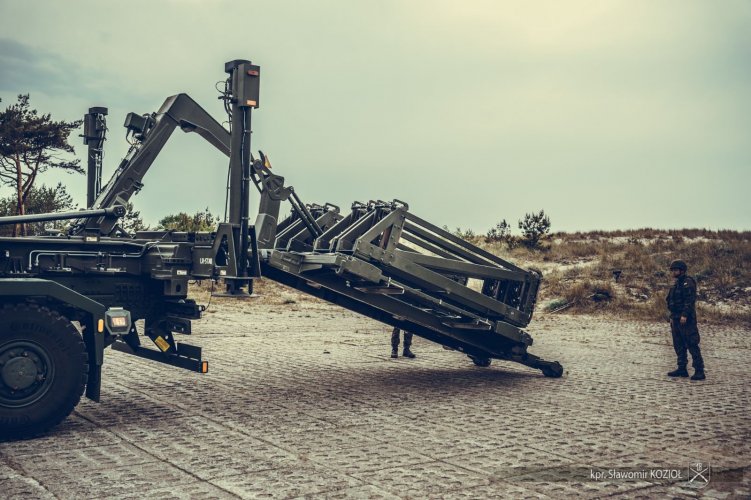
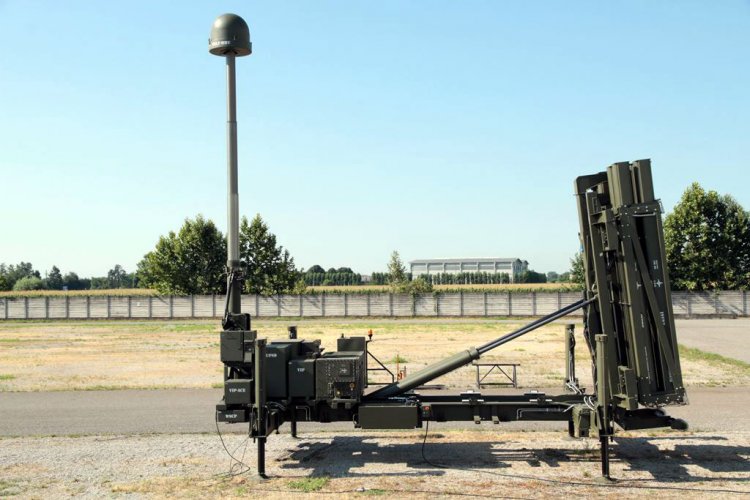
It is, the iLauncher can be use with either CAMM or CAMM-ER. What I mean by missile racks is this part: F-bAkAYbgAEP3iW.jpg
Above you can see the missile rack for CAMMs, and below for CAMM-ERs:
MBDA-Albatros-NG_04.jpg
You can see they're slightly different. I don't know if you can load either of these racks with a mix of CAMMs and ERs, but I doubt that honestly.
 
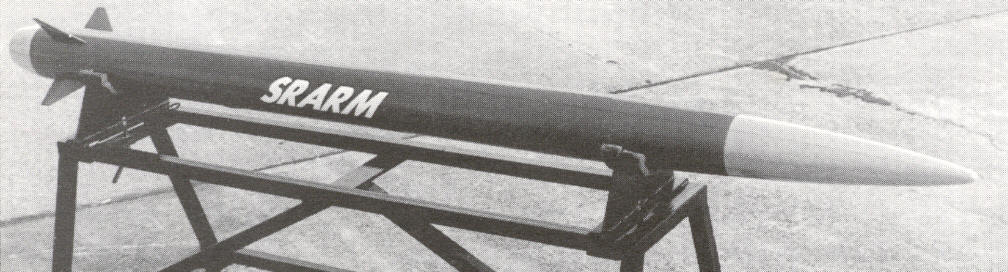
I was just thumbing through Bill Gunston's Illustrated Encyclopedia of Aircraft Armament and found an entry for SRARM as a seven-nation (US, UK, Germany, Italy, Canada, Netherlands, Belgium) program to consider a smaller ARM to replace/improve upon Sidearm. This was a 15-month study beginning in September 1985, so that's a bit later than your chart. But I'm not sure if it's necessarily the same program; it could just be a recycling of the obvious acronym.

I stumbled across some information on the 7 nation SRARM programme at the National Archives recently. Funny how often you find interesting things that you weren't looking for there. It seems SRARM was a 7 nation feasibility study, with the UK requirement being AST 1240.

I've attached a full copy of Air Staff Target 1240 - A Short Range Anti-Radar Missile as well as a few other assorted papers relating to the SRARM feasibility study, for anyone who's interested. All come from AIR 8/3402

The documents all relate to SRARM as a programme, rather than to specifically this SRARM missile. However British Secret Projects: Hypersonics, Ramjets and Missiles says that this missile was developed in response to AST 1240. So it seems they are indeed related, rather than just sharing a name.
1767005454424.png
 

Attachments

  • AST 1240 SRARM.pdf
    7.4 MB · Views: 68
Last edited:
I stumbled across some information on the 7 nation SRARM programme at the National Archives recently. Funny how often you find interesting things that you weren't looking for there. It seems SRARM was a 7 nation feasibility study, with the UK requirement being AST 1240.

I've attached a full copy of Air Staff Target 1240 - A Short Range Anti-Radar Missile as well as a few other assorted papers relating to the SRARM feasibility study. All come from AIR 8/3402

The documents all relate to SRARM as a programme, rather than to specifically this SRARM missile. However British Secret Projects: Hypersonics, Ramjets and Missiles says that this missile was developed in response to AST 1240. So it seems they are indeed related, rather than just sharing a name.
View attachment 796771

Fantastic work, that appears to nail it down.

One of these days I'll get round to updating the chart, also adding CAMM-MR. I'll post here when I get round to it.
 
I stumbled across some information on the 7 nation SRARM programme at the National Archives recently. Funny how often you find interesting things that you weren't looking for there. It seems SRARM was a 7 nation feasibility study, with the UK requirement being AST 1240.

I've attached a full copy of Air Staff Target 1240 - A Short Range Anti-Radar Missile as well as a few other assorted papers relating to the SRARM feasibility study, for anyone who's interested. All come from AIR 8/3402

The documents all relate to SRARM as a programme, rather than to specifically this SRARM missile. However British Secret Projects: Hypersonics, Ramjets and Missiles says that this missile was developed in response to AST 1240. So it seems they are indeed related, rather than just sharing a name.
View attachment 796771
So, ASRAAM-ARM in the same sense as Sidearm?

Makes sense to me.
 
So, ASRAAM-ARM in the same sense as Sidearm?

It does. Obviously went nowhere, but appears to have been superceded in UK thinking by ALARM. Can't help but think it would have been useful alongside ALARM though. You could open a corridor up for a strike with ALARM but have SRARM handy for pop-up threats, alongside ASRAAM for self protection.
 
It kind of just comes from different philosophies. ALARM coming from the need to counter the obvious countermeasure of turning off the threat radar but then evolving into preemptive use for SEAD. Vs just reactively slinging a lot of HARMs, or SRARM. But then everyone else in NATO is already bringing a bunch of HARMs along.

For SRARM, I'd imagine that small warhead size was also an issue. Probably needed to wait until GPS was small enough to include instead of just a small cheap INS.
 
It does. Obviously went nowhere, but appears to have been superceded in UK thinking by ALARM. Can't help but think it would have been useful alongside ALARM though. You could open a corridor up for a strike with ALARM but have SRARM handy for pop-up threats, alongside ASRAAM for self protection.
But wouldn't ALARM itself automatically be reacting to the pop-up threats? Unless you choose to divide up the target set among ALARM and SRARM - SA-6 and larger to ALARM, and SA-8 and ZSUs to SRARM being the obvious mix.
 
Sidearm didn't seem to have that issue. Roughly same size warheads, 22-25lbs all told.
I'm not that convinced convinced given US experience with (much bigger) Shrike in Vietnam and replacement with Standard ARM and HARM. Warhead size was one reason for this. It does obviously depend on miss distance i.e. how likely the threat is to remain active all the time
 
I'm not that convinced convinced given US experience with (much bigger) Shrike in Vietnam and replacement with Standard ARM and HARM. Warhead size was one reason for this. It does obviously depend on miss distance i.e. how likely the threat is to remain active all the time

In regards to the AGM-45 Shrike you need to keep in mind that it was a first-generation ARM based on the AIM-7 Sparrow airframe/warhead/rocket-motor combination and for its' time it WAS cutting-edge.
 
I'm not that convinced convinced given US experience with (much bigger) Shrike in Vietnam and replacement with Standard ARM and HARM. Warhead size was one reason for this. It does obviously depend on miss distance i.e. how likely the threat is to remain active all the time
As mentioned, Shrike was a Sparrow-ARM, and was very limited in which radars it could track.

Standard-ARM was not limited in that way, but was massively expensive. Cue the development of HARM.
 
But wouldn't ALARM itself automatically be reacting to the pop-up threats? Unless you choose to divide up the target set among ALARM and SRARM - SA-6 and larger to ALARM, and SA-8 and ZSUs to SRARM being the obvious mix.

One of the issues ALARM had was as it drifted down on its parachute its 'horizon' for its seeker head would decrease, so as every second passed it would lose some effectiveness. Yes, firing it would open up a corridor as Soviet SAM's were either destroyed or shut down, but that corridor would rapidly narrow. having a quick reaction ARM onboard, on a Sidewinder Pylon, would help...plus inject a little more reticence into Soviet AD crews from lighting up again.

For SRARM, I'd imagine that small warhead size was also an issue. Probably needed to wait until GPS was small enough to include instead of just a small cheap INS.

Just the act of firing it and homing in on a set would be enough for the system to shut down and allow the strike to exfil.

There was, reputedly, a radar/AD system in Kosovo that had 80+ HARM fired at it...it shut down every time and survived, but also didn't manage to engage any Allied aircraft, who continued with their strikes. But then one day an RAF Tornado came along...fired an ALARM...they dutifully shut down....waited the requisite time for the strike to clear the area...powered up...and got a rather unpleasant surprise.

EDIT - Just to note I suspect that Serbian system was, partly, the reason for AARGM getting a MMW radar for very robust capability against systems shutting down (although that was also an obvious direction of travel as well...).
 
Last edited:

Similar threads

Back
Top Bottom