
Tomboy
ACCESS: Top Secret
- Joined
- 4 January 2025
- Messages
- 543
- Reaction score
- 1,967
Isn't high hypass turbofans better for long range subsonic aircraft,?Oh, there are zillion reasons to use low bypass engines still.

Isn't high hypass turbofans better for long range subsonic aircraft,?Oh, there are zillion reasons to use low bypass engines still.

Yep. Even the B-2 and B-21 uses them.Oh, there are zillion reasons to use low bypass engines still.
Depends what you mean by "high". What most people think when they say high-bypass:Isn't high hypass turbofans better for long range subsonic aircraft,?
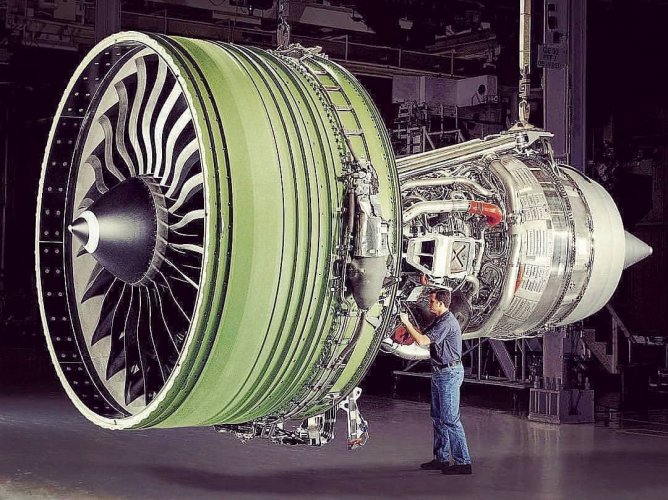
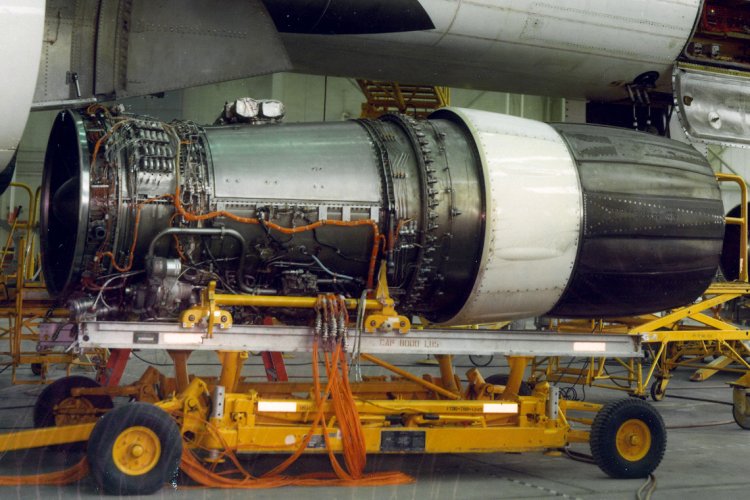
Isn’t it speculated that the B-21 uses a medium bypass engine for more efficiency?Yep. Even the B-2 and B-21 uses them.
Isn’t it speculated that the B-21 uses a medium bypass engine for more efficiency?
It's going to be high bypass since there was a order calling for analysis of large S bend intake for high bypass turbofan. Which means BPR>4I remember awhile back that the H-20 could potentially use an improved WS-18/D-30KP-2. Of which is medium bypass but lower bypass than PW9000. This is a pretty old rumor though.
The payload requirements are quite different. Also I am not saying they cannot make H-20, just that the reason we have not seen it yet is because it is a challenging project.For those that says it'll take China years to make a B-2 sized conventional flying wing because engine or whatever, you guys are clearly forgetting WZ-X and GJ-X two bomber sized flying wing already flying.
Clearly large composite structure and efficient powerplant is no issue right now.
If payload and endurance are no issue, sure.Sure it can. We could start with adopting a CFM-56 or clone. IIRC China has been license-producing those since the 1990s. Or you could take some of the new high-performance turbofans and remove the afterburners, like how the US F118 is basically an F110 sans afterburner.

I don't think striking the continental US is necessary; they have ICBMs for that. Attacking surface ships may be a more important role, as may non-nuclear power projection. Right now, most of China's goals may be achievable by soft power, more so since the current administration has conceded that particular field of conflict.The original WS-10's core itself is based on a locally reverse-engineered CFM-56. It powers almost all Chinese-built, manned jet aircraft in the PLA fleet and has evolved into a legitimate 5th-gen engine thanks to the integration of technologies developed for the first WS-15 design.
It's likely already in use as an interim engine on both the GJ-X and WZ-X.
View attachment 793414View attachment 793415
The delay in the H-20 project and its redesign is due to the changing requirements of the PLA. With these drones, PLAAF is already capable of delivering stand-in payloads to the 3IC reliably(the WZ-X likely also has a shallow, small IWB). If the H-20 project is to continue, it must be capable of striking CONUS and returning safely.
This is what the insiders have been hinting at, and it’s also the consensus within the PLA-watching community.
Yes, though my understanding is at very high altitudes they lose power and efficiency. I think the PW-9000 is thought to be a medium bypass more like 4:1.Isn't high hypass turbofans better for long range subsonic aircraft,?

How so? I get that the payload is a combination of fuel and bombs/missiles but the GJ-X is quite literally a B-21-sized UCAV, almost certainly with a comparable bomber-sized IWB. By contrast, what the PLAAF really needs from the H-20 isn't heavier/larger (weapons) payload, but rather bigger combat radius and more sensors (in addition to a cockpit). This isn’t just a guesstimate either; it’s what we've been hearing for a while now.The payload requirements are quite different.
Theoretically, the US in this current situation could just "lob" JASSM-ERs at the mainland (right in China’s backyard!) with impunity, while China would have to rely on expensive ICBMs to deliver a payload to the CONUS (which would trigger a nuclear retaliation!). Don’t you think any country with adequate resources would want to level out the playing field? It won't have to cross the Pacific in a straight line either...I don't think striking the continental US is necessary; they have ICBMs for that.

before you are trying to feed them via lo ducts and fly highIsn't high hypass turbofans better for long range subsonic aircraft,?
I don't think there is any issue with large S bends as B-21 uses PW9000 with a 4:1 ratio and there is a XAC tender calling for a S bend for high bypass turbofan. I also don't think there is any utility for a manned bomber to fly high enough for low bypass turbofans to truly shine.before you are trying to feed them via lo ducts and fly high
I just know that Ayi and Orca both agreed that the the H-20 is/was powered by 4xWS-18/D-30KP-2 engines. Perhaps it was like this when the bomber was first envisioned, and there has been major redesign and a switch to using high bypass engines, this could also explain the massive delay in it's appearance.It's going to be high bypass since there was a order calling for analysis of large S bend intake for high bypass turbofan. Which means BPR>4
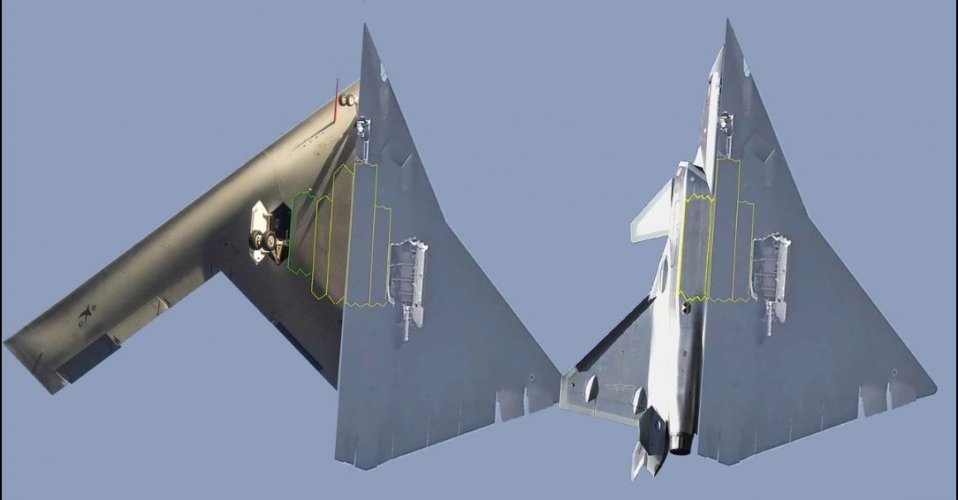
2D dimension of bays doesn't mean much, B-21 has deeper bays and much larger combat radius. Payload is one thing but the range you csn carry that payload is also important.Are we even sure they're gonna make this thing?
View attachment 793503
This is just a guess, but if the H-20 is B-21 sized, then the payload difference might not be meaningful enough to justify a new aircraft.
I think there's a chance the project got internally cancelled, and if we ever get a H-20, then it's going to be an entirely distinct aircraft from what was being built so far.
I mean, B-2 is 4x low/medium-bypass turbofans. B-21 is 2x low/medium-bypass turbofans.No reason to use low bypass engines anymore, China has medium to high bypass engine available. It's likely powered by four engines with bypass ratio >4 with GJ-X/WZ-X using two of the same engine.
In terms of sheer fuel economy, yes. If you're just setting the throttles and leaving it alone for the whole flight like a commercial plane, the higher the bypass ratio the better.Isn't high hypass turbofans better for long range subsonic aircraft,?
I don't forsee any reason for rapid maneuver for a large strategic bomber hence I doubt fast throttle response is really weighed over than having better fuel efficiency. In fact I expect the flight profile of these bombers to be more like airliners with a long high efficiency cruise to and back from the targeted area.In terms of sheer fuel economy, yes. If you're just setting the throttles and leaving it alone for the whole flight like a commercial plane, the higher the bypass ratio the better.
But high-bypass fans are slow to spool up. Even the small-fan CFM56s (60 or 61" fans) are very slow to respond to throttle changes. Which is not desirable for a military aircraft. F101s are about the highest bypass you'll want for a combat aircraft.
F118 has a bypass ratio of 1.3:1,I mean, B-2 is 4x low/medium-bypass turbofans. B-21 is 2x low/medium-bypass turbofans.
In terms of sheer fuel economy, yes. If you're just setting the throttles and leaving it alone for the whole flight like a commercial plane, the higher the bypass ratio the better.
But high-bypass fans are slow to spool up. Even the small-fan CFM56s (60 or 61" fans) are very slow to respond to throttle changes. Which is not desirable for a military aircraft. F101s are about the highest bypass you'll want for a combat aircraft.

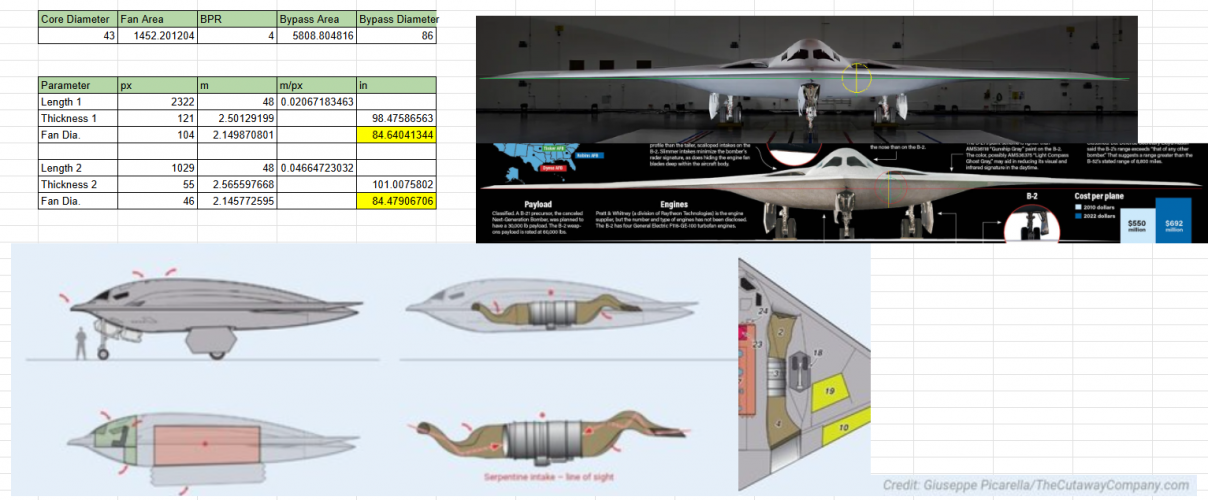
Because I do not trust those reports describing the PW9000. An F135 LP section does not fit on an engine core that has a 9:1 bypass ratio with a 56" fan. That's a ~19" diameter core, give or take, assuming I have done my math correctly.I don’t know why you keep calling B-21’s engines as “low/med” bypass. The PW9000 4:1 bypass ratio is by all accounts on the high end of medium bypass, and could be classified as low-high bypass. So by all means it should be referred to as med/high-bypass turbofan.
It's not how fast the aircraft accelerates, it's how fast the engine accelerates or decelerates.For a subsonic long range bomber fuel efficiency trumps whatever small advantages you’d get from accelerating a bit faster. If the B-21 is being shot at, its primary defense has already failed.
The B-2 goes that far with 4x F118s. Haven't we already talked about "H-20 has 4 engines"?If the H-20 has a requirement to hit the CONUS, it’s going to need more efficient engines.
F135 Fan inlet is 43in. Assuming this is used as the LP stage for the PW9000, a 4:1 BPR translates to roughly a 86in diameter Fan. Actually less due to the shaft.Because I do not trust those reports describing the PW9000. An F135 LP section does not fit on an engine core that has a 9:1 bypass ratio with a 56" fan. That's a ~19" diameter core, give or take, assuming I have done my math correctly.
It's not how fast the aircraft accelerates, it's how fast the engine accelerates or decelerates.
The B-2 goes that far with 4x F118s. Haven't we already talked about "H-20 has 4 engines"?
I remember I did some basic calculations awhile back where i assumed that an H-20 with a similar estimated L/D ratio of the B-2 while being powered by 4xWS-18 would get something like 16,000km range with 118,000kg of fuel. That's a lot of fuel, and a huge plane.I think the main issue is just going to be range; CONUS is very, very far from the PRC. Combat radius requirements are like 8,000 to 10,000 km, which means nearly 16-20,000 km of range.
Tankers might help, but you need to push your tankers very far over Russia (hah!) or over Japan (hahahaha!) to make this work.
So you need a very, very big flying wing with either a buddy tanker variant or something, and that's a huge mess. It's much worse in this day and age of space-based sensors, and in either case the enemy can hunt your tankers with Blue A2/AD/Golden Dome etc.
https://www.secretprojects.co.uk/th...bomber-program-xac-h-x-h-20.28076/post-855782Are we even sure they're gonna make this thing?
View attachment 793503
This is just a guess, but if the H-20 is B-21 sized, then the payload difference might not be meaningful enough to justify a new aircraft.
I think there's a chance the project got internally cancelled, and if we ever get a H-20, then it's going to be an entirely distinct aircraft from what was being built so far.

My theory was the "redesign" was them pivoting the R&D into HALE bomber/ISR drones like the WZ-X and the GJ-X.
My theory was the "redesign" was them pivoting the R&D into HALE bomber/ISR drones like the WZ-X and the GJ-X.
Do we have any good guesstimates of the respective ranges and payloads of the 2 aircraft? My guess would be 15 tons payload and 6000km combat range for the B-21, and 10 tons and 3000 km for the J-36. Both fit huge bombs/missiles.2D dimension of bays doesn't mean much, B-21 has deeper bays and much larger combat radius. Payload is one thing but the range you csn carry that payload is also important.
J-36 can maybe hit 3500 km with VCE and air to air payload and a reasonably bit less with heavier strike payload although the types of strike payload it could possibly carry are far inferior to B-21 owning to limited bay depth. B-21 could carry more proper strike weapons to ranges likely twice as far.Do we have any good guesstimates of the respective ranges and payloads of the 2 aircraft? My guess would be 15 tons payload and 6000km combat range for the B-21, and 10 tons and 3000 km for the J-36. Both fit huge bombs/missiles.
There are a couple variants of the CF6 in the 4+ - 5 BR.F118 has a bypass ratio of 1.3:1,
F101 has a bypass ratio of 2.1:1,
PW9000 has a bypass ratio of 4:1,
I don’t know why you keep calling B-21’s engines as “low/med” bypass. The PW9000 4:1 bypass ratio is by all accounts on the high end of medium bypass, and could be classified as low-high bypass.
If the H-20 has a requirement to hit the CONUS, it’s going to need more efficient engines.
FYI, the PLAAF don't have to fly over San Diego or anything; they just need to get close enough with refuel to launch very long range missiles.+1
The issue is not can any engine be used in a bomber; the issue is how far can you carry a heavy payload? And for that, you likely need a medium-to-high bypass engine of very high efficiency tuned to the cruise altitude of the airplane. That is probably a major development item for the PRC.
For comparison, B-2 has a combat radius of ~3000 miles/5000 km, which would get you to about Midway or the northern edge of Australia in a straight line. Plenty of range for Guam, but I assume the PLAAF is thinking bigger.
B-21 range is undisclosed but estimates run in the 5,000-6000 mile / 10,000 km combat radius, which could put you over Alaska or Hawaii. Austin has stated that B-21 will not require any “in theater logistics”, which I take to mean no air refueling. And I believe there have been statements by PLAAF watchers that 20,000 km range is the requirement for H-20.
I think reaching the CONUS is unobtainable without refueling.outside China, though strikes might be carried out against west coast targets with long range cruise missiles.

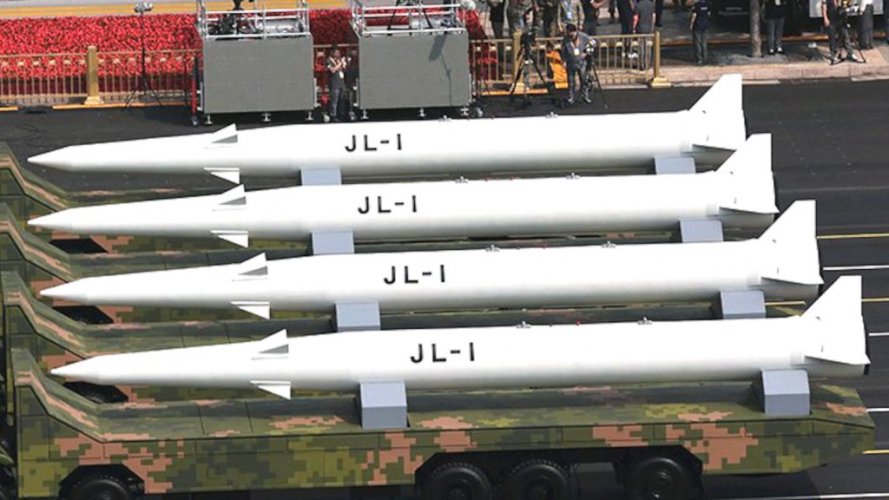
Not really, H20 is being built Primarily to deliver Nukes all other unguided bombs platforms talk is secondary and useless when they already have long range stealth platforms like GJX, So you have to include the range of nuclear vehicle in addition to bomber's CR and for now that would be JingLei-1 which has a range of 8000Km as stated by official media.Combat radius requirements are like 8,000 to 10,000 km, which means nearly 16-20,000 km of range.
10000km combat radius for B-21 seems ridiculous, are you sure it's not total range?
Not really, H20 is being built Primarily to deliver Nukes all other unguided bombs platforms talk is secondary and useless when they already have long range stealth platforms like GJX, So you have to include the range of nuclear vehicle in addition to bomber's CR and for now that would be JingLei-1 which has a range of 8000Km as stated by official media.
In other words, the PLA requires the H-20 to have a combat radius of 5000 km to be viable for their strategic goals.
View attachment 793550
"For now that would be JingLei-1 which has a range of 8000Km as stated by official media"JL-1 seems very unlikely to be an internal store or otherwise associated with H-20.
Actually, iirc the rumour mill was saying that the H-20 is designed around the capability to carry JL-1 class weapons, not necessarily the JL-1 per se but likely a somewhat miniaturized equivalent, so this still dictates a long bay and a big aircraft.JL-1 seems very unlikely to be an internal store or otherwise associated with H-20.


