Interesting, if it indeed is 6 engines and supersonic, it would a) be massive and b) completely different than what we've believed it would be for a very long time.That's one of my native language......
Someone asked the original poster did he play "metal 4" before, guess a modern airframe won't fit 6 axial turbojet, another person suggest it may fit 6 WS-15, the rest is similar to what you said

You are using an out of date browser. It may not display this or other websites correctly.
You should upgrade or use an alternative browser.
You should upgrade or use an alternative browser.
Chinese Stealth bomber program - XAC H-X (H-20)
- Thread starter Blitzo
- Start date
Scott Kenny
ACCESS: USAP
- Joined
- 15 May 2023
- Messages
- 19,517
- Reaction score
- 27,965
Ignoring the engine count question, there's a decent argument to make for a supersonic medium bomber design. See TSR-2, FB-111, Tu-22M...Interesting, if it indeed is 6 engines and supersonic, it would a) be massive and b) completely different than what we've believed it would be for a very long time.
Whether it's supersonic sprint or Blackbird style supercruise is a different argument.
But I'm still expecting the H-20 to be roughly B-21 in size, shape, and capabilities. ~25klbs in boom, subsonic, reasonably LO.

Airborne2001
ACCESS: Secret
- Joined
- 19 June 2020
- Messages
- 377
- Reaction score
- 541
Yeah, supersonic would mean no flying wing configuration.Interesting, if it indeed is 6 engines and supersonic, it would a) be massive and b) completely different than what we've believed it would be for a very long time.
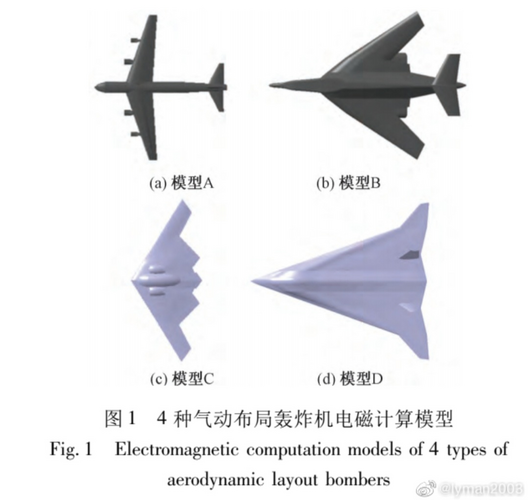
Could it use a blended wing body configuration? It could be for example like be like Model (d) shown here in an academic paper from some years ago.Yeah, supersonic would mean no flying wing configuration.
Last edited:
martinbayer
ACCESS: Above Top Secret
- Joined
- 6 January 2009
- Messages
- 5,062
- Reaction score
- 6,967
Following the traditional Chinese copycat trend, my money would be on option (c).
It's probably B-21 raider shaped not B-2 shaped, but B-2 size. That's my guess. I'm not convinced about it being supersonic.Following the traditional Chinese copycat trend, my money would be on option (c).
That's my guess. I'm not convinced about it being supersonic.
Can a flying-wing fly supersonically without tail-fins?

Tomboy
ACCESS: Top Secret
- Joined
- 4 January 2025
- Messages
- 543
- Reaction score
- 1,967
Perhaps it'll be more of an extra-large J-36's design of a supersonic blended body aircraftCan a flying-wing fly supersonically without tail-fins?

FighterJock
ACCESS: Above Top Secret
- Joined
- 29 October 2007
- Messages
- 7,228
- Reaction score
- 8,539
That is what I was thinking Tomboy, that is IF the H-20 turns out to be a supersonic bomber instead of a subsonic flying wing design.
Scott Kenny
ACCESS: USAP
- Joined
- 15 May 2023
- Messages
- 19,517
- Reaction score
- 27,965
Be tough but not impossible to get good range out of a supersonic aircraft, though. I'd expect a range comparable to H-6/Tu-16s, which means 7000km with 9-10 tonnes of boom.Perhaps it'll be more of an extra-large J-36's design of a supersonic blended body aircraft
7000km range supersonic means something about the size of a Tu-22M Backfire, ~125tonnes/280,000lbs.
they were referring to the strategy game "Hearts of Iron 4" with "metal 4"That's one of my native language......
Someone asked the original poster did he play "metal 4" before, guess a modern airframe won't fit 6 axial turbojet, another person suggest it may fit 6 WS-15, the rest is similar to what you said

Erdosain
ACCESS: Top Secret
- Joined
- 10 March 2020
- Messages
- 733
- Reaction score
- 2,960

- Joined
- 2 January 2006
- Messages
- 4,235
- Reaction score
- 8,279
Please be careful especially with account like him, he is not very strict in correctness as long as it sounds sensational ... the true paper per what I understand does not mention the H-20 but only "《一种飞机座舱风挡玻璃结构 发明专利申请》(Patent Application for an Aircraft Cockpit Windshield Structure)." ... as such all we know it is indeed related to a cockpit windshield for an aircraft.

- Joined
- 1 April 2006
- Messages
- 12,276
- Reaction score
- 15,084
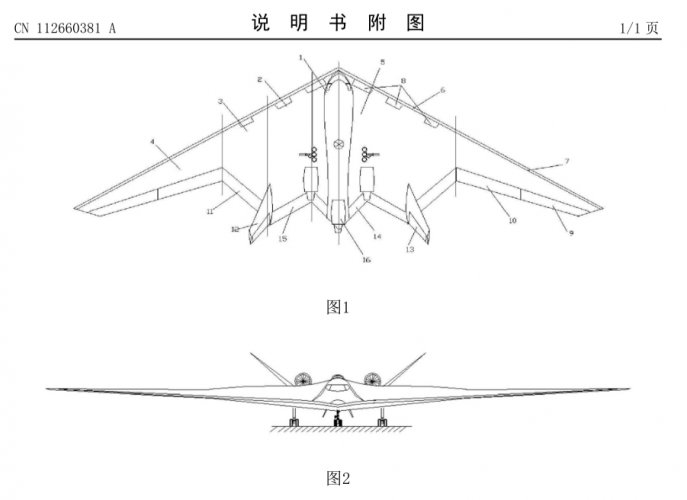
It says it's a blended wing body design with laminar flow technology for a passenger aircraft. Capacity of 360 people, range 11,000km and MTOW of 172 tons. Why it has stealth features? I have no Idea.XAC patent filed in 2017. Looks like disinformation effort to me as too much incongruous.

Erdosain
ACCESS: Top Secret
- Joined
- 10 March 2020
- Messages
- 733
- Reaction score
- 2,960
Yes, I know that Twitter user, and he's exaggerated and chauvinistic.Please be careful especially with account like him, he is not very strict in correctness as long as it sounds sensational ... the true paper per what I understand does not mention the H-20 but only "《一种飞机座舱风挡玻璃结构 发明专利申请》(Patent Application for an Aircraft Cockpit Windshield Structure)." ... as such all we know it is indeed related to a cockpit windshield for an aircraft.
I apologize for posting it without checking; there were similar posts, but they didn't allow copying links from my phone.

Rumil
ACCESS: Restricted
- Joined
- 3 January 2025
- Messages
- 35
- Reaction score
- 133
Beware of that handle
Here is the patent info, from Xi'an
CN119460062A
Applied 16/12/ 2024
Published 18/2/ 2025
Accessible here if you have an account
https://pss-system.cponline.cnipa.gov.cn/conventionalSearchEn
- Joined
- 28 January 2008
- Messages
- 1,645
- Reaction score
- 4,210
I am wondering if the J-36 is the first step for China into theater strike with a more strategic, larger H-20 bomber platform to follow and I would assume a flying wing configuration of some sort. Don't know if China can keep up the pace with all these new platform reveals, you can build as many different configurations as you like but you have to refine and test them to ensure they will work and be mission effective. We are all going WOW! look at all of the brand new Chinese jets but they ave to be able to produce them and they have to work in the end just like any other nation developing new hardware and systems.

snne
ACCESS: Top Secret
- Joined
- 3 July 2022
- Messages
- 2,408
- Reaction score
- 8,848
Via ACuriousPLAFan/sinodef:
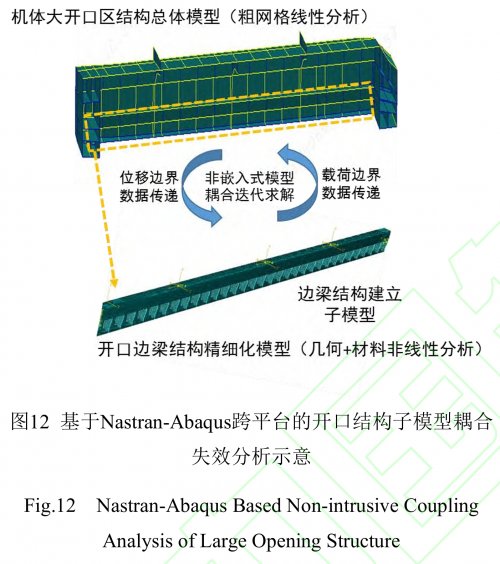
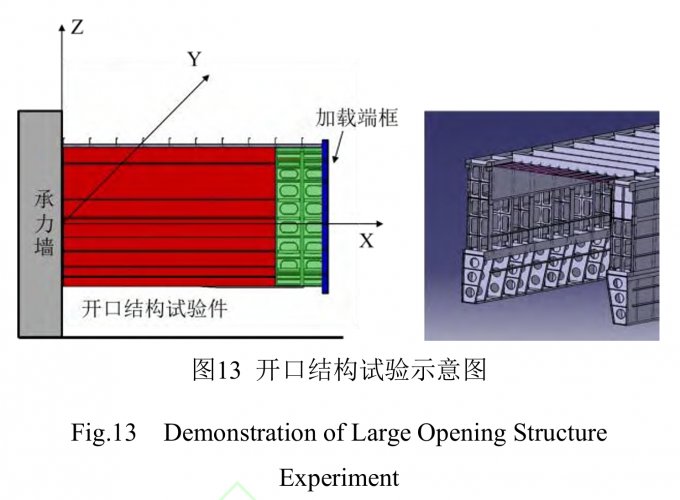
Excerpts from an academic paper titled《特殊布局飞机高承载开口结构优化设计研究》(Research on the Optimization Design of High-Load-Bearing Opening Structures in Special Configuration Aircraft), depicting what looks to be an IWB structure that is 6 meters long x 2.4 meters wide x 2 meters deep.
The paper originates from AVIC's 1st Aircraft Design and Research Institute (一飞院) at Xi'an.
Now that I'm not sure whether this is meant to depict the IWBs of the B-2 Spirit (given the listed dimensions do match), the GJ-X or the H-20, hence posting these here just in case.
Posted by @Crosshairs十字线 on Weibo.


But man, imagine the meltdown in the PLA fanboi circles if the H-20 really does come out to be a literal B-2...

- Joined
- 3 June 2011
- Messages
- 20,897
- Reaction score
- 19,087
Well that IS a CATIA file there on the right.Via ACuriousPLAFan/sinodef:
(directed to the original post)Via ACuriousPLAFan/sinodef:
The curvature at the top of the bay does not match that of the B2 (nor do the structural members in the CAD), but Id venture to say that it would be smart to do an analysis with the dimensions of something someone has already made work.
“imagine the meltdown in the PLA fanboi circles if the H-20 really does come out to be a literal B-2...”
Well, there is only so much you can change within the constraints of creating a stealthy flying wing to carry a certain payload and travel a certain range

Tomboy
ACCESS: Top Secret
- Joined
- 4 January 2025
- Messages
- 543
- Reaction score
- 1,967
People are expecting something more exotic, either supercruising or something else to carry both heavy and oversized payload. If it was simply just an enlarged B-21, I don't think it'll take this long.“imagine the meltdown in the PLA fanboi circles if the H-20 really does come out to be a literal B-2...”
Well, there is only so much you can change within the constraints of creating a stealthy flying wing to carry a certain payload and travel a certain range
Catia V5.Well that IS a CATIA file there on the right.

EmoBirb
ACCESS: Top Secret
- Joined
- 18 January 2025
- Messages
- 2,694
- Reaction score
- 6,920
I don't see why not, unlike CAC and SAC, XAC is kind of the neglected child. The Y-20 airlifter and the legacy H-6 are their most well known developments, both couldn't be further away from a stealth bomber even if they tried.If it was simply just an enlarged B-21, I don't think it'll take this long.
So I can see how it would take them quite a while to perfect a subsonic VLO design. Not to mention that there are various other programs being funded which may be considered a higher priority than the H-20. Although I'm leaning towards stealthy supersonic myself, I wouldn't categorically reject a subsonic flying wing just because the H-20 has been in the making this long. Especially if XAC hopes to surpass the aging B-2 and measure up against something like the B-21, which is lofty goal to achieve.
What is certain though, is that the flow of information about the H-20 is much tighter regulated than with other programs. We have little but various clues, some of which leading in vastly different directions. Meanwhile we had mainland PLA watchers teasing and predicting the next Gen fighters months in advance, with rumors of a J-20 successor going back further.
I'm confident either way that something will be unveiled in the next couple years. How it will look, your guess is as good as mine.
Why not? They have never made a bomber from scratch before, let alone a stealth one. And if range is an issue, then engine development is going to be an issue in a country that lacks almost any medium-high bypass commercial engine industry. The U.S. could pretty much kit bash a commercial engine off the shelf. J-36 bypassed this issue by using an existing fighter engine and just using three of them. But a subsonic strategic ranged high altitude bomber almost certainly could not adopt any existing engine. And I would expect other development problems as well, given the lack of experience with end to end bomber development.People are expecting something more exotic, either supercruising or something else to carry both heavy and oversized payload. If it was simply just an enlarged B-21, I don't think it'll take this long.
Last edited:
I'm confident either way that something will be unveiled in the next couple years. How it will look, your guess is as good as mine.
To get anything like the range they want it will be subsonic. And it will look roughly B-21 ish, because that is the best shape for that kind of plane form and performance requirement. The B-2 would have the same shape but for a low altitude requirement added somewhat later in the program as a future proofing effort.
Tomboy
ACCESS: Top Secret
- Joined
- 4 January 2025
- Messages
- 543
- Reaction score
- 1,967
For those that says it'll take China years to make a B-2 sized conventional flying wing because engine or whatever, you guys are clearly forgetting WZ-X and GJ-X two bomber sized flying wing already flying.
Clearly large composite structure and efficient powerplant is no issue right now.
Clearly large composite structure and efficient powerplant is no issue right now.

SUPER=BUG
ACCESS: Top Secret
- Joined
- 25 September 2024
- Messages
- 884
- Reaction score
- 2,424
The main reason is that times are changing rapidly, and tactics and combat concepts are also evolving quickly. 'Designing weapons is designing future warfare.' Just like with steam catapults and electromagnetic catapults, the PLA will not be satisfied with simply playing the traditional bomber role of the past. Perhaps this is why, six years after the official announcement of developing a stealth bomber, there has still been no news.
- Joined
- 3 June 2011
- Messages
- 20,897
- Reaction score
- 19,087
Could also be why F-47 and F/A-XX are still under wraps.The main reason is that times are changing rapidly, and tactics and combat concepts are also evolving quickly. 'Designing weapons is designing future warfare.' Just like with steam catapults and electromagnetic catapults, the PLA will not be satisfied with simply playing the traditional bomber role of the past. Perhaps this is why, six years after the official announcement of developing a stealth bomber, there has still been no news.
Scott Kenny
ACCESS: USAP
- Joined
- 15 May 2023
- Messages
- 19,517
- Reaction score
- 27,965
Disagree, there's been a whole heck of a lot posted here from the various China watchers about what the PLAAF was talking about for their big new fighter.I am wondering if the J-36 is the first step for China into theater strike with a more strategic, larger H-20 bomber platform to follow and I would assume a flying wing configuration of some sort. Don't know if China can keep up the pace with all these new platform reveals, you can build as many different configurations as you like but you have to refine and test them to ensure they will work and be mission effective. We are all going WOW! look at all of the brand new Chinese jets but they ave to be able to produce them and they have to work in the end just like any other nation developing new hardware and systems.
And it reads a lot like what the USAF was talking about wanting out of NGAD before CCAs were a big thing. Very large, at least 50 tonnes, and mostly to hold enough fuel to travel the distances to the Second or Third Island Chains.
Sure it can. We could start with adopting a CFM-56 or clone. IIRC China has been license-producing those since the 1990s. Or you could take some of the new high-performance turbofans and remove the afterburners, like how the US F118 is basically an F110 sans afterburner.Why not? They have never made a bomber from scratch before, let alone a stealth one. And if range is an issue, then engine development is going to be an issue in a country that lacks almost any medium-high bypass commercial engine industry. The U.S. could pretty much kit bash a commercial engine off the shelf. J-36 bypassed this issue by using an existing fighter engine and just using three of them. But a subsonic strategic ranged high altitude bomber almost certainly could not adopt any existing engine. And I would expect other development problems as well, given the lack of experience with end to end bomber development.
- Joined
- 1 April 2006
- Messages
- 12,276
- Reaction score
- 15,084
Apparently this is not B-2 bayVia ACuriousPLAFan/sinodef:
EmoBirb
ACCESS: Top Secret
- Joined
- 18 January 2025
- Messages
- 2,694
- Reaction score
- 6,920
They're most likely far less complex than any manned bomber and also most likely built to a lesser survivability standard due to their unmanned nature (not saying they're not survivable, it's just simply not given as much weight as on an expensive, high value, manned asset).you guys are clearly forgetting WZ-X and GJ-X two bomber sized flying wing already flying.
In essence, they had to scale up the GJ-11 and adapt the concept for high altitude, long endurance flight. I don't think you can equate that to any potentially manned strategic stealth bomber.
EmoBirb
ACCESS: Top Secret
- Joined
- 18 January 2025
- Messages
- 2,694
- Reaction score
- 6,920
Potential future MRTT/Airlifter perhaps? Although that may be better for a different thread.Why it has stealth features? I have no Idea.
I'll have to somewhat disagree, among others things, it is as of now just a theory of mine, but considering the significant noise around 2020 or so about the imminent flight of the H-20 that however we haven't seen, and then subsequent rumours about a change in requirements for H-20 and the resulting delays that pushed first flight by the end of this year or at any rate very soon again according to recent rumours, i'm wondering if the initial configuration H-20 didn't flew secretly around the 2020-ish timeframe, acting as a technology demonstrator, and/OR that initial configuration serves as the basis for the GJ-X, which as we know is practically B-21 sized, and about which we don't really know when it flew the first time.They're most likely far less complex than any manned bomber and also most likely built to a lesser survivability standard due to their unmanned nature (not saying they're not survivable, it's just simply not given as much weight as on an expensive, high value, manned asset).
In essence, they had to scale up the GJ-11 and adapt the concept for high altitude, long endurance flight. I don't think you can equate that to any potentially manned strategic stealth bomber.
Also, keeping in mind not only the GJ-X and WZ-X, but also China's amazing advances in fighter design - as incredulous as it still sounds J-36, J-50 and the two UADFs puts China ahead of absolutely everyone else including the americans in next generation fighter and UCAV design - imo all the necessary building blocks are already demonstrated for the H-20. So i don't see how the potential complexity of the H-20 is an insurmountable technological obstacle for China. Even if the the H-20 turns out to be "just" a rough equivalent of the B-2 (or more likely B-2 with B-21 tech), it will still be an amazing achievement considering where chinese aviation was 20 years ago, 10 years ago or even 5 years ago, at a minimum at least equaling the US in bomber design.
snne
ACCESS: Top Secret
- Joined
- 3 July 2022
- Messages
- 2,408
- Reaction score
- 8,848
The original WS-10's core itself is based on a locally reverse-engineered CFM-56. It powers almost all Chinese-built, manned jet aircraft in the PLA fleet and has evolved into a legitimate 5th-gen engine thanks to the integration of technologies developed for the first WS-15 design.Sure it can. We could start with adopting a CFM-56 or clone. IIRC China has been license-producing those since the 1990s. Or you could take some of the new high-performance turbofans and remove the afterburners, like how the US F118 is basically an F110 sans afterburner.
WS-10C already provides around 35.000lbf of thrust in exchange for a slightly reduced MTBO. Though not quite the equivalent of either of them, WS-15 is more similar to the F135 in characteristics than to the F119.
In-fact WS-10C incorporated components which were supposed to used in the early WS-15 engine. WS-10C currently uses DD9 3rd generation single crystal alloy which has been used in this engine since 2020.
It's likely already in use as an interim engine on both the GJ-X and WZ-X.The original WS-15 design from the pre-2017/18 era is not the same engine as the one developed afterward. They literally upped the requirements and redesigned it from the very beginning accordingly. As a consequence, the technologies from the scrapped WS-15 design eventually found their way into the WS-10C/C2 and probably the WS-10B3.
We've recently found out that the ultimate engine of the J-35, the WS-19, has already been equipping the PLAAF's J-35A LRIP batch, while the PLAN's J-35 still uses the interim WS-21 engine.
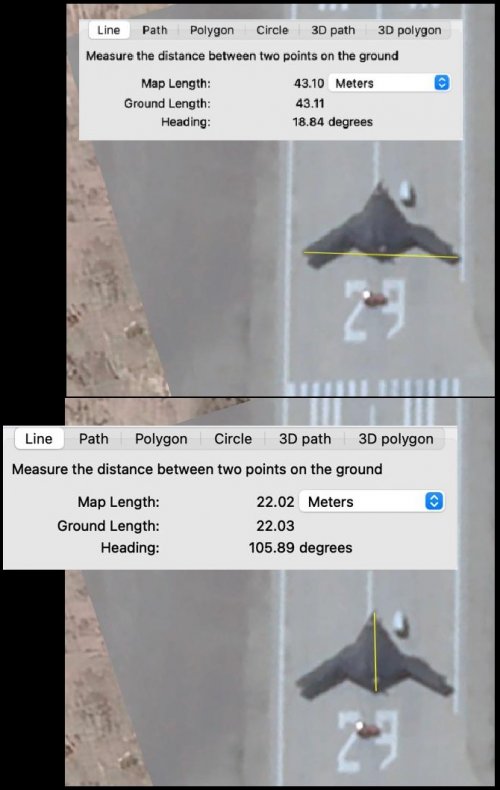
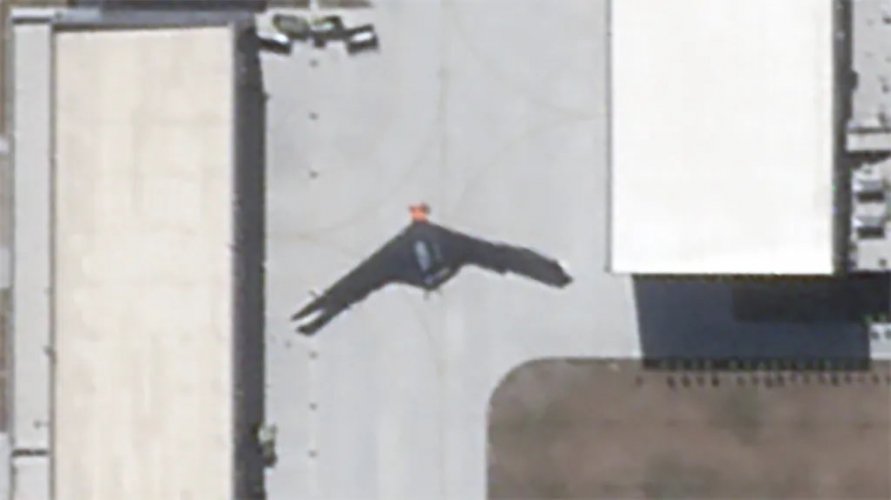
The delay in the H-20 project and its redesign is due to the changing requirements of the PLA. With these drones, PLAAF is already capable of delivering stand-in payloads to the 3IC reliably(the WZ-X likely also has a shallow, small IWB). If the H-20 project is to continue, it must be capable of striking CONUS and returning safely.
This is what the insiders have been hinting at, and it’s also the consensus within the PLA-watching community.
Last edited:
Scott Kenny
ACCESS: USAP
- Joined
- 15 May 2023
- Messages
- 19,517
- Reaction score
- 27,965
Which would absolutely track with using probably 4x WS-10 or WS-15 (without an afterburner) in the H-20, same way the B-2 uses 4x "F110-without-afterburners" aka F118s.The original WS-10 itself is based on a locally reverse-engineered CFM-56 core. It powers almost all Chinese-built manned aircraft in the PLA fleet and has evolved into a legitimate 5th-gen engine thanks to the integration of technologies developed for the first WS-15 design.
So, Red B-2, then.If the H-20 project is to continue, it must be capable of striking CONUS and returning safely.
Tomboy
ACCESS: Top Secret
- Joined
- 4 January 2025
- Messages
- 543
- Reaction score
- 1,967
No reason to use low bypass engines anymore, China has medium to high bypass engine available. It's likely powered by four engines with bypass ratio >4 with GJ-X/WZ-X using two of the same engine.Which would absolutely track with using probably 4x WS-10 or WS-15 (without an afterburner) in the H-20, same way the B-2 uses 4x "F110-without-afterburners" aka F118s.
- Joined
- 1 April 2006
- Messages
- 12,276
- Reaction score
- 15,084
Oh, there are zillion reasons to use low bypass engines still.No reason to use low bypass engines anymore,
Similar threads
-

-

-

-
 H-6N & Air-launched Anti-ship ballistic missile (ALBM/AShBM)
- Started by Deino
- Replies: 45
-
China's attempts to obtain foreign combat types: Draken, Mirage, Harrier, P-16 .
- Started by Deino
- Replies: 29