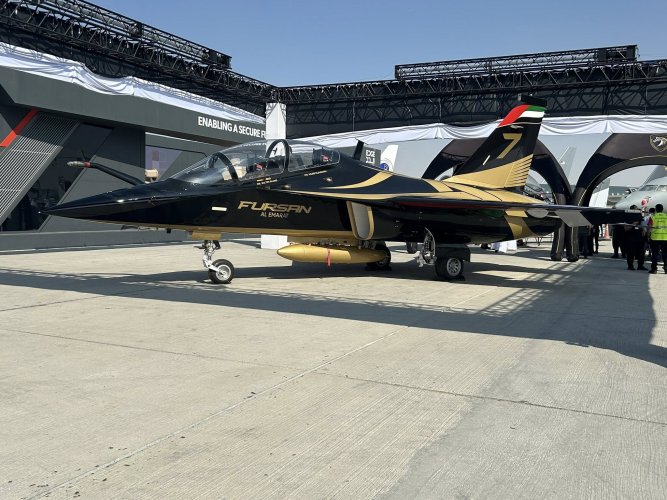
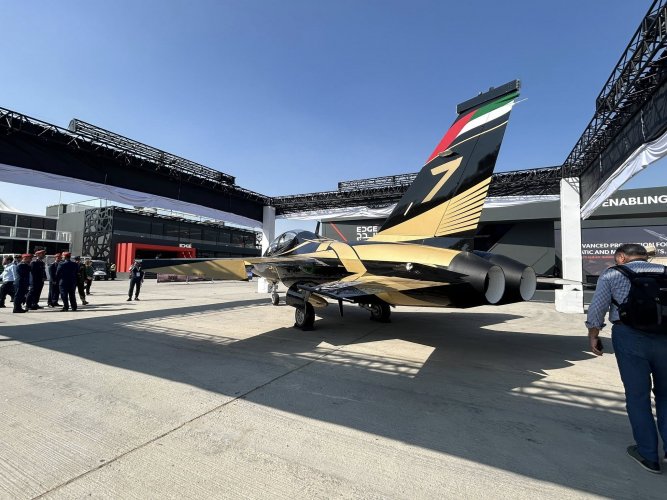
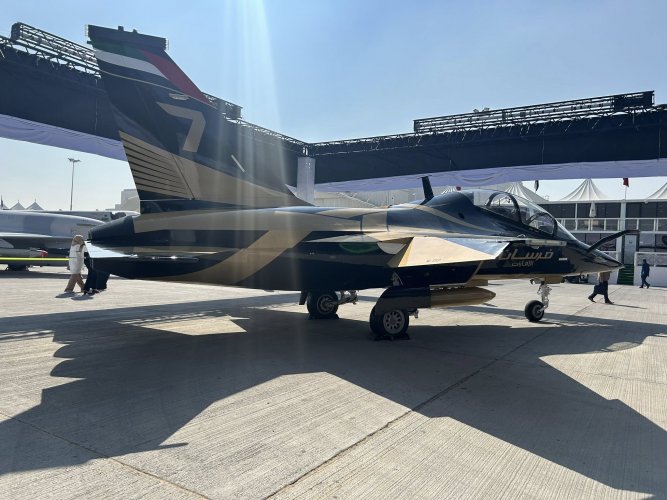
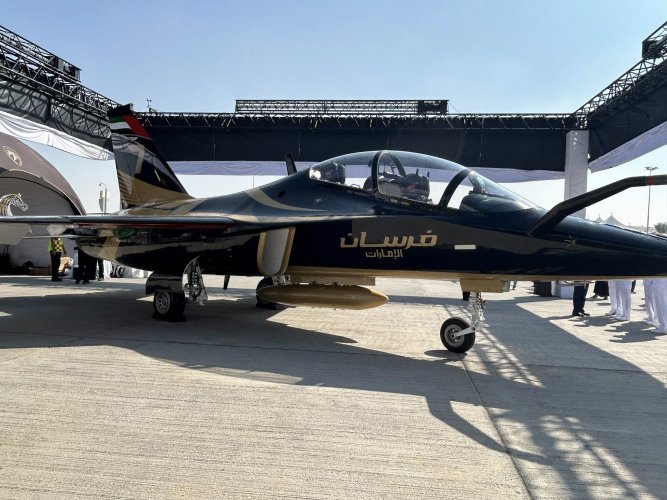
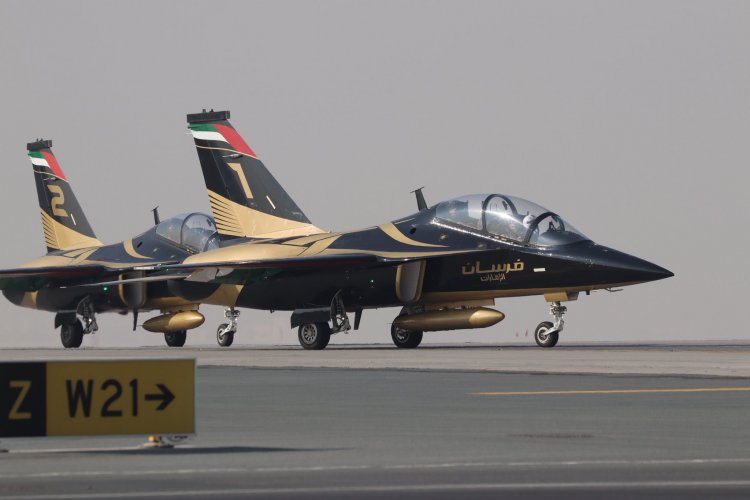
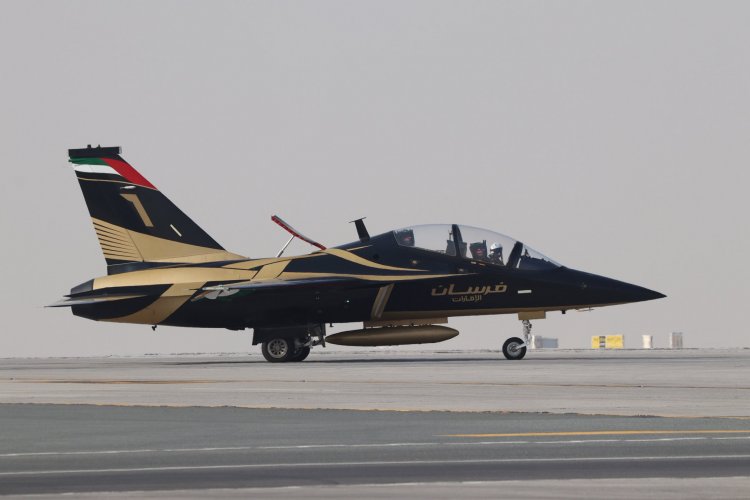
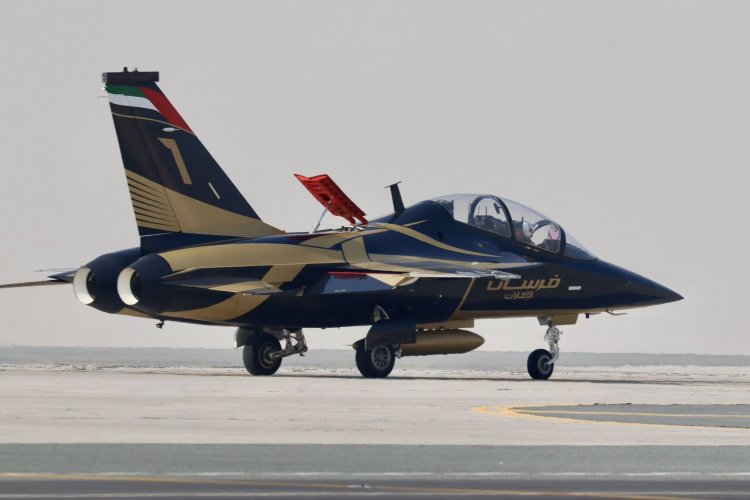
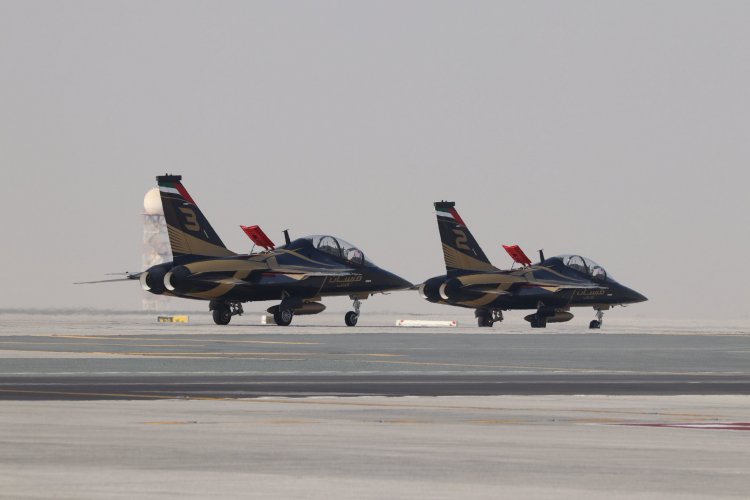
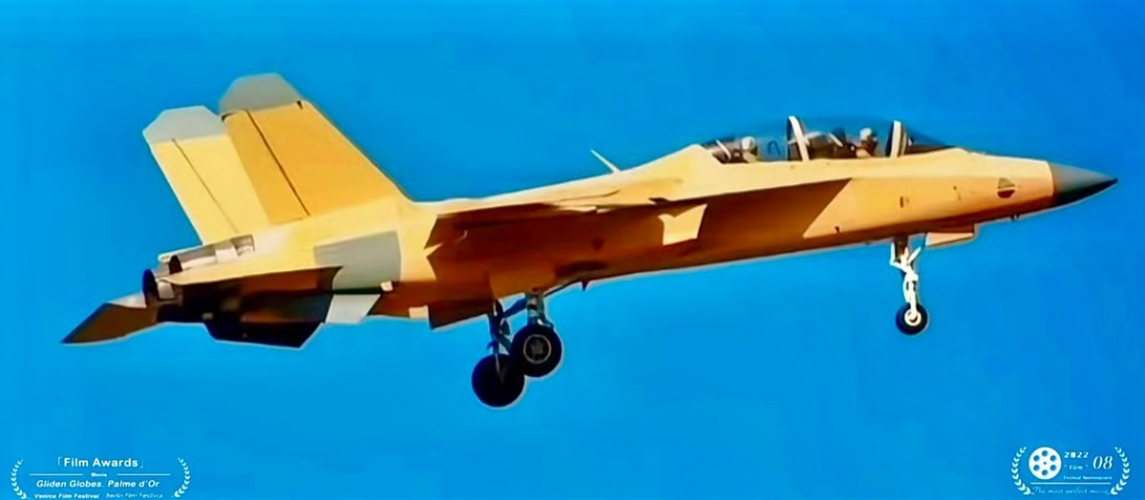
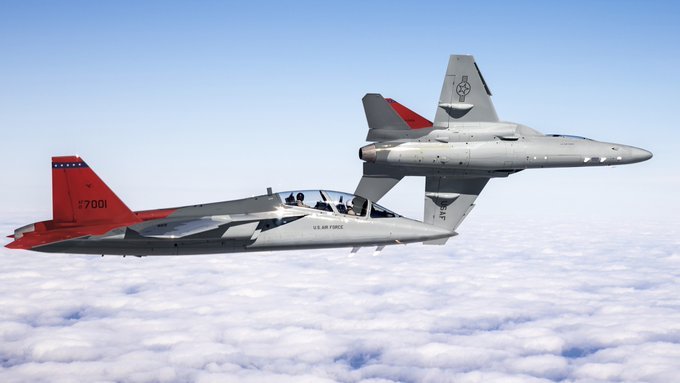
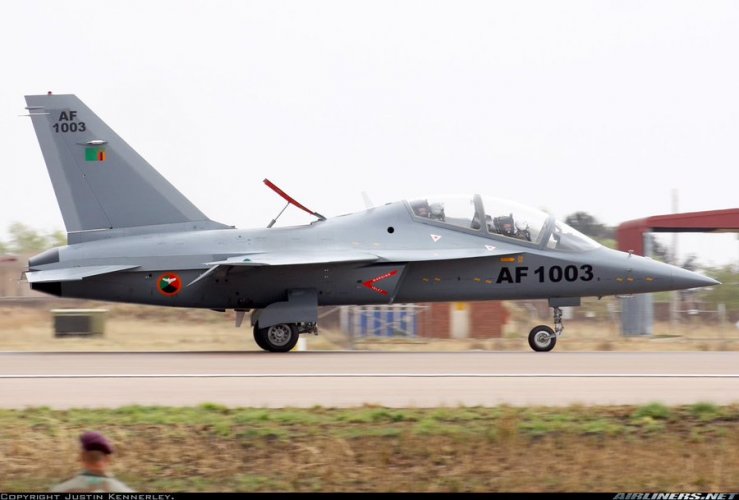
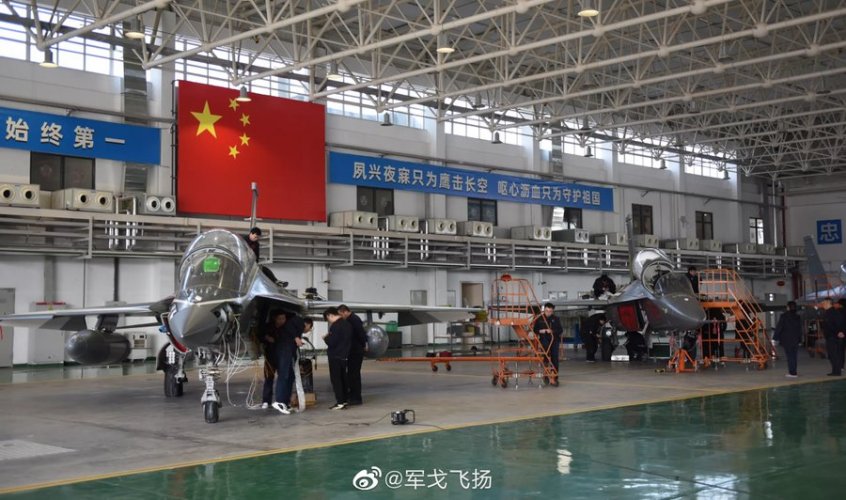
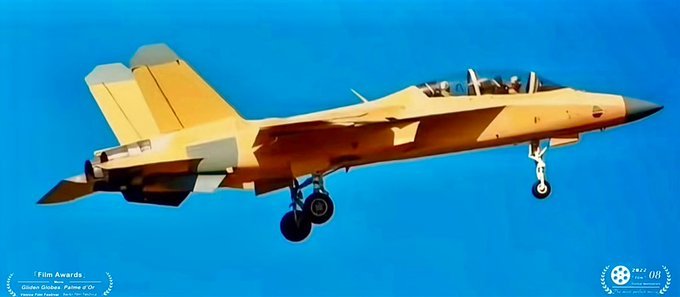
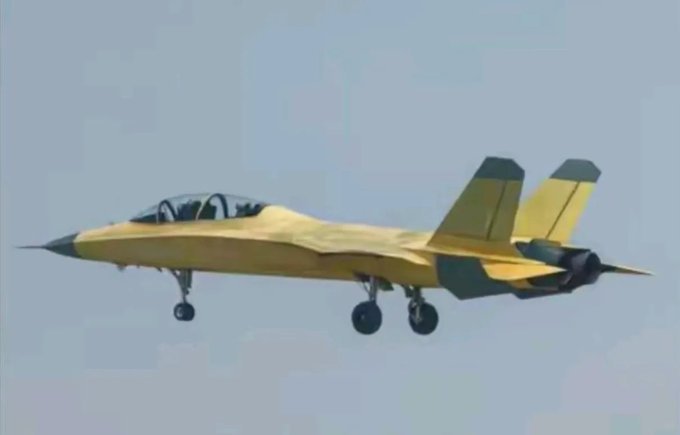
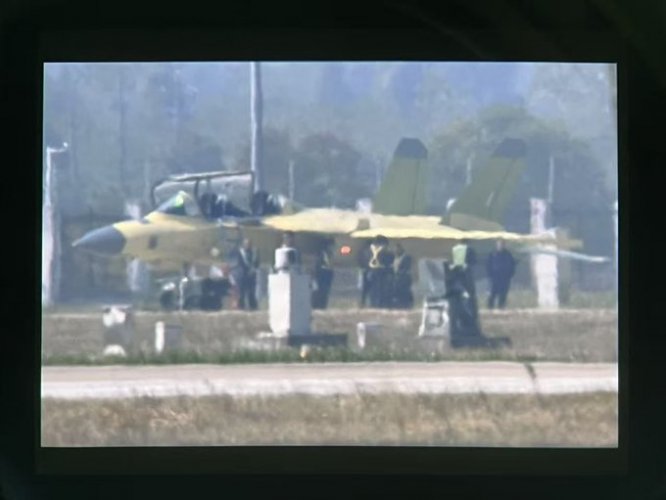
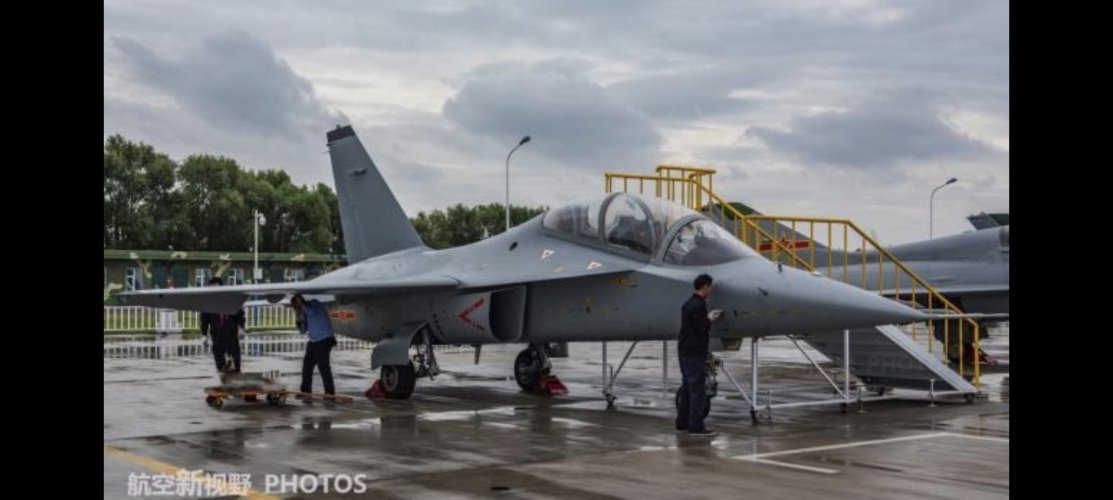
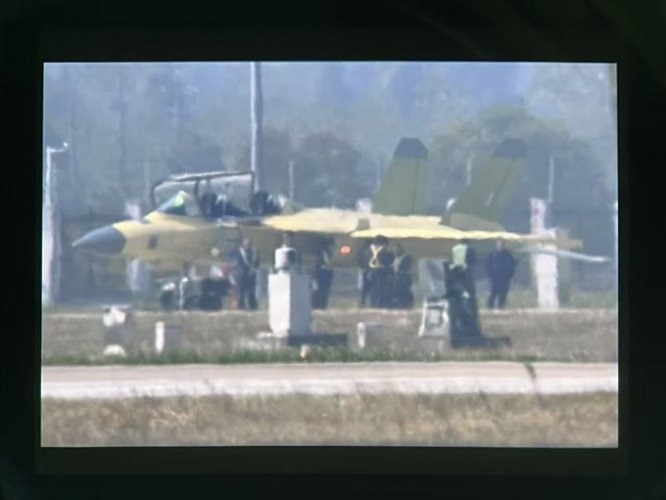
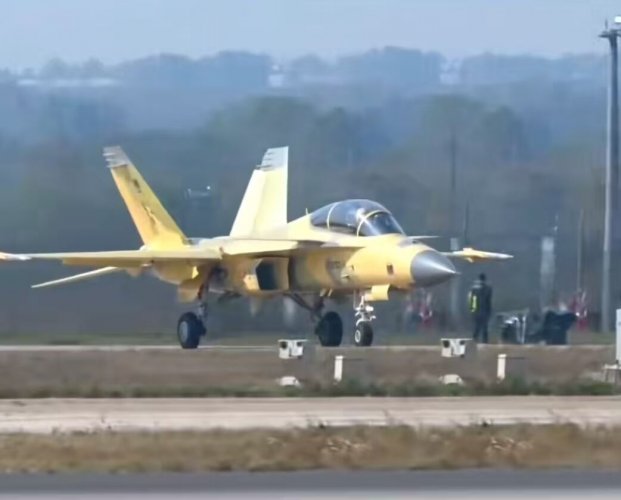
It does look to be less stepped than the L-10. But it probably matters less if this is a LIFT (lead-in fighter trainer) rather than being used for advanced flying training (though even the T-7A looks to have slightly more staggered seating).
I wouldn't be surprised if a single-seat version of this doesn't appear at some point.
 
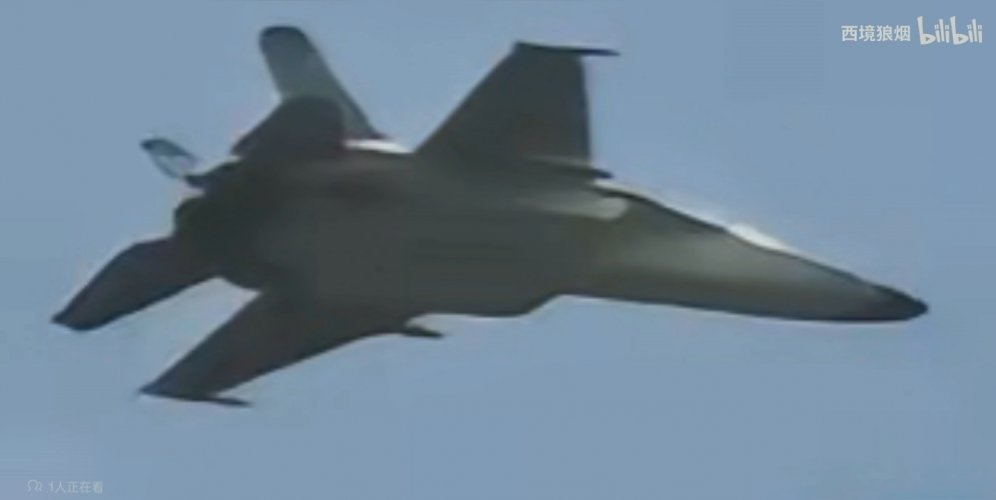
Looks like two distinctly different airframes. The nose-gear doors, wingtips and main landing gear are clearly different.


I don't think so! IMO both are not the original images - especially not the second one - and show heavy editing with AI up to the point were not only certain details are deleted (first image) but also where the wing is totally different (second one).
 
It seems baffling to me that the cockpit is not staggered in height like on other jet trainers.
Is it meant to favor aerodynamics sacrificing visibility for the back seater towards the front seat?
Perhaps the Helmet and what's built into it can compensate? Especially if this serves as a trainer to advanced Chinese 5th gens, it would make sense to utilize tech presumably used in these aircraft. The chinese have helmets comparable to the one used by F-35 pilots, no?
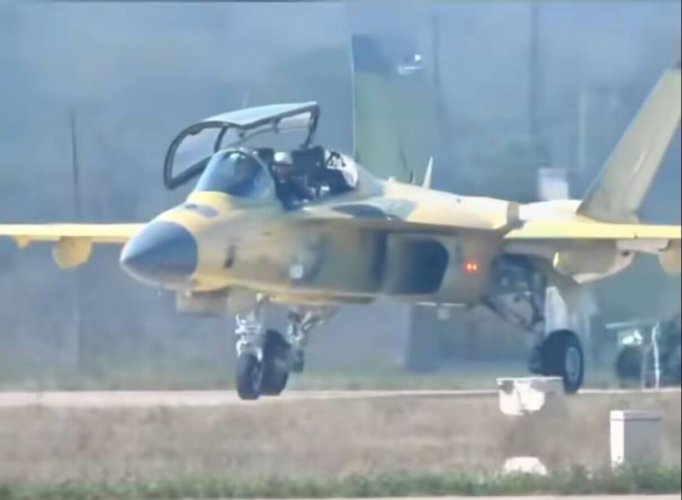
 
All I can say is the nose gear is not designed to be used off of a carrier. So unless they have other information, I would take the statement that it's for their navy with caution. It could just be an advanced supersonic trainer. Or, maybe they will use it for carrier training, but without trapping or launching like the USN is looking at doing now with the T-7.
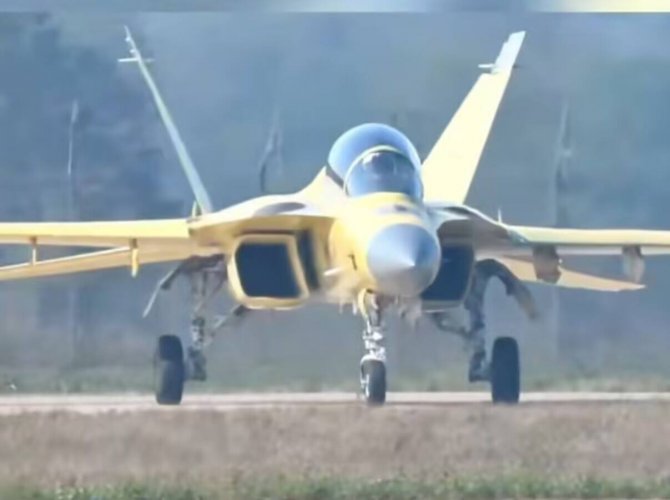
 
All I can say is the nose gear is not designed to be used off of a carrier. So unless they have other information, I would take the statement that it's for their navy with caution. It could just be an advanced supersonic trainer. Or, maybe they will use it for carrier training, but without trapping or launching like the USN is looking at doing now with the T-7.

makes me wonder if the PLAN aircraft have some kind of system similar to Magic Carpet, used on the F-35 and Super Hornet.
 
It's probable that a staggered cockpit might have induced severe buffeting on the tails at high AoA. Remember that the twin tails were certainly chosen right for expanding the flight domain there (as various configuration choices).

I would guess it an advanced trainer and adversary platform for the PLAN.
 
Last edited:
It's probable that a staggered cockpit might have induced severe buffeting on the tails at high AoA.
I understand that might have been a possibility, but the thing that surprises me is that the frontal part of the cockpit is deliberately raised from the nose OML.
It's very visible in the picture Tomboy posted in the previous page, the part I'm referring to is the bump before the front canopy.
So...they could have gone with having more height between the two seats (had they wanted to) without changing the external shape of the aircraft, but instead they decided to have a raised front seater.

Maybe for better visibility during carrier approach at high AOA...?
Maybe for freeing more space in the nose to put more sensors in there...?

Perhaps the Helmet and what's built into it can compensate?
I don't know.
Maybe?
It's not something that I would expect for a trainer though.

I just get the impression that there is "a lot of aircraft" for this being simply a trainer, even an advanced one.
A bit like what's happening with the J-36, I fear we might be putting too much focus into fitting these aircraft into the categories we've gotten used to deal with in the past (interceptor, fighter, regional bomber, trainer, etc.) and we might not be realizing that they could be conceptually new in their use and scope.

I think I'll need some more time (and footage) to be fully convinced that this is just a trainer and not something like (just to make an example) the low component of a Hi-Low mix force on an aircraft carrier.
 
I don't know.
Maybe?
It's not something that I would expect for a trainer though.

I just get the impression that there is "a lot of aircraft" for this being simply a trainer, even an advanced one.
A bit like what's happening with the J-36, I fear we might be putting too much focus into fitting these aircraft into the categories we've gotten used to deal with in the past (interceptor, fighter, regional bomber, trainer, etc.) and we might not be realizing that they could be conceptually new in their use and scope.

I think I'll need some more time (and footage) to be fully convinced that this is just a trainer and not something like (just to make an example) the low component of a Hi-Low mix force on an aircraft carrier.
I've heard something about PLAAF wanting this to also be a opfor aircraft as well. Another reason could be that JL-10 is relatively old and has poor supersonic performance while JL-9 is single engined and still basically a highly modified MiG-21, this is why PLAAF resorts to using J-10S and J-11BS for advanced training and opfor. It isn't optimal as J-10S and J-11BS are fully fledged fighter and isn't cheap to operate but they are also quite old and doesn't have the latest radar technology and avionics. So I suspect this new trainer is meant to be a two in one replacement for both J-10S/11BS and JL-10/9 by combining the glass cockpit of JL-10 and the flight performance of J-10S/11BS.

It could also potentially sell like a hotcake in SEA, African and Middle Eastern nations as basically a budget KF-21. It would be interesting if they either come out with a upgrade package to turn it into a single seater like the F-50 package for FA-50 or build a dedicated light fighter variant but I guess it depends on how much interest there is from foreign customers.
 
I understand that might have been a possibility, but the thing that surprises me is that the frontal part of the cockpit is deliberately raised from the nose OML.
It's very visible in the picture Tomboy posted in the previous page, the part I'm referring to is the bump before the front canopy.
So...they could have gone with having more height between the two seats (had they wanted to) without changing the external shape of the aircraft, but instead they decided to have a raised front seater.

Maybe for better visibility during carrier approach at high AOA...?
Maybe for freeing more space in the nose to put more sensors in there...?

Have you looked at it in regard to transonic drag?
 
Have you looked at it in regard to transonic drag?
If I were able to visualize transonic drag from a picture, I think I'd probably be somewhere else rather than on the internet posting mediocre renderings of aircraft projects:p

That position is already occupied by the J-15
I don't consider a J-15 to be the low mix for anything really.

So I suspect this new trainer is meant to be a two in one replacement for both J-10S/11BS and JL-10/9 by combining the glass cockpit of JL-10 and the flight performance of J-10S/11BS.
I think this is what makes the most sense so far, all in all considered. Thank you!
 
Well, it´s not that difficult. You have a wedged trapezoidal expending frontal volume ending with the apex of the LERX that starts at the front pilot position, just like an F-16B. Just like the latter the canopy bubble is raised in the front position...
 
I don't consider a J-15 to be the low mix for anything really.
Compared to the J-35? It is, just like the SHs are compared to the F-35C.

And the J-35 is closer to service entry than the Hongdu jet. And I don't see much reason for a Hi/Mid/Lo airwing with all three.
 
Compared to the J-35? It is, just like the SHs are compared to the F-35C.
More like "new - old" mix rather than "high - low mix".

For some years the US Navy ran F-14 Tomcats alongside older F4 Phantoms simply because they didn't have enough Tomcats to replace Phantoms. They also had to fly f-18s on Midway class carriers because the Tomcats wouldn't fit operationally, ( if I'm remembering my Navy history correctly).

I realized neither of these situations is a direct Corollary.
 
Another image of Hongdu's new twin-engined, twin-tailed jet trainer (JL-X // JL-15 ???) ... but is it real or again AI enhanced?

View attachment 794197
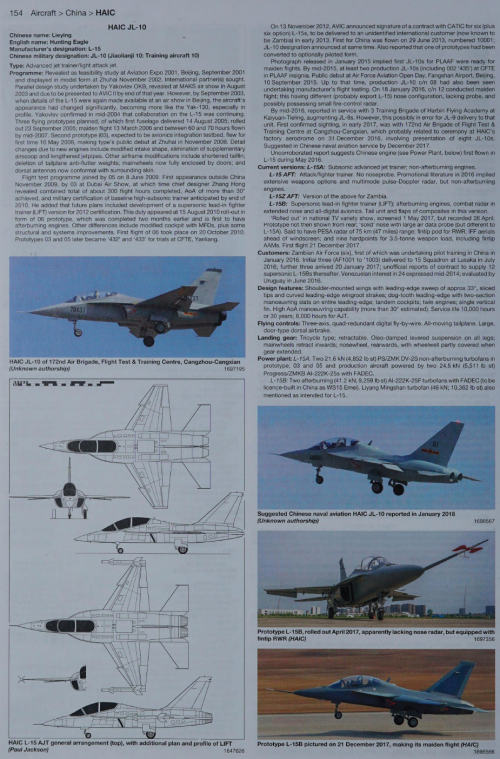
I mean, sure, it’s based on the existing JL-10 design, but this goes well beyond what I’d call an extensive redesign. I really wonder why they didn’t opt for a single WS-21 instead of twin 1/2-thrust-class engines, especially since it no longer shares the same engine as the JL-10 anyway.
 
I mean, sure, it’s based on the existing JL-10 design, but this goes well beyond what I’d call an extensive redesign. I really wonder why they didn’t opt for a single WS-21 instead of twin 1/2-thrust-class engines, especially since it no longer shares the same engine as the JL-10 anyway.
Because all Chinese fighter are twin engined
 
1000009956.jpg
Hmm, it looks like a Chinese-made FA-18, except it's smaller, let's just call it the Little Bee. Obviously, it's a trainer plane, but in some ways, its RCS has been reduced. In the future, there might be some used for training on Chinese aircraft carriers. Of course, for some countries, using this kind of plane is actually more cost-effective.
 
Some speculate it was designed as an attack aircraft, but personally, I found it fits the U.S. MR-X requirements nicely. It's considerably larger than the L-15, and its stealth capabilities are probably superior to any existing fourth gen fighters, even the KF-21. What's more, its radome is significantly bigger than those of regular trainer jets.
 
The demand for this kind of fighter jet in China is not very high, so it’s reasonable to guess that this is a cost-effective fighter aimed at countries that don’t have a very big budget.
 
I don't think this aircraft has any advantages in terms of exports compared to the Jf-17 and the J-10. On the contrary, I believe it was built to meet the needs of the PLA Air Force. A mature sixth generation aircraft system leaves no suitable position for fifth generation aircraft,there is a necessity for second line fighter jets that come at a significantly lower cost compared to fifth generation aircraft like J-20.
 
This new jet has a significantly larger fuselage and radome compared to the T7A and L15,I don't believe a pure LIFT aircraft requires such a large footprint, nor does it need a diamond shaped nose and canted vertical tails. Furthermore, it features a non-staggered tandem cockpit layout,the stretched fuselage proportions, combined with the CARET inlet, also hint at a strong focus on high speed performance.

I’m surprised people think it’s nothing more than a LIFT aircraft.
 

Attachments

  • T-7A boeing - Search  X.jpg
    T-7A boeing - Search X.jpg
    31.5 KB · Views: 24
  • fromRupprechtDeino L-15 - Search  X(1).jpg
    fromRupprechtDeino L-15 - Search X(1).jpg
    63.8 KB · Views: 29
  • fromRupprechtDeino JL-10 - Search  X.jpg
    fromRupprechtDeino JL-10 - Search X.jpg
    116 KB · Views: 40
  • fromRupprechtDeino trainer - Search  X.jpg
    fromRupprechtDeino trainer - Search X.jpg
    24.8 KB · Views: 42
  • fromRupprechtDeino trainer - Search  X(1).jpg
    fromRupprechtDeino trainer - Search X(1).jpg
    15 KB · Views: 43
  • fromRupprechtDeino trainer - Search  X(2).jpg
    fromRupprechtDeino trainer - Search X(2).jpg
    37.1 KB · Views: 46
Last edited:
It’s not that much larger than the other supersonic LIFTs. It’s still a small aircraft as you can see from the cockpit size.

Then “stealth” features such as the angled frontal fuselage don’t really mean much as the rest of the aircraft has plenty of non stealth features as well. Note that the yak-130 prototype with Alena also had a similar frontal fuselage as well as the proposed EADS Mako. Neither aircraft were considered anything more than a trainer aircraft with some light combat potential.
 
It is basically in the same class as the JF-17 and the Gripen, and in terms of proportions, it's actually quite a bit larger than other trainers. Pay attention to the cropped tips on the vertical tails. You could argue that we can't judge RCS just by eyeballing it, but this is a clear indicator that Hongdu takes its stealth seriously,and its radome is very likely no smaller than that of the Rafale.
 
Last edited:
It probably looks longer to you due to the smaller vertical tail fins, compared to the single large ones like those on the yak-130/m-346/jl-15 etc

Otherwise the aircraft looks like a 4th gen supersonic trainer with light combat abilities and some stealth like shaping. However it has rather standard wings, it’s too small to have an internal bay or even a semi recessed bay, and so far from these early pics, no major serration. This is not so different from the Mako.

In addition not sure about the claims about the PLAAF needing it either, at least for combat roles. They did not adopt the if-17, and have unveiled a number of unmanned aircraft that are likely larger than this plane.
 
No, this aircraft is clearly taller and longer. What I mean is, to hit the sweet spot of stealth performance relative to cost, you certainly can't and shouldn't demand an internal weapons bay. However, basic stealth performance does require outward canted twin vertical stabilizers,the trainer examples you cited don't meet that criterion. As I said before, it fits the MF-X program's requirements quite well. US should be regretting that the F-16 isn't a twin-tail design; otherwise, they could have developed a stealth variant the way they did with the F/A-18 and F-15. But those two are obviously too large for the MF-X program.

Unlike most people on this forum, I don't find the MF-X requirements strange. As I mentioned earlier, there's no suitable role for fifth generation fighters within a sixth generation system. The J-20 and F-35 will both become second-line fighters once the sixth generation system matures around 2040 or 2050. Rather than overproducing them, it would be better to develop a new, low-cost, modern light aircraft with a certain degree of stealth capability to take on second line duties. For China, the single tail J-10C is equally unsuitable, not to mention the JF-17.

My speculation regarding the specific application of this aircraft is just a guess, so there's no need to read too much into it. But I'm quite certain that it's clearly more than just a trainer.
 

Attachments

  • Screenshot_2026-06-17-10-02-01-146_com.miui.gallery.jpg
    Screenshot_2026-06-17-10-02-01-146_com.miui.gallery.jpg
    795.9 KB · Views: 44
  • fromRupprechtDeino trainer - Search  X(2).jpg
    fromRupprechtDeino trainer - Search X(2).jpg
    37.1 KB · Views: 53
Last edited:
US should be regretting that the F-16 isn't a twin-tail design; otherwise, they could have developed a stealth variant the way they did with the F/A-18 and F-15. But those two are obviously too large for the MF-X program.
It isn't obvious twin tails are super significant at these signature levels. And single tail is just not a valid reason to develop a whole new jet.

But this one is substantially larger, and it can be a defensive two seater (light fighter-bomber and drone controller) of some kind.

Whatever the case, it's a bit hard to justify LIFT when Hongdu already have their version of world's most successful LIFT, and it's LIFTier than the rest...
 
Have to say, it has some JL-9 vibes in its frontal section.
Also, if AI enhancement doesn't lie, it at least has MAWS, if not full EODAS.
 

Similar threads

Back
Top Bottom