Syria and Ukraine are not on par opponents. In Syria there was no relevant opposing air defense and Ukraine has predominantly equipment from the eighties, be it soviet era equipment or donated 50 years old fighters or air defense systems. Against a more modern NATO or chinese opponent these Sukhois would really struggle to perform their missions and stay alive.
One more thing to consider is the fact that a F-35A costs around 80 millions dollars, a similar price with what is being paid for a Su-34, which is a generation older. So there is no advantage in the ability to field superior numbers either.
For one, Ukraine fields top of the line NATO GBAD, be it Patriot alongside all available types of missiles currently in use, NASAMS or IRIS-T SLM, which is seeing adoption here in Germany and across many other states predominantly in Europe for short and medium range air defense work. While the Americans and Europeans delivered several of their own Patriot batteries, including sizeable portions of their missile stockpiles. The only thing the west has left to give in that sense would be THAAD.
Furthermore they operated plenty of S-300 batteries and various forms of other soviet era air defense systems. In many ways Ukraine had at some points the strongest IADS umbrella outside of the US, China and Russia, certainly overshadowing the rest of Europe, the near East and even Israel (which couldn't effectively deal with technologically inferior Iranian SRBMs).
So no, your point is rather moot. Given that the Su-34 manages to be one of the most impactful systems of the entire Russo-Ukrainian War despite operating in an environment that's entirely hostile to it and essentially anything that flies. But electronic countermeasures, rarely flying alone or without being supported by AEW&C style aircraft or fighter and interceptors looking out for it make it possible for the aircraft to still deliver it's payload.
Now:
All of this is a very long explanation on why Ukraine had at points one of the largest air defense networks (which is caught in a cycle of constantly being picked apart and replenished until supplies run dry), why the Su-34 still managed to deliver (literally) and how there isn't any "more modern" land based NATO ground based air defense in service except perhaps THAAD and some SPAAG like Skyranger or other small scale stuff. Although in fairness, the Su-34 isn't meant to deal with that sort of stuff anyway. It launches munitions at stand off range in a cheap and effective manner. It's the job of the likes of Iskander-M, Lancer and Tornado-S to pick apart these SAM systems which are all inadequate to deal with them.
However:
This all is rather besides the point, because for whatever reason you still stuck with your nonsensical apples to oranges comparison. I.e. comparing a tactical bomber to fighter jets. As if these aren't two entirely different roles which are for the most part not really comparable. While there are aircraft that lean more heavily into the A2G niche, like the Super Hornet, Su-30, F-15E or Rafale, they're ultimately compromised by design to fulfill that role as effectively as a purpose built machine. Meanwhile the Su-34 is like a Tornado or F-111, just far more modern. Albeit Flanker based in some ways, it's very much an in depth redesign and borders on a new design reusing some existing components. An aircraft which would have been a next generation equivalent to the Su-34 would have been the A-12, which went nowhere. Or the A/F-X, which didn't leave the drawing board either. The F-117 may be a close analogue albeit rather crude by modern standards. Either way, an aircraft like the Su-34, and the the Su-34M and the hypothetical Su-34M2 and so on will retain a niche in their air forces for a long time because the combination of range, speed, payload capacity and maintenance friendliness is a selling point that never changes. While frontline survivability may decrease over time, it will them just carry longer range bombs and missiles. Ordnance too big to be used by expendable or stealthy unmanned aircraft that will succeed it and similar aircraft in their role. Seeing how long the Tornado or Su-24 stuck around despite being more compromised designs with their maintenence intensive variable sweep wings, it's not hard to imagine that an aircraft like the Su-34 which has many advantageous traits and is being continously modernized will remain active for a long time.
I'd think they don't expect much from them beyond special package deliveries. There's just no way to do frontline penetration more than a few times with force ratio available, not enough fighters.
Given how easily and readily VKS dropped flying beyond LOC, it wasn't their playcard anyway. If you see fullback reheating over blue territory in a peer conflict, congratulations - it's broken arrow time.
Although in fairness, the Su-34 isn't meant to deal with that sort of stuff anyway. It launches munitions at stand off range in a cheap and effective manner.
Huge 45t mtow aircraft, painstakingly developed around forcing a completely unsuitable airframe to be able to fly low and fast (still bad at it, but at least it can), is neither cheap nor effective. It's a medium bomber bombing treelines with 3 dudes.
Also, from what's known, offensively su-34 electronics are just hopeless (victim of 1990s without chance of redemption).
Delivery van wasn't the plan, it's how things turn out to be.
From what appears, the only actually successful plan of entire su-34 story is it managing EW/Elint/Recon pods.
Which is extremely important enabling capability, but does it really take an entire type and production run of over 200 aircraft?
And since the same can be said about su-30sm (another aircraft without very clear procurement role, and predictable subpar performance when compared to su-35s), situation is messy.
It isn't terribly bad (flankers do their assigned jobs either way, and not like Ukraine can do much about it), it is just messy, and entire force is several times weaker than it could've been.
And who knows, maybe a better arranged force with more capabilities here and there could just bruteforce things back in February 2022.
Yes, but neither US nor Israel use it, with exception of related but different seamine glide kit.
As such, all massive jdam strikes we see in middle east are delivered close and personal.
Until 2023, JDAM-ER were almost exclusively Australian weapon; now it's a bit broader, but by large it's mainly Australia and Ukraine. Au-Ua club!
I'm pretty sure that the PL-15 has advantages compared to the AIM-120D, or R-77-1 because it is slightly bigger missile with dual pulsed solid fuel rocket motor and active AESA seeker, so it should have more range and better target tracking properties due to the electronic radar scanning, resistance to jamming etc. I doubt that it will have the maneuverability of the R-77-1, but that it about it for the Russian missile.
R-77M on the other hand is also the bigger missile with similar propulsion and active AESA seeker with claimed range of about 200 km.
So my question is, how exactly the PL-15 is superior missile as others have claimed?
As far as I can tell, R-77M should also be more maneuverable missile since it has bigger lifting and control surfaces, and it should have better end game when the speed drops down at longer ranges.
PL-15 also has AESA seeker.
R-37M seem like it has bigger diameter so you probably can fit bigger antenna inside, and bigger lifting area probably mean it is more agile. On the other hand, PL-17 look to be quite long and thin so it seem like it will have better fineness ratio, much smaller wing probably reduce drag even more so it is likely the faster missile and can retain speed for longer period after burn out or if target dive to lower altitude
Which design philosophy is “better” is mostly speculative. For example: AIM-260 has half the lifting surface of AIM-120D, so it plausible that China designer (similar to USA) think that at terminal phase speed is more important than turn rate. Obviously neither you nor I have actually fired these missiles from a fighter in combat, so it’s hard to draw firm conclusions. Personally, I always prefer missile with load of lifting surface like AIM-174 and R-37. But then again, when I played semi simulated game like DCS or war thunder, terminal phase is mostly either beaming or diving to lower altitude to make missile runout of energy, I have never got the opportunity to "out turn" the missile because the terminal phase seem rather short. Sure, you can detect missile from quite far away with your RWR, but you not really trying to out turn them. You mostly just beaming them.
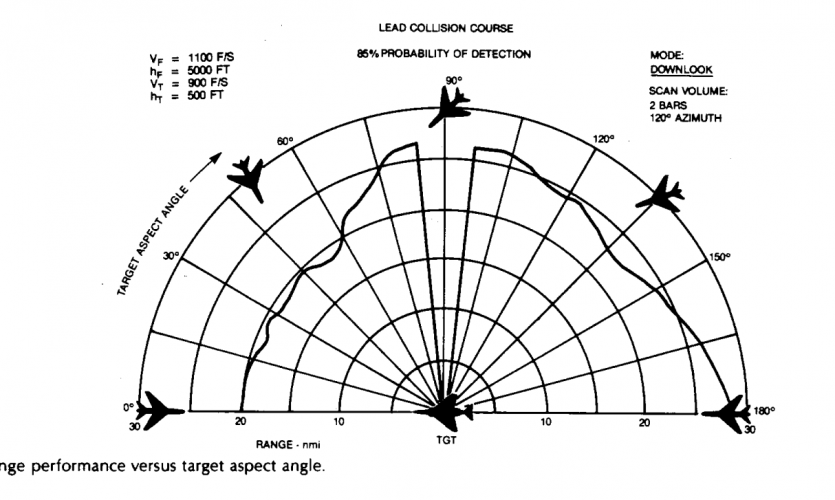
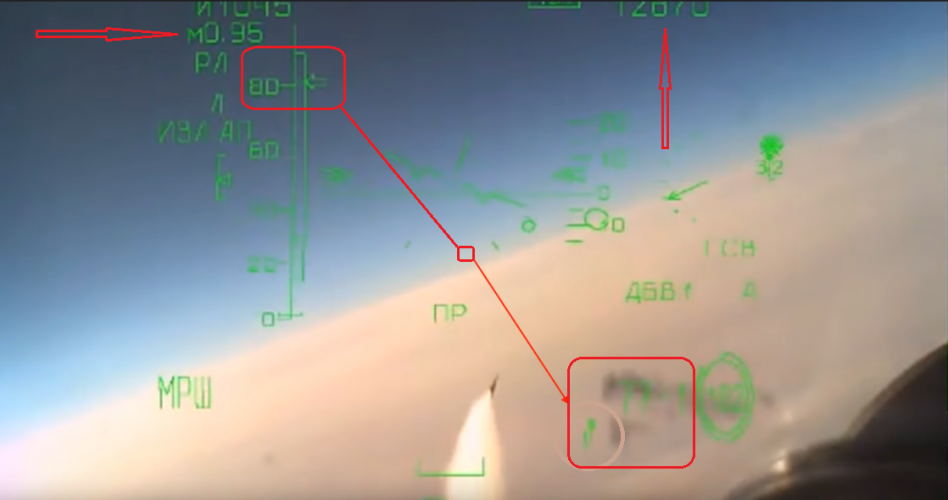
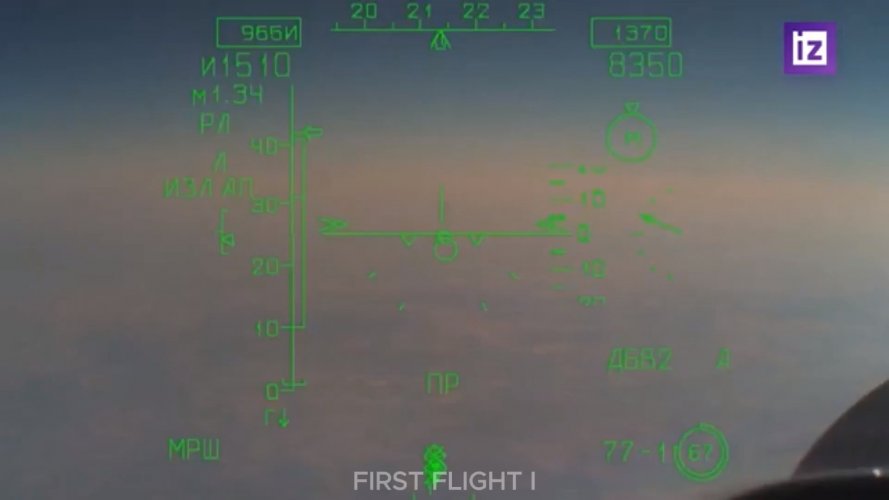
when you add the fact that the Su-35S radar has two times wider field of view, it is easy to understand how it can provide the missile midcourse guidance, while at the same time going away from the incoming missile (we have seen that from the HUD videos from the SMO engagements), and on the contrary, the J-16 needs to fly towards the incoming missile if it wants to provide the missile with the target update.
Agree, I think one of the biggest advantage of fighter like Su-35S, Eurofighter, Gripen-E is the fact that they can beaming while still guiding their missiles with their main FCR.
J-16 has inherited "flaws" of the two seater Flanker because the Russians wanted their Su-27UB trainer to have an elevated seating position so that trainee/operator would have superior field of view, and they also wanted to keep the same amount of fuel as the single seater, which would not be possible if they have opted for the F-15E type of layout.
Obvious downside is significant increase of the planes midsection, increased weight (on average the two seater is 1,2 tones heavier), and added weight in front of the CG.
All that has significantly reduced the overall flight performance of the plane where we have around Mach 0,35 reduction of the top speed, around 600 km reduction in range, reduction of acceleration, climb rate, service ceiling, turn performance etc.
It is clear that the Su-35S has more potential for the BVR "cat and mouse" game, and among other things that is the main reason F-22 is capable of dominating the F-35 in BVR fight (according to the F-22 pilots), simply by superior kinematics!
To be honest, I think the gap in kinematic between F-22 and F-35 is far greater than the gap between J-16 and Su-35.
Because F-22 and F-35 are both stealth aircraft, they are likely detect one another from relatively short distance well within the missile's no escape zone. In such an engagement, F-22’s significant advantages in speed (Mach 1.7 versus Mach 0.85) and altitude (60,000 feet versus 45,000 feet) would allow its missile to reach the target first.
By contrast, Su-35S and J-16 are both conventional aircraft with very powerful radar. They likely detect one another from beyond the NEZ of their missile. This gives both pilots a considerable window of time to accelerate, climb, or maneuver before committing to a missile launch. This likely reduce the important of things like acceleration.
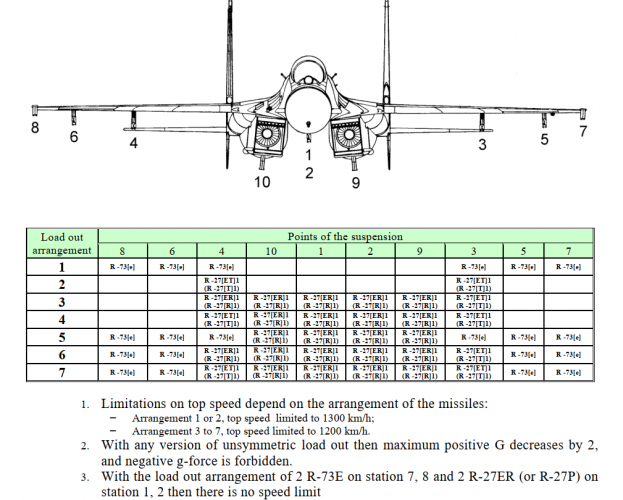
As for top speed, yes, top speed of clean Su-27 is greater than a clean Su-27UB by some margin. However, these aircraft doesn't go to war empty. When loaded with many missiles, their placard limit is much lower than their top speed so I don't think there is significant different in top speed between Su-35 vs either J-16 or J-15 when they are loaded
Now, you are hugely oversimplifying Russian accomplishments since the Ukraine pilots are tactically well versed and on international exercises they were able to score kills against the US F-15C in both BVR and WVR, and they are flying under the cover of some of the best SAM systems and ground jamming systems, both of Soviet and Western origin. Add to that the fact that the West is providing the ISR (Intelligence, Surveillance, and Reconnaissance) 24/7, and you can see that the Russians are facing the opponent US/NATO never did, and China basically doesn't have any experience of the sort!
Almost all 200+ km kills are done under very difficult conditions where the targeting planes were trying to disengage or escape flying extremely low, which means that the jet/missile radars had to work against the ground clutter and hit the small, fighter sized targets, and at the same time the Russian plane was in a danger of being shot by the SAM's.
Up to date, no one has achieved such a long range kills in high intensity conflict!
Personally, I find Pakistan’s performance against India during Operation Sindoor more impressive than what Russia has achieved against Ukraine.
In the skirmish between India and Pakistan, a total of 114 aircraft were involved, with 72 from Indian Air Force and 42 from Pakistan Air Force, meaning India actually had numerical superiority in the biggest air battle since WW II. India also enjoyed support from its S-400 systems, and its frontline fighters such as the Rafale and Su30-MKI are significantly newer and more capable than Ukraine’s F-16A/B, Su-27P and Mig-29 (I highly doubt their primitive RWR can even detect R-37 and Irbis-e signal).
By contrast, Russian Air Force greatly outnumbers Ukraine both in the air and through its dense network of S-400 and Buk air defense systems, which should exceed Ukraine’s limited number of Patriot batteries. Ukrainian pilots not only face a much larger and better equipped opponent but also lack the ability to strike back effectively, as they do not possess long range air to air missiles like Meteor.
Ukraines have the F-16 with the AIM-120, but they make absolutely no difference, and they know it. Russians planes are far superior in BVR realm for such types of jets.
Ukraine operate F-16A/B and F-16 MLU which still use the ancient mechanical APG-66 radar and AIM-120A/B or C-5. They are just too old to be compared with Su-35S and J-16 which operate PESA/AESA radar.
That said, there was at least one reported case where a Ukrainian F-16 successfully shot down a Su-35S , reportedly through a coordinated ambush supported by a Swedish AWACS. However, this doesn’t mean F-16 MLU is superior to Su-35S. It simply illustrates that an aircraft’s technical capabilities are only one factor in air combat, tactics, coordination, and combined arms integration can be equally decisive if not more.
From what I heard, PL-17 were supposed to fit inside J-36 and J-50
R-37M seem like it has bigger diameter so you probably can fit bigger antenna inside, and bigger lifting area probably mean it is more agile.
As far as I know, further investigation of the alleged Su-30MKI wreckage has shown that it was in fact the indian Mig-29 that was shot down, not the Su-30MKI
Allegedly launching a long range babushka armed with a pickle jar at said Su-35 and destroying it on a subatomic level. This is the level of credibility we're talking about with regards to such...reports.
Allegedly launching a long range babushka armed with a pickle jar at said Su-35 and destroying it on a subatomic level. This is the level of credibility we're talking about with regards to such...reports.
the Su-35 certainly did get shootdown and they did get a video of its wreckage, not even Russia tried to deny that. You can pretend like those wreckage didn't exist but they do.
Besides, we also known that in another occasion Magura-7 USV drone boat successfully shoot down Su-30 with AIM-9M, so frankly, I don't find it so outrageous that an F-16 with AWACS guidance can achieve a sneak attack. The point is not that these Su-30, Su-35 are bad or anything. The point is that no military weapon is invincible and tactic is also very important, even more so than the exact technical specification
I don’t think military bloggers have any more reliable information about what actually happened than the average forum user here. Besides, we’ve already seen people discussing the incident on YouTube and X. Honestly though, after nearly four years of fighting, an F-16 shooting down a Su-35 with AWACS support isn’t exactly headline news anymore, certainly not compared to events like the sinking of the Moskva or the FPV attacks on Tu-22 and Tu-95 bombers, hell even the shotdown of Su-30 by USV is far more unique
I don’t think military bloggers have any more reliable information about what actually happened than the average forum user here. Besides, we’ve already seen people discussing the incident on YouTube and X. Honestly though, after nearly four years of fighting, an F-16 shooting down a Su-35 with AWACS support isn’t exactly headline news anymore, certainly not compared to events like the sinking of the Moskva or the FPV attacks on Tu-22 and Tu-95 bombers, hell even the shotdown of Su-30 by USV is far more unique
Well actually, the shoot down event itself is confirmed as there was indeed a wreckage of Su-35, the question is only which weapon was used. In case of the FPV attack on Tu-95/Tu-22 and the shotdown of Su-30SM by Magura-7 USV drone boat. Confirmation is simple because they both have HD camera and the engagement happened at very close range. This case actually quite similar to the sinking of flag ship Moskva. Ukraine source said they used Neptune missile while Russian sources at the time claimed sailors smoke and caused a fire that reached the ammunition storage that lead to explosion. The engagement happened beyond visual range so we didn’t have video evidence, it hard to reach a firm conclusion and each side is entitled to their opinion. This case would be quite similar, if it is a sneak attack with AWACS and AMRAAM, it very unlikely that they could provide a video of the engagement.
Agree, I think one of the biggest advantage of fighter like Su-35S, Eurofighter, Gripen-E is the fact that they can beaming while still guiding their missiles with their main FCR.
One thing .Fighter's radar has nothing to do with AAM guidance 'cause they have inertial + ARH/PRH or SARH or combined ARH/SARH ( homing or guidance) like new R-37M and R-77-1 ( of course in the terminal phase). Only thing that radar can do after AAM launch is tracking and illuminating engaged target/s. There is also posibility of using RC-channel ( mid-course update) for correcting AAM flight path.
Only first gen AAM were radar guided ,guided by the fighter's radar beam.
India also enjoyed support from its S-400 systems, and its frontline fighters such as the Rafale and Su30-MKI are significantly newer and more capable than Ukraine’s F-16A/B, Su-27P and Mig-29 (I highly doubt their primitive RWR can even detect R-37 and Irbis-e signal).
R-37M and R-77-1 have dual band radar seekers where ARH mode works in Ku-band ( 12-18GHz).SPO-15LM can only register radar signals in the 4-10GHz frequency spectrum.
That said, there was at least one reported case where a Ukrainian F-16 successfully shot down a Su-35S , reportedly through a coordinated ambush supported by a Swedish AWACS.
In no case something like that would happen. Su-35S always fly/patrol in the stratosphere and above the zone controlled by the Russian Armed/ground Forces.War propaganda is somethnig else.What kind of ambush with Swedish Saab 340 AEW&C when they fly so far from the frontline and when RuA&SF fighters like Su-30SM,Su-35S an MiG-31BM carry very long range AAM R-37M. Ukr fighters are flying so low to stay hidden and not to be detected. Only perform climbs in the situation of bomb releasing.Don't forget what happened with two Russian A-50U. Ambushes can only be accomplished by SAM's( so called SAMbush) because launchers can be hidden closer to frontline and wait there for days to act. Something like that happened to one Su-35S together with one Su-34 on 13 May 2023 also to several Su-34's on 22 Dec 2024. Eight Su-35S were shot down so far, first was shot on 3 April 2022,all of them with SAM's ( Russian or Ukr).
I'd like to imagine that I would have heard about such an incident from Fighterbomber, one of the most trustworthy sources on VKS operations and losses. But maybe I did and just forgot, but I find it hard to imagine that I would have forgotten such an occasion.
I also find it hard to believe that Ukraine would be able to operate the Saab AWACS in their own air space, given the threat of Su-35s, MiG-31s and Su-57s armed with R-37Ms waiting for such an opportunity. And operating such an aircraft over allied countries would decrease it's effectiveness vastly, especially against a Su-35 that operates usually behind Russian lines and occasionally closer to the frontline itself.
Seems like another Ghost of Kiev style story in order to boost morale and foreign support to me.
That's pretty much the state of affairs I'm aware of as well.
For comparison the shoot down of the Su-30SM over the black sea has been publicized by both sides and FB also made a post about it back then. There is no trouble admitting something happens, when it actually happened. Which isn't always the case, as in this instance. Not to mention that F-16s and their lackluster armament would have tremendous trouble to engage anything above Kursk before being engaged by SAM or interceptors. If a Su-35 was lost there, then the cause is almost certainly Ukrainian AD which also plagued other assets of the VKS during the Kursk incursion before the GBAD brought there melted away over time.
One thing .Fighter's radar has nothing to do with AAM guidance 'cause they have inertial + ARH/PRH or SARH or combined ARH/SARH ( homing or guidance) like new R-37M and R-77-1 ( of course in the terminal phase). Only thing that radar can do after AAM launch is tracking and illuminating engaged target/s. There is also posibility of using RC-channel ( mid-course update) for correcting AAM flight path.
Only first gen AAM were radar guided ,guided by the fighter's radar beam.
In no case something like that would happen. Su-35S always fly/patrol in the stratosphere and above the zone controlled by the Russian Armed/ground Forces.War propaganda is somethnig else.What kind of ambush with Swedish Saab 340 AEW&C when they fly so far from the frontline and when RuA&SF fighters like Su-30SM,Su-35S an MiG-31BM carry very long range AAM R-37M. Ukr fighters are flying so low to stay hidden and not to be detected. Only perform climbs in the situation of bomb releasing.Don't forget what happened with two Russian A-50U. Ambushes can only be accomplished by SAM's( so called SAMbush) because launchers can be hidden closer to frontline and wait there for days to act. Something like that happened to one Su-35S together with one Su-34 on 13 May 2023 also to several Su-34's on 22 Dec 2024. Eight Su-35S were shot down so far, first was shot on 3 April 2022,all of them with SAM's ( Russian or Ukr).
With the amount of SAM which both side have, I don’t think Su-35 could always be patrol in the stratosphere. Also, unlike Mig-31, these Su-35 are also sometime tasked with other mission like SEAD or CAS.
An AWACS like Saab 340 likely able to detect Su-35 from beyond range of R-37M, besides, MALD from Ukraine fighters could act as distraction as well.
That high lighted part is “guiding missile with radar”
With the amount of SAM which both side have, I don’t think Su-35 could always be patrol in the stratosphere. Also, unlike Mig-31, these Su-35 are also sometime tasked with other mission like SEAD or CAS.
An AWACS like Saab 340 likely able to detect Su-35 from beyond range of R-37M, besides, MALD from Ukraine fighters could act as distraction as well.
No it is not beacuse modern AAM's have first : inertial guidance with mathematically modeled flight path and with proportional closing to target,second : they have as we know SARH ,PRH or ARH or guidance in the terminal phase or combined two of them.Fighter's radar can only help to correct their flight-path and if needed to illuminate target in the terminal phase. Modern AAM are not like some e.g. laser beam guided ATGM's or as I wrote ,radar beam guided AAM's from the 50's/60's.
Citation:
''Over longer distances the missile is controlled by an inertial guidance auto pilot with occasional encoded data link updates from the launch aircraft's radar on changes in spatial position or G of the target.''
Yes ,we usually use to say/write 'radar guided AAM' or 'inertial+radar guided' but in the reality, AAM is not guided by the aircraft's radar.
About Su-35S ,take a look on possible YT videos,Su-35S always do patrol flights above 10km. PS890 AESA has max detection range 300-400km just like AAM type R-37M.
Which design philosophy is “better” is mostly speculative. For example: AIM-260 has half the lifting surface of AIM-120D, so it plausible that China designer (similar to USA) think that at terminal phase speed is more important than turn rate.
It's been speculated that the PL-17 / 21 and AIM260 may use thrust vectoring or off axis air thruster things (whatever they are called) to retain maneuverability in terminal phase. A third dimension here is that these missiles were designed for a very long range, hence the sleeker design.
like DCS or war thunder, terminal phase is mostly either beaming or diving to lower altitude to make missile runout of energy, I have never got the opportunity to "out turn" the missile because the terminal phase seem rather short.
I think the whole "out turn a missile" thing gives people the wrong idea. Typically, the fail safe maneuver both IRL and in DCS is working off a time table:
You push the track to gimbal limit and decrease altitude. By the time the missile is close to going active, you should be in denser air and beaming. You need to repeatedly turn (usually first by 100 - 120 degrees, then followed by 60 - 90 degree turns while reducing altitude) and extend to force the missile to pull lead on you. In DCS, the three main ARH missiles lose enough energy to be slower than you after 2 - 3 of these turn and extend maneuvers. This only doesn't work if you're still in the NEZ of the missile (which means you pushed too close, you didn't reduce altitude enough or you reduced altitude too fast).
Maneuverability and energy (speed) go hand in hand here but energy is imo the more important factor. Maneuverability may help you lose less speed during turns, but that's still debatable how much energy you are saving. Maneuverability for a missile usually comes in in two places - at the point of acquisition and close range maneuvering to close with the target.
If the seeker never loses lock, any maneuver you make is a small adjustment to a far away missile. By the time the missile gets close enough, you'd have to have superhuman instincts (or fly maneuvers that I don't know of) to know exactly when and how to maneuver to out jink the missile at the last second. If a missile has enough energy to close with you, chances are you aren't going to be able to escape it nowadays.
Acquisition / reacquisition to quickly maneuver to ensure target is in detection basket and missile is on trajectory. Might be useful against a stealth fighter but usually at that range, no amount of stealth is going to hide you from the seeker anyway.
However, if you've depleted it's energy sufficiently, it doesn't have the air speed or propulsion anymore to follow your turns even if it's seeker can still see you. Given better seekers and more advanced algorithms for guidance, I'm of the opinion that it's better pay off to have a high energy missile with medium maneuverability than to keep large draggy fins at the expense of space, drag, or speed.
With the amount of SAM which both side have, I don’t think Su-35 could always be patrol in the stratosphere. Also, unlike Mig-31, these Su-35 are also sometime tasked with other mission like SEAD or CAS.
They achieved first real A2A kill on 28 Feb 2022 when one MiG-29 pilot mistakenly shot down UkrAF Su-27 with R-27R ( its pilot was KIA).
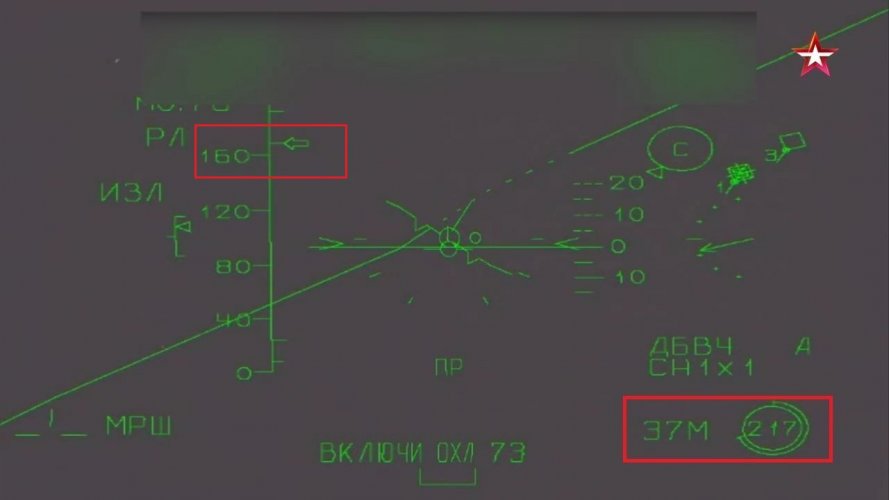
In this reportage, fighter-pilots told Aleksey Egorov about A2A combat tactics,also about SEAD/DEAD combat tactics.From 4:00 we can see sequencies through IKSh-1M when pilot engaged its target from about 160km with R-37M. One of them also told about possible new tactics against UkrAF F-16AM and even mentioned new AAM ( very possible it was about R-77M).
With the amount of SAM which both side have, I don’t think Su-35 could always be patrol in the stratosphere. Also, unlike Mig-31, these Su-35 are also sometime tasked with other mission like SEAD or CAS.
An AWACS like Saab 340 likely able to detect Su-35 from beyond range of R-37M, besides, MALD from Ukraine fighters could act as distraction as well.
One thing to consider is electronic warfare equipment and the direct involvement of US specialists in the programming the jammer pods specifically for the russian radars.
“Most reprogramming centers would have said ‘no way’ when approaching this challenge; it’s uncharted policy,” the 68th Electronic Warfare Squadron chief engineer, who was not named, said in the release.
The Air Force said it developed new processes and approaches to understand the EW system that is installed on the F-16s and reprogram it to counter against Russian threats. The improved system was then tested in a “partner-nation lab” along with “coalition teammates” according to the release. The aim was to “test and verify the unique elements required by the Ukrainians” of its F-16s."
"“One F-16 with a reprogrammed pod won’t achieve air dominance alone, but it may give you a pocket of air superiority for a moment’s time to achieve an objective that has strategic importance and impact,” the 68th Electronic Warfare Squadron’s director said in the release."
Russians/soviets always lagged massively in the development of electronics as compared with the US and european equipment. This was a constant situation since the Vietnam War. And the radar of the Su-35 is already 40 years old as design, not the latest technology. For example it is a PESA radar not an AESA like the latest western radars.
The clients have already complained about the weaknesses of the Su-35, including the radar. https://www.india.com/news/world/su...-putin-trying-to-sell-scrap-to-india-7926498/
"The military officer said that when the Egyptian Air Force conducted a technical examination of this aircraft, they found that the Irbis-E radar is technically weak. It is based on the old-fashioned PESA (Passive Electronically Scanned Array) technology. As compared to US’s F-35 and France’s Rafale, they use AESA (Active Electronically Scanned Array) radar.
Notably, AESA radar is considered more efficient because it is less prone to jamming during electronic warfare.
Apart from this, the Egyptian Air Force also found that the Su-35’s electronic warfare system is weak in comparison to modern warfare. As per the Egyptian Air Force this warfare system cannot withstand today’s electronic countermeasures."
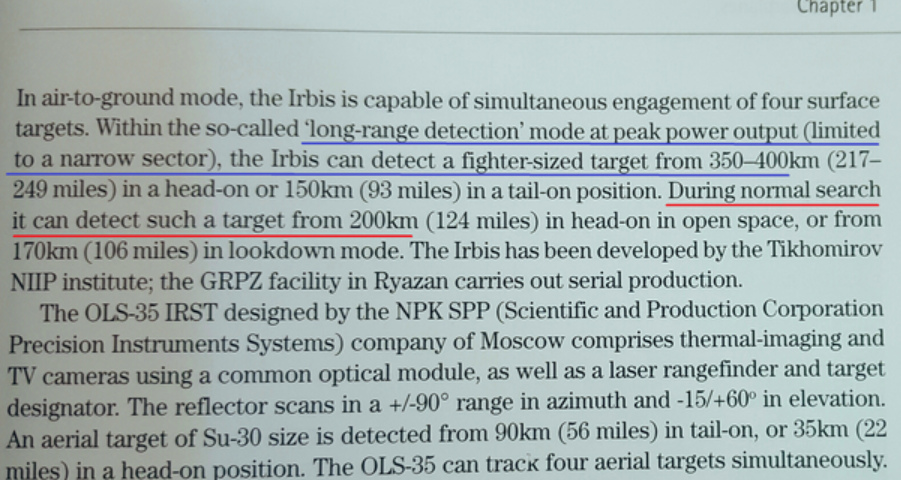
In real life, the stated 350-400km detection range of the Irbis-E radar is hard to achieve. It is measured when the Su-35 already knows the general direction of the incoming aircraft and focusses the radar in that particular slot of space. If you have an aircraft orbiting and generally scanning for targets the detection is half that range. If electronic warfare is involved the detection range would be even less. This situation can put the aircraft inside the enveloe of an Amraam missile.
One thing to consider is electronic warfare equipment and the direct involvement of US specialists in the programming the jammer pods specifically for the russian radars.
“Most reprogramming centers would have said ‘no way’ when approaching this challenge; it’s uncharted policy,” the 68th Electronic Warfare Squadron chief engineer, who was not named, said in the release.
The Air Force said it developed new processes and approaches to understand the EW system that is installed on the F-16s and reprogram it to counter against Russian threats. The improved system was then tested in a “partner-nation lab” along with “coalition teammates” according to the release. The aim was to “test and verify the unique elements required by the Ukrainians” of its F-16s."
"“One F-16 with a reprogrammed pod won’t achieve air dominance alone, but it may give you a pocket of air superiority for a moment’s time to achieve an objective that has strategic importance and impact,” the 68th Electronic Warfare Squadron’s director said in the release."
Russians/soviets always lagged massively in the development of electronics as compared with the US and european equipment. This was a constant situation since the Vietnam War. And the radar of the Su-35 is already 40 years old as design, not the latest technology. For example it is a PESA radar not an AESA like the latest western radars.
The clients have already complained about the weaknesses of the Su-35, including the radar. https://www.india.com/news/world/su...-putin-trying-to-sell-scrap-to-india-7926498/
"The military officer said that when the Egyptian Air Force conducted a technical examination of this aircraft, they found that the Irbis-E radar is technically weak. It is based on the old-fashioned PESA (Passive Electronically Scanned Array) technology. As compared to US’s F-35 and France’s Rafale, they use AESA (Active Electronically Scanned Array) radar.
Notably, AESA radar is considered more efficient because it is less prone to jamming during electronic warfare.
Apart from this, the Egyptian Air Force also found that the Su-35’s electronic warfare system is weak in comparison to modern warfare. As per the Egyptian Air Force this warfare system cannot withstand today’s electronic countermeasures."
In real life, the stated 350-400km detection range of the Irbis-E radar is hard to achieve. It is measured when the Su-35 already knows the general direction of the incoming aircraft and focusses the radar in that particular slot of space. If you have an aircraft orbiting and generally scanning for targets the detection is half that range. If electronic warfare is involved the detection range would be even less. This situation can put the aircraft inside the enveloe of an Amraam missile.
No it is not beacuse modern AAM's have first : inertial guidance with mathematically modeled flight path and with proportional closing to target,second : they have as we know SARH ,PRH or ARH or guidance in the terminal phase or combined two of them.Fighter's radar can only help to correct their flight-path and if needed to illuminate target in the terminal phase. Modern AAM are not like some e.g. laser beam guided ATGM's or as I wrote ,radar beam guided AAM's from the 50's/60's.
Citation:
''Over longer distances the missile is controlled by an inertial guidance auto pilot with occasional encoded data link updates from the launch aircraft's radar on changes in spatial position or G of the target.''
Yes ,we usually use to say/write 'radar guided AAM' or 'inertial+radar guided' but in the reality, AAM is not guided by the aircraft's radar.
Pure inertial guidance projects the target’s future position from data collected at launch, by itself, it is adequate only when the target’s motion is negligible or highly predictable. Fighter pilot, when aware of a missile launch events or a radar lock, will execute evasive and energy management maneuvers (for example: notching to break lock, dive down to lower altitude to deplete missile energy), these maneuver producing frequent and often abrupt changes in heading and altitude. So after your missile is launched, you should keep your radar lock/track as long as possible so that you can update your missile with the correct future position of target.
BVR missiles are often guided by Inertial + datalink in mid course.
Also, I have never said, modern AAM are the same as laser beam guided ATGM's or radar beam guided AAM's from the 50's/60's, I said aircraft with steerable aperture like Eurofighter, Su-35S, Gripen E can keep guiding their missiles toward target even while they are beaming. Guiding here mean they can keep track of target flight path and send datalink update to the missile.
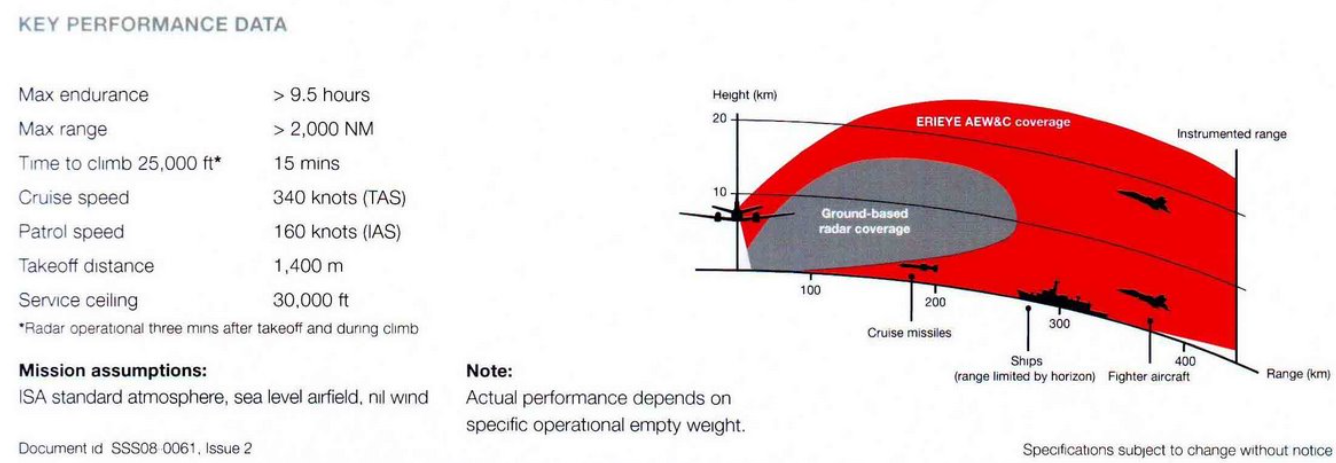
However, PS890 is a side looking radar. Which mean ERIEYE can track Su-35 while still notching Irbis-E radar at the same time. Due to Doppler effect, radar have the easiest time detect incoming (head on) targets, it quite harder for them to detect retreating (tail on) targets. And notching (beaming) target are extremely hard to detect because their return merged with surface return. Just because R-37M can have range nearly equal instrument range of PS890 doesn't mean Su-35 can detect a beaming ERIEYE at that distance.
Pure inertial guidance projects the target’s future position from data collected at launch, by itself, it is adequate only when the target’s motion is negligible or highly predictable. Fighter pilot, when aware of a missile launch events or a radar lock, will execute evasive and energy management maneuvers (for example: notching to break lock, dive down to lower altitude to deplete missile energy), these maneuver producing frequent and often abrupt changes in heading and altitude. So after your missile is launched, you should keep your radar lock/track as long as possible so that you can update your missile with the correct future position of target. BVR missiles are often guided by Inertial + datalink in mid course.
Also, I have never said, modern AAM are the same as laser beam guided ATGM's or radar beam guided AAM's from the 50's/60's, I said aircraft with steerable aperture like Eurofighter, Su-35S, Gripen E can keep guiding their missiles toward target even while they are beaming. Guiding here mean they can keep track of target flight path and send datalink update to the missile.
air patrol maybe but unlike Mig-31 it still does other role. Also, we don't have enough information of what distance these AMRAAM are launched either
However, PS890 is a side looking radar. Which mean ERIEYE can track Su-35 while still notching Irbis-E radar at the same time. Due to Doppler effect, radar have the easiest time detect incoming (head on) targets, it quite harder for them to detect retreating (tail on) targets. And notching (beaming) target are extremely hard to detect because their return merged with surface return. Just because R-37M can have range nearly equal instrument range of PS890 doesn't mean Su-35 can detect a beaming ERIEYE at that distance. View attachment 787255
Underlined is just what I wrote, AAM is guided by inertial system ( with or w/o using of RC channel) ,yes. It is not guided by the radar .Target's is /are only tracked or illuminate,that is the point.
As I wrote in the new N035 Irbis topic ,there is 'PPS' and 'PPS-DO' combat modes. PPS for the searching of wider FoV and PPS-DO for the searching of narower FoV. For both of them max detection distance is 400km.
In the PPS-DO mode ,N035 Irbis is capable to detect/track incoming MiG-21 from 400kms .Just like old mechanical N001V Myech in the Su-27SM and SM3. In the PPS-DO mode,it is capable of detecting/tracking incoming MiG-21 from 150kms but in the PPS mode only from 100kms. For both modes ,max detection distance is 150kms.
Here we can see 'PPS' combat mode ( HPRF working mode of the TWT) of the N011M Bars-M(R). Max detection distance on the scale from the left side is 400km ( 0-80-160-240-320-400). So how can N035 Irbis has only 200km max detection distance in the so-called 'normal search mode'-PPS ?
''several other magazines also reported that''
Nothing but war propaganda and some morale rising for the Ukrainians .
I may repeat myself here, but this is truly reminiscent of the Ghost of Kiev hoax, something Newsweek also reported on (but later edited their article after the hoax was exposed). If Ukraine managed to achieve an A2A victory, let alone with an F-16 donated to them, they would have made a huge circus about it. Because it would have been a genuine first for them after being relentlessly pummeled in the air since 2022. But given that nobody really jumped on the story at any scale and that FB laughed it off like other false claims previously, while posting about actual losses be it to enemy action or not, tells a very clear story.
Ultimately it's wishful thinking, especially given that the biggest headlines of Ukrainian F-16s (and Mirage 2000) so far has been them slamming into the ground and unceremoniously killing their hastily trained pilots who were put into these machines at such a disadvantage.
Locking is basically the radar narrow down the angular possition of targets by technique such as phase comparison monopulse or conical scan or sequential lobing. You can still lock targets after lauch, it just depend on how accurate you want the target position to be.
Underlined is just what I wrote, AAM is guided by inertial system ( with or w/o using of RC channel) ,yes. It is not guided by the radar .Target's is /are only tracked or illuminate,that is the point.
Missile is guided by radar because you need the radar to measure target position and trajectory so that you can update to the missile. Without the radar, and only rely on inertial system, your missile will miss the moment enemy decided to change course.
Also, it worth mention that air to air missiles, unlike air to ground missiles, does not use the tactical datalink. So for example: JSOW-C is guided by Link-16 (L-band) or UHF datalink. Whereas AMRAAM rely on encoded commands transmitted by the radar itself.
As I said before, similar to the case of the Moskva, we only know for certain that the aircraft indeed get shoot down. The rest is up to personal opinion because we don’t have video of the case
Locking is basically the radar narrow down the angular possition of targets by technique such as phase comparison monopulse or conical scan or sequential lobing. You can still lock targets after lauch, it just depend on how accurate you want the target position to be.
Missile is guided by radar because you need the radar to measure target position and trajectory so that you can update to the missile. Without the radar, and only rely on inertial system, your missile will miss the moment enemy decided to change course.
Also, it worth mention that air to air missiles, unlike air to ground missiles, does not use the tactical datalink. So for example: JSOW-C is guided by Link-16 (L-band) or UHF datalink. Whereas AMRAAM rely on encoded commands transmitted by the radar itself.
As I said before, similar to the case of the Moskva, we only know for certain that the aircraft indeed get shoot down. The rest is up to personal opinion because we don’t have video of the case
Locking the target is necessary only after the track of the target is lost. Besides inertial guidance there is ARH or SARH. Now my question is, in the case of the active radar homing (guidance) but by which radar? Radar in the fighter or radar in the AAM?
Bolded is about RC-channel ( mid course update) ,that details we know of course.
I may repeat myself here, but this is truly reminiscent of the Ghost of Kiev hoax, something Newsweek also reported on (but later edited their article after the hoax was exposed).
Yeah, you already said that twice . But personally, I don’t see how the two stories could be in the same scale. Ghost of Kiev just sound too good to be true while this story just sound like proper use of smart tactic, something that Ukraine demonstrated times and times again. At most, it similar to Moskva incident
If Ukraine managed to achieve an A2A victory, let alone with an F-16 donated to them, they would have made a huge circus about it. Because it would have been a genuine first for them after being relentlessly pummeled in the air since 2022. But given that nobody really jumped on the story at any scale and that FB laughed it off like other false claims previously, while posting about actual losses be it to enemy action or not, tells a very clear story.
No, tracking generally mean you know distance/speed/heading/ angular direction. But locking is generally when you narrow down the angular direction by methods I mention above
Besides inertial guidance there is ARH or SARH. Now my question is, in the case of the active radar homing (guidance) but by which radar? Radar in the fighter or radar in the AAM?
Mid course update is done by fighter’s radar. Terminal phase is done by missile radar. The tiny radar on your missile can’t track target from 300-400 km and battery time is another issue
''Near the equator, the lower edge of the stratosphere is as high as 20 km (66,000 ft; 12 mi), at mid-latitudes around 10 km (33,000 ft; 6.2 mi), and at the poles about 7 km (23,000 ft; 4.3 mi).''
One thing to consider is electronic warfare equipment and the direct involvement of US specialists in the programming the jammer pods specifically for the russian radars.
This is a bit of nothingburger.
This happens all the time, in all directions, every time since birth of EW during WW2.
Both sides treat war as a massive emission lab - if anything, some of shadow reasons why both Russian long range a2a missiles and NATO-provided SAMs dropped down in kill rates(including Iskander rates) can probably be tracked to this area.
However, PS890 is a side looking radar. Which mean ERIEYE can track Su-35 while still notching Irbis-E radar at the same time. Due to Doppler effect, radar have the easiest time detect incoming (head on) targets, it quite harder for them to detect retreating (tail on) targets. And notching (beaming) target are extremely hard to detect because their return merged with surface return. Just because R-37M can have range nearly equal instrument range of PS890 doesn't mean Su-35 can detect a beaming ERIEYE at that distance.
Irbis has a max ( calibrated, instrumental ) range in air to air mode for High PRF regime of 400kms . In medium PRF mode max range is 150kms . In the so called DO-regime ( dalnye obnaruzhenye or further detection mode ), it is said to be able to detect and automatically track fighter MiG-21 from 400kms. This mode has 10x10 degrees scanning zone, so you really need to know before where to look in order to detect the target. Like for example the information relayed from an AEW radar. No own AEW radar, no detection.
However, PS890 is a side looking radar. Which mean ERIEYE can track Su-35 while still notching Irbis-E radar at the same time. Due to Doppler effect, radar have the easiest time detect incoming (head on) targets, it quite harder for them to detect retreating (tail on) targets. And notching (beaming) target are extremely hard to detect because their return merged with surface return. Just because R-37M can have range nearly equal instrument range of PS890 doesn't mean Su-35 can detect a beaming ERIEYE at that distance.
Yeah, but the Notch happened when the aircraft is Exactly 90 degrees to each other and there is notch width actually which depend on the threshold speed of the radar (you may find it as "Minimum speed" or "Notch width" or cone). The lower the velocity threshold (e.g say afaik Bars was 48 km/h) The narrower the notch, any deviation will basically make the target detectable again.
One more thing to consider is the fact that a F-35A costs around 80 millions dollars, a similar price with what is being paid for a Su-34, which is a generation older. So there is no advantage in the ability to field superior numbers either.
Details about the evolution of the BARS radar family from Su-27 up to the Su-35 and the capabilities. https://militarywatchmagazine.com/a...e-sensor-suite-built-to-hunt-stealth-fighters
"The Irbis-E was developed by the V V Tikhomirov Research Institute of Instrument Production as an X-waveband multi role radar with a passive phased antenna array (PAA) mounted on a two-step hydraulic drive unit. The two-step electro-hydraulic drive unit turns the antenna mechanically to 60° in azimuth and 120° in roll, while the the antenna device scans using an electronically controlled beam in azimuth and angle of elevation in sectors exceeding 60°. By using the electronic control and mechanical additional turn of the antenna, the maximum deflection angle of the beam reaches to 120° - a capability few fighters can boast. Compared to its predecessor the BARS radar used by the Su-27 and Su-30, the Irbis-E has four rather than three discrete channels and replaces and replaces the single 7 kiloWatt peak power rated Chelnok traveling-wave tube with a pair of 10 kiloWatt tubes which provide a total peak power rating of 20 kiloWatts. The new radar uses the Solo-35.01 digital signal processor hardware and Solo-35.02 data processor, but retains receiver hardware, the master oscillator and exciter of the older BARS design. "
"The Irbis-E for years had the longest detection range for a Russian aircraft developed for air to air combat other than the MiG-31BSM’s Zaslon-M, and could detect a target with a three square metre radar cross section 350-400 km away. Against stealth targets with a 0.01 square metre cross section, the range is 90 km. It remains uncertain whether these quoted ranges apply only when the radar is focused on a particular area, or when it is performing a wider scan over up to 120 degrees."
"While the Irbis-E can detect large aircraft at up to 400km away, against ground or naval targets the distance is somewhat shorter. An aircraft carrier sized target can be detected at 150-200km away, a railroad bridge sized target at 100-120km and a motorboat sized target at 60-70km. "
R-37M seem like it has bigger diameter so you probably can fit bigger antenna inside, and bigger lifting area probably mean it is more agile. On the other hand, PL-17 look to be quite long and thin so it seem like it will have better fineness ratio, much smaller wing probably reduce drag even more so it is likely the faster missile and can retain speed for longer period after burn out or if target dive to lower altitude
Which design philosophy is “better” is mostly speculative. For example: AIM-260 has half the lifting surface of AIM-120D, so it plausible that China designer (similar to USA) think that at terminal phase speed is more important than turn rate. Obviously neither you nor I have actually fired these missiles from a fighter in combat, so it’s hard to draw firm conclusions. Personally, I always prefer missile with load of lifting surface like AIM-174 and R-37. But then again, when I played semi simulated game like DCS or war thunder, terminal phase is mostly either beaming or diving to lower altitude to make missile runout of energy, I have never got the opportunity to "out turn" the missile because the terminal phase seem rather short. Sure, you can detect missile from quite far away with your RWR, but you not really trying to out turn them. You mostly just beaming them.
Yes, we can speculate, but with such a small amount of data about the PL-17, that is the only thing we are left with.
On the other hand, we know that the R-37M is hypersonic missile that is based on the older R-37, which is based on the R-33, and all these missiles were intended to hit small RCS targets against the ground clutter, like cruise missiles, and in the case of the R-37/37M, maneuverable fighter-sized targets, in addition to slow high value targets at ultra long ranges. That was confirmed in the '90s with the R-37 and, more importantly, in real combat conditions with the R-37M.
Russians have over 40 years of experience working with electronically scanned radars in their fighters and long/very long-range missiles, and the math and algorithms behind it are second to none.
Here we can see the Su-35S firing the R-37M at a Ukrainian MiG-29 from a distance of about 170 km, and still, the MiG-29 was well within the engagement range of the missile. Almost all the Ukrainian fighters were hit and destroyed at low altitudes and against the ground clutter. The longest Su-35S MiG-29 kill was at 213 km, and I can only imagine the range against targets such as AWACS or aerial refueling tankers!
But the main advantage I see with a missile like the R-37M compared to the PL-17 is the fact that such a missile, in the form of the more advanced Izd.810, can fit inside the Su-57 weapons compartment. That combo is by far the deadliest out there at the moment!
To be honest, I think the gap in kinematic between F-22 and F-35 is far greater than the gap between J-16 and Su-35.
Because F-22 and F-35 are both stealth aircraft, they are likely detect one another from relatively short distance well within the missile's no escape zone. In such an engagement, F-22’s significant advantages in speed (Mach 1.7 versus Mach 0.85) and altitude (60,000 feet versus 45,000 feet) would allow its missile to reach the target first.
By contrast, Su-35S and J-16 are both conventional aircraft with very powerful radar. They likely detect one another from beyond the NEZ of their missile. This gives both pilots a considerable window of time to accelerate, climb, or maneuver before committing to a missile launch. This likely reduce the important of things like acceleration.
As for top speed, yes, top speed of clean Su-27 is greater than a clean Su-27UB by some margin. However, these aircraft doesn't go to war empty. When loaded with many missiles, their placard limit is much lower than their top speed so I don't think there is significant different in top speed between Su-35 vs either J-16 or J-15 when they are loaded View attachment 787157
I agree that the gap in kinematics between the F-22 and F-35 is greater than the gap between the J-16 and Su-35, but that is a clear example that shows the platform launching the missile is extremely important in BVR fights.
Everything I have said about the Su-35S and J-16 still stands.
Loading the missiles will not mitigate the deficiencies the J-16 has compared to the Su-35S. For example, if we put the missiles on pylons numbers 1, 2, 7, and 8, both planes will have no speed limit because the missiles at the wingtips will significantly reduce induced drag and will compensate for the additional drag of all the missiles that are attached. The Su-27 will still have its top speed of Mach 2.35, and the Su-27UB will fly at Mach 2.
From memory, if you add two more A-A missiles, the top speed will drop to Mach 2.2 for the Su-27 and around Mach 1.85 for the Su-27UB. Adding more missiles will proportionally reduce the speed of both planes and consequently all other performance numbers (acceleration, climb rate, turn rate, range, etc.). So the performance gap will still be there, and when we take into account that the Su-35S actually has more powerful engines than the J-16, that gap will be even greater than the gap between the Su-27 and Su-27UB.
The Su-35S will have significantly better acceleration (which matters in BVR), it will have significantly superior range, it can fly higher and faster, it will have superior supersonic maneuverability due to the engines with TVC, its supersonic persistence will be significantly superior, and because of that, the Su-35S will have a tactical advantage and superior missile kinematics for the BVR engagement.
Personally, I find Pakistan’s performance against India during Operation Sindoor more impressive than what Russia has achieved against Ukraine.
In the skirmish between India and Pakistan, a total of 114 aircraft were involved, with 72 from Indian Air Force and 42 from Pakistan Air Force, meaning India actually had numerical superiority in the biggest air battle since WW II. India also enjoyed support from its S-400 systems, and its frontline fighters such as the Rafale and Su30-MKI are significantly newer and more capable than Ukraine’s F-16A/B, Su-27P and Mig-29 (I highly doubt their primitive RWR can even detect R-37 and Irbis-e signal).
By contrast, Russian Air Force greatly outnumbers Ukraine both in the air and through its dense network of S-400 and Buk air defense systems, which should exceed Ukraine’s limited number of Patriot batteries. Ukrainian pilots not only face a much larger and better equipped opponent but also lack the ability to strike back effectively, as they do not possess long range air to air missiles like Meteor.
Would the Pakistani J-10C with the PL-15E perform better than the Russian Su-35S with the R-77-1/R-77M and R-37M in Ukraine?
I'm pretty sure they wouldn't for various/obvious reasons. Su-35S as a platform is superior in all performance metrics that matters, and it also carries the missiles with superior range and overall performance. Could the Pakistani pilots destroy Ukraine fighters at over 200 km range?
Ukrainians are employing very smart tactics and they don't go frontal against the Russian Air Force because they know that they don't stand a chance in direct confrontation.
Instead they use their IADS potential and huge Western support in Intelligence, Surveillance, and Reconnaissance (ISR), which combined provides the tactical picture, and based on that they make strategies how to approach the contact line with their jets in order to support the troops on the ground, or to get near the contact line to be able to launch unguided or guided missiles of western origin.
So what different or better could Pakistani pilots with their J-10C do?
Not much in my opinion, and the nature of the battle between the Pakistani and Indian fighters is different. It is obvious that the Pakistani pilots had superior tactics and superior missiles (props to them), and despite that the Indians have managed to destroy their intended targets in Pakistan. On the other hand, out of 114 that were involved, only few were destroyed which is not that impressive for the biggest air battle after the WW II.
Ukraine operate F-16A/B and F-16 MLU which still use the ancient mechanical APG-66 radar and AIM-120A/B or C-5. They are just too old to be compared with Su-35S and J-16 which operate PESA/AESA radar.
That said, there was at least one reported case where a Ukrainian F-16 successfully shot down a Su-35S , reportedly through a coordinated ambush supported by a Swedish AWACS. However, this doesn’t mean F-16 MLU is superior to Su-35S. It simply illustrates that an aircraft’s technical capabilities are only one factor in air combat, tactics, coordination, and combined arms integration can be equally decisive if not more.
That story is total nonsense!
First there was a claim that the info is coming from well respected "Fighter Bomber", and that was refuted, but since the story went out, many have jumped on the bandwagon, even though there was no official statements from both sides, other than the fact thatSu-35S was downed.
Tell me, how is F-16 with the missiles and EFT's that significantly increase the RCS of the plane going to come unnoticed near the contact line to be able to launch the old AIM-120A/B when there are numerous Russian ground surveillance radars, AWACS, Su-35S and Mig-31BM patrolling the skies at high altitude?
Typical altitude at which the Su-35S is flying is between 9000-12000m
All the HUD videos I have seen confirm that.
The only way any Ukrainian fighter comes near the contact line is by flying extremely low, but that consequently limits the AIM-120A/B range! In the US/NATO war against Serbia, that missile had relatively poor Pk against targets that basically had no situational awareness, and the kill ranges were between 10-25 km, with the missiles fired from superior heights (usually from the troposphere). Firing that missile from low altitude reduces the already poor range of the missile even more against the high flying target, and you must have all Russian assets blind and unaware of the F-16 and AIM-120 presence.
Also, is there any confirmation that Swedish AWACS is operating inside Ukraine?
To provide any useful battle picture, that plane should fly high and relatively close to the contact line, and we already know that this is a no-go situation because of the Su-35S, MiG-31BM, and Su-57 with R-37M/Izd.810 missiles, as well as the S-400, which has already destroyed Ukraine's low-flying fighters at great ranges when operating in conjunction with the AWACS and the 40N6 missile with active radar homing.
Is there a possibility that the F-16 could shoot down the Su-35S under such conditions? Yes, when all the stars align for the Ukrainian pilot flying the Falcon. Did that actually happen? Most probably not!
For the first time at the XIV St. Petersburg International Gas Forum, the United Engine Corporation of Rostec State Corporation presented the rotor of the AL-41ST universal high-pressure compressor for industrial engines of the new generation. This key component can be used in engines of different power. Its use will increase efficiency and fuel efficiency.
At the forum, UEC presented a model of the industrial AL-41ST-25 and the latest innovative development - a universal high-pressure compressor, which is being created by the designers of the A. Lyulka Design Bureau, a branch of the Ufa enterprise UEC-UMPO. It will be used in the creation of a line of promising AL-41ST industrial engines with a capacity of 25, 32 and 42 MW.
The new development will make it possible to adapt AL-41ST engines of various capacities to work at compressor stations with minimal changes in the design of gas pumping units. This will significantly reduce the cost and time of reconstruction of gas transmission facilities. In addition, the use of a universal high-pressure compressor will reduce operating costs by increasing engine efficiency and improving fuel efficiency.
"We see a growing demand from fuel and energy companies for equipment that combines high energy efficiency and compliance with strict environmental standards. Rostec's UEC not only serially produces reliable industrial engines, but also creates new ones in popular power segments. The promising AL-41ST-25 presented at the forum clearly demonstrates that the Russian engine industry is successfully replacing foreign analogues. With the creation of a universal compressor for the line of this engine, UEC is already offering advanced technologies," said Andrey Vorobyov, General Director of UEC Engineering.
One of the latest developments of UEC is the promising AL-41ST-25 industrial engine, which is used to drive the superchargers of gas pumping units. It was developed by the Lyulka Design Bureau, a branch of the Ufa enterprise UEC-UMPO within the framework of agreements between Rostec State Corporation, UEC, Gazprom and the Republic of Bashkortostan.
Bench tests of the first prototype of the new engine took place at UEC-UMPO in December 2023. The second prototype of the AL-41ST-25 was first presented at the St. Petersburg International Gas Forum in October 2024. In April 2025, its bench tests took place. Pilot operation of AL-41ST-25 samples takes place at the Arskaya compressor station in Tatarstan.
The advantages of the new AL-41ST-25 engine are a high efficiency of 39% with the possibility of step-by-step increase to 40% and a power of 25.6 MW. The engine has unique characteristics that allow you to maintain efficiency at elevated ambient temperatures. It is also highly environmentally friendly. Thanks to its minimal footprint, light weight and modular design, it is easy to install, commission and maintain. The assigned engine life is 120,000 hours with the possibility of increasing to 150,000 hours.
For many years, UEC has been a leading manufacturer of gas turbine engines, gas pumping units and power plants for the domestic fuel and energy complex. The integrated supplier of UEC gas turbine equipment is UEC Engineering.
The XIV St. Petersburg International Gas Forum is being held in St. Petersburg from October 7 to 10. The UEC stand presents modern developments for the fuel and energy complex - a full-size NK-36ST-25 gas turbine engine with a capacity of 25 MW, a combustion chamber for it, models of the GTD-110M high-power turbine for the power industry and the AL-41ST-25 engine. In addition to the exposition "Gazprom – Territory of Technological Leadership", UEC demonstrates the latest NK-36ST-32 with a capacity of 32 MW and the rotor of a universal high-pressure compressor.
This site uses cookies to help personalise content, tailor your experience and to keep you logged in if you register.
By continuing to use this site, you are consenting to our use of cookies.