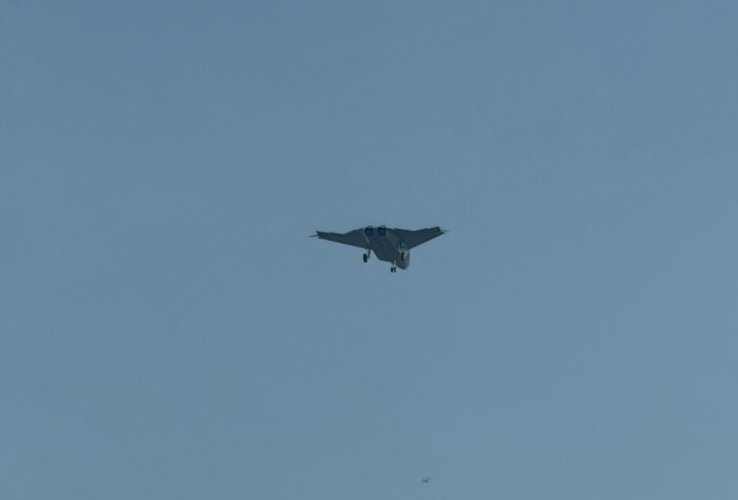
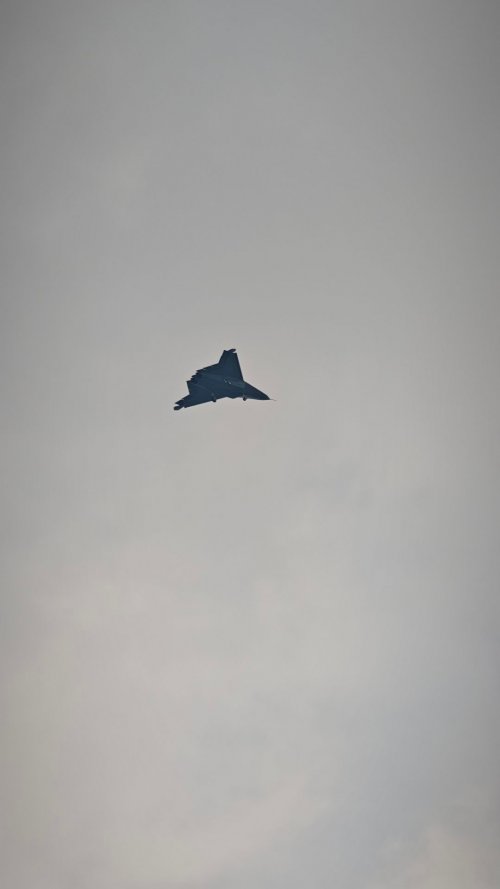
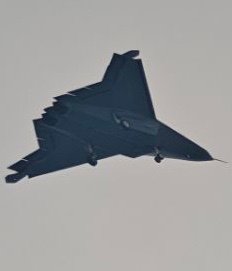
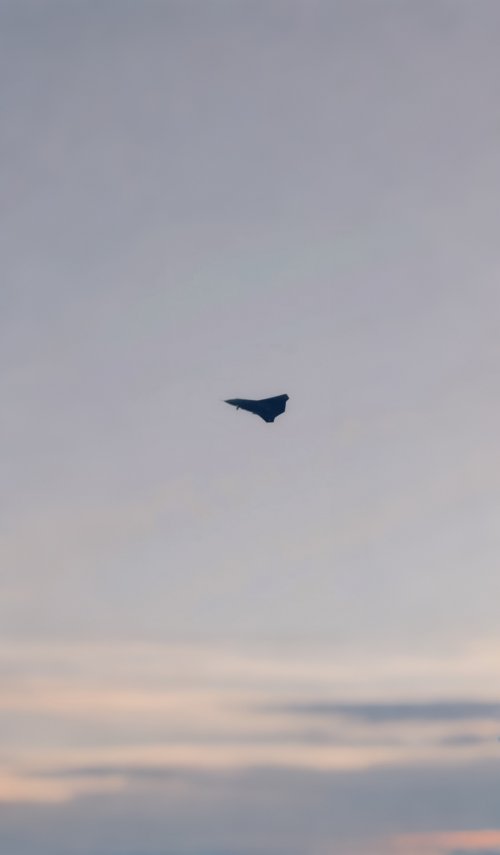
-A lot of attention to IR masking, well over 5th gen average, despite having it harder(no stabilizers to work with). IR signature just doesn't work together with supersonic flight. Maybe sound as well, btw.
-Both are relatively thick birds, with quite a lot of wing on top. Especially Shenyang one, which more or less shares power rating with J-20(A), yet has way more body to her.
-Neither has vertical stabilizers and neither tries to cheat in a way visible with F-47 render ("V" wing...and that's before we truly know what's there in the back). J-20 (which we know for sure focuses on supersonic fight) had 4 just a decade ago.
-J-36, furthermore, intentionally goes for a really large iwb, i.e. it lets more work to be done by the arrow rather than by the archer.

Those are, of course, just my observations. It's totally reasonable with all that written that both can be faster than I currently assume. Or one of them.

But my current inner understanding is they're normally transsonic/low supercruisers(perhaps up to 1.5 for normal operating envelope, with mean speeds below m=1)), and their high wing sweep is less about speed, more about desired signature reduction.
Then, their power is mostly to help them get out of predicaments (bvr maneuvers, disengaging, slower pursuits), onboard energy/cooling, as well as to ensure fighter class take off and landing performance.
Higher speeds, not so much. They're undesirable, as those are aircraft that really don't want to be found or seen; blinking is not enough. Especially J-36, which is range-bound to keeping very low profile.

I don't disagree with those observations -- IR masking, large fuselage cross sections and IWBs (especially J-36), no vertical stabilizers... but I don't see how any of those can reasonably lead to the conclusion that they are incapable or not intended for supersonic flight at credible mach numbers.

If anything, everything you described somewhat applies for all aircraft -- technically there are few tactical combat aircraft which spend large amounts of time in supersonic flight, as they will bloom their signature. Prior generation/less stealthy aircraft would suffer from that arguably moreso than J-36 or J-XDS
 
-A lot of attention to IR masking, well over 5th gen average, despite having it harder(no stabilizers to work with). IR signature just doesn't work together with supersonic flight. Maybe sound as well, btw.
-Both are relatively thick birds, with quite a lot of wing on top. Especially Shenyang one, which more or less shares power rating with J-20(A), yet has way more body to her.
-Neither has vertical stabilizers and neither tries to cheat in a way visible with F-47 render ("V" wing...and that's before we truly know what's there in the back). J-20 (which we know for sure focuses on supersonic fight) had 4 just a decade ago.
-J-36, furthermore, intentionally goes for a really large iwb, i.e. it lets more work to be done by the arrow rather than by the archer.

Those are, of course, just my observations. It's totally reasonable with all that written that both can be faster than I currently assume. Or one of them.

But my current inner understanding is they're normally transsonic/low supercruisers(perhaps up to 1.5 for normal operating envelope, with mean speeds below m=1)), and their high wing sweep is less about speed, more about desired signature reduction.
Then, their power is mostly to help them get out of predicaments (bvr maneuvers, disengaging, slower pursuits), onboard energy/cooling, as well as to ensure fighter class take off and landing performance.
Higher speeds, not so much. They're undesirable, as those are aircraft that really don't want to be found or seen; blinking is not enough. Especially J-36, which is range-bound to keeping very low profile.
If trump's greater than 2 indicates the F-47 is meant to go mach 2.0 or faster.

You may want to consider that the chief designer at SAC said in an interview that VLO stealth will be the standard requirement for all aircraft moving forward, while emphasizing speed as one of the most important, and unchanging aspects of aerial warfare.

Take that as you will, but I personally don't expect the J-XDS at least from Shenyang to be slower than the J-20.


From 35:30 he talks about his briefly.
 
Last edited:
If trump's greater than 2 indicates the F-47 is meant to go mach 2.0 or faster.
I mean, we know that the F-14 and F-15 would do M2.3+

I would assume that the F-22 is designed for similar or greater maximum speeds, as IIRC the design brief was "to exceed the F-15 in all aspects."

However, IIRC the F-22 supercruises at ~M1.7 or so.


You may want to consider that the chief designer at SAC said in an interview that VLO stealth will be the standard requirement for all aircraft moving forward, while emphasizing speed as one of the most important, and unchanging aspects of aerial warfare.

Take that as you will, but I personally don't expect the J-XDS at least from Shenyang to be slower than the J-20.


From 35:30 he talks about his briefly.
I would not expect a VLO supersonic aircraft to exceed M2.3 or so, just due to IR blooming as a result of skin heating.

IIRC the F-16, F-18, and F-35 were designed around a M1.8ish top speed, because even the big supersonic planes that could go faster so rarely went all the way up to their max speed, but did spend a lot of time around M1.8
 
I don't expect J-XDS or J-36 to have a meaningful top speed higher than M2 due to skin heating and limited combat utility, but I do expect these aircraft to have a high supercruise speed(M1.6-1.8) and efficiency especially with new variable cycle engines along with some sort of active skin cooling to reduce IR emission.
 
I expect it to be higher than that of F-22.

On the sidenote, any working theory on how this side EO systems will operate?
View attachment 773587
Two EOTS on each side of its cheeks, probably can be used to triangulate the position of the target( tho not sure if the distance between both eots is enough to do that).


Nose is tapering forward and spreading as we move towards fuselage like usual, so frontal view won't be a problem, along with side view.
So these eots should allow combined ~270°of coverage.
 
Two EOTS on each side of its cheeks, probably can be used to triangulate the position of the target( tho not sure if the distance between both eots is enough to do that).


Nose is tapering forward and spreading as we move towards fuselage like usual, so frontal view won't be a problem, along with side view.
So these eots should allow combined ~270°of coverage.
Don't modern EOTS systems have laser range finder built into them for ranging purposes, for one the OSF on the Rafale has it built in.
 
Two EOTS on each side of its cheeks, probably can be used to triangulate the position of the target( tho not sure if the distance between both eots is enough to do that).


Nose is tapering forward and spreading as we move towards fuselage like usual, so frontal view won't be a problem, along with side view.
So these eots should allow combined ~270°of coverage.
The distance the between two eots is too low for any triangulation.
 
The distance the between two eots is too low for any triangulation.
IMO, it likely just relies on LRF for ranging or even the radar arrays. EOTS are good at spotting stealthy targets, it could direct the radars to focus on a single point to achieve a lock even against VLO targets at considerable range. Theoretically speaking the side arrays seems to be the same size as your normal fighter sized radar(F-22/F-35 sized) so should achieve similar ranges or even better range if new technology such as gallium oxide TRMs are used.
 
This is pure phantasm with no rational base. VLO are also tailored to meet the IR threat since long (think F-117).

The side aperture are probably more part of a staring system for full frontal sector sensing and, additionally, provide downward vison for their pilots (see how otherwise the cockpit visibility is pretty poor in that aspect).
 
Don't modern EOTS systems have laser range finder built into them for ranging purposes, for one the OSF on the Rafale has it built in.
Laser rangefinder has much less range that an air-air IRST.

PIRATE on Typhoon apparently can use kinematic ranging, where the aircraft turns to alter the relative geometry between it and the target and allow triangulation between multiple offset points. Kind of like widely spaced IRSTs. Accuracy of ranging like this is unclear. A better alternative would be cooperative triangulation between pairs of aircraft.
 
Last edited:
Laser rangefinder has much less range that an air-air IRST.

PIRATE on Typhoon apparently can use kinematic ranging, where the aircraft turns to alter the relative geometry between it and the target and allow triangulation between multiple offset points. Kind of like widely spaced IRSTs. Accuracy of ranging like this is unclear. A better alternative would be cooperative triangulation between pairs of aircraft.
I'd say it's prety accurate, considering the ranges (60km max) and speeds (0.5-2mach) involved, these objects have quite sizeable angular velocities.
 
Last edited by a moderator:
If they really did, they would be releasing images themselves, officially, and in better quality.

There is a difference between tolerating pictures and footage of a certain quality/resolution/content being released, and showing them off for publicity in that manner.


The best way to view this dynamic is:
1. the aircraft themselves are at a stage of mundane testing/development where they can't fully prevent images and footage from getting out anyhow.
2. they still have means to try and set maximum ceilings for what civilians are able to release outwardly (you can bet there is footage and videos that have been taken of this which is much higher in quality than what has been released on the internet).

Now, I'm sure that there are probably some elements of CAC, AVIC or the PLA at large who are feeling pleased at the publicity these things do get -- but that's different to actively letting those factors drive what is released. And their desire for publicity definitely isn't driving any official release of imagery/footage, because if that was their focus, we'd be seeing much better pictures than what we have, in a more astonishing manner as well.

===

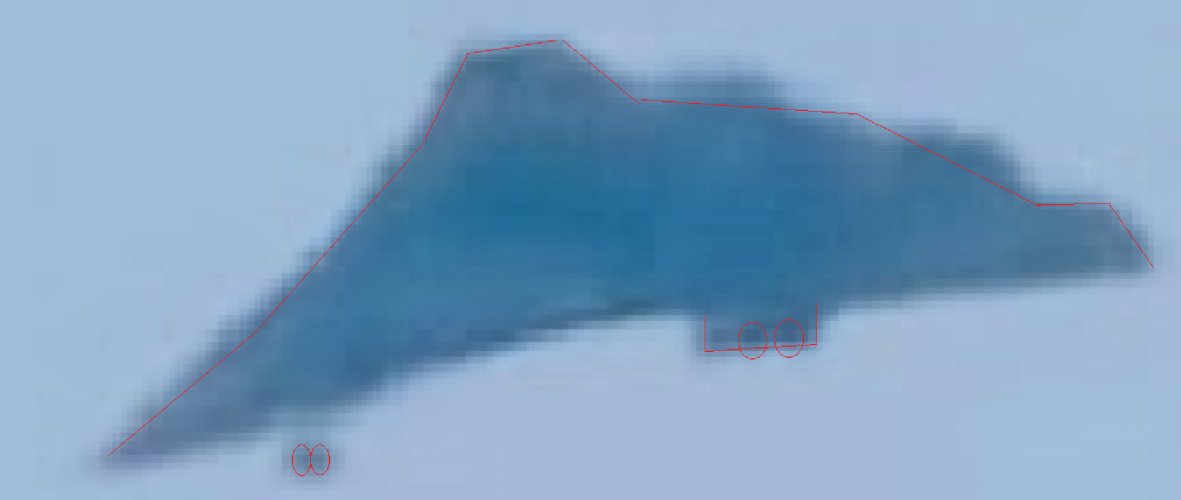
Regarding the shape of the aircraft, I've depicted in a red outline, what I think is the approximate to the overall outer "silhouette" of the aircraft from the photo angle is -- in yellow is the direction of the air intake and the way it protrudes and blends into the rest of the fuselage.

Keep in mind the red outline is asymmetrical from this perspective because the photo was not taken head on, so the dorsal air intake makes the "silhouette" look uneven.

View attachment 772749

Congrats, you were able to see the outer mold line better than Janes! :)
 

Attachments

  • BSP_89437-JDW-31427.jpeg
    BSP_89437-JDW-31427.jpeg
    168.9 KB · Views: 330
Do people actually take Janes seriously these days? I am aware they were once treated as a credible source, but everything I've seen from them over the last 3-4 years wasn't looking good. Especially anything PLA related tbh.

With their annual subscription.. you would expect they will have some quality over something more free.
 
Laser rangefinder has much less range that an air-air IRST.

PIRATE on Typhoon apparently can use kinematic ranging, where the aircraft turns to alter the relative geometry between it and the target and allow triangulation between multiple offset points. Kind of like widely spaced IRSTs. Accuracy of ranging like this is unclear. A better alternative would be cooperative triangulation between pairs of aircraft.
That's how submarine passive sonar gets range data. It's a relatively slow process for sonar, probably due to the slow rate of change in bearing.
 
There doesn‘t seem to be a lot of media coverage around these 2 planes for some reason.
 
There doesn‘t seem to be a lot of media coverage around these 2 planes for some reason.
The hype (at least in the media) has died. Media reports were strong in December and then again back in March, but now that the prototypes flying is normal do we find the usual shift to a topic that will be the next big income generator. 'Tis the cycle of news reporting.
 
There doesn‘t seem to be a lot of media coverage around these 2 planes for some reason.
There isn't much new information that can be obtained from spotting test flights. Unlike programs like GCAP and FCAS there are no official statements nor official project timeline targets or service introduction. This is also unlike the American programs like F/A-XX and F-47, which see some frequent media reports, due to the political and budgetary strings that are attached to defense procurement. There is nothing like that here.
 
There doesn‘t seem to be a lot of media coverage around these 2 planes for some reason.
We'll probably have to wait four or five more years—until they actually fly over some airshow—before getting any official media reports. Until then, only semi-official test flight leaks. It's basically teasing at this point.;)
It's better to say that the explosive media coverage at that time was unexpected, as it was imbued with a narrative of 'China surpassing US' in the media. And when the discussion of these 2 planes returned to the slightly more professional military field, these reports just disappeared.
 
There isn't much new information that can be obtained from spotting test flights. Unlike programs like GCAP and FCAS there are no official statements nor official project timeline targets or service introduction. This is also unlike the American programs like F/A-XX and F-47, which see some frequent media reports, due to the political and budgetary strings that are attached to defense procurement. There is nothing like that here.
Rather, this is actually normal in China.
 
Rather, this is actually normal in China.

Given the limited number of flights filmed... it increasingly looks like this was a deliberate display. Presumably testing has moved back to a location which is less observable.

It might even be the case that the next time we see one of these platforms will be when a satellite photographs several examples at an airfield (perhaps left outside of a hanger deliberately).
 
Given the limited number of flights filmed... it increasingly looks like this was a deliberate display. Presumably testing has moved back to a location which is less observable.

It might even be the case that the next time we see one of these platforms will be when a satellite photographs several examples at an airfield (perhaps left outside of a hanger deliberately).
The limited of flights filmed right now is... due to that they haven't flown them since May. This is normal, the original J-20 prototypes was only flown a handful of times before moving on to the next aircraft or undergo siginificant modifications before taking flight again.
 
I don't think it's that complicated. The satellite photo may not be a sixth-generation aircraft, but just an unknown drone or something else. It is said that this year's military parade will display some unmanned wingmen that resemble sixth-generation aircraft. Also, I don't think the PLA has this tradition((Announced by satellite photo)).
 
The limited of flights filmed right now is... due to that they haven't flown them since May. This is normal, the original J-20 prototypes was only flown a handful of times before moving on to the next aircraft or undergo siginificant modifications before taking flight again.
J50 had another flight just a few days ago, but only two or three videos showed up and seems no clear photos were shot.
 
Given the limited number of flights filmed... it increasingly looks like this was a deliberate display. Presumably testing has moved back to a location which is less observable.

It might even be the case that the next time we see one of these platforms will be when a satellite photographs several examples at an airfield (perhaps left outside of a hanger deliberately).


Unlikely, IMO they are still testing it at SAC and only later it will be transferred to the CFTT at Xi'an-Yanliang or Dingxin ... otherwise I think peoples are no longer that amazed and hyped to post everything.
 
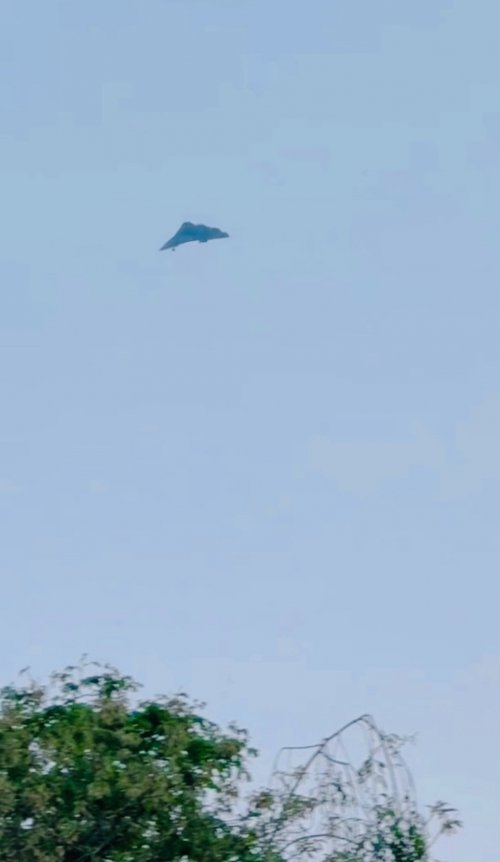
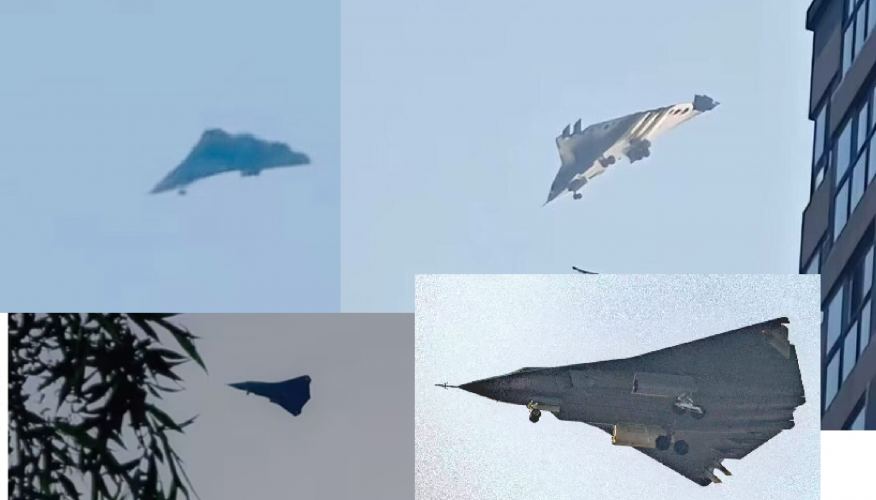
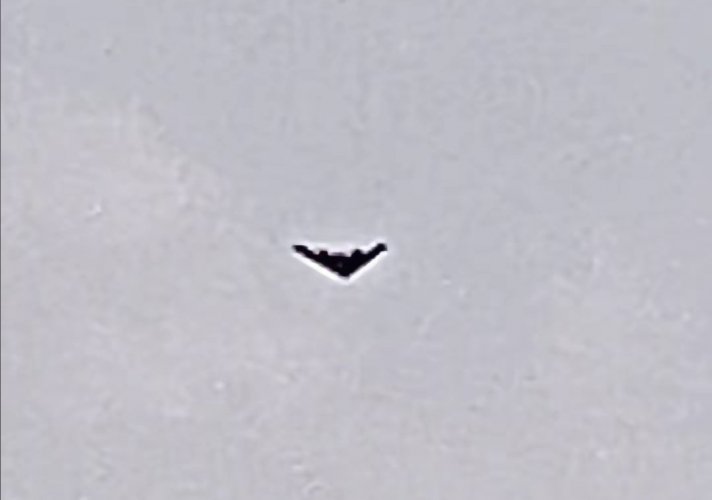
We've got an interesting new specimen...

672d2337ly1i41t9otithj20v81hcadn.jpg

IMG_3327.jpeg 1754291845276.png 1754291938465.png

There's some similarities between it and the J-36. Could this potentially be an parallel development or even a newer prototype?

It was originally posted in the CCA/Unmanned thread in SDF but folks now think it exhibits characteristics of a manned aircraft.
 
If it's the same aircraft that flew with the Y-9, the above doesn't seem to conform to that planform, it does seem like it's a flying wing with two portrusions at the back. We don't have an idea of scale, so for now could be anything, from a prop driven model to something much more serious, up to and including the H-20 (!). I struggle though to see why they'd put tails on it since we seem to have a whole range of chinese tailess designs, manned and unmanned.
 

Similar threads

Back
Top Bottom