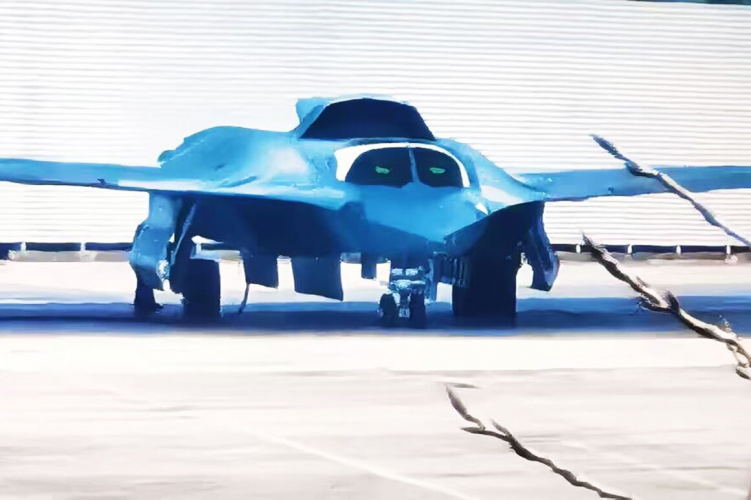
IIRC I don't know why everyone keeps forgetting, but isn't it already known that there's a guy in China who creates fakes photo's and presents them as real by putting them on a camera? How are we still falling for this exact trick, again.These photos are highly likely to be FAKE, guys.Here are some arguments from Chinese websites:
https://www.bilibili.com/video/BV1T6tpzaE1x/
1. There are clear J36 videos and photos with the same angle and background;
2. Noise analysis reveals missing noise in the sky areas, indicating obvious post-processing;
3. Upon close inspection of certain photos, severe misalignment in bilateral structure and perspective is observed — some even lack symmetry.
4.
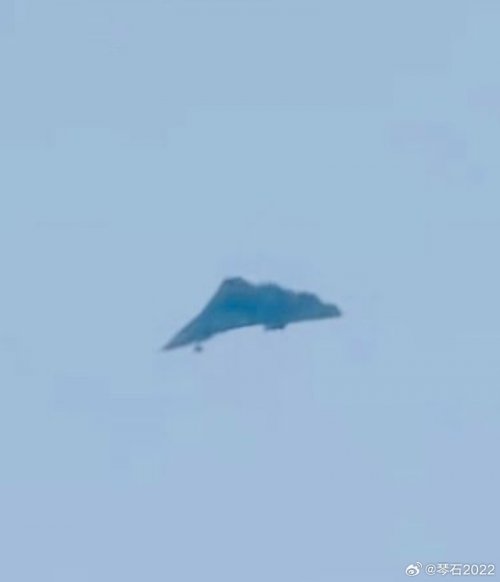
Personally, I believe only one photo is real: that FIRST blurry long-range shot taken with a smartphone.

You are using an out of date browser. It may not display this or other websites correctly.
You should upgrade or use an alternative browser.
You should upgrade or use an alternative browser.
Shenyang / Chengdu "6th Gen" Aircraft - News and Analysis
Well, I think China has completely broken the "Hi-Lo" concept from the 1970s. I see it more as a cruiser (J-36), a destroyer ("J-50"), a frigate (J-20) and a corvette (J-35A) for the PLAAF. Of course, with great exaggeration.Medium (J-50) and Heavy (J-36) for PLAAF and one for PLAN would be a possibility if you want to make sense of three advanced aircraft flying.

EmoBirb
ACCESS: Top Secret
- Joined
- 18 January 2025
- Messages
- 2,693
- Reaction score
- 6,919
I've seen these naval analogies a couple times now and while I understand the point, I think it's too early to make such assumptions given that we'll have to wait many years for the PLAAF and PLANAF to introduce their next gen aircraft and then a couple more years in order to even attempt to get a grasp on how they intend to use them on the battlefield.Well, I think China has completely broken the "Hi-Lo" concept from the 1970s. I see it more as a cruiser (J-36), a destroyer ("J-50"), a frigate (J-20) and a corvette (J-35A) for the PLAAF. Of course, with great exaggeration.
It would give a new meaning to the term aviation cruiser though, lol.
Either way, from what we assume to know it's clear however that the J-36 is the largest, possibly heaviest, thus possibly longest range and most exotic jet of the bunch. So it may very well be a very specialized but highly capable aircraft. With it's Shenyang counterpart possibly being a more general purpose aircraft as we know them.
If that demonstrator spotted recently is indeed real and manned, then I'm almost sure it may be intended for the PLANAF. While the SAC J-50 and CAC J-36 will probably succeed/complement the SAC J-35A and CAC J-20 in the PLAAF.
This patent about the variable geometry wings peeked my interest, it would definitely help with low speed approach and take off when fully extended (perhaps comprising it's stealth characteristics to a degree in that position) and then in the air sweep them back for maximum speed and maximum stealth (creating better edge alignment). But maybe it's just a thought experiment someone had sometime somewhere.
Usually I try to leave the speculation to people more knowledgeable about PLA watching than me, but I found the approach so novel that it stuck with me and made me think a bit.

- Joined
- 11 February 2007
- Messages
- 4,132
- Reaction score
- 8,871
If you stand in the same place on the circuit, then you're highly likely to catch similar angles and background, because aircraft will habitually be doing similar things in similar places. Identical cloudscapes would be a giveaway, but fixed background on its own isn't.These photos are highly likely to be FAKE, guys.
1. There are clear J36 videos and photos with the same angle and background;

SspewixzzZ
From YanCheng Jiangsu China
- Joined
- 29 March 2025
- Messages
- 87
- Reaction score
- 230
Perhaps so, but the noise analysis remain unexplainable (just realized I forgot to include the noise analysis evidence sry.)If you stand in the same place on the circuit, then you're highly likely to catch similar angles and background, because aircraft will habitually be doing similar things in similar places. Identical cloudscapes would be a giveaway, but fixed background on its own isn't.
如果你站在赛道上的同一个地方,那么你很可能会捕捉到相似的角度和背景,因为飞机会习惯性地在相似的地方做类似的事情。相同的云景将是一种赠品,但固定背景本身则不然。


Low IQ Techie
Low IQ, mid-aged, IT Engineer, Military enthusiast
- Joined
- 4 December 2022
- Messages
- 293
- Reaction score
- 630
Earlier J-50 was speculated to have rotating rudder but it didn't turn out that way.
Now with this new 3rd jet it is speculated to have variable geometry wing. If true then it leaves very less area for control surfaces, only ailerons, no flaps.
Some diagrams are also being made around guesses.


If this is for Navy then such high sweep body may need canards for low speed approach.
On belly there seems to be 6 panels to be part of IWB door, probably for BVRAAMs.
And then 5 shorter panels behind, probably for CCMs.
It is unclear how would they open -
- all individually
- 1:1 like in Su-57
- 2:1 bi-fold like in F-22, J-20/35
With this design how will it carry longer weapons like PL-17 AAM & AGMs?
Now with this new 3rd jet it is speculated to have variable geometry wing. If true then it leaves very less area for control surfaces, only ailerons, no flaps.
Some diagrams are also being made around guesses.


If this is for Navy then such high sweep body may need canards for low speed approach.
On belly there seems to be 6 panels to be part of IWB door, probably for BVRAAMs.
And then 5 shorter panels behind, probably for CCMs.
It is unclear how would they open -
- all individually
- 1:1 like in Su-57
- 2:1 bi-fold like in F-22, J-20/35
With this design how will it carry longer weapons like PL-17 AAM & AGMs?

Tomboy
ACCESS: Top Secret
- Joined
- 4 January 2025
- Messages
- 543
- Reaction score
- 1,967
Only the first image you posted are genuine renders from the patent the second one is just fan art, no need to read too carefully from the second one.Earlier J-50 was speculated to have rotating rudder but it didn't turn out that way.
Now with this new 3rd jet it is speculated to have variable geometry wing. If true then it leaves very less area for control surfaces, only ailerons, no flaps.
Some diagrams are also being made around guesses.
View attachment 781023
View attachment 781024
If this is for Navy then such high sweep body may need canards for low speed approach.
On belly there seems to be 6 panels to be part of IWB door, probably for BVRAAMs.
And then 5 shorter panels behind, probably for CCMs.
It is unclear how would they open -
- all individually
- 1:1 like in Su-57
- 2:1 bi-fold like in F-22, J-20/35
With this design how will it carry longer weapons like PL-17 AAM & AGMs?

FighterJock
ACCESS: Above Top Secret
- Joined
- 29 October 2007
- Messages
- 7,227
- Reaction score
- 8,538
Those people that do these fan art images are getting good enough nowadays that it is almost to difficult to know what to believe, I am gradually getting to the point where I am getting used to finding out what is genuine and what is fan art.
Low IQ Techie
Low IQ, mid-aged, IT Engineer, Military enthusiast
- Joined
- 4 December 2022
- Messages
- 293
- Reaction score
- 630
Well, i don't understand chineseOnly the first image you posted are genuine renders from the patent the second one is just fan art, no need to read too carefully from the second one.
, so i don't have to read either of the images tooooooo carefully. Speculation is fuel for forums.

- Joined
- 2 January 2006
- Messages
- 4,235
- Reaction score
- 8,279
Earlier J-50 was speculated to have rotating rudder but it didn't turn out that way.
Now with this new 3rd jet it is speculated to have variable geometry wing. If true then it leaves very less area for control surfaces, only ailerons, no flaps.
Some diagrams are also being made around guesses.
View attachment 781023
View attachment 781024
If this is for Navy then such high sweep body may need canards for low speed approach.
On belly there seems to be 6 panels to be part of IWB door, probably for BVRAAMs.
And then 5 shorter panels behind, probably for CCMs.
It is unclear how would they open -
- all individually
- 1:1 like in Su-57
- 2:1 bi-fold like in F-22, J-20/35
With this design how will it carry longer weapons like PL-17 AAM & AGMs?
IMO this is nonsense. The Patent is surely real but so far besides the Overall shape nothing hints this new aircraft is a VG design
Sorry for the kooky theory (and if this has been discussed with before) , but I did a bit of pixel counting on the intakes of the J-36, and the central intake seems about 25% larger in area. I wonder if this is just because of the different flow conditions/intake type, or does this hint that something genuinely different is going on with the middle engine?

SspewixzzZ
From YanCheng Jiangsu China
- Joined
- 29 March 2025
- Messages
- 87
- Reaction score
- 230
Perhaps this intake design needs to free up more power for electricity, or for higher cruise efficiency?Sorry for the kooky theory (and if this has been discussed with before) , but I did a bit of pixel counting on the intakes of the J-36, and the central intake seems about 25% larger in area. I wonder if this is just because of the different flow conditions/intake type, or does this hint that something genuinely different is going on with the middle engine?
View attachment 781176
- Joined
- 15 January 2021
- Messages
- 649
- Reaction score
- 2,859
My thought is that this massive dorsal DSI inlet is intended to feed all three engines, with the lower caret inlets eliminated. For this test vehicle, they would be bypassing two engines worth of airflow around the center engine, then throttling the bypass air in synch with the center engine throttle. This would determine how well the upper intake behaves at various power settings and flight conditions to determine if it is suitable to be the only inlet, while isolating the two outboard engines from any inlet induced stalls or other malfunctions.Perhaps this intake design needs to free up more power for electricity, or for higher cruise efficiency?
Not sure that's only for test. Why would you bother designing carret inlets if that just temporary items?
More probably, in that scenario, the inlets are shut during cruise for improving the RCS at high altitude.
But let's not sideline the most logical reason that they had to carry three engines, for a lack of powerful ones, but couldn't afford to increase the capture surface of the inlets for stealth.
Alternatively, the design call for a cruise flight portion flown inverted, upside down... Don't ask me why!
More probably, in that scenario, the inlets are shut during cruise for improving the RCS at high altitude.
But let's not sideline the most logical reason that they had to carry three engines, for a lack of powerful ones, but couldn't afford to increase the capture surface of the inlets for stealth.
Alternatively, the design call for a cruise flight portion flown inverted, upside down... Don't ask me why!
Tomboy
ACCESS: Top Secret
- Joined
- 4 January 2025
- Messages
- 543
- Reaction score
- 1,967
How would that even work, closing the intakes will cause more issues than it solves. Where do you redirect the air that gushes into the intake? If you don't need three intakes than why even design three in takes in the first place, why add that deadweight and even more with whatever complex mechanism that is used to close the intake. This argument just makes no sense.Not sure that's only for test. Why would you bother designing carret inlets if that just temporary items?
More probably, in that scenario, the inlets are shut during cruise for improving the RCS at high altitude.
But let's not sideline the most logical reason that they had to carry three engines, for a lack of powerful ones, but couldn't afford to increase the capture surface of the inlets for stealth.
Alternatively, the design call for a cruise flight portion flown inverted, upside down... Don't ask me why!


- Joined
- 30 May 2023
- Messages
- 664
- Reaction score
- 1,436
Your speculation has me nodding in agreement given its surface merits. If the aero at and within the dorsal inlet are permissive through many flight regimens including supercruise, such air would appear invaluable from a PTM perspective and as has been discussed in other threads, is more efficient than using engine bleed air. Coupled with shaft driven power generation or some such, and you might even have a couple hundred kW to play with, even after powering the flight related systems.Perhaps any extra bypass air through the dorsal inlet, it there is any, might be used for cooling.
- Joined
- 15 January 2021
- Messages
- 649
- Reaction score
- 2,859
Because a low shoulder mounted caret inlet for a single engine is a relatively well understood design. A single dorsal DSI inlet feeding multiple engines has a lot of unknowns, although it has the potential for better LO performance. If this aircraft is a technology demonstrator, this would be a risk reduction approach.Not sure that's only for test. Why would you bother designing carret inlets if that just temporary items?

- Joined
- 27 December 2005
- Messages
- 19,225
- Reaction score
- 35,635
This. Caret intakes are unobstructed while DSI intake has a large bump in it.Don't forget that while the top intake appears 25% larger, it has the DSI bump so the overall area might actually be similar to the side ones.
Not sure about that - I mean you know WAY more about this than I do, but I did also try to compare the intake sizes to the J-20, using the fact that both planes have a similar HUD(I assume), then comparing the HUD/intake pixel ratio, I'd assume we'd get similar numbers if the 2 planes have similar engines (which I think are assumed to be AL-31 class). Unfortunately the HUD's poorly visible even after boosting the heck out of the image, so my measurements were highly suspect, but within the ballpark for the two planes.My thought is that this massive dorsal DSI inlet is intended to feed all three engines, with the lower caret inlets eliminated. For this test vehicle, they would be bypassing two engines worth of airflow around the center engine, then throttling the bypass air in synch with the center engine throttle. This would determine how well the upper intake behaves at various power settings and flight conditions to determine if it is suitable to be the only inlet, while isolating the two outboard engines from any inlet induced stalls or other malfunctions.
But my guess would be there's no way you could feed 3x AL-31 from an intake that's only slightly bigger than what's used for a single engine in the J-20
Don't forget that while the top intake appears 25% larger, it has the DSI bump so the overall area might actually be similar to the side ones.
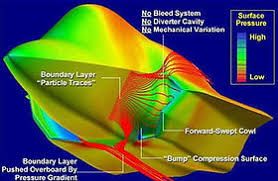
Not a fluid dynamics guy by any means, but my guess the bump pushes a lot of air into the intake, so its useful area.
- Joined
- 2 January 2006
- Messages
- 4,235
- Reaction score
- 8,279
These photos are highly likely to be FAKE, guys.
https://www.bilibili.com/video/BV1T6tpzaE1x/
1. There are clear J36 videos and photos with the same angle and background;
2. Noise analysis reveals missing noise in the sky areas, indicating obvious post-processing;
3. Upon close inspection of certain photos, severe misalignment in bilateral structure and perspective is observed — some even lack symmetry.
4.
Personally, I believe only one photo is real: that FIRST blurry long-range shot taken with a smartphone.
Not only "highly likely" but 100% for sure this is a fake based on a J-36 clip: I therefore suggest to stuip discussing this nonsense any further.
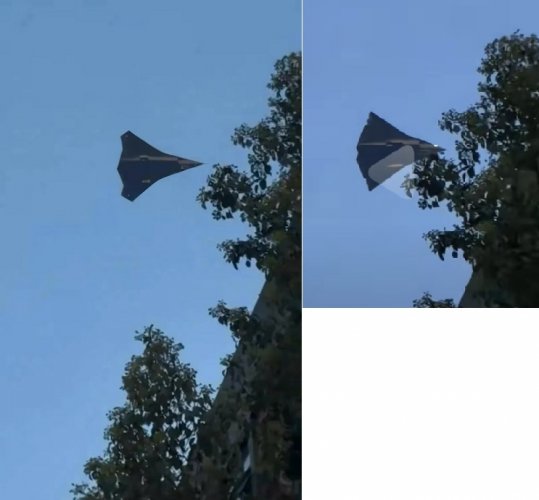
Still ... the only true legit image is this:

Airborne2001
ACCESS: Secret
- Joined
- 19 June 2020
- Messages
- 377
- Reaction score
- 541
Oh wow, yeah that first picture looks waaaay too similar to the J-36 video we have already. The underside looks a tad bit different in places, but the similarity in video again leads me to believe that it was edited. I agree that we have to rely on the bottom photo for now until more comes out.Not only "highly likely" but 100% for sure this is a fake based on a J-36 clip: I therefore suggest to stuip discussing this nonsense any further.
View attachment 781443
Still ... the only true legit image is this:
View attachment 781444
Another mention of "3 Chinese 6th gens," this time by Justin Bronk. While he is "just" an analyst, he does have conversations with some fairly high-level people. Unclear whether he has simply absorbed RUMINT or heard it from someone who would actually know.
"The Chinese have three -- two to three -- 6th gen crewed fighter platforms in testing..."
View: https://youtu.be/ykLIH2kY1U8?&t=1458
"The Chinese have three -- two to three -- 6th gen crewed fighter platforms in testing..."
- Joined
- 2 January 2006
- Messages
- 4,235
- Reaction score
- 8,279
Another mention of "3 Chinese 6th gens," this time by Justin Bronk. While he is "just" an analyst, he does have conversations with some fairly high-level people. Unclear whether he has simply absorbed RUMINT or heard it from someone who would actually know.
"The Chinese have three -- two to three -- 6th gen crewed fighter platforms in testing..."
View: https://youtu.be/ykLIH2kY1U8?&t=1458
I do not want to discredit him, but IMO he has no access to first hand valid information but just los of contact to other peoples and as such is IMO most likely just reposting „absorbed RUMINT“!
The J-50 is another interesting topic worth talking about. The lambda wing has been around since the JSF competition days. so, a 20 years old concept. Clearly, the U.S. didn’t think it was the best choice. As for the all moving wingtips, they look more like a fix for weak aerodynamic control. In reality, that kind of design just adds complexity and weight, not an ideal solution. To me, both of these features are signs of technological decline. Let me also tip my hat to the Valkyrie :)If that's your opinion on the J-36. What about the "J-50" that was spotted? Twin engine heavy fighter, cranked lambda wing, all moving wingtips. Are there signs of limited tech in this example?
Like the J-36, this aircraft reflects the latest trend in China’s aerospace development: conventional layouts can’t meet the demands due to technical limits, so they’re turning to niche solutions that are flawed in some ways but offer unique benefits. With the F-47 and FAXX moving forward, China’s weaknesses in AI, engines, and materials will only widen the gap faster. Maybe in ten years, we’ll see the story like MiG MFI trying to compete with F-22.
And by the way—on September 3rd, China’s version of the XQ-58 will be on display in Beijing :)

- Joined
- 3 June 2011
- Messages
- 20,895
- Reaction score
- 19,083
It would be refreshing to see something that was actually new.And by the way—on September 3rd, China’s version of the XQ-58 will be on display in Beijing :)

Reddington777
ACCESS: Top Secret
- Joined
- 23 March 2025
- Messages
- 830
- Reaction score
- 2,745
That could have been do to any number of reasons. Cost and risk being the usual reasons. Not fitting the required profile being another. If it was meant for JSF, it may not have been a good idea due to JSF having shared requirements across three branches, one of which needed VTOL.the U.S. didn’t think it was the best choice.
Advanced planforms like the X-36 or the Bird of Prey were considered even for the ATF, but they were turned down because they were considered too risky and not to mention they didn't meet the maneuverability requirements. Back then, maneuverability was still important in addition to kinematics while today's 6th gens value kinematics but not so much super-maneuverability anymore.
No really - how do you know that? What actually is your evidence for this? How would this be more "complex" than the entire swinging wing of an F-14, or a B-1, or any aircraft that moves its wings in flight?As for the all moving wingtips, they look more like a fix for weak aerodynamic control. In reality, that kind of design just adds complexity and weight, not an ideal solution.
Again - how do you come to this conclusion when people and organizations much more qualified to speak about this have not arrived at the same conclusions?To me, both of these features are signs of technological decline.
I'm sorry but lets just set aside what the Chinese have actually achieved thus far and consider only the evidence on the US side - if the gap is widening, why in world then is there such a rush?China’s weaknesses in AI, engines, and materials will only widen the gap faster.
This is the exact kind of mindset that leads to the find out phase in a shooting war.
Last edited:
Tomboy
ACCESS: Top Secret
- Joined
- 4 January 2025
- Messages
- 543
- Reaction score
- 1,967
I dount aero-engine will be much of a issue soon, they've caught up in diesel and gas turbines already. CJ-1000A is undergoing production certification right now and possibly will see flight test on the C919 later this year, it is said to be of similar if not slightly better performance than the LEAP series. WS-15 is in LRIP and there are patents that suggest it is of F-135 class in technology, WS-19 is expected to be even better as it is built on the lessons of WS-15. VCE is also under development, I think there are rumors of a demonstrator built with a WS-10 core along with a new core as well.I think I peed my pants from laughing too hard
SspewixzzZ
From YanCheng Jiangsu China
- Joined
- 29 March 2025
- Messages
- 87
- Reaction score
- 230
Optimism is good... but it shouldn't come from underestimate enemies.

mokahete
ACCESS: Confidential
- Joined
- 18 April 2025
- Messages
- 196
- Reaction score
- 298
If we're going this route.The lambda wing has been around since the JSF competition days. so, a 20 years old concept.
Then dyson sphere's concept was born in 1960s.
We have concepts of quantum radar and studies done on it for decades, even early tech-demonstrators built yet its a future tech.
Etc.

- Joined
- 1 April 2006
- Messages
- 12,276
- Reaction score
- 15,084
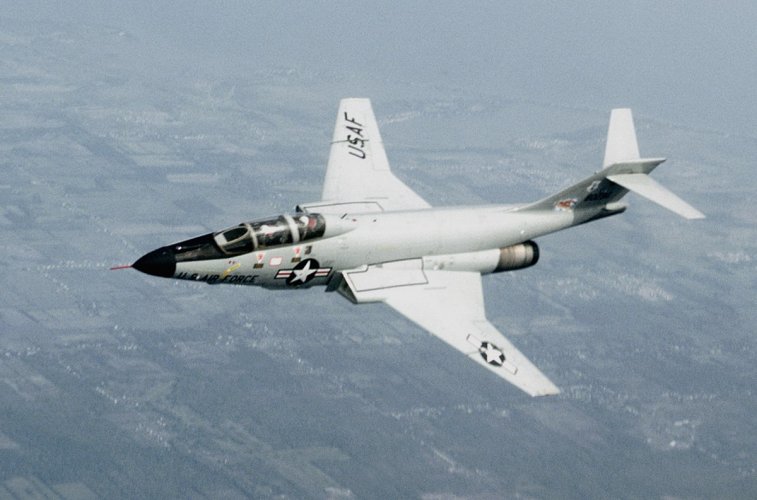
Sure. 20 years old.The lambda wing has been around since the JSF competition days. so, a 20 years old concept.
Attachments

Avimimus
ACCESS: Top Secret
- Joined
- 15 December 2007
- Messages
- 2,707
- Reaction score
- 1,378
Sure. 20 years old.
I can one-up-you-all. The concept of a wing is over a century old!
Seriously though - the planform of the wing is relatively superficial. There are only so many combinations of shapes. There are only so many optima (but there are multiple optima varying on the task).
One can play a similar game with any aircraft. For example, the F-22 has a trapezoidal wing with conventional horizontal stabiliser and canted twin tails - so basically a sub-optimal F/A-18 or F-15...
P.S. No solution is truly optimal, as there are always design tradeoffs. The question is 'how does the system perform' as a whole.
- Joined
- 3 June 2011
- Messages
- 20,895
- Reaction score
- 19,083
A lambda wing? Source please.I can one-up-you-all. The concept of a wing is over a century old!
mokahete
ACCESS: Confidential
- Joined
- 18 April 2025
- Messages
- 196
- Reaction score
- 298
Also in past, when stealth was not as prioritized as now, especially with upcoming 6th gen going towards the trend of losing vertical tails, for better stealth, especially against more broader radar spectrum.I can one-up-you-all. The concept of a wing is over a century old!
Seriously though - the planform of the wing is relatively superficial. There are only so many combinations of shapes. There are only so many optima (but there are multiple optima varying on the task).
One can play a similar game with any aircraft. For example, the F-22 has a trapezoidal wing with conventional horizontal stabiliser and canted twin tails - so basically a sub-optimal F/A-18 or F-15...
P.S. No solution is truly optimal, as there are always design tradeoffs. The question is 'how does the system perform' as a whole.
In past Moving wing tips would be pretty suboptimal solution compared to traditional control surface layout, but priorities changed now, vertical tails are going away, atleast in chinese 6th gens.
And lambda wing provides much longer perimeter for control surfaces on the back end of the wing.
Avimimus
ACCESS: Top Secret
- Joined
- 15 December 2007
- Messages
- 2,707
- Reaction score
- 1,378
A lambda wing? Source please.
My point was saying that the 'lambda wing' has been a known geometry for decades is pretty meaningless. You could say the same thing about any wing shape, or even the idea of a wing itself.
Also in past, when stealth was not as prioritized as now, especially with upcoming 6th gen going towards the trend of losing vertical tails, for better stealth, especially against more broader radar spectrum.
In past Moving wing tips would be pretty suboptimal solution compared to traditional control surface layout, but priorities changed now, vertical tails are going away, atleast in chinese 6th gens.
And lambda wing provides much longer perimeter for control surfaces on the back end of the wing.
It is likely that there are savings in structural weight and an increase in the L/D ratio - both of which make it more optimal for long range use (i.e. jousting with very long range missiles, use over oceans).
It is also worth noting that flight control systems were much more limited in the past. A lot of fly-by-wire systems even in the 90s were single-channel... now with more computing power, more distributed sensors, and more time for researching control laws it may be possible to overcome some of the aerodynamic challenges that would've made a similar design too high-risk for the 1990s designed JSF projects.
So broadband stealth is undoubtedly a driver, and there are undoubtedly many design trade-offs, I'm just not entirely sold on the idea that there hasn't been significant progress to make such designs more feasible and that they might not also be desirable for cruise performance.

- Joined
- 21 April 2009
- Messages
- 14,348
- Reaction score
- 9,429
These guys developed it I heardA lambda wing? Source please.
Attachments

Similar threads
-
 Chengdu J-10 "Vigorous Dragon" fighter - News only
- Started by overscan (PaulMM)
- Replies: 939
-

-
Shenyang FC-31 demonstrators / J-35 naval fighter / J-35A land-based version
- Started by Foxglove
- Replies: 1K
-

-
 The early MiG's in China - MiG-9, MiG-15 and MiG-15UTI
- Started by Deino
- Replies: 11