
Bruno Anthony
The Morons are winning
- Joined
- 5 August 2012
- Messages
- 976
- Reaction score
- 990
And which parts? The “USN” is a big abbreviation.Why did the USN lose interest in AShM,

And which parts? The “USN” is a big abbreviation.Why did the USN lose interest in AShM,

One reason is up through to the 70's there was no other nation that had a useful navy that was at odds with the US. Why research and build a weapon when there's barely any targets to use it on?And which parts? The “USN” is a big abbreviation.
Really?One reason is up through to the 70's there was no other nation that had a useful navy that was at odds with the US. Why research and build a weapon when there's barely any targets to use it on?
“Reporting
to Attack Squadron 66 in late October of 1973 while it was deployed aboard USS
Independence. Independence was then operating in the Eastern Mediterranean
during the US/Soviet crisis associated with the Yom Kippur War. I quickly
discerned that the Navy had neither the weapons nor the doctrine to effectively
counter the anti-ship missile-armed Soviet Fifth Eskadra.1 The best we could do at
the time was to “birddog” Soviet ships – orbit overhead of their formations waiting
for smoke to appear on deck indicating a missile launch. We started working on
anti-ship tactics after that cruise, but we were limited by only having freefall
bombs. In my view at the time, even with optimally executed tactics, we would
likely lose 2-4 aircraft per single ship attack. The air wing could be effectively put
out of commission attacking a six ship formation. It took four years to get
Harpoon to the fleet, which gave us at least a fighting chance against well-armed”
Good question and crappy ordnance if that’s the best they could have had for AS work.Firstly, why didn't VA66 have any guided ordnance, like Walleyes or Bullpups, in 1973?
Good question and crappy ordnance if that’s the best they could have had for AS work.
The main problem with those was cost. Condor was particularly expensive.I mean... Walleye (and thence Condor) were doing good work with electro-optical (and in-flight datalink / Operator-In-The-Loop), with demo drops in '63 and combat use by '67. Condor seems to have worked pretty well, though a bit iffy on the datalink.
Standards definitely work well enough as an antiship missile, just ask the Iranians.It would also seem to me that AAM-N-10, AGM-76 Falcon ARM, and AGM-78 Standard ARM would have all been reasonable lightweight anti-ship missiles (though AAM-N-10's 110lbs warhead is a bit small). Falcon ARM and Standard ARM rocking ~200-250lbs warheads isn't nothing (especially as in the 60s something like a W45 / W72 would also be on the table, and a couple kilotons will fix almost any lethality issue).
I would not want to be the pilot told to "fly closer to the non-radiating target to guide your 10kt nuclear missile."Going back a bit further you've got stuff like Corvus, which is pretty on the money for big AShM.
Don't forget that there basically wasn't any competing fleet until the 1970s, so there was no rush to acquire any dedicated AShMs.I think the better question is Why did the USN lose interest in AShM, and I think there the answer has more to do with the over-emphasis on SLOC in the period before The Maritime Strategy of the 80s and probably some programmatic dysfunction, given how obvious an idea Skipper (AGM-123) seems, and how long it took to get in service (1985).
They should have had Walleyes, Bullpups, and early LGBs like GBU-8s.Good question and crappy ordnance if that’s the best they could have had for AS work.
The USN didn't like Paveway Is and didn't use them very often. This is because of how often they had to jettison munitions over water; losing some dumb bombs wasn't a big deal, but Paveway Is were expensive, and even with cheaper Paveway IIs the desire to not have to jettison them before landing was a significant factor in the development of the Super Hornet.
Uh, hmmDon't forget that there basically wasn't any competing fleet until the 1970s, so there was no rush to acquire any dedicated AShMs.
Missile patrol boats are useless except in littoral waters and even there, only worthwhile if they have some degree of air cover or the opposition has no real air force to use against them. Outside of the occasional--very occasional--stroke of luck, they're basically worthless.Really?
GROWTH IN SOVIET MISSILE-LAUNCH PLATFORMS
MAJOR MISSILE WARSHIPS
MISSILE PATROL BOATS
CRUISE MISSILE SUBMARINES RECONNAISSANCE AND MISSILE AIRCRAFT TOTAL
1960 1970 6 49 6 158 0 62
215 454 227 723
https://digital-commons.usnwc.edu/cgi/viewcontent.cgi?article=1029&context=newport-papers
Pp. 8,9
In '73 the what if missile would be Condor, not Harpoon? Or idiot-looping a B43 at them (which is a decent part of why no AShM — in a nuclear war these things become simpler)Firstly, why didn't VA66 have any guided ordnance, like Walleyes or Bullpups, in 1973?
Those Soviet warships were trailing the USN TFs very closely, maybe even within visual range, as it was in peacetime. The USN TFs were metaphorically 'anchored' to small operating area due to the politically mandated task to be on hand to support Israel, rather than being free to seek sea-room to avoid the Soviet warships. As such they were uniquely vulnerable to the Soviet CG firing AShMs at the Forrestal class carrier (I forget which one) and the Sverdlov cruiser firing 6" broadsides at USS Coral Sea as the opening shots of a hot USSR-USA war in the area. That said the USS Little Rock was ready to go with its Talos SAMs in the surface-to-surface role and IIRC so too were the other USN missile armed warships, not to mention that the range was close enough for immediate gunfire attacks from the escorts.
As for the attack sqns, they'd just come off 7 years of land attack in Vietnam. While the Vietnam war had sharpened the USN fighter sqns into extremely effective MiG killers it would not have sharpened the attack sqns into ship killers. In any case, even if they were the Soviets shadowing the carriers at gun range wouldn't leave many other options that birddogging Soviet ships and dropping ordnance when the missile launchers or guns start to turn from fore-aft toward the carriers.
That said, 1973 was a real-world scenario and having heaps of Harpoons available would have been extremely useful as an instant reaction, but I doubt it would have stopped the carriers from being hit if the Soviets fired first.
Condor got the Walleye ERDL, no? The China Lake documentary seems to imply so. Obviously a biased source, but Condor seems pretty capable. IIRC it made it's way into SLAM?The main problem with those was cost. Condor was particularly expensive.
The tactical problem with those was needing to drop Walleyes at high altitude to give them a good range, and then having to remain above the datalink horizon if you wanted to provide operator-in-the-loop.
Condor needed to be flown to within TV range of the target before drop, so any medium-range SAM would be a threat to the launching aircraft
Standards definitely work well enough as an antiship missile, just ask the Iranians.
I would not want to be the pilot told to "fly closer to the non-radiating target to guide your 10kt nuclear missile."
But if they stuck a ~400lb HE warhead in there it'd be pretty solid.
Don't forget that there basically wasn't any competing fleet until the 1970s, so there was no rush to acquire any dedicated AShMs.
It'd require the Russians to develop and deploy their fleet in the 1950s for the USN to make a priority of getting AShMs.
They should have had Walleyes, Bullpups, and early LGBs like GBU-8s.
The Soviets were trying it at the time. There is ZERO evidence that it would actually work in battle, and nobody since has been able to make that work. So, I'd say using some coordinated AShM strike from multiple platforms, and worse trying to use intermediate platforms to increase the launch range, is a total no-go up through at least the 90's.What's the go with Soviet AShMs coordinating with each other? It seems super advanced, but the Soviet were doing it from 1970 so surely it can't be too difficult. Then again, the threat the Soviets were trying to counter is much greater than the West, so required much more sophistication to counter.
IIUC the Otomat Mk2 was the first Western AShM to use a datalink in the late 70s, so perhaps it's a candidate for cooperative operation.

Condor was basically Brahmos in speed and warhead size. (Mach 2.9 & 290kg linear shaped charge warhead.)In '73 the what if missile would be Condor, not Harpoon? Or idiot-looping a B43 at them (which is a decent part of why no AShM — in a nuclear war these things become simpler)
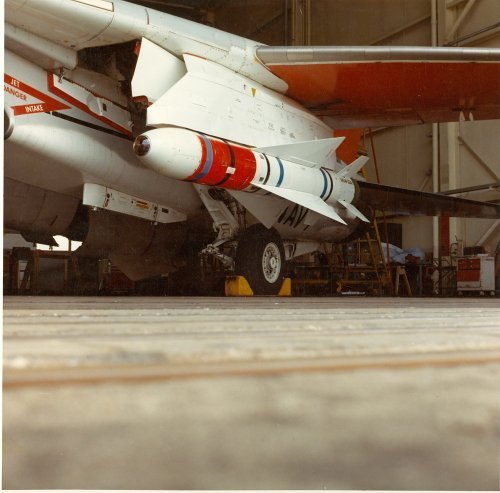
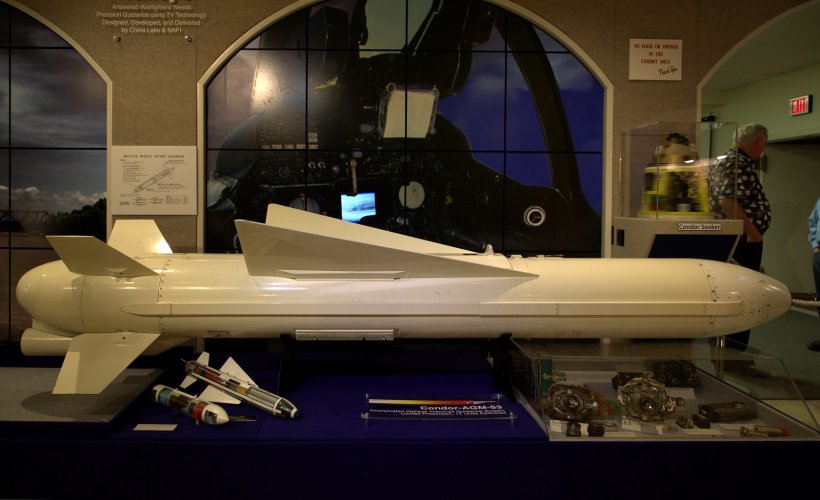
In '73 the what if missile would be Condor, not Harpoon?
The Soviets were trying it at the time. There is ZERO evidence that it would actually work in battle, and nobody since has been able to make that work. So, I'd say using some coordinated AShM strike from multiple platforms, and worse trying to use intermediate platforms to increase the launch range, is a total no-go up through at least the 90's.
Which is why the USN SAMs have a secondary AShM capability. And why even Sea Sparrows and ESSMs have a secondary AShM capability.The Condor is an air launch AShM, I meant surface ships firing the Harpoon or some earlier surface launched AShM in the 1973 YKW scenario. No point in having air launched AShMs when the war starts with Soviet cruisers launching their surface launched AShMs (and 15 x 6"-gun broadsides) from within visual range into the carriers. In that scenario you need the rapid response of escort ships firing their own AShMs.
Which is why the USN SAMs have a secondary AShM capability. And why even Sea Sparrows and ESSMs have a secondary AShM capability.
If someone is within 30km and starts throwing 6" HE at your carrier, they're going to eat 2-4 Talos, 8x Standards, and whatever Sea Sparrows want to cooperate. Each Talos is approximately 6x the ouch of a 16" HE shell, 50% more boom and impacting at twice the velocity, with a couple thousand pounds of magnesium that will burn your ship to the waterline.
Honestly, just packing a bigger warhead into a Talos is probably the USN's best bet for early AShMs. One tailored to getting the entire airframe ignited at that.
One Talos hitting any Russian surface combatant of that era and it's all she wrote. That ship is going to be wrecked.Which is why the USN SAMs have a secondary AShM capability. And why even Sea Sparrows and ESSMs have a secondary AShM capability.
If someone is within 30km and starts throwing 6" HE at your carrier, they're going to eat 2-4 Talos, 8x Standards, and whatever Sea Sparrows want to cooperate. Each Talos is approximately 6x the ouch of a 16" HE shell, 50% more boom and impacting at twice the velocity, with a couple thousand pounds of magnesium that will burn your ship to the waterline.
Honestly, just packing a bigger warhead into a Talos is probably the USN's best bet for early AShMs. One tailored to getting the entire airframe ignited at that.
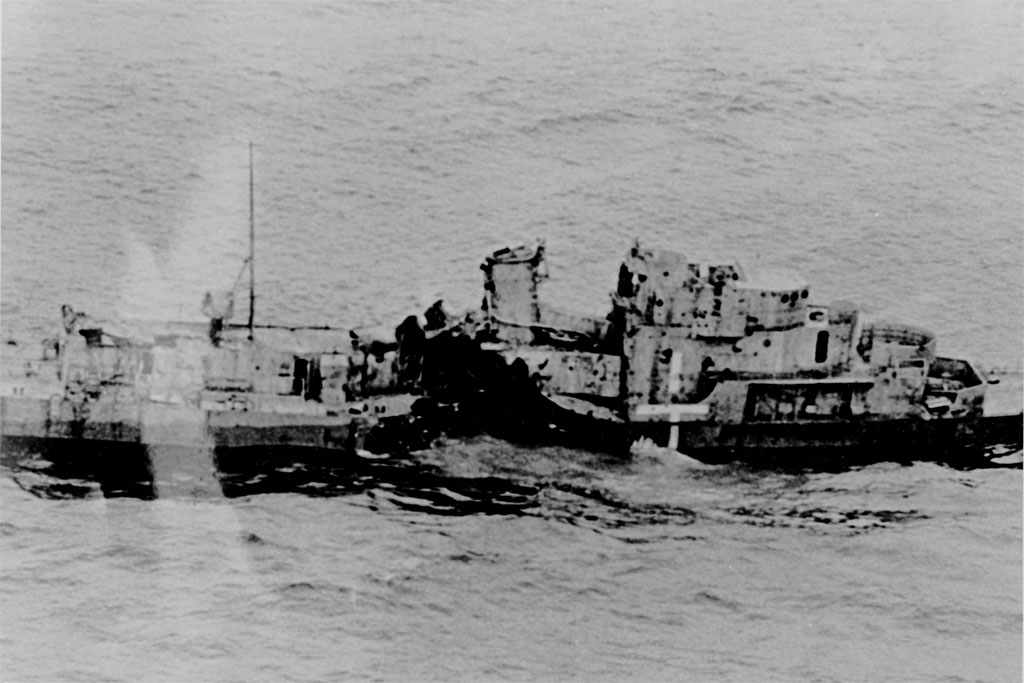

Erm, they were supposed to get targeting from coastal radio detection network. The USN in early 1960s was pretty careless about radar emissions, and only realized that something is wrong after observing Soviet ships and planes perfectly homing on its carriers without any previous recon missions. So the situation when an unsuspecting carrier got hit with supersonic P-35 missiles launched from 150+ miles range was... pretty disturbing.Cruise missile subs of that era had to surface, like the Soviet Juliett class, that had to surface, then take 5 to 10 minutes to try and acquire the target (forget trying to coordinate with a patrol plane) for a launch range of about 20 to 30 NM at most. Against a US carrier group that's not asleep, it's a death wish.
As many experts stated, it depend heavly on how much awarness carrier have about incoming strike. If the carrier got warning only when planes started to climb for launch altitude, then the best crew could do is to hit the deck & pray to die quickly. If the carrier got warning from sufficient distance, it could survive (but not for sure), and clearly the attacking regiment would be mangled. If the carrier expected attack with at least a hour warning, and have time to deploy additional air patrols & missile traps along the threat vector - then the regiment was doomed.Missile armed maritime patrol planes, like the Tu 95 or Tu 16 are toast without serious fighter escort or getting very damn lucky. Even back then, the F-4 was designed specifically by the USN to shoot those planes down.
There was at most one cruiser with Talos supporting the carrier (or none; there were only seven Talos-armed ships at all, not enough for all supercarriers even). The Terrier was still rather short-legged and slow to reload in early 1960s. And the CAP was limited in interception capability; there were only a few F-4s with only a few Sparrow, and they could attack only one target per time. With a full regiment of Tu-16 charging the defense perimeter - usually supported by at least some coastal fighters, and electronic warfare planes - the situation was far from safe.Talos could down either at up to about 75 NM, while either would have to go active with radar to locate the target for firing information. AS-1 or -2 are pretty crappy as AshM's go. They have very easily jammed conical scan radars based largely on US and British WW 2 technology.
First of all, neither KS-1 nor KS-10C were easy to jam. Both those missiles have midcourse beam-riding guidande, flying along launcher plane target tracking radar beam - and switching to radar homing only 10-20 km from target. The midcourse guidance was pretty resistant to jamming; there was a human operator at the scope to discriminate signatures & hold the beam (if required, manually) on target. And the terminal guidance did not left much time for the ECM's to tune on. Don't forget, the 1960s jammers needed to be set manually!AS-1 or -2 are pretty crappy as AshM's go. They have very easily jammed conical scan radars based largely on US and British WW 2 technology.
You clearly should learn WW1 history...Given the $h!+ performance of the Russian Navy since 1905--at least--I

What weapons would those Buccaneers be using that wouldn’t involve almost directly overflying those ships?
Some of those major missile warships were Soviet Kresta-II and Kara class BPKs and Krivak class MPKs armed with SS-N-14.Really?
GROWTH IN SOVIET MISSILE-LAUNCH PLATFORMS
MAJOR MISSILE WARSHIPS
MISSILE PATROL BOATS
CRUISE MISSILE SUBMARINES RECONNAISSANCE AND MISSILE AIRCRAFT TOTAL
1960 1970 6 49 6 158 0 62
215 454 227 723
https://digital-commons.usnwc.edu/cgi/viewcontent.cgi?article=1029&context=newport-papers
Pp. 8,9
https://en.wikipedia.org/wiki/Blue_Boar_(bomb)TV/imaging guided (DSMAC) can be better, but now we're getting into guidance modes that are probably too fancy to do with 1950s or 60s technology.
Erm, they were supposed to get targeting from coastal radio detection network. The USN in early 1960s was pretty careless about radar emissions, and only realized that something is wrong after observing Soviet ships and planes perfectly homing on its carriers without any previous recon missions. So the situation when an unsuspecting carrier got hit with supersonic P-35 missiles launched from 150+ miles range was... pretty disturbing.
As many experts stated, it depend heavly on how much awarness carrier have about incoming strike. If the carrier got warning only when planes started to climb for launch altitude, then the best crew could do is to hit the deck & pray to die quickly. If the carrier got warning from sufficient distance, it could survive (but not for sure), and clearly the attacking regiment would be mangled. If the carrier expected attack with at least a hour warning, and have time to deploy additional air patrols & missile traps along the threat vector - then the regiment was doomed.
Terrier, even in the 60's had a nearly 40 NM range on it and a practical 30 NM engagement range. The "full regiment of Tu 16" attacking in coordination is just asking for lots of casualties. They're going to get picked up at 100+ NM from the task group by EW aircraft and that's about the end of them. Even 4 F-4's up are going to start taking them down one after the other as they are exactly the sort of target Sparrow was meant to engage.There was at most one cruiser with Talos supporting the carrier (or none; there were only seven Talos-armed ships at all, not enough for all supercarriers even). The Terrier was still rather short-legged and slow to reload in early 1960s. And the CAP was limited in interception capability; there were only a few F-4s with only a few Sparrow, and they could attack only one target per time. With a full regiment of Tu-16 charging the defense perimeter - usually supported by at least some coastal fighters, and electronic warfare planes - the situation was far from safe.
You clearly should learn WW1 history...
I have. It's almost as underwhelming and horrific a defeat as WW 2 was. After all, in the latter, the Red Navy's submarine arm was the most common one engaging enemy ships and they lost more submarines than ships they sank.You clearly should learn WW1 history...
Yeah, one problem - it was NOT done in early 1960s, since USN underestimated the capabilities of passive tracking. Only after facing the fact, that Soviet fleet could reliably track the USN carriers in real time, USN started to took the problem seriously.Unless you set EMCON Delta, which was only occasionally done (I served on carriers). That was a specific plan for masking EM radiation the carrier was giving off. Just because the norm was rotate and radiate, doesn't mean when the shooting starts the carrier will continue to do so.
It took 4.5 minutes to ready launchers for the first missile, ten second pause between launches. The missile could be launched at 4-5 Beaufort; not great, but not bad also.The Juliett class also has a serious weakness in being a diesel boat. Besides that, it had to surface, then it took about 5 to 10 minutes to ready the launchers and the sea state had to be relatively calm. In a heavier sea between waves washing over the boat and it rolling it couldn't fire.
Because of what? There were numerous times Soviet submarines & bombers were able to sneak to USN carriers. Of course, the opposite was true also.Doing a "high seas Pearl Harbor" wasn't going to happen. Gaining such a level of surprise given Soviet command and control really wasn't possible.
They weren't, but they were fast fighter-size targets, flying relatively low (especially on terminal run), and USN anti-air defense wasn't exactly great against such targets.As for incoming missiles, those early, large, Soviet ones were hardly surface skimmers.
Sure. As long as you warm up all the tubes in your fire control computer, lock the radar on small, not very reflective target, run through the missile warm-up, moving, finning (manual) and loading cycle, and your prayers that seeker is actually tracking are answered. Yes, it was possible; no, it wasn't guaranteed. The Talos was good, but slow-firing, and there were too few ships with it. The 1960s Terrier was still half a beam-rider, and wasn't exactly suited for fighter-size target. And the Tartar in early 1960s was basically unworkable due to technical issues.They'd get picked up on radar fairly far out and were really no more difficult to engage than a jet fighter would have been given that they were nearly as big and going roughly the same sort of speed.
Only the RIM-2F have a 75 km range. The majority of missiles in early 1960s were still RIM-2D (beam-rider) or RIM-2E (homing), limited by circa 40 km range.Terrier, even in the 60's had a nearly 40 NM range on it and a practical 30 NM engagement range.
Oh, how nice. Now a really fun thing; at 100 NM, the missiles is already flying, and it's less than 10 minutes till impact. If the carrier detected the attack at 100 NM, the carrier is very much dead.They're going to get picked up at 100+ NM from the task group by EW aircraft and that's about the end of them.
For CAP to have any use, the detection must be made at least at 200-250 NM. So the F-4 would at least have time to react, not only observe in horror how their task group turns into burning hulks.Even 4 F-4's up are going to start taking them down one after the other as they are exactly the sort of target Sparrow was meant to engage.
Facepalm. It was PVO Strany that were tasked with fleet support. Not Red Air Force.First, Soviet naval aviation had next to nil fighters assigned and to assign Red Air Force ones would require inter-service cooperation and likely days of planning and moving planes around.
Meet Mig-23)Then, given the short range of Soviet fighters and a lack of air-to-air refueling capacity,
Yeah? So apparently you missed the whole Black Sea campaign, the actions on Baltic completely. The two battles of Riga Gulf, the battle off Sarych, the action near Bosphours 10 may 1915? Ring any bells?I have. It's almost as underwhelming and horrific a defeat as WW 2 was. After all, in the latter, the Red Navy's submarine arm was the most common one engaging enemy ships and they lost more submarines than ships they sank.
The bravely primitive. But not ineffective. Ask Argentina.RAF plans with the TASMO force was to attack at low-level, with a flight of four Buccaneers tossing proximity fused 1000lb bombs at an enemy surface combatant, followed in quick succession by a second flight delivering bombs via laydown.
Not worth sinking?Some of those major missile warships were Soviet Kresta-II and Kara class BPKs and Krivak class MPKs armed with SS-N-14.
Congratulations! You’ve just an amazing argument for drastically cutting the USN budget!Missile patrol boats are useless except in littoral waters and even there, only worthwhile if they have some degree of air cover or the opposition has no real air force to use against them. Outside of the occasional--very occasional--stroke of luck, they're basically worthless.
Cruise missile subs of that era had to surface, like the Soviet Juliett class, that had to surface, then take 5 to 10 minutes to try and acquire the target (forget trying to coordinate with a patrol plane) for a launch range of about 20 to 30 NM at most. Against a US carrier group that's not asleep, it's a death wish.
Missile armed maritime patrol planes, like the Tu 95 or Tu 16 are toast without serious fighter escort or getting very damn lucky. Even back then, the F-4 was designed specifically by the USN to shoot those planes down. Talos could down either at up to about 75 NM, while either would have to go active with radar to locate the target for firing information. AS-1 or -2 are pretty crappy as AshM's go. They have very easily jammed conical scan radars based largely on US and British WW 2 technology.
Major warships? Like the Kynda class "cruisers?" The ships so poorly designed that if carrying a full load of SS-3 Shaddock missiles was in danger of capsizing in moderate seas? Given the $h!+ performance of the Russian Navy since 1905--at least--I wouldn't put any stock in their capability to anything at sea other than be targets.
You're talking a force that is about 99% conscripts with 3-year terms at that time with a professional officer corps that learns mostly by rote. Ships and missile boats use a "second captain" to coordinate fires where the overall commander of the force decides on what will be targeted and fired on. It's a cumbersome, inflexible, system that is highly prone to jamming and disabling.
The whole is poor quality and that is made worse by having crews that are poorly trained. One reason many Russian warships have duplicate radars onboard is so if one goes down, a common occurrence, and cannot be repaired due to lack of crew skill or parts, they have a backup to use.
Of course, none of that was going to be made public at the time but much of it is now.
https://apps.dtic.mil/sti/tr/pdf/ADA119812.pdf
https://archive.org/details/cia-readingroom-document-cia-rdp79-01194a000400070001-5/page/n1/mode/2up
https://www.cia.gov/readingroom/document/0005512847
https://warhistory.org/@msw/article/kynda-class
Basically, what you see with the Red Navy in the 60's to 80's is quite a bit of smoke and mirrors, illusion, not reality if all you look at is the surface of their weapons systems.

Not very long range on that one either. I'd say that until the Su-27 started entering service there wasn't much chance of escorts going out to support the bombers. I know the Soviets had dedicated interceptors with the range (Tu-128, MiG-25, MiG-31) but would they ever be used in such a way? They were generally to operate with land-based radar and command support for their interception duties, while going up against USN fighters far out over the ocean would be quite a different scenario.Meet Mig-23)
They were actually used that way, at least Tu-128. I read about several exercises in 1970s (including Ocean-70, the largest Soviet naval exercise), when they specifically sortied covering naval forces in Arctic from OPFOR air force.Not very long range on that one either. I'd say that until the Su-27 started entering service there wasn't much chance of escorts going out to support the bombers. I know the Soviets had dedicated interceptors with the range (Tu-128, MiG-25, MiG-31) but would they ever be used in such a way?
They were actually used that way, at least Tu-128. I read about several exercises in 1970s (including Ocean-70, the largest Soviet naval exercise), when they specifically sortied covering naval forces in Arctic from OPFOR air force.
As far as I know, Navy didn't have any specific troubles operating with PVO Strany squadrons. The air defense of maritime borders were also amongst PVO Strany duties, so they have no objections against flying sorties for the fleet.
