I think many definitions are meaningless. For example, "medium-weight fighter jets, heavy-weight fighter jets" or "4.5th-generation fighter jets, 5.5th-generation fighter jets", just like how chip manufacturers call a chip with an actual line width of 7nm a 2nm chip. It's a marketing gimmick.However, I would like to ask whether using medium-thrust turbofan engines and large-thrust turbofan engines can be regarded as a distinguishable standard. That is to say, an aircraft equipped with two F110, AL-31F or WS-10 engines can be considered a heavy fighter jet, while an aircraft equipped with two F414 or RD-93 engines can be called a medium-sized fighter jet.
 
In theory the limit was somewhere between F-18 and F-15. But Rafale and Typhoon may disagree... a Rafale is two-third the size of a Mirage 4000, yet can carry as many bombs and missiles (13 - 14 hardpoints).

Also depends from the distinction between a fighter and an interceptor. Think of a MiG-21 and a Tu-128...

MiG-29 : LWF fighter

Su-27 : heavy fighter

MiG-31 : large interceptor.
 
Might as well ask here as it's the closest topic to fit my question.

But why did super-large fighter/interceptors like the Tu-160PP, A2A focused B-1 or YF-12 fail repeatedly. After all, space for plenty of missiles and powerful radars was available, and these aircraft could actually fly fast and high, which lends itself to slinging dangerous AAMs at adversaries. I guess a reason could be cost, but is there something else I'm overlooking with these "super heavy fighter" concepts?
 
Due to the high cost, only superpowers could afford such highly specialized "ships". China is likely to be the only operator J-36 in the sixth generation. Russia is trying to master this area by working towards the development of the MiG-31++ and possibly the PAK DP from Sukhoi. The United States is currently in a state of "falling aircraft". In my opinion, the chances of NGAD and F/A-XX entering service are negligible.
 
Might as well ask here as it's the closest topic to fit my question.

But why did super-large fighter/interceptors like the Tu-160PP, A2A focused B-1 or YF-12 fail repeatedly. After all, space for plenty of missiles and powerful radars was available, and these aircraft could actually fly fast and high, which lends itself to slinging dangerous AAMs at adversaries. I guess a reason could be cost, but is there something else I'm overlooking with these "super heavy fighter" concepts?
Well, the YF-12 Blackbird was not built because McNamara was throwing a temper tantrum and not releasing the funds allocated by Congress. Also, it only had space for 3-4 missiles. Really good missiles, but only 3-4. As a side note, the YF-12 would need some special setup for scramble interceptor work; the prebreathing needed due to the space suits is a challenge.

But Tu160PP/B-1R were very expensive, and took up bomber production space at the factory.
 
Due to the high cost, only superpowers could afford such highly specialized "ships". China is likely to be the only operator J-36 in the sixth generation. Russia is trying to master this area by working towards the development of the MiG-31++ and possibly the PAK DP from Sukhoi. The United States is currently in a state of "falling aircraft". In my opinion, the chances of NGAD and F/A-XX entering service are negligible.
Isn't PAK DP a Mikoyan project within UAC? (PAK FA for Sukhoi, PAK DA for Tupolev, PAK DP for Mikoyan and PAK VTA for Ilyushin).

Also NGAD will definitely enter service, the USAF is the favorite child of all the branches and NGAD is viewed as an essential part of ensuring national security and maintaining US air power. NGAD, like the B-21, or the Columbia SSBN, or the Ford CVNs is seen as a non negotiable investment and asset for the military.

F/A-XX seems to be somewhat murky currently, but that will most likely also come to fruition. Albeit possibly later than the F-47.
 
As a side note, the YF-12 would need some special setup for scramble interceptor work; the prebreathing needed due to the space suits is a challenge.
This is one of the reasons the F-12's cancellation may have been a blessing. The Blackbird family on the whole was complex enough to operate on a basis of pre-planned missions executed without special urgency. Trying to keep the force on any form of readiness could have been a nightmare, let alone trying to fit the complex accelerate-seal-refuel cycle into an interception profile.
 
What would be the ballpark estimate for a single unit of either of these?
Base cost of bomber plus cost of F-14/MiG-31.


The US Congress should've overridden McNamara and then removed him from office.
Yes. Too bad he knew where too many bodies were buried.


This is one of the reasons the F-12's cancellation may have been a blessing. The Blackbird family on the whole was complex enough to operate on a basis of pre-planned missions executed without special urgency. Trying to keep the force on any form of readiness could have been a nightmare, let alone trying to fit the complex accelerate-seal-refuel cycle into an interception profile.
It'd be possible to make a "scramble RV" that had the crews pre-breathing oxygen. Figuring out how to make food while in pure oxygen would be more than a little exciting, but it's a technical problem.

It wouldn't be pleasant to be on oxygen for however long the alert setup lasted. But it'd be doable.
 
Personal categorization:

Light fighter: A fighter with all the desirable characteristics except payload/range that is generally marketed for defensive purposes.

Heavy fighter: A fighter that is significant larger, heavier and more expensive than light fighters for the purpose of much longer range and increased payload for offensive operations, either as escort or fighter bomber.

Note technology change the weight and baseline range of the standard light fighter of the era, and heavy fighter is relative to that.
 
Anyway...in the modern era is there actually anything that could be called a fighter? Everything is multi-role, even the 'not a pound for air to ground' Eagle went bombing.

Chris
 
This is one of the reasons the F-12's cancellation may have been a blessing. The Blackbird family on the whole was complex enough to operate on a basis of pre-planned missions executed without special urgency. Trying to keep the force on any form of readiness could have been a nightmare, let alone trying to fit the complex accelerate-seal-refuel cycle into an interception profile.

Also the very specific JP-7 fuel https://en.wikipedia.org/wiki/JP-7
-triethylborane (TEB) "shots" to start and to go afterburning
-copious amount of JP-7 leaking on the ground because the YF-12 titanium structure only fully sealed at high mach numbers;
-so YF-12 would need a refueling immediately after takeoff;
-but, with the KC-135 running on classic JP-4, the tanker needs to be a specialized variant: KC-135Q

More generally: titanium is a b*tch at many levels, operationally. No surprise the B-70 went for stainless steel. Boeing 2707-300 SST picked titanium but would have paid a heavy prize to it.

Both A-12 and SR-71 were not "miracle planes" - whatever the internet says LMAO. They had stupendous performances but compromises had to be made along the way.
These compromises were tolerable for "silver bullet" strategic reconnaissance planes, operated by the CIA. But going into the fighter or bomber business created different requirements that ran headon into the A-12 / SR-71 particularities.
 
Also the very specific JP-7 fuel https://en.wikipedia.org/wiki/JP-7
-triethylborane (TEB) "shots" to start and to go afterburning
-copious amount of JP-7 leaking on the ground because the YF-12 titanium structure only fully sealed at high mach numbers;
-so YF-12 would need a refueling immediately after takeoff;
-but, with the KC-135 running on classic JP-4, the tanker needs to be a specialized variant: KC-135Q
There were specific Blackbird missions that did not feature a refueling. Forget what the crews called them. IIRC the usual reason to take off without a full fuel load was runway length. There's a big difference in how much runway you need to take off at 150klbs versus 100klbs.

But yes, it'd be a complete pain in the ass to keep a Blackbird fully fueled on the apron.

I suspect that if the USAF got their 100x F-12 interceptors many more of the KC135s would have been modified to -Q models.
 
The definition of Light/Medium/Heavy fighter might change from era to era, gen to gen. It may not be right to comapre jets of 2 different gens like F-18 SH Vs F-35.

1746967682445.png

Since WW era, technology evolved & type of FIGHT & FIGHTER changed.
Gunfight -> WVR fight with IR-CCM -> BVR fight.
6gen tech aims to have DEW-CIWS, so we'll see DEW fight, rendering gun-fight obsolete.

Materials & Mechanical Engineering improved & hence component type & weight changed, so overall weight/capcity also chaged.

1 or 2 engines decided on cost Vs performance & redundancy. F135 engine is equivalent of 2x F414 engines.

5gen F-22 has STOW (Stealth Take OFF Weight) = 19.7(empty) + 8.2 (fuel) + 1.1 (AAMs) = 29 tons.
If 6gen aims to have more fuel, weapons + DEW internally then STOW might reach 35tons.

MTOW is roughly 2x +/- empty weight. F-22 has 38 tons MTOW. It also depends on lift > wing config > wing area, velocity, air density.
So 6gen MTOW might reach 45-50 tons.

Some people imagine 7gen SR-72 Darkstar kind of high altitude fighter, which would need huge fuel + bigger hypersonic AAMs/AGMs + DEW. So it would be something comparable in size with SR-71 derived A-12.
 
I think the Chinese & Russian tilt towards heavy fighters is also largely an artifact of the Su-27's success and Mig-29's failure to compete with other contemporary designs (in relative terms). Everything flows from there - engine size, upgraded platforms etc. That's how you get such a large fleet of J-11/J-15/J-16 etc.

Whereas Western medium designs starting with the F/A-18, and now Rafale, Typhoon and F-35 have all provided essentially the same (or better) capability in somewhat smaller, more weight optimized airframes that leverage the West's technological lead in engine technology, composites and avionics. (Though China appears to be catching up and possibly even on par in some respects with its newest designs)
Wouldn't those designs be successful because they hit the performance targets and were free of current-day politics: MiG-31 covering vast areas of Russian Siberia and arctic, Su-27 needing big fuel load to loiter for long, and SR-71 needing to go fast and far? West also does not lack successful heavy aircraft. If Avro Arrow was allowed to take off, perhaps we would have had a similar case there too (Canada being similarly geographically configured like Russia? Chinese 6th gen seem to be designed to deny force multipliers close to their coast - so again, fit for use, fit for purpose rather than just being successful because they were heavy?
 
Might as well ask here as it's the closest topic to fit my question.

But why did super-large fighter/interceptors like the Tu-160PP, A2A focused B-1 or YF-12 fail repeatedly. After all, space for plenty of missiles and powerful radars was available, and these aircraft could actually fly fast and high, which lends itself to slinging dangerous AAMs at adversaries. I guess a reason could be cost, but is there something else I'm overlooking with these "super heavy fighter" concepts?
1) Politics; 2) Change of military doctrine; 3) New weapons or technologies entering the scene; 4) Change of needs.... Many reasons in every particular case....
I forgot 5) Costs and budget....
 
Might as well ask here as it's the closest topic to fit my question.

But why did super-large fighter/interceptors like the Tu-160PP, A2A focused B-1 or YF-12 fail repeatedly. After all, space for plenty of missiles and powerful radars was available, and these aircraft could actually fly fast and high, which lends itself to slinging dangerous AAMs at adversaries. I guess a reason could be cost, but is there something else I'm overlooking with these "super heavy fighter" concepts?
Not enough targets to justify the expense. XF-108 and YF-12 were meant to counter supersonic strategic bombers. When they didn't materialize the F-106 was good enough for Bears.
 
That is a perfect example of what I said earlier; no such thing as a fighter any more.

Chris
 
Anyway...in the modern era is there actually anything that could be called a fighter? Everything is multi-role, even the 'not a pound for air to ground' Eagle went bombing.

Think of the pursuit role. Only a fast airplane with good kinematics can do it.

This is why YB-40 was not a "fighter" while every fast airplane with AA weapon probably falls under it.
 
This is why YB-40 was not a "fighter" while every fast airplane with AA weapon probably falls under it.

IIRC one reason why the YB-40 failed is that the conversion didn't remove the bomb-racks and all associated equipment that made the B-17 a bomber meaning it had a lot of deadweight.
 
IIRC one reason why the YB-40 failed is that the conversion didn't remove the bomb-racks and all associated equipment that made the B-17 a bomber meaning it had a lot of deadweight.
It also didn't dump all the empty cases out the bottom, so the YB-40 was much heavier/slower on the return flight than the B-17s.
 
It also didn't dump all the empty cases out the bottom, so the YB-40 was much heavier/slower on the return flight than the B-17s.
Even if it had, there was the weight (and drag!!) of the extra dorsal turret, I think the waist guns were duplicated, and I have a vague recollection that the chin turret (which became standard on the -G) was also new at that point. So even if she'd shot herself dry and dumped all the cases, she'd still be heavier and slower than a regular B-17F or even a -G that had dropped all its bombs.
 
Figuring out how to make food while in pure oxygen would be more than a little exciting, but it's a technical problem.
You do the cooking elsewhere.

When I was a kid, we stayed in a motel of which I have only a vague memory now. But the thing I remember was ticking boxes on a breakfast order and hanging it on the outside of the door. In the morning we would open a little hatch near the door and our breakfast would be there, having been pushed through a hatch on the outside of the room. No doubt a similar airlock system could be worked out. I very much doubt that the small amount of nitrogen this would introduce could be of harm.
 
A better question would've been how different air forces categorize their aircrafts and how it compares with other air forces. And also how such categorization changed over time.
 
You do the cooking elsewhere.

When I was a kid, we stayed in a motel of which I have only a vague memory now. But the thing I remember was ticking boxes on a breakfast order and hanging it on the outside of the door. In the morning we would open a little hatch near the door and our breakfast would be there, having been pushed through a hatch on the outside of the room. No doubt a similar airlock system could be worked out. I very much doubt that the small amount of nitrogen this would introduce could be of harm.
I guess I was actually thinking coffee, but yeah. You'd probably have to airlock it.
 
I will try to be brief.
Over on the Sino Defense Forum in the Air Force thread, someone made the statement that China now operates the world's largest force of heavy fighters. The PLAAF and PLANAF combined apparently operate a fleet of about 1,263 J-11/15/16/20 and SU-27/30 and 33. The total also includes about 200 JH-7s but excludes J-8s (due to their 18MT MTOW).
This compares to 580 USAF F-22s and various F-15s. Now...

One should explain him that a Lightweight fighter F-16 with AESA radar and latest AMRAAM/Meteor long range missile would make short work of them fighters. In fact, those heavy fighters would be at disadvantage in a such long range environment because of their much bigger radar signature.
The only advantage in these days for bigger fighters is longer range. But I seriously doubt that in the foreseeable future the chinese air force would try/ be able to conduct offensive air operations over american teritory. :)

We should remember that the most successful fighter in the history was one of the lightest fighters of WW2.
1845_rd.jpg
 
There are many opportunities to reduce weight in sixth gen fighters: composite based primary structures, using 3D printed parts wherever possible (yes this saves weight), going modern electronic as much as possible, deleting vertical stabilizers, fluidic TV over mechanically actuated, filling empty cavities with helium…:D
 
There are many opportunities to reduce weight in sixth gen fighters: composite based primary structures, using 3D printed parts wherever possible (yes this saves weight), going modern electronic as much as possible, deleting vertical stabilizers, fluidic TV over mechanically actuated, filling empty cavities with helium…:D
You still need a large airframe to hold the amount of fuel required for the range demanded.
 
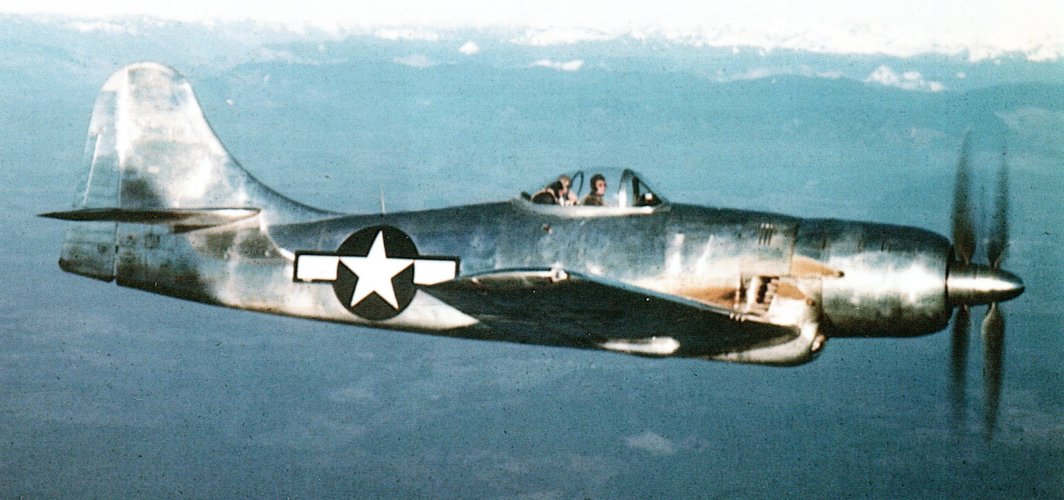
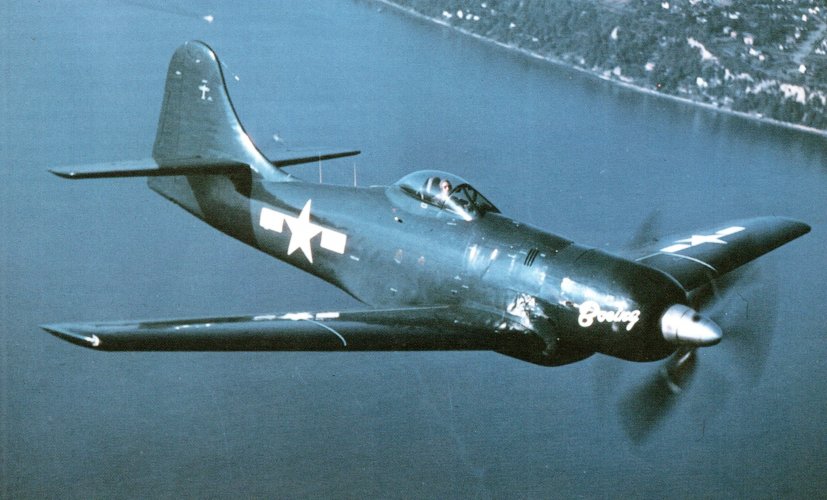
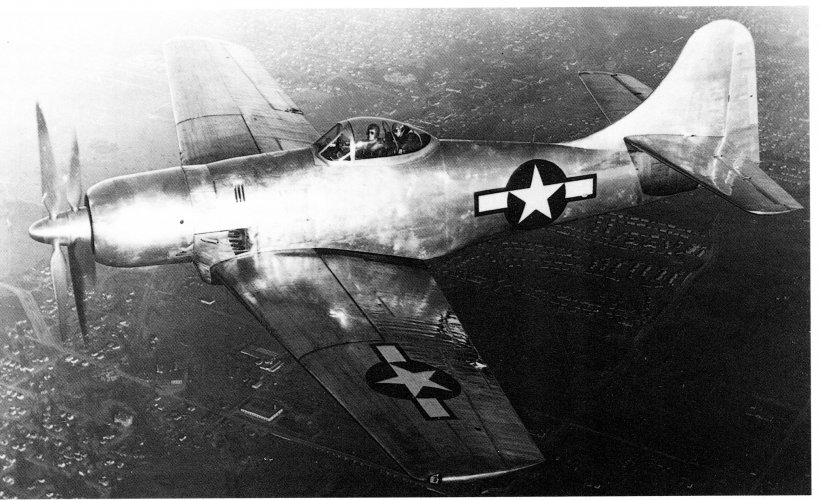
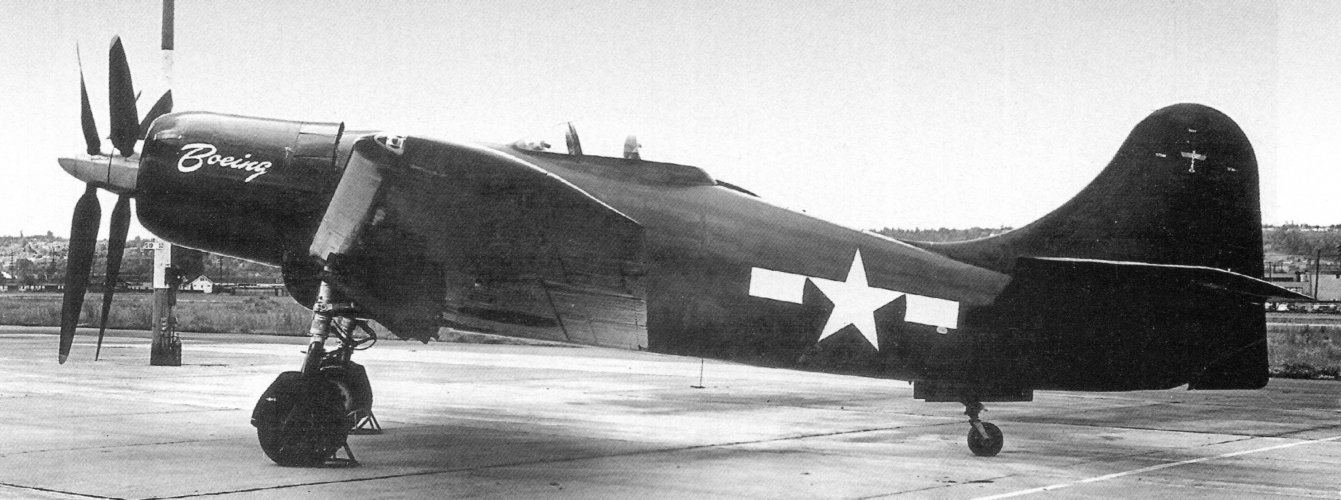
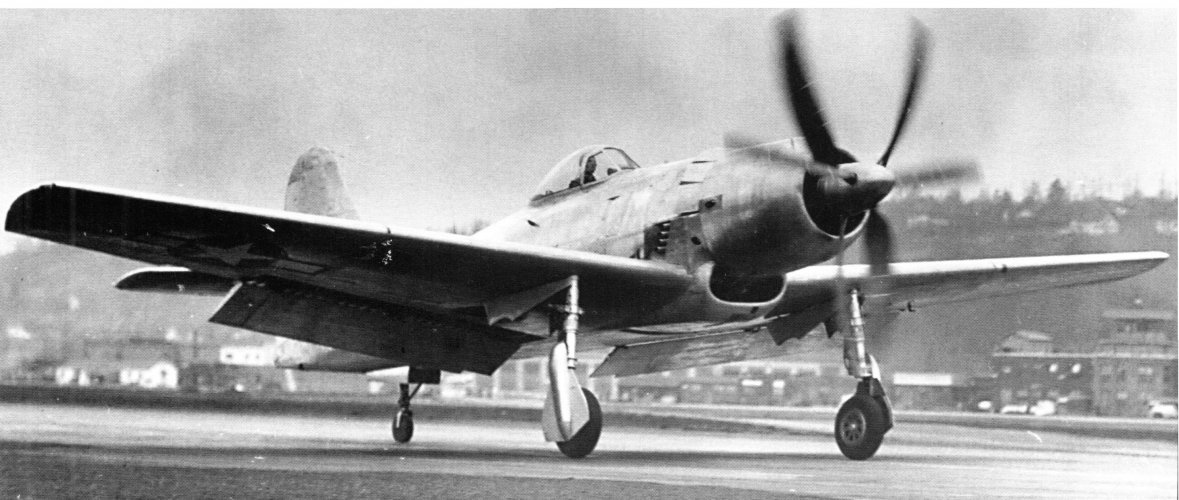
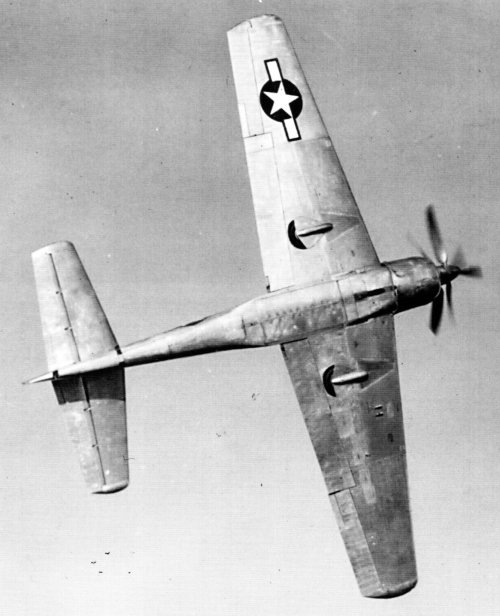
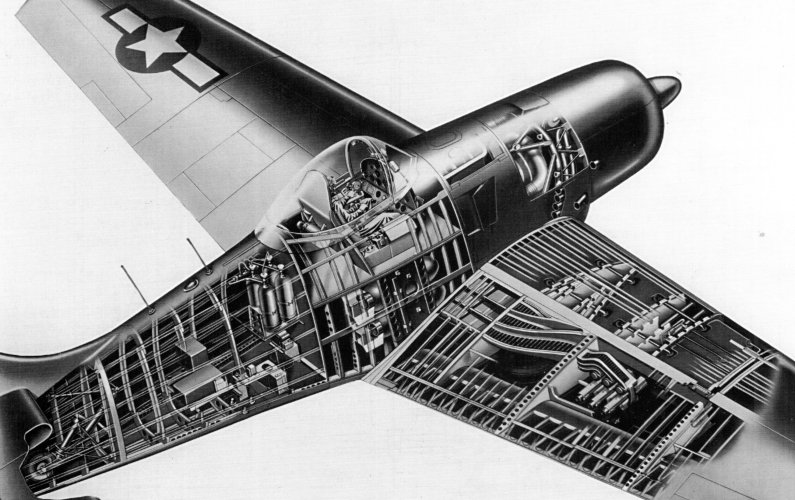
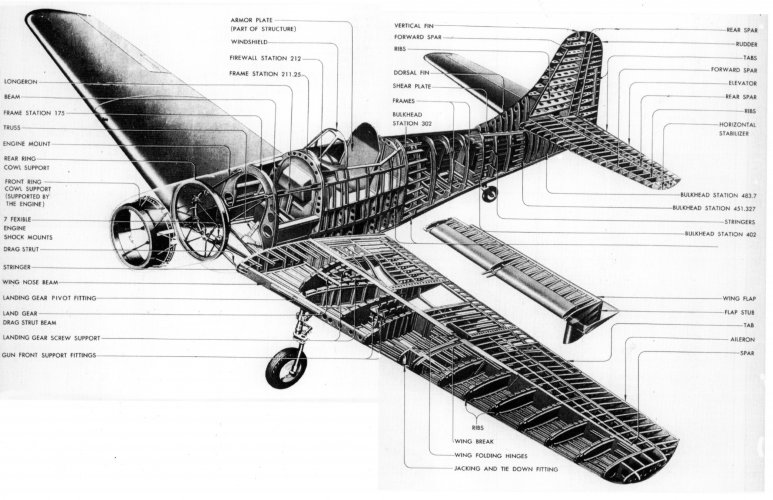
Boeing XF8B-1 Five-in One


On June 30, 1941, the U.S. Navy Bureau of Aeronautics decided to support the development of the F7F Tigercat, a twin engine, single seat multirole heavy aircraft, to serve in the Midway class carriers.

The project was doomed to failure because with the technology available at the time, it was not possible to solve the problem of landing on the deck of an aircraft carrier with an engine stopped.

Early in 1943, the Bu Aer issued the specification SD-349, calling for a long-range shipboard escort fighter with 342 mph top speed, 79 mph landing speed, deck takeoff in 262 feet with 25 knot wind, 30,000 feet ceiling and 3,760 ft/min rate of climb.

To avoid the symmetry problems suffered by the Tigercat, Boeing proposed to use a single engine aircraft designed to be used as long-range escort fighter, shorth range shipboard interceptor, high speed level bomber, medium range dive bomber or low level, medium range torpedo bomber.

To be able to perform such different roles, it was necessary to design a large airframe, 130 per cent heavier than a Hellcat and 116 per cent heavier than an Avenger to accommodate a large amount of fuel, fitted with vertically folding wings for carrier storage.

Tigercat designers calculated that its multirole missions required the power of two P&W R-2800-22W engines each rated at 2,200 hp, but the American industry had not been able to develop an operating engine of 4,400 hp and Boeing had to use the P&W R-4360 of only 3,000 hp. an experimental third-generation engine of which only a few prototypes had been built.

Boeing engineers took a big risk mixing an airframe with multiple innovative systems with a little-tested engine, and the predictable result was the construction of only three prototypes, no production contract and a program cost twice the estimate.

On April 10, 1943, the U.S. Navy awarded a contract for three prototypes (Bu Aer Nos. 57984, 57985 and 57986), one static test airframe, four engines, spares and design drawings.

The mockup of Boeing Model 400 was inspected in early October 1943.

The first prototype was flown on November 27, 1944, powered by one Pratt and Whitney R-4360-8a, air cooled radial engine driving a six-bladed, contra-rotating airscrew Aeroproducts propeller.

This engine suffered from over speeding, overheating and it proved extremely hard to start, due carburetor malfunction.

On February 13, 1945, during a 120-mph taxi run test, the undercarriage retracted without warning. As a result, the engine, the propeller, the chin air intake the landing gear doors and the bomb bay doors were damaged.

The aircraft was repaired, a new R-4360-10 engine (c/n 23) was installed, and a flight engineer's seat was located behind the pilot to reduce development time.

Between March 5 and April 9, 1945, the prototype was tested at Patuxent River naval air station, but the wing folding system proved not to work properly in moderate wind.

The U.S. Navy evaluation program included mockup combats against twin engine fighters Grumman F7F Tigercat and Bell P-59 Airacomet.

At this time the aircraft was not yet painted, except for a large Olive Drab anti-glare panel and four star and bars national insignia.

During the summer of 1946, the painting scheme was changed to overall Glossy Sea Blue (FS 15042, ANA 623).

First prototype technical data

Wings: single spar, 16.46 m span, 45.43 sq. m area, electrically operated folding system and Fowler flaps, hydraulically boosted ailerons, 384 U.S. gallons of fuel housed in internal cells, 600 gallons in four underwing drop tanks and two underwing racks for 1,000 lb. bombs or two AD-1/AM-1 torpedoes, six 0.5-in machine guns with 400 rpg or six T-31 20-mm cannons with 200 rpg and main carriage members. In night fighter configuration, the plane could carry under the starboard wing one pod housing the AN/APS-4 airborne radar.

Fuselage: housing the engine mount, firewall, 40 U.S. gallon oil tank, chin air intake with the gun camera, cockpit with armor plates and bulletproof windshield, Mk 23 computing gunsight, bomb bay with four racks or one fuel cell containing 270 U.S. gallon, radio telephone, IFF radio, battery, landing lights, electrically operated tail wheel and tail hook, B-17 style tailfin and horizontal stabilizer with tabs, overall length: 13.21 m, height: 4.98 m.

Power plant: one Pratt and Whitney R-4360-10, 28 four row 28 cylinders, air cooled radial engine with two-stage engine-driven supercharger and intercooler, driving a six-bladed, contra-rotating Aeroproducts airscrew with 4.27 meters of diameter. The engine was rated at 3,000 hp, restricted to five minutes of max power.

Max weight: 10,414 kg, max speed: 695 km/h, service ceiling: 11,430 m, climb rate: 3,660 ft/min, range: 5,000 km.

The second prototype was flown on November 27, powered by the R-4360-10 (c/n 23) rebuilt after the accident of the first prototype.

On December 26, 1945, the aircraft suffered engine failure during a high-altitude flight test and the pilot was forced to make an emergency landing damaging the propeller.

It was also necessary to replace the engine with the R-4360-10 (c/n 31).

The second prototype was delivered to the USAF-Wright Field for an evaluation program conducted between February and August 1946.

Several changes were incorporated at the request of the Air Materiel Command to increase the critical Mach number:

-Redesigned cockpit and canopy.

-Modified radio equipment.

-Revised exhaust tubes.

-Modified the carburetor air intake.

-Modified wheel covers.

-Faired tailhook.

-Installation of compressibility dive-recovery flaps.

As a result of all these modifications, the aircraft was 680 kg overweight.

The test program was terminated by a new engine failure and the prototype was returned to the Navy.

Painting scheme: Overall Glossy Sea Blue (FS 15042, ANA 623).


Proposed configurations to accomplish the various roles:

-Shipboard interceptor: with 384 U.S. gallons of fuel housed in the wing cells and six 0.5-in machine guns.

-Long-range escort fighter: with 384 U.S. gallons of fuel housed in the wing cells, 270 gallons in the bomb bay cell, 600 gallons in four underwing drop tanks and six 0.5-in machine guns.

-Medium range dive bomber: with 384 U.S. gallons of fuel housed in the wing cells, 270 gallons in the bomb bay cell, two 1,000 lb. bombs in underwing bomb racks and six 0.5-in machine guns.

-Long-range level bomber: with 384 U.S. gallons of fuel housed in the wing cells, 600 gallons in four underwing drop tanks, 3,200 lb. of internal bombs and six 0.5-in machine guns.

-Torpedo-bomber: with 384 U.S. gallons of fuel housed in the wing cells, 270 gallons in the bomb bay cell, three torpedoes AD-1 or AM-1 and six 0.5-in machine guns.

Tests showed that the aircraft did not excel at any of these roles.

Proposed production engines:

-P&W R-4360-B-2 with two-stage supercharger, rated at 3,250 hp.

-P&W R-4360-C with two-stage supercharger, rated at 3,500 hp.

The third prototype made its maiden flight in March 1946 powered by the engine c/n 31 and was used by the USAF for weapons tests at Eglin Field between July and December 1946.

When the machine guns were tested in flight, they were found to jam during maneuvers at high G and it was necessary to install anti-surge devices and ammunition drive boosters.

It was also shown that the poor design of the weapons housing caused inadequate cooling and led to frequent stoppages.

The 20-mm guns were not used during the tests.

The bomb bay doors were designed to open and close quickly after each bomb was launched and during testing of the system showed a tendency to open during tight turns, but they could not be bridled at more than 130 mph because of the negative air pressure. The launch system was never tested, only the external bomb racks were used for dive bombing tests.

During the tests, 1,000 lb. bombs were launched at 400 mph with diving angles between 40 and 60-degrees and 4-to-5 G pull outs.

The USAF evaluation concluded that the Model 400 was unsuitable for high-speed level bombing, because the deficient design of the bomb bay door system, also was unsuitable for diving due to its longitudinal instability diving at 60-degrees. The type proved inferior in dogfight against conventional fighters P-51 and P-47, due to their large size, overweight and slower maneuverability.

The U.S. Navy had considered a production contract for torpedo bombers, but the type was no better than the existing specialized torpedo bomber already available: Douglas BTD, Martin BTM and Curtiss BTC.

The Model 400 was too large compared to the Hellcat and Corsair naval fighters and took up too much space in the carrier's hangars, decreasing the number of aircraft available.

It was also unsuitable as a night fighter and the Navy preferred to use the Tigercat which could carry a larger, more advanced nose-mounted radar.

During the post war, the need for propeller fighters had disappeared and the last prototype was scrapped on March 16, 1950.

 

Attachments

  • 819.jpg
    819.jpg
    1.1 MB · Views: 9
  • 820.jpg
    820.jpg
    1.8 MB · Views: 11
  • 821.jpg
    821.jpg
    1.7 MB · Views: 12
  • 822.jpg
    822.jpg
    950 KB · Views: 10
  • 823.jpg
    823.jpg
    1.7 MB · Views: 10
  • 824.jpg
    824.jpg
    1.1 MB · Views: 9
  • 825.jpg
    825.jpg
    1.6 MB · Views: 9
  • 826.jpg
    826.jpg
    2.2 MB · Views: 9

Similar threads

Back
Top Bottom