- Joined
- 4 July 2010
- Messages
- 2,689
- Reaction score
- 3,748
New Atlas has some coverage.
https://newatlas.com/aircraft/pterodynamics-transwing-evtol/
https://newatlas.com/aircraft/pterodynamics-transwing-evtol/


It's always fun to watch fancy fledgling aerospace startups fight the laws of (wo)men rather than the laws of physics - this is almost one of those moments where I wish I liked popcornUS court denies Wisk’s request for injunction against Archer https://www.flightglobal.com/busine...-for-injunction-against-archer/144740.article
“In essence, Wisk has not shown a likelihood of success on the merits that defendant Archer Aviation Inc. has misappropriated its particular asserted trade secrets,” the court said in a one-page ruling on 22 July.
“There are some arguable indications of misappropriation but, even if the totality of that evidence raises ‘serious questions going to the merits,’ it is too uncertain and equivocal to support a finding of irreparable injury based on misappropriation or that the balance of hardships sharply favours Wisk,”
 ...
...
Not quite facetiously, I'd suggest that they're subject to the laws of evolution instead. We're seeing an explosion of morphologies not seen since the Cambrian.It's always fun to watch fancy fledgling aerospace startups fight the laws of (wo)men rather than the laws of physics - this is almost one of those moments where I wish I liked popcorn
That does seem to be a cauldron of innovation, as WH Sutton points out on his blog, Covert Shores, where 'narcosubs' regularly feature.
'survival of the least inadequate'.


...
But both roles can already be met by the helicopter. It is a proven and reliable vehicle which can get from A to B quickly and safely.
It can take off and land in a wide range of places with little preparation. A conventional automobile can connect seamlessly with it.
The role of the air car is more akin to the amphi car or the turbine powered yacht. It is a recreational toy for the Bezos and Musks or even Gareth Southgate.

At small scales it's not hard to build something strong enough, but as you mentioned, make this big enough to be manned, and the fold structure and mechanism become a challenge (to put it mildly).Does the weight fraction for the fold system scale up well? I wonder if a UH-60 size platform would be viable. While it might be sensible for the civil market, all of the extra requirements for military use might make this a difficult proposition. It certainly does look promising.


Get a optical stealth kit and every spec ops team will be getting one? It is not that expensive and a combustion engine can be used when outside of insertion point for militarily relevant performance.Very impressive noise profile. However, the Joby prototype is currently flying unmanned, so without any payload the engines might not be operating at full power. Also the AW109 is a much larger heavier machine that can carry 8 people, so it's not the best comparison.

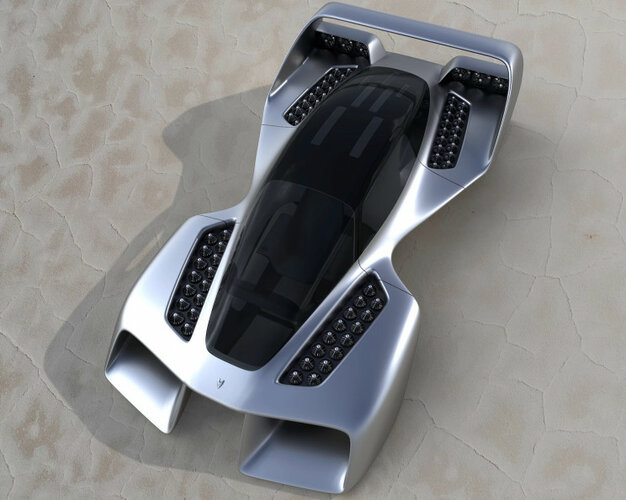
Still not as good as the Narco VTOL Drone.Tetra-aviation 33 engines monster:
https://www.designboom.com/technology/mk5-tetra-aviation-personal-evtol-08-02-2021/
I am not sure it is an inherently safe design (large span wing flapping with highly loaded rotors slung under it and M6 screws holding the props for example). Nice to see however yet a new team but focused on adapting existing tech without claiming the wheel was waiting for them to shape it more square...
Will be interesting to see how that turns out...
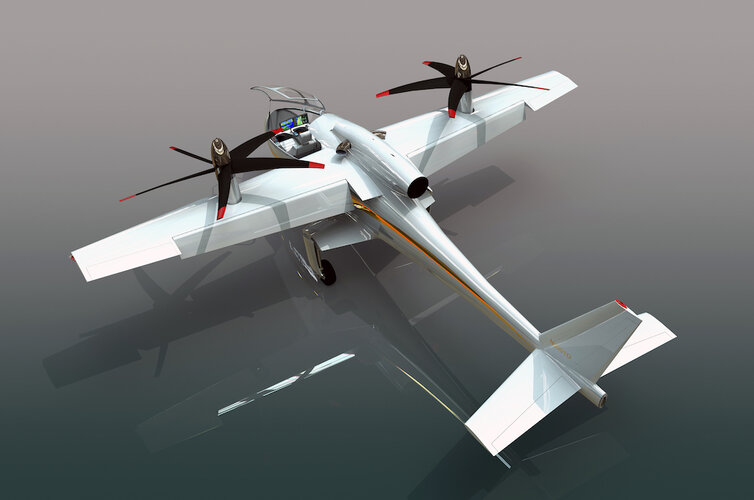

Well, I'd say you're working to a completely different set of requirements depending on whether you want to attract investors/press or whether you actually have to deliver a payload.I can definitely see the parallels here. Aska and Kelekona in particular need to take notes on that cartel drone design if they're serious about not going extinct!

What aspect is "weirdly impossible"? It seems like a quite attractive design to me.Another project based on tilting prop but with a weirdly impossible setup:

I guess the small propellers pushing the air straight on top of the wings, when in VTOL mode, might not make for a very efficient configuration.What aspect is "weirdly impossible"? It seems like a quite attractive design to me.Another project based on tilting prop but with a weirdly impossible setup:
I would also add that it is not immediately clear how they plan to control pitch in hover. Previous tilt-wings have used a small pitch rotor in the back...It is theoretically possible to use cyclic on the wing rotors, but no one has pulled that off yet.I guess the small propellers pushing the air straight on top of the wings, when in VTOL mode, might not make for a very efficient configuration.What aspect is "weirdly impossible"? It seems like a quite attractive design to me.Another project based on tilting prop but with a weirdly impossible setup:
The hybrid propulsion system, on the other hand though...
In addition to the above...At small scales it's not hard to build something strong enough, but as you mentioned, make this big enough to be manned, and the fold structure and mechanism become a challenge (to put it mildly).Does the weight fraction for the fold system scale up well? I wonder if a UH-60 size platform would be viable. While it might be sensible for the civil market, all of the extra requirements for military use might make this a difficult proposition. It certainly does look promising.
Consider that ALL the wing loads have to pass through those relatively small hinges. So, roughly speaking, if you were to scale this up to a 7,000 lbs 5-pax eVTOL (Joby or Alia class), and you were sizing for 4.5g's ultimate load factor, those hinges would have to transfer 31,500 lbs of force.
I don't have much practical experience in this field, but if variable-geometry pivot design is any indication, these flight-critical structures are built like tanks.
Actuation is also a challenge. If you notice, for the subscale vehicle they wisely went with a somewhat crude and draggy (but light and effective!) scheme with jointed arms projecting outside of the airframe. I doubt they'd do that for a UAM vehicle.
That being said, for a group I, II, or III UAS, this is probably not a problem.
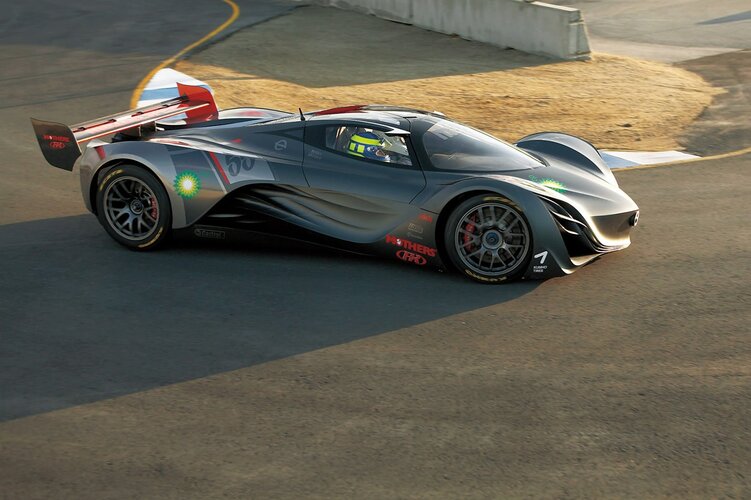
Found the problem!interestingengineering.com

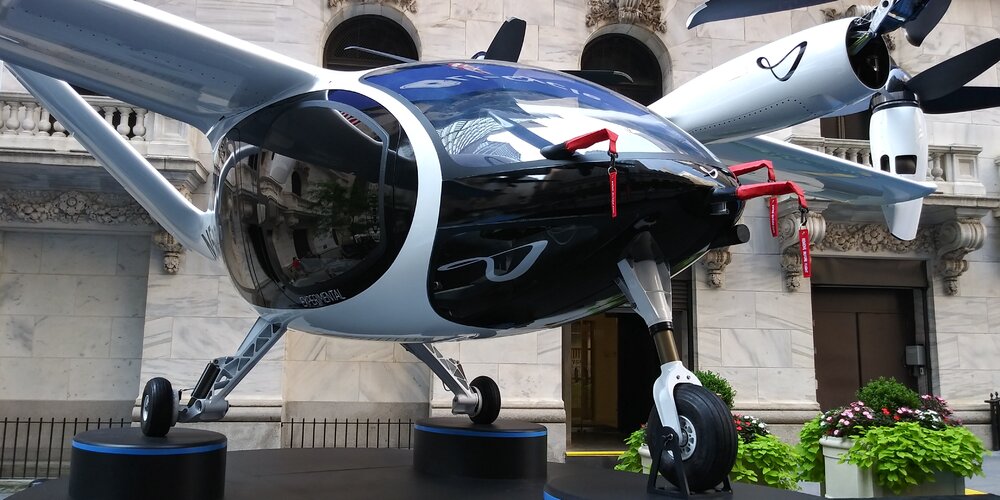
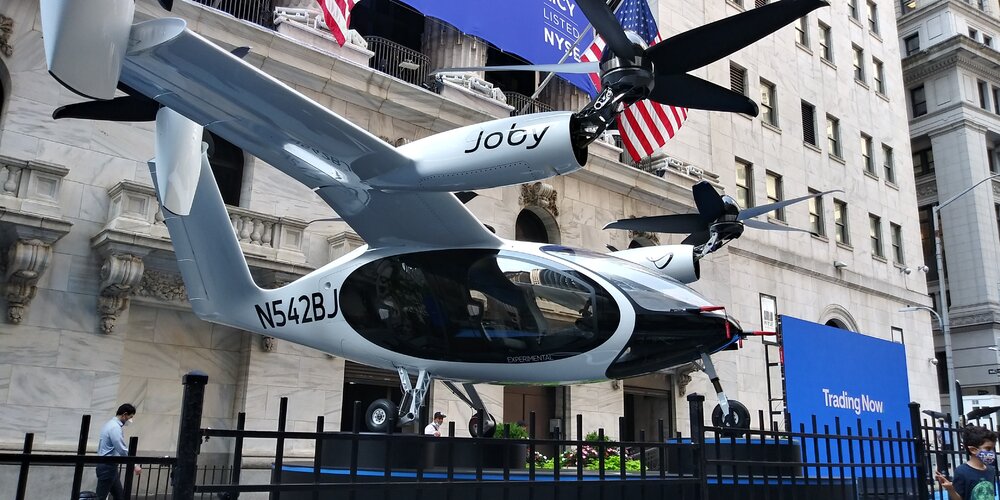
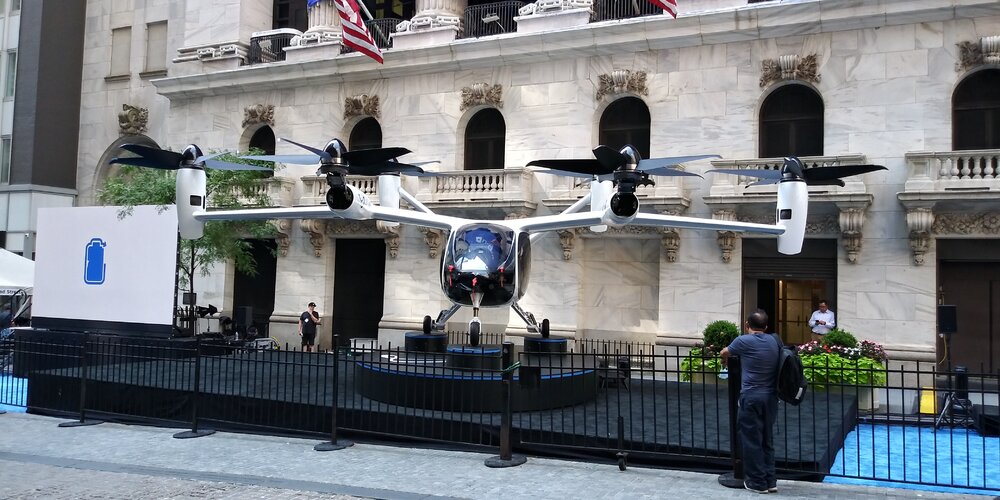
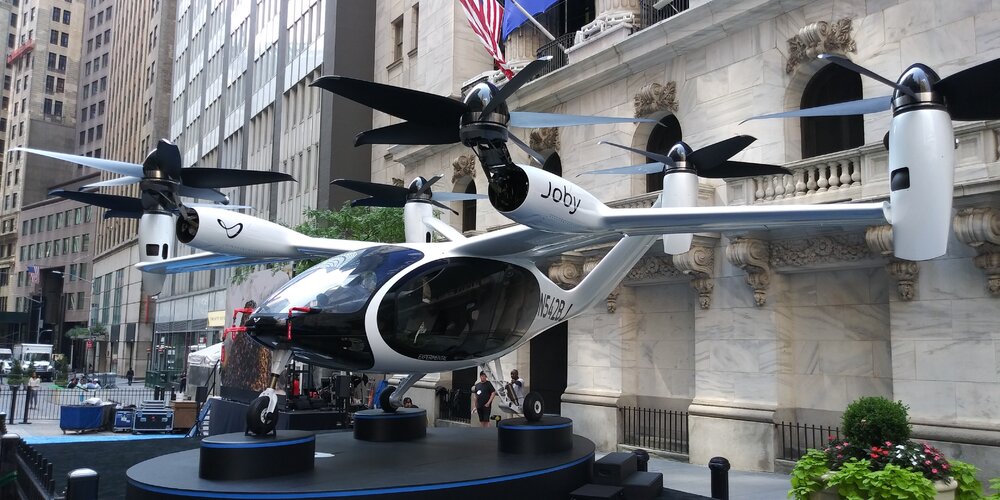
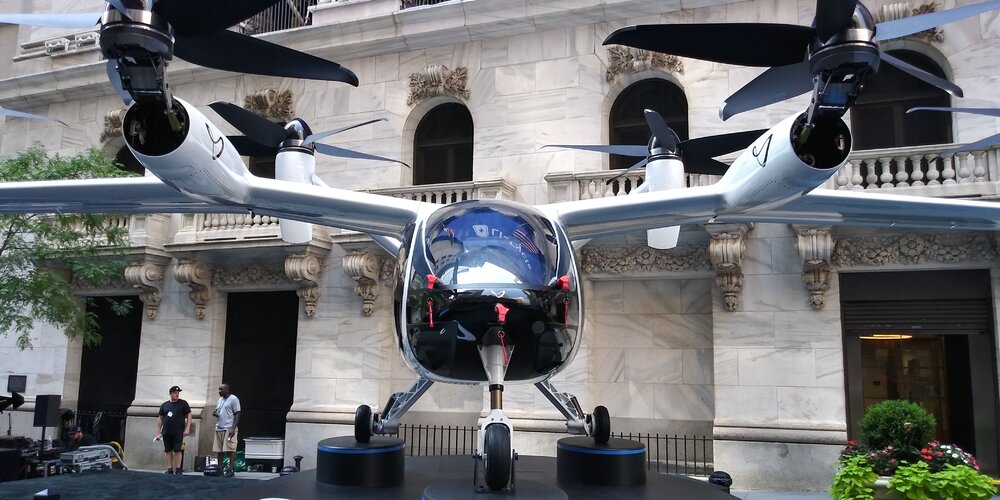
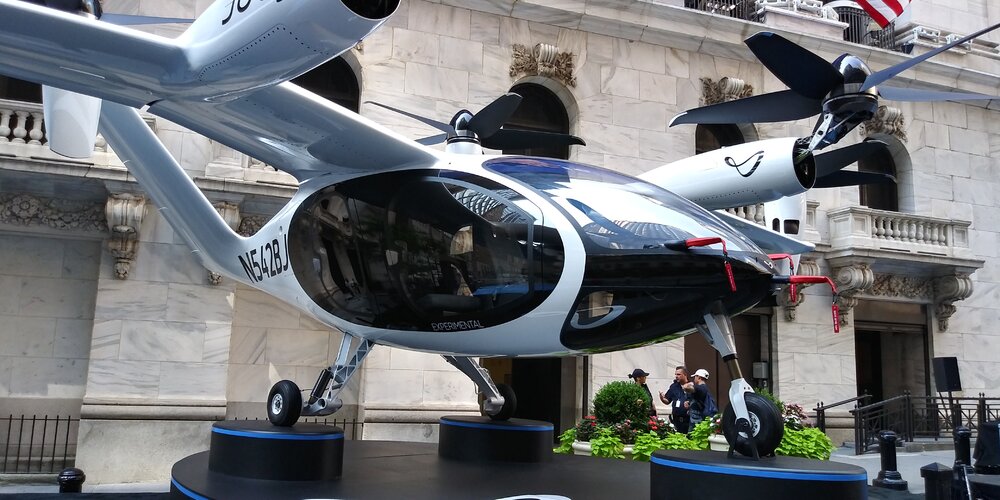
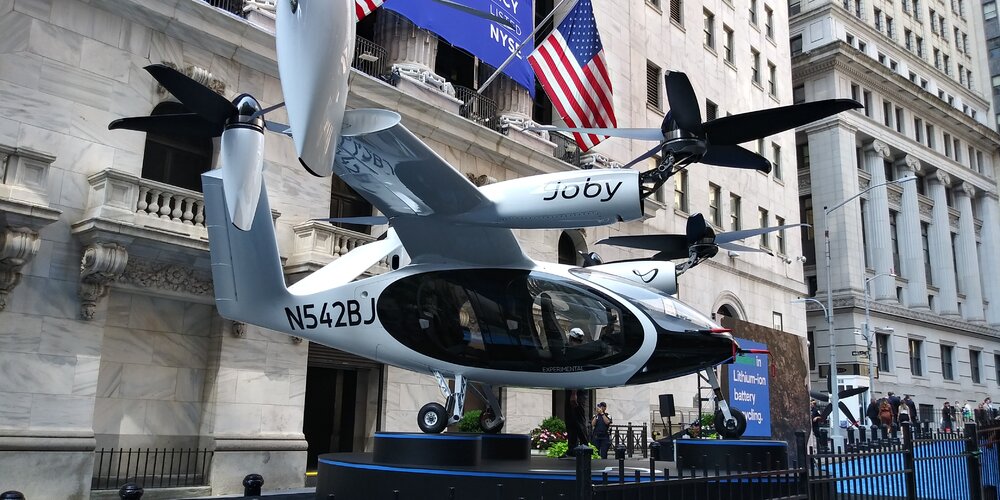

There's also the Flying Fishy thread for much the same purpose.There is also a "blacklist" thread somewhere, and the most obvious scams could go there.
Sourced From the link above.“In a normal aircraft, it makes sense to have this quite complex and heavy mechanism on your propeller in order to operate optimally over the whole range,” said Norcia. “Electric propulsion provides some opportunities to just massively simplify the aircraft. So all four of the propellers are fixed-pitch: the ones in front are pitched for takeoff and climb out, and the rear ones are for cruising.”
With a heavy, complex, expensive traditional engine, it would be silly to double the number just so you don’t have to use variable pitch propellers for takeoff. But with light, simple, inexpensive electric engines, it makes perfect sense to do so, even if it looks unusual.
The front and rear propellers are only both active during take-off and climbing, with the front ones folding away afterwards as then the rear ones take over completely for cruise. It mechanically simplifies things — no heavy duty hinges and hydraulics — and in fact putting the prop back there seems to improve efficiency by about 10%, said Norcia. “It’s pretty cool,” he added. (And they’ve applied for a patent.)

https://www.flyingmag.com/story/aircraft/technicalities-electric-air-taxis/
This article from a respected aviation magazine summarizes the issues with electric aircraft. Depressing reading, but it raises the same points that have been talked about on this forum for some time. And this article doesn't even go into the challenges of getting these machines certified and setting up all the specialized infrastructure that they will need.
And yet another short haul electric project materializes. I'm not an aircraft engineer but those engines seem ridiculously small for an aircraft of that size.
https://techcrunch.com/2021/08/12/pyka-shows-off-its-new-electric-passenger-plane-the-p3/amp/
https://flypyka.com/p3.html
In the renderings the rear props are folded while on the ground - makes sense since you don't want to let passengers wander into the sharp bits. However those are referred to as 'cruise props' and the front ones as 'takeoff/climb out', so BOTH sets of props are folding, is my interpretation.“In a normal aircraft, it makes sense to have this quite complex and heavy mechanism on your propeller in order to operate optimally over the whole range,” said Norcia. “Electric propulsion provides some opportunities to just massively simplify the aircraft. So all four of the propellers are fixed-pitch: the ones in front are pitched for takeoff and climb out, and the rear ones are for cruising.”
With a heavy, complex, expensive traditional engine, it would be silly to double the number just so you don’t have to use variable pitch propellers for takeoff. But with light, simple, inexpensive electric engines, it makes perfect sense to do so, even if it looks unusual.
The front and rear propellers are only both active during take-off and climbing, with the front ones folding away afterwards as then the rear ones take over completely for cruise. It mechanically simplifies things — no heavy duty hinges and hydraulics — and in fact putting the prop back there seems to improve efficiency by about 10%, said Norcia. “It’s pretty cool,” he added. (And they’ve applied for a patent.)