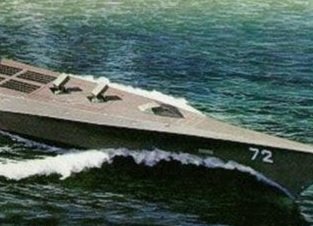
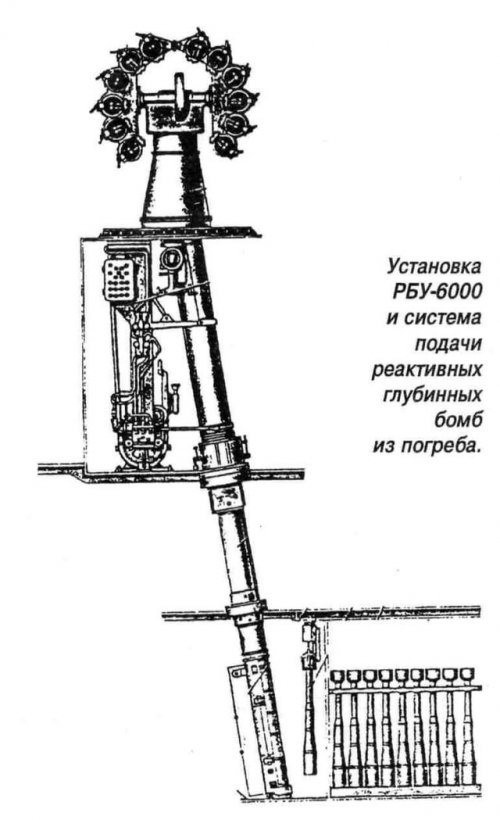
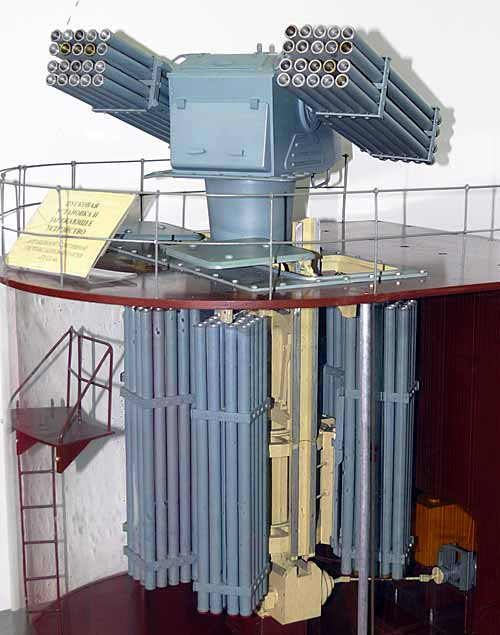
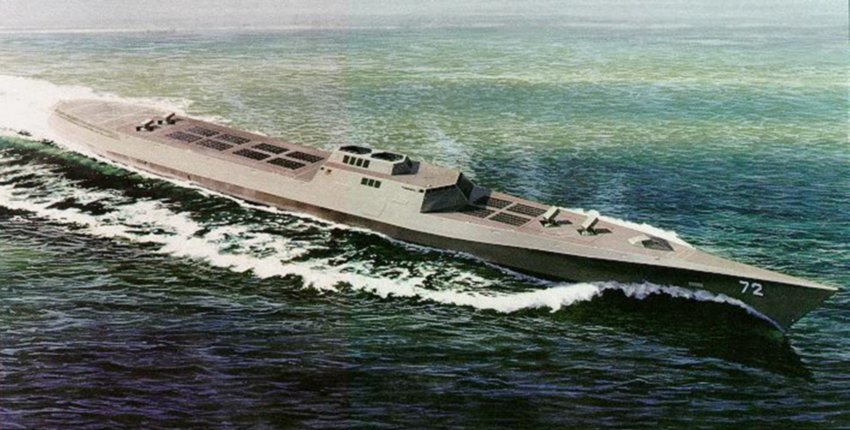
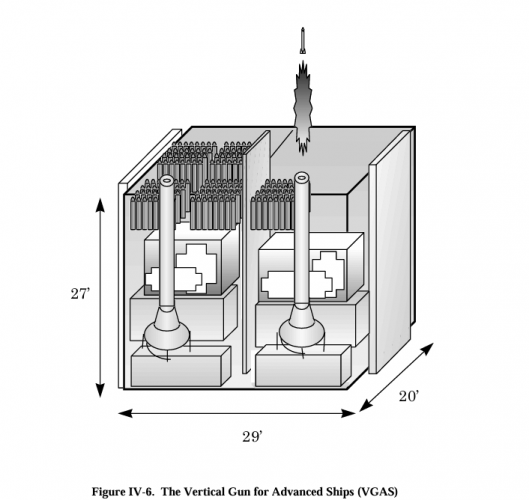
There are elevators forward and aft for each pair of box launchers so those might be used by the reloading equipment though for one launcher at a time
Quite probable. Anyway, reloading the MLRS launcher on dedicated fire support ship would not be any major challenge. Stabilizing it could be more complicated, true, but far from unsurmountable.
 
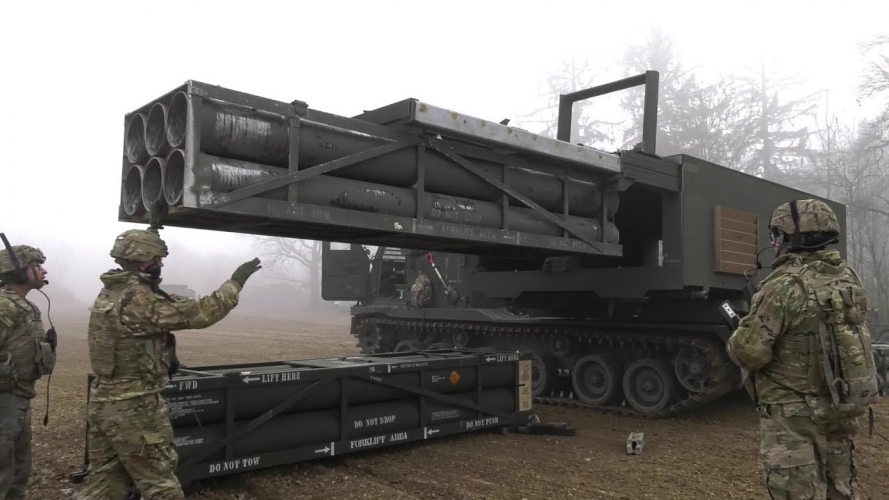
That's could be done relatively quickly, if you have deck space; the MLRS launcher is reloaded with rocket pod, and equipped to auto-reload itself. In field, it could grab a new pod from the ground or from the truck with loading frame, and put inside:

View attachment 822558

Basically on ship all you need is rail/conveyor to move the new container under the launcher frame.

The pods aren't under positive control, they are just suspended from cables. Enjoy that on a moving ship's deck. Also, I believe you need crew out there to attach the lifting cables. So this is a complete redesign of the launcher.
 
The pods aren't under positive control, they are just suspended from cables. Enjoy that on a moving ship's deck. Also, I believe you need crew out there to attach the lifting cables. So this is a complete redesign of the launcher.
You don't need any cables on the ship, where launcher reloading position is fixed. The cables are only to raise pod toward the loading frame. If the pod is placed directly under the frame, there is no need for cables, the frame could just directly grab the pod.

1788124223554.png

Seriously, this is actually simple. The cables only used to lift the pod from ground or truck to launcher frame, because the MLRS launcher is supposed to be reloaded in field conditions and cables & winch are the simplest way to compensate for height difference.

On warship - where there is no such thing as unplanned height difference, and pod could be easily moved directly under launcher frame - there is no need for such add-ons.
 
If indeed the units on Arsenal Ship are MLRS configuration I would believe rockets reloaded below deck penetration. 1000044434.jpg

1000044435.jpg


No people on deck. Not ideal infrastructure on smaller vessel. Even then what specific advantage over cruise missiles besides speed.
ATACMS has range 190 miles
Baghdad was 393 miles from sea, Kabul any target Afghanistan 500.
Tehran 450.
A common incorporated booster perhaps.
 
1788283136893.png
though the Arsenal ship was proposed gas turbine propulsion, at modest 25 knots.
1788283255137.png
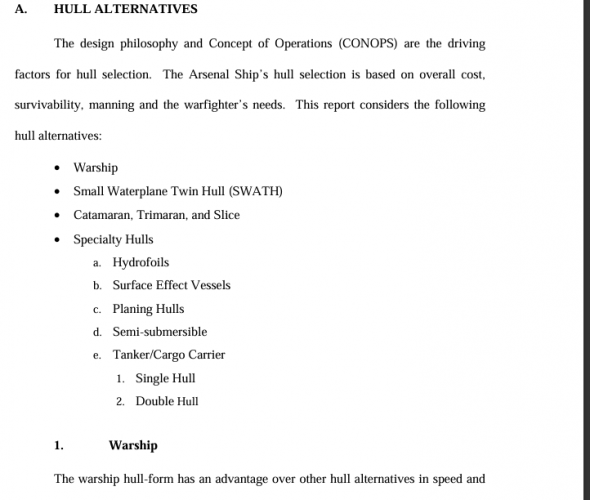
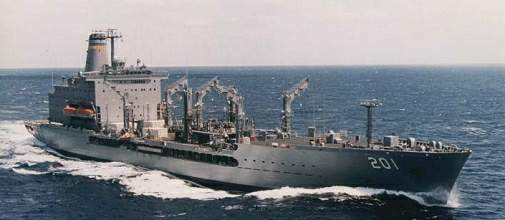
Navy' considered many hull geometries including freighter ship/tanker hull.
Including by 1989 report, integration of Kaiser class replenishment ship hull
1788284093441.png


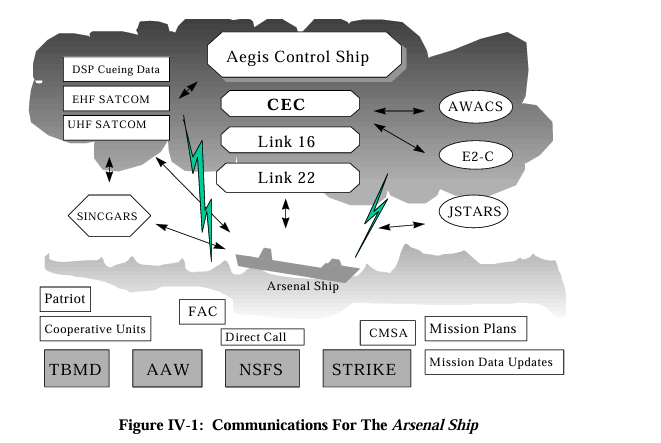
An possible AEGIS integration control systems.
1788283352714.png

Lockheed was on course development concentric canister derived launcher, No cells, Just a vertical gun and a magazine
1788283475836.png


Had incorporated nuclear power plant, at the time Navy development SG6 for the Seawolf then a Cold war growth projection to supplement/replace Los Angeles. Dual setup, after bombardment/securing beachhead, umbilical power allow Arsenal ship supply power to adjacent land facilities be it sustained operation or if say in Humanitarian setup, post operation.
 
I don't think the USN considered a nuclear power plant at any point for the Arsenal Ship/Maritime Fire Support Demonstrator, the entire idea was that it would be minimally-manned and built to commercial standards, both requirements which select against nuclear power. What would the power generation even be required for, the ship was basically an offboard magazine of VLS cells cued by CEC with minimal sensors, which required little in the way of power generation.
 
I don't think the USN considered a nuclear power plant at any point for the Arsenal Ship/Maritime Fire Support Demonstrator, the entire idea was that it would be minimally-manned and built to commercial standards, both requirements which select against nuclear power. What would the power generation even be required for, the ship was basically an offboard magazine of VLS cells cued by CEC with minimal sensors, which required little in the way of power generation.
I presume the final sensor suite would be the standard SPS-7X navigational/surface sesrch radar a gun control radar and some ECM domes. Not sure about an Air-Search set.
 
I presume the final sensor suite would be the standard SPS-7X navigational/surface sesrch radar a gun control radar and some ECM domes. Not sure about an Air-Search set.

The gun was strictly for NSFS; no need for an FCR. You might want something like SPQ-9 for ASCM detection, but even that would probably just link data offboard and then fire self-defense missiles via launch-on-remote. Everything else would be fully remote with control via CEC/NIFC-CA (for air and TBMD) and Naval Fires Control system (NFCS, for surface and strike targets). ECM very unlikely, other than possible decoys.
 

Similar threads

Back
Top Bottom