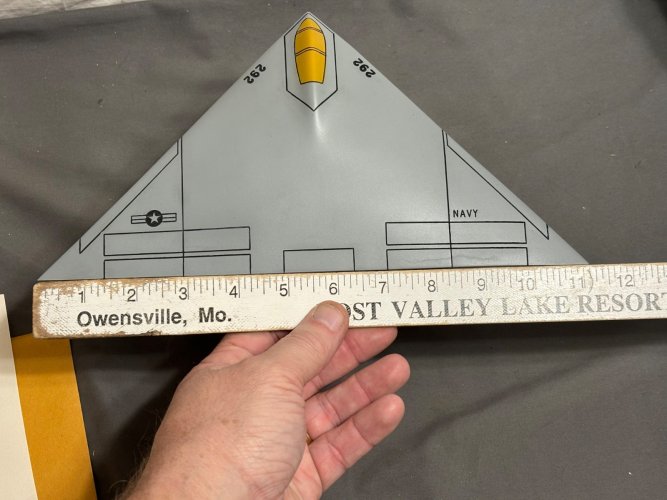
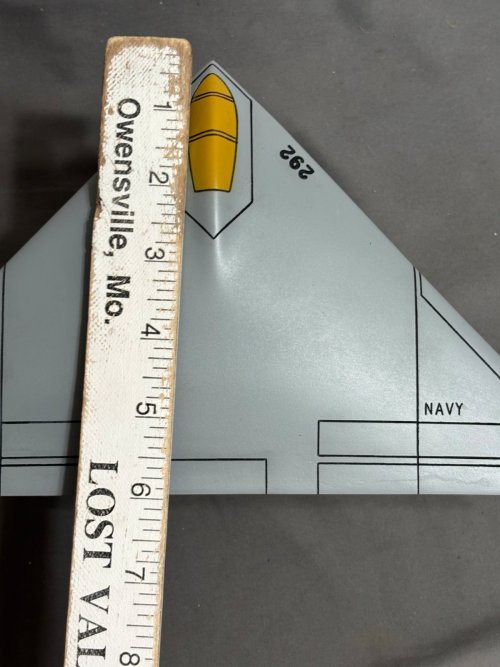
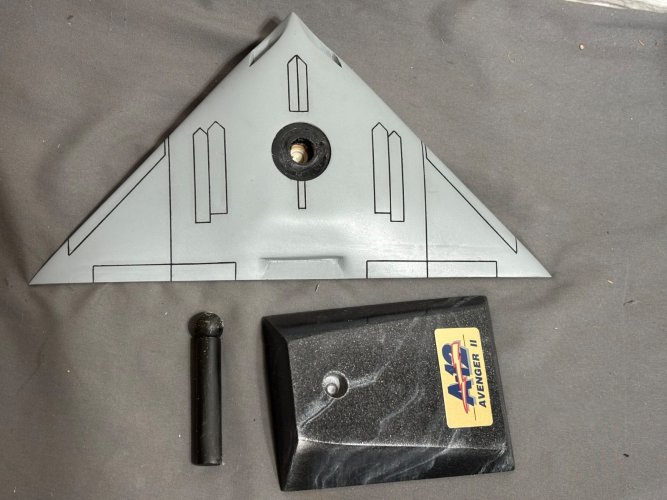
As someone involved in the Northrop ATA, and the following A12 evaluation by Northrop, there is so much misinformation in this, it's not even worth a detailed reply.
Can't help adding my 2 cents ... KJ has been drinking too much of his own bath water.

I never had a dog in the ATA fight, but I was on the small Bethpage team working our pre-ATA clean sheet design. That was until SECNAV John Lehman visited us in July 1984 and flat-out told Grumman Pres. George Skurla and a few VPs to "fly out west and talk to Northrop".

In addition to experiences shared by Cancerman and Hydroman, I'll add another story:
Lockheed Skunk Works sent a team of about 50 engineers to Fort Worth in the 1988-1989 timeframe (plus or minus), based on a direct request from General Dynamics' CEO to Larry Kitchen, CEO of Lockheed Corp. [It's possible I was told that Alan Brown was the leader of the Lockheed contingent in Fort Worth; I'm not at all certain.]

The Lockheed team was parachuted in to 'help out' with observables stuff. I've spoken to 2 of those 50 folks. If memory serves, they were in FW for several weeks, not several months. What I remember best is this story: CEO Kitchen called the Lockheed team leader (Brown?) and told him to pack up and come home. The small group of Lockheed execs with BRR access had concluded that GD was unlikely to award the type and size of subcontract that was initially promised in return for Lockheed's assistance.

Edit: fiddled with date.
 
Last edited:
Intended to be LO/VLO?
Yes, as best as we understood it.
We were taught shaping basics by the Global Analytics team (of pirates). We were given very sporty requirements by a Navy office (who seemed to know less than we did, IMO).
Looking back 40 years later, our two preferred external arrangements were actually decent compromises between LO/VLO and flight performance, including carrier suitability.
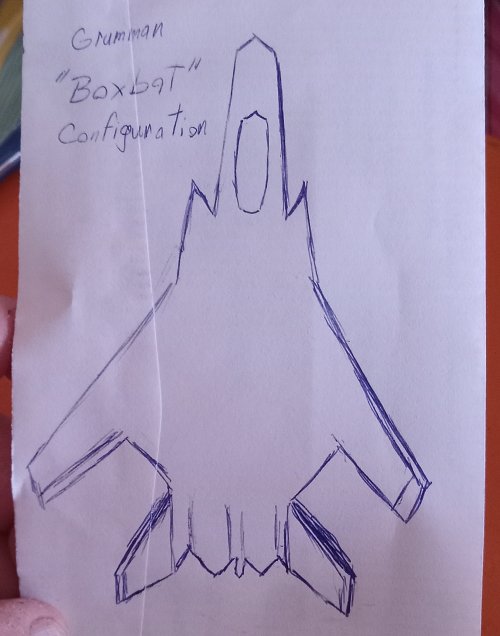
One of those two conceptual designs (known as Boxbat; the boss's favorite -- far from mine) was brought to Northrop in Sept/Oct 1984 I was told. It was Grumman's input to the start of the ATA conceptual design phase. A comparative evaluation was made with Northrop's mini-B-2 and a Vought design layout. We all know which configuration won that competition.
 
Looking back 40 years later, our two preferred external arrangements were actually decent compromises between LO/VLO and flight performance, including carrier suitability.
Here's a simple summary of Grumman's pre-ATA clean-sheet design work, based on my memory.

We started with 5 basic configurations -- 3 fixed wing and 2 variable sweep. In lieu of providing sketches, these are the vehicle takeoff gross weights of our AAA (advanced attack aircraft) concepts of 1983-1984. All were sized to a subsonic mission profile and payload very similar to later ATA/A-12 requirements:

Star-C.........................TOGW=base​
Star-T................................+2%​
Boxbat............................+10%​
DoubleDelta-VS.........+20%​
Delta-VS........................+25%​

No surprise that the concepts' LO/VLO potential was in the opposite order of the lightest (and cheapest). My preference was Star w/Tails because Star w/Canards provided less control robustness in a carrier approach condition. The boss (P.B.) brought Boxbat to Los Angeles in Sep/Oct 1984...

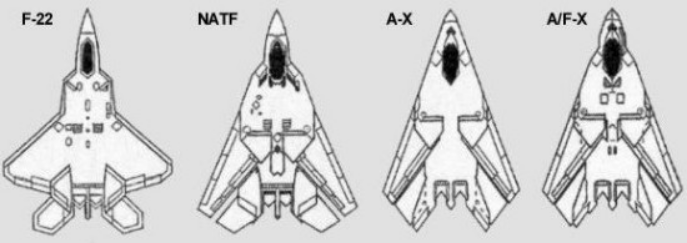
The Delta-VS configuration resembled the L-B-GD A-X design of 1991-1992, shown below. Of course ours was much more cartoonish: we hardly knew the technological solutions for so many components and design details.

1743769489566.png
from https://aerospaceweb.org/aircraft/fighter/jsf/pics04.shtml

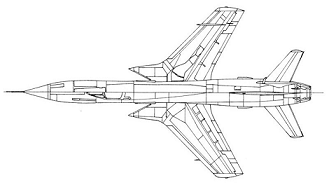
The Boxbat configuration bore some resemblance to the Republic F-105 planform, shown next. Among the differences were a chisel nose, lambda wing, and a wider fuselage housing a large weapons bay and twin engines.

1743942182129.png
 
Last edited:
Can't help adding my 2 cents ... KJ has been drinking too much of his own bath water.

I never had a dog in the ATA fight, but I was on the small Bethpage team working our pre-ATA clean sheet design. That was until SECNAV John Lehman visited us in July 1984 and flat-out told Grumman Pres. George Skurla and a few VPs to "fly out west and talk to Northrop".

In addition to experiences shared by Cancerman and Hydroman, I'll add another story:
Lockheed Skunk Works sent a team of about 50 engineers to Fort Worth in the 1988-1989 timeframe (plus or minus), based on a direct request from General Dynamics' CEO to Larry Kitchen, CEO of Lockheed Corp. [It's possible I was told that Alan Brown was the leader of the Lockheed contingent in Fort Worth; I'm not at all certain.]

The Lockheed team was parachuted in to 'help out' with observables stuff. I've spoken to 2 of those 50 folks. If memory serves, they were in FW for several weeks, not several months. What I remember best is this story: CEO Kitchen called the Lockheed team leader (Brown?) and told him to pack up and come home. The small group of Lockheed execs with BRR access had concluded that GD was unlikely to award the type and size of subcontract that was initially promised in return for Lockheed's assistance.

Edit: fiddled with date.
To add also joewee, Lockheed was also "trying" assist GD with fixing the A-12 tail pipe since it did not work. Lockheed stated the tail pipe had to withstand higher temps than what the GD analysis concluded. Ben Rich said (and quoted from an interview) you dumb "s**ts, the highest exhaust temps are not worst-case in-flight temps but after you shut the engines down, no cooling air around and passing through the submerged exhaust system.

Again, GD thought they knew better than one of the industry experts and Ben Rich was originally a thermodynamics guy. Our Northrop ATA if selected, would have had some issues and probably minor but the USN would have had an excellent aircraft (providing it was cost-plus due to high risk), every aircraft program is not perfect especially if you are implementing new tech.

Additionally, to GD/McAir credit, the USN was constantly jacking with the specification. Eventually there were so many "natural access" panels for maintenance that the A-12 would have had to have been jacked and jigged to a 1g configuration just to remove panels for routine maintenance since these panels would now become load-bearing, imagine the what the techs would say, I would be pissed if I had to jack and jig an aircraft just for basic maintenance.
 
Eventually there were so many "natural access" panels for maintenance that the A-12 would have had to have been jacked and jigged to a 1g configuration just to remove panels for routine maintenance since these panels would now become load-bearing, imagine the what the techs would say, I would be pissed if I had to jack and jig an aircraft just for basic maintenance.
Dafuq?

Man, I'd be throwing wrenches and probably making a list of engineers to "talk" to.
 
I'm intrigued by this "Boxbat". Intrigued enough to have tried to visualize it. This is just a rough sketch on the back of an envelope. I know it sucks. But it's the best I could do with the info at hand and only 2 sips of coffee!
 

Attachments

  • 20250406_110039.jpg
    20250406_110039.jpg
    885.7 KB · Views: 378
Last edited:
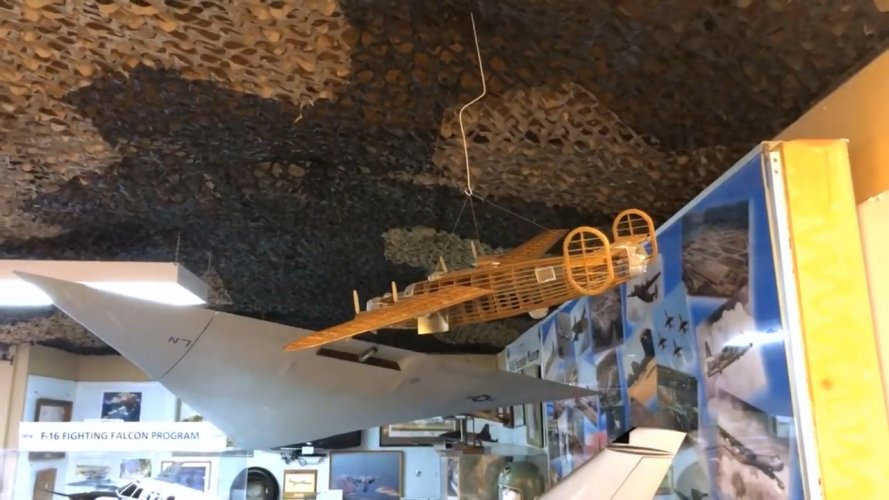
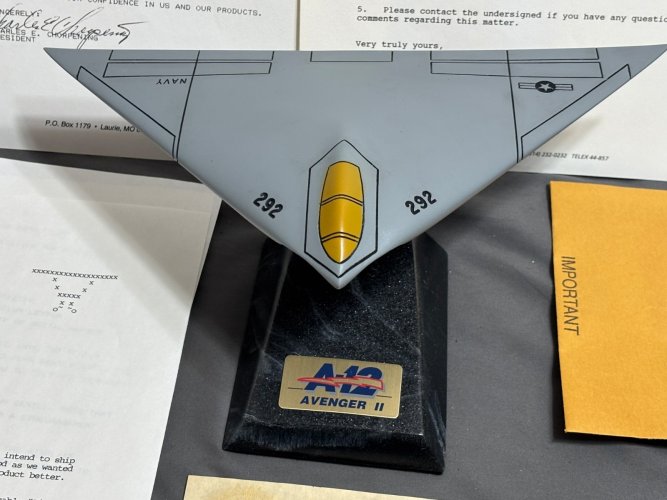
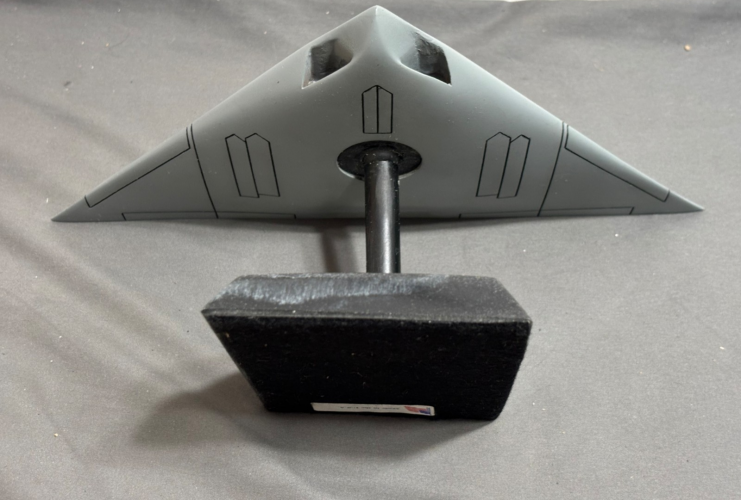
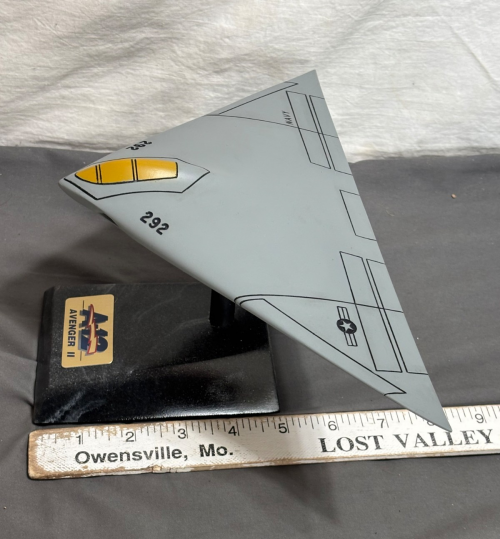
MWS sensors fairings on large scale model not seen on full-scale mockup.
 

Attachments

  • Checking out the Aviation Museum #dallastx #fortworth #aviation #museum #cheapprice #enjoylife...jpg
    Checking out the Aviation Museum #dallastx #fortworth #aviation #museum #cheapprice #enjoylife...jpg
    210.2 KB · Views: 371
  • A Walk Through the Fort Worth Aviation Museum and Airpark.mp4_snapshot_06.46_[2025.04.06_22.27...jpg
    A Walk Through the Fort Worth Aviation Museum and Airpark.mp4_snapshot_06.46_[2025.04.06_22.27...jpg
    502.6 KB · Views: 351
Last edited:
Yikes, what an odd design -- certainly not ATA related. Additionally, it's quite unlikely to have emerged from a SAP/SAR compartment. It's definitely from some activity well after I left Bethpage, for greener pastures in Burbank (browner pastures?). So 1993-1994 would be my guess ... right before Oliver Boileau did his version of DOGE with the assets Kent Kresa had just purchased.

More speculation - Although Hughes was the contractor for Tacit Blue's phased array radar, Grumman was responsible for the AN/APY-7 in the E-8 Joint STARS. As Paul mentioned, the 773 would seem to date from just before the merger with Northrop, so perhaps this was a last ditch effort to develop and pitch a "survivable", loitering battlefield surveillance and targeting platform using a version of the radar that they developed?
Excellent xstatic3000! Emphasis on last ditch...
Grumman-Bethpage was out of ideas and out of $$$. The E-8C and the E-2C were the only franchises left, and both of those were already in, or transitioning to, Florida.
Edit: also possible Grumman was looking at an advanced AEW platform -- or even a new aircraft that combines air, ground and surface ISR&T.
 
Last edited:
Yikes, what an odd design -- certainly not ATA related. Additionally, it's quite unlikely to have emerged from a SAP/SAR compartment. It's definitely from some activity well after I left Bethpage, for greener pastures in Burbank (browner pastures?). So 1993-1994 would be my guess ... right before Oliver Boileau did his version of DOGE with the assets Kent Kresa had just purchased.
Yes, Model 775 was 1993 so 773 is likely from the same era.
 
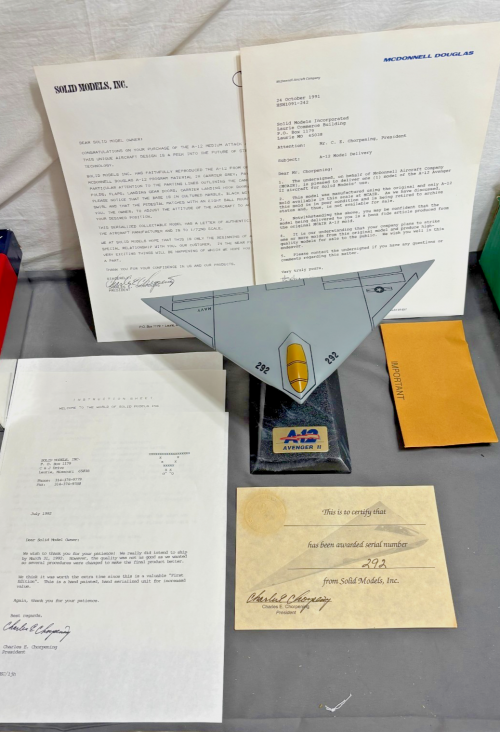
A question I've been mulling at the back of my mind for the last few days, was A-12 fixable?

We know it was overweight and had significant stealth problems, some of which were built in by the initial operational concept of a low-level penetrator, others inherent in the Dorito layout, ultimately leading SecDef (Dick Cheney) to cancel it in January 1991.

But if we hadn't had the peace dividend and the Cold War had continued, giving the A-6 replacement additional importance, could it have been turned into an operable aircraft with fixed signature? Or would it have been cheaper to start over (A-X), or look at A/F-117N?
 
A question I've been mulling at the back of my mind for the last few days, was A-12 fixable?

We know it was overweight and had significant stealth problems, some of which were built in by the initial operational concept of a low-level penetrator, others inherent in the Dorito layout, ultimately leading SecDef (Dick Cheney) to cancel it in January 1991.

But if we hadn't had the peace dividend and the Cold War had continued, giving the A-6 replacement additional importance, could it have been turned into an operable aircraft with fixed signature? Or would it have been cheaper to start over (A-X), or look at A/F-117N?
I don't believe that the MDD A-12 was fixable.

The "fix" would have had to have been selecting the NG design to begin with.
 
Anything is fixable with enough time and money. But it probably wouldn't look exactly the same - like Boeing X-32 to Boeing PWSC.

Which basically answers the question. Because if the entire thing would have had to be redesigned from the ground up and several more billions being sunk into the program I wouldn't say "it" is fixable.

Kinda like a car crash I suppose, sure you can rebuild that absolute wreckage, but it is 100% smarter to just move on and get something new.

Comparing the whole program to a crash/wreckage feels oddly right though, I have to admit.
 
Anything is fixable with enough time and money. But it probably wouldn't look exactly the same - like Boeing X-32 to Boeing PWSC.
I'd argue that requiring a near-total redesign in order to "fix" it indicates just how hosed up the design was to begin with.

Don't forget that ATA required a fixed-price DEVELOPMENT contract, so even once MDD got up to speed on how stealth actually worked they'd be burning company cash to fix the A-12 design. And probably driving themselves bankrupt in the process.
 
Perhaps Boeing could've subcontracted N-G to help fix McDD's design and produce something workable instead of Navy canceling ATA.
 
Perhaps Boeing could've subcontracted N-G to help fix McDD's design and produce something workable instead of Navy canceling ATA.
We (Northrop) had fixes, actually a few of them, USN just did not want to pursue any longer, plus USN screwed up big time, hence the coming of F-18 E/F.
 

Attachments

  • s-l1600 - 2025-06-25T230503.507.jpg
    s-l1600 - 2025-06-25T230503.507.jpg
    923.9 KB · Views: 200
  • s-l1600 - 2025-06-25T230508.897.jpg
    s-l1600 - 2025-06-25T230508.897.jpg
    977 KB · Views: 135
  • s-l1600 - 2025-06-25T230513.295.jpg
    s-l1600 - 2025-06-25T230513.295.jpg
    161.4 KB · Views: 115
  • s-l1600 - 2025-06-25T230420.438.jpg
    s-l1600 - 2025-06-25T230420.438.jpg
    371.1 KB · Views: 101
  • s-l1600 - 2025-06-25T230429.386.jpg
    s-l1600 - 2025-06-25T230429.386.jpg
    420.8 KB · Views: 177
ATA. related ? (found on an old disc) Likely from the SP. site
nipped wingtips looked interesting ?
 

Attachments

  • DSC000060001.JPG
    DSC000060001.JPG
    256.4 KB · Views: 161
Last edited:
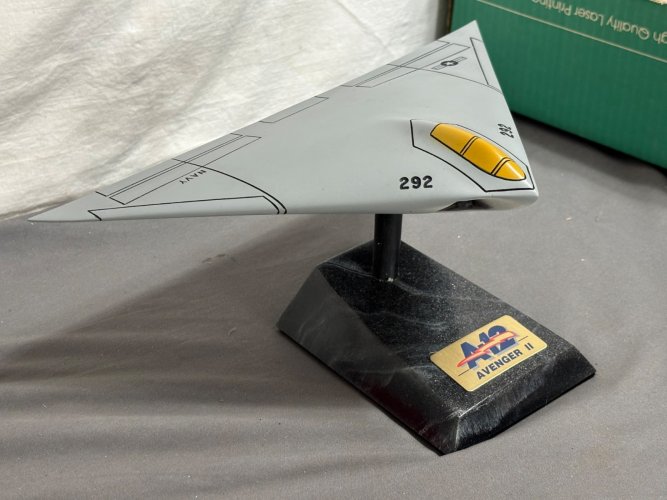
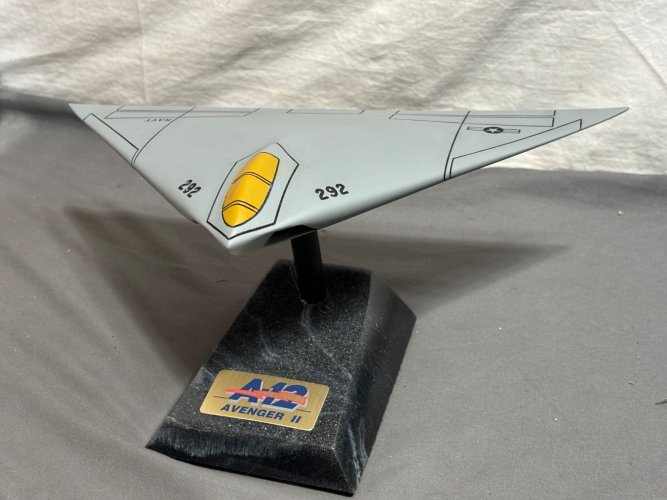
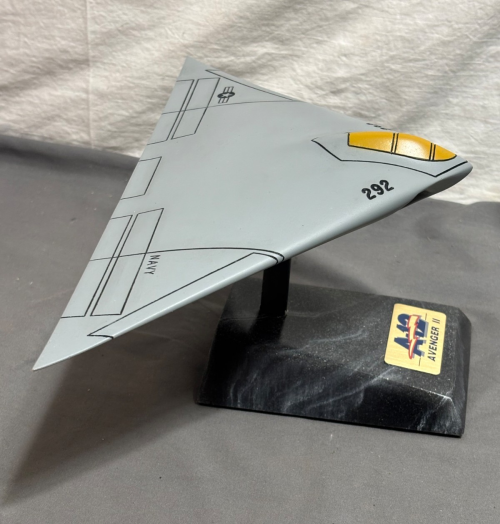
When I read Stevenson's book The $5 billion misunderstanding, I have a few questions.
1.On 28 November 1985, General Dynamics-McDonnell Douglas team gave the navy its approach to proceeding on the demonstration and validation phase. There were three approaches -- two of the designs were flying wings and the third design was a supersonic aircraft. So what happened from these three approaches to the well known "Flying Dorito" later? Did the final design came from one of the two flying wings in 1985?
2.Why did the navy sent out an RFP for the VFMX on 17 May and canceled the development of VFMX in navy's Program Objective Memorandum? Is it because this project is too expensive, because the Navy's needs have changed, or because of some other reason?
 
Which basically answers the question. Because if the entire thing would have had to be redesigned from the ground up and several more billions being sunk into the program I wouldn't say "it" is fixable.

Kinda like a car crash I suppose, sure you can rebuild that absolute wreckage, but it is 100% smarter to just move on and get something new.

Comparing the whole program to a crash/wreckage feels oddly right though, I have to admit.
In other words:
053.jpg

https://en.wikipedia.org/wiki/Bob_the_Builder
 
i have a question why was the Northrop ATA proposal got rejected.
The short answer is that Northrup (and Grummy) had known no chance in hell and over was the program going to garner success with how the acquisition was laid out, so they then submitted a non-compliant bid, as in they exceeded the pricings expectations. With them outta the way only GD/Mac was viable for down-select and thus the dorito was born.

More details can be reached on one's own if you peruse the infos on this topic and the documents and sources mentioned.
 
Northrop/Grumman/LTV, smart move not to take the bait on fixed-price, high-risk program. If the USN would have met our demands, they would have had an excellent aircraft but it had some risk as well but we knew what we were doing. Also, USN kept altering the spec requirements plus we kept telling them, an LO aircraft strikes from mid to high altitudes to remain stealthy, not down on the deck like the A-6. LO was new to the USN and they didn't get it in regards to aircraft.
 
i have a question why was the Northrop ATA proposal got rejected.
Primarily because it was not a fixed-price bid.

Northrop quite rightly said, "there's a lot of Navy-specific development work that still needs to happen, that we don't think Northrop should be paying for."

Not to mention the other issues like Hydroman said, that led to a quote from someone at Northrop to say "the only thing worse than losing this contract would be winning it!"
 
To start with, we beat them pretty badly on the pole. Both designs carried the same weapons load. We had several designs being tested, tunnel and pole wise. Side by side and tandem cockpit were studied. Top inlets for high mission, messed with low inlet trade offs for low mission and performance. Towards the end we even modified the design for ruddervators like a flatter YF23 type for pitch power, there was concerns about getting back on board, etc. It morphed into the FX designed series we called arrowhead. We already declined to bid fixed price, but we were hearing about the competitors problems so we were preparing to rebid if possible with a different design as the Navy was literally changing the program requirements weekly. We were cutting new CNC tunnel models as fast as we could go in the machine shop. By then we had mostly froze the B2 design, just tying up loose ends. We were waiting on the YF23 flight testing, etc. So this kept the tunnel work busy, as well as some other "Poverty Programs" we always seemed to have going on. I made the switch back to avionics integration, which all these programs had ongoing. My lab and it's busses connected to the FCHIL lab, with Hydroman. We had cockpits for all these programs compartmentalized of course. As far as ATA, we had a full scale engineering mock up we were updating constantly, including fold wing, bay, etc. Very impressive.
Hi, Sir. Hope you're fine.

Please allow me to ask you one question. Is the description of the ATA's weapon loading capacity in $5 Billion Dollar Misunderstanding accurate (i.e. each main bomb bay can carry two 2000-pound bombs)? Because Google shows that the A-12's internal weapon bay can only carry about 5160 pounds of ordnance.
 
Hi, Sir. Hope you're fine.

Please allow me to ask you one question. Is the description of the ATA's weapon loading capacity in $5 Billion Dollar Misunderstanding accurate (i.e. each main bomb bay can carry two 2000-pound bombs)? Because Google shows that the A-12's internal weapon bay can only carry about 5160 pounds of ordnance.
Google is very confused on the issue.

I've found documentation that says the bays of the MDD A-12 were 205" long by 60" wide by 50" deep. That's enough space for 2x 2000lb, 1x HARM and 1x GBU-15, 5x 1000lb, or 8x 500lb. Each bay, and there were two bays.

5160lbs is per bay, not total.
 

Similar threads

Back
Top Bottom