
- Joined
- 26 May 2011
- Messages
- 2,630
- Reaction score
- 4,651
Bummer. If you're up my way, give me a shout.Running around the country doing my day job Chris.
Chris

Bummer. If you're up my way, give me a shout.Running around the country doing my day job Chris.
Been up your neck of the woods loads of times, problem was travel was on the clock and the Van had a tracker.Bummer. If you're up my way, give me a shout.
Chris


From the personal hardware archive; test rejected ASRAAM Project Top Hat seeker FPA.
On another note with the RAVEN air defence frankenSAM project using old AIM-132s (All of the pre-Block 6 stuff) so that they can be replaced in the RAF's inventory by Block-6 ITAR-free ASRAAMs how many missiles would that be being sent to Ukraine?
Over 400 missiles are said to have been fired to date. The fact that we're sending a further 5 vehicles in addition to the 8 already sent (1 of which has definitely been lost) should indicate that weapons stocks are not a concern. You won't get a number for the RAF stocks of Asraam anywhere....but....it was ordered in the late 90's when the RAF/MoD were very generous with their spend on guided weapons, particularly for domestic production (see the rather prodigious Storm Shadow, Starstreak and Brimstone stockpile sizes....) so I expect there to be a very large number still in stock. The fact that they could send 400 (and fire 55 for fun) without really cutting into the war reserve should be a clue....I suspect that if necessary the Australian stockpile of 200+ Asraam could also be made available now that Legacy Hornet has been retired (although technically they could mount Asraam on their F-35A).
So the RAF stockpile is likely in the low thousands for the pre-Block-6 AIM-132s?
Which suggests something like 2 missions a day for 14 days, let's add 2 more missions in there somewhere so we're at 30 missions total, just to make rounder numbers. And each mission we're assuming expending all weapons.Officially NATO warstocks requirement was two weeks intensive combat.
It's certainly seeming like that based on the US's buying patterns!Rumour is more like a few days worth
So, ~500 aircraft armed with ASRAAM, and we can assume 2x ASRAAM each for basic load. That means a minimum of 1000 missiles, just to arm all the planes.
How many reloads do we want to assume is HMGov's typical planning? 5? 10?
Programme cost including development and manufacture to the UK (and remember there was some spend from partners prior to their exit) was £823m in 2002. Prices for Asraam per missile were reported at the time as <£200,000 per missile...which probably implies it was close to that figure..If you figure half of the £823m went into production missiles you end up with c2,000-2,500 missiles dependent on where you set the dial on price....which at the time would have been reasonable (and in fact was cut down from the original purchase quantities in 1992 due to end of Cold War). I think thats not a bad figure to work from if you factor in the threat at the time, increased pk of missiles etc. That would also tie in with the UK sending more Raven to Ukraine which would imply the use of 400 missiles to date + all the missiles expended in tests/training (and a small number in actual operations) has left a significant number remaining that should be spare over time....and that the rate of firing is not scaring anyone vis a vis new production Block VI and remaining missiles in stockpile + perceived threat...
I have actually come across a couple of documents discussing that the National Archives. Can't remember the exact numbers off the top of my head, but I have a feeling it was in the region of 2,500.You won't get a number for the RAF stocks of Asraam anywhere....but....it was ordered in the late 90's when the RAF/MoD were very generous with their spend on guided weapons, particularly for domestic production
Most likely a BIST failure, there's probe contact marks on the signal pads. Pattern generator must have tripped a fail during wafer level check, prior to integration in an IDCA for imaging testWhat was the reason for rejection?
On another note with the RAVEN air defence frankenSAM project using old AIM-132s (All of the pre-Block 6 stuff) so that they can be replaced in the RAF's inventory by Block-6 ITAR-free ASRAAMs how many missiles would that be being sent to Ukraine?


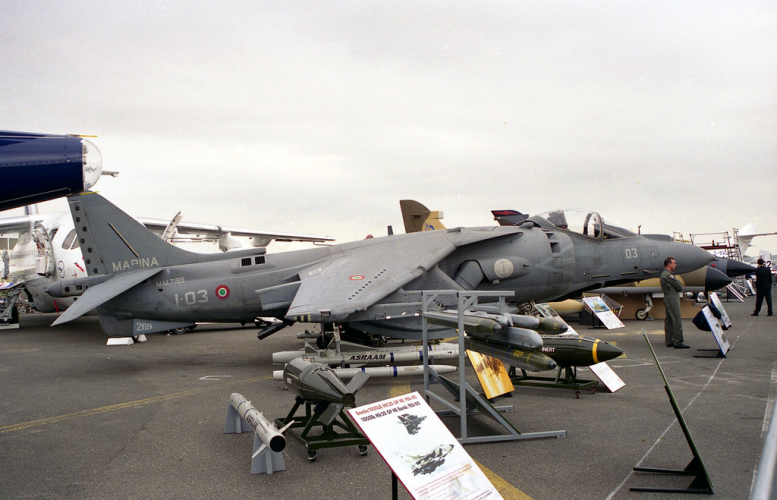
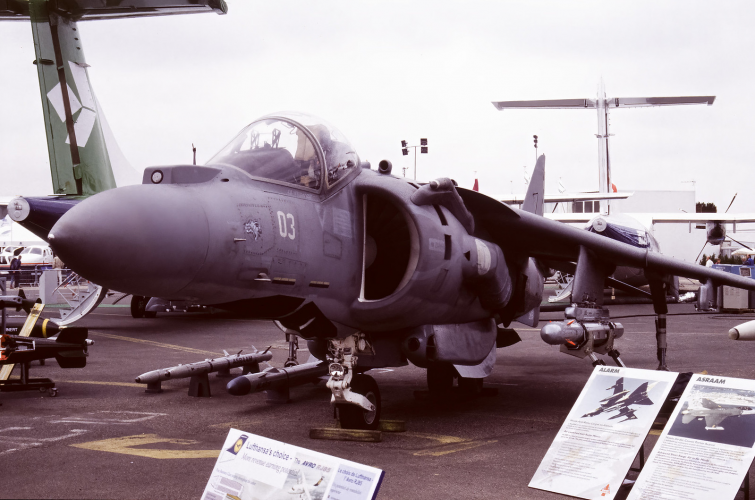
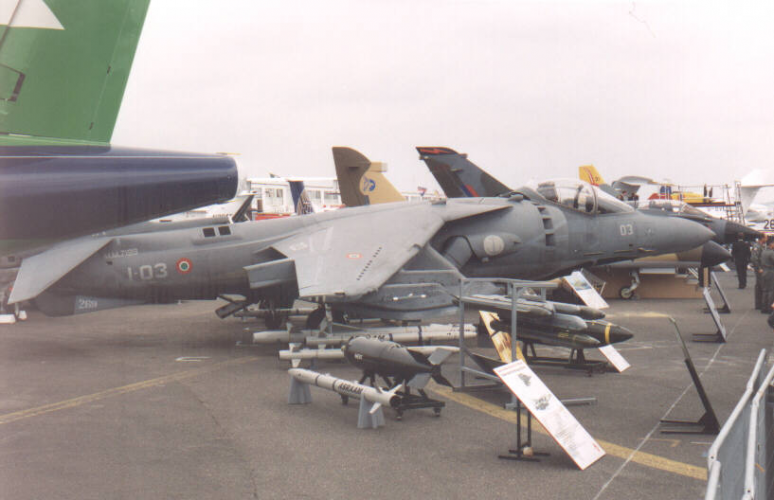
First time posting here, here are some images of what appear to be Typhoon missiles (+ ASRAAMS) next to an Italian Navy Harrier II.
These are from the 1995 Paris Airshow
Hopefully this hasn't already been posted
There's a GR.7 (maybe still GR.5A, since the FLIR isn't installed) sat carrying a pair of them ~23:15 in this documentaryAlso an ALARM 'hanging' on a Harrier is new on me....

I wondered at the time if they were ensuring everyone was up to speed in case things turned really hot.What wasn't prescient though.....was the RAF deciding to have an extravagant missile practice camp whilst the rapid development of Raven was underway....and firing off 55+ Asraam for larks.....sure they need to do live missile firings....but in hindsight it looks utterly ludicrous...I think I said so at the time...

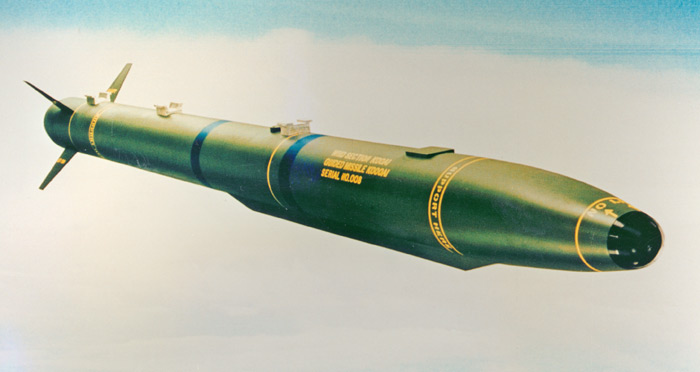
Is the "Guided Missile K###A1" designation readable on the original image?https://www.secretprojects.co.uk/threads/bae-dynamics-typhoon-anti-armour-missile.2576/
I still have photo I posted, could scan at higher res.
Its Guided Missile K000A1 and below that Serial No. 008.Is the "Guided Missile K###A1" designation readable on the original image?
Curious what K number they might have given Typhoon. ASRAAM seems to be K146 for the live unit and K148 for the ACQN round

Its Guided Missile K000A1 and below that Serial No. 008.
He would have made the whole thing from a tube of toothpaste and a saucepan.Macguyver would be proud
He would have made the whole thing from a tube of toothpaste and a saucepan.
.

Are we expecting BMD from the CAMM-MR? >20km altitude/>100km range puts it in the same bracket as the Aster-30 Block 0 and Block 1, both of which are proven against SRBMs.So to summarise what we know so far...
CAMM-MR or Future Common Missile
- Vertical launch
- Cold launch
- No quad packing, will probably take up the volume of 4 CAMM cannisters. (Personally I'm not sure about this as it would mean 2 per launcher only, which is a little low, I suspect they'd aim for 4 per launcher, the flatrack is fairly adaptable dimensionally, quad packing is a huge advantage)
- Will obviously be longer than CAMM, but still fit lengthwise on the Land Ceptor launcher. (There is at least 0.5m at the front of the rack to play with and at least 1m at the rear).
- Active Radar seeker at a minimum. (I do wonder if they'll look at dual mode as well)
- >100km range
- >65,000ft height capability
- Using same data link for compatability
- Sensor agnostic as per other CAMM variants
- Same launcher system. (On land at least, no direct mention of naval to date, however, the only potential imagery of the missile was in front of the Polish A140 Frigate and specific mention was made of the Polish Air Force, Navy and Army running a shared stockpile approach like the RN and British Army)
- If it is proceeded with will arrive after 2030
- May use a 2 stage approach with booster and tip over mechanism being expended after use. (I think this would be sensible, but would add cost)
- EDIT: - Cost - For the Polish to be interested it must be significantly cheaper than the other Patriot system long range missiles that they are buying.
It all sounds good, and has really good implications for the UK as well....my only question is for that sort of performance why not just go for a ground launched Meteor? A boosted Meteor has been proposed before, would easily fulfil the performance criteria, probably exceeding it dramatically and you could get 6 on the launcher with few problems...how it all interfaces with the rest of the MBDA also is unclear. For example if you're building a much larger missile in diameter do you continue to use the same seeker from MBDA Italia? Or go for more performance? Will the existing CAMM seeker still be viable in terms of its performance and obsolescence management from 2030 onwards in a new missile?
Not sure, though I don't think it will be the primary concern when designing the missile. I'd say the CAMM-MR is going to be closer in capabilities to the SM-2MR than to the Aster 30 (be it with a bit smaller warhead, but that's just my guess), as its low cost nature would likely mean no attitude control thrusters, so no hit-to-kill capability.Are we expecting BMD from the CAMM-MR? >20km altitude/>100km range puts it in the same bracket as the Aster-30 Block 0 and Block 1, both of which are proven against SRBMs.
Given that MBDA currently market Aster as having a range of >100km, anything from 100-120km seems reasonable for the CAMM-MR.Not sure, though I don't think it will be the primary concern when designing the missile. I'd say the CAMM-MR is going to be closer in capabilities to the SM-2MR than to the Aster 30 (be it with a bit smaller warhead, but that's just my guess), as its low cost nature would likely mean no attitude control thrusters, so no hit-to-kill capability.
And from what we already know about it, its maximum possible dimensions are indeed quite similar to the SM-2MR - up to ±340 mm in diameter for the dual pack and just a touch over 5 meters to fit onto either of the potential ground launchers (the iLauncher is more likely I think, but the M903 could be an option as well, at least for Poland).
So the range of "over 100 km" likely means around 150 in my opinion, I don't know what that means for anti-ballistic performance though.
That would be a good marketing position. Long range, reasonably cheap weapon to deal with low end threats.My thinking was that if CAMM-MR could go after the less agile, slower, short range BMs like Scud/Houthis stuff, it'd leave the less numerous Aster-30 B1NTs for more challenging intercepts. In that sense, CAMM-MR wouldn't need crazy manoeuvrability to intercept these more basic BMs, just altitude and range.
Ah, that's what you meant. If range and altitude alone will be enough for this (I have no idea if it does, haven't seen any reports of SM-2 performance in the Red Sea or anything like that), then yeah, it probably will be able to.My thinking was that if CAMM-MR could go after the less agile, slower, short range BMs like Scud/Houthis stuff, it'd leave the less numerous Aster-30 B1NTs for more challenging intercepts. In that sense, CAMM-MR wouldn't need crazy manoeuvrability to intercept these more basic BMs, just altitude and range.

