Oh come on! On the one side twisting words, claiming this and then denying that and then such rants against well-respected members who are here since years! Calm down, get mature and earn some respect first before continuing posting in such a tone!
I've got no problem with imagination in the absence of (semi) official figures.

I would rather encourage it. But why do they deserve respect if they discard official figures willingly and go their own way? There is already someone (@Buchmaru) who tried to measure the Kaan almost a year ago coming up with wrong specs and had to backtrack as soon as they had a proper view of Kaan.

These pictures tend to spread all over the community and provide a wrong picture. I'm trying to prevent that from happening.

Hence do it right or don't.
 
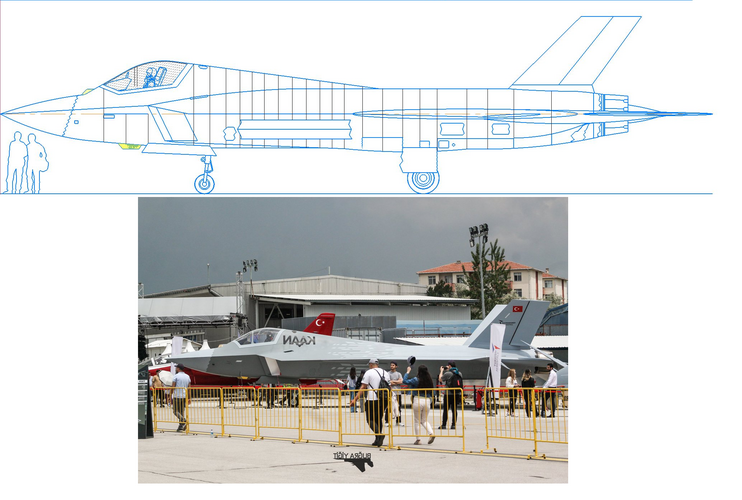
If your claim is that paralay's drawing is not scaled correctly, shrinking the drawing would then contradict your own claims of the aircraft's length dimension.
It appears to me the nose gear strut appears more extended in paralay's drawing than the irl photos. That would account for the discrepancy if you insist on trying to match height against feature.
 
If your claim is that paralay's drawing is not scaled correctly, shrinking the drawing would then contradict your own claims of the aircraft's length dimension.
It appears to me the nose gear strut appears more extended in paralay's drawing than the irl photos. That would account for the discrepancy if you insist on trying to match height against feature.
Have you perhaps thought that his drawing of the Kaan is flawed in the first place?
 
No, any distortions upon his drawing appear even more flawed in terms of apparent proportions to me. You are welcome to present corrections, I am interested to see how well they match reality.
 
No, any distortions upon his drawing appear even more flawed in terms of apparent proportions to me. You are welcome to present corrections, I am interested to see how well they match reality.
The two biggest flaws is the nose is too short and the entire rear fuselage starting from the middle is too thick.

There are other minor flaws that you can spot for yourself.
 

Attachments

  • 7234.png
    7234.png
    2 MB · Views: 205
The two biggest flaws is the nose is too short and the entire rear fuselage starting from the middle is too thick.

There are other minor flaws that you can spot for yourself.
Ok but it is a very good open source effort isn't it? Yes there are and could be mistakes but why disrespect Paralay?
 
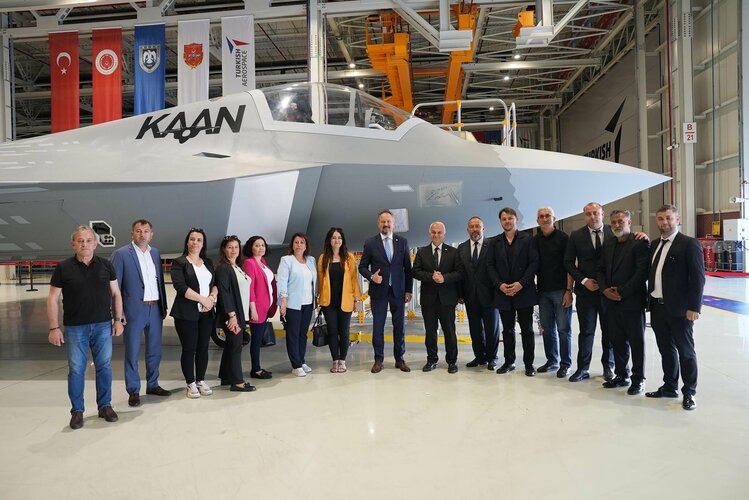
Look, I have seen the aircraft, plant, hangar, production etc and I can confidently say and state that aircraft is 20.2 meters and not 21
 
Look, I have seen the aircraft, plant, hangar, production etc and I can confidently say and state that aircraft is 20.2 meters and not 21
this is the first time I've heard from you that the plane is 20 meters, can this mean that the wingspan is not 14 meters either?
 
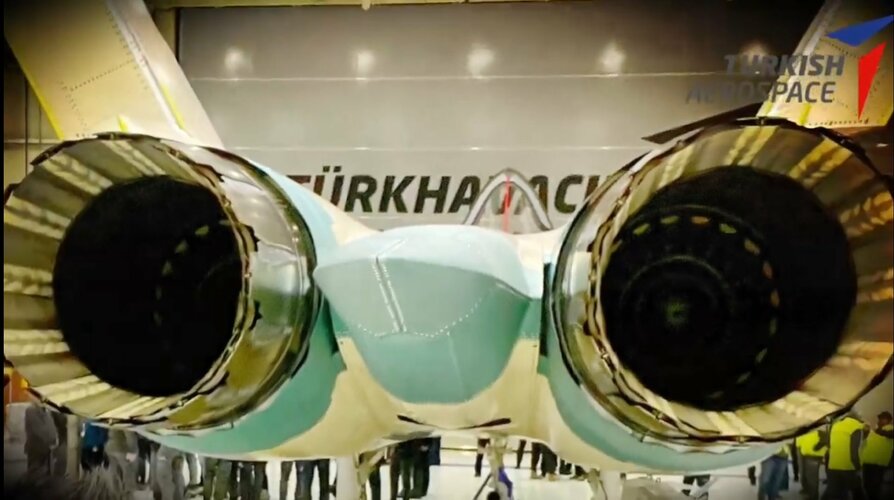
I hadn't been watching this program very closely and rather just assumed it would be powered by F414s or an engine in that similar weight/size/power class, so I was surprised to learn it's using two F110s which makes is quite larger than I thought. Seems quite an ambitious aircraft for sure.
 
I hadn't been watching this program very closely and rather just assumed it would be powered by F414s or an engine in that similar weight/size/power class, so I was surprised to learn it's using two F110s which makes is quite larger than I thought. Seems quite an ambitious aircraft for sure.
Yes, I was quite surprised as well, I was expecting it to be in the same size class as the KF21, not in the F14-Su27 size class.


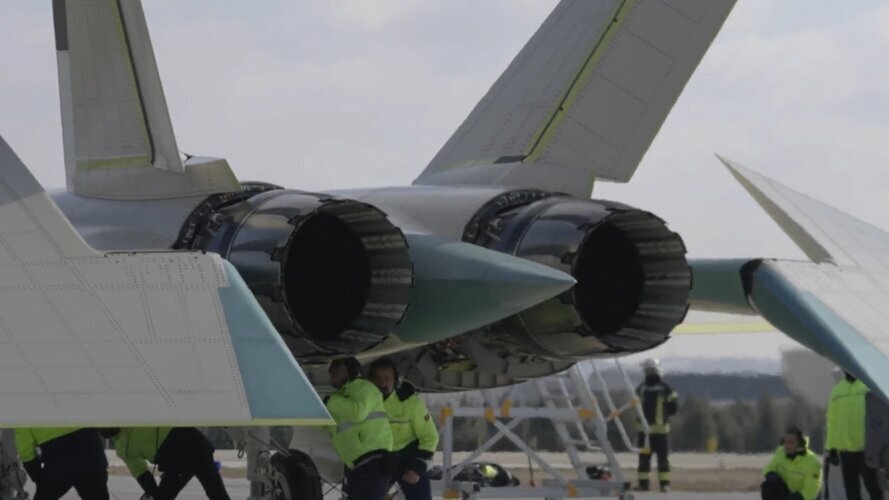
Yes, we know that there is a sensor housing there, but they seem to have temporarily installed chutes in place instead, since it could be considered a necessity during testing.
Spin testing requires a parachute to pull the plane back out in case it can't recover with full control deflections.
 
Yes, I was quite surprised as well, I was expecting it to be in the same size class as the KF21, not in the F14-Su27 size class.


Spin testing requires a parachute to pull the plane back out in case it can't recover with full control deflections.

They've made it that big for one major reason, and they are not shy about it. Fitment of avionics. This is Turkey's first attempt at a highly functional fighter aircraft and as such, they don't want to limit national partners to tight tolerances. Not yet anyway. There's plenty of space in the TechDem aircraft to test newly developed avionics and measurement equipment.

I expect the KAAN to be highly optimized when avionics mature and new wind tunnel gets up and running. With the additive manufacturing tech they've poured $$$ into, we will likely see those changes happen rapidly.
 
They've made it that big for one major reason, and they are not shy about it. Fitment of avionics. This is Turkey's first attempt at a highly functional fighter aircraft and as such, they don't want to limit national partners to tight tolerances. Not yet anyway. There's plenty of space in the TechDem aircraft to test newly developed avionics and measurement equipment.

I expect the KAAN to be highly optimized when avionics mature and new wind tunnel gets up and running. With the additive manufacturing tech they've poured $$$ into, we will likely see those changes happen rapidly.
Ah, yeah, makes sense!
 
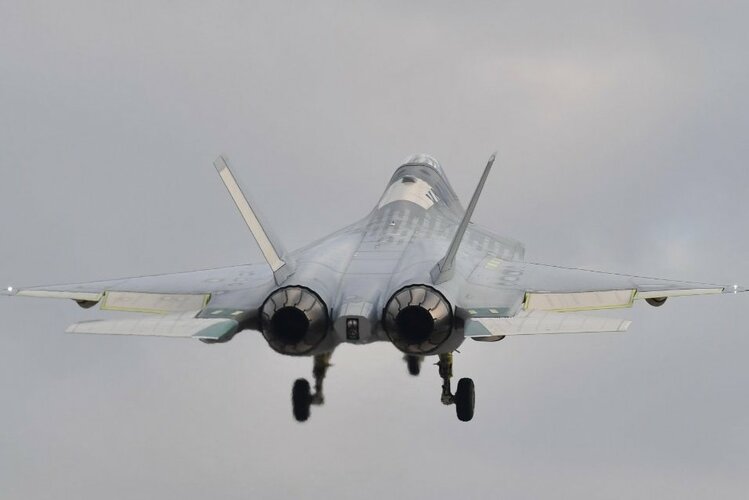
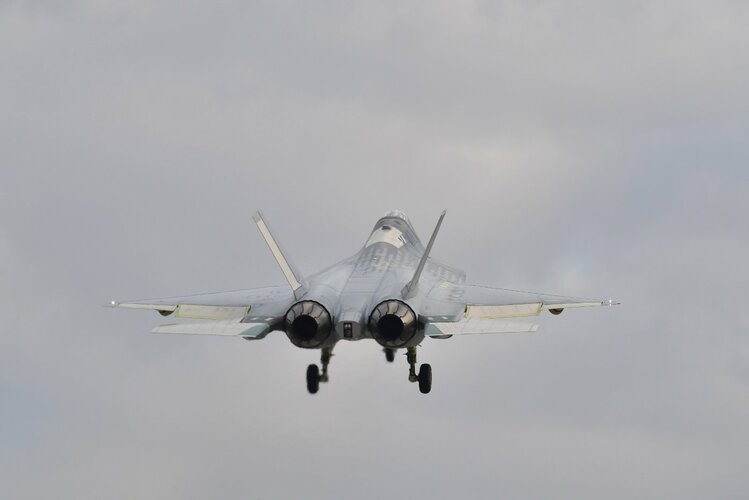
That pic is PSed. How do we know that? Because that's the 3rd Main Jet Base in Konya where the Anatolian Eagle Exercises are held.
 
Forward landing gear leg landing light for example.

You're right, for whatever reason the aircraft has clearly been mirrored, and it's also been pasted onto a different background (since that is not mirrored). But it's still a genuine photo of the aircraft in the air (note condensation due to flow separation from AoA behind the lower intake lip).
 
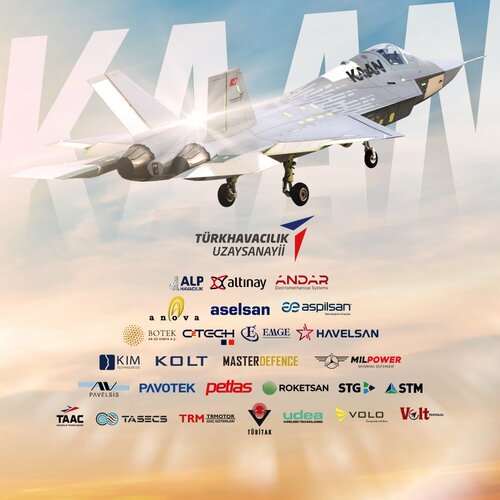
This appears to be a list for domestic companies but I could be wrong since I just glanced at the names.
true. The CEO has said that the engines, the side-stick, the ejection seat and a few valves are of foreign origin. The rest are completely Turkish. So GE, Martin Baker and the Spanish company they buy the side-stick from should be on the list, too. Maybe BAE systems too since they helped with the design of the aircraft in the preliminary phase.
 
Last edited:
To prevent this from occurring, the engine was programmed to raise Idle speed to Mil power above 1.4M.

For the F-15 and F-16, 1.4M was the speed where spread reached its minimum and the engine was maintained at Mil power to prevent dropping below that minimum corrected airflow. When the corrected airflow drops below the minimum, the normal shock is pushed forward out of the throat, and pressure recovery drops abruptly. With the pressure behind the throat decreased, the airflow in the inlet is momentarily increased, the shock is swallowed, pressure recovery increases, airflow drops below minimum, and the process repeats, many times per second. This is inlet buzz, and it can be very damaging to both the airframe inlet structure and the engine.

Interesting. It has been stated several times that TAI wants to make the Kaan supercruise at Mach 1,4. Perhaps it has to do with this phenomenon of inlet buzz.
 
Its actually remarkable how few foreign items are used - shows the breadth of capability in Turkish aerospace industries. If they can design and produce engines for Kaan even in the 4th gen F110 class that would be truly impressive.
Yes, I'm very impressed with this!


The only connection is that if you can supercruise at M1.4 or higher, and you cannot reduce the power below Mil power at M1.4 without inducing inlet buzz, how do you slow down below M1.4?
airbrakes, maybe?
 

Similar threads

Back
Top Bottom