If Boeing had the N400's forward section with Saab's tail design then nobody complains I am sure. M346N certainly had a good looking front, too. (But its origin made it a no-go.) T-7A's tail was the golden b-b.

You are using an out of date browser. It may not display this or other websites correctly.
You should upgrade or use an alternative browser.
You should upgrade or use an alternative browser.
T-X Trainer - Boeing T-7A Red Hawk
- Thread starter flateric
- Start date
I think that a lot of my fellow posters here dismiss too easily that Saab unconventional approach and numerous claims of simplified manufacturing and cost decrease were not able to match the reality of the program. We know,(and we see) that Boeing had to redesign the airframe to be more conventional in order to match the price point. You can see in a lot of small details that this plane was not optimized the way Boeing has used us to see. Attentive Readers here probably remember how I pointed early to the the crude lack of ingress and egress systems that would provide a safe access for both pilots. But I haven´t yet mentioned the MesserscHawk canopy that lacks proper side hinges to fully open to a correct angle (see how taller pilots have to crawl out of their seats snakes like!*)... Well clearly, Saab early design busted the budget and now Red Hawk stands as a compromised design (until Block II?).
I would hence not attribute the low supersonic Mach to some aerodynamic features. It´s just more likely limited by material quality due to cost and proper R&D budgets. The canopy for example we know had some early troubles is probably designed to be as safe as cost effective while matching service´s requirements instead of opening the Mach number...
*remarkably this was noticeable during the first delivery reception ceremony!
I would hence not attribute the low supersonic Mach to some aerodynamic features. It´s just more likely limited by material quality due to cost and proper R&D budgets. The canopy for example we know had some early troubles is probably designed to be as safe as cost effective while matching service´s requirements instead of opening the Mach number...
*remarkably this was noticeable during the first delivery reception ceremony!
Last edited:

- Joined
- 6 November 2010
- Messages
- 6,355
- Reaction score
- 8,239
Prime contractor Boeing has a recent history of poor project management, what proof do you have of SAAB as a major cause of T-7 troubles?a lot of my fellow posters here dismiss too easily that Saab unconventional approach and numerous claims of simplified manufacturing and cost decrease were not able to match the reality of the program
Gripen ground equipment has perfectly servicable access ladders. Gripen canopies open just fine.the crude lack of ingress and egress systems that would provide a safe access for both pilots.
'Walmart' access ladders for T-7 are a US thing.
Conjecture.Well clearly, Saab early design busted the budget and now Red Hawk stands as a compromised design (until Block II?).
Never Boeing's fault?
Last edited:
Well, as you are an old member here, I would invite you to read back this thread to close all your bullet points.*
And since you are even older in this Aerospace Fana community, I will point you toward your old Keypub days, reading that well illustrated post of old TViP that already pointed to the rear cockpit access for IP.
But Saab is (was?) a dynamic company and took the bull by the horns nearly in the same lapse of time with a revised access ladder.
*If you know a bit of aerospace you can just watch Boeing/Saab material displaying their manufacturing line or airframe image that clearly shows that Saab nut/rivet free composite assembly technique is... Nowhere to be seen! (that was matched by Boeing communication b/w)
And since you are even older in this Aerospace Fana community, I will point you toward your old Keypub days, reading that well illustrated post of old TViP that already pointed to the rear cockpit access for IP.
But Saab is (was?) a dynamic company and took the bull by the horns nearly in the same lapse of time with a revised access ladder.
*If you know a bit of aerospace you can just watch Boeing/Saab material displaying their manufacturing line or airframe image that clearly shows that Saab nut/rivet free composite assembly technique is... Nowhere to be seen! (that was matched by Boeing communication b/w)
- Joined
- 6 November 2010
- Messages
- 6,355
- Reaction score
- 8,239
Tried that to no avail.would invite you to read back this thread to close all your bullet points
You seem to know when this type of ladder was introduced.Saab is (was?) a dynamic company and took the bull by the horns nearly in the same lapse of time with a revised access ladder.
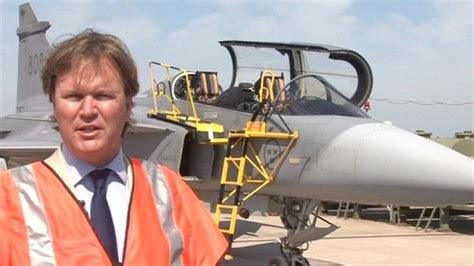
Enlighten me, please.
The absence of SAAB-specific 'assembly techique' indicates that SAAB is a major cause of T-7 delays and cost-overruns?Saab nut/rivet free composite assembly technique is... Nowhere to be seen!
Try again.
Scott Kenny
ACCESS: USAP
- Joined
- 15 May 2023
- Messages
- 19,674
- Reaction score
- 28,153
The fact that it was supposed to be SAABs assembly techniques were able to get the T-7 flying sooner, and then a total redesign that removes them for more traditional techniques does not suggest the cause for the delays?The absence of SAAB-specific 'assembly techique' indicates that SAAB is a major cause of T-7 delays and cost-overruns?
Try again.
- Joined
- 6 November 2010
- Messages
- 6,355
- Reaction score
- 8,239
Fair point, I am not that conversant with the T-7 project.
Was nut/rivet free construction originally considered? If so, when/why was it dropped?
Because of incompatability with Boeing practice/expertise, for instance?
Was nut/rivet free construction originally considered? If so, when/why was it dropped?
Because of incompatability with Boeing practice/expertise, for instance?
Scott Kenny
ACCESS: USAP
- Joined
- 15 May 2023
- Messages
- 19,674
- Reaction score
- 28,153
I am not aware of the reason for the redesign, a poster here suggested it was for easier/faster production.Fair point, I am not that conversant with the T-7 project.
Was nut/rivet free construction originally considered? If so, when/why was it dropped?
Because of incompatability with Boeing practice/expertise, for instance?

- Joined
- 19 February 2007
- Messages
- 1,644
- Reaction score
- 3,484
You seem to know when this type of ladder was introduced.
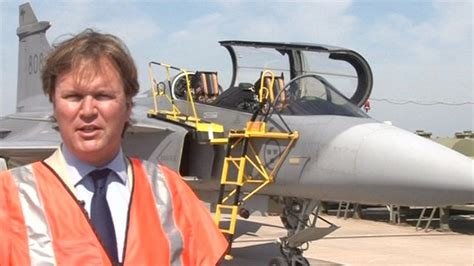
I had no idea Ikea was a qualified aerospace subcontractor!
https://breakingdefense.com/2026/02...to-approve-t-7-trainer-production-within-days
Boeing has now delivered two T-7s to Joint Base San Antonio-Randolph, Texas, where the 99th Flying Training Squadron became the first Air Force unit to receive the Red Hawk in a Jan. 9 ceremony.
Stevens said one aircraft, dubbed APT-5, will be used for “familiarization training,” where a Boeing test pilot will fly with instructor pilots from the 99th to get them acquainted with the Red Hawk. The other aircraft, APT-3, is being used to train maintainers.
The T-7 is currently restricted to flights with test pilots, in test airspace [...] pilots will get qualified on the aircraft through Type 1 aircrew training [in] “early 2027.” Then in spring or summer 2027, the program will start the initial operational test and evaluation phase, where new weapons systems are measured for their operational effectiveness.
Stevens said three more aircraft are further slated for delivery this year. Two will be production-representative test jets, which the Air Force decided to buy last year to provide extra testing capacity. The third will be a developmental jet that will be converted to a test aircraft and delivered to Randolph following electromagnetic testing.
/

T-7 tiptoing to low rate production (each first 3 low rate production airframe will be reviewed separately before the USAF open further delivery) :
https://www.airforcetimes.com/news/...clears-t-7a-red-hawk-for-low-rate-production/
https://www.airforcetimes.com/news/...clears-t-7a-red-hawk-for-low-rate-production/
Despite the production approval, the Air Force is proceeding cautiously. Each of the first three low-rate production lots will be green-lighted separately, allowing officials to apply lessons from ongoing testing before committing to subsequent batches.

Forest Green
ACCESS: USAP
- Joined
- 11 June 2019
- Messages
- 14,596
- Reaction score
- 31,708
T-7 Red Hawk Moves into Production with $219M Contract to Boeing
https://www.airandspaceforces.com/t-7-red-hawk-production-boeing-contract/T-7 Red Hawk Moves into Production with $219M Contract to Boeing
https://www.airandspaceforces.com/t-7-red-hawk-production-boeing-contract/
Finally!
Lots of spare parts (cheap).
Especially when the T-7 starts replacing the T-38 en-masse.

- Joined
- 21 January 2015
- Messages
- 15,032
- Reaction score
- 24,272
Boeing Drops Out Of U.S. Navy Trainer Competition
Boeing has decided not to bid on the U.S. Navy’s next-generation trainer competition, a surprise move by the company that was seen as a favorite.
The decision allows Boeing to focus more heavily on sixth-generation aircraft programs. With Lockheed Martin having also dropped out of the Undergraduate Jet Training System competition, the teams that remain are Sierra Nevada Co. (SNC) with Northrop Grumman and General Atomics Aeronautical Systems Inc., and a team of Leonardo and Textron.
Boeing in a statement to Aviation Week said its offering, the T-7A Red Hawk, does not meet the Navy’s stated needs despite it already being delivered to the U.S. Air Force.
“Boeing is focused on meeting our commitments, and we bid for programs where we believe we can provide the right solution tailored to our customers’ needs and requirements,” a company spokesperson says. “After careful evaluation, we have determined the T-7A does not meet the U.S. Navy’s Undergraduate Jet Training System requirements.”
The first of a series of 3 articles on the T7 and its "issues":
https://breakingdefense.com/2026/06/t7-red-hawk-air-force-trainer-secret-struggles-investigation/
https://breakingdefense.com/2026/06/t7-red-hawk-air-force-trainer-secret-struggles-investigation/
Amazing this has been allowed to carry on this long...The first of a series of 3 articles on the T7 and its "issues":
https://breakingdefense.com/2026/06/t7-red-hawk-air-force-trainer-secret-struggles-investigation/
Scott Kenny
ACCESS: USAP
- Joined
- 15 May 2023
- Messages
- 19,674
- Reaction score
- 28,153
T-38s are life-limited airframes.Amazing this has been allowed to carry on this long...

HaveVoid
ACCESS: Confidential
- Joined
- 4 October 2010
- Messages
- 84
- Reaction score
- 274
“Post contract award, the Boeing T‑7A Red Hawk program has safely accumulated over 344 flight test hours across more than 350 test flights,” the company added.
Boeing has only logged 344 hours of flights in the 8 years since the contract was awarded? Is that a typo? That's 43 hours a year... less than an hour a week. But its ready for the operational tempo that the T-38 replacement will need?
I like to think that I don't shock easily, but this program seems to be scandalously off-track if even a fraction of what is reported here is true.
Boeing has only logged 344 hours of flights in the 8 years since the contract was awarded? Is that a typo? That's 43 hours a year... less than an hour a week. But its ready for the operational tempo that the T-38 replacement will need?
I like to think that I don't shock easily, but this program seems to be scandalously off-track if even a fraction of what is reported here is true.
Scott Kenny
ACCESS: USAP
- Joined
- 15 May 2023
- Messages
- 19,674
- Reaction score
- 28,153
The ratio of flight hours per week tends to depend on just how much time the engineers need to spend looking at the data produced. (And yes, how much time manglement needs to decide things. Note that Boeing manglement is extremely risk-averse right now.)Boeing has only logged 344 hours of flights in the 8 years since the contract was awarded? Is that a typo? That's 43 hours a year... less than an hour a week. But its ready for the operational tempo that the T-38 replacement will need?
Also, note that the first two EMD airframes didn't happen till the middle of 2021, and first flight of T-7A wasn't until mid 2023.
So there were the two T-7 prototypes, and at least 3 EMD T-7As. I'd need to see flight hours per year before I start screaming about things taking too long.

alberchico
I really should change my personal text
- Joined
- 14 January 2014
- Messages
- 1,029
- Reaction score
- 2,552
Not going with the proven T-50 really was a blunder of massive proportions.
Agree, USAF saw the reduced dollars and thought they had a win but clearly not. When the successful bid is literally billions of dollars cheaper than the two best alternatives it should have sent alarm bells ringing.Not going with the proven T-50 really was a blunder of massive proportions.
Not sure what you are saying with this. Are you inferring the USAF is continuing because they have no other option, which I agree with, or that the USAF persisted too long already?T-38s are life-limited airframes.
- Joined
- 19 February 2007
- Messages
- 1,644
- Reaction score
- 3,484
"Among other requirements the Air Force claims Boeing “did not flow down” to its suppliers include those for configuration status accounting, which “[p]rovides a detailed audit trail of the aircraft configuration and its evolution over time,” the August 2025 presentation says.The first of a series of 3 articles on the T7 and its "issues":
https://breakingdefense.com/2026/06/t7-red-hawk-air-force-trainer-secret-struggles-investigation/
"The document says “[c]urrent impacts” of the configuration status accounting problem range from an unknown aircraft configuration to errors ordering parts and inefficient maintenance. In the longer term, the problem raises a host of issues like “runaway sustainment costs,” “compromised airworthiness” and “massive operational disruption,” according to the presentation."
What the bloody hell? Boeing has lost control of the program. And the Air Force has lost control of their contractor.
Boeing has now f****d up a trainer even worse than Fairchild Republic did in the 1980s with the T-46.
SecAF should fax eight words to Kelly Ortberg - "Contract Terminated for Default - strong letter to follow".
And we know things happen in threes, T-7, MQ-25 and KC-46. Hopefully this means the F-47 is going to work out for the best but based on the evidence to date that doesn't look promising...What the bloody hell? Boeing has lost control of the program. And the Air Force has lost control of their contractor.
Boeing has now f****d up a trainer even worse than Fairchild Republic did in the 1980s with the T-46.
SecAF should fax eight words to Kelly Ortberg - "Contract Terminated for Default - strong letter to follow".
- Joined
- 19 February 2007
- Messages
- 1,644
- Reaction score
- 3,484
Things in threes ? MQ-25, T-7 and F-47 are all St. Louis programs. Tell me they have top people in charge.And we know things happen in threes, T-7, MQ-25 and KC-46. Hopefully this means the F-47 is going to work out for the best but based on the evidence to date that doesn't look promising...
Top. People.
HaveVoid
ACCESS: Confidential
- Joined
- 4 October 2010
- Messages
- 84
- Reaction score
- 274
Then I think they are cruising towards 6 as their next multiple of 3, because they have also made a biblical mess out of the MH-139 and VC-25B too, so F-47 would make a nice even 6And we know things happen in threes, T-7, MQ-25 and KC-46. Hopefully this means the F-47 is going to work out for the best but based on the evidence to date that doesn't look promising...
Scott Kenny
ACCESS: USAP
- Joined
- 15 May 2023
- Messages
- 19,674
- Reaction score
- 28,153
VC-25B isn't a Boeing program. All Boeing did was supply completed airframes to Sierra Nevada to convert.Then I think they are cruising towards 6 as their next multiple of 3, because they have also made a biblical mess out of the MH-139 and VC-25B too, so F-47 would make a nice even 6
Both, really.Not sure what you are saying with this. Are you inferring the USAF is continuing because they have no other option, which I agree with, or that the USAF persisted too long already?
USAF has no choice in the matter because the T-38s are out of lifespan. FFS they had a fatigue failure that grounded the fleet in 2008!
The USAF also has no choice in the matter because they waffled around too long. They should have started that contract in 2008 with the fatigue crash, and had their choice at IOC by 2018.
So now they're doubly screwed in that if they void the contract for breach it will take another decade to get a new trainer to IOC due to the laws around government contracts, but if they stick with Boeing it'll still take another decade to get a trainer to IOC.
but if they stick with Boeing it'll still take another decade to get a trainer to IOC.
Time for Boeing's senior management to get a boot up its' collective arse.
Last edited:
Scott Kenny
ACCESS: USAP
- Joined
- 15 May 2023
- Messages
- 19,674
- Reaction score
- 28,153
Long past time, IMO, but yes.Time for Boeing's senior management to get boot up its' collective arse.
- Joined
- 19 February 2007
- Messages
- 1,644
- Reaction score
- 3,484
No.VC-25B isn't a Boeing program. All Boeing did was supply completed airframes to Sierra Nevada to convert.
Boeing is doing the VC-25B conversion.
SNC is doing the E-4C NAOC conversion.
Not so much here, but on other fora under the same username I have been banging a bit of an "anti-Boeing" drum for quite a while but particularly regarding their civils and MAX."Among other requirements the Air Force claims Boeing “did not flow down” to its suppliers include those for configuration status accounting, which “[p]rovides a detailed audit trail of the aircraft configuration and its evolution over time,” the August 2025 presentation says.
"The document says “[c]urrent impacts” of the configuration status accounting problem range from an unknown aircraft configuration to errors ordering parts and inefficient maintenance. In the longer term, the problem raises a host of issues like “runaway sustainment costs,” “compromised airworthiness” and “massive operational disruption,” according to the presentation."
What the bloody hell? Boeing has lost control of the program. And the Air Force has lost control of their contractor.
Boeing has now f****d up a trainer even worse than Fairchild Republic did in the 1980s with the T-46.
SecAF should fax eight words to Kelly Ortberg - "Contract Terminated for Default - strong letter to follow".
The allegation above that Boeing "Did not flow down" should terrify TBH.
This isn't an engineering or a design issue, it's a pretty basic document & revision management issue.
It's basic project management and Boeing appears to have failed utterly at it.

- Joined
- 18 October 2006
- Messages
- 4,782
- Reaction score
- 6,847
This appears to be an endemic issue with both Boeing and Lockheed Martin, where managers who should be "in tune" with the processes and the customer are not.
For instance I am reliably informed that all of the middle management at Sikorsky Helicopter (part of LMCO) are from " F-35 programs" with no rotorcraft background or work with Sikorsky’s primary customer.
Boeing at least has people who are familiar. Don't know if that makes them even more nefarious or not.
I will defer to others with more historical understanding of the industry if this is a perennial problem or modern.
I also feel that some blame falls on the government who wants to accelerate programs and are willing to accept more risk to acheive this.
For instance I am reliably informed that all of the middle management at Sikorsky Helicopter (part of LMCO) are from " F-35 programs" with no rotorcraft background or work with Sikorsky’s primary customer.
Boeing at least has people who are familiar. Don't know if that makes them even more nefarious or not.
I will defer to others with more historical understanding of the industry if this is a perennial problem or modern.
I also feel that some blame falls on the government who wants to accelerate programs and are willing to accept more risk to acheive this.
- Joined
- 21 January 2015
- Messages
- 15,032
- Reaction score
- 24,272
Boeing strike again.The first of a series of 3 articles on the T7 and its "issues":
https://breakingdefense.com/2026/06/t7-red-hawk-air-force-trainer-secret-struggles-investigation/
Four actually if you include their space business with the mess that is the Starliner.And we know things happen in threes, T-7, MQ-25 and KC-46. Hopefully this means the F-47 is going to work out for the best but based on the evidence to date that doesn't look promising...

FighterJock
ACCESS: Above Top Secret
- Joined
- 29 October 2007
- Messages
- 7,256
- Reaction score
- 8,571
Well let's see what happens to the F-47 in that case. I do not want anything to go wrong with the F-47 I really want it to succeed where the other Boeing aircraft have so far failed to do so.
From the Breaking Defense News report linked above:
Extraordinary to have to read that. But I am not surprised. They (Boeing) bought a project on a brand name and that´s what you get with that kind of lazy thinking (see FCAS).
But then, we can see the same problematics with Boeing (willingly or not) courting the ones in charge of regulating their engineering (the USAF) that dropdown their raised harm faster than a bullet* in face of a problem, just like with the MAX. Sadly, as we have seen with the latter, a mouse size flaw ended up wrecking an entire program like an angry herd of elephants in a bowling alley..
*What will happen with the unsealed panels when kids fly through clouds or get lost and have in consequence to be radar directed to land under heavy rain?
Other challenges have been more mundane. For example, the aircraft currently cannot fly in the rain because exterior access panels don’t seal properly, potentially allowing water to seep in and damage the aircraft’s subsystems.
Extraordinary to have to read that. But I am not surprised. They (Boeing) bought a project on a brand name and that´s what you get with that kind of lazy thinking (see FCAS).
But then, we can see the same problematics with Boeing (willingly or not) courting the ones in charge of regulating their engineering (the USAF) that dropdown their raised harm faster than a bullet* in face of a problem, just like with the MAX. Sadly, as we have seen with the latter, a mouse size flaw ended up wrecking an entire program like an angry herd of elephants in a bowling alley..
*What will happen with the unsealed panels when kids fly through clouds or get lost and have in consequence to be radar directed to land under heavy rain?
Last edited:


