Forest Green
ACCESS: USAP
- Joined
- 11 June 2019
- Messages
- 14,638
- Reaction score
- 31,800


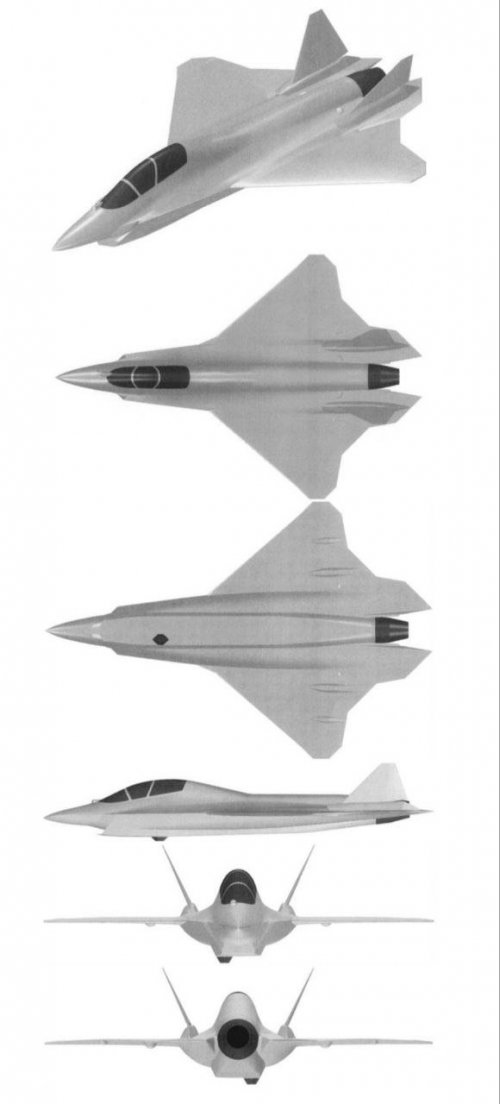
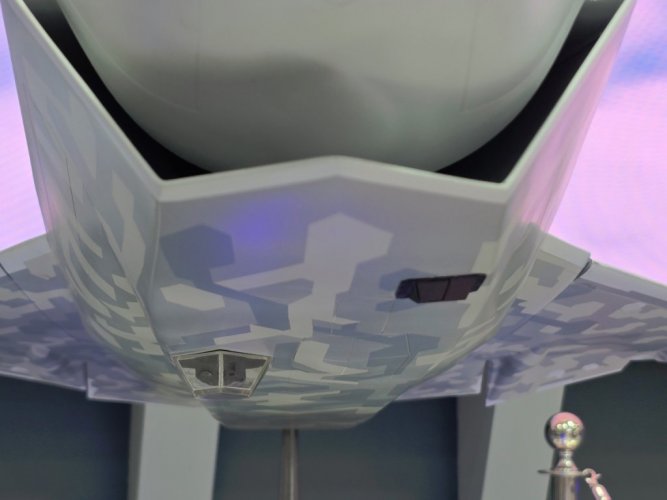
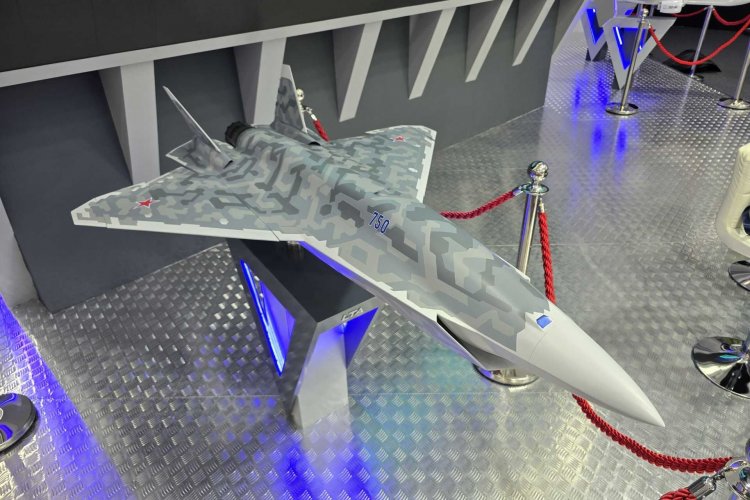
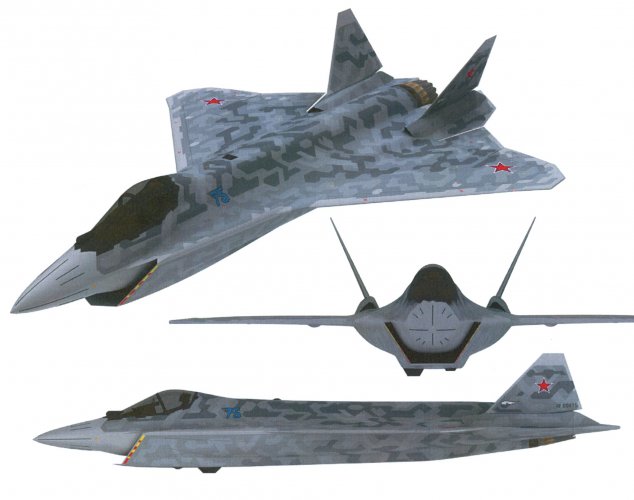
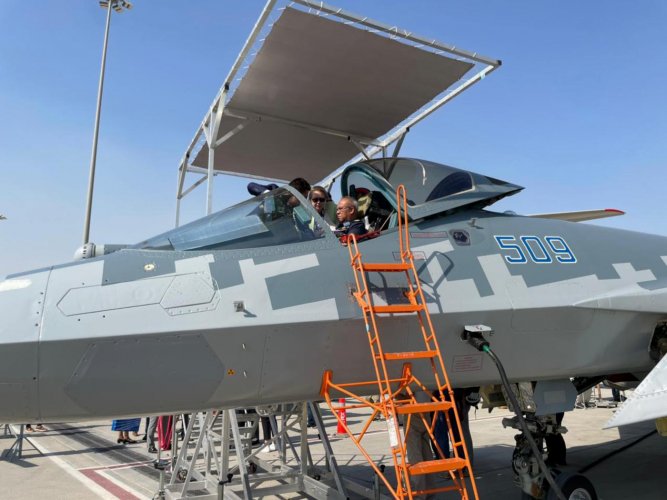
Building on the basis of previous systems, most likely ease of manufacturing as well as many of the same processes and equipment are already in place. As for faceting, if the models, artwork and three-views are to be believed the LTS will have both, the already known IRST and EOTS similar to that of the F-35. T-75B, the proposed unmanned version would forego the spherical IRST entirely though, one has to assume that it's not considered worthwhile to keep it when the removal of the cockpit would already erase a major source of radar returns, so perhaps it was deemed worthwhile to consider going all in on signature reduction.Can someone be kind enough to explain why Su57 didnt go with a faceted IRST dome and instead used a semi-spherical one? what are the design trade off for both?
Flat mirror is easier than bulb (and in any case, su-57 has lots of flats).Building on the basis of previous systems, most likely ease of manufacturing(...)
Russian IRSTs are very much WVR sensors working in tandem with HMS (which of course can do more).T-75B, the proposed unmanned version would forego the spherical IRST entirely though, one has to assume that it's not considered worthwhile to keep it when the removal of the cockpit would already erase a major source of radar returns, so perhaps it was deemed worthwhile to consider going all in on signature reduction.

I don’t agree with this part. IRSTs enable you to track a target passively within mostly sub-100 km BVR ranges, head-on, without alerting your opponent that you’re locking onto them, pretty much right up until the missile seeker acquires the target. In the era of LO aircraft and 5th gen aerial warfare, their utilization has become massively important.Russian IRSTs are very much WVR sensors working in tandem with HMS (which of course can do more).
Without cockpit, IRST loses significant part of it's value.


You don't build airplanes at Area 51.That place seems like a nightmare place to keep secure just by looking at the amount of abandoned buildings; roads and easy and close access to the plant location. Don’t the Russians have something like Area 51 anymore?
IRSTs are different. Some are full sized mirrors with limited movement, going into LWIR(detecting heated surfaces over long range). Those are obviously ambush/bvr focused; but usually no laser for you, it's search/track. Plus, foggier image.I don’t agree with this part. IRSTs enable you to track a target passively within mostly sub-100 km BVR ranges, head-on, without alerting your opponent that you’re locking onto them, pretty much right up until the missile seeker acquires the target. In the era of LO aircraft and 5th gen aerial warfare, their utilization has become massively important.
Russian IRSTs are very much WVR sensors working in tandem with HMS (which of course can do more).
Yes, OSF is indeed more unique with the TV-sensor, but frankly, you’ll find the rest on newer systems worldwide. And when an IRST isn’t dual-band (LWIR+MWIR), it’s usually paired with an EOTS on the same aircraft, like with the Turkish designs. PIRATE, KARAT, OLS-35, etc., also have lasers for WVR combat.IRSTs are different. Some are full sized mirrors with limited movement, going into LWIR(detecting heated surfaces over long range). Those are obviously ambush/bvr focused; but usually no laser for you, it's search/track. Plus, foggier image.
Others are much smaller mirrors with in-built laser rangefinder, capable of matching most of pilot head movement(60 deg). They are more of wvr tools, as while mwir captures really hot objects(tracking falcon 9) from afar, overall atmosphere absorbs mwir way better. Image it can generate is sharper, though.
Frenchmen combined best of both worlds(pure dual band IRST + pure visual TV+LRF, and gave them impressive downwards angle, plus mixed them with mica-ir feed), but at expense of huge optical "cassette" and moving radar forward almost as if it's a secondary sensor (never backfired).
Finally, there's EOTS - which in principle is the same(mwir, LRF in), but they tend to be far worse scanners due to entirely different design focus(which is picture quality for ground target observation and recognition), and their FoV is literal opposite of pilots' cockpit. Which doesn't mean it's useless(certainly useful), just a different focus.
Su-57 has all, 720, at the same time (though no internal EOTS) - i.e. it isn't really meant to be offensive aircraft, fighting more like a better 4th gen in this regard (throwing stand off strikes).
On a more affordable Su-75, since it has EODAS- and EOTS- like systems, IMHO, separate IRST isn't really worth it. Not worth the money (and it isn't cheap). Plus it most certainly looks like an offensive aircraft: signature penalty is undesirable.
On the other hand, it can take MRAAMs in fast bays and it has lower G-rating; was WVR that important for design? Drone hunting is better done through EOTS(lower hemisphere and image quality being big advantages), which is there.
Turkish case is unique in my opinion, as TAF really needs whatever a2a capability it can claim, asap, yesterday. Otherwise, it would be far too comprehensive of a suite for a relatively light subsonic drone.
Are we looking at the same aircraft? Everything about the Su-57 screams "offensive aircraft" to me, except for the fact that the 101KS-V is essentially a further evolution of the OLS family.Su-57 has all, 720, at the same time (though no internal EOTS) - i.e. it isn't really meant to be offensive aircraft, fighting more like a better 4th gen in this regard (throwing stand off strikes).
Although both the Su-57 and the Su-75 are clearly offensive aircraft, the -75 is meant to operate right where the action is due to its lower signature, while the Su-57 stays further back and commands everything it’s capable of. This means the -75 needs to ambush other LO aircraft without revealing its position, or else it’d be a death sentence for it or could not reliably get a mission kill.On a more affordable Su-75, since it has EODAS- and EOTS- like systems, IMHO, separate IRST isn't really worth it. Not worth the money (and it isn't cheap). Plus it most certainly looks like an offensive aircraft: signature penalty is undesirable.
On the other hand, it can take MRAAMs in fast bays and it has lower G-rating; was WVR that important for design? Drone hunting is better done through EOTS(lower hemisphere and image quality being big advantages), which is there.
Turkish case is unique in my opinion, as TAF really needs whatever a2a capability it can claim, asap, yesterday. Otherwise, it would be far too comprehensive of a suite for a relatively light subsonic drone.
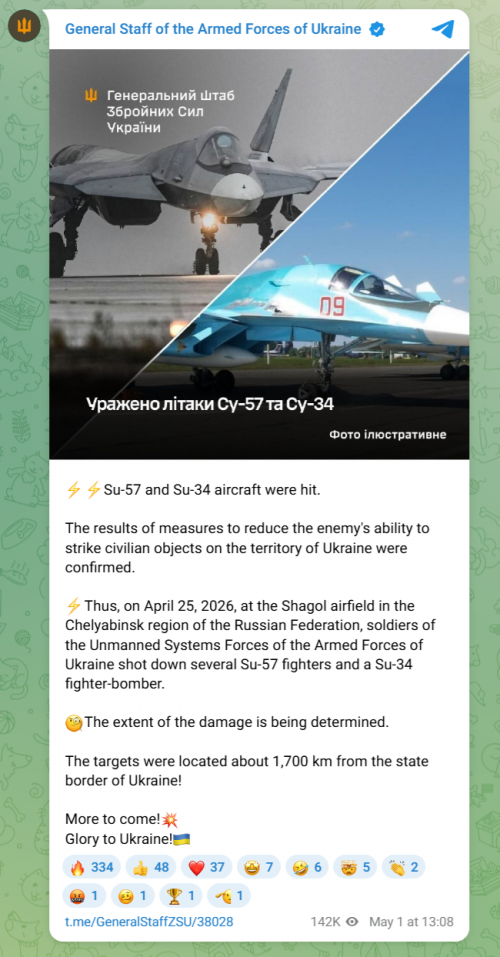
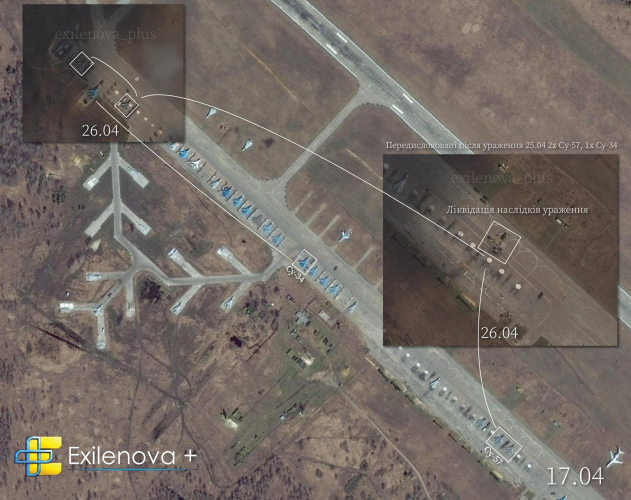
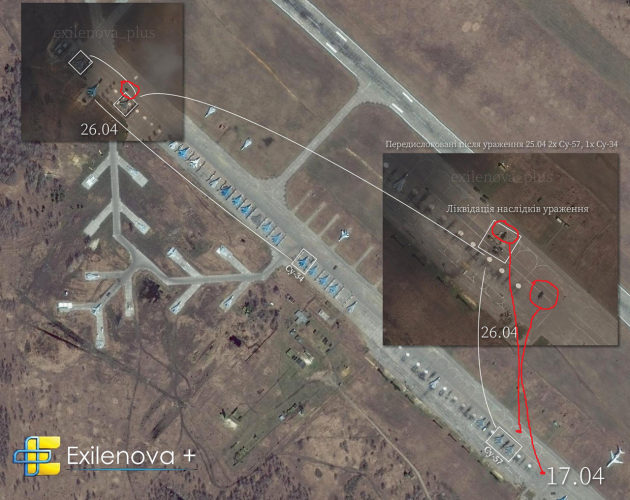
So same evidence as R-37 shoot-downs then?> alleged hit on an airfield
> "Shot down"
> No footage
> "GLORY TO UKRAINE
One doesn't have to be German to be mildly amused by this...attitude.
We can say "paired" when they share FoV; in case of Turkish aircraft, it just isn't the case(apart from narrow lense of shared sectors directly ahead) , though you can "pass" engagement from one sensor to another.Yes, OSF is indeed more unique with the TV-sensor, but frankly, you’ll find the rest on newer systems worldwide. And when an IRST isn’t dual-band (LWIR+MWIR), it’s usually paired with an EOTS on the same aircraft, like with the Turkish designs. PIRATE, KARAT, OLS-35, etc., also have lasers for WVR combat.
Offensive aircraft is meant to penetrate enemy airspace.Are we looking at the same aircraft? Everything about the Su-57 screams "offensive aircraft" to me, except for the fact that the 101KS-V is essentially a further evolution of the OLS family.
You can still do it via cooperative engagement datalink, EODAS, EOTS, or LPI. Same as F-35...Although both the Su-57 and the Su-75 are clearly offensive aircraft, the -75 is meant to operate right where the action is due to its lower signature, while the Su-57 stays further back and commands everything it’s capable of. This means the -75 needs to ambush other LO aircraft without revealing its position, or else it’d be a death sentence for it or could not reliably get a mission kill.
Tbf, usually yes. Until someone will get to dig after the war, normal practice is either unmistakable debris/video or admission from engaged side.So same evidence as R-37 shoot-downs then?


A bit more ...
Brovdy's callsign is Madyar, not 'Magyar'
...it is easier to bamboozle than to debamboozle
Ngl, it's quite the achievement to have satellite footage that makes aircraft look as undamaged and unharmed as this one.A bit more ...
As usual in such threads, the wishful thinking is off the charts with some. It's unfortunate that some consider these meaningful contributions to the forum and post peremoga fictionWar Monitor as a source in 2026?
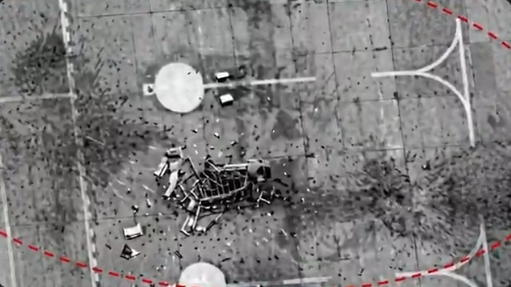
It's absent in official SBS video https://t.me/usf_army/1865What could even be the source of this image, is there a drone over the airbase? because that's not a sattelite image, in this case one would expect a video right? a still image suspiciously sharpened and cropped in that looks a lot like AI, again certified BS

Spherical is simpler, field of view great and they could reuse existing technology and solutions for it.Can someone be kind enough to explain why Su57 didnt go with a faceted IRST dome and instead used a semi-spherical one? what are the design trade off for both?
Yes, a bajillion X "OSINT" accounts reposting stories with added bullshit. Lets try to stick to the real sources not the talking heads.It's absent in official SBS video https://t.me/usf_army/1865
I don't understand why post endless retellings from 'OSINT sources' when you just can point to original
True, but also fighter doesn’t usually cruise that high against enemy with strong IADS, because plane are very sluggish up high. Additionally, you often need to dive down to dodge enemy AAM/SAM, so after the first shot, the follow through shot are often done at much lower altitude. It often something like: detect enemy => climb => shot the first shot => crank and dive down to dodge enemy return fire => climb again=> shot again.There is no bad weather conditions in the stratosphere ( 15-20+km).
True, but also fighter doesn’t usually cruise that high against enemy with strong IADS, because plane are very sluggish up high. Additionally, you often need to dive down to dodge enemy AAM/SAM, so after the first shot, the follow through shot are often done at much lower altitude. It often something like: detect enemy => climb => shot the first shot => crank and dive down to dodge enemy return fire => climb again=> shot again.
10-12 km is good altitude to cruise for most fighter jet since you have good enough height for your missile to fly far, yet still low enough so that you can have good chance of dodging enemy missile launching at you (by cranking and diving down).We can see that Su-35S ,Su-30SM/SM2 patrol/cruise at height 10-12km. What is the long range cruise/patrol height for the Su-57, we don't know. Keep in mind that MiG-31BM can patrol and cruise in the supersonic mode at 20+km. If you want to establish air superiority/air dominance, I think you must be 'higher' than the enemy.
If we talk about Su-57 in comparison with the FFF ( Flanker Family Fighters) in that domain, cruising, patrolling or maneuvering in higher stratosphere,that fighter has better possibilities, capabilities all in all.
10-12 km is good altitude to cruise for most fighter jet since you have good enough height for your missile to fly far, yet still low enough so that you can have good chance of dodging enemy missile launching at you (by cranking and diving down).
Mig-31 can patrol at 20+ km, but its main role is to intercept bomber/cruiser missiles ie things that doesn't shot back, so it should fly as high as possible to maximizes the kinematic envelope of its missiles, enhancing engagement range.
However, this extremely high altitude profile also increases vulnerability, if a long range AAM (let say AIM-174, PL-17, R-37 or AIM-260) launched at you, they will have better chance of hitting the Mig-31 cruising at 20 km than the cranking Su-35 at 12 km
So same evidence as R-37 shoot-downs then?
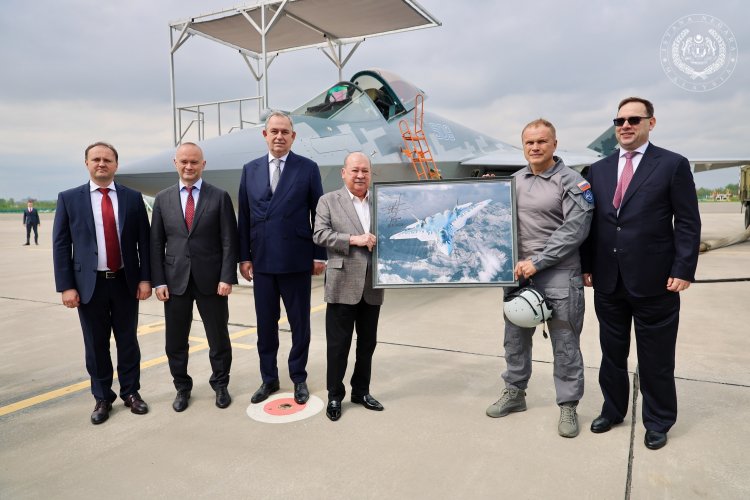
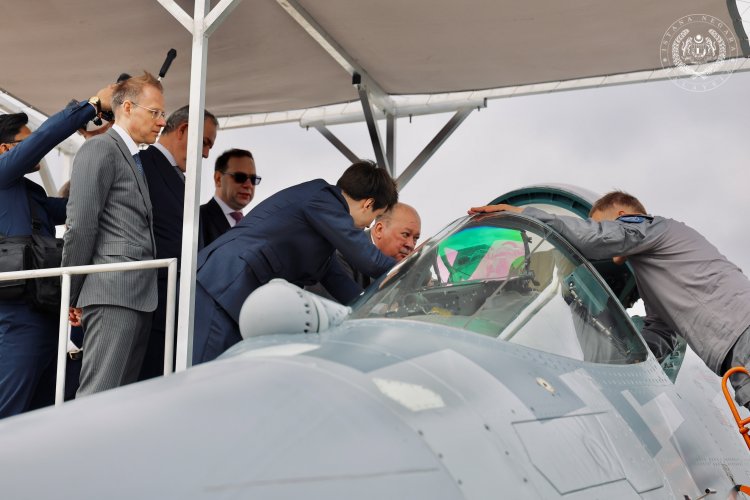
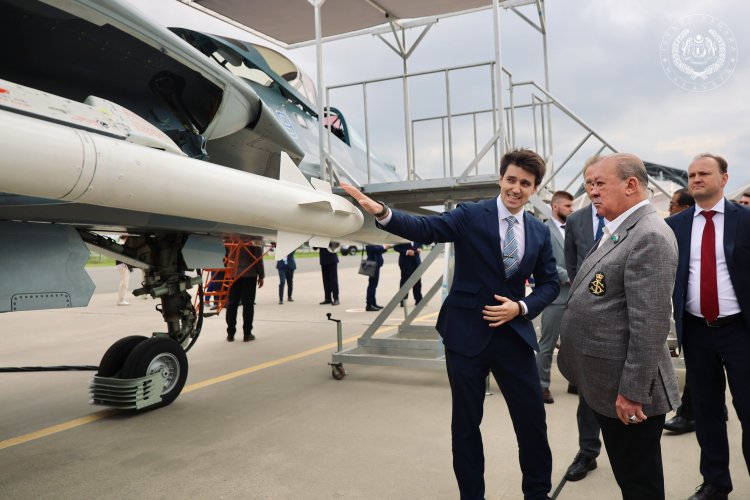

The izdeliye 30 (AL-51F-1) was designed to be a drop-in replacement for the AL-41F-1 (izdeliye 117), and production Su-57s (the so-called second stage T-50 design with the reworked internal structure) were to be able to accommodate it. Note that the "second stage" T-50 is separate from the "Su-57M" project (Megalopolis) which would incorporate improved mission systems as well. "Second stage" needs clarification when discussing the Su-57 because depending on the context, it can refer to the airframe, or the engine, or an overall PAK FA modernization program.I have heard from Engineers that it will be plug and play. So its designed with a modular architecture to house the AL-51F-1/Izdeliya 30 engine as soon as it is available, with the Al-41F-1 acting as a place holder till than, this is so that production and industry can mature around the available platform and hence the project isn't tied to engines which can be complex and tedious to develop and are usually subject to delays.