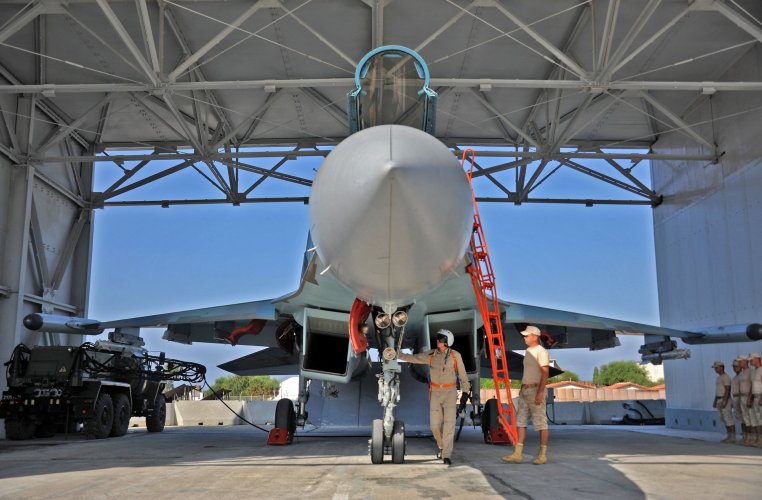
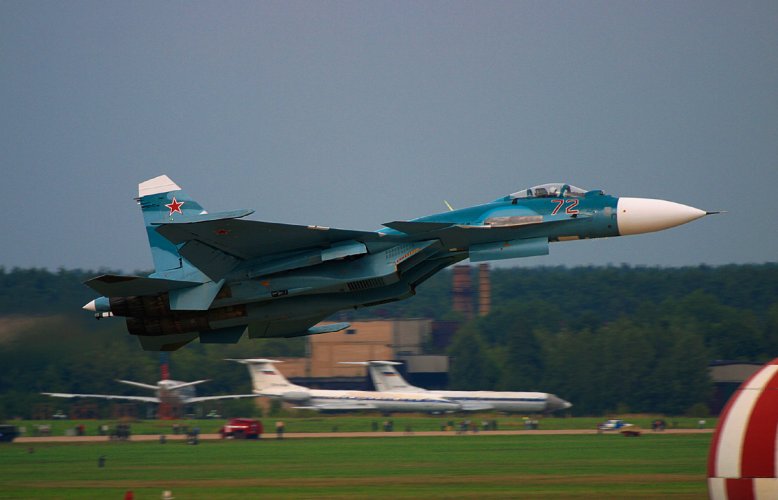
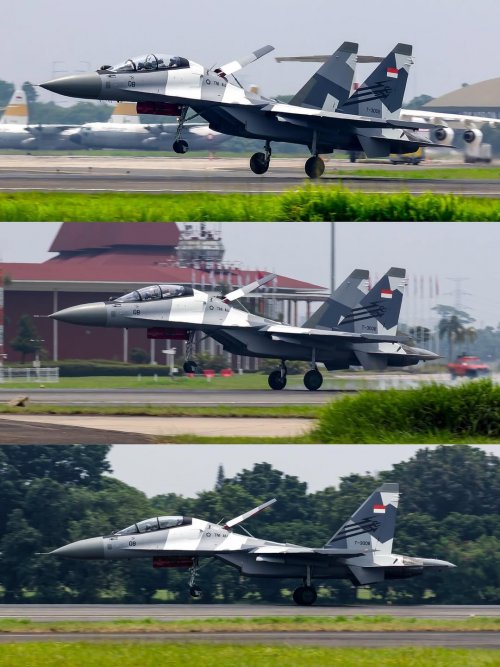
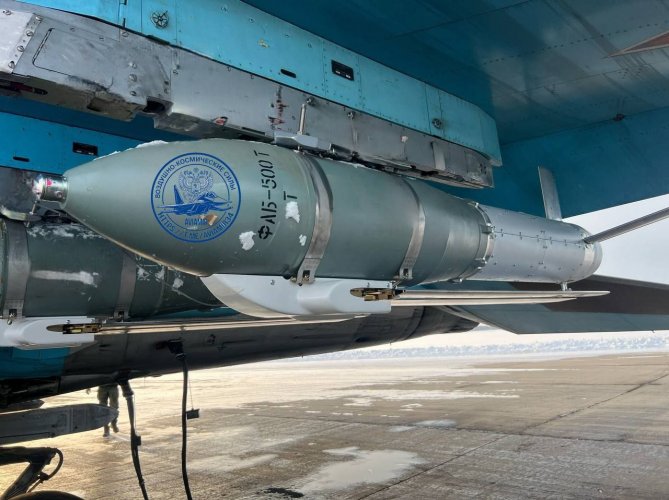
"Ukraine has confirmed the shootdown of a Russian Su-34 fighter-bomber and an Su-30SM multirole fighter, reportedly intercepted by a U.S.-made PAC-3 Patriot system.
As it was mentioned earlier ,FB gave explanation and denied all of that.As I wrote in previous comment, something must bring the moral up. Same happened during 1999 NATO intervention on the former FRY, believe me.
In the connection with jamm/ECM stations-systems,we should not expect from pilot to fly like a flying brick after he got indication from his RWR that his aircraft is under AAM/SAM attack even if he has ECM systems.
Of course he will start with evasive maneuvers ,whether he has or not those stations/systems.
Even that is not correct. Take a look on posts No 1051 and 1052 ( page 27 ). You will realise that Su-35S engage its targets not from Russian air space.
Also have a wonderful weekend.
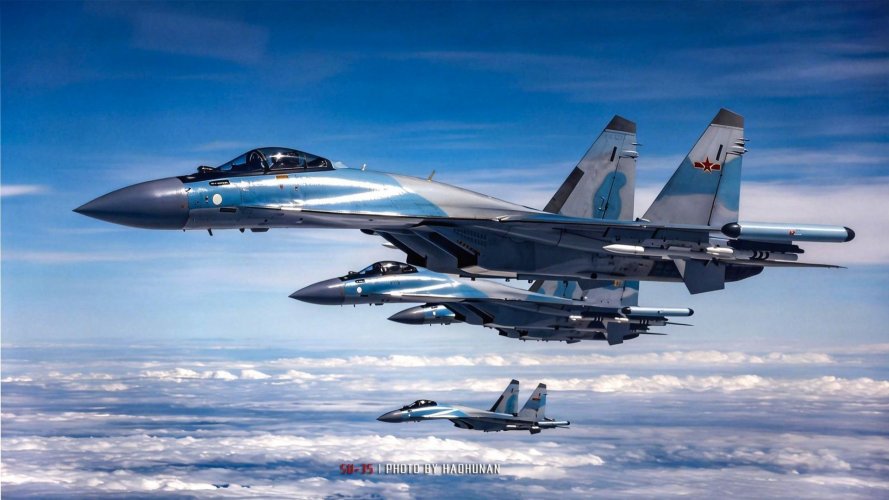
''A still image from a newly released Russian MoD video on VKS Su-35S operations against Ukraine. Here we see the starboard wing of a Su-35S during a combined CAP/SEAD sortie. Visible under the wing is a Kh-31PM ARM, R-77-1 medium-range AAM and R-73K or R-74MK short-range AAM.''
Interesting detail ,Su-35S with R-27 (maybe T) on 0:04 .We saw Su-35S armed with R-27T 's so many times in Syria from Feb 2016.This is something unusual.
Eh, not really, Ukraine launches cruise missiles like once every blue moon. Which then either miss because they're of a lesser design (Flamingo is an emergency weapon) or are dealt with by other air defense assets.
It also shouldn't be ignored that this isn't really something the Su-35 would be tasked with, it's a mission for lesser aircraft.
Guy Plopsky also commented about the R-27T on Su-35S. Comment was from 26 Jan. '26.
''A still image from a newly released Russian MoD video on air operations against Ukraine showing an R-27R or R-27T medium-range AAM and an R-73L or R-74ML short-range AAM under the starboard wing of a VKS Su-35S. It's very rare to see the R-27 in war-related footage of Su-35Ss.''
LACM intercept is core flanker mission.
Also, there's effectively no lesser fighter aircraft than flankers in Russia.
Separating su-35s (which is by far the most capable, at this point the most numerous, and in fact nowhere near the most expensive of them to operate) from other flankers is irrational.
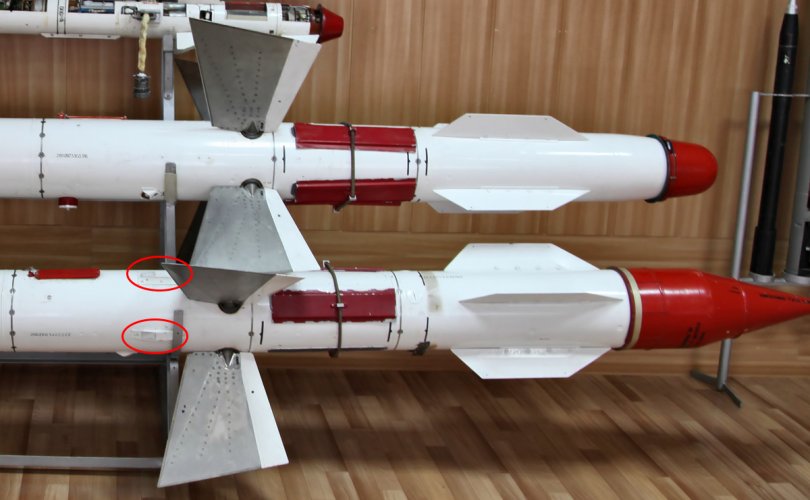
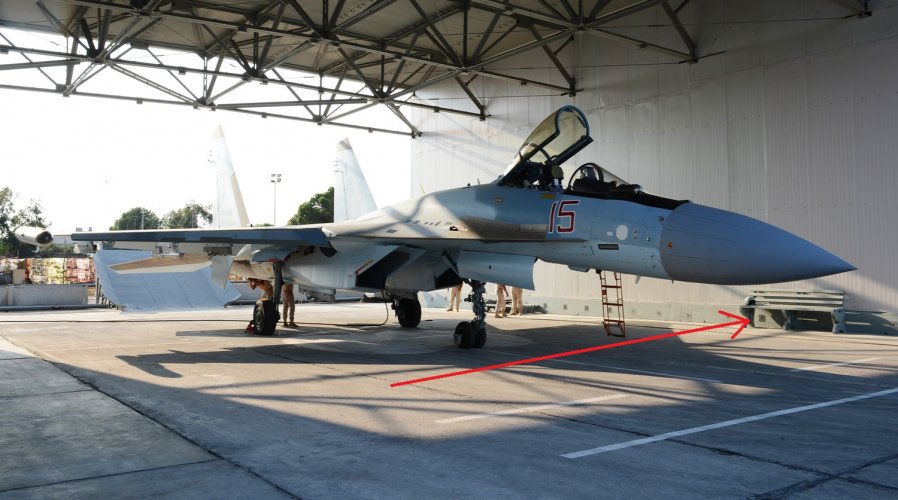
Yes, it is. Take a look on Guy Plopsky photo .Details like ECM wingtip station,than vertical stabilizers, RWR SPO-32 'Paste'l receive antenna in the wingslat ,etc.
Separating su-35s (which is by far the most capable, at this point the most numerous, and in fact nowhere near the most expensive of them to operate) from other flankers is irrational.
You just explained yourself why the Su-35S is not only utilized differently from other Flankers but also why it's completely rational to do so (which is why the VKS does it operationally).
Thinking "a Flanker is a Flanker" is in fact extremely irrational, because between something like a Su-35 and an OG Su-27S are entire dimensions. It's like comparing a by contrast ancient Su-27UB to a brand new J-16D. Do you think that an Arleigh-Burke Flight I is anywhere close in capability to an Arleigh-Burke Flight III and that they're treated equally by the USN in how they're deployed and used. I'm honestly in complete disbelief lol.
That shock aside, there are many lesser aircraft in the VKS, MiG-29 and Su-25 send their regards. It's just that there is a large quantity of older Su-27s and Su-30s that cannot effectively be deployed at the frontline but are useful enough for that kind of mission. While the Su-35S and the units that operate it have the capability to conduct patrols, to suppress SAM systems and opposing aircraft over long ranges and have the equipment to do so effectively. The only tactical aircraft in VKS service of higher value are the Su-57 and Su-34. There are almost three times as many Su-35S in the VKS than Su-57S right now, while the Su-34 (and Su-34M) are the main platform to deliver cost effective glide bombs to the front in volume. To put this into perspective, it's like saying there are no lesser aircraft in USAF service than the F-15EX, when it in fact significant outperforms all previous Eagle variants in service (like the Su-35S), as well as the entire F-16 fleet in sheer capability.
You just explained yourself why the Su-35S is not only utilized differently from other Flankers but also why it's completely rational to do so (which is why the VKS does it operationally).
Su-35s routinely fly intercepts on common grounds. Most others indeed don't fly LOC CAPs as they're just less survivable, but this doesn't mean su-35 units are somehow excluded from drone warfare.
Especially since they're by far the best available flankers for the purpose, at least Russian ones.
Also, it's honestly strange to see such arrogance towards drone intercepts. Both sides are now firmly in "polite war of cities" phase, slowly sliding down to less than polite one. Given the role of single way drones and LACMs, this is in fact quite an impactful mission, perhaps the most impactful one around.
Do you think that an Arleigh-Burke Flight I is anywhere close in capability to an Arleigh-Burke Flight III and that they're treated equally by the USN in how they're deployed and used. I'm honestly in complete disbelief lol.
Unless task involves things they can't do(ASW, ABM), or it's straining for older hulls - yes, I do think they're treated equally. Staff work takes these aspects into account, but so it does others that enthusiasts tend to skip.
Fl.I AB is still a fully capable AAW combatant.
To put this into perspective, it's like saying there are no lesser aircraft in USAF service than the F-15EX, when it in fact significant outperforms all previous Eagle variants in service
Out of curiosity, where they do outperform them as of 2026?
I.e. a mission set you'd assign to F-15EX unit, which you won't assign to F-15E or even F-15C one?
It won't take much to come up with mission F-15EX units(which fly single seat) won't take, but F-15E one - will.
Which goes against what you said, that they're all equally as capable. The Su-35 is preferred to conduct other missions because it has the capability to do so, which others lack. A Su-35 may take part in anti-drone warfare when it's the closest unit in a given area. But otherwise that tasked is left to aircraft which have trouble to meaningfully contribute elsewhere and where pilots need some flight hours.
There's no arrogance. It's just an incredibly simple mission set better left to assets that cannot perform more complex missions due to technical limitations (MiG-29s are great examples). And that's generally reflected by VKS operations.
The F-15EX posesses a more capable avionics suite including radar. Given that it's bases on the previously export oriented advanced Eagle family, it has some other tweaks that set it apart from the ancient F-15C and aging F-15E. Which fly with significantly more dated systems. As a consequence the EX posesses better situational awareness, better survivability and arguably superior offensive capabilities even when equipped with the same missiles. It's a 21st century aircraft.
Which goes against what you said, that they're all equally as capable. The Su-35 is preferred to conduct other missions because it has the capability to do so, which others lack. A Su-35 may take part in anti-drone warfare when it's the closest unit in a given area. But otherwise that tasked is left to aircraft which have trouble to meaningfully contribute elsewhere and where pilots need some flight hours.
Problem is others - all of them - also are substantially worse (from worse to outright bad) at drone intercept. Which is the most directly impactful mission out there.
There's no arrogance. It's just an incredibly simple mission set better left to assets that cannot perform more complex missions due to technical limitations (MiG-29s are great examples). And that's generally reflected by VKS operations.
Simple mission somehow lets dozens of drones through, day after day, every day.
The simple thing is "simple mission set" is solved by a single airforce in the world. Others aren't even close.
They're primary AAW combatants. I.e. for almost all mission sets, it's just a Burke.
And commander may consider other factors(like, good crew, quite likely for old ship) over technical standard.
As a consequence the EX posesses better situational awareness, better survivability and arguably superior offensive capabilities even when equipped with the same missiles. It's a 21st century aircraft.
Some details about the lost Su-33's during its career ( source RIA) .
https://ria.ru/20161205/1482868615.html?in=t
On September 28, 1988, the prototype, tail number 37, lost control at transonic speed and an altitude of 2,000 meters due to a hydraulic system failure. Test pilot Nikolai Sadovnikov ejected and survived.
On July 11, 1991, during a test program for one of the first production Su-33 aircraft (then codenamed the T-10K-8), a partial control system failure occurred. Following orders from the ground, pilot Timur Apakidze ejected.
On June 17, 1996, pilot Vitaly Kuzmenko died while landing a Su-33 at a ground airfield in difficult weather conditions.
On May 11, 2000, while conducting a scheduled flight near the Severomorsk-3 airfield, a Su-33 aircraft piloted by Colonel Pavel Kretov lost control and crashed. The pilot managed to eject.
On July 17, 2001, near Pskov, during a demonstration dedicated to the 85th anniversary of Naval Aviation, Deputy Commander of Naval Aviation, Major General Timur Apakidze, crashed in a Su-33 fighter jet.After performing a series of aerobatic maneuvers, the aircraft began to descend sharply. The pilot reported to the ground that the plane was unstable. Air traffic control ordered ejection, but the general decided to attempt a landing. The Su-33 crashed far from residential buildings.
On September 5, 2005, a Su-33 fighter jet sank in the North Atlantic. The aircraft, piloted by Lieutenant Colonel Yuri Korneyev, was conducting a scheduled naval aviation flight from the heavy aircraft carrier Admiral Kuznetsov in the North Atlantic,during landing, the aircraft rolled off the ship's deck, fell into the sea, and sank to a depth of 1,100 meters. The pilot ejected and was recovered five minutes later. The crash was caused by a broken arrestor cable.
On December 5, 2016, after completing a combat mission in Syria, a Russian Su-33 fighter jet skidded off the deck while landing on the aircraft carrier Admiral Kuznetsov due to a broken arresting gear cable. The pilot managed to eject and was brought back on board by search and rescue personnel.
Sukhoi offering is at the earliest stages of negotiation(they just pitched it last autumn), the plane they're proposing hasn't even flown yet.
FGFA did indeed lose, sort of, but it happened 7 years ago at this point. Which means that FGFA as it existed before(indian single seater) doesn't exist either, and can't be delivered anytime soon.
Russia may have preferred if Rafale didn't get the order out of sheer spite, but at current state of affairs India has no plan B at all, and collapse of IAF isn't exactly in no one's interest either.
This site uses cookies to help personalise content, tailor your experience and to keep you logged in if you register.
By continuing to use this site, you are consenting to our use of cookies.