Triton

Donald McKelvy
Senior Member
Joined
14 August 2009
Messages
9,704
Reaction score
3,626
Website
deeptowild.blogspot.com
http://youtu.be/-idcnKx3PQo

http://youtu.be/MGQ-7TtM4Kg

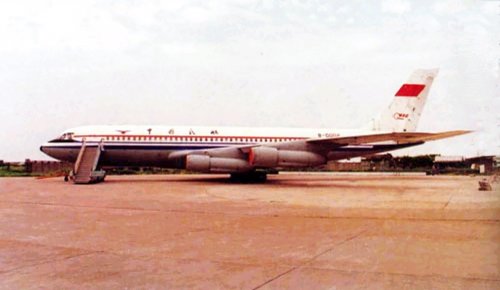
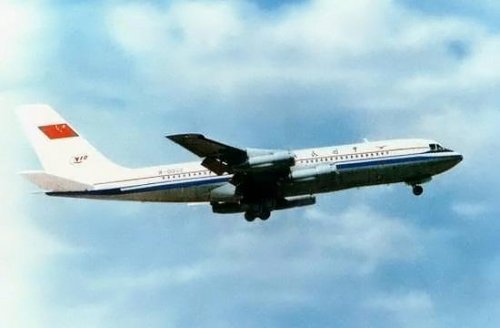
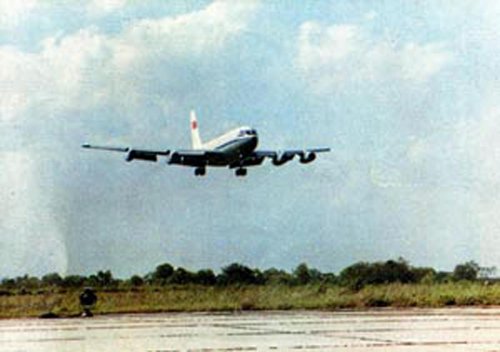
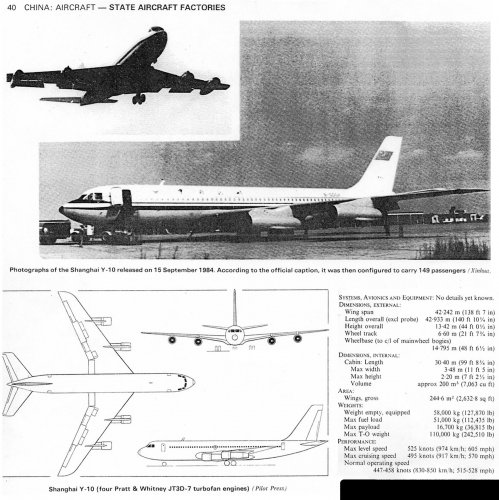
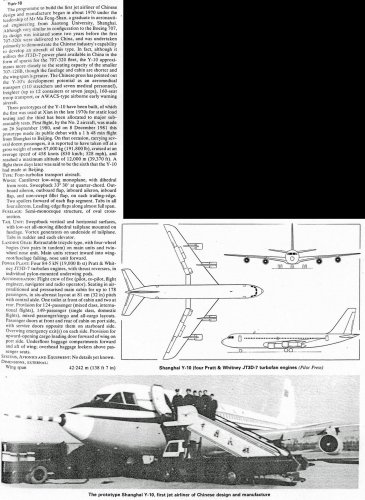
The Shanghai Y-10, the Chinese attempt to copy the Boeing 707.

Source:
https://www.flickr.com/photos/23269353@N00/5288276795/in/photostream/
 

Attachments

  • 5288276795_3403341802_o.jpg
    5288276795_3403341802_o.jpg
    135.6 KB · Views: 630
  • 5288276871_b4b327fe12_o.jpg
    5288276871_b4b327fe12_o.jpg
    17.3 KB · Views: 609
  • 5288880376_6b55979d7a_o.jpg
    5288880376_6b55979d7a_o.jpg
    229.5 KB · Views: 610
  • 5288880906_46bfb94db3_o.jpg
    5288880906_46bfb94db3_o.jpg
    740.3 KB · Views: 598
  • 5288881090_b283c6ab43_o.jpg
    5288881090_b283c6ab43_o.jpg
    795.6 KB · Views: 559
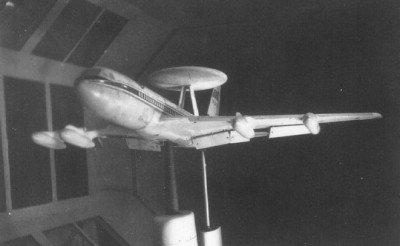
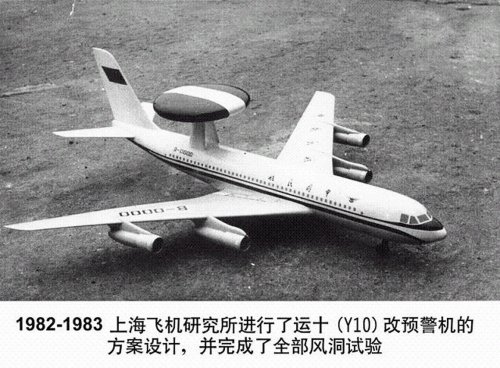
Model of Shanghai Y-10 AWACS

Source:
https://www.flickr.com/photos/23269353@N00/5288277097/in/photostream/
http://www.strategycenter.net/research/pubID.97/pub_detail.asp
 

Attachments

  • 20060319_09.jpg
    20060319_09.jpg
    16.9 KB · Views: 175
  • 5288277097_2fff4573e3_o.jpg
    5288277097_2fff4573e3_o.jpg
    576.2 KB · Views: 203
Because US assumed Chinese copies of anything-they-could-lay-hands-on, US embargoed much, under COCOM rules, until Nixon chose to open contact, 7/71. UK did not take the same line, having recognised PRC de jure (HKG-sensitivity). So UK was able to deliver Viscount (1963) and Trident (1972), but must remove embargoed US content. China chose not to spend on copying those, but bought a massive upfront spares pack (the sole 8-engined Viscounts), as they in turn assumed we would sell-and-forget, like USSR had done.

No.1 707-320B went straight to (later: SAIC), 8/73, not delivered to the airline for several years; its JT3D-7s were removed into the Shanghai Engine Factory; interesting components were sent to specialist sites, all to be reversed by folk who had done just that after Mao and Khrushchev fell out, 5/60 and all USSR men and most data vanished overnight. They did reproduce much inc. H-5 Badger, its engines and components, self-sufficient even unto silica for transparancies.

Y-10 was...inspired by 707-320B; PRC tried hard but failed to reproduce JT3D-7 or such components as Sundstrand CSD, because Western kit differed from USSR at levels of material specifications and tolerances with which PRC was unfamiliar. Efforts were abandoned when the Party judged Westerners would happily sell much for money. Aerospatiale showed the way on Super Frelon (Z-8). At very great expense the Party (then dominated by Shanghainese) 3/85 made an MDC MD82 licence for the plant which had produced 2 Y-10s, assuming the airline parastatal CAAC would be enthusiastic to take $-sparing product. Instead they sought anything-but-local-produce: like BOAC/BEAC, Chinese airlines wanted to buy proper aeroplanes from firms that understood Product Support. Seattle and Long Beach answered the telex 24/7.

 
Last edited:
why the nose section of the blueprint looks more shorter and less pointy than in the photo?

I may actually make a 3D model of it from the existing 3-point view drawing.

might actually a fun weekend project (or rather after work project lol)
 
why the nose section of the blueprint looks more shorter and less pointy than in the photo?

I may actually make a 3D model of it from the existing 3-point view drawing.

might actually a fun weekend project (or rather after work project lol)
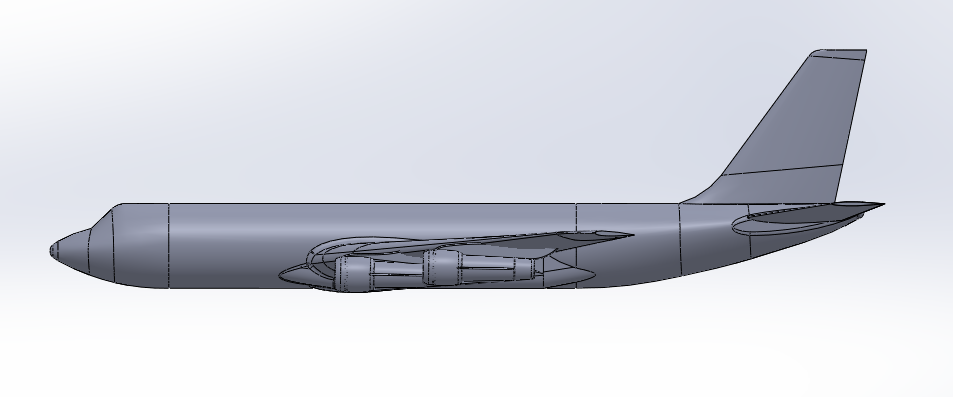
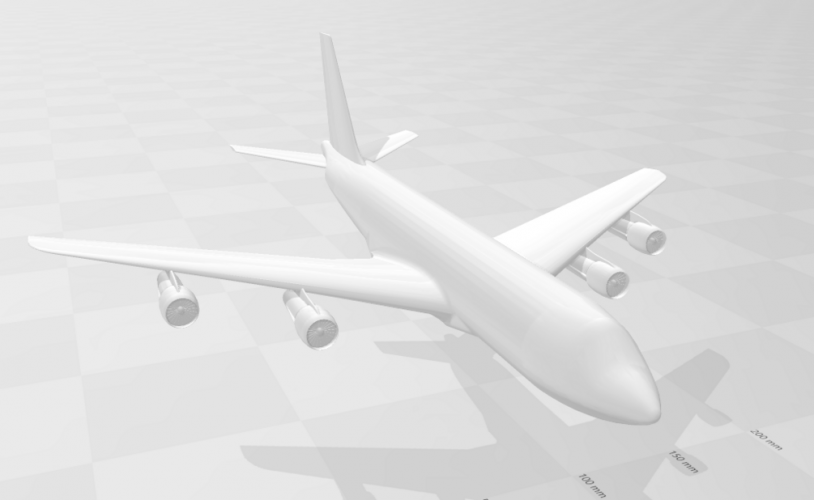
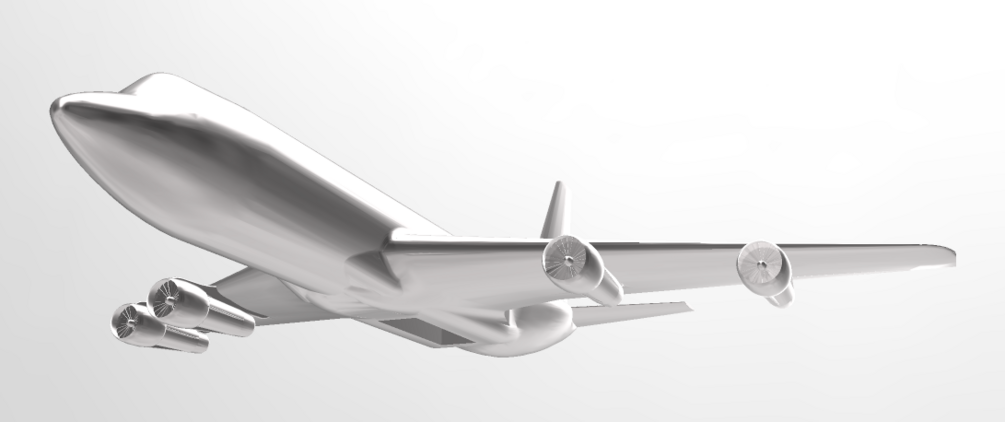
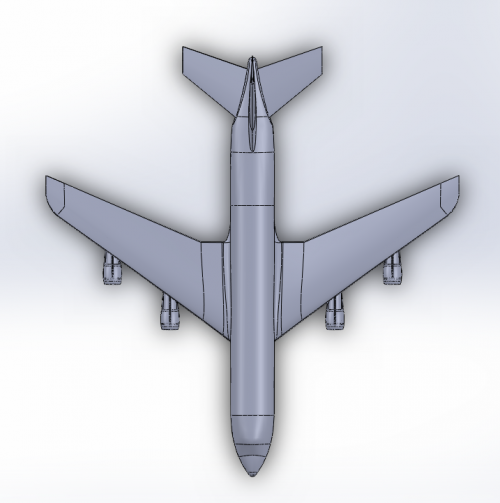
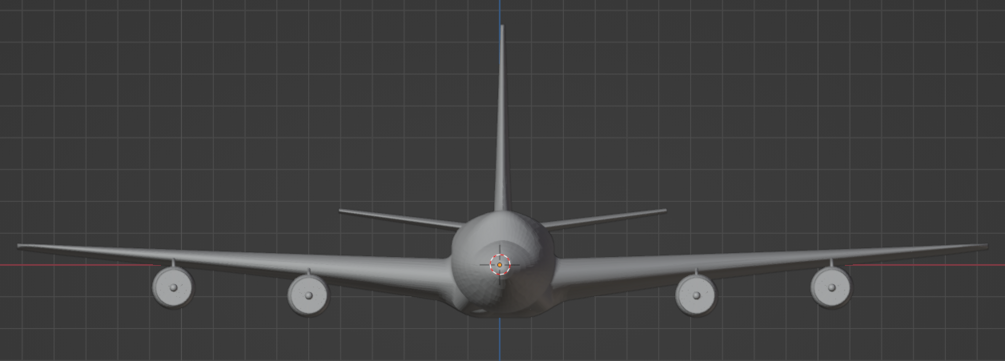
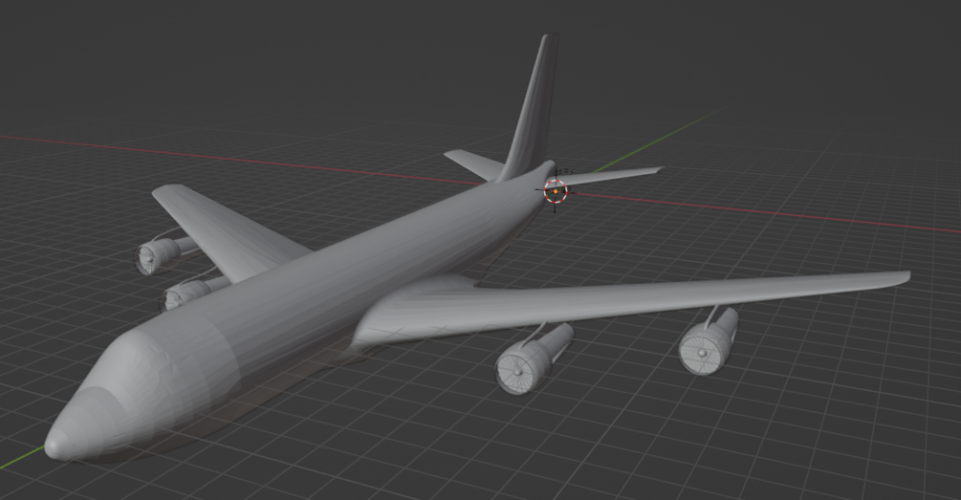
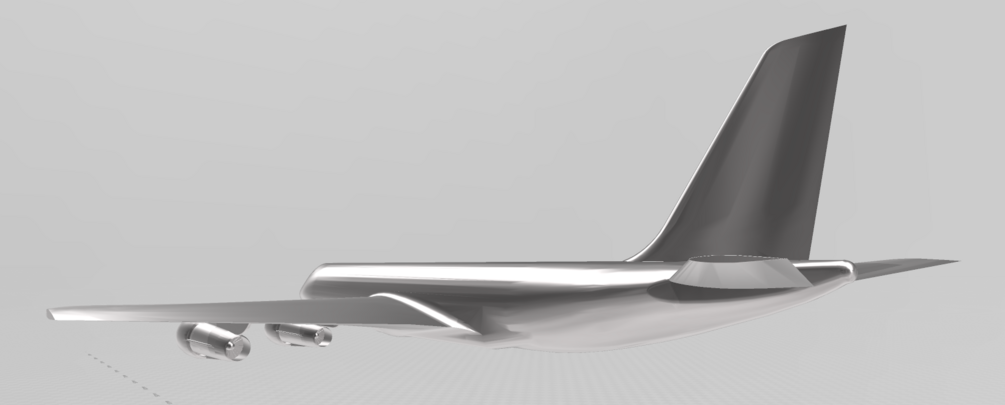
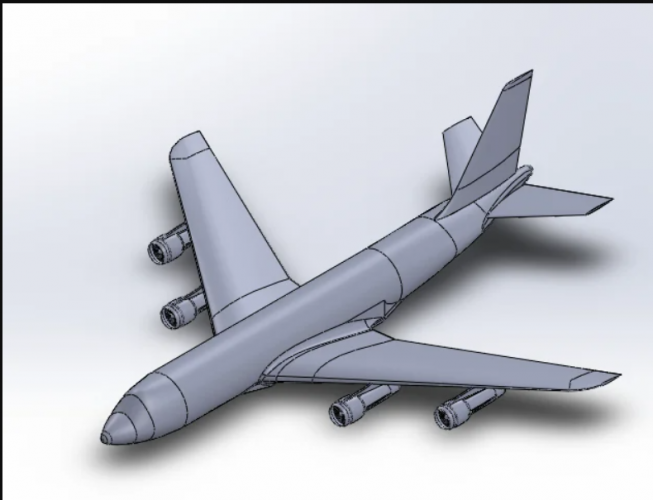
Some of my take to make the 3D render of this aircraft based on the existing details attached as blueprint in the previous comment by Triton. IMO this aircraft is totally different from Boeing 720. Since I make it from CAD geometry first, I realized, based on many account, it is said it has different airfoil profile than the actual 707 counterpart, which many Chinese engineer said it as more 'stronger looking' than what was very much laminar 1950s early jet-age enthusiastic airfoil. Hope you guys like it
 

Attachments

  • psrtqs4jn4pulliqd6xu54jglu77.png
    psrtqs4jn4pulliqd6xu54jglu77.png
    76.3 KB · Views: 39
  • od0m10r5jjmjhquqeyejyk4imw6f.png
    od0m10r5jjmjhquqeyejyk4imw6f.png
    90 KB · Views: 33
  • mjye773547wuj1elsd05ajcduxex.png
    mjye773547wuj1elsd05ajcduxex.png
    129.1 KB · Views: 30
  • ckl87226r6dzqmq7dxa90prec6tg.png
    ckl87226r6dzqmq7dxa90prec6tg.png
    161.9 KB · Views: 30
  • 12pcpn908l4o88n25p7mzr34va5h.png
    12pcpn908l4o88n25p7mzr34va5h.png
    115.9 KB · Views: 25
  • 5mj5eowj1mtug3un8pd5v9oe4p0f.png
    5mj5eowj1mtug3un8pd5v9oe4p0f.png
    289.5 KB · Views: 22
  • 2w08qygt3ml3e7drbtus3haxup64.png
    2w08qygt3ml3e7drbtus3haxup64.png
    103.9 KB · Views: 23
  • Screenshot 2026-03-20 223748.png
    Screenshot 2026-03-20 223748.png
    256.6 KB · Views: 32
Shanghai Y-10: In the Shadow of the Boeing 707

Developing an indigenous aviation industry has always been a strategic, commercial, and, of course, pride-driven necessity for China. Despite its technical and scientific capabilities, the Asian giant has consistently lagged behind the West and Russia among aircraft manufacturers due to its dependence on certain components, such as engines and avionics, that were not produced locally.

This limitation was addressed by acquiring and replicating foreign technology with varying degrees of success. In the early 1970s, as its defense aviation industry expanded, the Chinese government decided to fully commit to the development of commercial aircraft; and it did so in a very interesting way: by attempting to replicate a commercial aircraft from scratch. This is the story of the Shanghai Y-10.

Link to the full article (in Spanish):
https://nobarrelrolls.blogspot.com/2026/02/shanghai-y10-la-sombra-del-boeing-707.html
 
Back
Top Bottom