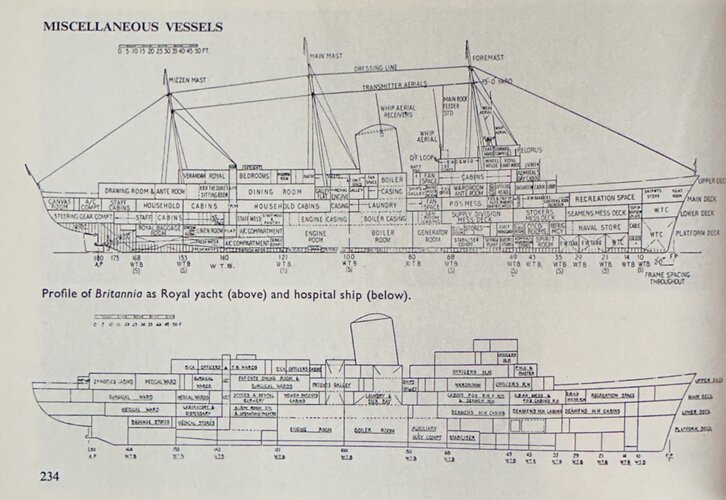
I know this is a bit of thread necromancy, but stumbled across an old illustration of what Britannia was supposed be like as a Hospital ship…
Image is from Warships of the British & Commonwealth Navies, 1st Edition, 1966. The later editions of the publication also had the same schematic. The book also has illustrations of the County Class destroyer and Tribal Class frigate engine layouts.
 

Attachments

  • D03D3E6A-EB5A-4391-8679-0633BBECFFC0.jpeg
    D03D3E6A-EB5A-4391-8679-0633BBECFFC0.jpeg
    506.2 KB · Views: 152
I know this is a bit of thread necromancy, but stumbled across an old illustration of what Britannia was supposed be like as a Hospital ship…
Image is from Warships of the British & Commonwealth Navies, 1st Edition, 1966. The later editions of the publication also had the same schematic. The book also has illustrations of the County Class destroyer and Tribal Class frigate engine layouts.
The plans for conversion of BRITANNIA to a hospital ship were drawn up in reasonable detail in parallel with the design as a Royal Yacht, so that alterations to structure and equipment - particularly the bathrooms and sanitary facilities - could be minimised. The idea that it was purely a wheeze to get the idea past the Treasury isn't based in any kind of fact.

Capacity was to be 200 patients, with a Royal Navy medical crew of 8 medical and dental officers, 5 nursing sisters, and 47 male ratings; ship's crew was to be Merchant Navy.
 
The UK does have a real requirement for a hospital/casualty receiving ship to replace Argus as well as the "national refuge" capacity for the monarch and Home Secretary once offered by Britannia and Engadine.
 
The UK does have a real requirement for a hospital/casualty receiving ship to replace Argus as well as the "national refuge" capacity for the monarch and Home Secretary once offered by Britannia and Engadine.

Hospital ship, sure. Maybe with a role for disaster assistance or logistics.

National refuge? I don't see it. Far better to fly whatever leadership you need to safeguard somewhere secure.
 
As I understand it from Peter Hennessy "The Secret State" the UK does indeed disperse its leadership to various safe places in a crisis.
Rather like Engadine/Britannia an Argus replacement would just give them another relocation option.
 
I know this is a bit of thread necromancy, but stumbled across an old illustration of what Britannia was supposed be like as a Hospital ship…
Image is from Warships of the British & Commonwealth Navies, 1st Edition, 1966. The later editions of the publication also had the same schematic. The book also has illustrations of the County Class destroyer and Tribal Class frigate engine layouts.
The plans for conversion of BRITANNIA to a hospital ship were drawn up in reasonable detail in parallel with the design as a Royal Yacht, so that alterations to structure and equipment - particularly the bathrooms and sanitary facilities - could be minimised. The idea that it was purely a wheeze to get the idea past the Treasury isn't based in any kind of fact.

Capacity was to be 200 patients, with a Royal Navy medical crew of 8 medical and dental officers, 5 nursing sisters, and 47 male ratings; ship's crew was to be Merchant Navy.
Trawling though vast quantities of information I have accumulated over the years, I stumbled across this paper from a Royal Institution of Naval Architects paper regarding the design of HMY Britannia and her inter-convertibility.
 

Attachments

  • HER MAJESTY’S YACHT BRITANNIA.pdf
    275.2 KB · Views: 36

Attachments

  • When a Royal Yacht trumped a new RFA.pdf
    86.2 KB · Views: 29
The Royal Yacht made a lot of sense at a time when air travel was not particularly safe or comfortable.
Britannia came to be associated with HM Queen Elizabeth II and her extensive visits around the world. However, once the Queen ceased to travel so widely and so often the era of Britannia passed with her.
In the Internet age the Monarchy needs to be closer to the lives of the people it represents. HM The King and the Queen Consort seem to grasp this and are doing their best.
A replacement for the versatile HMS Argus in her various roles seems to me much more keeping with the times than a Boris Boat.
 
Blue one looked nice. Still a faff, though.
 
The Royal Yacht is not a topic that interests me much usually but when I spotted that a couple of files on the replacement - Project 96 - had been recently opened at The National Archives, Kew, I decided to have a look.
For reference the files are DEFE 23/393 and DEFE 23/397.

Basically, John Major's Conservative government were not willing to fund a new ship and indeed the Chancellor of the Exchequer, Ken Clarke, made a fairly scathing rebuff to the Queen's desire for a new ship, more or less saying the Royal Family had to get with the times. Up to 1993, only 13.8% of Britannia's service life had actually seen the Royal Family aboard. Efforts to interest other government departments in hiring the ship - or a replacement - for arms fairs and the like were similarly abortive. Nobody wanted to fork out cash and there were not enough likely events to make it worthwhile.

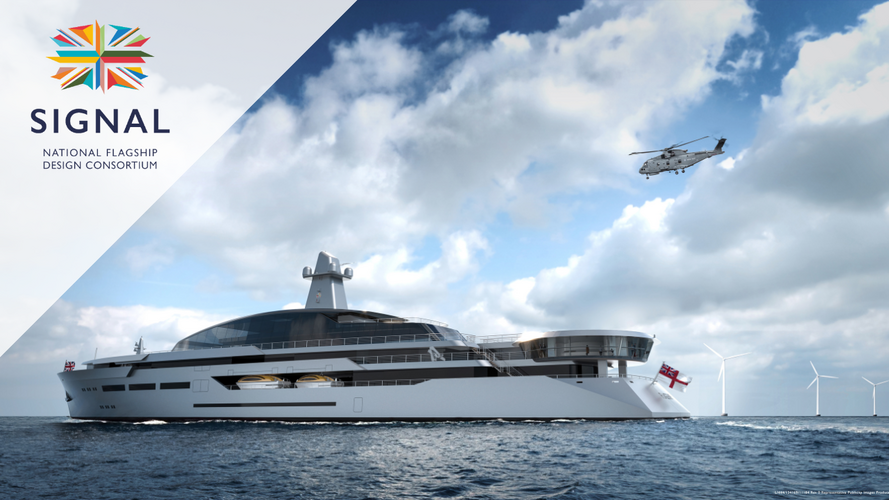
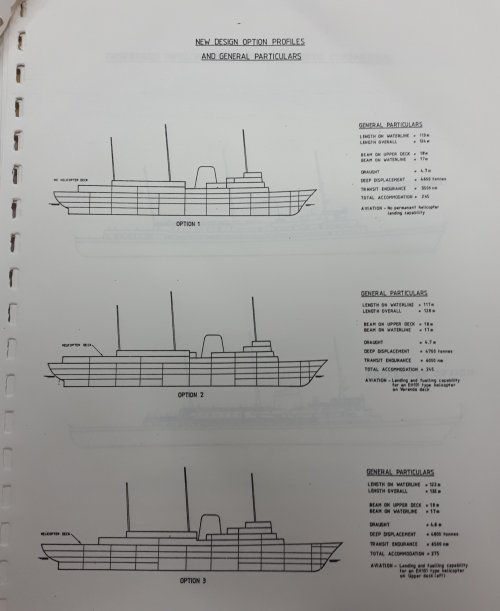
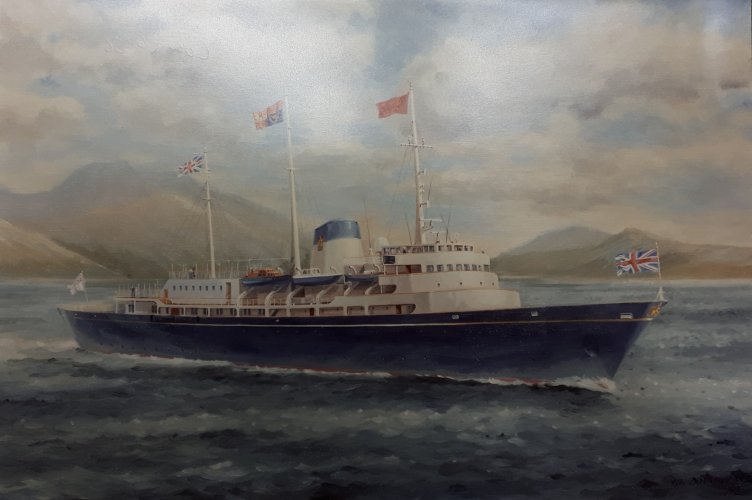
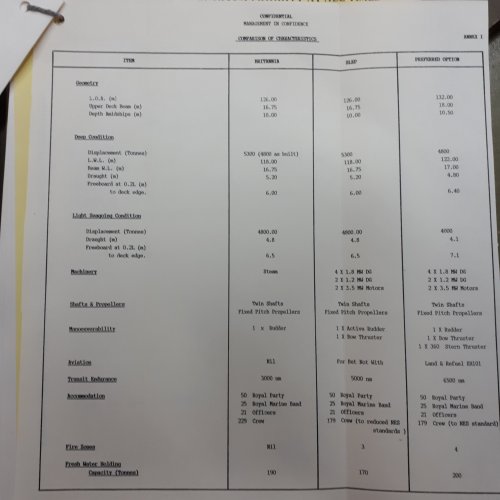
A few years prior, DGSS Bath had completed a Concept Design Study in 1989, issuing an Executive Summary in July that year. That is where the painting on p.1 of this thread comes from. The choices were a new-build ship for 1996, a SLEP for Britannia for 20 years more life (1996-2016), or running on Britannia until 2006.

For the new ship, possible wartime roles studied were: MCM Command and Support Ship; Hospital Ship; Casualty Clearance Ship; Forward Medical Support Ship. The latter role was selected as it was easier to rapidly refit in wartime for that role.
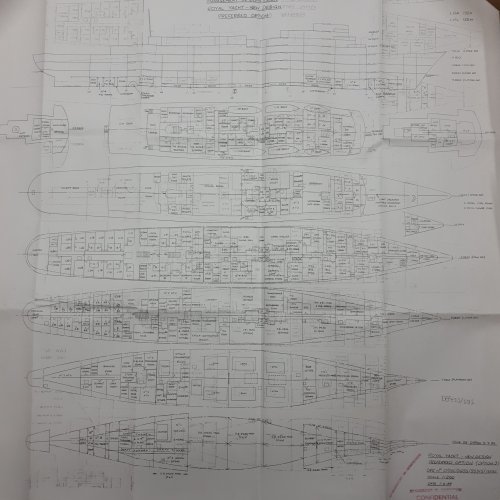
The ship was to have a helideck and refuelling facilities for a helicopter up to EH101 size.

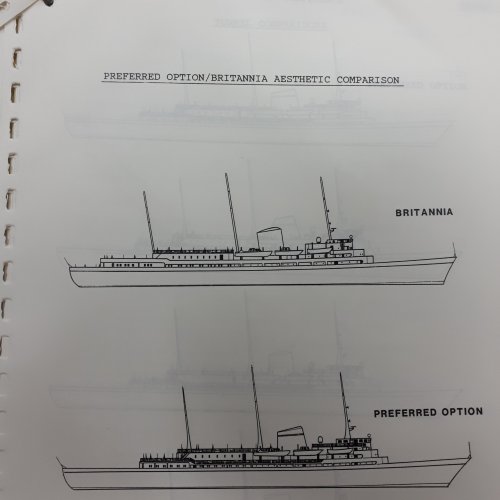
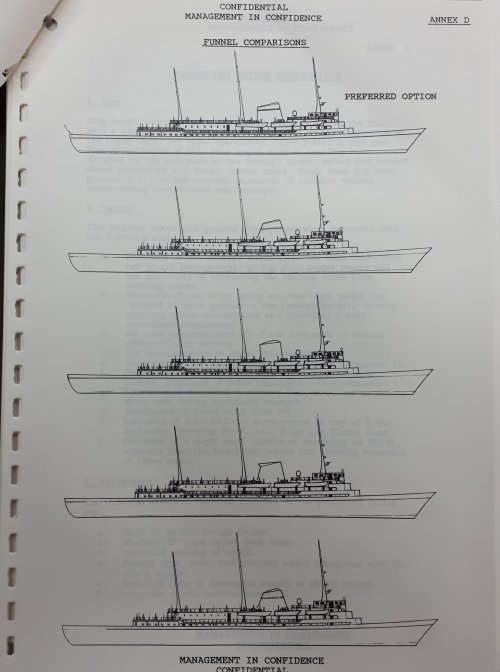
Attached are the studies, external appearance choices and the final "Preferred Option". There is also a plan of the ship (the quality is pants because the ink of every page of the report had stuck to its opposite page and it took some careful teasing to open the files, but some of the ink remained on the opposite page.

 

Attachments

  • Royal Yacht Replacement 1989 Design Plan.jpg
    Royal Yacht Replacement 1989 Design Plan.jpg
    906.5 KB · Views: 54
  • Royal Yacht Replacement 1989 Design Comp.jpg
    Royal Yacht Replacement 1989 Design Comp.jpg
    457.4 KB · Views: 49
  • Royal Yacht Replacement 1989 Designs.jpg
    Royal Yacht Replacement 1989 Designs.jpg
    549.6 KB · Views: 49
  • Royal Yacht Replacement 1989 Options.jpg
    Royal Yacht Replacement 1989 Options.jpg
    510.1 KB · Views: 51
  • Royal Yacht Replacement 1989 Design.jpg
    Royal Yacht Replacement 1989 Design.jpg
    539.1 KB · Views: 47
  • 20260304_142220.jpg
    20260304_142220.jpg
    451 KB · Views: 54
The Royal Yacht is not a topic that interests me much usually but when I spotted that a couple of files on the replacement - Project 96 - had been recently opened at The National Archives, Kew, I decided to have a look.
For reference the files are DEFE 23/393 and DEFE 23/397.

Basically, John Major's Conservative government were not willing to fund a new ship and indeed the Chancellor of the Exchequer, Ken Clarke, made a fairly scathing rebuff to the Queen's desire for a new ship, more or less saying the Royal Family had to get with the times. Up to 1993, only 13.8% of Britannia's service life had actually seen the Royal Family aboard. Efforts to interest other government departments in hiring the ship - or a replacement - for arms fairs and the like were similarly abortive. Nobody wanted to fork out cash and there were not enough likely events to make it worthwhile.

A few years prior, DGSS Bath had completed a Concept Design Study in 1989, issuing an Executive Summary in July that year. That is where the painting on p.1 of this thread comes from. The choices were a new-build ship for 1996, a SLEP for Britannia for 20 years more life (1996-2016), or running on Britannia until 2006.

For the new ship, possible wartime roles studied were: MCM Command and Support Ship; Hospital Ship; Casualty Clearance Ship; Forward Medical Support Ship. The latter role was selected as it was easier to rapidly refit in wartime for that role.
The ship was to have a helideck and refuelling facilities for a helicopter up to EH101 size.

Attached are the studies, external appearance choices and the final "Preferred Option". There is also a plan of the ship (the quality is pants because the ink of every page of the report had stuck to its opposite page and it took some careful teasing to open the files, but some of the ink remained on the opposite page.

Not entirely true - the mil role was rapidly deleted by the austere hull version and by mid 1990s no role was considered other than being a yacht. You should read the blog / tweet threads I did on this which cover it in far more depth.
 
For obvious reasons the UK does not reveal what plans it now has to safeguard the King and his ministers in war or other existential crisis

https://www.google.com/amp/s/www.mi...s/royal-yacht-would-have-been-used-234784.amp
I believe from the occasional comments during the pandemic that various official residences and government sites around the UK would be used and the King in particular would move regularly.
 
Not entirely true - the mil role was rapidly deleted by the austere hull version and by mid 1990s no role was considered other than being a yacht. You should read the blog / tweet threads I did on this which cover it in far more depth.
I'm referring to the original 1989 concept studies, not the mid-1990s discussions when they seem to have dusted off these plans again (it's equally clear that they were just concepts and not widely shared, had the project moved forwards the Royal Family would have appointed its own designers and so the internals may well have been rejigged. It's clear Britannia was not convertible to her theoretical war role by 1990. I think any early talk of a secondary role was just scrabbling around for justifications to spend the money.

Reading the files I was struck by how little support there was from the government and its interesting that the Johnson government's attempts to regain a yacht trotted out the same old arguments as a floating trade/conference space. If it made no economic sense in 1993-96 then it certainly made no economic sense in 2021. I wonder if anyone pulled these files to actually look at the history (judging by the facts that the pages of the 1989 report were still stuck together it appears not).

Sorry to say I am ignorant of your tweet threads - I don't do twittery stuff, which is a shame as you do unearth some interesting stuff.
 
I'm referring to the original 1989 concept studies, not the mid-1990s discussions when they seem to have dusted off these plans again (it's equally clear that they were just concepts and not widely shared, had the project moved forwards the Royal Family would have appointed its own designers and so the internals may well have been rejigged. It's clear Britannia was not convertible to her theoretical war role by 1990. I think any early talk of a secondary role was just scrabbling around for justifications to spend the money.

Reading the files I was struck by how little support there was from the government and its interesting that the Johnson government's attempts to regain a yacht trotted out the same old arguments as a floating trade/conference space. If it made no economic sense in 1993-96 then it certainly made no economic sense in 2021. I wonder if anyone pulled these files to actually look at the history (judging by the facts that the pages of the 1989 report were still stuck together it appears not).

Sorry to say I am ignorant of your tweet threads - I don't do twittery stuff, which is a shame as you do unearth some interesting stuff.
By 1989, far more luxurious mega yachts were in the hands of a high single digit number Persian Gulf monarchs and rulers, which make the Britannia replacement seem oddly austere and horrifically overmanned. Flash forward to the era of Boris and the megayacht was a mainstream institution, with many hundreds in the hands of private individuals of means. Core operating crews are quite small and are specialist professionals, making the idea of RN staffing practices seem outright ridiculous. There’s nothing unworkable or unaffordable about a royal yacht, aside from the very peculiar institution of the monarchy itself. Essentially, the Royal Family is on public exhibit in the metaphorical equivalent of a human zoo, much like the 1895 African Exhibition at The Crystal Palace. A British monarch essentially has about the same control over their own nominal billions in assets as an adult under court conservatorship and less freedom of speech and political influence than any prisoner. In short, the typical megayacht owner is either an influential entrepreneur or occasional non-Western monarch of true authority and global consequence.
 
Core operating crews are quite small and are specialist professionals, making the idea of RN staffing practices seem outright ridiculous.
It won't just be RN crewing practices, but also the expectations around the Proper Way to do things around the Firm. That tends to be labour intensive, whether those people are military or civilian.
 
Back
Top Bottom