Follow up from this thread so as not be too off topic:
https://www.secretprojects.co.uk/threads/dassault-rafale-technical-news-only.17813/page-41


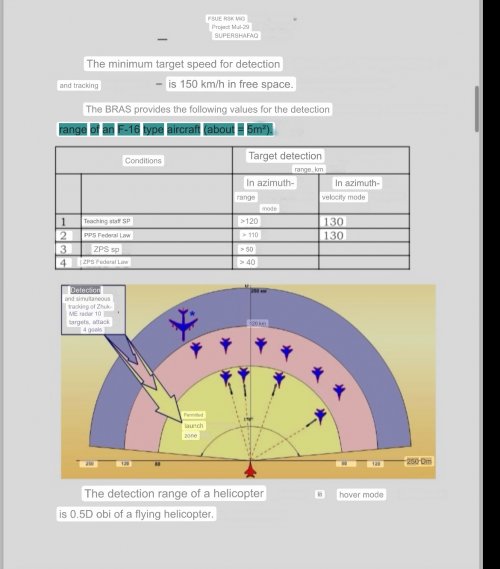
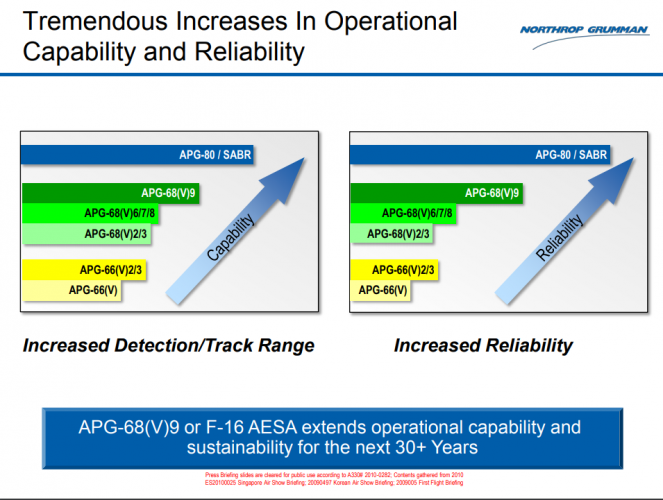
1) APG-68v9 were able to detect Rafale from fairly long range. We know this is not a particularly powerful radar, its detection range against target with RCS of 1 m2 is merely 70 km.
2) In France side, Rafale F1 were supported by E-2 AEW&C whereas in Greece side, F-16 block 50/52+ were cooperated with F-4
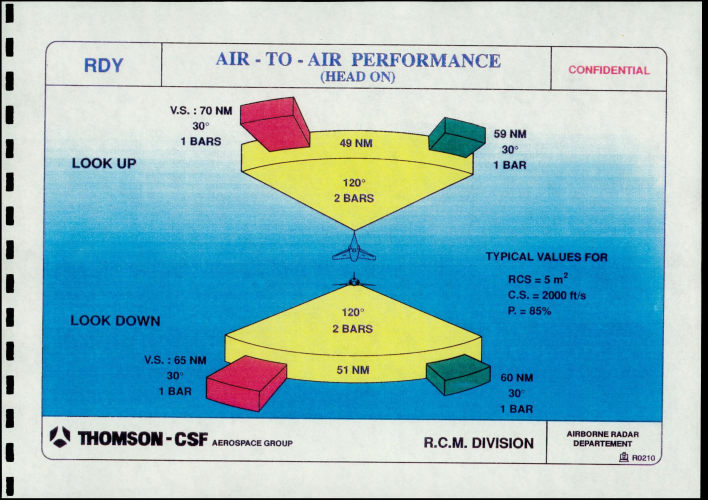
3) It was said that RBE2 PESA is not better than APG-68v9 in “above sector”. So in co altitude and look down I would assume they are roughly similar.
4) RWR on Greece F-16 either didn’t work or they didn’t allow Greece F-16 to detect RBE2, so situation awareness were purely rely on APG-68v9 and datalink between different F-16.
5) In the second exercrise, in some situation, F-16 were able to get close to Rafale undetected, and the kill ratio favor Greece side since their shot were made within NEZ of AMRAAM.
So in conclusion, one of the two option can happen
Option 1:
Rafale RCS is a lot smaller than F-16, however RBE2 is also a lot worse than APG-68v9 in detection range so it balance out
Option 2:
Rafale RCS is roughly the same as F-16, RBE2 is roughly the same as APG-68v9
So their BVR capability are roughly equal
But anyway, Rafale started operating on CDG since 2004, the exercrise happened in 2006, I highly skeptical that a mere 2 years is enough for the coating to deteriorate tothe point that it significantly affect Rafale RCS.
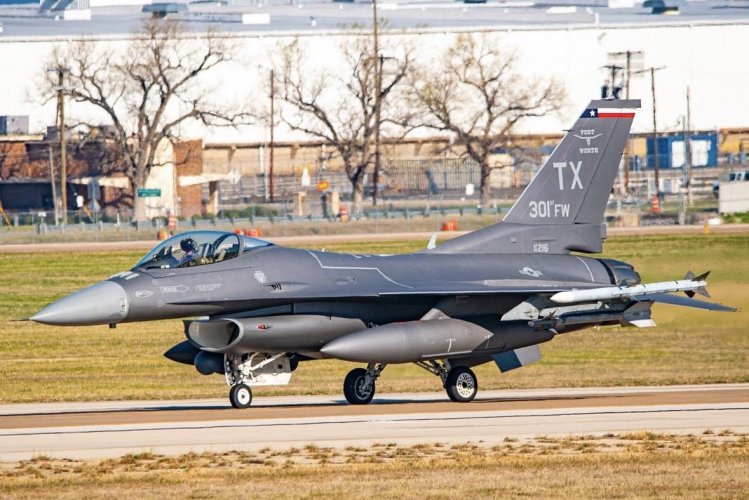
Besides, Greece F-16 didn’t have HAVE GLASS V radar absorbing paint until very recently with Block 70 upgrade. HAVE GLASS V has a very unique dark shinny gray look compared to older paint

Moreover, given that Turkey themselves also operate F-16 block 30/40/50, it likely that they know all strength and weakness of F-16 along with its signature characteristic, Greece buying some additional Rafale to diversify can introduce an “unknown” element in a conflict with Turkey
https://www.secretprojects.co.uk/threads/dassault-rafale-technical-news-only.17813/page-41
Here is the original name of the article with the name of the magazine in the left corner-Well, then an article of August 2006 (what is the name of the magazine?)

They didn’t outright said Rafale RCS were lower or higher than F-16. But there were clues in details given-Can you show me the passage where the RCS of the Rafale is higher than that of the F-16? I didn't find it...
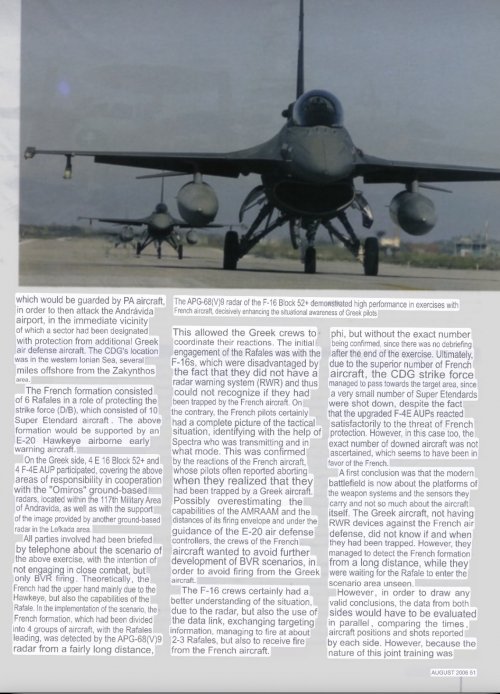

1) APG-68v9 were able to detect Rafale from fairly long range. We know this is not a particularly powerful radar, its detection range against target with RCS of 1 m2 is merely 70 km.
2) In France side, Rafale F1 were supported by E-2 AEW&C whereas in Greece side, F-16 block 50/52+ were cooperated with F-4
3) It was said that RBE2 PESA is not better than APG-68v9 in “above sector”. So in co altitude and look down I would assume they are roughly similar.
4) RWR on Greece F-16 either didn’t work or they didn’t allow Greece F-16 to detect RBE2, so situation awareness were purely rely on APG-68v9 and datalink between different F-16.
5) In the second exercrise, in some situation, F-16 were able to get close to Rafale undetected, and the kill ratio favor Greece side since their shot were made within NEZ of AMRAAM.
So in conclusion, one of the two option can happen
Option 1:
Rafale RCS is a lot smaller than F-16, however RBE2 is also a lot worse than APG-68v9 in detection range so it balance out
Option 2:
Rafale RCS is roughly the same as F-16, RBE2 is roughly the same as APG-68v9
So their BVR capability are roughly equal
Shaping have much bigger impact on the overall RCS of aircraft compared to radar absorbing paint.-But, otherwise, I remind you that the Rafale (in this case the Rafale Marine, exposed to salt) had exterior coating problems at the time, which were only resolved subsequently. And, one of the applications intended to make the Rafale more “discreet” to radars consists of covering them with a coating intended to limit their RCS (I haven't found an article to this effect. It's old. Does anyone in the audience have any? There were photos of the Rafale in question where you could clearly see the state of deterioration of the coating).
But anyway, Rafale started operating on CDG since 2004, the exercrise happened in 2006, I highly skeptical that a mere 2 years is enough for the coating to deteriorate tothe point that it significantly affect Rafale RCS.
Besides, Greece F-16 didn’t have HAVE GLASS V radar absorbing paint until very recently with Block 70 upgrade. HAVE GLASS V has a very unique dark shinny gray look compared to older paint
The point is that, if RBE2 PESA either unable to keep up with or just roughly similar to mechanical scanned radar such as RDY-2, APG-68v9. Then it is highly unlikely that RBE2-AA AESA version can keep up with APG-80, Captor-E, ES-05Well, and ? AFAIK, it was well known at the time and AESA has been delivered as standard on Rafale since 2013... (even the ten initial Rafale Ms, those of the August 2006 article, have since been retrofitted).
The exercrise happened in 2006, Greece only started buying Rafale in 2021 due to rising tension with Turkey. Rafale with RBE2 AESA and Meteor is certainly better than F-16 block 50/52+ equipped with mechanical radar and AIM-120C-5. The only F-16 version with dedicated AESA and cooling to take full advantage of it was F-16 E/F block 60, but that version were made only for UAE so it is out of question. With that said, Greece did not replace F-16 with Rafale, they replaced older Mirage 2000 with 24 Rafale while at the sametime, upgrade 84 F-16 block 50/52+ to block 70 standard.-So, F-16s of the Greek air force did exercises with French Rafales, where the French Rafales were so inferior, that, in the end, Greece chose Rafales as the spearhead of its air force to face the Turkish F-16s ?
I think it would be interesting to have the results of Franco-Greek exercises after 2006 (and even another point of view, if possible official and French, on these 2006 exercises...).
Moreover, given that Turkey themselves also operate F-16 block 30/40/50, it likely that they know all strength and weakness of F-16 along with its signature characteristic, Greece buying some additional Rafale to diversify can introduce an “unknown” element in a conflict with Turkey
Last edited: