Rafale vs F-16

Ronny

ACCESS: Top Secret
Joined
19 July 2019
Messages
1,674
Reaction score
2,033
Follow up from this thread so as not be too off topic:
https://www.secretprojects.co.uk/threads/dassault-rafale-technical-news-only.17813/page-41
-Well, then an article of August 2006 (what is the name of the magazine?)
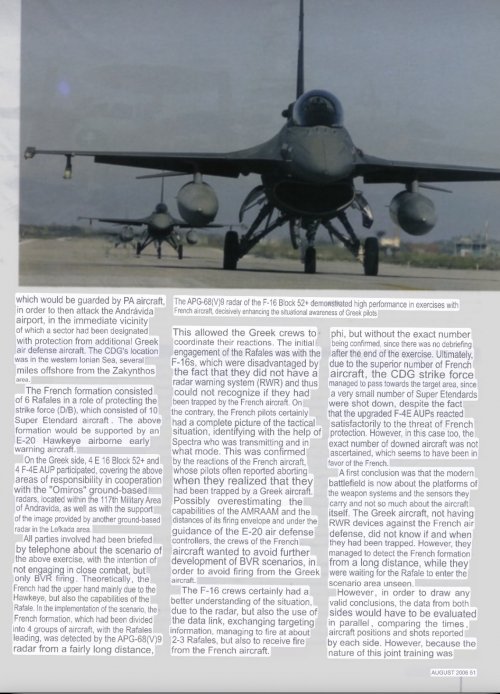
Here is the original name of the article with the name of the magazine in the left corner
IMG_3632.jpeg

-Can you show me the passage where the RCS of the Rafale is higher than that of the F-16? I didn't find it...
They didn’t outright said Rafale RCS were lower or higher than F-16. But there were clues in details given
IMG_3781.jpeg
IMG_3782.jpeg
1) APG-68v9 were able to detect Rafale from fairly long range. We know this is not a particularly powerful radar, its detection range against target with RCS of 1 m2 is merely 70 km.

2) In France side, Rafale F1 were supported by E-2 AEW&C whereas in Greece side, F-16 block 50/52+ were cooperated with F-4

3) It was said that RBE2 PESA is not better than APG-68v9 in “above sector”. So in co altitude and look down I would assume they are roughly similar.

4) RWR on Greece F-16 either didn’t work or they didn’t allow Greece F-16 to detect RBE2, so situation awareness were purely rely on APG-68v9 and datalink between different F-16.

5) In the second exercrise, in some situation, F-16 were able to get close to Rafale undetected, and the kill ratio favor Greece side since their shot were made within NEZ of AMRAAM.
So in conclusion, one of the two option can happen
Option 1:
Rafale RCS is a lot smaller than F-16, however RBE2 is also a lot worse than APG-68v9 in detection range so it balance out

Option 2:
Rafale RCS is roughly the same as F-16, RBE2 is roughly the same as APG-68v9
So their BVR capability are roughly equal

-But, otherwise, I remind you that the Rafale (in this case the Rafale Marine, exposed to salt) had exterior coating problems at the time, which were only resolved subsequently. And, one of the applications intended to make the Rafale more “discreet” to radars consists of covering them with a coating intended to limit their RCS (I haven't found an article to this effect. It's old. Does anyone in the audience have any? There were photos of the Rafale in question where you could clearly see the state of deterioration of the coating).
Shaping have much bigger impact on the overall RCS of aircraft compared to radar absorbing paint.
But anyway, Rafale started operating on CDG since 2004, the exercrise happened in 2006, I highly skeptical that a mere 2 years is enough for the coating to deteriorate tothe point that it significantly affect Rafale RCS.
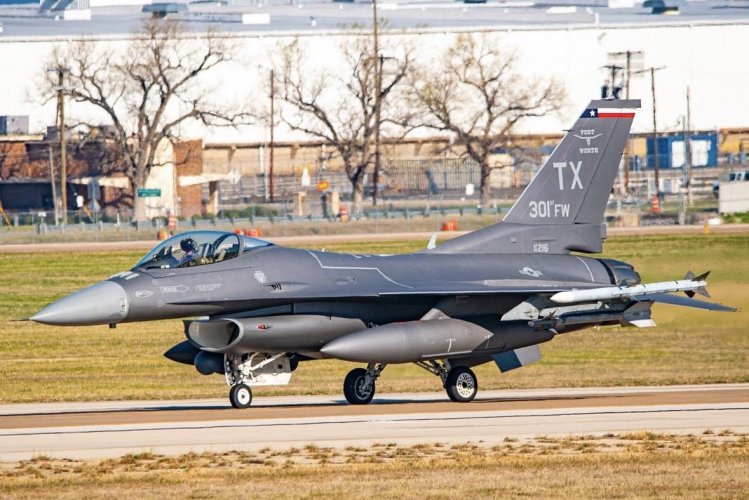
Besides, Greece F-16 didn’t have HAVE GLASS V radar absorbing paint until very recently with Block 70 upgrade. HAVE GLASS V has a very unique dark shinny gray look compared to older paint
IMG_3783.jpeg
Well, and ? AFAIK, it was well known at the time and AESA has been delivered as standard on Rafale since 2013... (even the ten initial Rafale Ms, those of the August 2006 article, have since been retrofitted).
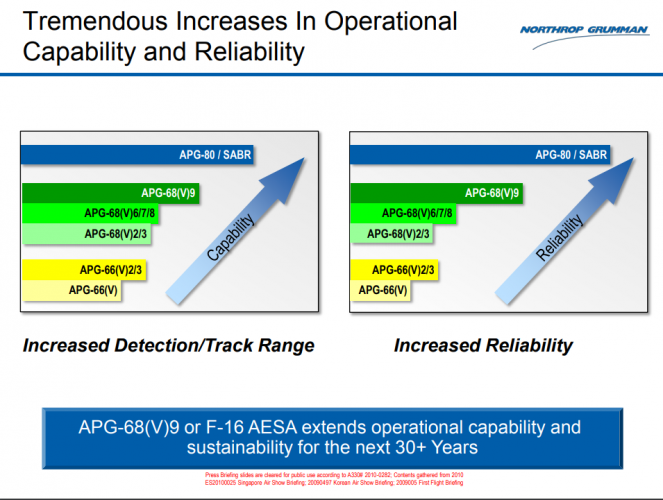
The point is that, if RBE2 PESA either unable to keep up with or just roughly similar to mechanical scanned radar such as RDY-2, APG-68v9. Then it is highly unlikely that RBE2-AA AESA version can keep up with APG-80, Captor-E, ES-05

-So, F-16s of the Greek air force did exercises with French Rafales, where the French Rafales were so inferior, that, in the end, Greece chose Rafales as the spearhead of its air force to face the Turkish F-16s ?
I think it would be interesting to have the results of Franco-Greek exercises after 2006 (and even another point of view, if possible official and French, on these 2006 exercises...).
The exercrise happened in 2006, Greece only started buying Rafale in 2021 due to rising tension with Turkey. Rafale with RBE2 AESA and Meteor is certainly better than F-16 block 50/52+ equipped with mechanical radar and AIM-120C-5. The only F-16 version with dedicated AESA and cooling to take full advantage of it was F-16 E/F block 60, but that version were made only for UAE so it is out of question. With that said, Greece did not replace F-16 with Rafale, they replaced older Mirage 2000 with 24 Rafale while at the sametime, upgrade 84 F-16 block 50/52+ to block 70 standard.
Moreover, given that Turkey themselves also operate F-16 block 30/40/50, it likely that they know all strength and weakness of F-16 along with its signature characteristic, Greece buying some additional Rafale to diversify can introduce an “unknown” element in a conflict with Turkey
 
Last edited:
Sorry no source.
The RBE2 AA used US T/R, and it was sure that US didn't want to help to create a competitor to a quite new technology, only mastered by USA and Japan at those time.
So we probably received no up to date and high efficiency modules.....
Tbh, I don’t think wikipedia screenshot is a reliable source for data since anyone can write anything there
 
Thank you for your efforts.


Here is the original name of the article with the name of the magazine in the left corner
AYΓOYΣTOΣ is the name of the month of August in Greek, not the name of the magazine. This magazine is maybe Ptisi & Diastima (Flight and Space), the oldest greek aviation magazine.


They didn’t outright said Rafale RCS were lower or higher than F-16. But there were clues in details given
The problem is that we have two close references, in 2006, out of all the exercises between Rafale and F-16... And we are in 2026...
It takes a lot of data to create a statistic. Otherwise everyone can go with their own (over)interpretation...
https://theaviationist.com/2013/06/19/f-22-shot-down-by-rafale/

1) APG-68v9 were able to detect Rafale from fairly long range. We know this is not a particularly powerful radar, its detection range against target with RCS of 1 m2 is merely 70 km.

2) In France side, Rafale F1 were supported by E-2 AEW&C whereas in Greece side, F-16 block 50/52+ were cooperated with F-4

3) It was said that RBE2 PESA is not better than APG-68v9 in “above sector”. So in co altitude and look down I would assume they are roughly similar.

4) RWR on Greece F-16 either didn’t work or they didn’t allow Greece F-16 to detect RBE2, so situation awareness were purely rely on APG-68v9 and datalink between different F-16.

5) In the second exercrise, in some situation, F-16 were able to get close to Rafale undetected, and the kill ratio favor Greece side since their shot were made within NEZ of AMRAAM.
So in conclusion, one of the two option can happen
Option 1:
Rafale RCS is a lot smaller than F-16, however RBE2 is also a lot worse than APG-68v9 in detection range so it balance out

Option 2:
Rafale RCS is roughly the same as F-16, RBE2 is roughly the same as APG-68v9
So their BVR capability are roughly equal
The article also mentions Greek land radars and we don't even know from what vertical and horizontal angles they approached each other, or whether and who carried drop tanks*. And in 2006, the F-16 52+ was a mature system, when the Rafale M/F1 ("crash program" to replace the Crusader) was not.
*The French Naval Air Force has the unfortunate habit of using drop tanks in exercises, including in WRV... (from 17' in this video. Sorry in French) :
View: https://youtu.be/sioG8IP-b1w?si=7Q5GKEJFcXx5RKtJ


Shaping have much bigger impact on the overall RCS of aircraft compared to radar absorbing paint. But anyway, Rafale started operating on CDG since 2004, the exercrise happened in 2006, I highly skeptical that a mere 2 years is enough for the coating to deteriorate tothe point that it significantly affect Rafale RCS.
The first point is important enough to equip the F-16s upgraded to standard 70 with.... But for the shape:
I remember that the photos of the Rafale with the degraded coating dated from the time when Ms. Michèle Alliot Marie was Minister of Defense, so it must have been before May 15, 2007.
Too (even if the French version of Wikipedia is somewhat "optimistic"):
https://fr.wikipedia.org/wiki/Dassault_Rafale#Rafale_C01_et_B01
While the Rafale A tests were taking place without problem, engineers began working on the final version of the Rafale which would be thinner than the Rafale A thanks to the M88 being smaller than the F404, but in 1988 the Minister of Defense André Giraud added a clause classified as “confidential defense” of stealth in the program sheet. The documents from the time therefore speak of the ACE/Rafale D (for Discreet), the engineers from Dassault and Thomson CSF will have to make the Rafale invisible to radars. As in the case of American stealth planes, we play on shapes (the Rafale A is completely redesigned with the exception of the wheels) and materials to improve the passive stealth of the plane which is not total (the plane is discreet and not stealthy), then we add a SPECTRA electronic protection system to increase the active stealth of the plane. This choice of a semi-stealth cell made stealthy by the addition of an electronic system has two advantages: we do not sacrifice the operational qualities of the aircraft in the name of passive stealth, in any case progress in detection systems will ultimately make passive stealth obsolete[46],[47] while on the contrary the scalability of the Rafale and its SPECTRA electronic protection system will allow it to adapt the active stealth of the Rafale to these new sensors and to remain at the best technological level until 2050[48].

https://en.wikipedia.org/wiki/Dassault_Rafale#Variants
Rafale D: Dassault used this designation (D for discret) in the early 1990s to emphasise the new semi-stealthy design features.
But neither Dassault nor Lockheed Martin communicated the RCS values of their planes to me (nor to anyone on this forum, I imagine...)


Besides, Greece F-16 didn’t have HAVE GLASS V radar absorbing paint until very recently with Block 70 upgrade. HAVE GLASS V has a very unique dark shinny gray look compared to older paint.
I never wrote that the Greek F-16s of 2006 had radar absorbing paint.

The point is that, if RBE2 PESA either unable to keep up with or just roughly similar to mechanical scanned radar such as RDY-2, APG-68v9. Then it is highly unlikely that RBE2-AA AESA version can keep up with APG-80, Captor-E, ES-05
I will "highly" wait for something more concrete than this statement to believe it...

The exercrise happened in 2006, Greece only started buying Rafale in 2021 due to rising tension with Turkey. Rafale with RBE2 AESA and Meteor is certainly better than F-16 block 50/52+ equipped with mechanical radar and AIM-120C-5. The only F-16 version with dedicated AESA and cooling to take full advantage of it was F-16 E/F block 60, but that version were made only for UAE so it is out of question. With that said, Greece did not replace F-16 with Rafale, they replaced older Mirage 2000 with 24 Rafale while at the sametime, upgrade 84 F-16 block 50/52+ to block 70 standard.
Moreover, given that Turkey themselves also operate F-16 block 30/40/50, it likely that they know all strength and weakness of F-16 along with its signature characteristic, Greece buying some additional Rafale to diversify can introduce an “unknown” element in a conflict with Turkey
I never said that the Rafale replaced the F-16. And with the Qatari Rafale exercises against the Turkish F-16s (without even mentioning their common base in Qatar), I believe that we can put the "unknown" aspect into perspective...
Otherwise, I don't think the Greeks have a bad opinion of the Rafale, compared to the F-16 Block 70, regarding its air-air capabilities...
https://www.flightglobal.com/defenc...ive-used-rafales-from-mid-2021/142118.article
Greek defence minister Nikolaos Panagiotopoulos says the acquisition “will contribute to the further strengthening of the combat capability and deterrent power of the air force and the armed forces”. He adds: “The firepower of the Greek air force will be multiplied. The special features of the Rafales, with advanced electronic [warfare] systems, in combination with their strategic weapons, make them an important factor of air superiority.”
https://www.ekathimerini.com/news/1258155/final-rafale-fighter-jet-delivered-to-greek-air-force/
Within just four years, Greece has acquired a fully equipped Rafale fighter squadron, which significantly changes the balance of power in the Aegean and the Eastern Mediterranean. Greece has gained clear air superiority over Turkey, as it not only incorporated a 4.5th generation fighter jet, a technology that Turkey does not possess, but with the addition of Meteor medium-range missiles, it has sealed the Athens flight information region from any potential threats.
 
Curious how Spectra on the Rafale fares compared to whatever the Israeli F16s. I think that is one of the benchmarks for 360 protective suites for non stealthy fighter aircraft
 
I’ve been curious about this topic for a long time. I’ve got a few cases of the Rafale seemingly under performing in BVR in the 2000s period. Exactly why this is I’m unsure, one impression I’ve gotten is the French themselves where not exactly sure what how to use the Rafale early. Two deficiencies though I feel are small radar size and for a long time mica was the only missile.

First we do have some information that APG-80 does out perform rbe2
https://www.key.aero/forum/modern-military-aviation/98455-rafale-news-ix?page=40
DSI : Interview with Admiral Alain Silvy on the state of UAE negotiations :
http://www.dsi-presse.com/?p=2010

Olybrius at mp.net seems to have a more extensive translation:


With the general Alain SILVY
Deputy Chief Plans within the Staff of the Air Force.
The french government took the pledge with the Rafale manufacturer to ensure, whatever happens, a minimum annual rate of 11 aircrafts. A rate estimated by the manufacturer as the floor below which it would not be possible to go without calling into question the economy of the program, including the unit cost of these aircrafts. The LPM (Law of Military Planning) not providing matching funds for the purchase of these machines for the years 2013 and 2014, either export allow very opportunely to keep the commitment to the industry, or export is lacking and the french state must find the necessary budgets by reducing or eliminating other programs. Is this commitment based on obtaining export orders a dangerous bet?
Alain Silvy: Let's be honest. This "bet", to use your word, on short-term obtaining of export orders for the Rafale, has nevertheless allowed to complete the LPM allowing the planning of a big hole in the shipment for the Air Force and the Navy without questioning the production rate, already reduced to the minimum industrially acceptable by Dassault Aviation. Deliveries to the French armies should be reduced to only 2 or 3 machines per year for a time, the export bringing the complement to reach the threshold of 11 Rafale produced per year. In case of absence of export order, the situation would become obviously complicated.[…] We would have to find a substantial funding of several hundred million euros. […]
But how to find the hundreds of millions euros in question?
The 3 armies have all benefited from the choice made by the planners of the LPM to reduce to a very low level the Rafale deliveries. The amount saved have been reallocated to the 3 armies. I think nobody questions it. We should have to find the funds by making new balancing within the LPM […] we must now hope that will come very quickly a first export order. […] But export is not neutral. Potential customers, including UAE, have specific requirements with developments leaving the French standards - and therefore with budget not taken into account by the LPM - they want cofinanced by the French state. That could require for France to find further funding for the Rafale program […]
What would be the cost for France of these additional co-development to fund with a potential UAE customer?
One hears everything and its opposite. Everything depends on what one includes. Personally, I do not give precise figures. But this is obviously something like several hundreds of millions of euros paid by the french state.
Is the Air force interested by some of the UAE requirements ?
From my point of view, it depends where. We could be potentially interested by the M88-X with 9 tons of thrust because it would be, in the circumstances, an open field. But, on the other hand, we have not yet reached the stage of maturity - which requires about 150,000 flight hours – with the current M88 with 7.5 tonnes thrust. This means that with the M88-X, even if it should presumptively enjoy a good community with the existing M88, we would have to accumulate even more hours to reach the stage of maturity of the engine.
Very clearly, in my opinion, the M88-X is not for the Air force an immediate need. In order to sell the Rafale to the UAE, the Defense may ultimately be asked to acquire the M88-X in a quantity and on terms still to define. And we'll maybe even happy to use it. But today we have no technical or operational reasons to make it available for us.The gain expected from the arrival of a more powerful engine is lower than the risks we would go with the technical immaturity of new modules and the management in parallel - so complicated in terms of logistics and operational employment of aircraft with different performances –of two relatively different parks of M88. All this must be thorough.
Would it be possible to see Safran manufacturing M88-X for UAE and continue to deliver “classic” M88 for the french Rafale? And this notwithstanding that the french government would have co-funded the development of the M88-X
It is not forbidden to imagine it. On condition, however, that to maintain the parallel production of two versions of M88 does not cost more than producing a single model. The support costs must not explode. Safran must tell us very quickly and very frankly what it would be. And again, nothing force us to equip the whole fleet of Rafale, Air and/or Marine.
And about the UAE demand to have a more powerful RBE2 radar, could it answer to some expectations for the Air force?
The Air Force is interested in having a RBE2 with an active antenna. It is now established with the powerful AESA antenna which will equip our tranche 4 Rafale. What the Emirians are calling for is much more complex. They want, in addition to the AESA, to have new functionalities on their Rafale, such as GMTT / GMTI (detection and tracking of moving ground target), interlacing between air/air and air/ground modes, etc.. Even if this is not for us an urgent need, the operational 'plus' obtained could nonetheless eventually interest us. However, the key Emirian demand is about the range of the RBE2. And, with the same antenna diameter, the only way to achieve the 10% range increase (compared with the Basic AESA F3 "roadmap") that wish to obtain the Emirians, is a big boost to the power of the radar.
But more power to the RBE2, could it be a risk to generate serious electromagnetic interference (EMI) with the SPECTRA receptors ?
There is indeed a very real EMI risk to treat. This is the case whenever we want to change aircraft emission systems. There are solutions, obviously, but this will require to reexamine SPECTRA. But the biggest problem we have identified is about electric generation, which could be insufficient. To increase the maximum range of a few nautical miles, we would have to deeply review the electrical generation system of the aircraft.
In short, to conceive what it could be a Rafale-9, that is to say a new aircraft moving away from the similarity you want with french Rafale. The Emirati experts participating in negotiations are well aware of the problem. But they are also used to have very high quality weapons systems. They want to avoid any regression with the Rafale, at least on the radar range, compared to the F-16 Block 60, the Rafale having also many other qualities. The Emirians don’t have AWACS and therefore want - it is a fundamental requirement - that the Rafale can see very far. Beyond the radar, they are showing fairly strong requirements into SPECTRA development with, for example, the expansion of some frequency bands, an increased sensitivity, adding functionalities; in short, they want we push up the current technologies. Of course, to improve the electronic warfare of our Rafale faster than originally planned could be an additional operational advantage for the Air force. However, our current approach is to consolidate the features implemented in SPECTRA, to make them more robust and make it easier for operators and programmers before wanting to go further into addition of new capabilities. The current SPECTRA is working well and even very good. In sum, what separates us, about Spectra, is a matter of timing and calendar […]. In a more general way, we share the same wishes about capabilities, but with very different maturities calendar sometimes. Budgetary constraints remain a dimensioning factor.

Rbe2 aesa needed a ten percent range bump to meet APG-80 figures. This is consistent with the proposed plan to increase peak power from 9.6 to 14kw with new generationors


https://rafalenews.blogspot.com/2011/06/air-and-cosmos-bring-new-insight-on.html?m=1
First, the radar : the current RBE-2 AESA provides 10° more azimut coverage compared to the PESA version (70° vs 60°) and an increased range of more than 40%
In order to meet the UAE requirement, the power output will be increased from 9.6 kW to 14 kW by changing the cooling pomp. This should provide an additional 10% range bonus.

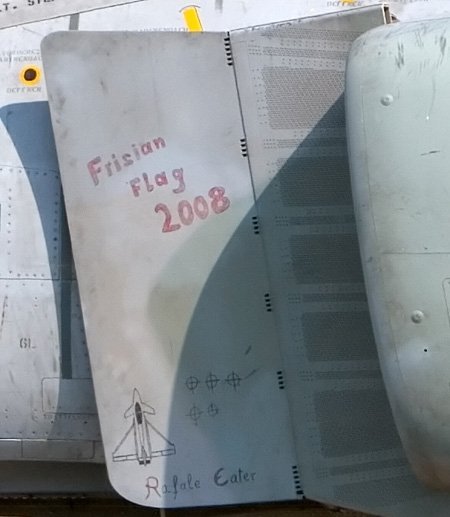
Around the same time in 2008 German F-4F ice did extremely well in BVR against Rafale aircraft
https://www.reccereports.com/leeuwarden-frisian-flag-9/
New is not always better


During the exercise the brand-new Rafales suffered lots of problems, making it necessary that French Air Force Alpha Jets flew in to bring spare parts on multiple occasions. And that was not the only disappointment for the French Air Force. During the first week, a German F-4F had no problems with a Rafale in an air-to-air mock combat. The Germans rubbed salt in the French wounds to paint "Rafale Eater" on the engine intake plate of F-4F 37+85.

IMG_6336.jpeg

The impression I get is the PESA Rafale had very good MMI and sensor fusion but the sensors themselves were not necessarily that different from peers. Kinimatics are good but not necessarily like a Eurofighter were they could dominate on that alone. The small nose is a limitation. Mica was a limitation but meteor and mica mg adress that.

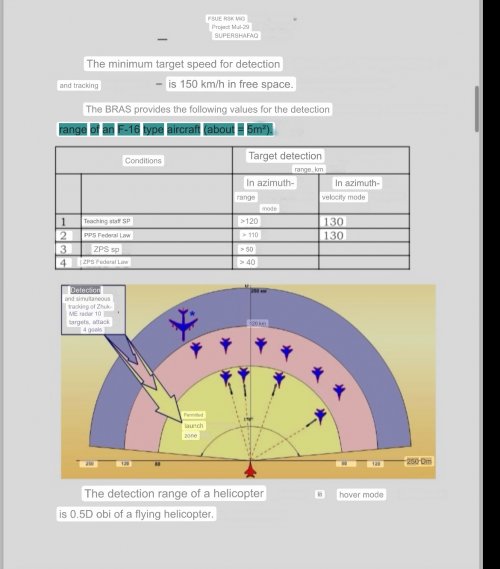
Supposedly Indian MiG-29k did much better then expected against pesa Rafale while using Zhuk-me
https://www.indiandefensenews.in/2019/06/did-indian-mig-29k-surprise-french.html?m=1
Navy officers did not reveal details of the air to air engagements between Indian Navy MiG-29Ks and the French Rafales. All of these exercises were done at beyond visual ranges of between 60 to 80 kilometres with the Indian Navy sharing that they were able to detect and engage the more-sophisticated Rafale fighter but score-lines were not provided to this correspondent.

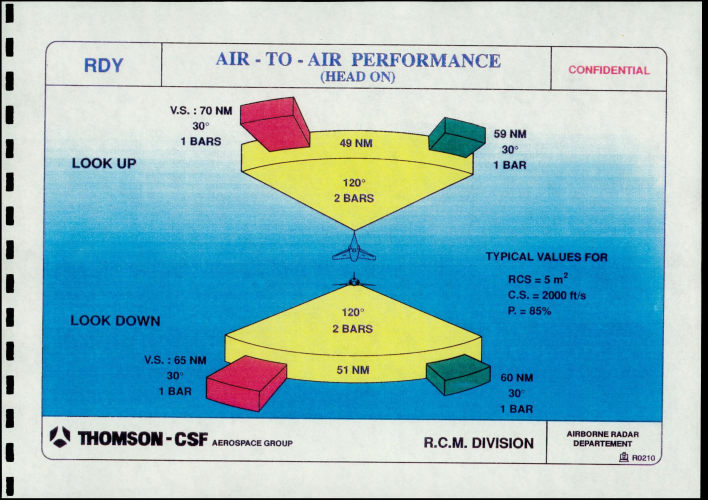
Supposedly RBE2 is a bit weaker then RDY
https://breakingdefense.com/2024/06...aded-to-ukraine-heres-how-kyiv-will-use-them/
One of the test pilots was involved in the 1990s development of the Radar à Balayage Electronique 2 plans (RBE2) passive electronic scanning array (PESA) set that was the Dassault Rafale’s original radar. He stated that the RDY was “in several respects superior to even the RBE2 in the air-to-air envelope,” despite being a mechanically-steered array and not fitted with an electronically-scanning antenna. The reason, the pilot said, is the RDY was designed with air-to-air missions in mind, as opposed to the RBE2 which was designed to be multi-role.

“So, there were compromises made in the air-to-air performance to accommodate air-to-ground mission profiles,” he said.

The same test pilots hastened to add that the latest active array (AESA) version of the RBE2 combined with upgrades in the Rafale’s F4 and F5 software releases have “closed the performance gap” that existed 30 years ago. But that “the [Mirage] RDY remains one of — if not the — best radars of its generation.”

IMG_4492.jpg image0.png IMG_2675.png
 
Last edited:
This is the only account I have of an AESA Rafale (but no meteor) Green Shield 2014 BA 113 F3r vs Saudi MSIP I F-15C 3 to 3.

https://web.archive.org/web/2018040...-fever.nl/galleries/2014-2/green-shield-2014/
Saudi and French fighters get Familiar

f15rsafnancy1404141740dennisspronk.jpg
A Royal Saudi Air Force F-15D Eagle at Nancy, France, for Green Shield 2014 (Image © Dennis Spronk)

A Royal Saudi Air Force (RSAF) F-15C Eagle pilot looks outside his cockpit. He sees not the familiar sandy surroundings of Tabuk King Faisal Airbase in the Saudi desert, but the green scenery of Nancy Airbase in France. To his right is a green, delta shaped local bird. It’s an Armée de l’air Dassault Mirage 2000D, ready for take-off and for the combat search and rescue (CSAR) mission that follows. But the Saudi pilot is not alone, his wingman in another F-15C is readying himself for the same mission. This is exercise Green Shield 2014 in progress.

On Monday 14 April it takes only a quick look at the fighter filled flightline of Base Aérienne 133 Nancy (Ochey) to notice the two participating countries in Green Shield 2014. Next to about a dozen French Dassult Mirages and Rafales stand six Royal Saudi Air Force F-15 Eagles. Four of the Saudis are C-model one-seaters, two being D-model two-seaters. Nearby, a group of Saudi personnel keeps watch over the aircraft, while they wait for pilots to show up for the next mission. Despite reasonable spring weather, the ground crew jokes about the cold. Judging by their clothing, they may actually mean it.

mirage2000dadlanancy1404141791dennisspronk.jpg
Great ball of fire! French Air Force (Armée de l’Air) Mirage 2000D with serial 667 / code 133-JZ taking off
(Image © Dennis Spronk)

It’s a big operation for them”, says Nancy based Mirage 2000D pilot Pascal Leroux, involved in organizing Green Shield 2014. “The Saudi’s brought their fighters to Nancy together with 200 personnel, using their new Airbus A330 MRTT tanker/transport aircraft. A lot of planning was involved on their side, and ours as well. Nancy is not really suited for large exercises, but we made it work.”

ec725r2adla1404142114dennisspronk.jpg
During our visit the French Air Force scrambled the dedicated Eurocopter EC725R2 Caracal for the Combat Search and Rescue mission (Image © Dennis Spronk)

Earlier experience:
There was luckily some experience to lean on. It’s the fourth time the French and Saudi’s train together. Earlier exercises were held in 2007 (Saudi Arabia), 2009 (Dijon, France) and 2012 (Saudi Arabia again). Leroux: “The goal is to train together and share experience in combined air operations. When the F-15s arrived here two weeks ago, we started training one-versus-one scenarios, using our Mirage 2000-5Fs as opponents. Gradually missions grew larger, as did the mission packages. Today, we fly a Combat Search and Rescue mission.”

f15rsafnancy1404141808dennisspronk.jpg
A Royal Saudi Air Force F-15C Eagle taking off from Nancy during Exercise Green Shield 2014 (Image © Dennis Spronk)

Indeed, in the afternoon the sound of jet engines starting up is heard at Nancy. Two CSAR specialized EC-725 Caracal helicopters take off first. They are followed by several Mirage 2000Ds which have been calling Nancy ‘home’ for years. Then, two Saudi F-15s claim the 7,874 feet long runway, throttle up to 50,000 lbs of thrust and depart with full afterburner. A second pair does the same some time later. Meanwhile, Rafales and Mirage 2000 air defense fighters go airborne as well.

rafaleadlanancy1404141678dennisspronk.jpg
The look of a killer: an Armée de l’Air Dassault Rafale B with code 113-FI (Image © Dennis Spronk)

Killed:
Two weeks into the exercise, the Saudis have grown into the Nancy environment and are giving the French a hard time. Camille Jolly, a weapons systems officer (‘wizzo’) from Nancy, flew against the Saudi pilots in the backseat of a Dassault Rafale B in the morning. “We were actually killed by them, but we did take out some of their aircraft too. I think the score was an equal 3-3.” According to Jolly the general goal of a Green Shield mission is to force a hole in air defenses by using offensive air, so that Mirage 2000D strike aircraft can move through to hit their targets

f15rsafnancy1404141532dennisspronk.jpg
The flightline of Nancy filled with Royal Saudi Air Force F-15 Eagles (Image © Dennis Spronk)

Saudi Eagles:
The RSAF has used the F-15C/D Eagles as an air defence fighter for years, acquiring 60 aircraft in the eighties and ordering nine more after that. The United States hastily supplied an additional 24 F-15Cs in 1990, after Iraq invaded neighbouring Kuwait. Some of those aircraft were seen at Nancy.

Saudi Arabia has become a big user of the F-15, also buying 72 of the F-15S Strike Eagle version in 1993. Deliveries of another 84 new-build F-15SAs (Saudi Advanced) are set to run from 2015 until 2019. The SA-order is worth US$ 29.4 billion, making it one of the largest foreign military sales ever in US history.

mirage2000f5adlanancy1404141880dennisspronk.jpg
The Saudi Eagle jocks started their aerial combat in the skies over Nancy against this French Air Force Mirage 2000-5F (Image © Dennis Spronk)

Involved:
The ‘old’ F-15C/Ds performed well during Green Shield, Mirage pilot Pascal Leroux tells after the CSAR mission returns to base and the roar of aircraft engines has gone. “Green Shield was a success for everybody involved.”

Over the last two weeks, fierce air wars have been fought out over Nancy, but it also sounds like friend were made. On Wednesday 16 April, dignitaries of both the French Air Force and the Royal Saudi Air Force will talk about a follow-up exercise. Leroux: “There will likely be another Green Shield in 2016, but then it will be us heading for Saudi Arabia.”

© 2014 AIRheads’ editor Elmer van Hest

No substitute for Kinimatics. Note all of these aircraft seem to be very fast and good at acceleration.
 
I’ve been curious about this topic for a long time. I’ve got a few cases of the Rafale seemingly under performing in BVR in the 2000s period. Exactly why this is I’m unsure, one impression I’ve gotten is the French themselves where not exactly sure what how to use the Rafale early. Two deficiencies though I feel are small radar size and for a long time mica was the only missile.

First we do have some information that APG-80 does out perform rbe2
https://www.key.aero/forum/modern-military-aviation/98455-rafale-news-ix?page=40

Rbe2 aesa needed a ten percent range bump to meet APG-80 figures. This is consistent with the proposed plan to increase peak power from 9.6 to 14kw with new generationors


https://rafalenews.blogspot.com/2011/06/air-and-cosmos-bring-new-insight-on.html?m=1

Around the same time in 2008 German F-4F ice did extremely well in BVR against Rafale aircraft
https://www.reccereports.com/leeuwarden-frisian-flag-9/

View attachment 808800

The impression I get is the PESA Rafale had very good MMI and sensor fusion but the sensors themselves were not necessarily that different from peers. Kinimatics are good but not necessarily like a Eurofighter were they could dominate on that alone. The small nose is a limitation. Mica was a limitation but meteor and mica mg adress that.

Supposedly Indian MiG-29k did much better then expected against pesa Rafale while using Zhuk-me
https://www.indiandefensenews.in/2019/06/did-indian-mig-29k-surprise-french.html?m=1

Supposedly RBE2 is a bit weaker then RDY
https://breakingdefense.com/2024/06...aded-to-ukraine-heres-how-kyiv-will-use-them/

View attachment 808801View attachment 808802View attachment 808803
This is an excellent post, thank you!!
 
Something interesting about AAM :
“The MICA missile is sometimes overlooked based on the comparison of the advertised ‘effective range’ of the two weapons,” a retired French test pilot told Breaking Defense. “The MICA’s engagement envelope is listed at only 80 km, which is slightly more than half of the AMRAAM. However, what the US firms do not tell you is that with most of the previous models of the AIM-120, their probability of a kill at its maximum range is 0.59 at best, where the MICA’s Pk at 80km is 0.9.”
 
where did you get the double range data from?
In « Rafale, Chasseur omnirôle », Air Fan number 431, p. 31

"le radar RBE2-AESA monté sur le Mirage 2000 B501 a pu montrer sa capacité à détecter et à poursuivre un airliner en éloignement à 140 km de distance. La portée maximum est doublée par rapport à la version RBE2-PESA, selon les pilotes, et estimée en 2014 à 200 km en mode air-air et annoncée a plus de 220 km en 2016 pour la détection d'un avion cargo"

=

"The RBE2-AESA radar mounted on the Mirage 2000 B501 has demonstrated its ability to detect and track a departing airliner at a distance of 140 km. The maximum range is double that of the RBE2-PESA version, according to the pilots, and was estimated in 2014 at 200 km in air-to-air mode, and announced at over 220 km in 2016 for the detection of a cargo aircraft."
 
Last edited:

Similar threads

Back
Top Bottom