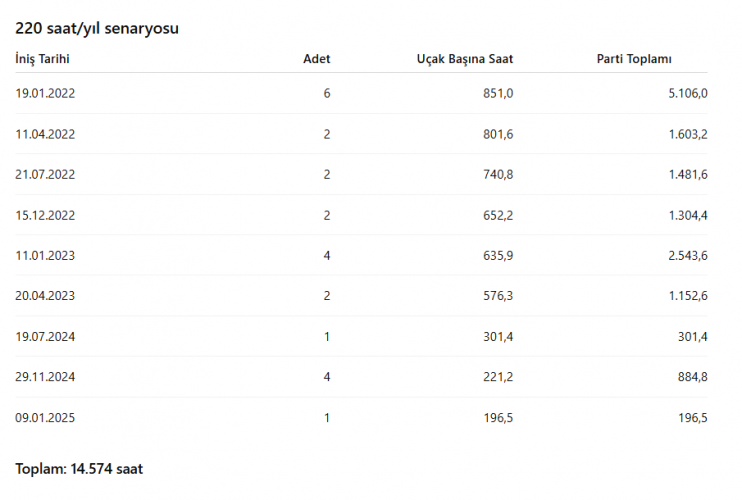
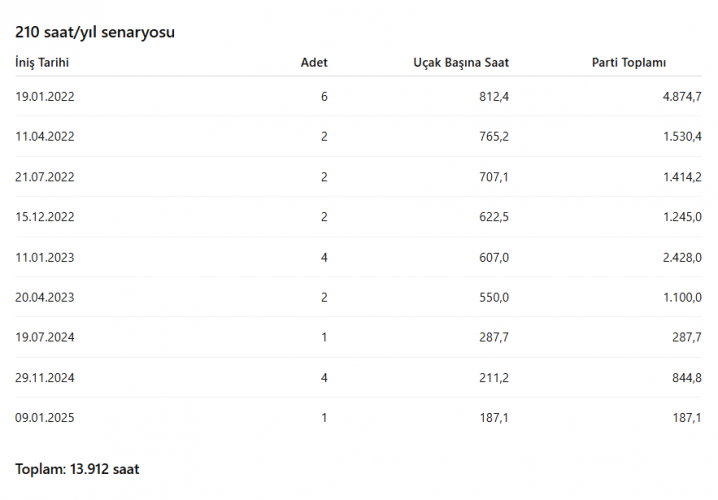
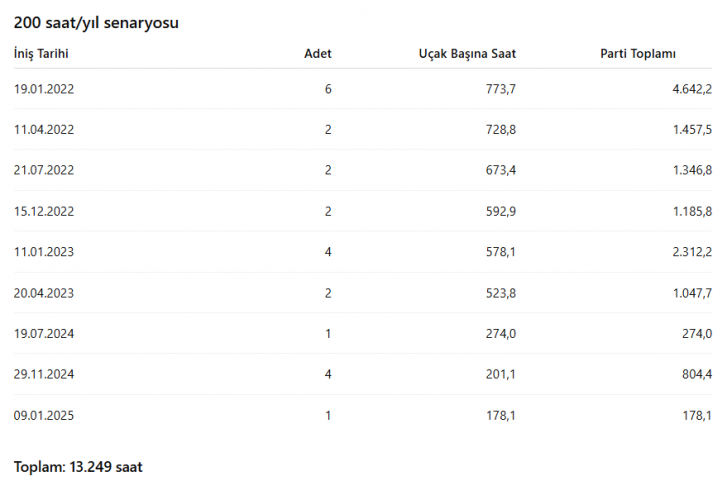
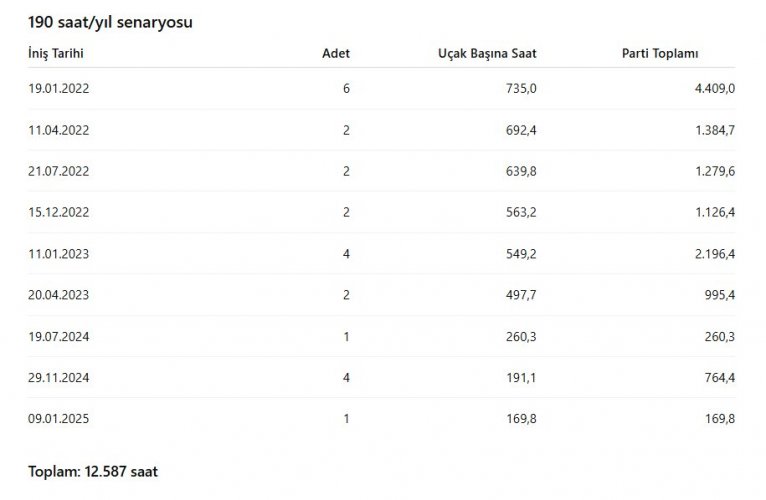
The 24 of Greece were delivered from 2022 to 2025. so even if we only used the last 5 years, the 24 were not delivered. So your maths are false.
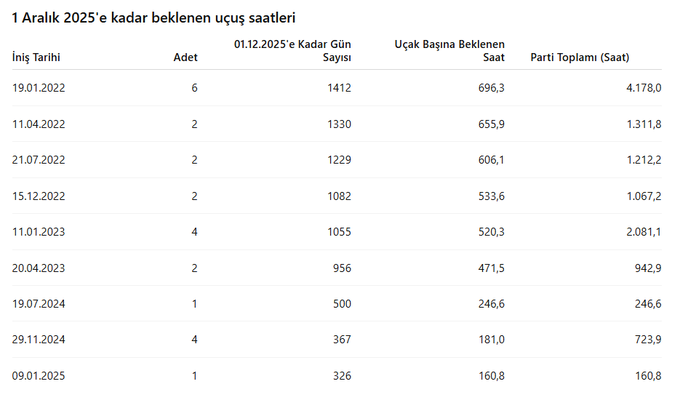
Based on the delivery dates, the Rafale fleet should have accumulated 11,924 flight hours by December 1, 2025.
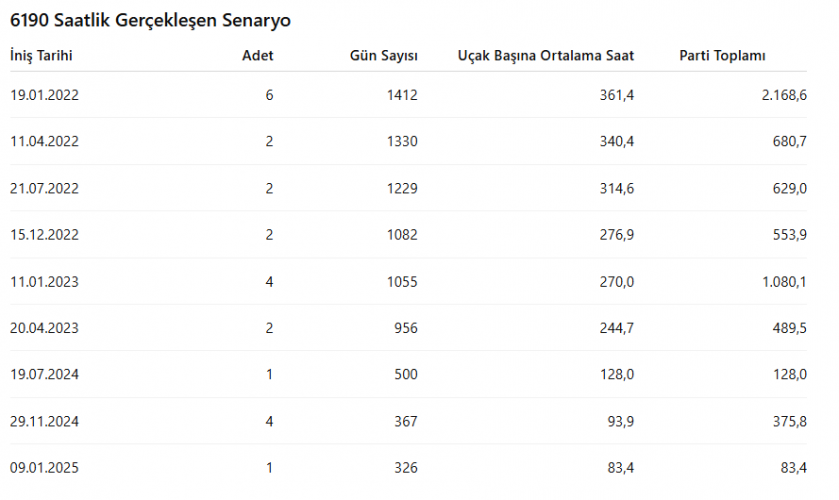
Instead, the actual figure is only 6,190 hours.
So we're talking about roughly half of the expected flight time -- a gap of 5,734 hours!
Let's go through the available information and calculate the expected hours from each delivery.
The HAF Rafale fleet had accumulated 6,190 flight hours in total by December 1, 2025. According to NATO standards, a fighter aircraft is expected to fly a minimum of 180 hours per year.
The first 6 Rafales arrived in Greece on January 19, 2022. By December 1, 2025, they had therefore spent 1,412 days on duty. At the NATO-standard rate, that corresponds to 696 expected flight hours per aircraft, or 4,178 hours for the six aircraft combined.
The next 2 arrived on April 11, 2022. They had been in HAF service for 1,330 days by December 1, 2025, which works out to 655 expected flight hours per aircraft, or 1,311 hours combined.
Another 2 aircraft arrived on July 21, 2022, officially entering the HAF inventory as the third batch. By December 1, 2025, they had served for 1,229 days. That gives an expected 606 flight hours per aircraft, or 1,212 hours in total.
The final delivery of 2022 came on December 15, when another 2 aircraft arrived in Greece. They had 1,082 days of service by December 1, 2025, corresponding to 533 expected flight hours each, or 1,067 hours combined.
So, just from the first 12 aircraft, the expected total already comes to 7,769 flight hours.
The entire 24-aircraft Rafale fleet, however, has accumulated only 6,190 hours.
If you insist that the first aircraft delivered obviously haven't had the same amount of time to fly as the last ones, and therefore an average calculation would be misleading, fine -- even then, the first 12 aircraft alone were supposed to have accumulated 7,769 hours.
In other words, they would already have needed to account for the entire 6,190-hour figure and then fly another 1,579 hours on top of that.
Anyway, let's continue.
On January 11, 2023, another 4 aircraft were delivered. By December 1, 2025, they would have spent 1,055 days in service, giving an expected 520 flight hours per aircraft, or 2,081 hours for the four.
That pushes the cumulative expectation to 7,769 + 2,081 = 9,850 hours.
Then, on April 20, 2023, another 2 aircraft were delivered, completing the first 18 aircraft.
By December 1, 2025, these two had accumulated 956 days of service in the HAF inventory. Their expected flight time over that period was 471 hours each, or 942 hours combined.
The cumulative expectation therefore rises to 9,850 + 942 = 10,792 hours.
The additional package of 6 aircraft began arriving on July 19, 2024, with 1 aircraft delivered to Greece on that date. By December 1, 2025, it would have spent 500 days in service and would be expected to have accumulated 246 flight hours.
That brings the expected total for the 19 aircraft to 10,792 + 246 = 11,038 hours.
According to open sources, another package of 4 aircraft was deployed to Greece on November 29, 2024. By December 1, 2025, these aircraft had also been on duty for 367 days. At that point, each would be expected to have logged 181 hours, or 723 hours for the four combined.
The cumulative expectation therefore reaches 11,038 + 723 = 11,761 hours...
Finally, the 24th and last aircraft was delivered on January 9, 2025. By December 1, 2025, it should have been on duty for 326 days and should have accumulated approximately 160 flight hours.
Once the fractional parts of the fleet's total flight hours are included as well, that brings the overall expectation to approximately 11,924 hours.
Even using the minimum calculation based purely on the delivery dates, down to the individual day, they still came up 5,734 hours short... Put in percentage terms, they've only managed to fly about 52% of what they should have...