Rafale - concept of operations

All the west country will reduce or limit weapons deal so as to protect israel. We have a debt for the Shoah.
Then we return back to Egypt, who's getting expensive, nerfed equipment and forced to swallow it.
Rafale is already a somewhat lagging platform (Israel got F-35 almost 10 years ago), but it is also left without it's key enabler. Just to make sure.

Israel having a license to kill everyone around, when no one in the region is even related to Holocaust (unlike countries perpetrating it), is a somewhat weird arms export policy.

I.e. Egypt is in a same condition as a country like Iraq, which lost a war and is reduced to a de facto dependency. Usually it's called protectorate, but the right term in current context is I guess unprotectorate.
 
Iran and Israel actually deter each other quite well, as you can see now.
Israel attacked twice, sure, but it came at a substantial cost. Cost associated with fighting is the definition of deterrence.

Israel attacks everyone else in the region(other than maybe Yemen) without any cost.
Including Qatar, as Doha hosts Hamas delegation. There are other cities in the region, hosting Hamas delegates. One of them is Cairo.

As such, Egypt absolutely wants(needs) to deter Israel. It just isn't allowed to, and the geography works in a way that Egypt able to deter/stop Israel is halfway there to being existential threat to Israel. Or would be, if Israel didn't have nukes.
But in any case, Egypt is denied non-compliant weapons. I frankly missed that Egypt has SCALPs(see above), and this somewhat undermines my position.
But they don't have many (25-50, minus AA, is just a few targets ultimately). Israel is used to being hit, few hits won't dent it.

Btw it's interesting to me how COMET will look like. Original Rafale was very much optimized for low altitude fighting; meteor wasn't part of the original concept, but it added up beautifully.

COMET now seems to be more of a high altitude weapon. Granted, MICA NG doesn't go anywhere and Rafale can keep it's current low altitude capability, but still. I wonder if it's a general shift "upwards".
Rafale was studied at the beginning to me mainly air to ground oriented, as a replacement of Jaguar, with Mirage 2000 for air to air (Rafale was expected to be on duty in 1996, with Mirage 2000-5 really on service in 1998).
It was postoned as peace dividend after iron wall collapse, and then it evolved to a more versatile platform.

Same can be said to F-35 : studied to replace A10 and F16 in the CAS mission, and later modified to be more polyvalent. In the F-35 case it is obvious, as it is shaped as a sugar piece, so not made from scratch for supersonic use. It is why despite a huge engine it can't supercruise.
 
Rafale was studied at the beginning to me mainly air to ground oriented, as a replacement of Jaguar, with Mirage 2000 for air to air (Rafale was expected to be on duty in 1996, with Mirage 2000-5 really on service in 1998).
I.e. originally Mirage should've been continued in parallel, rather than dropped?
 
Then we return back to Egypt, who's getting expensive, nerfed equipment and forced to swallow it.
Rafale is already a somewhat lagging platform (Israel got F-35 almost 10 years ago), but it is also left without it's key enabler. Just to make sure.

Israel having a license to kill everyone around, when no one in the region is even related to Holocaust (unlike countries perpetrating it), is a somewhat weird arms export policy.

I.e. Egypt is in a same condition as a country like Iraq, which lost a war and is reduced to a de facto dependency. Usually it's called protectorate, but the right term in current context is I guess unprotectorate.
Who says that the Egyptian Rafale are restricted ? I'm sure thay have all the capacity of the legacy Rafale, just without Meteor yet delivered. It can be made in 12 hours !

Lagging platform ? Rafale evolve every 18 month with a new std release ! In India it has a 90% availability. 80% in Greece !
The last datas for F-35 is 40% availability, with a 40000€ cost by flight hour ! It is not without some good reasons that israel purchased F-35 but also F-15 !
 
I.e. originally Mirage should've been continued in parallel, rather than dropped?
I don't know.
Some imagined a Mirage 2000 powered with a M88-4 (10.5 tons of thrust).
But more probably a new version of Rafale, more oriented air to air than the original one.
 
Who says that the Egyptian Rafale are restricted ? I'm sure thay have all the capacity of the legacy Rafale, just without Meteor yet delivered. It can be made in 12 hours !
Just without meteor(and mica ng) it's basically incapable of BVR. This is crippling.
And by the end of 12 hours Egypt will likely be without an air force.

Lagging platform ? Rafale evolve every 18 month with a new std release ! In India it has a 90% availability. 80% in Greece !
The last datas for F-35 is 40% availability, with a 40000€ cost by flight hour ! It is not without some good reasons that israel purchased F-35 but also F-15 !
It doesn't really affect that Rafale won't be able to hold the line against an f-35.
 
Just without meteor(and mica ng) it's basically incapable of BVR. This is crippling.
And by the end of 12 hours Egypt will likely be without an air force.
Mmmhh... You're pushing a bit here. basic MICA is still a BVR missile, just not of the same class as Meteor/AMRAAM/PL-15.
So they still have some BVR capacity.
 
Mmmhh... You're pushing a bit here. basic MICA is still a BVR missile, just not of the same class as Meteor/AMRAAM/PL-15.
So they still have some BVR capacity.
You're right, let me use a more specific term: BVR combat. Missile itself can be launched BVR. But range outmatch is still critical: by a factor of two, with MRAAMs having more no-escape range than MICA has head on. I.e. MICA is capable of BVR, but it's doubtful you can rely on it in modern BVR combat.

With MICA alone, I doubt getting to launch authorization in BVR fight nowadays is statistically realistic. Balakot (with rvv-ae) was a clear indication that such a force gets suppressed.

It's totally possible for MICA to be used on a deck against another aircraft down low.(sudden encounter) but this will require something to press down the entire battlespace. This is done by LR SAMs and Meteors.

Meteor is especially critical, as it's both light and has excessive specific impulse. It ensures that low flying eurocanards can self-escort(suppress). And vise versa, if meteor is excluded.
 
Last edited:
80% in Greece !
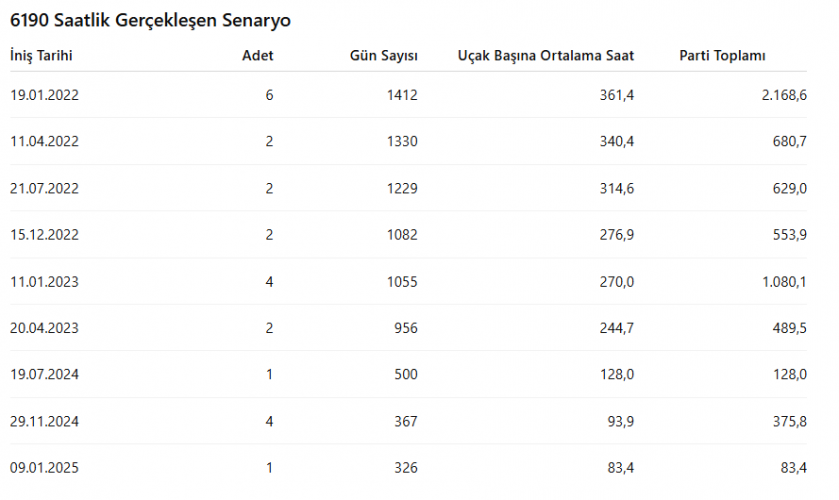
They have 24 aircraft in their possession. In the first 5 years, they have flown a total of 6190 hours -- the average flight time per aircraft is 258 hours. So each aircraft has flown less than 52 hours per year. Of course, this is a fleet average, and there are some that fly more and some less.

We obtain this data from the published "FOS," that is, "Follow-on Support" agreements.

According to the FOS agreement for the 2025-2029 period, the fleet is targeted to fly a total of 13,000 hours. In other words, it means that one aircraft will fly only 135 hours in one year.

These are very low hours.

For those who want to compare, the ideal is for a level 1 pilot in NATO to fly more than 180 hours per year. Because the number of aircraft is less than the number of pilots, the aircraft are flown more hours by different pilots within 1 year.

In other words, 1 pilot's flight hours will be lower than 1 aircraft's... In this case, it means that Greek Rafale pilots have even less than 135 hours of annual flight experience...

The standard Pilot/Aircraft/Seat ratio in peacetime is 1.5 pilots per seat, and the HAF has 18xRafale-EG (single-seat) and 6xRafale-DG (two-seat): According to this calculation, the Greeks should have trained a total of at least 45 pilots, with 18 x 1.5 = 27 pilots for the Rafale-EGs and 12 x 1.5 = 18 pilots for the Rafale-DGs.

In other words -- in short, one Rafale pilot can fly 72 hours per year. Compared to 180 hours, this is an incredibly low amount of time.

In the scenario where this rate is maintained, it takes a full 14 years for a Rafale pilot to accumulate 1,000 hours of flight experience.

In summary, the HAF is unable to operate the Rafale aircraft it purchased from France in an effective manner. Their wartime readiness rates are quite low.


These are not conclusions that could be "according to you" or "according to me"... Everything is out in the open and clear as day...

Another unspoken piece of information on this topic is that the HAF does not have a spare parts stockpile for the Rafale, they have shifted to "pay for what you fly" with the FOS agreement...

Under this doctrine, the procurement of spare parts is planned as needed. Although this has material advantages, it would be disastrous if problems arise in the logistics constructed through France.

For example, if the factories in France fail to meet the expected production pace, or if there are problems with the delivery of a spare parts package originating from France somehow reaching Greece, the planes will be grounded.

Another topic to discuss at this point is the ammunition package.

According to open sources, they have procured only 36 Meteor missiles along with the Rafale acquisition... For the SCALP-EG and Exocet missiles, which are arguably the most dangerous weapons that the Rafale has, they have not made any new procurements and have decided to extend the service life of the existing old SCALP-EG and Exocets...

It has also been stated that the same method will be applied to the MICA missiles currently on hand...

Although it was previously mentioned that they'd would receive AASM munitions for Air-to-Ground missions, it has not yet been officially confirmed whether they have received them up to now.

So, the munitions depots seem to be empty as well...
 
Last edited:
ust without meteor(and mica ng) it's basically incapable of BVR. This is crippling.
Legacy MICA has a range of 80km. in 1997, with an early MICA version (we can imagine it evolved since...) a Taiwanese Mirage 2000-5 shoot a target at 67km in a training. It it isn't BVR, what is it?

And once again, these last 30 years, how many jets were destroyed, and on these how many were shooted at more than 50 km ???

(it remember me the story of this SH18 than tried to shoot a Syrian Su22, some 8 years ago. AMRAAM failed. It has to use a AIM9 X to end the job).
 
They have 24 aircraft in their possession. In the first 5 years, they have flown a total of 6190 hours -- the average flight time per aircraft is 258 hours. So each aircraft has flown less than 52 hours per year. Of course, this is a fleet average, and there are some that fly more and some less.
The 24 of Greece were delivered from 2022 to 2025. so even if we only used the last 5 years, the 24 were not delivered. So your maths are false.
 
For example, if the factories in France fail to meet the expected production pace, or if there are problems with the delivery of a spare parts package originating from France somehow reaching Greece, the planes will be grounded.
With the same "if", all the F-35 will be grounded if a US supplier is falling.
The Dassault will is "on time, on spec, on budget". They never failed.
 
According to open sources, they have procured only 36 Meteor missiles along with the Rafale acquisition... For the SCALP-EG and Exocet missiles, which are arguably the most dangerous weapons that the Rafale has, they have not made any new procurements and have decided to extend the service life of the existing old SCALP-EG and Exocets...

It has also been stated that the same method will be applied to the MICA missiles currently on hand...

Although it was previously mentioned that they'd would receive AASM munitions for Air-to-Ground missions, it has not yet been officially confirmed whether they have received them up to now.
Meteor is mainly usefull for some specific targets : AWACS, tankers.
36 are more than enough in a hurry. France has strong tie with Greece : some can also be taken from the french stockpile if needed.

AASM : once agains french stockpile can be used, and there are laser guided bombs available already integrated on Rafale.

Greece is a small and relatively poor country. They can't have all in quantity.
 
The 24 of Greece were delivered from 2022 to 2025. so even if we only used the last 5 years, the 24 were not delivered. So your maths are false.
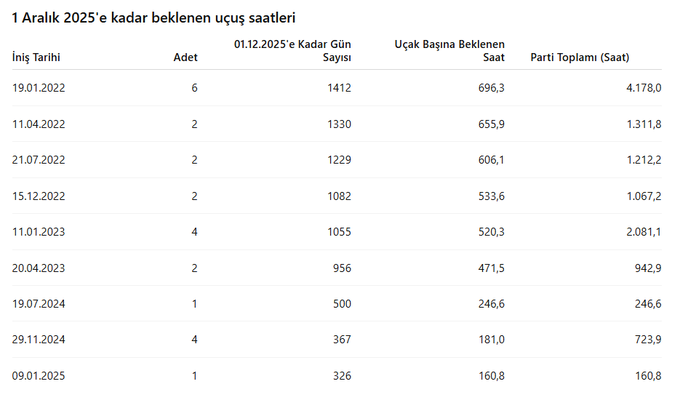
Based on the delivery dates, the Rafale fleet should have accumulated 11,924 flight hours by December 1, 2025.

Instead, the actual figure is only 6,190 hours. So we're talking about roughly half of the expected flight time -- a gap of 5,734 hours!


Let's go through the available information and calculate the expected hours from each delivery.

The HAF Rafale fleet had accumulated 6,190 flight hours in total by December 1, 2025. According to NATO standards, a fighter aircraft is expected to fly a minimum of 180 hours per year.

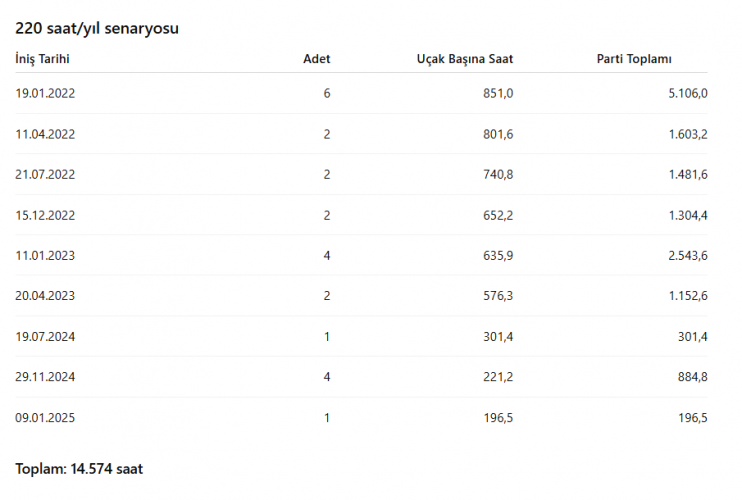
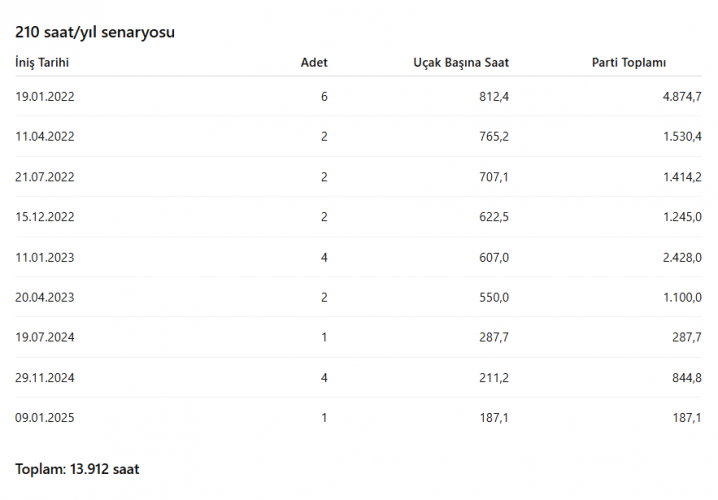
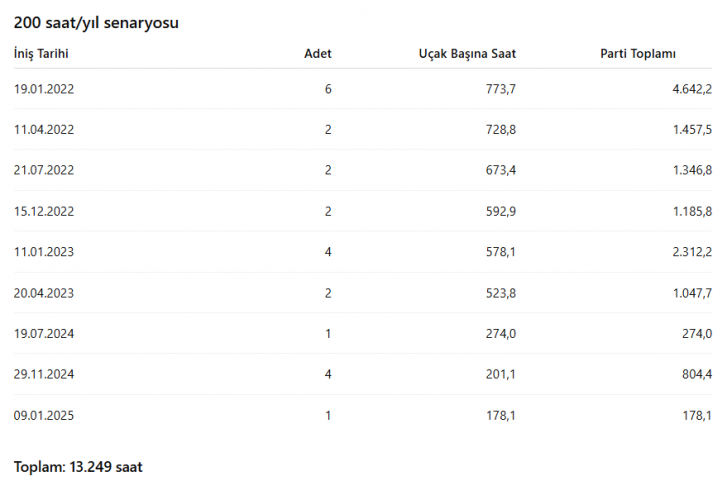
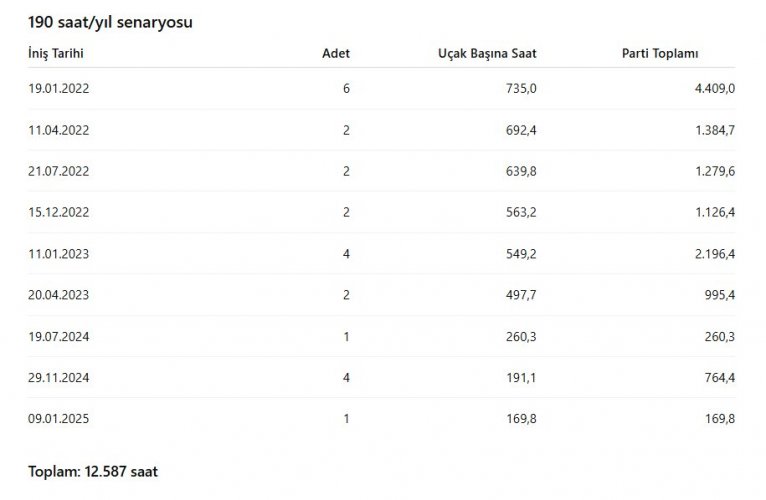
The first 6 Rafales arrived in Greece on January 19, 2022. By December 1, 2025, they had therefore spent 1,412 days on duty. At the NATO-standard rate, that corresponds to 696 expected flight hours per aircraft, or 4,178 hours for the six aircraft combined.

The next 2 arrived on April 11, 2022. They had been in HAF service for 1,330 days by December 1, 2025, which works out to 655 expected flight hours per aircraft, or 1,311 hours combined.

Another 2 aircraft arrived on July 21, 2022, officially entering the HAF inventory as the third batch. By December 1, 2025, they had served for 1,229 days. That gives an expected 606 flight hours per aircraft, or 1,212 hours in total.

The final delivery of 2022 came on December 15, when another 2 aircraft arrived in Greece. They had 1,082 days of service by December 1, 2025, corresponding to 533 expected flight hours each, or 1,067 hours combined.

So, just from the first 12 aircraft, the expected total already comes to 7,769 flight hours.

The entire 24-aircraft Rafale fleet, however, has accumulated only 6,190 hours.

If you insist that the first aircraft delivered obviously haven't had the same amount of time to fly as the last ones, and therefore an average calculation would be misleading, fine -- even then, the first 12 aircraft alone were supposed to have accumulated 7,769 hours. In other words, they would already have needed to account for the entire 6,190-hour figure and then fly another 1,579 hours on top of that.

Anyway, let's continue.

On January 11, 2023, another 4 aircraft were delivered. By December 1, 2025, they would have spent 1,055 days in service, giving an expected 520 flight hours per aircraft, or 2,081 hours for the four.

That pushes the cumulative expectation to 7,769 + 2,081 = 9,850 hours.

Then, on April 20, 2023, another 2 aircraft were delivered, completing the first 18 aircraft.

By December 1, 2025, these two had accumulated 956 days of service in the HAF inventory. Their expected flight time over that period was 471 hours each, or 942 hours combined.

The cumulative expectation therefore rises to 9,850 + 942 = 10,792 hours.

The additional package of 6 aircraft began arriving on July 19, 2024, with 1 aircraft delivered to Greece on that date. By December 1, 2025, it would have spent 500 days in service and would be expected to have accumulated 246 flight hours.

That brings the expected total for the 19 aircraft to 10,792 + 246 = 11,038 hours.

According to open sources, another package of 4 aircraft was deployed to Greece on November 29, 2024. By December 1, 2025, these aircraft had also been on duty for 367 days. At that point, each would be expected to have logged 181 hours, or 723 hours for the four combined.

The cumulative expectation therefore reaches 11,038 + 723 = 11,761 hours...

Finally, the 24th and last aircraft was delivered on January 9, 2025. By December 1, 2025, it should have been on duty for 326 days and should have accumulated approximately 160 flight hours.

Once the fractional parts of the fleet's total flight hours are included as well, that brings the overall expectation to approximately 11,924 hours.

Even using the minimum calculation based purely on the delivery dates, down to the individual day, they still came up 5,734 hours short... Put in percentage terms, they've only managed to fly about 52% of what they should have...

 

Attachments

  • HKHwvsNX0AAWR_N.png
    HKHwvsNX0AAWR_N.png
    37.4 KB · Views: 13
  • HKHwsivW8AEO8G4.png
    HKHwsivW8AEO8G4.png
    36.8 KB · Views: 9
  • HKHwpTtXQAAaFSn.png
    HKHwpTtXQAAaFSn.png
    36.5 KB · Views: 7
  • HKHwmRfXoAAxU2s.jpg
    HKHwmRfXoAAxU2s.jpg
    37.8 KB · Views: 6
  • HKHvmI8WoAAoVLd.png
    HKHvmI8WoAAoVLd.png
    38.6 KB · Views: 5
  • HKHuxtMWkAA1aKD.png
    HKHuxtMWkAA1aKD.png
    57.6 KB · Views: 11
According to the FOS agreement for the 2025-2029 period, the fleet is targeted to fly a total of 13,000 hours. In other words, it means that one aircraft will fly only 135 hours in one year.

These are very low hours.

For those who want to compare, the ideal is for a level 1 pilot in NATO to fly more than 180 hours per year. Because the number of aircraft is less than the number of pilots, the aircraft are flown more hours by different pilots within 1 year.

In other words, 1 pilot's flight hours will be lower than 1 aircraft's... In this case, it means that Greek Rafale pilots have even less than 135 hours of annual flight experience...

The standard Pilot/Aircraft/Seat ratio in peacetime is 1.5 pilots per seat, and the HAF has 18xRafale-EG (single-seat) and 6xRafale-DG (two-seat): According to this calculation, the Greeks should have trained a total of at least 45 pilots, with 18 x 1.5 = 27 pilots for the Rafale-EGs and 12 x 1.5 = 18 pilots for the Rafale-DGs.

In other words -- in short, one Rafale pilot can fly 72 hours per year. Compared to 180 hours, this is an incredibly low amount of time.

In the scenario where this rate is maintained, it takes a full 14 years for a Rafale pilot to accumulate 1,000 hours of flight experience.

In summary, the HAF is unable to operate the Rafale aircraft it purchased from France in an effective manner. Their wartime readiness rates are quite low.
According to my numbers there were only ~30 Rafale pilots in the HAF by december 2025, so indeed less than 1 pilot per seat if you count 2 per Rafale B

Btw the flight hours per year per aircraft are even lower in egypt. Doesn't mean readiness is low.
 
And once again, these last 30 years, how many jets were destroyed, and on these how many were shooted at more than 50 km ???
Idk, should be dozens, I.e. wast majority. I don't track Ukrainian conflict plane to plane. In fact, sub50 plane kills over last 30 years are likely a minority due to Ukraine alone.
I may be wrong, but recent su-35 is in fact likely the only sub-50 kill of that war over last several years(if it was below 50 even).
With the same "if", all the F-35 will be grounded if a US supplier is falling.
The Dassault will is "on time, on spec, on budget". They never failed.
It isn't true; US still have huge AMRAAM stocks.
They still maintain several full warloads per their entire force, on top of yearly production capability dwarfing European entire arsenals. Plus a separate, and huge, aim-9 stock.

"Just in time" is just not a way to prepare for war.
 
Last edited:
Based on the delivery dates, the Rafale fleet should have accumulated 11,924 flight hours by December 1, 2025.

Instead, the actual figure is only 6,190 hours. So we're talking about roughly half of the expected flight time -- a gap of 5,734 hours!


Let's go through the available information and calculate the expected hours from each delivery.

The HAF Rafale fleet had accumulated 6,190 flight hours in total by December 1, 2025. According to NATO standards, a fighter aircraft is expected to fly a minimum of 180 hours per year.

The first 6 Rafales arrived in Greece on January 19, 2022. By December 1, 2025, they had therefore spent 1,412 days on duty. At the NATO-standard rate, that corresponds to 696 expected flight hours per aircraft, or 4,178 hours for the six aircraft combined.

The next 2 arrived on April 11, 2022. They had been in HAF service for 1,330 days by December 1, 2025, which works out to 655 expected flight hours per aircraft, or 1,311 hours combined.

Another 2 aircraft arrived on July 21, 2022, officially entering the HAF inventory as the third batch. By December 1, 2025, they had served for 1,229 days. That gives an expected 606 flight hours per aircraft, or 1,212 hours in total.

The final delivery of 2022 came on December 15, when another 2 aircraft arrived in Greece. They had 1,082 days of service by December 1, 2025, corresponding to 533 expected flight hours each, or 1,067 hours combined.

So, just from the first 12 aircraft, the expected total already comes to 7,769 flight hours.

The entire 24-aircraft Rafale fleet, however, has accumulated only 6,190 hours.

If you insist that the first aircraft delivered obviously haven't had the same amount of time to fly as the last ones, and therefore an average calculation would be misleading, fine -- even then, the first 12 aircraft alone were supposed to have accumulated 7,769 hours. In other words, they would already have needed to account for the entire 6,190-hour figure and then fly another 1,579 hours on top of that.

Anyway, let's continue.

On January 11, 2023, another 4 aircraft were delivered. By December 1, 2025, they would have spent 1,055 days in service, giving an expected 520 flight hours per aircraft, or 2,081 hours for the four.

That pushes the cumulative expectation to 7,769 + 2,081 = 9,850 hours.

Then, on April 20, 2023, another 2 aircraft were delivered, completing the first 18 aircraft.

By December 1, 2025, these two had accumulated 956 days of service in the HAF inventory. Their expected flight time over that period was 471 hours each, or 942 hours combined.

The cumulative expectation therefore rises to 9,850 + 942 = 10,792 hours.

The additional package of 6 aircraft began arriving on July 19, 2024, with 1 aircraft delivered to Greece on that date. By December 1, 2025, it would have spent 500 days in service and would be expected to have accumulated 246 flight hours.

That brings the expected total for the 19 aircraft to 10,792 + 246 = 11,038 hours.

According to open sources, another package of 4 aircraft was deployed to Greece on November 29, 2024. By December 1, 2025, these aircraft had also been on duty for 367 days. At that point, each would be expected to have logged 181 hours, or 723 hours for the four combined.

The cumulative expectation therefore reaches 11,038 + 723 = 11,761 hours...

Finally, the 24th and last aircraft was delivered on January 9, 2025. By December 1, 2025, it should have been on duty for 326 days and should have accumulated approximately 160 flight hours.

Once the fractional parts of the fleet's total flight hours are included as well, that brings the overall expectation to approximately 11,924 hours.

Even using the minimum calculation based purely on the delivery dates, down to the individual day, they still came up 5,734 hours short... Put in percentage terms, they've only managed to fly about 52% of what they should have...
https://www.avionslegendaires.net/2...-rafale-grecs-sous-les-menaces-de-la-turquie/

"Les vingt-quatre chasseurs omnirôles fournis par la France voient leur activité décupler depuis le début de cette semaine. En l’espace de 24 heures la Grèce a engagé rien moins que huit patrouilles de combat, dont six sur Dassault Aviation Rafale EG/DG et deux sur Lockheed-Martin F-16V Viper face à des avions militaires appartenant à la Turquie. La tension entre Athènes et Ankara est remontée à un de ses niveaux les plus élevés depuis le début de la décennie. Vingt-cinq violations d’espaces aériens souverains de la Grèce ont été enregistrés en Mer Égée ce mardi 18 août 2026."

=

"The twenty-four omnirole fighter jets supplied by France have seen a tenfold increase in activity since the beginning of the week. In the span of just 24 hours, Greece deployed no fewer than eight combat patrols—six involving Dassault Aviation Rafale EG/DG aircraft and two involving Lockheed-Martin F-16V Vipers—to confront Turkish military aircraft. Tensions between Athens and Ankara have surged to one of their highest levels of the decade. Twenty-five violations of Greek sovereign airspace were recorded in the Aegean Sea on Tuesday, August 18, 2026."

They only have 24 Rafale but more than 100 F-16.
 
I was not speaking of weapons, but of spare parts for F-35
True, but it is unfair to put similar(and wrong) approach as advantage to one aircraft and a failure to another.
If it's a failure, which it is*, it's a failure for both.

*frankly speaking, I honestly wonder how many nations and new plane models aren't like this in a modern world. Part stocks are very expensive (relative to the plane), and when plane prices themselves easily overwhelm procurement budgets, rest won't be in a good shape either.
 
*frankly speaking, I honestly wonder how many nations and new plane models aren't like this in a modern world. Part stocks are very expensive (relative to the plane), and when plane prices themselves easily overwhelm procurement budgets, rest won't be in a good shape either.
In the Indian case, they inked a contract to have more than 75% of availability for their fleet of 36 (I think it is 75%, but not sure of this precise number). It is more than respected. Yes it has a cost only the nations at war risk accept to pay.
 
Every combat aircraft design is a choice of compromises. Physics dictate that in order to gain some performance point here and there, you need to trade some elsewhere. Something like a perfect uncompromised design that can do everything doesn't exist and the Rafale is no exception to that rule.

Dassault's original ACT 92 study from 1976 was centred around a succesor for the Jaguar A only. The AdA's eventual ACT requirement from 1978 specified a multirole combat aircraft to replace the Mirage F1C, Mirage IVP and Jaguar A. Mission priority emphasized AG with the Mirage 2000 being the designated AA fighter for the AdA. A credible AA capability was nevertheless required to succeed the Mirage F1, which itself wasn't the successor to the Mirage III, but a complimentary design. Replacing the Mirage 2000 was therfore not an original requirement for the ACT.

The MN's ACM requirement from 1978 likewise called for a multirole platform to succeed the F-8E and Super Entendard, but requirements were said to be more balanced between AA and AG, unlike the AdA, the MN had no new fighter in the making.

Merging ACT and ACM was first considered by the French MoD on cost grounds in 1979, but a firm decision wasn't made before ~1986.

One of the primary objectives of the ACX that was initially launched as a private venture by Dassault in 1982, was to demonstrate the feasibility of a single advanced aircraft design to satisfy both services' requirements. France's participation in ECA and F/EFA was solely driven by AdA requirements only. The MN had no stakes in either program and that was also a reason for strong resistance from the EFA partners, when the French side tried to impose a naval requirement on EFA in the retrospect, torpedising everything already done and agreed upon.

The AdA had to fill a capability gap in the OCA deep strike department, as it lacked an adequate platform for this mission, while it had a proper fighter/interceptor with the Mirage 2000. This bit with the partners who had a credible striker with the Tornado IDS, but no proper fighter which also contributed to the eventual divide.

The ACX / Rafale A proved the feasibility for a joint AdA/MN design and progressed into today's Rafale as we know it.

The omnirole Rafale had to replace all existing tactical combat aircraft in all mission roles in AdA and MN service, with exception of the Mirage 2000. It pretty much looks like the M2k replacement was an afterthought based on opportunity and only impacted the earlier M2k-C and N.

Inline with Dassault's tradition of building small and light aircraft that were exportable the airframe was designed to be as compact as somehow possible. At the same time the aircraft had to provide a deep strike capability that required long range and good payload. To achieve this with a small and light aircraft the aircraft needed to feature a strong airframe and a lot of lift which was likewise required for naval operations. Size and mass of the Rafale had to comply with the constraints of French aircraft carriers which coincided with Dassault's policy of a well exportable aircraft as well.
Due to these requirements Dassault for the first time in three decades dropped its 1950s fuselage layout which carried the entire Mirage series. Lateral mounting of the intakes, along with mid-mounted wings widened the fuselage for lift generation and large stores carriage on the fuselage. Wingsweep angle was lower compared to previous Mirage deltas for improved low speed lift, augmented by the LEX and close-coupled canards. Everything comes at its price and the significant amount of lift also increased its drag compared to sleeker fuselage of the Mirage series. The engines were sized to achieve decent performance in AA configs, but underpowered for heavier payloads. Internal fuel was insufficient necessitating the carriage of large external drop tanks to achieve the desired range performance and carrying various ordnance incl. heavy weapons necessitated the high overall payload capability, which can be considered as best in class, with only F-16C/D from Block 40 onwards matching it.
The nose is relatively small, once again in line with Dassault traditions, but also out of necessity. The nose must not have been too large in diamenter and not too long either, to ensure sufficient downwards visibility during high AoA approaches to the carrier. Radar aperture size was further reduced to fit the bulky twin unit OSF.

To reach targets deep into enemy territory the aircraft relied on low level peneration with TF/TA through radar and TRN, accurate autonomous navigation, reduced signatures and a powerful EW suite (SPECTRA). Signature reduction involved managing own RF emissions incl. the use of passive sensors and a stealthier PESA radar instead of an MSA design. The use of a PESA enabled simultaneous airspace monitoring and terrain following flights at the same time. The tradeoff in raw AA range performance and coverage was the price to pay. And no that's not a feature, but a tradeoff!

In AA mission roles remaining stealthy and relying on passive sensors and offboard feeds fused together was key, using the radar primarily during the attack phase, this is however dependent on the exact mission roles, i.e. defensive or offensive. For DCA you'd rather use the radar to achieve best overall coverage and detection performance and probability.

MICA was a Magic II and Super 530D/F replacement, bettering both but with the constraints of being an intermittent weapon, but compliant with the range performance of the radar.

Newer technological developments incl. armaments like AASM weren't a thing back then and can't be considered as part of the original CONOPS, albeit any of these new developments has led to an evolution of the CONOPS. RBE2AA and METEOR change the BVR fight and to cope with threats offering ever longer range missiles and more powerful radars/sensors itself this became a necessity. Claiming the Meteor is only needed for high value assets is rather ignorant.
 
For the whole Egypt-Israel discussion, we can see Egypt's actual force structure and buildup. It is simply not built with Israel as its reference threat.
Its posture also doesn't reflect any perception of threat from Israel.

An Egyptian Meteor buy may simply be one of spare capability. The low quantities bought reflect that. And they are a sound alternative to the AMRAAM - which by the way they are operating, just from ground launchers.

The current threat to Egypt emanates from the south-east and north-east, via the Houthis in Yemen, Hezbollah in Lebabon, and Iran, which are occasionally firing drones in Egypt's direction and disrupting trade relevant directly to Egypt.

Against these threats, something like the Meteor is excessive. APKWS-like weapons are more relevant, as are WVR AAMs. But these threats could improve in quality, potentially to the point where Egypt may require BVR capability.

All this is added to the layer which is that Egypt buys equipment, but refrains from turning it into capability via doctrine and training and so on.
 
For the whole Egypt-Israel discussion, we can see Egypt's actual force structure and buildup. It is simply not built with Israel as its reference threat.
Its posture also doesn't reflect any perception of threat from Israel.
Egypt procured dozens of mobile SAM batteries (up to tactical/theater ABM-capable) in the 2010s and tried to develop a2a arm (mig - sukhoi). I.e., same exact kinds of capabilities which enabled the Yom Kippur. You just don't procure those systems against anyone other than Israel.

That was targeted very specifically and can't be attributed to CATSA alone; no replacement capabilities were allowed. They're now buying best they're allowed (which are short- to medium-range deployable systems, broadly under an 80 km cap). Very advanced ones, though the same advancedness radically increases the chance they'll just turn duds if anything happens.
Against these threats, something like the Meteor is excessive.
But a 370 km class 9M82MD is not? Egypt also tried procuring Su-35s, which almost certainly meant RVV-BDs. Meteor is a shorter-range weapon.
In any case, it's a very weak argument by any standards; longer-range weapons are reach, not just overmatch. Longer range is always useful, no matter the opponent.

There's also the opposite point. Rafale is a high-end fighter. It is not top-end capability anymore (dated), but it still costs as one, and on a best-effort basis tries to keep up. Paying for this kit is meaningful when it delivers. Otherwise, if threat level is negligible - why pay for Spectra?

I.e., the point is that Rafale was procured exactly as the best thing politically possible. Ideally could be better, but not allowed - and Western countries currently have enough grip to prevent competition. Hard to avoid the feeling that while part of this is economic, part is a direct threat from Israel; Israel, on more than a few occasions, solved any procurement in surrounding countries kinetically. Last such action was a mere week ago (not even counting Lebanon).
 
Last edited:
Nice summary, just have few questions/remarks.
Every combat aircraft design is a choice of compromises. Physics dictate that in order to gain some performance point here and there, you need to trade some elsewhere. Something like a perfect uncompromised design that can do everything doesn't exist and the Rafale is no exception to that rule.

Dassault's original ACT 92 study from 1976 was centred around a succesor for the Jaguar A only. The AdA's eventual ACT requirement from 1978 specified a multirole combat aircraft to replace the Mirage F1C, Mirage IVP and Jaguar A. Mission priority emphasized AG with the Mirage 2000 being the designated AA fighter for the AdA. A credible AA capability was nevertheless required to succeed the Mirage F1, which itself wasn't the successor to the Mirage III, but a complimentary design. Replacing the Mirage 2000 was therfore not an original requirement for the ACT.

The MN's ACM requirement from 1978 likewise called for a multirole platform to succeed the F-8E and Super Entendard, but requirements were said to be more balanced between AA and AG, unlike the AdA, the MN had no new fighter in the making.

Merging ACT and ACM was first considered by the French MoD on cost grounds in 1979, but a firm decision wasn't made before ~1986.

One of the primary objectives of the ACX that was initially launched as a private venture by Dassault in 1982, was to demonstrate the feasibility of a single advanced aircraft design to satisfy both services' requirements. France's participation in ECA and F/EFA was solely driven by AdA requirements only. The MN had no stakes in either program and that was also a reason for strong resistance from the EFA partners, when the French side tried to impose a naval requirement on EFA in the retrospect, torpedising everything already done and agreed upon.
Pesky franzosen fault again, at least good to know they can "tropedize".
The AdA had to fill a capability gap in the OCA deep strike department, as it lacked an adequate platform for this mission, while it had a proper fighter/interceptor with the Mirage 2000. This bit with the partners who had a credible striker with the Tornado IDS, but no proper fighter which also contributed to the eventual divide.

The ACX / Rafale A proved the feasibility for a joint AdA/MN design and progressed into today's Rafale as we know it.

The omnirole Rafale had to replace all existing tactical combat aircraft in all mission roles in AdA and MN service, with exception of the Mirage 2000. It pretty much looks like the M2k replacement was an afterthought based on opportunity and only impacted the earlier M2k-C and N.

Inline with Dassault's tradition of building small and light aircraft that were exportable the airframe was designed to be as compact as somehow possible. At the same time the aircraft had to provide a deep strike capability that required long range and good payload. To achieve this with a small and light aircraft the aircraft needed to feature a strong airframe and a lot of lift which was likewise required for naval operations. Size and mass of the Rafale had to comply with the constraints of French aircraft carriers which coincided with Dassault's policy of a well exportable aircraft as well.
That often repeated "small is easily exportable" was true but not the main reason why rafale had to be compact and light for a twin engine fighter.
The main reason was "heavier is more/too expensive" for the always tight French budget. it was a domestic cost consideration, with secondary advantages that yes, it's easier to put on a carrier, and eventually it's easier to export,
Due to these requirements Dassault for the first time in three decades dropped its 1950s fuselage layout which carried the entire Mirage series. Lateral mounting of the intakes, along with mid-mounted wings widened the fuselage for lift generation and large stores carriage on the fuselage. Wingsweep angle was lower compared to previous Mirage deltas for improved low speed lift, augmented by the LEX and close-coupled canards. Everything comes at its price and the significant amount of lift also increased its drag compared to sleeker fuselage of the Mirage series. The engines were sized to achieve decent performance in AA configs, but underpowered for heavier payloads.
Every fighter jets would love more power when loaded to the full. Rafale can still take up to 9500 kg (compared to 7500 kg for a Typhoon for example) and fulfil a mission, so "underpowered for heavier payloads" compared to what ?
Internal fuel was insufficient necessitating the carriage of large external drop tanks to achieve the desired range performance and carrying various ordnance incl. heavy weapons necessitated the high overall payload capability, which can be considered as best in class, with only F-16C/D from Block 40 onwards matching it.
Sorry again, but insufficient compared to what ? the requirements ? Other jet fighters ?
Rafale has a fuel ratio (fuel-to-take-off-weight ratio) of approximately 0.25 to 0.30, depending on its configuration and armament, with an internal fuel capacity of 4,700 litres.
Not to go into a Rafale vs Typhoon d... contest, but to compare with a good contemporary designed jet;
with Internal fuel capacity of approximately 5,700 litres (equivalent to approximately 4,560 kg, assuming a density of 0.8 kg/litre for kerosene), and max take-off weight of approximately 23,500 kg (for a typical configuration), that gives the Typhoon a fuel fraction (fuel-to-take-off-weight ratio) of approximately 0.19 to 0.20 for the Typhoon, depending on its configuration and armament.

So why would rafale internal fuel be insufficient compared to a contemporary designed jet ? The M88s burn more fuel/time ?
The nose is relatively small, once again in line with Dassault traditions, but also out of necessity. The nose must not have been too large in diamenter and not too long either, to ensure sufficient downwards visibility during high AoA approaches to the carrier. Radar aperture size was further reduced to fit the bulky twin unit OSF.

To reach targets deep into enemy territory the aircraft relied on low level peneration with TF/TA through radar and TRN, accurate autonomous navigation, reduced signatures and a powerful EW suite (SPECTRA). Signature reduction involved managing own RF emissions incl. the use of passive sensors and a stealthier PESA radar instead of an MSA design. The use of a PESA enabled simultaneous airspace monitoring and terrain following flights at the same time. The tradeoff in raw AA range performance and coverage was the price to pay. And no that's not a feature, but a tradeoff!
The feature was that it was the first electronically scanned radar to enter service in Europe (excluding USSR/Russia), thus permitting as you point out AA monitoring as well as terrain following at the same time for a relatively compact and light system, in line with the omnirole requirements. As PESA was the first iteration of a new system, of course there were tradeoffs, but these were eliminated when passing to AESA.
In AA mission roles remaining stealthy and relying on passive sensors and offboard feeds fused together was key, using the radar primarily during the attack phase, this is however dependent on the exact mission roles, i.e. defensive or offensive. For DCA you'd rather use the radar to achieve best overall coverage and detection performance and probability.

MICA was a Magic II and Super 530D/F replacement, bettering both but with the constraints of being an intermittent weapon, but compliant with the range performance of the radar.

Newer technological developments incl. armaments like AASM weren't a thing back then and can't be considered as part of the original CONOPS, albeit any of these new developments has led to an evolution of the CONOPS. RBE2AA and METEOR change the BVR fight and to cope with threats offering ever longer range missiles and more powerful radars/sensors itself this became a necessity. Claiming the Meteor is only needed for high value assets is rather ignorant.
Ok
 
Last edited:
Guys! What has Egypt, India etc. to do with Rafale's CONOPS as such? You really collectively fail to stay on topic, not to say that in this case people failed to get on topic in the first place!
 
Newer technological developments incl. armaments like AASM weren't a thing back then and can't be considered as part of the original CONOPS, albeit any of these new developments has led to an evolution of the CONOPS. RBE2AA and METEOR change the BVR fight and to cope with threats offering ever longer range missiles and more powerful radars/sensors itself this became a necessity. Claiming the Meteor is only needed for high value assets is rather ignorant.
Adding on that, the original (1990-2000s) environment was different from the current state of affairs.
Look down: shot-down modes, especially against terrain-following targets, had substantial range penalties. Background noise doesn't go anywhere, and filtering techniques are by default compromises.
As such, it was quite a reasonable expectation that a low-flying aircraft would be able to defend itself in a penetration mission from a higher-positioned defender with a moderate-range weapon.
I.e., when the international threat picture was dominated by slotted array radars and either older SARH or newer (but Mica-ranged) ARH missiles.

As the threat picture evolved in the 2010s, detection ranges against targets down low increased several times (in some cases it can be close to comparable to range v clear sky, esp. for more modern sets). Part of this change is AESA, but worth pointing out that back-end changes are in fact more important than array changes.

Furthermore, the threat profile changed (R-37M instead of R-27ER; R-77-1 instead of RVV-AE; or PL-15 instead of PL-12 and RVV-AE).
This is not only a necessity for a fighter up high. A fighter doing penetration now also needs a medium-range reach from the deck. Otherwise, it'll be unable to penetrate.
Every fighter jets would love more power when loaded to the full. Rafale can still take up to 9500 kg (compared to 7500 kg for a Typhoon for example) and fulfil a mission, so "underpowered for heavier payloads" compared to what ?
Modern fighter payloads have more to do with pylon configuration than with available power. Though in the Rafale case, worth keeping in mind that a huge chunk of it's listed payload is in bags.
 
Last edited:
...

Modern fighter payloads have more to do with pylon configuration than with available power. Though in the Rafale case, worth keeping in mind that a huge chunk of it's listed payload is in bags.
True, Rafale can't still fulfil a mission carrying her max load though...
Sorry, don't understand what you mean in the text in bold.
 
Legacy MICA has a range of 80km. in 1997, with an early MICA version (we can imagine it evolved since...) a Taiwanese Mirage 2000-5 shoot a target at 67km in a training. It it isn't BVR, what is it?

And once again, these last 30 years, how many jets were destroyed, and on these how many were shooted at more than 50 km ???

(it remember me the story of this SH18 than tried to shoot a Syrian Su22, some 8 years ago. AMRAAM failed. It has to use a AIM9 X to end the job).
During the current Ukraine war a number of Ukrainian losses were at ranges exceeding 100KM by R-37. Of course we don't know out of how many shots fired so we don't know the R-37s success rate. If I recall correctly the biggest challenge for Ukrainian legacy MiG-29s and Su-27s is that due to their outdated radar warning sensors they rarely are alarmed about the R-37 launch and have difficulties evading.

But I agree, up to that point most shooting downs were at lower ranges - 30-50 km (I think this was the typical for AMRAAM historically).
 
True, Rafale can't still fulfil a mission carrying her max load though...
Sorry, don't understand what you mean in the text in bold.
Rafale maximum payload includes 2-3 huge drop tanks. I.e. actual weapon load is far more moderate.

Eurofighter actually carries substantially more weapons in its heaviest practical configurations(with 4 or even 6 2000lb bombs).
 
Pesky franzosen fault again, at least good to know they can "tropedize".

You shouldn't take everything personal. Can you disprove the French weren't introducing naval requirements in the retrospect? Can you prove the MN was among the EST signers? I guess not, so where is the problem? If you can't handle the truth as is, I'm sorry for you, but that's your personal issue in this case.
That often repeated "small is easily exportable" was true but not the main reason why rafale had to be compact and light for a twin engine fighter.
The main reason was "heavier is more/too expensive" for the always tight French budget. it was a domestic cost consideration, with secondary advantages that yes, it's easier to put on a carrier, and eventually it's easier to export,

Not disputing that, it was one of the reasons as outlined.

Every fighter jets would love more power when loaded to the full. Rafale can still take up to 9500 kg (compared to 7500 kg for a Typhoon for example) and fulfil a mission, so "underpowered for heavier payloads" compared to what ?

Compared to the TWR at MTOW which is among the lower end on the Rafale and it could certainly need more power than other aircraft to perform better in such conditions. It doesn't prevent the aircraft from performing its missions, but the performance penalty paid is higher. Yes Typhoon has a lower payload capacity and in fact even lower MTOW, but it packs more thrust and has a notably better TWR in such a configuration which impacts rate of climb to cruise altitude, attainable altitude and acceleration and turning capability, especially at higher altitudes where the SEP advantage really kicks in. Same is true for many other aircraft. That's not a deal breaker as such, but compared to its carrying capabilities the Rafale is underpowered.

Sorry again, but insufficient compared to what ? the requirements ? Other jet fighters ?
Rafale has a fuel ratio (fuel-to-take-off-weight ratio) of approximately 0.25 to 0.30, depending on its configuration and armament, with an internal fuel capacity of 4,700 litres.
Not to go into a Rafale vs Typhoon d... contest, but to compare with a good contemporary designed jet;
with Internal fuel capacity of approximately 5,700 litres (equivalent to approximately 4,560 kg, assuming a density of 0.8 kg/litre for kerosene), and max take-off weight of approximately 23,500 kg (for a typical configuration), that gives the Typhoon a fuel fraction (fuel-to-take-off-weight ratio) of approximately 0.19 to 0.20 for the Typhoon, depending on its configuration and armament.

So why would rafale internal fuel be insufficient compared to a contemporary designed jet ? The M88s burn more fuel/time ?

Compared to the range requirement. Rafale needs to carry massive fuel tanks to meet its range performance and that's the tradeoff for building a quite small aircraft, but tasking it with long range missions. Not more, not less. No comparison with other aircraft intended or even attempted here. And for the matter Rafale's internal fuel load is about 4700 kg, so it should be a fair deal above that in terms of capacity (litres) dependent on fuel density and Typhoon's isn't 5700 L...

So please don't invent things that haven't been said and in the case of doubt you can ask me to elaborate on what's meant, instead of immediately resorting to exactly those peeing contests that you claim you don't want youself.


The feature was that it was the first electronically scanned radar to enter service in Europe

Being the first isn't a feature and it doesn't add anything, nor has it been disputed. I have explained underlying rationals for selecting the PESA and briefly discussed some tradeoffs for the gains. Again no comparison to anything else intended...

Take yourself a bit more time to read and understand, before hastingly jumping into the defence of something that doesn't need to be defended as it hasn't been threatened, let alone attacked.
 
Rafale maximum payload includes 2-3 huge drop tanks. I.e. actual weapon load is far more moderate.

Eurofighter actually carries substantially more weapons in its heaviest practical configurations(with 4 or even 6 2000lb bombs).

It doesn't (6 x 1000 lb max, but only 1 x 1000L tank or none...), but the Typhoon isn't the subject matter here!...
 
It doesn't (6 x 1000 lb max, but only 1 x 1000L tank or none...), but the Typhoon isn't the subject matter here!...
It's just more about broad point. Rafale is in most ways a better strike platform: clean separation of pylon functions, well optimized configurations in multirole. But it isn't without it's compromises, and typhoon gets it's own advantages when it just does some one thing(like brings bombs or a2a).

I honestly am not sure if photos on internet are with 6x1000 or 2000(it'll be strange to not lift 2000 on wing tank pylons), but even with 4 it's still more than how Rafale gets to it's heaviest payloads (which are 3+2 or 2+3 big tanks and heavy weapons).

Rafale ones are more practical in most cases, but for dumb mass (like trying to get to Houthis through their mountains), Eurofighter will be better. Rafale will come better equipped, true, but with 3 AASM-1000.

We can in fact draw a "reference ladder".
Gripen E can do deep pen with 2 tanks, 2 2000lb bombs and 2+2 aams for self escort. On 1 f414. Stand off weapons come instead of drop tanks, so either/or. On 1 larger engine.

Rafale carries 2-3 tanks, 3-2 heavy stand off weapons or stand in weapons(or uses same pylons to bring more smaller weapons on MERs). And 2+2 aams for self escort(can be 2+4 on later rafales, though my understanding it's not a very useful option). On 2 smaller engines.

Finally, Eurofighter is not very penetration (3 smaller tanks, conflicting either with weapons and with targeting pod), but brings up to 6 heavy weapons(2 stand off), with 4+2 aams.
Broadly, euro fighter is probably more about high flying, strike included.
 
Last edited:
Many of these points are to do with what the customer or supplier has chosen to actually fund in light of priorities through life, rather than being baked into the design or some sort of hard limitation.
 
You shouldn't take everything personal. Can you disprove the French weren't introducing naval requirements in the retrospect? Can you prove the MN was among the EST signers? I guess not, so where is the problem? If you can't handle the truth as is, I'm sorry for you, but that's your personal issue in this case.
I have no problem and don't take anything personally, and have nothing to prove or disprove, you are the one providing us with your text here, which I even said was a nice summary.
You seem to be the one taking badly my joke about blaming the French again, which seem to be the universal habit when one can't make them do what they don't want to do.
If you can't handle it, I'm sorry for you.
As for "the truth", it's certainly out there... but that "everything [was] already done and agreed upon" before the carrier capability was asked, sorry I doubt. But again you are the one presenting us with that narrative, so if one question it, you are the one to defend it.
Not disputing that, it was one of the reasons as outlined.
Sorry, can you point out where in your original text is mentioned that the plane was made as compact and light as possible mainly for budgetary reasons ? can't find it.
I've found only mention of exportability.
Compared to the TWR at MTOW which is among the lower end on the Rafale and it could certainly need more power than other aircraft to perform better in such conditions. It doesn't prevent the aircraft from performing its missions, but the performance penalty paid is higher. Yes Typhoon has a lower payload capacity and in fact even lower MTOW, but it packs more thrust and has a notably better TWR in such a configuration which impacts rate of climb to cruise altitude, attainable altitude and acceleration and turning capability, especially at higher altitudes where the SEP advantage really kicks in. Same is true for many other aircraft. That's not a deal breaker as such, but compared to its carrying capabilities the Rafale is underpowered.
I don't deny the Typhoon as an higher TWR, which is certainly an advantage, what I say is that almost every jet fighter loaded to the full could be said to be "underpowered".
A typhoon carrying her max load of 7500 kg with her higher TWR, of course suffers less than a
Rafale carrying her max 9500 kg with less TWR. But the two are going to suffer anyways.
But one is still going to carry 2000 kg more and be able to fulfil a mission, which is no small feat for a plane of this size, lighter than a Typhoon.
Again more a question of words used (like "torpedizing" for example...), than pointing the pro and cons of a specific airframe...
Compared to the range requirement. Rafale needs to carry massive fuel tanks to meet its range performance and that's the tradeoff for building a quite small aircraft, but tasking it with long range missions. Not more, not less.
Ok then, so do you have the original French range requirement to show us? That would prove that "Internal fuel was insufficient" maybe ?
All jet fighters of this class and time need to carry massive fuel tanks to meet their max range.
To carry all that fuel internally and having the same range, the plane would have had to be like F-111 sized, which was impossible, as I said because France just can't afford a fighter of that size in sufficient number to be meaningful, and moreover would have made it a very poor omnirole fighter as required.
No comparison with other aircraft intended or even attempted here. And for the matter Rafale's internal fuel load is about 4700 kg, so it should be a fair deal above that in terms of capacity (litres) dependent on fuel density and Typhoon's isn't 5700 L...
So please don't invent things that haven't been said and in the case of doubt you can ask me to elaborate on what's meant, instead of immediately resorting to exactly those peeing contests that you claim you don't want youself.
Sir... you are the one stating the "internal fuel was insufficient" without citing any source from either the main ordering country requests, or returns from the operators... And saying this is proven by the fact the plane must carry big external fuel tanks, which is the case for almost every fighters of the time, sorry it's a bit light.

My only alternative to try to understand your point is to compare with the closest contemporary jet, which I've found have a lower fuel fraction while being a heavier aircraft. But if you have better numbers, and the sources to prove "internal fuel was insufficient" for the requirements, be my guest and post it.
Being the first isn't a feature and it doesn't add anything, nor has it been disputed. I have explained underlying rationals for selecting the PESA and briefly discussed some tradeoffs for the gains. Again no comparison to anything else intended...

Take yourself a bit more time to read and understand, before hastingly jumping into the defence of something that doesn't need to be defended as it hasn't been threatened, let alone attacked.
Please, I've taken the time I need and saw fit to make some remarks to your summary, which again, I said was nice, there was no jumping on anything.
So don't tell me how to read and understand, because I have also been polite enough, even adding a bit of humour, which I'm sorry but you are the one who seem to take badly or don't understand.
 
Last edited:
I honestly am not sure if photos on internet are with 6x1000 or 2000(it'll be strange to not lift 2000 on wing tank pylons), but even with 4 it's still more than how Rafale gets to it's heaviest payloads (which are 3+2 or 2+3 big tanks and heavy weapons).

Only two pylons can carry 2000 lbs bombs. https://eurofighter.airpower.at/bew_gbu10.jpg
In reality, I don't thinky any 2000 lbs class bombs are in use/cleared by any operator.
This of course reflects different requirements. EF nations had Tornado for that role, whereas the Rafale is France's strategic bomber. Hence 5 heavy stations for 2000 lbs bombs, conventional or nuclear cruise missiles, and 2250 liter tanks.

Btw, internal fuel capacity is 4700 kg for Rafale C/M and 4440 kg for Rafale B (relevant for the strategic strike mission).
EF single seater carries around 5000 kg of internal fuel.

Edit: The Spanish AF apparently uses GBU-10: https://www.aviationcorner.net/show_photo_en.asp?id=292451
 
In terms of weight I always assumed that 11000kg for the typhoon was the operating weight but apparently it’s the bone dry weight, according to the manual it’s not

OPERATIVE GROSS MASS EMPTY (BASIC GROSS MASS EMPTY PLUS AIRCREW PLUS OIL PLUS 4 MEDIUM
RANGE AIR-TO-AIR EJECT
LAUNCHERS PLUS 2 INTEGRATED
TIP STUB PYLON/LAUNCHERS)
12 300
 

Similar threads

Back
Top Bottom