Scorpion82
ACCESS: Secret
- Joined
- 20 May 2006
- Messages
- 407
- Reaction score
- 877
As for "the truth", it's certainly out there... but that "everything [was] already done and agreed upon" before the carrier capability was asked, sorry I doubt. But again you are the one presenting us with that narrative, so if one question it, you are the one to defend it.
This doc which has been shared in this forum already includes a lengthy summary which is assembled from a large number of letters from UK officials involved at different levels (Government, MoD, RAF and industry) at that time.
https://www.raf.mod.uk/what-we-do/o...rofightertyphoonpart1coldwarorigins1983-1990/
It's as official as it can get, you may object it's only the British view point, but it's internal communications and there is no particular reason for them to lie about it. You'll find it confirmed what I said European Staff Target agreed upon by the 5 airforce (not navy) chiefs on 11 October 1984. UK officials complaining about the French side suddenly trying to introduce naval requirements and also pushing for a revision of the EST and restart of the studies for the new EST.
Sorry, can you point out where in your original text is mentioned that the plane was made as compact and light as possible mainly for budgetary reasons ? can't find it.
I've found only mention of exportability.
I covered exportability and carrier suitability. Exportability is linked to costs, small and light typically is cheaper assuming everything else generally remains the same.
what I say is that almost every jet fighter loaded to the full could be said to be "underpowered".
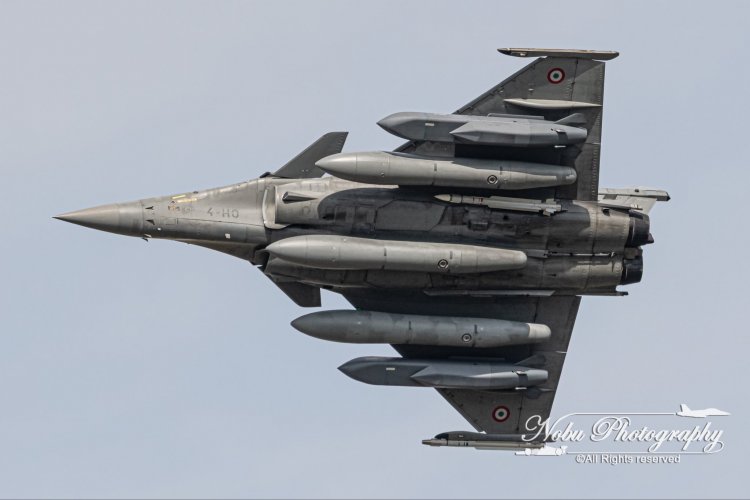
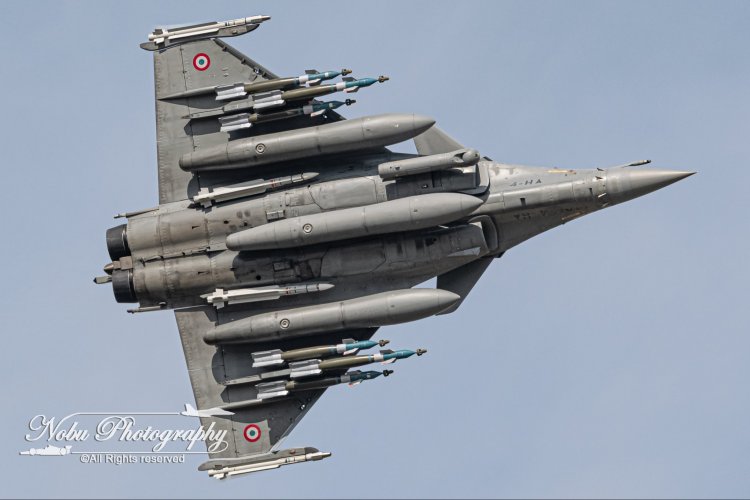
Ofcourse every aircraft's performance is impacted by its mass. Point being, if you have an extraordinarily high payload capacity as is the case on Rafale sticking to otherwise "standard thrust" metrics your aircraft is automatically more compromised in performance. If you look up TWR by dividing thrust through weight you'll figure the Rafale is sitting at the lower end of the performance spectrum. That's just as it is, no bashing just objective pointing out facts. In return the Rafale can lug around a greater payload than other aircraft and more thrust compared to its carrying capability is in this context of greater relevance to the Rafale than to many other aircraft. It's the trade off the Rafale design pays in its current form, though it could be addressed by using more powerful engines.
Ok then, so do you have the original French range requirement to show us? That would prove that "Internal fuel was insufficient" maybe ?
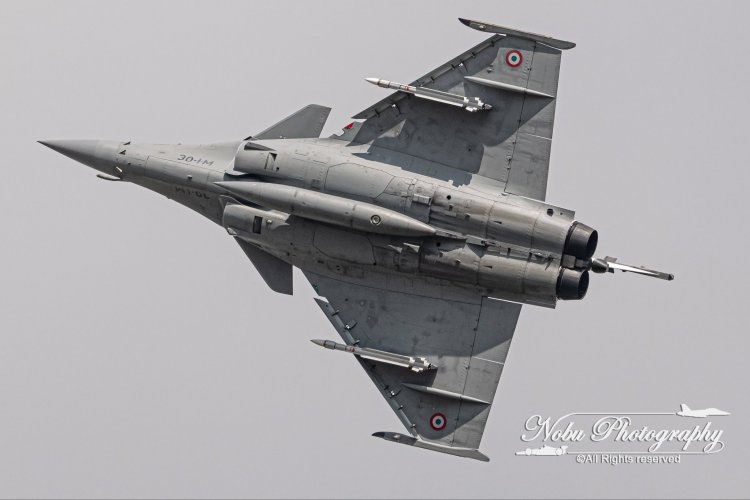
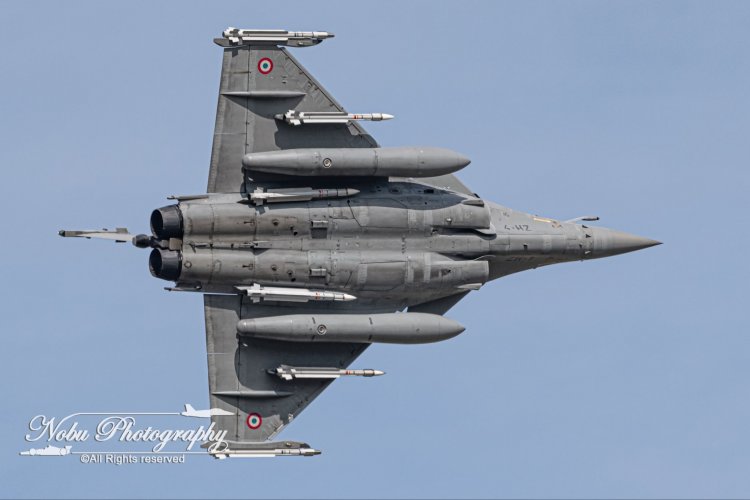
The Rafale's combat radius is stated with 1850 km, which is a quite impressive performance for an aircraft of this size, but to achieve such long range performance large and heavy tanks are needed and these impact the performance of a small and light aircraft more than a large and heavy aircraft carrying the same amount of fuel externally. It's plain logic.
All jet fighters of this class and time need to carry massive fuel tanks to meet their max range.
They do, but typically, if you want long range you build a large aircraft. If you build a small aircraft instead you need a notable payload two allow the ordnance to be delivered over such distances, incl. the massive fuel tanks which hamper the performance of a small and light aircraft more than what's the case with a large aircraft. That's the tradeoff to pay.
To carry all that fuel internally and having the same range, the plane would have had to be like F-111 sized, which was impossible, as I said because France just can't afford a fighter of that size in sufficient number to be meaningful, and moreover would have made it a very poor omnirole fighter as required.
Correct, as explained above.