Rafale - concept of operations

As for "the truth", it's certainly out there... but that "everything [was] already done and agreed upon" before the carrier capability was asked, sorry I doubt. But again you are the one presenting us with that narrative, so if one question it, you are the one to defend it.

This doc which has been shared in this forum already includes a lengthy summary which is assembled from a large number of letters from UK officials involved at different levels (Government, MoD, RAF and industry) at that time.

https://www.raf.mod.uk/what-we-do/o...rofightertyphoonpart1coldwarorigins1983-1990/

It's as official as it can get, you may object it's only the British view point, but it's internal communications and there is no particular reason for them to lie about it. You'll find it confirmed what I said European Staff Target agreed upon by the 5 airforce (not navy) chiefs on 11 October 1984. UK officials complaining about the French side suddenly trying to introduce naval requirements and also pushing for a revision of the EST and restart of the studies for the new EST.

Sorry, can you point out where in your original text is mentioned that the plane was made as compact and light as possible mainly for budgetary reasons ? can't find it.
I've found only mention of exportability.

I covered exportability and carrier suitability. Exportability is linked to costs, small and light typically is cheaper assuming everything else generally remains the same.

what I say is that almost every jet fighter loaded to the full could be said to be "underpowered".

Ofcourse every aircraft's performance is impacted by its mass. Point being, if you have an extraordinarily high payload capacity as is the case on Rafale sticking to otherwise "standard thrust" metrics your aircraft is automatically more compromised in performance. If you look up TWR by dividing thrust through weight you'll figure the Rafale is sitting at the lower end of the performance spectrum. That's just as it is, no bashing just objective pointing out facts. In return the Rafale can lug around a greater payload than other aircraft and more thrust compared to its carrying capability is in this context of greater relevance to the Rafale than to many other aircraft. It's the trade off the Rafale design pays in its current form, though it could be addressed by using more powerful engines.

Ok then, so do you have the original French range requirement to show us? That would prove that "Internal fuel was insufficient" maybe ?

The Rafale's combat radius is stated with 1850 km, which is a quite impressive performance for an aircraft of this size, but to achieve such long range performance large and heavy tanks are needed and these impact the performance of a small and light aircraft more than a large and heavy aircraft carrying the same amount of fuel externally. It's plain logic.

All jet fighters of this class and time need to carry massive fuel tanks to meet their max range.

They do, but typically, if you want long range you build a large aircraft. If you build a small aircraft instead you need a notable payload two allow the ordnance to be delivered over such distances, incl. the massive fuel tanks which hamper the performance of a small and light aircraft more than what's the case with a large aircraft. That's the tradeoff to pay.

To carry all that fuel internally and having the same range, the plane would have had to be like F-111 sized, which was impossible, as I said because France just can't afford a fighter of that size in sufficient number to be meaningful, and moreover would have made it a very poor omnirole fighter as required.

Correct, as explained above.
 
The Rafale's combat radius is stated with 1850 km, which is a quite impressive performance for an aircraft of this size, but to achieve such long range performance large and heavy tanks are needed and these impact the performance of a small and light aircraft more than a large and heavy aircraft carrying the same amount of fuel externally. It's plain logic.
I think we can contest "insufficient" here.
Rafale is broadly optimized for 3 points.
1, alert intercept (clean with aam). Here less fuel, slender airframe match well.
2, a2a. Same, with supersonic tanks (much like typhoon). Somewhat worse result than typhoon, but it's a secondary point after all.
3, long range strike with all the fuel tanks.

I.e. there are two reasonable ways to match together 3 optimization points like this in one airframe. You either build a flanker(which is expensive), or you build a Rafale.
Low internal fuel in this case is feature, as long as you're both sleek and can efficiently(important) take more, without burning most of it just to push added drag.
Which is indeed the beauty of Rafale design. It's absolutely a trade-off, but a well executed one.
 
Feel free to elaborate on where you disagree and why and things can be probably be sorted.
Sure.

This doc which has been shared in this forum already includes a lengthy summary which is assembled from a large number of letters from UK officials involved at different levels (Government, MoD, RAF and industry) at that time.

https://www.raf.mod.uk/what-we-do/o...rofightertyphoonpart1coldwarorigins1983-1990/

It's as official as it can get, you may object it's only the British view point, but it's internal communications and there is no particular reason for them to lie about it. You'll find it confirmed what I said European Staff Target agreed upon by the 5 airforce (not navy) chiefs on 11 October 1984. UK officials complaining about the French side suddenly trying to introduce naval requirements and also pushing for a revision of the EST and restart of the studies for the new EST.
Ok. Still, "torpedizing" was fun... :p
I covered exportability and carrier suitability. Exportability is linked to costs, small and light typically is cheaper assuming everything else generally remains the same.
yes, you covered exportability which is linked to costs, but not the fact that the requirement for a smaller/cheaper plane was mainly driven by the budget of the main buyer.
Ofcourse every aircraft's performance is impacted by its mass. Point being, if you have an extraordinarily high payload capacity as is the case on Rafale sticking to otherwise "standard thrust" metrics your aircraft is automatically more compromised in performance. If you look up TWR by dividing thrust through weight you'll figure the Rafale is sitting at the lower end of the performance spectrum. That's just as it is, no bashing just objective pointing out facts. In return the Rafale can lug around a greater payload than other aircraft and more thrust compared to its carrying capability is in this context of greater relevance to the Rafale than to many other aircraft. It's the trade off the Rafale design pays in its current form, though it could be addressed by using more powerful engines.
Ok
The Rafale's combat radius is stated with 1850 km, which is a quite impressive performance for an aircraft of this size, but to achieve such long range performance large and heavy tanks are needed and these impact the performance of a small and light aircraft more than a large and heavy aircraft carrying the same amount of fuel externally. It's plain logic

They do, but typically, if you want long range you build a large aircraft. If you build a small aircraft instead you need a notable payload two allow the ordnance to be delivered over such distances, incl. the massive fuel tanks which hamper the performance of a small and light aircraft more than what's the case with a large aircraft. That's the tradeoff to pay.


Correct, as explained above.
Well, the problematic word for me here is "insufficient".
Thing is, you can't really have a omnirole fighter, on a restricted budget as stated above, so light, meant to do AA and even long range strikes by putting all the fuel in the airframe.
So stating that internal fuel was insufficient on the Rafale is like stating that the F-111 has insufficient manoeuvrability in dog fight for example.
It's not insufficient, that's by design of the requirements, being small but with good range.
No other ways to achieve the range required than having the capacity to carry large amount of fuel externally.
Moreover, sorry but the internal fuel fraction is quite good for a plane of that size, I would definitively not call it insufficient. It meets the requirements.
 
Last edited:
Carrier compatibility (and a multi-role aircraft) was a requirement by France from the very beginning of the European attempt. It was already part of the national programme that had been started before it, and would be part of the national programme that followed the collapse of the European project. To portray it as a late surprise is ridiculous. At the Turin conference carrier compatibility was discarded indirectly by the English through their push for a much heavier aircraft (and probably in the hope that in the long run it would oblige us to purchase their mediocre VSTOL attack aircraft for naval use), and explicitely by the Italians, we supposed on behalf on the former, with the very dubious argument that a piece of legislation passed by fascist Italy in the 1930s had given to Regia Aeronautica, succeeded by AMI, a monopoly on combat aircraft and that there was no way AMI could acquire a combat aircraft that one day it might be asked to deploy from a carrier the Italian Navy could get in the future (hypotetically).
We knew also from intelligence that by pushing the empty weight to 12 to 15 tonnes, with the corresponding engine, the English were looking at having all partners in the European fighter programme finance the development of an engine that could also be used to re-engine the Tornado, something France was not happy with. Finally there was the major issue of exports. AMD-BA had sold abroad nearly 2000 supersonic combat aircraft in the previous 25 years (III, V, F1, 2000), with the constant political support from the government of France. The English had sold only a few BAC Lightning to (former) client state Saudi Arabia, the Italians nothing outside NATO-subsidized Turkey, and the Germans not only nothing at all, but they were expected on top to be very difficult on granting export licenses (Bundestag being involved, etc.). France brought a large existing customer base and the political will and capability to support foreign sales of the future aircraft. In other terms we would do a large part of the heavy lifting in this area and the others much less or even apply the brakes / Bremsen. France had asked that benefits from export sales would be split in a different way that the sharing of production workload for those aircraft acquired by the partners in the programme, with a kind of premium to the partner country (wichever) that had brought the export contract. It was rejected. This issue and empty mass / naval capability were the main deal-breaker in Turin, and in fact since the Madrid ministerial in 1984. One also has to remember France had been "invited" in Turin to join an agreement already arrived at by the English, the Italians and the Germans, under strong influence of the latter, for a large air-superiority fighter with only secondary air-to-ground capability and powered by a Rolls-Royce - MTU engine, but still using AMD-BA know-how. No wonder we declined, and rightly so.
 
Back to CONOPS
Meteor is not seen by french air force as the main AA missile. It is usefull to destroy AWACS and tanker, but not fighter as the french air to air rule is to positively identify the target before opening the fire, ie a range in the 40 to 50km. A bit more with OSF.
I'm not sure that is a valid wartime CONOPS. Not anymore, anyways.

Perfectly valid in peacetime, though. Peacetime you need to get a positive visual ID to make sure you're not blowing an airliner out of the sky.

Wartime you need to be able to engage without visual ID, on radar/IFF contacts only.


I think the point is not Egypt attacking Israel, because they obviously won't do that, but rather having the capacity to defend themselves against possible Israeli raids, which even though unlikely right now, could eventually happen given Israel’s tendency to carry out raids in neighbouring countries whenever it sees fit.
It is my understanding that Egypt and Israel have an agreement over cross-border raids on terrorists. To include "hot pursuit" type border crossings with radio frequencies to talk to border guards and/or Israeli army/intel units. And it's been used both directions, Egyptian military chasing terrorists into Israel as well as Israeli forces chasing terrorists into Egypt. I am not aware if that is a formal treaty or only an informal agreement between the units on the border.
 
yes, you covered exportability which is linked to costs, but not the fact that the requirement for a smaller/cheaper plane was mainly driven by the budget of the main buyer.

If it's so important for you to get this explicitely added/mentioned, fine. There is no disagreement here. I may have better phrased it as "costs/affordability driven".

Well, the problematic word for me here is "insufficient"..

Ok, essentially you hang up on the word insufficent here that you interpret as "malicous". The context needs to be obeyed, the insufficient is related relative to the range requirement.

So stating that internal fuel was insufficient on the Rafale is like stating that the F-111 has insufficient manoeuvrability in dog fight for example.

The comparison is inappropriate as the F-111 wasn't designed to dogfight, but Rafale was being designed to meet a range requirement that can only be met with an extraordinary external fuel load, as the aircraft is small.

It's not insufficient, that's by design of the requirements, being small but with good range.

True and that's what I'm talking about here since the beginning, requirements, resulting design choices and trade offs required!

There's no critic here, just an explaination of the tradeoff. You'd typically build a larger/heavier aircraft to achieve the range/payload capability of the Rafale. As the Rafale was required to be small and nevertheless offer the range/payload capability of a large and heavy fighter it needs to carry a lot of fuel relative to its internal fuel load and that does hamper performance of a small aircraft more than on a large aircraft that typically reaches such a range performance carrying less fuel externally relative to its mass and internal fuel load. A larger/heavier aircraft would maybe carry only 1.5 times its internal fuel to reach such a distance and it would perform better as the relative weight and drag increase on a larger airframe would be lower compared to a smaller aircraft carrying an identical load. That's a general rule and not Rafale specific. If you wanna punch above your weight class you'll not do this at the same level.
 
Last edited:
If it's so important for you to get this explicitely added/mentioned, fine. There is no disagreement here. I may have better phrased it as "costs/affordability driven".
Agreed, reading your text though, it felt more that the drive for a smaller/cheaper was primarily driven by exportability... that's how I read it.
Ok, essentially you hang up on the word insufficent here that you interpret as "malicous". The context needs to be obeyed, the insufficient is related relative to the range requirement.
:) no I don't interpret it as malicious, but for the meaning of the word, which I find IMHO doesn't fit to the thing.
No big deal.
There was a range requirement, but there was also a weight requirement.

The comparison is inappropriate as the F-111 wasn't designed to dogfight, but Rafale was being designed to meet a range requirement that can only be met with an extraordinary external fuel load, as the aircraft is small.
Some misunderstanding here. I don't compare the Rafale to the F-111, I mean that one can't say a plane is insufficient in one thing when it wasn't designed specifically for it, and in the case of the Rafale, especially designed as a compromise between requirements very opposite to one another.
Rafale wasn't asked to be a specialised long range striker only.
But again, choice of wording, just MHO.
True and that's what I'm talking about here since the beginning, requirements, resulting design choices and trade offs required!

There's no critic here, just an explaination of the tradeoff. You'd typically build a larger/heavier aircraft to achieve the range/payload capability of the Rafale. As the Rafale was required to be small and nevertheless offer the range/payload capability of a large and heavy fighter it needs to carry a lot of fuel relative to its internal fuel load and that does hamper performance of a small aircraft more than on a large aircraft that typically reaches such a range performance carrying less fuel externally relative to its mass and internal fuel load. A larger/heavier aircraft would maybe carry only 1.5 times its internal fuel to reach such a distance and it would perform better as the relative weight and drag increase on a larger airframe would be lower compared to a smaller aircraft carrying an identical load. That's a general rule and not Rafale specific. If you wanna punch above your weight class you'll not do this at the same level.
Agreed. I feel though that it has to be put more in the context of requirements driven by a constrained budget, which weren't for a long range strike fighter only or superiority fighter only, but for a "jack of all trade" that can punch above his weight good enough if needed, with the inevitable trade offs you mention.
In that sense, it's doing quite well, when a more specialised airframe wouldn't have fit the bill. Either because it would have been too expensive, or because it wouldn't have fulfilled all the missions asked by the original buyer, thus would have required it to purchase another type.
 
France has managed to develop a pretty versatile and capable aircraft that can do a lot and that can do a lot well, while fitting within budgetary constraints.
They have. Did better than the Hornet team did.

I'm just not impressed with the idea that you can wait to engage targets until you can positively guarantee ID in wartime scenarios.
 
They have. Did better than the Hornet team did.

I'm just not impressed with the idea that you can wait to engage targets until you can positively guarantee ID in wartime scenarios.

That entirely depends on the RoE! Ask Vietnam veterans, or those participating in Desert Storm... A positive IFF reply is typically not enough! Having a powerful TV sensor onboard for vis id, is a great and also reliable aid in this respect.
 
They have. Did better than the Hornet team did.

I'm just not impressed with the idea that you can wait to engage targets until you can positively guarantee ID in wartime scenarios.
I don't think it's the case tbh. In time of war, positively guaranteed ID before firing a BWR missile would be conditioned to rules of engagement, which in turn would be conditioned case by case by who is the opposing party, are there guaranteed way to ID it, does ID errors could have unwanted consequences , like are there serious risk to civilians jets... stuff like that. That would change from case to case imho.
Now in peace time or even crisis time, rules of engagement are very strict for sure, because any errors can have bad consequences and turn a crisis into something worst, so no surprises guaranteed ID is required before firing anything.
I suppose it's the same for most professional enough air forces.
 
Last edited:
They have. Did better than the Hornet team did.
The Hornet mid-size turbofans were the key. France tried to afford a Phantom, then a Tornado, then a F-15, each two or three times in a row - to no avail. Mirage IVC (1958) AFVG, Mirage G4 / G8, ACF, 4000 - no way, always too expensive even at the height of the "30 glorieuses" (before the 1973 oil shock).
Compared to the 4000 the Rafale shrunk from F-15 to F-18 size, thanks to the M88 being much more compact than the M53. And even with that, Rafale had to replace the full and entire AdA combat jet fleet PLUS arm-twisting the Aeronavale, which wanted... Hornets, the irony.
I once counted all the fighter jets and subvariants of 1993 AdA & Aéronavale - the Rafale, give or take, replaced 16 of them.
 
right, so this thread has become less about Rafale operations and more about comparisons with the F-35, F-15, Typhoon, J-10, and what not, as well as the random political comment that has nothing to do with Rafale operations.
 
right, so this thread has become less about Rafale operations and more about comparisons with the F-35, F-15, Typhoon, J-10, and what not, as well as the random political comment that has nothing to do with Rafale operations.
I've found it quite interesting so far, and it does talk about Rafale operations, even if inevitably other stuff mixes in.
What you call political comments are concerning how one Rafale buyer operate Rafale due to his political/strategic situation.
Plus, exchanges have been correct, well behaved and informative, for me at least.
Sorry if you don't like what you read. I feel it would be a pity if this thread is closed though.
 
Last edited:
I've found it quite interesting so far, and it does talk about Rafale operations, even if inevitably other stuff mixes in.
What you call political comments are concerning how one Rafale buyer operate Rafale due to his political/strategic situation.
Sorry if you don't like what you read. I feel it would be a pity if this thread is closed though
some of the political comments I am referring to have now been deleted but had nothing to do with Rafale.
most of the comments here are more guided by nationalistic sentiment rather than genuine interest in Rafale operations.
 
how about we get back to talking about strictly rafale operations.
My patience in this thread is wearing out with all the off topic discussion.
 
They have. Did better than the Hornet team did.

I'm just not impressed with the idea that you can wait to engage targets until you can positively guarantee ID in wartime scenarios.
Late CW expectations of fratricide over Fulda were outrageous (dozens of %).
But overall, Rafale visibly invests more in shorter range, passive combat than any other aircraft of it's generation.
In some way, it's a direct antithesis of "UK" Eurofighter, despite being rather close to it in Genesis.

A shame novi avion(or something like this) wasn't born anywhere. We could've had something akin to a 4th generation (mostly) day fighter, with just enough all weather capability to not be a compromise.
 
Last edited:
Late CW expectations of fratricide over Fulda were outrageous (dozens of %).
But overall, Rafale visibly invests more in shorter range, passive combat than any other aircraft of it's generation.
In some way, it's a direct antithesis of "UK" Eurofighter, despite being rather close to it in Genesis.
I wonder if that as to do that one of the original AA weapon is the MICA IR version, which I believe is quite unique.
Being IR, but quite long range for an IR AA missile. This is a passive detection weapon .
A shame novi avion(or something like this) wasn't born anywhere. We could've had something akin to a 4th generation (mostly) day fighter, with just enough all weather capability to not be a compromise.
Wouldn't that be the Gripen basically ?
 
Last edited:
I wonder if that as to do that one of the original AA weapon is the MICA IR version, which I believe is quite unique.
Being IR, but quite long range for an IR AA missile. This is a passive detection weapon .
Probably. Overall MICA effective ranges and effective FC range of OSF are indeed well matched.
Pirate(and possibly Chinese IRSTs) doesn't seem to be directly matching weapons in range or anything, and just tries to detect as far as possible.
OLS series were(are?) only meant to match R-73 WVR.
 
I always thought the rbe2 was sort of like the B-1 pesa radar. Basically it was meant more to provide continuous situational awareness while terrain following.

I guess the original plan was a self supporting penetration craft and AESA later on made it very attractive for the mirage like air defense role.


There are some interesting similarities between the Rafale and F-2. Both jets seem to have been designed with a primary air to ground (or sea) role, both have fairly novel for the time electronic scanning radars for situational awareness during this mission, both are highly agile to deal with enemy aircraft, and in terms of iews they are both quite good at detecting enemy emissions for targeting.
 
urofighter actually carries substantially more weapons in its heaviest practical configurations(with 4 or even 6 2000lb bombs).
with what kind of range ?
very small one, as in such a config no external tank.
 
with what kind of range ?
very small one, as in such a config no external tank.
As we found up there, it was in fact 1000s.
But either 1 tank for 6, or 2/3 tanks for 4.
Brits bombed Yemen like this.
 
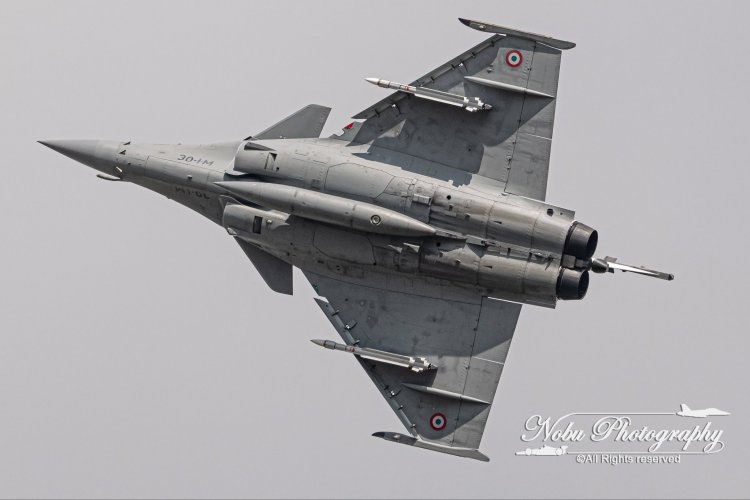
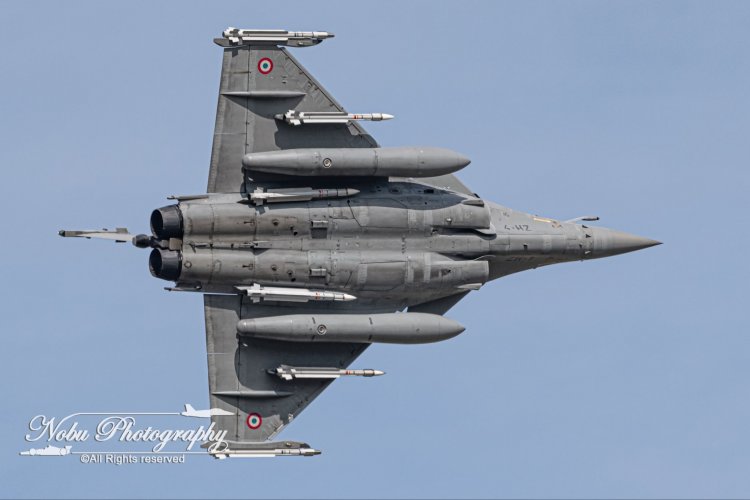
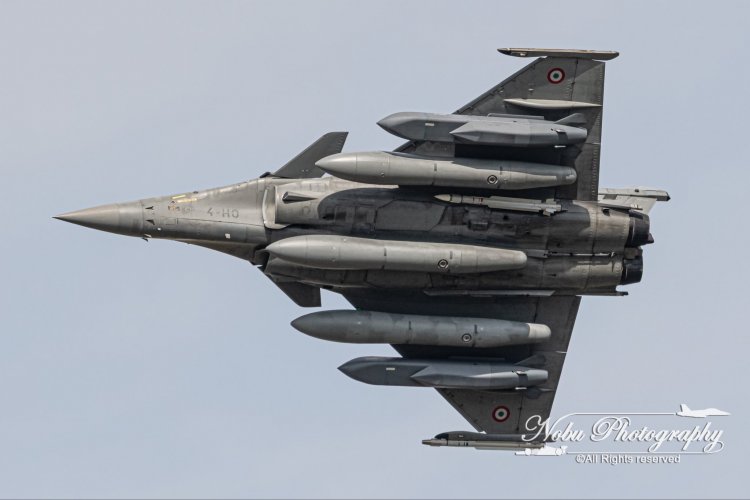
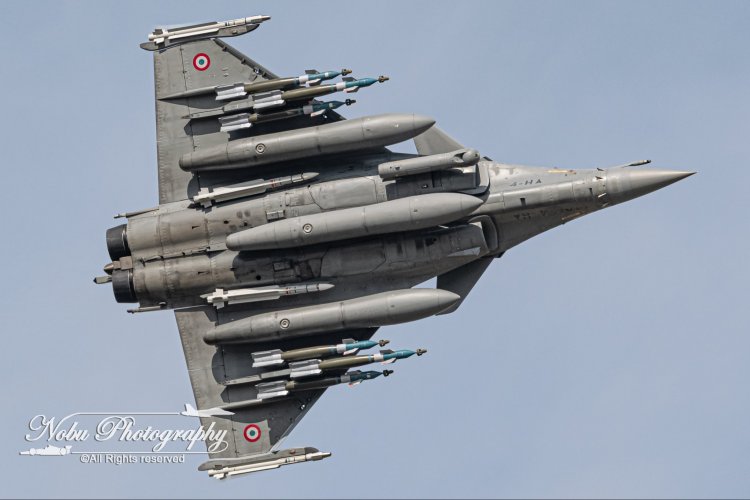
An excellent set of different Rafale configurations. Only lacks ASuW and bunker buster one.
 

Attachments

  • HSQBTgOa4AAY-D7.jpeg
    HSQBTgOa4AAY-D7.jpeg
    194.1 KB · Views: 33
  • HSQBTgYa0AE_Uo-.jpeg
    HSQBTgYa0AE_Uo-.jpeg
    164.8 KB · Views: 29
  • HSQBTgLbgAAsM04.jpeg
    HSQBTgLbgAAsM04.jpeg
    157.2 KB · Views: 32
  • HSQBTgWawAACXNh.jpeg
    HSQBTgWawAACXNh.jpeg
    211.6 KB · Views: 34
SCALP-EG, GBU-24A and P1000+AASM kit are all weapons with penetration capability to strike burried and hardened targets available to Rafale.
And Exocet too. I meant, not on these photos specifically.
Those are ofca - intercept - penetrative/long range strike - stand in/long range strike/self-escort.
Nearly a full set. Nearly.
 

Similar threads

Back
Top Bottom