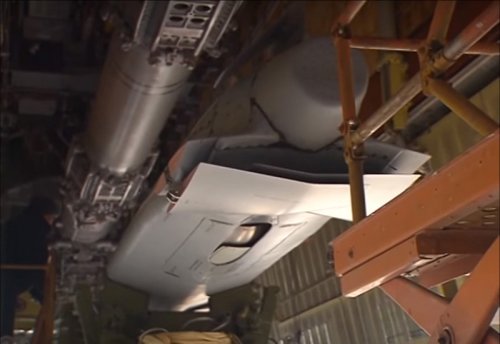
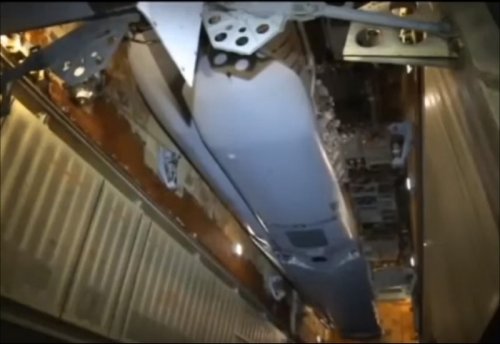
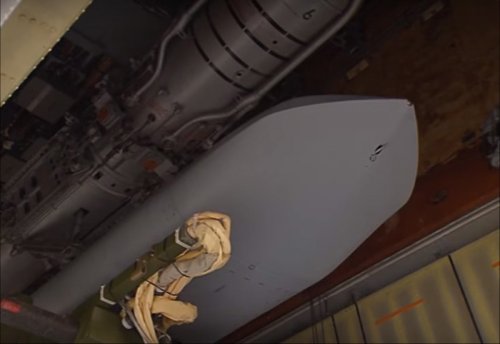
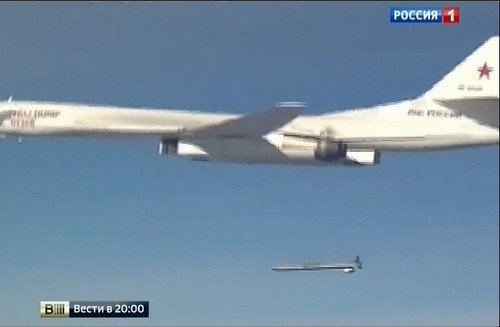
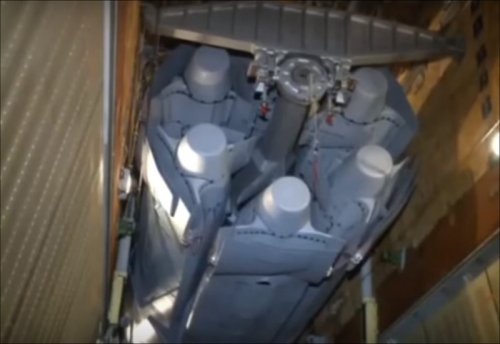
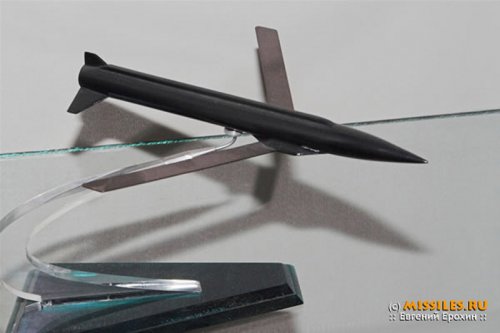
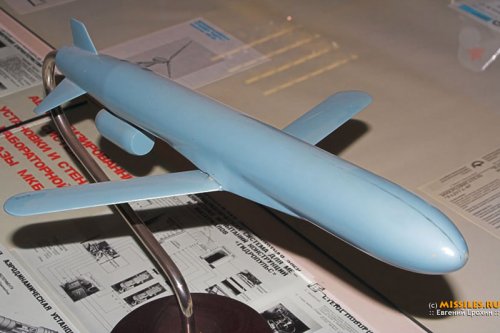
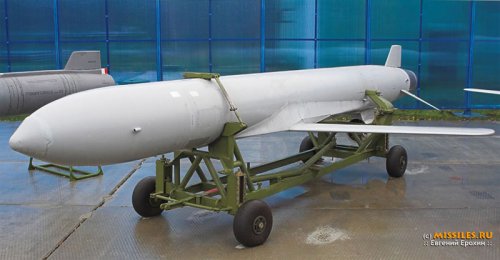
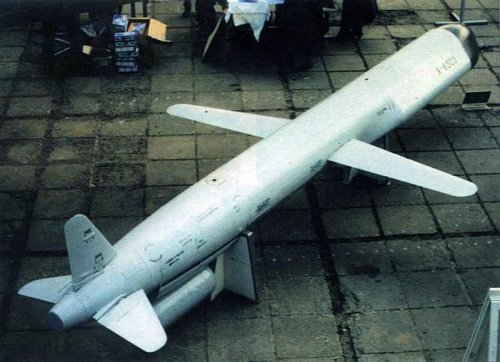
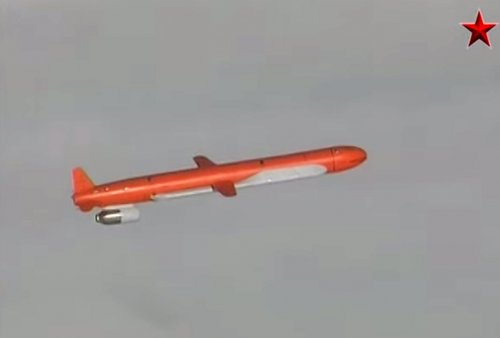
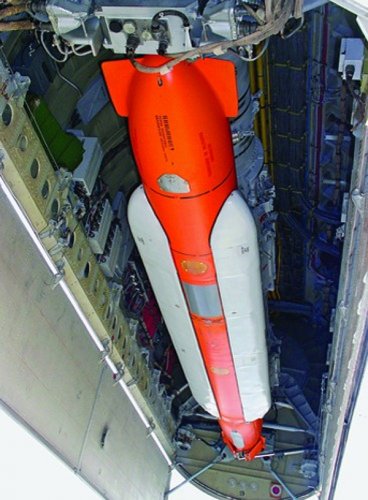
If the missile drops to low altitude during the latter part of its flight - then the fan is masked from "look-down shoot-down" systems by the body of the missile. So, it may not be a problem if you're willing to give up some of the missile's operational range in return for an extended low-altitude approach.

kaiserd said:
Its somewhat ominous because at first sight it could appear more to be a demonstration of capacity to the US and NATO/ Europe rather than a particularly cost-effective or effect-justifiable weapon selection.

I certainly agree that videos like this a part of propaganda and technological posturing.

So, propaganda certainly
Operational tests maybe...

I don't think their deployment to the Syrian theatre should be interpreted as a military build up focussed on potential direct conflict with NATO though. So, I don't find it ominous, rather it is everyday posturing and run of the mill stupidity...
 
Arian said:
CiTrus90 said:
I'm NOT claiming the Kh-101 makes use of such a feature, but i would NOT dismiss a similar possibilty where a device like the one described by Flateric is used to screen just the engine.

We have pictures of the engine of the KH-101, as a bunch of them have fallen unexploded. There's no radar blocker there or other type of screen. Just regular 36MT cruise missile engine.
kh_101.jpg

Interesting fan blades there. Makes one wonder why they're (the missiles) not exploding though. Also note the airframe is metallic rather than composite.
 
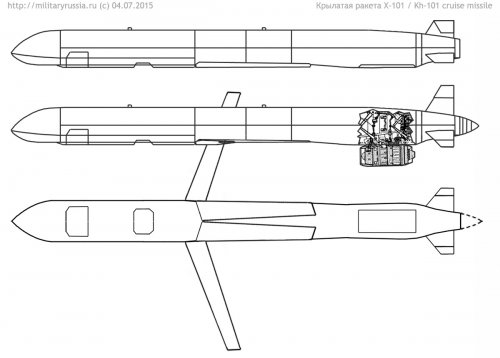
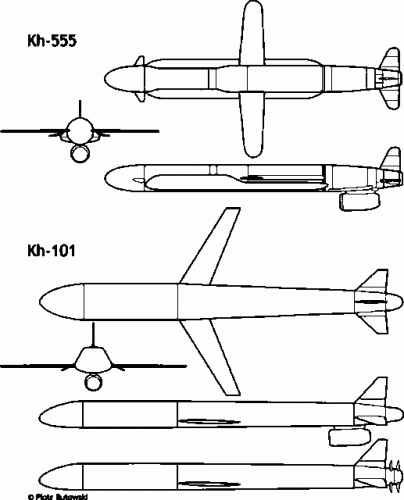
Drawing of Kh-101

http://militaryrussia.ru/blog/topic-440.html
 

Attachments

  • Kh-101.jpg
    Kh-101.jpg
    94.8 KB · Views: 332
sferrin said:
Interesting fan blades there. Makes one wonder why they're (the missiles) not exploding though. Also note the airframe is metallic rather than composite.

The fan blades are chipped. They are actually straight just as in a normal 36MT. KH-101 seems to be just a KH-555 internals in a new skin.

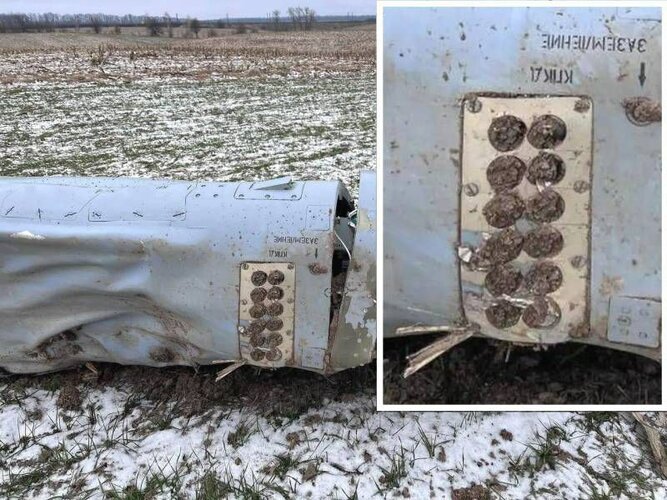
They don't seem to be all that accurate. They're falling in the general vicinity of some targets (this one fell nearby some airbase), but only "near". Seems several so far are in this shape, and at least 2 have been caught on camera exploding in mid air (not due to ground fire).
 
Screenshots show the drawing is pretty accurate. Rear end is pretty much Kh-55, including the engine installation. Wings are moved to the bottom of the fuselage instead of popping out from the centreline and are slightly swept. Fuselage is more triangular in cross-section All the changes seem primarily aimed at increasing range - it looks like AGM-86, not AGM-129. RCS may be reduced compared to Kh-55SM but I doubt its particularly low. Its clearly not a clean sheet design more of a major Kh-55 derivative. No sign of terminal homing.
 

Attachments

  • 0_b9161_4f6b09a1_XL.jpg
    0_b9161_4f6b09a1_XL.jpg
    77.6 KB · Views: 137
  • 0_b9160_26298fe6_XL.jpg
    0_b9160_26298fe6_XL.jpg
    76.4 KB · Views: 112
  • 0_b915f_289d9431_XL.jpg
    0_b915f_289d9431_XL.jpg
    64.4 KB · Views: 116
  • 0_b91af_8d2d69de_L.jpg
    0_b91af_8d2d69de_L.jpg
    20.1 KB · Views: 315
  • 0_b9162_8430a4a4_XL.jpg
    0_b9162_8430a4a4_XL.jpg
    73.5 KB · Views: 330
Funnily enough, the wings on Kh-101 recall the original Kh-55 design for airborne use before it was redesigned to fit torpedo tubes.
 

Attachments

  • First Kh-55 design.jpg
    First Kh-55 design.jpg
    56.7 KB · Views: 120
  • Second Kh-55 design model.jpg
    Second Kh-55 design model.jpg
    94.5 KB · Views: 124
  • Prototype Kh-55.jpg
    Prototype Kh-55.jpg
    91.9 KB · Views: 110
And comparing to Kh-55SM and Kh-65SE is informative. The one with canards may be Kh-555.
 

Attachments

  • Kh-65SE.jpg
    Kh-65SE.jpg
    80.1 KB · Views: 114
  • Kh-55SM.jpg
    Kh-55SM.jpg
    42.3 KB · Views: 114
  • Kh-55sm with canards.jpg
    Kh-55sm with canards.jpg
    145.9 KB · Views: 119
  • Kh-55sm in by.jpg
    Kh-55sm in by.jpg
    83 KB · Views: 130
As aside, it is clear that Russia is demonstrating it's new capabilities in the Syrian campaign. While not as good as US, they are something to be considered.

For the crashed missile, perhaps it was a cluster warhead? In that case, it would disperse the bomblets then crash itself. That could explain the intact shape.
 
DrRansom said:
As aside, it is clear that Russia is demonstrating it's new capabilities in the Syrian campaign. While not as good as US, they are something to be considered.

For the crashed missile, perhaps it was a cluster warhead? In that case, it would disperse the bomblets then crash itself. That could explain the intact shape.

It's possible that it could be cluster warheads. But so far all the videos of explosions have shown unitary warheads. It's doubtful a cluster warhead version exists. It's also doubtful that the delivery method of cluster munitions would be for the missile to jettison its rear portion. More likely panels open to release bomblets over the area. But looking at what appears to be the front end of one, there doesn't appear to be any panels to open to release cluster munitions.

kh_101_2.jpg


Here's video of a crashed one
https://youtu.be/ScWgGYWb8r4
 
Grey Havoc said:
PaulMM (Overscan) said:
No sign of terminal homing.

Dedicated submunition bus, do you think?

Further to this and similar comments above considering the cost and probably relative rarity of these weapons it appears very unlikely to be used for submunitions.
We are talking about an expensive strategic-level weapon more equivalent to Tomahawks, AGM-86 or AGM-129, not a JSOW, JASSM or JASSM-ER or European Storm Shadow/ Apache.
Experience with the Storm Shadow/ Apache is quite illuminating with many customers of the Apache submunitions version quickly losing interest and cutting back orders as they decided it was a pricey way to deliver submunitions (with Apache being a lot smaller and cheaper than the Russian weapons we are talking about).
 
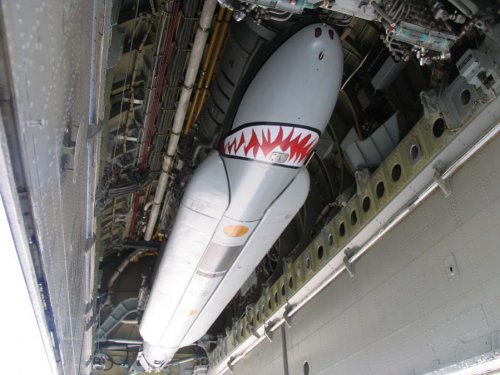
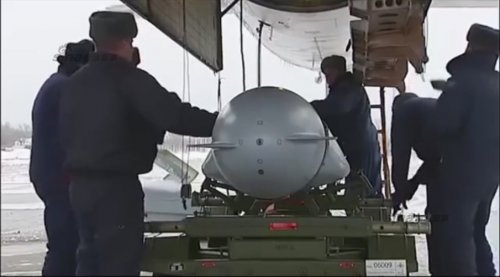
Does anyone know what exact type of cruise missile the one with these strange canards is (a Kh-555 ??) and why they are arranged that way ?
 
Yes, Kh-555. The canard on the left is actually sitting slightly lower, and slightly behind (i think) than the one on the right.

From what i have heard Kh-101 has two warheads, at once i think. One cluster and one normal. Either way, i don't see how if there are pieces of them left that necessarily means they are "unexploded".
 
flanker said:
Yes, Kh-555. The canard on the left is actually sitting slightly lower, and slightly behind (i think) than the one on the right.

From what i have heard Kh-101 has two warheads, at once i think. One cluster and one normal. Either way, i don't see how if there are pieces of them left that necessarily means they are "unexploded".

If a warhead had exploded the airframe would be fragmented. It seems to be in decent shape even if all it did was crash landed.
 
flanker said:
Yes, Kh-555. The canard on the left is actually sitting slightly lower, and slightly behind (i think) than the one on the right.


Thanks ... but why that unusual configuration ?
 

Attachments

  • Ch-555 strange canards.jpg
    Ch-555 strange canards.jpg
    59 KB · Views: 478
Sferrin, the shape of the warhead could conceivably leave quite a bit of the missile behind (especially if it was dispersing submunitions). The missile is fairly long and a bursting charge wouldn't be likely to render it unrecognisable. Of course, if both the nose and the tail are in the same spot then it was a system failure.

The export price of a 9K114 is $80,000, while the AGM-114 has gardually increased to 100-150,000 and the Brimstone is about 300,000. The 9K121 was once quoted to be closer to $30,000! So, if it is indeed 'inferior' it may also be a bit cheaper to make than the European StormShadow or Apache!
 
Deino said:
flanker said:
Yes, Kh-555. The canard on the left is actually sitting slightly lower, and slightly behind (i think) than the one on the right.


Thanks ... but why that unusual configuration ?

They might be intended to move the centre of gravity to destabilise the missile. Canards were added to the R-33 for similar purpose, in combination with a new control system to compensate for the instability, to increase range.
 
Avimimus said:
Sferrin, the shape of the warhead could conceivably leave quite a bit of the missile behind (especially if it was dispersing submunitions). The missile is fairly long and a bursting charge wouldn't be likely to render it unrecognisable. Of course, if both the nose and the tail are in the same spot then it was a system failure.

Yes there will always be some pieces left behind. But these seem like pretty large intact section of the missile to have been near a warhead explosion. There's no evidence of any submunition use so far, judging from the videos of exploding ones.

Here you can see the remains of one which suffered a flight malfunction and blew up in midair (fuel exploded judging from the video of it going down, rather than the warhead):
https://www.youtube.com/watch?v=YO8aTpp6Jeg
 
Avimimus said:
Sferrin, the shape of the warhead could conceivably leave quite a bit of the missile behind (especially if it was dispersing submunitions). The missile is fairly long and a bursting charge wouldn't be likely to render it unrecognisable. Of course, if both the nose and the tail are in the same spot then it was a system failure.

Was looking for the Tomahawk test where they did an airburst over a Vigilante in a revetment. Normally you can't download a Tomahawk clip without seeing it. Now, for the life of me, I can't find it. Basically, about all that makes it out of the fireball even somewhat intact is the engine.


edit: Here we go:

 
Last edited:
sferrin said:
Was looking for the Tomahawk test where they did an airburst over a Vigilante in a revetment. Normally you can't download a Tomahawk clip without seeing it. Now, for the life of me, I can't find it. Basically, about all that makes it out of the fireball even somewhat intact is the engine.

Yes the exploded KH-101s don't leave much behind other than this:
kh_101_engine.jpg


Similar wrecks for Tomahawk are also unexploded ones, like this in Serbia and another in Syria. But exploding ones don't leave much behind besides mangled engines.

tomahawk_cruise_missile_shot_down_serbia.jpg

1568479_main.jpg


I think this is what you would expect to see if a unitary warhead didn't explode. The front end would be carried off by the warhead for quite some distance if it bounced off the ground. A front end carrying cluster munitions would be much lighter and probably remain with the rest of the body.

Here's another (or 2) unexploded one which fell today in Iran (although may be KH-555 instead). Similar pattern: rear end separated from front end which is probably off in the distance.
iran_3.jpg

iran.jpg


This looks shredded. Maybe fan blade failure?
iran_4.jpg
 
This is Kh-101 judging by the fuselage cross section and underfuselage wing panels. Interesting materials visible in the cross-section.
 

Attachments

  • iran_3.jpg
    iran_3.jpg
    105.5 KB · Views: 178
Thanks guys. It is really nice to be able to put out a question and come away better informed!
 
flanker said:
Yeah, i am guessing the Iran one is Kh-101 judging by the shapes and the camo.

And no-one is concerned that Iran here receives the latest Russian ALCM-technology delivered on a silver-tablet ?

By the way ... another small image of the Kh-555.
 

Attachments

  • RuAF Ch-555 small.jpg
    RuAF Ch-555 small.jpg
    4 KB · Views: 353
Iran isn't reverse-engineering a Kh-101 from fragments, even large ones. The US has left a bunch of Tomahawks in their territory as well over the years and there hasn't been an Iranian copy yet (propaganda statements aside) .
 
Circling back to the original design as discussed a page ago - what is the advantage of having the entire engine extend downward in a separate pod vice having a ventral air intake and leaving it internalized? I assume it's easier/cheaper to pod mount the entire outside the airframe in fixed design, and a lot of Iranian missiles seem to use that geometery (US UTAP-22 UAV is another example). But once you go to the trouble of internalizing the engine and using up the missile body's volume anyway, why not duck the intake to the engine rather than move the engine out of the missile? I'm sure there's some additional loss of volume for having an air duct, but compared to having the moving parts of shifting the engine outside the airframe, isn't worth just keeping it internal?
 
It is obvious that the absence of a channel has a beneficial effect on the operation of the engine and reduces aerodynamic drag
 
It is obvious that the absence of a channel has a beneficial effect on the operation of the engine and reduces aerodynamic drag
Yes, but it would seem to be incompatible with a lowered RCS. Which ought to matter more for it.
 
As someone else pointed out, if it flies at low altitude, the engine might be hidden from the airframe in the forward arc. But it seems to me if you wanted to have the missile stow properly and wanted superior airflow, perhaps some kind of static mount with the engine half out of the airframe and a semi external scoop would be the better compromise - Storm Shadow seems to go this route, with a noticeable bulge in the after part of the airframe aft the scoop.
 
Last edited:
The podded engine, as noted, does away with duct losses at the cost of increased RCS. It also frees up internal airframe volume for more fuel, especially if it is fixed (otherwise the only gain is the space taken up by the duct). But then the greater bulk is a disadvantage for internal carriage or torpedo tube or VLS launch.
 
Are we sure that isn’t some other type of decoy? Doesn’t seem bright enough for a flare. Chaff or a disposable jammer? Some kind of disposable IR emitter that doesn’t use combustion?
 
How bright a flare is doesn't really matter, what we see with our eyes is not what a seeker head sees.


at that link they talk about 'low luminance' as a benefit

View: https://www.youtube.com/watch?v=BItsf-sW8KI


In this video at 1:05 you can see a C-17 deploying flares with very little visual signature but you can bet they work for the wavelength/band that they are designed for, and remember that is a C-17 not a cruise missile.

Sorry in advance about the links
 
Why is it ominous? Because it is overkill for the air-defences available to opponents? IMHO, NATO isn't immune to using low threat combat environments to gain operational experience with new weapon types, nor is NATO immune to using up outdated weapon stocks against unsuitable targets. So, either explanation would work.

The Kh-55 is also one of the few precision weapons readily available.
My thinking was a little bit of "operational experience" and a little bit of "precision weapon available"


Circling back to the original design as discussed a page ago - what is the advantage of having the entire engine extend downward in a separate pod vice having a ventral air intake and leaving it internalized? I assume it's easier/cheaper to pod mount the entire outside the airframe in fixed design, and a lot of Iranian missiles seem to use that geometery (US UTAP-22 UAV is another example). But once you go to the trouble of internalizing the engine and using up the missile body's volume anyway, why not duck the intake to the engine rather than move the engine out of the missile? I'm sure there's some additional loss of volume for having an air duct, but compared to having the moving parts of shifting the engine outside the airframe, isn't worth just keeping it internal?
There's quite a bit of volume taken up by an inlet duct. especially if you want stealth ducting. Call it engine diameter and length, if not twice that much volume.
 
Back
Top Bottom