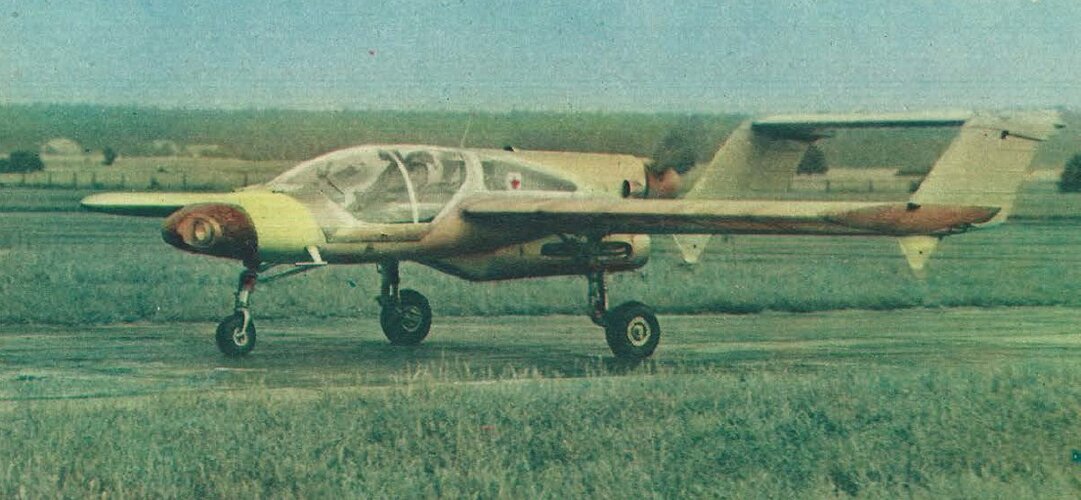
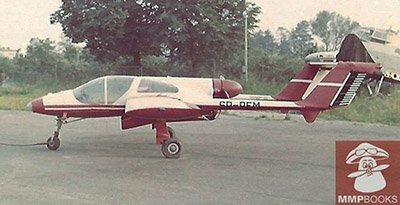
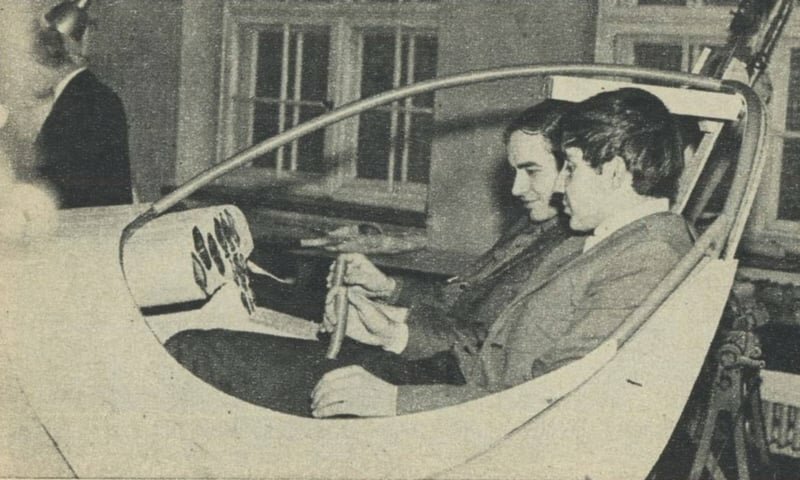
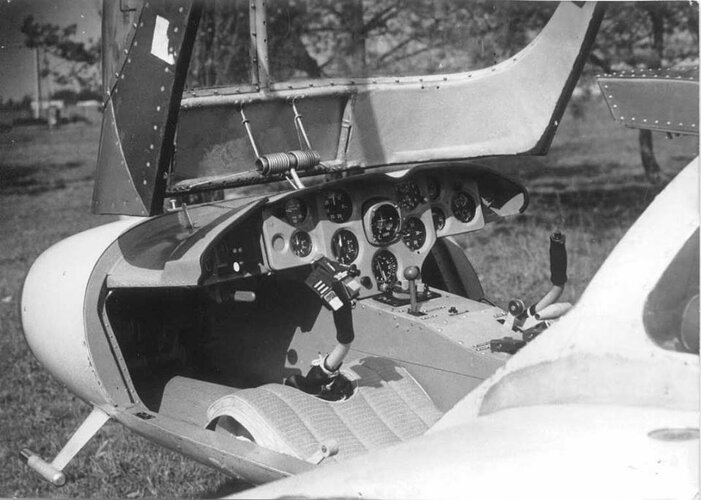
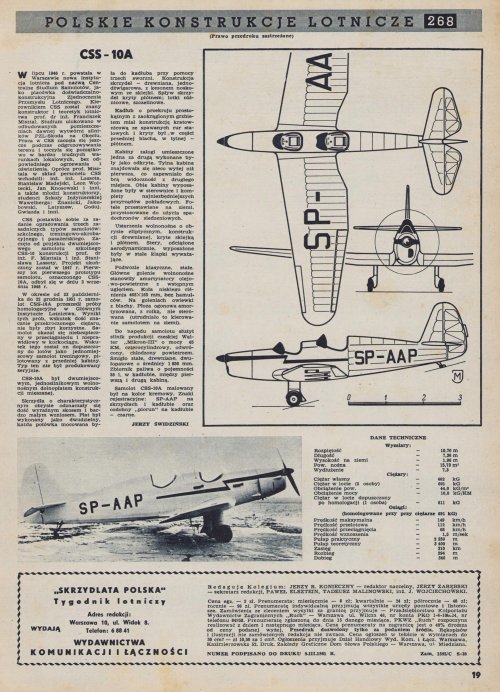
It should be noted that the ITL M.48/ITL-48 was not to be a jet fighter. Its planned engine was the Jumo 211, many of which (with propellers) had been taken over by Polish authorities after the war.

Piotr
 
But where there any plans to make jet fighters/trainers which where to be armed?
 
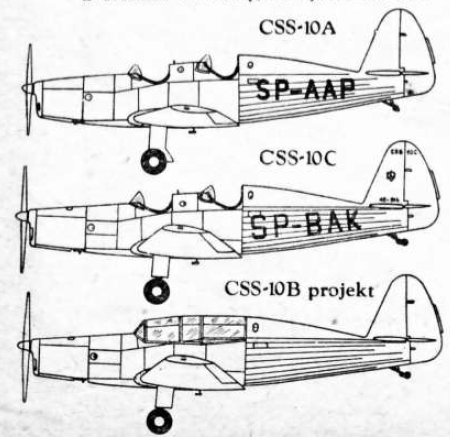
From L+K 6/1971.

the CSS-10B Project.
 

Attachments

  • 1   6-1971.png
    1 6-1971.png
    158.6 KB · Views: 129
Hi,

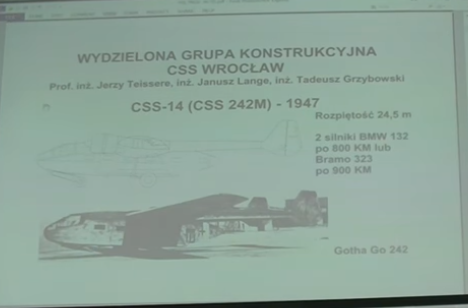
the CSS-14 was production of Gotha Go.242M

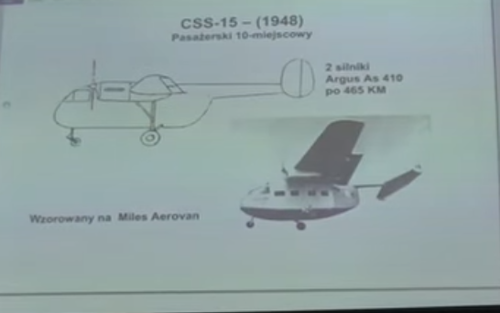
Indeed the CSS-14 was a probable designation of a proposed Go-242 conversion (the conversion has been also referred to as the CSS-242M). After WW2 there were quite a few Go-242 gliders at several airfields in Poland abandoned by the Luftwaffe. So the idea came up to rebuild them into someting along the lines of the Go-244 using captured German engines. In 1948 a project of such a rebuilt was prepared. The aicrcrat was to have BMW-132 engines.
As for the CSS-15 here you've got a scan of the original drawing of the project (with the BMW-132 engines):
https://www.secretprojects.co.uk/threads/polish-projects-since-1945.818/#post-159635
There was also another version of the CSS-15 with the Bramo-323 Fafnir engines.

Piotr
 
M-9 Ziemowit* trainer project of 1959 (construction team: Stanislaw Jachyra, Adam Borowski, Marek Augustynik) from PZL-Mielec. Span 8.15m, length: 9.2m. It was to be powered by the TO-1 jet engine (by Tadeusz Mirski) that was to develop 400kp thrust.


* Ziemowit is a Polish male first name, also known as a name of a legendary ruler of ancient Poland.

Is that a single-face centrifugal compressor?
 
M-9 Ziemowit* trainer project of 1959 (construction team: Stanislaw Jachyra, Adam Borowski, Marek Augustynik) from PZL-Mielec. Span 8.15m, length: 9.2m. It was to be powered by the TO-1 jet engine (by Tadeusz Mirski) that was to develop 400kp thrust.


* Ziemowit is a Polish male first name, also known as a name of a legendary ruler of ancient Poland.

Is that a single-face centrifugal compressor?
Indeed the TO-1 had a single-stage centrifugal compressor.
 
Hi,

Fire-Fighting Airplane design.

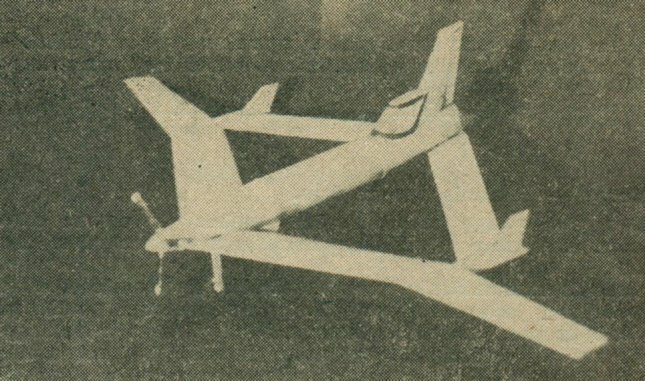
Dr. Eng. In the mid-1980s, Stanisław Danilecki conducted research on the closed wing system. At that time, he developed concept designs for a fire-fighting aircraft with a minimum lifting capacity of not less than 3500 kg and an ultralight sports aircraft in such a system.
The aircraft was designed in a variant of the closed wing system, which was characterized by the fact that the horizontal tail is formed by the surfaces outside from the point of contact of both wings, connected in one line. The point of contact of both pairs of airfoils was in 2/3 of their span. The position of the control surfaces was as follows: elevator on the inside of the aft pair of airfoils, ailerons on the outside parts behind the contact point, flaps on the inside part of the front pair of airfoils, rudder on the tailplane.

The analysis of the advantages of the closed wing system for an aircraft intended for firefighting conducted by the author of the project showed that it was possible to obtain approx. 10% higher climb speed, the weight of the load may increase by 50% and the speed range will increase by approx. 10% compared to the design classic.

http://www.samolotypolskie.pl/samoloty/14851/126/Danilecki-samolot-przeciwpozarowy2
 

Attachments

  • Danilecki_samolot_przeciwpoarowy.jpg
    Danilecki_samolot_przeciwpoarowy.jpg
    75.2 KB · Views: 109
Hi,

Design of an amateur sports plane. Poland.

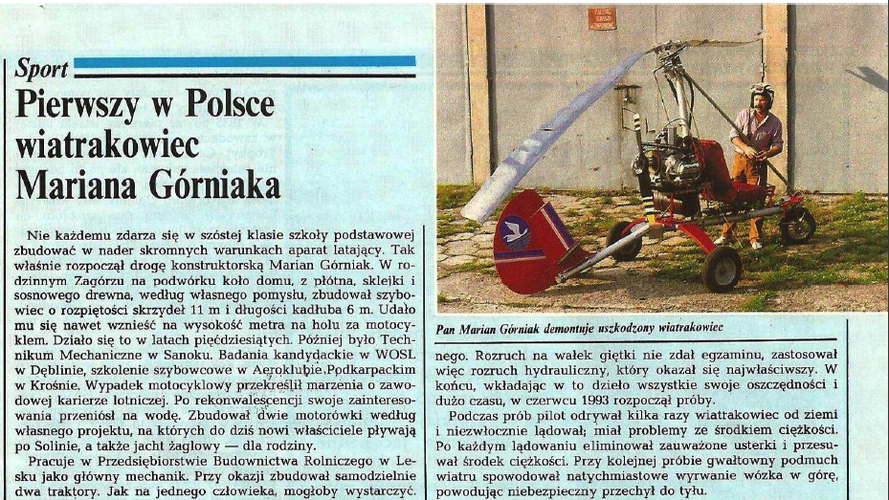
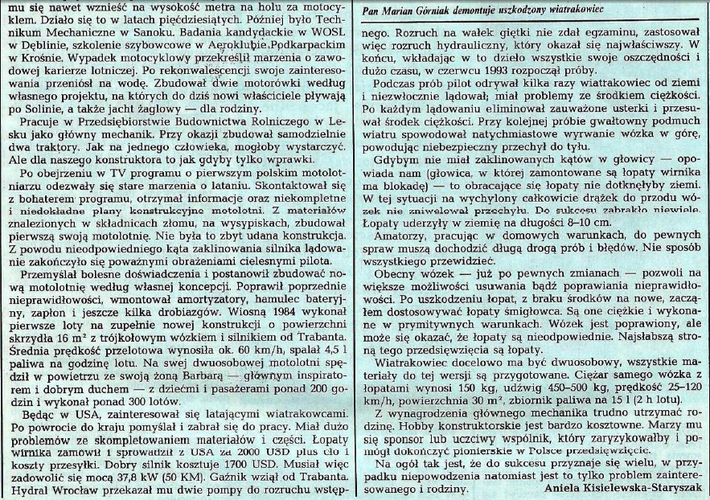
In 1987 Marian Górniak, an amateur constructor, had a ready plan of a light aircraft, the construction of which would take about a month. The constructor was looking for a sponsor who would finance its construction. Probably, due to financial reasons, this project was not implemented.

http://www.samolotypolskie.pl/samoloty/3438/126/Gorniak-samolot-sportowy2
 
The publication Lotnictwo (Aviation) published an appeal in issue No.35 (16-31 March 1994) to raise donations for both Marian Górniak and Jarosław Janowski. It was dubbed the Fundusz Uparci Lotnicy - The Stubborn Aviators Fund :D

I assume for the project in question for Janowski was the J-7 Fregata, an unbuilt two-seat development of the J-6 motor-sailplane.
 
Thank you dear Apophenia,

and here is the article.
 

Attachments

  • 1.png
    1.png
    1.2 MB · Views: 77
  • 2.png
    2.png
    1.3 MB · Views: 100

Attachments

  • 132006845_2651477898403361_3097746430867539279_o.jpg
    132006845_2651477898403361_3097746430867539279_o.jpg
    151.6 KB · Views: 92
  • pprune4jun20a_a462789903f2c7890e25420f747eca5d37501430.jpg
    pprune4jun20a_a462789903f2c7890e25420f747eca5d37501430.jpg
    22.8 KB · Views: 85
  • 79289475_2195325430567741_289369212500049920_n.jpg
    79289475_2195325430567741_289369212500049920_n.jpg
    67.9 KB · Views: 78
  • 1451339_601570409903842_676869543_n.jpg
    1451339_601570409903842_676869543_n.jpg
    75.4 KB · Views: 73
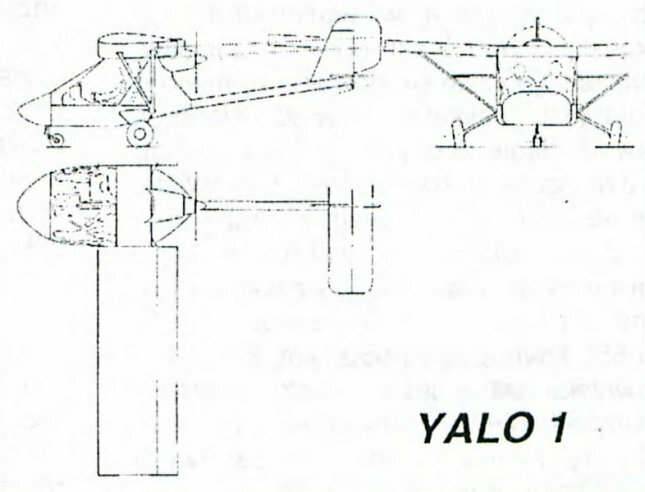
Ultralight sports plane project. Poland.

In 1994, the Yalo Floating and Flying Equipment Plant carried out design work on
the Yalo 1 two-seater ultralight sports plane.The design of the plane was probably
not implemented. No further information available.

http://www.samolotypolskie.pl/samoloty/14533/126/Yalo-1
 

Attachments

  • 1.jpg
    1.jpg
    35.1 KB · Views: 65
From this book.
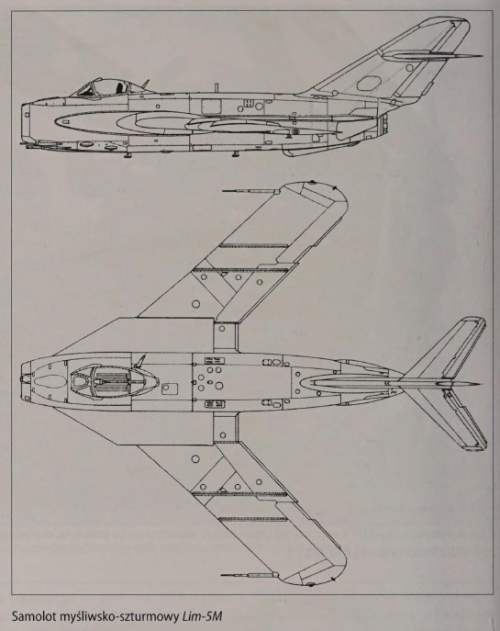
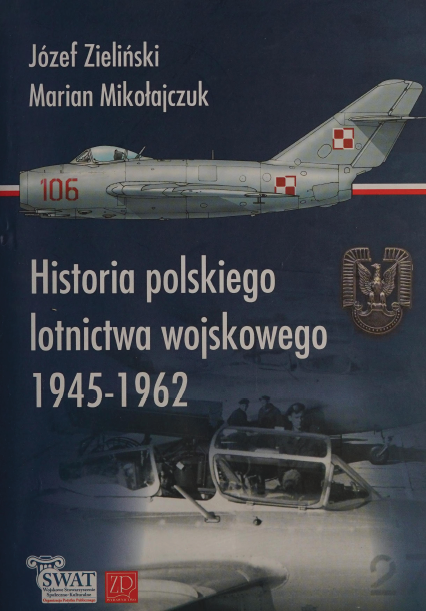
This is a Mig-17 that had in fact conform fuel tanks around the base of the wing, and have heavy duty landing undercarriage with doubleed wheels. It was suppose to be polish premier attacker. Engeniers in Poland considered making a "traditional nose with moving intakes to the sides, but MiG did not allow as this would be a change to the structure of the planes.
 
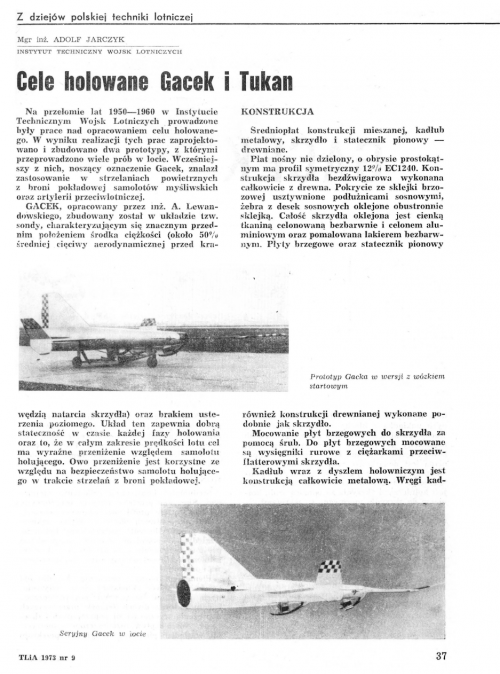
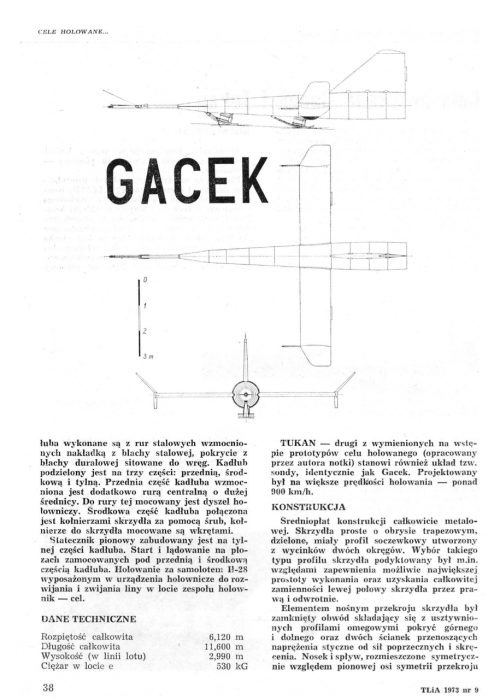
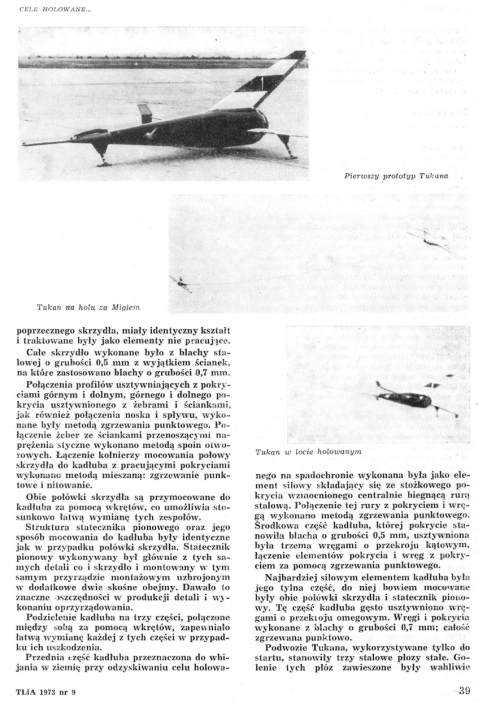
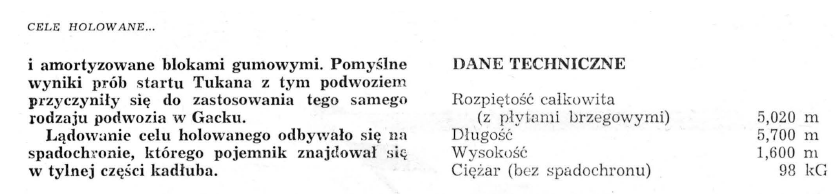
From Technika Lotnicza 1973,

what was this Gacek/Tukan ?.
 

Attachments

  • 5.png
    5.png
    763.9 KB · Views: 48
  • 6.png
    6.png
    576.3 KB · Views: 43
  • 7.png
    7.png
    799.6 KB · Views: 39
  • 8.png
    8.png
    87.6 KB · Views: 33
Hi,

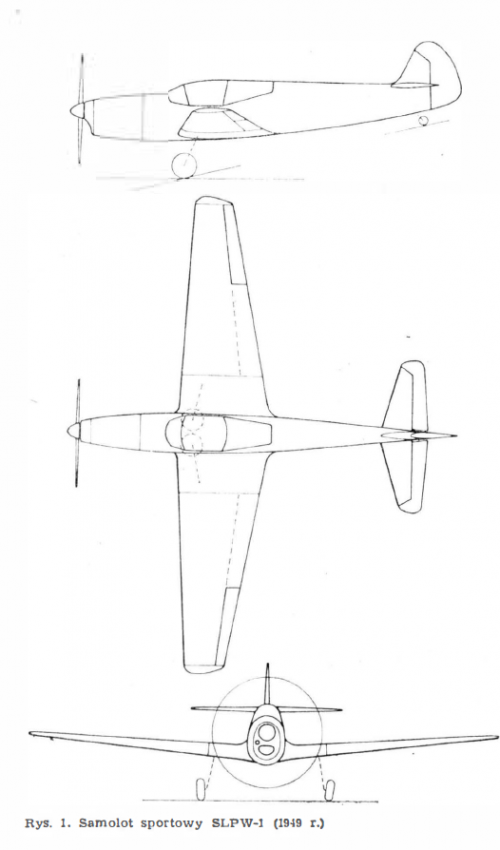
in 1949,the Section Aviation Mechanics Wheels Students Warsaw University of Technology designed SLPW-1,a two-seat low-wing sporting aircraft Project,powered by one 90 hp Cirrus Minor engine.

http://www.samolotypolskie.pl/samoloty/1888/126/SLPW-1

From Technika Lotnicza 1982,

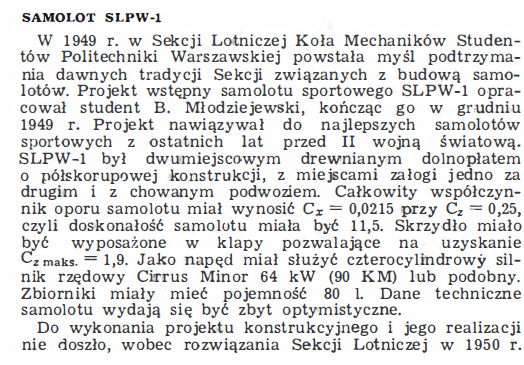
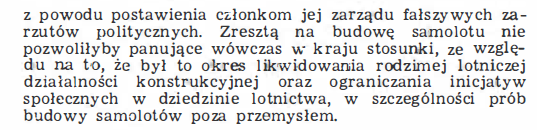
In 1949, the Aviation Section of the Warsaw University of Technology Student Mechanical Association conceived the idea of maintaining the Section's long-standing traditions of aircraft construction.

The initial design of the SLPW-1 sports aircraft was developed by student B. Młodziejewski, who completed it in December 1949. The design was inspired by the best sports aircraft from the last years before World War II.

The SLPW-1 was a two-seat, wooden, low-wing monocoque monoplane with a semi-monocoque design, with one crew seat behind the other and a retractable landing gear. The aircraft's total drag coefficient was to be Cr = 0.0215 at Cz = 0.25, giving an aircraft glide ratio of 11.5. The wing was to be equipped with flaps to achieve Cz max = 1.9. Power was to be provided by a four-cylinder Cirrus Minor 64 kW (90 hp) inline engine or similar. The tanks were to have a capacity of 80 liters. The aircraft's technical specifications appear to be overly optimistic.

The design and implementation of the project were never completed due to the dissolution of the Aviation Section in 1950 due to false political charges brought against its board members. Moreover, the conditions prevailing in the country at the time would not have allowed the aircraft to be built, as it was a period of liquidation of domestic aircraft design activities and the restriction of social initiatives in the field of aviation, particularly attempts to build aircraft outside the industry.
 

Attachments

  • 1.png
    1.png
    138 KB · Views: 22
  • 2.png
    2.png
    51 KB · Views: 30
  • 3.png
    3.png
    102.7 KB · Views: 44
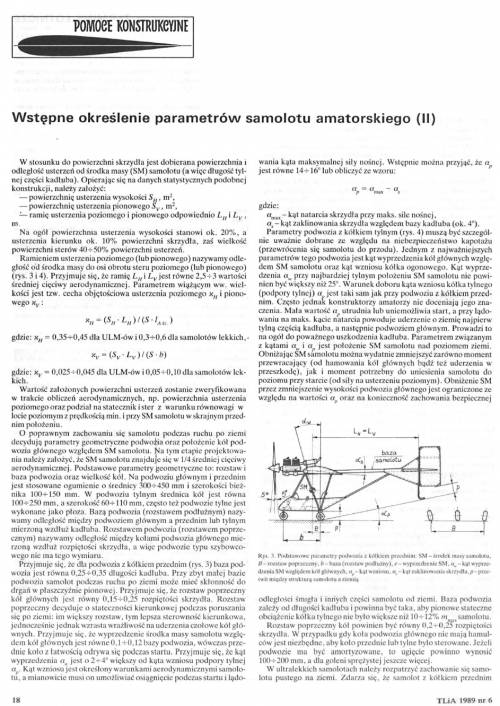
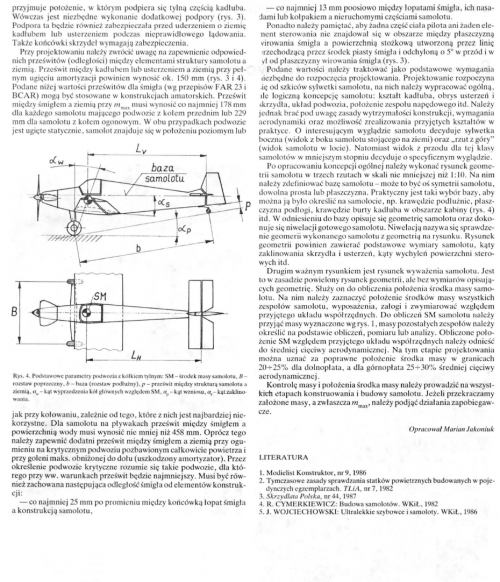
From Technika Lotnicza 1989.
 

Attachments

  • 3.png
    3.png
    961.4 KB · Views: 30
  • 4.png
    4.png
    793.4 KB · Views: 43
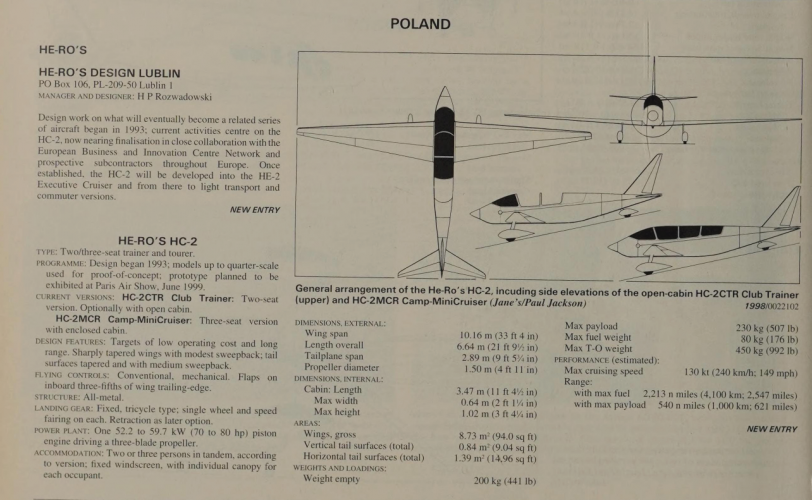
From JAWA 1998/99,

the HE-RO'S Design Lublin HC-2
 

Attachments

  • 2.png
    2.png
    1 MB · Views: 26

Similar threads

Back
Top Bottom