Translation please. I can't get Google translating the page. And no hablo russiano.
Translation
Search the site...
Home
Science
The 2025 Demidov Prize was awarded to the developer of Zircon rocket fuel.
In total, more than 20 highly effective solid rocket fuel formulations have been developed under the leadership of Academician Yuri Milekhin.
TASS website editors
February 6, 2:32 PM
Yuri Milekhin
© Gavriil Grigorov/ TASS
YEKATERINBURG, February 6. /TASS/. The 2025 Demidov Prizes were awarded on Friday in Yekaterinburg to three RAS academicians: Yuri Milekhin, General Designer and First Deputy General Director of JSC Soyuz, for his contribution to the creation of high-energy substances for special purposes; Academician Alexander Latyshev for his outstanding contribution to the physics of conductors; and Academician Alexander Rumyantsev for outstanding scientific research in pediatric oncology, hematology, and immunology, a TASS correspondent reports.
"The Scientific Council has determined the 2025 Demidov Prize laureates. In the Physics category, the winner is Alexander Latyshev for his outstanding contribution to semiconductor physics. In the Chemistry category, the winner is Yuri Milekhin for his outstanding contribution to the creation of high-energy substances for special purposes. In the field of medicine, the winner is Alexander Rumyantsev for outstanding scientific research in pediatric oncology, hematology, and immunology," said Academician Valery Charushin at the awards ceremony, which coincided with Russian Science Day.
In turn, Sverdlovsk Region Governor Denis Pasler noted that scientists are currently solving large-scale state problems, ensuring sovereignty in key sectors of the country's economy. He emphasized the importance of consolidating efforts with businesses, educational institutions, and research centers to achieve progress.
About the laureates
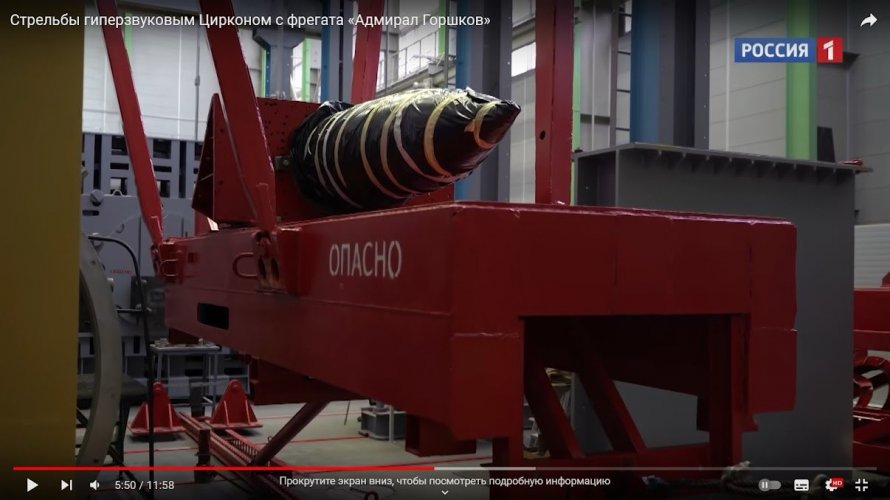
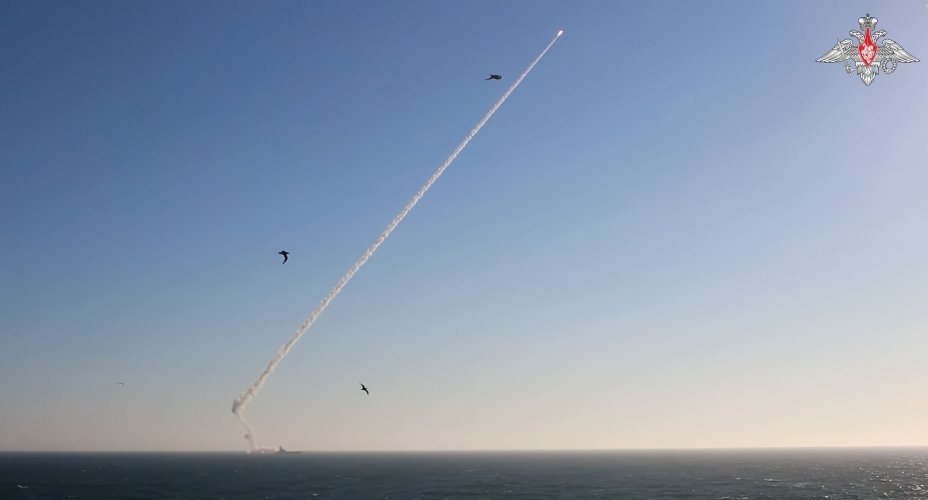
Academician Yuri Milekhin is the General Designer and First Deputy General Director of JSC Soyuz. In 2023, he was awarded the title Hero of Labor. One of his most significant achievements is the development of a unique fuel for the latest hypersonic missiles, the Zircon. Under his leadership, more than 20 highly effective solid rocket propellant formulas, over 50 solid propellant rocket motors (SRBMs) for various missile systems, and much more have been developed.
Academician Alexander Latyshev, Director of the A.V. Rzhanov Institute of Semiconductor Physics, Siberian Branch of the Russian Academy of Sciences, was awarded the Physics Prize for outstanding contributions to semiconductor physics. Latyshev's scientific findings have paved the way for the development of a new generation of semiconductor devices, such as nanotransistors, single-electron transistors, and quantum photodetectors. These devices are used in microelectronics, including computers, mobile devices, sensors, and even medical equipment.
Alexander Rumyantsev, President of the Dmitry Rogachev National Medical Research Center for Pediatric Hematology, Oncology, and Immunology and a laureate in the "Medicine" category, is the founder of Russia's pediatric hematology and oncology service, which treats, among other things, acute leukemia and brain tumors in children. Under Rumyantsev's leadership, the country's first cord blood stem cell transplants were performed in children with primary immunodeficiencies, hematological diseases, and oncological diseases.
About the award
The Demidov Prize is one of the oldest and most prestigious scientific awards in Russia. Its history begins in 1831, when Ural industrialist and philanthropist Pavel Nikolaevich Demidov established the award "to promote the advancement of science, literature, and industry" in the country.
The prize was discontinued in 1865 and revived in 1993. The initiative was initiated by the Ural Branch of the Russian Academy of Sciences, then headed by Academician Gennady Mesyats, regional authorities, entrepreneurs, and representatives of the Demidov Foundation. The first ceremony of the new stage took place on November 29, 1993, in Yekaterinburg.
The award ceremony for this modern prize is held in Yekaterinburg, typically in February during Russian Science Day. Laureates receive a gold medal in a malachite box and a cash prize.