NPOMash 3M22 Zircon / Tsirkon (SS-N-33)

The P-700 Granit was initially developed as sub-launched missile. For the surface ships, the P-500 Bazalt (direct decendant of P-35 missile) was developed. But due to technological progress, P-700 Granit came out significantly more advanced than P-500 Bazalt. So the idea was born to install Granit on newest warships. Which required water-filled launch tubes; P-700 Granit was intended for underwater launch, and adapting it for "dry" launch would require too many changes in missile and launcher both.
Soviet engineering in a nutshell: "Perfection is achieved not when nothing more can be added, but rather when nothing more can be removed." (emphasis mine)

IIRC that quote is from Shpagin, as told to Kalashnikov.
 
I would be interested to know what it’s reported speeds were.
 
The low usage rate seems a little surprising. I would expect either no usage to preserve operational characteristics or more commitment to maximize effect. Using it occasionally seems counterintuitive.
 
The low usage rate seems a little surprising. I would expect either no usage to preserve operational characteristics or more commitment to maximize effect. Using it occasionally seems counterintuitive.
Its called "combat testing". The system is new, and it make sence to use it in limited numbers so any hidden flaws could be revealed and rectified.
 
Its called "combat testing". The system is new, and it make sence to use it in limited numbers so any hidden flaws could be revealed and rectified.

Kinda no reason not to combat test anything you can produce in a full war though? No reason to just trickle those in, as far as I can tell.
 
Kinda no reason not to combat test anything you can produce in a full war though? No reason to just trickle those in, as far as I can tell.
They aren't free, you know. Expending expensive hypersonic missiles on something that could be as well knocked out by dirt-cheap "Geran" drones is just not practical outside of testing.
 
They aren't free, you know. Expending expensive hypersonic missiles on something that could be as well knocked out by dirt-cheap "Geran" drones is just not practical outside of testing.

Fair, but the usage is so low, I kinda question the utility. I cannot imagine these are significantly more expensive than an Iskander.
 
Interesting conclusion based on a news that target was hit.
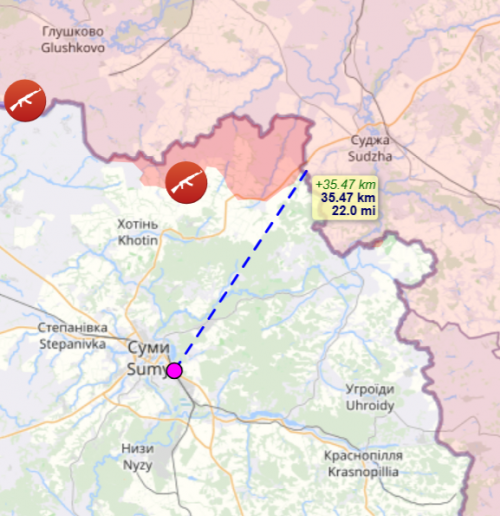
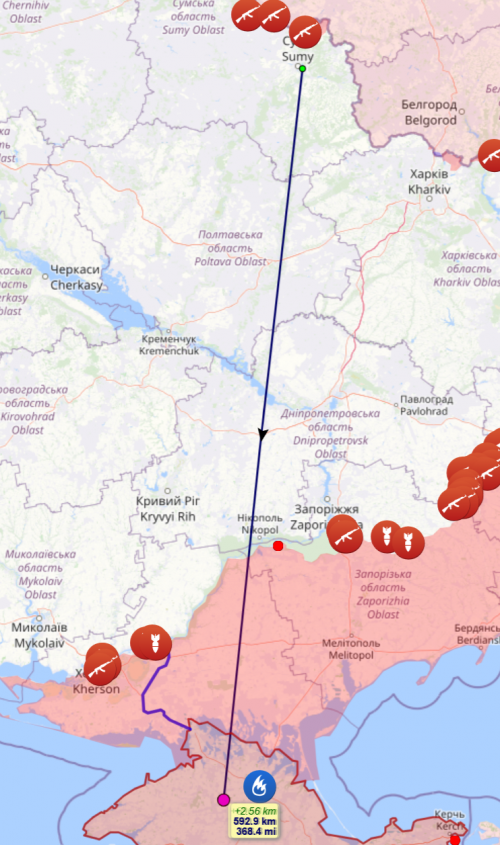
That's only one version of events. Why would they even use a Mach 10 missile to hit an energy facility (i.e. stationary target) that close to the border. And even if we accept a time-critical argument, it's an active front, do they not have artillery and MLRS that can hit it at that range? That's got to be just as quick as firing a Zircon all the way from Crimea surely? It looks like the missile went wildly of course based on these facts.

1755847929342.png 1755848820185.png
 
Last edited:
Fair, but the usage is so low, I kinda question the utility. I cannot imagine these are significantly more expensive than an Iskander.
They certainly are significantly more expensive. Iskander is a rocket-propelled ballistic missile. Zirkon is a scramjet-powered air-breathing hypersonic cruise missile, that maintain thrust during the whole flight. Zircon is order of magnitude more complex.
 
They certainly are significantly more expensive. Iskander is a rocket-propelled ballistic missile. Zirkon is a scramjet-powered air-breathing hypersonic cruise missile, that maintain thrust during the whole flight. Zircon is order of magnitude more complex.

To be fair, I am not sure any open source has confirmed it’s a scramjet.

And a dozen examples is hardly a big stretch for any economy, let alone a wartime one. That is basically the entire AGM-183 or HACM program.
 
That's only one version of events. Why would they even use a Mach 10 missile to hit an energy facility (i.e. stationary target) that close to the border. And even if we accept a time-critical argument, it's an active front, do they not have artillery and MLRS that can hit it at that range? That's got to be just as quick as firing a Zircon all the way from Crimea surely? It looks like the missile went wildly of course based on these facts.

View attachment 782327View attachment 782328
I have only heard Zircons being sea launched not land launched based on that map.......It's a Ukrainian source your referencing isn't it?
 
Fair, but the usage is so low, I kinda question the utility. I cannot imagine these are significantly more expensive than an Iskander.
They are produced in limited no. Mainly for anti ship role.
The warhead they carry most likely pales in size compared to iskander or kinzhal for land attack.

It will be surprising if they are not significantly more expensive than iskander.
 
Zirkon is a scramjet-powered air-breathing hypersonic cruise missile
I started an interesting discussion about this in the past.
I still stay by that its most likely purely rocketpowered/non-airbreathing missile IMO.
 
Last edited:
I have only heard Zircons being sea launched not land launched based on that map.......It's a Ukrainian source your referencing isn't it?
According to analysts, the Zircon launch was carried out from occupied Crimea, most likely from the underground complex Object-100 near the village of Rezervne. It is from there that Russia has carried out all previous launches of this type of missile.

However, the reasoning of my previous point still stands unaffected even if it was fired from the Black Sea.
 
Scramjet thrust sucks, compared to any turbojet or rocket. It took 30 years of research and flight testing (from the late 1960's to the late 1990's) to extract some thrust out of a scramjet. Supersonic combustion is no picnic !
 
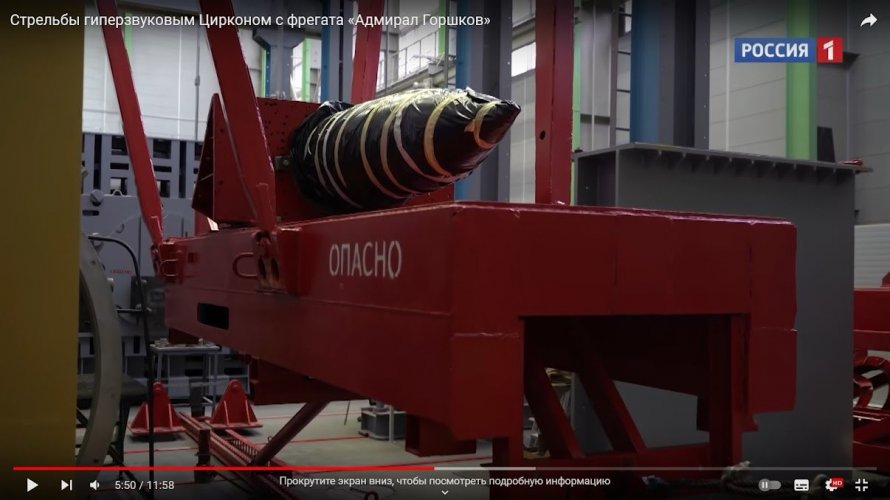
Found this pic in discord.
Allegedly zircon's nose.
Though can't find the video on youtube.
 

Attachments

  • image0.jpg
    image0.jpg
    99.6 KB · Views: 151
Though can't find the video on youtube.


2. The missile does not reach the Kremlin’s claimed Mach 9.

The real figures are still formidable:

  • Cruise altitude speed: around Mach 5.5
  • Peak speed during descent: up to Mach 7.5
  • Terminal phase near the ground: slows to around Mach 4.5
Its high terminal speed is what makes it so dangerous.

On approach, the missile travels faster than most Russian cruise missiles ever achieve:

  • Soviet-era Kh-22: Mach 2–2.4
  • Kinzhal (terminal estimate): Mach 2.5–4
  • Zircon (terminal): Mach 4.5


This leaves air defenses very little reaction time.

4. Actual range appears closer to 700 km.
Time to target: When launched from Crimea, a Zircon could reach any major Ukrainian city within minutes. Approximate flight times:

  • From Sevastopol (Object 100) to Kyiv: ~7 minutes
  • From Cape Tarkhankut (Bastion launcher): ~6 minutes


Warhead: 300–400 kg.

Length: ~9.5 meters.

Estimated speed: Defence Express expert Ivan Kyrychevskyi estimates 5,000–8,000 km/h depending on flight phase.
Stationary ground systems

Chief among them: Object 100, a Soviet-era underground coastal missile complex built into cliffs between Cape Aya and Balaklava in Crimea. Originally designed for the 3M44 Progress anti-ship missile, it has reportedly been modernized by Russia since 2014.

Most Ukrainian experts believe that Russia’s Zircon strikes on Ukraine — including the latest attack on Sumy — are launched either from modified Bastion mobile units or from the restored Object 100 installation.

In 2024, Ukrainian Defense Intelligence chief Kyrylo Budanov confirmed that “Russia has the technical capability to launch Zircons from temporarily occupied Crimea,” noting the presence of at least several coastal missile systems adapted for Zircon use.
 
Last edited:
Translation please. I can't get Google translating the page. And no hablo russiano.
Translation


Search the site...
Home
Science
The 2025 Demidov Prize was awarded to the developer of Zircon rocket fuel.

In total, more than 20 highly effective solid rocket fuel formulations have been developed under the leadership of Academician Yuri Milekhin.
TASS website editors
February 6, 2:32 PM

Yuri Milekhin

© Gavriil Grigorov/ TASS
YEKATERINBURG, February 6. /TASS/. The 2025 Demidov Prizes were awarded on Friday in Yekaterinburg to three RAS academicians: Yuri Milekhin, General Designer and First Deputy General Director of JSC Soyuz, for his contribution to the creation of high-energy substances for special purposes; Academician Alexander Latyshev for his outstanding contribution to the physics of conductors; and Academician Alexander Rumyantsev for outstanding scientific research in pediatric oncology, hematology, and immunology, a TASS correspondent reports.

"The Scientific Council has determined the 2025 Demidov Prize laureates. In the Physics category, the winner is Alexander Latyshev for his outstanding contribution to semiconductor physics. In the Chemistry category, the winner is Yuri Milekhin for his outstanding contribution to the creation of high-energy substances for special purposes. In the field of medicine, the winner is Alexander Rumyantsev for outstanding scientific research in pediatric oncology, hematology, and immunology," said Academician Valery Charushin at the awards ceremony, which coincided with Russian Science Day.

In turn, Sverdlovsk Region Governor Denis Pasler noted that scientists are currently solving large-scale state problems, ensuring sovereignty in key sectors of the country's economy. He emphasized the importance of consolidating efforts with businesses, educational institutions, and research centers to achieve progress.

About the laureates
Academician Yuri Milekhin is the General Designer and First Deputy General Director of JSC Soyuz. In 2023, he was awarded the title Hero of Labor. One of his most significant achievements is the development of a unique fuel for the latest hypersonic missiles, the Zircon. Under his leadership, more than 20 highly effective solid rocket propellant formulas, over 50 solid propellant rocket motors (SRBMs) for various missile systems, and much more have been developed.

Academician Alexander Latyshev, Director of the A.V. Rzhanov Institute of Semiconductor Physics, Siberian Branch of the Russian Academy of Sciences, was awarded the Physics Prize for outstanding contributions to semiconductor physics. Latyshev's scientific findings have paved the way for the development of a new generation of semiconductor devices, such as nanotransistors, single-electron transistors, and quantum photodetectors. These devices are used in microelectronics, including computers, mobile devices, sensors, and even medical equipment.

Alexander Rumyantsev, President of the Dmitry Rogachev National Medical Research Center for Pediatric Hematology, Oncology, and Immunology and a laureate in the "Medicine" category, is the founder of Russia's pediatric hematology and oncology service, which treats, among other things, acute leukemia and brain tumors in children. Under Rumyantsev's leadership, the country's first cord blood stem cell transplants were performed in children with primary immunodeficiencies, hematological diseases, and oncological diseases.

About the award
The Demidov Prize is one of the oldest and most prestigious scientific awards in Russia. Its history begins in 1831, when Ural industrialist and philanthropist Pavel Nikolaevich Demidov established the award "to promote the advancement of science, literature, and industry" in the country.

The prize was discontinued in 1865 and revived in 1993. The initiative was initiated by the Ural Branch of the Russian Academy of Sciences, then headed by Academician Gennady Mesyats, regional authorities, entrepreneurs, and representatives of the Demidov Foundation. The first ceremony of the new stage took place on November 29, 1993, in Yekaterinburg.

The award ceremony for this modern prize is held in Yekaterinburg, typically in February during Russian Science Day. Laureates receive a gold medal in a malachite box and a cash prize.

 
I made an account just to comment on this subject, not a ballistic missile expert by any means but it isn't very likely that a ground launched ballistic missile of it's size would have the range it does, especially if it doesn't follow a purely ballistic trajectory.

OTOH, it's relatively low cost and frequent usage (several are launched in every major strike package, with up to 8 used in a night) does imply a simpler (ie pure rocket) means of propulsion, as does it's relatively quick (by Russian standards at least) development cycle.

So i'm wondering, could a sort of booster/sustainer set up provide it with similar performance to a scramjet design, but with significantly lower costs and complexity?
 
Given the somewhat reduced speed specifications alleged by the Ukrainians (obviously take that with a huge amount of salt) I think a ramjet sustainer might be on option, and of course Russia has a weal of experience with large ramjets and integral boosters, the latter I believe they invented.
 
News brought to you directly by the Ghost of Kiev. It cannot get more rigorous :cool:

I find the Mach 9 claims equally dubious. I have no read to believe either claim, but I also have no evidence of Russian scramjet existence, let alone dual mode ramjet/scramjet motors which Zircon would have to employ if it used a scramjet.

The simplest solution is that Russia used a ramjet, which they decades of experience with. Until I see evidence of a scramjet, that is the bet I would place on in polymarket.
 
Last edited:

Similar threads

Back
Top Bottom