Northrop Grumman "RQ-180"

The video I saw of the alleged RA-01 was of poor quality but seemed to show a spinning propeller on the aft end.

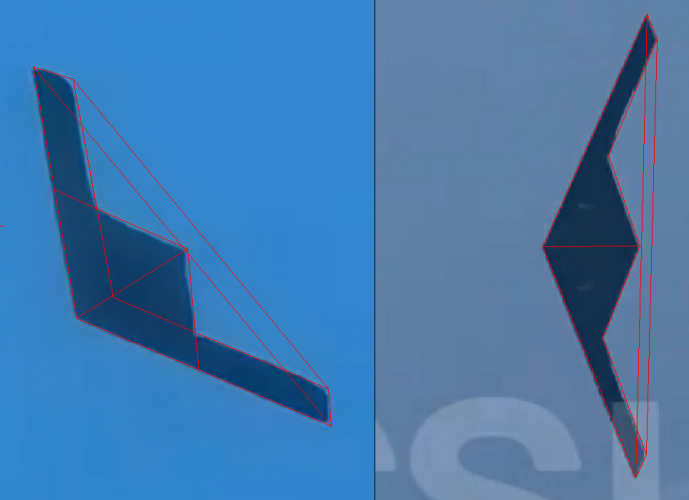
Additionally, I've seen some pictures from Larissa where the planform looks like a much closer match to other alleged RQ-180 sightings in California and the Philippines.
 
I don't know why this is easily chalked as the RQ-180, someone on the TWZ article comments made this comparison.
it's plain strange attempt to compare vehicles at different angles instead comparing the proportions. It's not *RA-01* (or whatever was filmed over Lebanon).
 

Attachments

  • 2026-03-24_21-05-16.png
    2026-03-24_21-05-16.png
    272.5 KB · Views: 203
Last edited:
Are the two hangars at the southeast corner of the field the ones that people think are supporting the RQ-180? I don't know how well Google Maps does mensuration, but the doors appear to be 50 meters wide and can probably fit an aircraft up to 20 meters long.
 
Are the two hangars at the southeast corner of the field the ones that people think are supporting the RQ-180? I don't know how well Google Maps does mensuration, but the doors appear to be 50 meters wide and can probably fit an aircraft up to 20 meters long.
read this topic. right at the previous page
 
Going to mention again, this isn’t an Israeli drone. Whatever it is, it was photographed over the US a few weeks ago.
 
The video I saw of the alleged RA-01 was of poor quality but seemed to show a spinning propeller on the aft end.

Additionally, I've seen some pictures from Larissa where the planform looks like a much closer match to other alleged RQ-180 sightings in California and the Philippines.

The thing is, there is nothing that connects or correlates any of these photos to "RA-01". The only information about "RA-01" comes from a leaked NIMA document. The content of that document isn't specific enough to say any of these are (or are not) the RA-01.

What seems to have happened is that however many months ago the NIMA document was leaked and there was much speculation about "RA-01". Not that long after a triangular / flying wing aircraft was captured on video . The connection between RA-01 and the aircraft in the video isn't really there, it seems to be just an assumption.
 
Employing something like a GBU-39, dropped from high altitude, would allow for an impressive standoff distance that would reduce risk to the delivery platform. If the RQ-180 has such a capability, it would serve as a useful "silver bullet" for covert missions where you wouldn't necessarily need or want a B-21.

But then it exposes itself: this (presumably) $1B+ exotic, secret aircraft could be shot down and exploited (worst case scenario). In the least, it would be open season for all manner of SIGINT and OSINT. Better to use it as a strategic anchor and direct other effects to the target.
 
I can't believe I'm saying this but I agree with @EmoBirb and disagree with @quellish. The notion that Israel can't develop a stealthy ISR drone just because it doesn't have an outdoor far field RCS range seems completely counterintuitive to me and I finally have the evidence to prove it. Israel built and validated a compact RCS range designed to emulate far field conditions. Although I don't know exactly when they built it or where it is, 2 papers about it were published in 2023, which would line up with the timeline for the Israeli ISR drone/RA-01. I've attached all the relevant documentation I can find below, hopefully someone with radar expertise can comment on the more technical aspects.

This subject has come up in several threads. Rather than gum up this thread with more OT, I have created a new thread for this subject:


With that out of the way, I'm 99% sure that the "Lady of Larissa" is the RA-01. As @lancer21 pointed out, the size, planform, and color are an exact match. The actual RQ-180 is a lot bigger, has a lower wing sweep for high altitude operation, and although color isn't a good indicator, there don't seem to be any good reasons to change from white for such a high altitude asset. It seems that a lot of the defense sites just ran with the RQ-180 for clicks but this entire discussion should really be moved to the Israeli drone thread.

The size and shape seem to be consistent with an aircraft photographed near Groom Lake in 2021 by Joerg Arnu. Joerg was able to provide location and EXIF camera data that allowed reasonably accurate estimates of the size of the aircraft he photographed. Spoiler: Much smaller than what has been claimed/hypothesized for the "RQ-180" in the past.
 
Last edited by a moderator:
I can't believe I'm saying this but I agree with @EmoBirb and disagree with @quellish.
Yeah, seems weird.

Even though I often disagree with Quellish. Crud, I think we disagree more often than we agree on things! :D


The notion that Israel can't develop a stealthy ISR drone just because it doesn't have an outdoor far field RCS range seems completely counterintuitive to me and I finally have the evidence to prove it. Israel built and validated a compact RCS range designed to emulate far field conditions. Although I don't know exactly when they built it or where it is, 2 papers about it were published in 2023, which would line up with the timeline for the Israeli ISR drone/RA-01. I've attached all the relevant documentation I can find below, hopefully someone with radar expertise can comment on the more technical aspects.
View: https://www.youtube.com/watch?v=WDGAG3YUCHI&t=3s
Strongly disagree, the Israelis would still need access to a far field RCS range to verify their model across quite a few shapes.

But we can continue this discussion in the thread Quellish started.


Here is my shot at the size of the plane, I assume the footage was taken with a modern smartphone sensor using the standard 1x field of view. There is very little populated area under the approach path to runway 26. I therefore worked on the basis of a 3-degree glide path, which gives the respective altitudes used in my calculations.
  1. Point 1 is located near the two towns of Anavra and Aetolofos, roughly 20 km from Larissa Air Base, directly under the approach path to runway 26. Because there is a lack of Street View imagery in the region that made it near impossible to pinpoint where the video was taken, I used villages lying roughly under the approach path as reference points. Based on the pixel measurement, the estimated object size comes out to be around 24 meters at 1000 meters altitude, which results in a smaller wingspan than expected.
  2. Point 2 is located closer to the coastline, at approximately 33 km from the base. The aircraft was on approach from the west. Under the same assumptions, the estimated object size comes out to be around 40 meters at 1700 meters altitiude, which makes the object appear very large.
This creates a problem in the analysis: at Point 1, the estimated span is smaller than expected, while at Point 2, farther out near the coast, the estimated size becomes unusually large... *Terrain elevation differences were taken into account in the calculations. (~100m)

This quick check kinda requires some error bars around your measurements.

Though a simple "wingspan of approximately 30m", splitting the difference, would seem to check.
 
You get enough smart scientists and engineers along with the required funding, they can develop LO platforms. The UK built Taranis and a couple of others, France with Neuron. Even Turkey with Kaan and South Korea with KF-21 have a basic LO design, so Israel has a lot smart people who could develop a VLO flying wing, these other countries are at the point where the US was at around 30 to 40 years ago. Along with Russia and China. The US is the only country currently with battle-tested LO/VLO and probably other which are not acknowledged as well.
 
You get enough smart scientists and engineers along with the required funding, they can develop LO platforms. The UK built Taranis and a couple of others, France with Neuron. Even Turkey with Kaan and South Korea with KF-21 have a basic LO design, so Israel has a lot smart people who could develop a VLO flying wing, these other countries are at the point where the US was at around 30 to 40 years ago. Along with Russia and China. The US is the only country currently with battle-tested LO/VLO and probably other which are not acknowledged as well.
Thank you!

I found out the company which built the Compact RCS Test Range designed to emulate far field conditions in Israel (Orbit/FR) also supplies components and software for the Northrop Grumman Rancho Bernardo range, the MIT Lincoln Lab RF test facility, and worked on the B2 program, so they probably know what they are doing.
 

Attachments

  • NG-RF-Technology-Testing.pdf
    859.5 KB · Views: 24
  • MIT LL RF Testing.pdf
    1.6 MB · Views: 21
Defense Updates put out a video yesterday concerning the RQ-180:


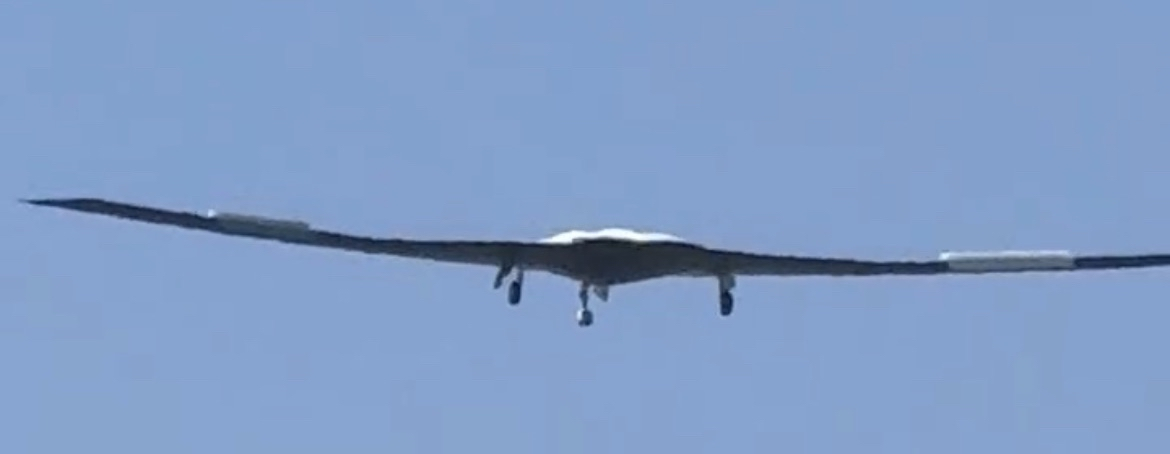
In what aviation experts consider one of the most significant public exposures of a classified U.S. platform in recent years, a large flying-wing unmanned aircraft—widely assessed to be the Northrop Grumman RQ-180—was reportedly observed making an emergency landing at Larissa Air Base on March 18, 2026. Often referred to in open-source discussions as the “White Bat” or “Shikaka,” the RQ-180 has been the subject of sustained speculation since reports of its initial flight emerged around 2010. Event the designation RQ-180 is publicly acknowledged.​
Although the U.S. Air Force has not officially disclosed imagery or technical details of the platform, this incident—apparently triggered by a mechanical issue—offers some of the most tangible indications to date that the system is both operational and actively deployed. The event quickly generated significant attention across Greek media and social platforms, with early reports from outlets such as OnLarissa.gr initially misidentifying the aircraft as a Northrop B-2 Spirit diverted to the 110th Combat Wing. Viewers may note that Larissa Air Base has functioned as a hub for U.S. drone operations since the U.S. Air Force relocated MQ-9 Reapers there several years ago.​
In this video, Defense Updates analyzes what is special about Northrop Grumman RQ-180?
Chapters:
0:00 TITLE
00:11 INTRODUCTION
01:41 SPONSORSHIP - NordVPN
02:15 DESIGN
04:46 CAPABLITIES
07:13 ANALYSIS
 
Some very close up videos were found. We’ll see if big news outlets report on it
Not from within the US though, once again it was Larissa on two separate occasions which indicates they’re just blatantly operating it during daylight hours.
 
If this is correct it’s obviously no longer considered sight sensitive. With the RQ-170 that triggered a limited acknowledgment by the USAF.
 
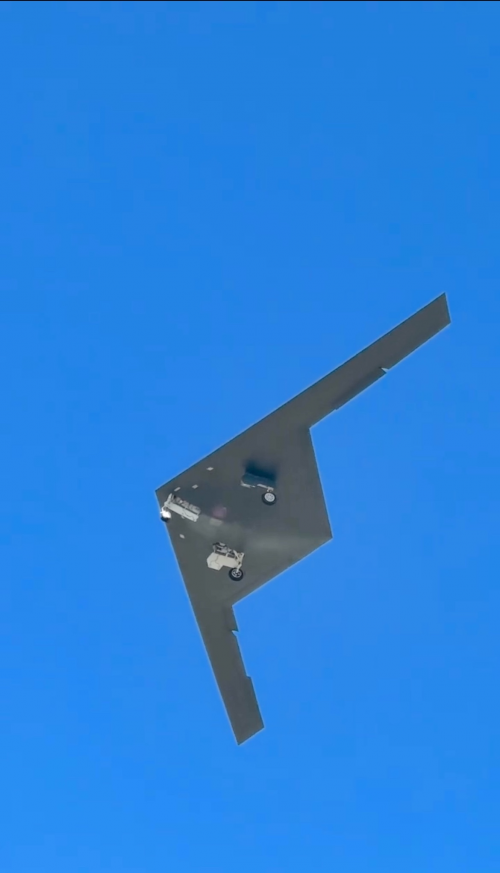
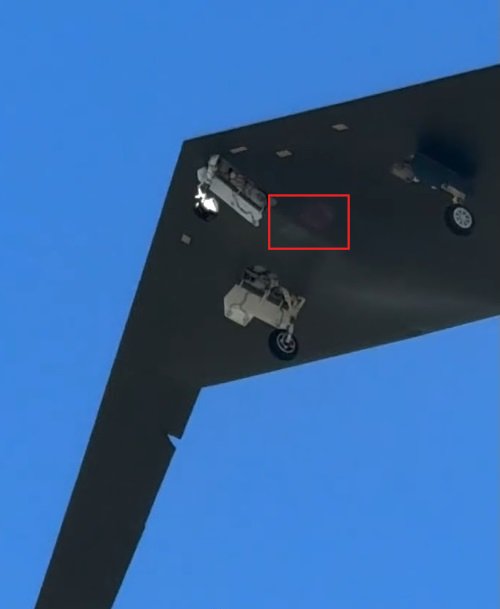
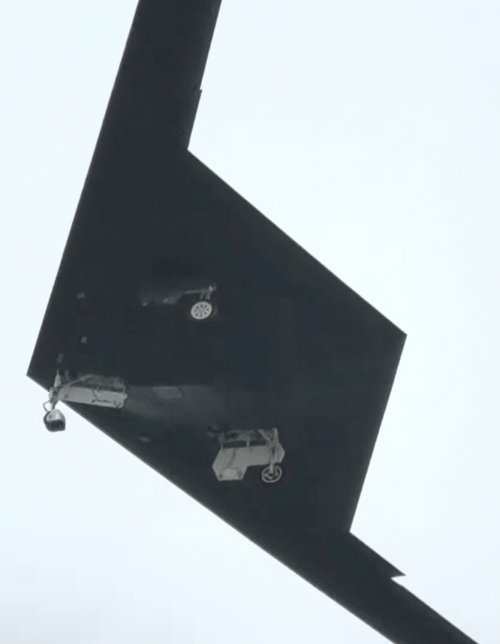
Definitely not a real large aircraft, look at the size of the landing gears, gear bays and the wheels/tires. The flight control surfaces seem to be sized for moderate maneuvering performance only. I assume it has two smaller-sized turbofan engines, you can barely see it seems two exhaust humps. Air data ports somewhat similar to B-21. I would assume the engine inlet a very similar to B-21.
 
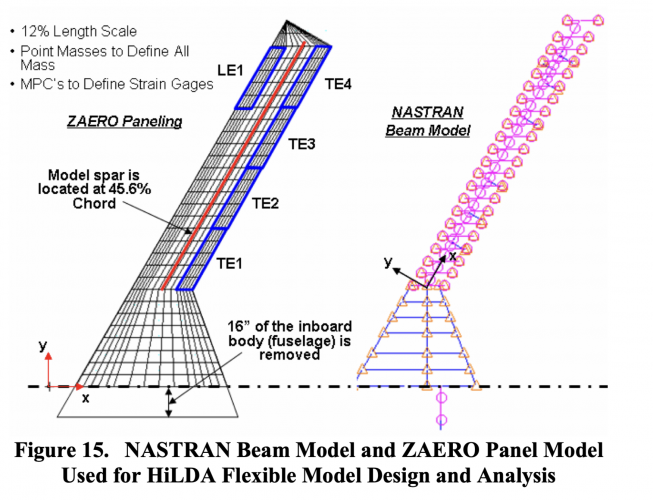
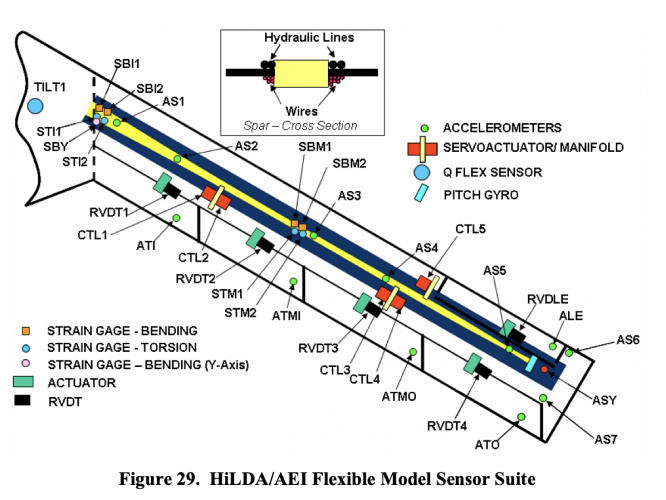
It has far fewer control surfaces than I expected… The wing design tested in the HiLDA program had a huge bank of trailing edge control surfaces with some leading edge controls as well.
 

Attachments

  • Screenshot 2026-04-06 at 10.58.24 AM.png
    Screenshot 2026-04-06 at 10.58.24 AM.png
    844.4 KB · Views: 369
  • Screenshot 2026-04-06 at 10.59.14 AM.png
    Screenshot 2026-04-06 at 10.59.14 AM.png
    331.8 KB · Views: 366
Last edited by a moderator:
Since I assume the mission of the aircraft is ISR, sigint, etc, you don't need a highly maneuverable platform but you do need enough control authority for gusty, windy conditions during approach and landing as an example. This aircraft flies high using low-gain, controlled maneuvers so you don't need a lot of control surfaces. This aircraft splits the inboard and outboard elevons for yaw control. From what we can see as compared to the B-21, this platform formed the basis for the B-21 where naturally the design changes were made for the bomber mission. If you ping the USAF about this, they'll tell you are looking a modified 1965 Ford Galaxy 500.
 
With that out of the way, I'm 99% sure that the "Lady of Larissa" is the RA-01. As @lancer21 pointed out, the size, planform, and color are an exact match. The actual RQ-180 is a lot bigger, has a lower wing sweep for high altitude operation, and although color isn't a good indicator, there don't seem to be any good reasons to change from white for such a high altitude asset. It seems that a lot of the defense sites just ran with the RQ-180 for clicks but this entire discussion should really be moved to the Israeli drone thread.
This is such an awful take now that the new videos are out, I wonder which idiot posted it. Oh...

In any case, I'm glad the RQ-180, or whatever its true designation is, has finally come out of the woodworks. I wonder how big it is, since it still seems awfully small for the speculated level of endurance, and whether the RQ-180, or something carried by it, was the "highly unique capability" that the CIA used to locate the F-15E WSO that was rescued recently.

It also seems that the synergies between the development of the RQ-180 and B-21 would be a great example for many programs to follow:

1. Build a highly classified, low volume asset, with higher risk technologies that give it exquisite capabilities
2. Put it into limited service to get real world results and determine which technologies are most worth investing in
3. Apply all of that to unclassified, high volume assets

Since the public and Congress seem to have a far lower tolerance of risk for military development programs compared to the Cold War and often compromise military capability for political reasons, it seems that derisking critical technologies in classified, low volume assets deployed with limited service before mass producing them in unclassified, high volume assets, might be the only way forward.
 
Last edited:
I know it’s hard to judge these things but it looks a lot smaller than I expected it to be from all the years of speculation about it.
 
It's consistent with the night camo the B52s used in Vietnam.
That at least made sense though. Black on the bottom camo up top. This one is black on the bottom and white on top. The opposite of standard counter shading. I wonder if the bottom was haphazardly painted black for night time operations (assuming they are actually painted white as standard practice. Or if this represents something more special, perhaps for high altitude operations it provides visual camouflage from satellites?
 
What would the rcs of RQ-180 be, relative to the B-2? To B-21? To QUARTZ/AARS? Perhaps the RQ-180 is even a modern incarnation of the QUARTZ/AARS program.
 

Similar threads

Back
Top Bottom